New Zealand’s business events sector has a new name for its peak body, Business Events Industry Aotearoa (BEIA), reflecting its distinct role within tourism and events.
Formerly Conventions and Incentives New Zealand (CINZ), Business Events Industry Aotearoa represents 460 members across New Zealand who work within the meetings, incentives, conferences and conventions, and exhibitions sector.
The new brand was announced on November 18 at the association’s Annual General Meeting and will go live on December 1 to coincide with New Zealand’s only business events industry exhibition for 2020, BE Reconnected in Auckland.
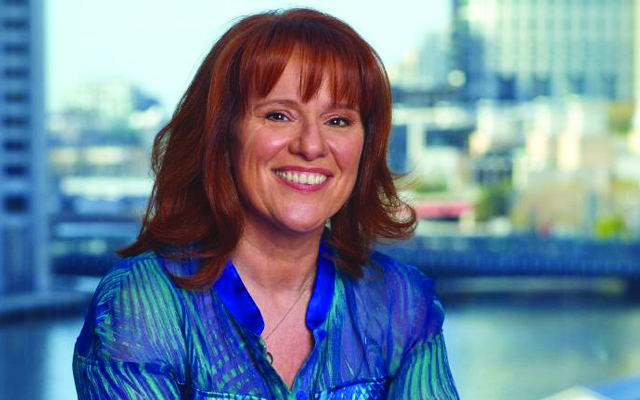
BEIA chief executive, Lisa Hopkins, said in a press release the new name gives its members the mandate to own the industry.
“We are using a globally-acknowledged term, and there is no ambiguity about who we represent and what we do.”
The new branding also maintains the body’s connection to Aotearoa New Zealand, with the palette reflecting the colours of our ocean, alps and native birds,
She stressed the sector will continue to be a “proactive and energetic partner with government in the vital work needed for New Zealand’s economic and social recovery”.
focus now on recovery, operations and changes to the organisation, then use technology deliver new services and improve the way of doing things, you’ll set the foundations for success beyond Covid.
How will your travel business emerge from Covid-19 ready to meet the opportunities of the next normal, the challenges that come your way and thrive? TMCs who ramp up their game now will be more ready when travel is back in business than those who do not.
There are four key areas to focus on as we navigate our way through this period: revenue, organisation, operations and technology.
Focus now on recovery, operations and changes to the organisation, then use technology to deliver new services and improve the way of doing things, will ensure success beyond Covid-19
As the crisis subsides, TMCs will need to rethink their operating model, revenue profile, position themselves for the long term and to get ahead of the competition.
According to McKinsey survey, businesses from a variety of industries said that their new remote sales models were as much or more effective than traditional channels. Agents should move now before the recovery fully starts, launch targeted campaigns to win back loyal customers; focus on health and safety; adjust pricing, reskill the sales force to support remote selling; and use technology to streamline and automate processes that free up sales representatives to sell.
Agents should understand clients’ priorities and what businesses value most, post-Covid-19, then develop services based on those insights. Health and safety will be a key driver and influence when and where businesses travel to. Connected trips with up-to-date personalised information will play a big part in the recovery.
TMCs are already installing the latest permission-based applications such as Travel Radar that enable them to configure and manage client’s policies and ensure that the travel consultant can access the correct information and booking capability. These new applications close the entire loop of sufficient information and immediate decision making and will drive the next duty of care level for TMCs when the “return to travel” policies and processes are in place.
Businesses will also be adopting new processes, rules and changes to travel procedures. Travel companies will need to act fast and changes to processes implemented quickly to give them the edge. Businesses will be ready to get back to travelling and you may need to respond quickly to recover that client base before the competition. Develop an operating model that’s agile and urgent.
Rebuild operations TMCs are prioritising their tech needs. Agents are looking to improve the services they supply and how they manage their budgets.
Businesses will want to track staff expenses more efficiently. The Aberdeen Group, which analysed data on buyer behaviour, found that up to 70 per cent of companies want to find new ways to manage their travel-related corporate expenses.
These operational changes are crucial but should be sustainable. Agents will need to protect against a wide range of potential shocks and act quickly, including increased use of external suppliers and partners.
Creating a new level of business resilience is expensive but there is a wave of new digital and analytics tools which significantly reduce the cost of flexibility.
Concur Compleat automates and manages everyday processes – searching low fares, securing seats, and ticketing – to streamline work processes. Unlocked Data launched a Covid forecaster looking at spending and risk to predict future spend and Travel Operations has solutions to support travel agents in their daily tasks. Tools like these increase productivity and create flexibility.
Many TMCs were already digitising their operations before Covid. Accelerating these efforts now will likely see significant benefits in productivity, flexibility and quality of service.
There is an increased demand to manage the commercials, suppliers, back-office, while corporates are able to configure the travel policies, approvals, and reporting. TMCs are looking for new systems that provide New Distribution Capability with direct airline connects and hotel consolidators and aggregators.
These platforms enable bookings outside of many global distribution system processes and related fees and compress months of effort into weeks or days. Looking beyond Covid, TMCs can build their next-normal operations around a revamped approach to spending. These new technology-enabled methodologies are accelerating cost transparency.
The new way of working, with more automation and technology, has been coming for a long time. This pandemic has just sped up the pace.
The new culture of doing things As we come through the crisis, TMCs will have to address growth and scalability. This will depend mostly on the ability to embed data and analytics in decision making, learning to support clients and a culture that fosters value with other partners. What matters is a deep understanding of the customer.
There has been a transformation in the way we interact with each other, make purchases and do business. These changes have accelerated the adoption of digital technologies across every sector.
Technology plays a critical role in the recovery of the travel industry and new deals being struck and partnerships happening.
Earlier this year, Flight Centre Travel Group acquired tech company WhereTo for its AI platform that recommends hotels, flights and transportation to employees. Sabre integrated Mindsay technology enabling automated customer service for TMCs and airlines. At Element, we partnered with tech company Zenmer to supply an end-to-end platform for TMCs and their clients.
Businesses will need to set an ambitious digital agenda – but one that they can deliver quickly. In the post-pandemic world, business as usual will not be enough because too many things have changed.
Gavin Smith is the director of Element, a travel technology company that helps TMCs gain access to cutting-edge travel technology. A former manager at SAP Concur, Smith has vast experience across various functions within TMCs. He has worked with TMCs of all sizes supporting their goals to deliver technology and payments to their clients.
Oakwood has opened the Oakwood Suites Yokohama, the first international serviced apartment brand in the Japanese port city, and its 12th property in Japan.
The 175-unit property is the second serviced apartment asset owned by Mapletree in Japan. Occupying the 46th to 51st floors of The Kitanaka Yokohama Tower, studios to three-bedroom residences are on offer, where each unit is fully-equipped with a kitchenette, washer and dryer.
Other facilities include a residents’ lounge, 24-hour fitness centre and restaurant.
Oakwood Suites Yokohama is located above the Bashamichi Station on the Minato-Mirai Subway line. Attractions such as Yamashita Park, Chinatown and Yokohama Red Brick Warehouses are within walking distance.
Hyatt has appointed Herman Kemp as general manager of Hyatt Regency Phnom Penh, which will become the first Hyatt Regency hotel in Cambodia when it opens in 1Q2021.
A Dutch national with extensive experience in South-east Asia, Kemp will also oversee the pre-opening of the 247-room property.
With more than 20 years of hospitality experience, Kemp’s career has taken him to hotels and resorts in The Netherlands, Indonesia and Cambodia. Most recently, he was general manager of Park Hyatt Siem Reap from 2016 to 2019, before relocating last year to lead the new Hyatt Regency Phnom Penh.
Kemp commenced his hospitality career as a marine hotel operations controller with the Seattle-based cruise company Holland America Line. Over the next 12 years, he held various F&B and management roles at Le Meridien, Sofitel and Carlton hotels, all in The Hague. In 2012, Herman was appointed general manager of Aryaduta Medan in North Sumatra, Indonesia before moving in the same role to The Edge Bali in 2014.
Chinese airlines allowed to set price on significantly more routes now
South-east Asian leaders have agreed to take steps towards the establishment of an ASEAN travel corridor arrangement framework to facilitate essential business travel within the region.
Such an arrangement would necessitate the development of a common set of safety measures to safeguard public health in the face of Covid-19, noted the leaders in a joint statement issued at the 37th ASEAN Summit, which took place on November 12 and was hosted virtually by Vietnam.
South-east Asian leaders working towards an ASEAN travel corridor for essential business travel
Travellers will also be required to strictly abide by the prevailing public health regulations stipulated by the authorities of the receiving countries.
The ASEAN Coordinating Council, supported by the ASEAN Coordinating Council Working Group on Public Health Emergencies, has been tasked to coordinate and oversee the development of an ASEAN travel corridor arrangement framework.
This plan will build upon existing bilateral travel corridors set up between individual ASEAN member states, as well as those established with partners outside the region, said the regional grouping in a statement.
For instance, Singapore has already established green lanes with ten countries, including ASEAN members Malaysia, Indonesia, Brunei and Vietnam.
The leaders further added that they do not preclude the application of the framework to other categories of travel in the future.
Indonesian president Joko Widodo is pushing for the regional travel bubble to come into effect by early 2021, according to Bloomberg.
Earlier in June, Indonesia had proposed the move, which was backed by Thailand and Malaysia, but other countries have not signalled their support for the arrangement, said the report.
Indonesia is battling the largest coronavirus outbreak in South-east Asia, having recorded 463,007 infections and 15,148 deaths as of Saturday. This month, the country entered its first recession since the 1998 Asian financial crisis, after two successive quarters of economic shrinkage.
With business events disrupted for almost a full year, country governments are now realising the deep and wide implications on their economy and society, from GDP impact and job losses to tremors through the many supply chains that travel and events touch.
In this new episode of TTG Conversations: Five questions video series, Geoff Donaghy, CEO of the International Convention Centre (ICC) Sydney as well as director of convention centres, ASM Global – Asia Pacific, discusses how the MICE crisis has emphasised the industry’s role in economic contributions and community advancement, what venue operators can do to contribute to business events recovery, and how ICC Sydney is supporting local and regional communities despite business challenges.
Fifteen Asia-Pacific ministers signed a massive free trade deal on November 15, as part of the four-day ASEAN summit, held virtually.
The Regional Comprehensive Economic Partnership (RCEP), first proposed in 2012, brings together the 10 ASEAN economies, as well as China, Japan, South Korea, New Zealand and Australia.
Country leaders and ministers at the RCEP virtual signing; Photo: Ministry of Communications and Information
RCEP builds on existing free trade deals among member countries. It will broaden and deepen economic links across the Asia-Pacific, ease trade in goods and services, facilitate the flow of foreign investments, and enhance protections in areas such as e-commerce and intellectual property.
The agreement will also eliminate tariffs for at least 92 per cent of goods, with additional preferential market access for exports. The flow of goods will also be faster.
More companies will be able to provide services in the region, with foreign shareholding limits raised for at least 50 subsectors including professional services, telecommunications and financial services. Businesses will also find it easier to navigate and integrate into regional value chains.
The RCEP will come into force when six ASEAN countries and three non-ASEAN countries have ratified it.
Terms of the deal were agreed upon by the 15 RCEP countries last year. However, this resulted in India’s pullout, who was worried that the elimination of tariffs would open its markets to a flood of imports that could harm local producers. Other countries have reiterated the door remains open to India.
According to The Straits Times, Singapore’s prime minister Lee Hsien Loong, said: “The RCEP is a major step forward for the world, at a time when multilateralism is losing ground and global growth is slowing.”
“It signals our collective commitment to maintaining open and connected supply chains, and to promoting freer trade and closer interdependence especially in the face of Covid-19 when countries are turning inwards and are under protectionist pressures,” he said.
In the same article, Asean secretary-general Lim Jock Hoi told The Straits Times that the RCEP will ensure markets are kept open, and provide much-needed certainty and stability for businesses as they cope with the Covid-19 crisis.
“The signing of the RCEP agreement at this time… is a demonstration of the region’s strong commitment to open, inclusive, and rules-based multilateralism and confidence of the contribution of trade to post-pandemic recovery efforts,” he said.
The latest opening represents the company's commitment to having a presence in key Philippine cities
SMX Convention Center, the largest privately-owned meeting and convention facility in the Philippines, unveiled its first managed venue in the north, the Olongapo City Convention Center.
The 2,130m2 Olongapo City Convention Center is located on the fourth level of the SM City Olongapo Central in Olongapo City, one hour and 15 minutes away from Clark International Airport.
The latest opening represents the company’s commitment to having a presence in key Philippine cities
The convention centre can accommodate 2,400 guests in a regular setting and no less than 1,900 guests in the new normal. It offers five flexible function rooms, seven meeting rooms, six kitchens or preparation rooms, one car lift, two freight lifts, and one passenger lift.
Owned by the Olongapo City Government, opening the venue now helps to build market confidence for when business events are allowed to restart,” said SMX Convention Center vice president-general manager Agnes Pacis.
Pacis also told TTGmice that the Olongapo City Convention Center “has been in the pipeline before the pandemic started to augment the need for venue spaces in the north”.
With hybrid meetings the way forward, domestic prospects includes corporate and government agency meetings, seminars with high-profile speakers, hospitality colleges with special courses, as well as church organisations.
To entice planners to hold hybrid events in its venues, aside from increasing its Internet bandwidth, she revealed that SMX is in the process of “acquiring additional software for virtual meetings to accommodate over 1,000 participants simultaneously”.
Current repurpose projects at SMX include film shoots, satellite kitchens for small catering businesses, co-working spaces, exam centres for professional certification, and fulfilment and packaging centres for e-commerce.
In addition to Olongapo City, SMX Convention Center also has a presence in Pasay, Taguig, Bacolod, Davao, Cebu and Mandaluyong.
As people tire of virtual meetings and webinars, new ways to hold their attention have to be thought of
Conference and event organisers are thinking on their feet to evolve audience engagement – through bite-sized events and non-traditional speakers – as event attendees tire of basic Zoom meetings.
The shift is happening as virtual-only events give way to more hybrid events in the region, encouraging optimism for the return of physical meetings.
As people tire of virtual meetings and webinars, new ways to hold their attention have to be developed
“I think hybrid is here to stay and I think every virtual conference will have a physical element,” said Yeoh Siew Hoon, founder and editor of Singapore-based Web In Travel.
“I definitely see bite-sized events throughout the year, so you don’t have to have the big one, but just the tentpole and have it spread out with smaller, intimate gatherings throughout the year, so that there’s continuous engagement, whether with your customers or target audience,” she continued.
Yeoh was speaking on trends in the corporate meetings sector as part of a deep dive breakout at PCMA’s Convening Asia Pacific – Global Recovery Forum this week. She said she also sees potential in the growth of watch parties that allow small communities to gather and be part of much larger events.
“Just as the American Chamber of Commerce in Singapore organised a watch party of the US elections for more than 100 people, if you can’t get together in an industry room, why don’t you organise small client parties and watch an event together?” Yeoh proposed.
Meantime, Hong Kong-based technology keynote speaker James Bennet, director of Creative Technologies APAC for Project Worldwide, told PCMA conference participants the industry as a whole needs to move on from just watching livestreams, and limiting audiences’ online engagement to Q&As and conducting polls.
“They’re a necessary piece of the puzzle but I don’t think they’re the answer to anything,” he said, before continuing to demonstrate from his remote location in real-time, how a global audience can be immersed in 360 experiences like being onstage at an Elton John concert, or importing a six-foot robot into your room using a QR code.
However with digital, Yeoh said the onus is on individual participants to make the most of technology to create new connections for networking. “I don’t think we can be passive and that applies even in the physical world. But if you’re active, the virtual world really gives you a lot more connection points than the physical world so it’s up to you to make use of all those connection points to build your relationships,” she said.
PCMA’s Convening Asia Pacific – Global Recovery Forum featured topics and speakers considered non-traditional for the industry, such as a disruptive entrepreneur for its welcome keynote and heads of advertising companies, in response to feedback on the changing needs of business events tourism players.
“It’s the type of stuff we need to start thinking about and leaning towards, not more of the same,” said PCMA Asia Pacific’s managing director Karen Bolinger.
The forum was attended by more than 500 participants in 20 countries in a hybrid event filmed from ICC Sydney, with 46 per cent of attendees engaging with PCMA for the first time.
Hilton has globally rolled out EventReady with CleanStay, its meeting and events programme designed to help organisers create event experiences that are clean, flexible, safe and socially responsible.
With EventReady, Hilton has identified 10 “high-touch” areas in its event spaces where disinfection efforts have been enhanced, such as door handles and the podium. Hilton has also added room seals for both guest and meeting rooms to signify that no one else has entered the space after it has been thoroughly cleaned.
Hilton EventReady with Cleanstay
1 of 5
Socially-distanced seating round tables
Another format of socially-distanced seating
An unbroken CleanStay seal
Door handles will cleaned thoroughly
Bento lunches will be provided instead of buffets
“It’s all about the touchpoints and mitigating risk, reducing the moments people need to touch before we clean. What we are trying to do is to keep it simple, because we all know that if we make it too complicated, it’s not going to happen,” said Herman Ehrlich, general manager of Conrad Bangkok.
One part of the EventReady programme comprises the Hilton EventReady Playbook, an interactive resource which covers the spectrum from pre-event attendee communications to hybrid meeting solutions; alongside health and wellness considerations to creative networking ideas.
The second part is the Local Pages, an additional information document tailored to each country’s climate and hygiene standards, the hotel or resort size and layout, and volume of event space being used.
In Singapore for example, Hilton Singapore works closely with Singapore Tourism Board to ensure its Local Pages provides specific, up-to-date information as restrictions are lifted and group numbers are increased, shared Peter Webster, regional general manager, Singapore, Thailand, Myanmar, Laos & Cambodia at Hilton.
When asked how the demand for corporate meetings was like at the moment for Hilton Singapore, Webster revealed there has been a “week-on-week increase in demand”. He added that the hotel has seen “a large number of domestic meetings”, and that international enquiries were coming in for 2Q2021 onwards.
“I am quietly confident that next year will be a good year because of all the pent-up demand. There’s nothing quite like meeting in-person to make decisions or conduct trainings; it’ll come back with a vengeance next year,” he opined.
It is not only the Singapore market that has noticed an uptick in momentum.
Paul Hutton, vice president, operations, South East Asia, Hilton, told TTGmice: “This month alone, our properties across South-east Asia have seen a 30 per cent increase in leads from June, of which 50 per cent are leads for social events such as weddings and celebrations. Of the 524 leads for meetings and events across South-east Asia, over 300 are leads generated in our key markets – Malaysia, Indonesia and Thailand – an encouraging sign that the MICE and events industry in the region is gradually making headway with recovery.”
EventReady was built upon Hilton’s CleanStay programme launched earlier this year, which are standards and procedures for hotel cleanliness and disinfection developed in conjunction with Lysol & Dettol maker RB, and Mayo Clinic. – Additional reporting by Anne Somanas
The newly-opened Ritz-Carlton, Bangkok anchors the One Bangkok development with cosmopolitan elegance. Featuring the city's largest ballroom and a spectacular new penthouse suite, it delivers exceptional hardware and deeply authentic, soulful service for business and leisure travellers alike
Behind the imposing, Brutalist concrete that defines Zurich’s Oerlikon district lies a surprising secret. While its exterior honours the neighbourhood’s industrial roots, stepping inside Mama Shelter reveals a vibrant, neon-soaked world that is a far cry from its rigid shell
A polished urban retreat designed for business travellers, Hyatt Regency Kuala Lumpur at KL Midtown combines thoughtful design, seamless service, and exceptional facilities.
South-east Asian leaders have agreed to take steps towards the establishment of an ASEAN travel corridor arrangement framework to facilitate essential business travel within the region.
Such an arrangement would necessitate the development of a common set of safety measures to safeguard public health in the face of Covid-19, noted the leaders in a joint statement issued at the 37th ASEAN Summit, which took place on November 12 and was hosted virtually by Vietnam.
Travellers will also be required to strictly abide by the prevailing public health regulations stipulated by the authorities of the receiving countries.
The ASEAN Coordinating Council, supported by the ASEAN Coordinating Council Working Group on Public Health Emergencies, has been tasked to coordinate and oversee the development of an ASEAN travel corridor arrangement framework.
This plan will build upon existing bilateral travel corridors set up between individual ASEAN member states, as well as those established with partners outside the region, said the regional grouping in a statement.
For instance, Singapore has already established green lanes with ten countries, including ASEAN members Malaysia, Indonesia, Brunei and Vietnam.
The leaders further added that they do not preclude the application of the framework to other categories of travel in the future.
Indonesian president Joko Widodo is pushing for the regional travel bubble to come into effect by early 2021, according to Bloomberg.
Earlier in June, Indonesia had proposed the move, which was backed by Thailand and Malaysia, but other countries have not signalled their support for the arrangement, said the report.
Indonesia is battling the largest coronavirus outbreak in South-east Asia, having recorded 463,007 infections and 15,148 deaths as of Saturday. This month, the country entered its first recession since the 1998 Asian financial crisis, after two successive quarters of economic shrinkage.