UFI, The Global Association of the Exhibition Industry, has revealed the results of the elections for chapter chairs and vice chairs in its four regional chapters around the world.
David Zhong
The elected industry leaders will begin their three-year mandate in November.
The future chapter chairs are:
Asia-Pacific – David Zhong (VNU Exhibitions Asia, China)
Europe – Andreas Gruchow (Deutsche Messe AG, Germany)
Latin America – José Navarro Meneses (Tarsus Mexico)
Middle East/Africa – Albert Aoun (IFP, Lebanon)
Europe – David Boon (1st vice chair, Brussels Expo, Belgium), Albert Arp (Royal Dutch Jaarbeurs, Netherlands), Antonio Bruzzone (BolognaFiere, Italy)
Latin America – Raul Strauss Justiniano (1st vice chair, Fexpocruz, Bolivia), Fernando Gorbarán (Messe Frankfurt Argentina), Joāo De Nagy (World Trade Center Sāo Paulo, Brasil)
Middle East/Africa – Said Salim Al Shanfari (1st vice chair, Oman Convention & Exhibition Centre), Craig Newman (Johannesburg Expo Centre, South Africa), Mohammed Al Hussaini (Riyadh Exhibitions Co, Saudi Arabia)
The chapter Chairs work with UFI to deliver events, education, research, and advocacy for the members in their respective region. They also represent the respective chapters in both the UFI Executive Committee and the Board of Directors.
View of Quang Ninh Exhibition of Planning and Expo Center flanked by UNESCO-listed Halong Bay
Slated to be Vietnam’s next big business events destination, Quang Ninh is ready to make its move once the coronavirus crisis is over.
Recent years have seen a raft of developments across the province after Vietnam National Administration of Tourism (VNAT) earmarked it to be developed into one of the country’s MICE destinations.
View of Quang Ninh Exhibition of Planning and Expo Center flanked by UNESCO-listed Halong Bay
Before the crisis happened, in December last year, the provincial Department of Tourism set out to boost business events tourism from 20 per cent to 35 per cent in 2020 – a figure authorities have set their eyes on once the world has been given the all-clear.
Developments helping establish the area as a choice business events destination include the opening of Van Don International Airport, Quang Ninh Exhibition of Planning and Expo Center, and the completion of Hanoi–Haiphong Expressway, halving the driving time from Hanoi to Halong to less than two hours. It has also hosted a string of international events, including ASEAN Tourism Forum 2019.
A surge in investment in Quang Ninh from major local developers, including Vingroup, Sungroup and FLC Group, as well as international hospitality brands joining the fray, such as MGallery and Wyndham, has also helped raise the destination’s profile.
Ngo Tien Duc, chief operating officer at Luxury Travel Vietnam, said: “Governments are investing in upgrading the infrastructure, and tourism boards are stepping up their efforts in Quang Ninh to promote it as a MICE destination.”
He added post-coronavirus, flash packages and attractive event budgets aimed at specific markets are essential to continue to promote the province.
Lan Le, managing director and co-founder of Luxperia, said the ease to organise charter flights, helicopters and private cruises in Quang Ninh will also help boost its appeal with business travellers.
Noted Le: “Avoiding crowds will be an increased trend that eventually will become an expectation. Charter flights and ocean cruises can easily access Quang Ninh, so this can be promoted for the safety of VIP MICE guests.”
Natural wonders
Quang Ninh’s major draw is Halong Bay. The majestic natural wonder is dotted with 1,600 limestone karsts, islands and islets that form a dramatic seascape of towering pillars rising from the sea.
And Halong Bay is proving to be the perfect playground for corporate travellers, with an increasing number of cruise operators curating innovative itineraries. For example, Bhaya Group boasts a team of dedicated business events experts to arrange corporate events ranging from teambuilding activities to conferences.
In mid-2019, Bhaya Group also secured exclusive access from Halong authorities to host events at Trinh Nu Cave, which was previously off-limits to visitors. The company is currently the only cruise operator granted access to the ancient grotto, which is one of 72 that dot the UNESCO World Heritage site.
The ancient grotto provides a flexible function area that can hold events for about 200 people. Tables and chairs, stages and other arrangements can be set up on the beach or inside the cave, making it ideal for gala dinners or special gatherings.
For incentive groups, Heritage Cruises has curated a four-day, three-night itinerary that sails guests through Halong Bay and on to lesser-visited Bai Tu Long Bay and Lan Ha Bay. Activities include a tailor-made cocktail class, CSR no-plastic activities in Cat Hai village, and cultural performances.
Cultural deep dives
While Halong Bay is the province’s main attraction, Quang Ninh is home to more than 620 historical and cultural attractions. A growing range of products have been developed to showcase these and also offer a glimpse into local life.
Yen Duc Village is a community-based tourism project about 60km west of Halong City. It offers a range of tours that are increasingly attracting tourists seeking authentic and immersive experiences. These range from traditional fishing and learning to cook like a local, through to water puppetry, and helping villagers farm.
Another popular attraction highly recommended is Cua Ong Temple. Standing as one of the most spiritual tourist sites in Quang Ninh, it sits on a hill and boasts stunning views across Bai Tu Long Bay.
Hop On Hop Off Vietnam also offers tours that can be curated for up to 40 pax through Halong City. Elsewhere, Northern Vietnam Helicopter Company has rolled out a series of flights offering an alternative way to view scenic Halong Bay. These can also be used for private transfer to events hosted at the bay’s islands or from the airport.
Infrastructure upgrade
With VNAT having earmarked Quang Ninh, developers have also been heavily investing in accommodation to cater to the growing number of business visitors.
Sun Group has opened a swathe of resorts and entertainment activities in the area, with several projects slated to open soon. This includes Yoko Onsen, a luxurious hot spring resort in Quang Hanh; Premier Village Halong Bay Resort in the heart of Ha Long city; and a three-wire cable car route on Cat Hai Island. The establishment of Van Don Economic Zone has also helped attract investment.
In line with this, FLC Group is currently carrying out several projects, including FLC Ngoc Vung Beach & Golf Resort, which will see Ngoc Vung island transformed into a high-end tourism hub by 2030. Amenities include five-star resorts and hotels, an international convention centre, golf course and safari park.
And while several major international brands have already landed on Quang Ninh’s shores, Best Western is gearing up to open 13-storey Best Western Premier Sapphire Ha Long in 4Q2020. It will feature 1,008 keys and a range of facilities, including a swimming pool, fitness centre, business centre, executive lounge and retail outlets.
Malaysia now allows for business events of up to 250 to take place; Kuala Lumpur pictured
Business events industry leaders in Malaysia have welcomed the government’s decision to reboot the sector, allowing planners to organise meetings, workshops and conventions, capped at 250 people, starting from July 1, 2020.
These business activities can only be carried out in Malaysia’s green zones, and with strict adherence to standard operating procedures (SOPs). Green zones are districts with no active Covid-19 cases; yellow zones have one to 40 cases; while red zones have 41 or more active cases, according to the Ministry of Health Malaysia.
Business events of up to 250 can now take place in Malaysia’s green zones; Kuala Lumpur pictured
Aside from a capacity cap, the venue also has to be large enough to hold the group with social distancing measures in place. Buffets are also banned, and will be replaced with pre-packed food.
This was announced at a press conference on Wednesday by Malaysia’s senior minister security Ismail Sabri Yaakob. Ismail further encouraged attendees to wear face masks, wash their hands with soap or use hand sanitisers, and reiterated the need to use the MySejahtera contact tracing app.
Business Events Council Malaysia chairman, Alan Pryor, said: “The announcement demonstrates the recognition and importance of the business events industry in contributing to economic recovery and affirms the government’s confidence that the sector can operate safely, and provide a controlled, regulated and secure environment for the commencement of events.”
“It has been very heartening to see how the entire industry supply chain has come together and worked in solidarity to proactively engage with the government and to establish their detailed SOPs, which have enabled us to reopen the sector,” added CEO of MyCEB, Abdul Khani Daud.
Malaysian Association of Convention and Exhibition Organisers and Suppliers’ president, Vincent Lim, hailed the move as a “good start”, adding that he hopes that the government will also soon allow for exhibitions to be held.
Anthony Wong, Malaysian Association of Hotel Owner’s secretary, said the reopening “signifies the beginning of the recovery of domestic tourism and the meetings industry, which has been badly affected by the pandemic”.
He added: “Revenue from a business events delegate is, on average, three times more than a leisure tourist. I foresee strong competition among hotels with meeting spaces who will be giving out promotional deals on meeting packages to encourage domestic consumption.”
BESydney’s regional director for Asia, Sinead Yeo, said a renewed campaign is planned for the Asian market, which accounts for about half of BESydney's business.
Australian venues are reinventing their business with digital tools and pivoting their attention towards Asia, believing it will be “the fastest market to come back” when international borders reopen.
Melbourne Convention and Exhibition Centre (MCEC) for example – which remains closed until August 2 – has been using this period to renovate its offering.
The MCEC team has made good use of this downtime to plan its next steps forward
“We’re looking at completely new business models, new partnerships and potential new revenue streams, both nationally and internationally,” said MCEC’s chief executive Peter King. “I think it’s a really interesting opportunity because we’ll never get another chance like this to reset our business.”
Over recent weeks, King said staff who “wouldn’t normally get to contribute to these conversations” have been grouped into cross-departmental teams to work through ideas in two-week spurts, completely changing the dynamics of the organisation.
“With no business as usual and the doors closed, we’ve got 100 per cent capacity for innovation and creative thinking and what we’re enjoying so much at the moment is allowing our people to change the rhythm of the way they work and contribute,” King continued.
One of MCEC’s main workstreams to emerge is in the development of offerings that feature elevated virtual and hybrid components to the conference experience. Other areas being enhanced include the reinforcement of partnerships.
“We’re trying to move away from being such a prescriptive, mechanical delivery organisation to becoming a more nimble, creative operation. I think that’s directly in line with the expectations of the way the Asian market works and it’s a big opportunity to partner more closely with our customers to provide a different type of event experience,” he said.
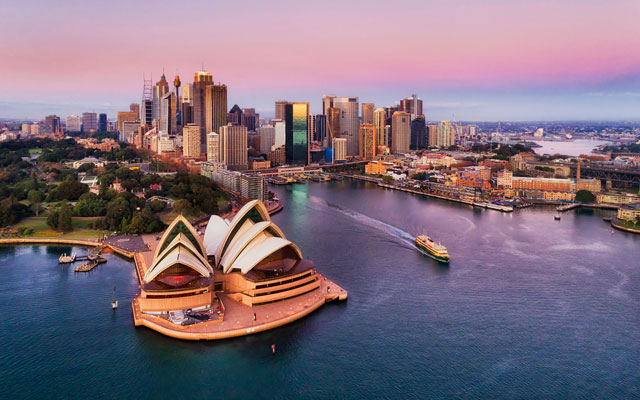
BESydney is working on a renewed campaign for the Asian market; Sydney pictured
Similar waves are also being seen in Sydney, where a reboot strategy is in the works. BESydney’s regional director for Asia, Sinead Yeo, said a renewed campaign is planned for the Asian market, which accounts for about half of BESydney’s business.
“Traditionally, our clients have looked for big hero activities when visiting Sydney,” Yeo told TTGmice. “We are now working with our partners and the industry to look at more bespoke experiences that will really appeal, especially to repeat clients that have visited Sydney before.
“We are also looking at more digital tools that we can provide to assist and service our travel industry partners and clients.”
Yeo also said the bureau has been busy keeping communication lines open with priority customers, providing updates and listening for their key motivations and concerns. “We must keep relevant,” said Yeo. “Our new activities include conducting webinars with our markets, (hosting) around 17 webinars to date with close to 600 participants, as well as holding virtual site inspections.”
Industry leaders believe Asia will be first in line when Australia’s international borders reopen, projected for December or January. But pressure is also building for travel bubbles to be created sooner with select Asian countries deemed low risk for Covid-19 cases.
“There’s a reboot strategy for all of our segments and Asia is obviously at the top of the list internationally, said ICC Sydney CEO Geoff Donaghy.
“I think it’s very obvious that airline travel out of Asia will occur well before it does out of the US, for example,” said Donaghy, having just announced ICC Sydney’s EventSafe Operating Framework, which involves a set of protocols in 16 key areas of event management.
“We believe it will create a whole lot more confidence and trust in ICC Sydney as a venue. And part of that will be direct follow up with our Asian contacts who are prepared and ready to run events, probably in the first half of next year,” he said.
King also observed that Australia’s similar timezone with Asia will be a benefit. “That allows us to conduct face-to-face and hybrid or virtual elements attached to these sorts of meetings a lot more easily than trying to do it in North America or in Europe,” he said.
“The challenge is to address confidence in meeting face-to-face which will take a little while to rebuild. But I think the Asian market is likely to be the fastest to come back because the propensity of Asians to get together is very, very strong,” he continued.
King also concluded that Singapore, South Korea and Hong Kong are among markets in the region with the greatest possibilities for the resumption of travel with Australia.
Indonesian exhibition industry stakeholders are expecting a slow rebound even as the country begins to resume economic activities end of June, and believe that cooperation will bring better solutions for challenges.
Soehoed Kosasih, director of operations with Samudra Dyan Praga, an exhibition contractor, related his experience of riding out the 2008 global financial crisis when he was with PEO Dyandra Promosindo.
An aerial view of the Jakarta International Expo
“To restart an event requires great effort. We have to be creative and have to accept low profits, or even losses,” he said.
He recalled Dyandra having to move the Indonesia International Motor Show, Indonesia’s biggest motor exhibition, from the Jakarta Convention Center to Jakarta International Expo Kemayoran, even though exhibitors had not yet recovered from the crisis and were unsure about the new venue.
To ensure a successful show, Soehoed said “a lot of sacrifices” had to be made and “massive discounts” had to be given to participants. Some even participated for free, he said.
The show took off on the back of close collaboration between all show stakeholders, which Soehoed said is necessary today for the country’s exhibitions industry to emerge well from the Covid-19 crisis.
Iqbal Rudianto, president director of Untuk Negeri Production, agrees that collaboration is critical and will help to spawn new ideas.
Iqbal, who is also chairman of the Indonesian Exhibition Companies Association (IECA) South Sumatera chapter, elaborated: “For the last three months, all exhibition stakeholders in South Sumatra have coordinated with each other, to look for solutions so that we can hold (physical) exhibitions again as soon as possible.”
Meanwhile, IECA South Sumatera chapter members are also undergoing training on how to conduct virtual exhibitions, as it is the only way for tradeshows to be conducted for now.
IECA chairman, Hosea Andreas Runkat, added that the organisation is working with the government to develop health protocols that can suit various exhibition-related businesses.
Rizki Handayani, deputy of tourism products and events of the Tourism and Creative Economy (TCE) Board, expects the draft of the joint protocol to be completed end-June. He added that the target was to have a trial exhibition with the new protocols in place by 3Q2020, before it will be passed on to business events stakeholders and exhibition visitors.
For now, the TCE Board is focused on helping local event organisers stage virtual events.
Soehoed also proposed two solutions to help exhibitions rebound. First, he suggested switching production costs once borne by the event organiser to the exhibition contractor, to ensure equal participation. Second, he suggested using bailouts from non-bank financial institutions to pay for production costs.
Heavy industry corporate travel buyers and a specialist TMC reveal that the increased use of charters is helping to meet airlift needs by repatriating employees in marine, oil and infrastructure projects affected by the Covid-19 pandemic.
Peter Muller, international board director, ATPI, a specialist TMC and worldwide charter operator, said the agency was harnessing charter opportunities in the offshore and marine industries.
TMCs for heavy industries had to come up with creative workarounds travel restrictions during the pandemic; an offshore oil rig in Rio de Janeiro pictured
Muller added that apart from more charters being mounted in Australia and a number of areas around the world, some flights saw different companies sharing capacity to cut cost.
Glencore, a multinational commodity trading and mining company, has been putting on more charters, and to address the concern for and commitment to arrival destinations, nurses at departure points and temperature taking of travellers were put in place, according to Paul Littman, its regional procurement coordinator.
Sometimes, TMCs had to get creative to work out a destination’s travel restrictions.
Muller shared: “There was an opportunity to put people on rigs in the Gulf of Mexico, but there was the question of the 14-day quarantine. So we put them on a cruise ship then sent them by helicopter to the rig and back.”
Broadspectrum, an infrastructure maintenance services company, could not have done it without its TMC, which had to repatriate 40 crew onboard the Diamond Princess stuck in Tokyo back to Australia, John Browne, general manager category services, shared.
Littman added: “Our travellers can fly to Brazil, so what we want (from our TMC) is the current state of regulations, where we can and cannot travel to and how to track our people,” he said.
A more fundamental question for Glencore, which is switching to a new TMC, is if the “dedicated team at tender” would remain intact and what are its future investments when all businesses are facing cash constraints, Littman commented.
A Corporate Travel Community (CTC) online poll on how adaptive and proactive TMCs were in meeting corporate travel needs throughout the Covid-19 crisis showed encouraging results.
Almost half (48.4 per cent) of respondents said their TMC was “very supportive with current bookings and discussion of future options”, while 44.1 per cent said their TMC was “very supportive in every aspect, with a high level of contact and solutions for future travel”.
According to Muller, GDS projections show 2019 corporate travel levels might only return in 2022/23 and would still be 10 per cent down, and moving forward, TMCs would be in the management of continual change.
Japan is preparing to admit up to 250 inbound travellers per day as it eases entry restrictions imposed to limit the spread of the Novel Coronavirus in the country.
The quota, which will begin this summer, will apply to travellers from New Zealand, Australia, Vietnam and Thailand, because they have the pandemic under control and enjoy strong economic ties with Japan, according to The Mainichi, which cited unnamed government sources.
Business travellers will be prioritised in 250 count limit; Narita International Airport pictured
The plan will prioritise businesspeople such as executives and engineers, before opening to students and, finally, tourists, the article continued.
Under the scheme, travellers must test negative to a polymerase chain reaction (PCR) test before departure and take a further PCR test on arrival.
They will also be required to submit an itinerary and refrain from using public transportation. They may be asked to record GPS data on their smartphone to enable Japanese authorities to carry out contact tracing should they be found to be infected.
Air New Zealand is among the first airlines to announce resumed flights to Japan. The carrier will start passenger flights on June 25, with a weekly return service on its Auckland–Narita route, which has been suspended since March 30.
In time, the Japanese government expects to extend entry to citizens of other countries, including China, South Korea and the US. At present, citizens of 111 nations are banned from entry at Japan ports to help stop the spread of Covid-19.
Even though the Covid-19 pandemic has endangered the traditional business events industry, its proponents say that the outbreak has in fact highlighted event models that were obsolete even before the virus broke.
Speaking at a webinar hosted by ICCA and TTG earlier this month, Oscar Cerezales, global executive vice president, COO Asia Pacific, MCI Group, said: “There absolutely may be sections of the MICE value chain that will become obsolete, but some were already obsolete even before Covid-19.
Event models with large number of participants will become obsolete, predicted panellists
“Many of these are eroded models – people are still thinking of the thousands of delegates attending a congress – but this will change. Destinations and industries that are obsessed with one client segment are ripe for rupture. The whole industry is ready for a shake.”
Large-scale conventions are expected to become a rarity, due to travel budget cuts, risk of contamination at big events, and reduced motivation to spend on expensive passes, noted Alexandre de Juniac, director general & CEO, IATA.
Instead, Cerezales predicted that the next level of events will successfully find a “new way of segmenting audiences” according to location, which influences their digital and physical attendance. One way to do so is by striking partnerships with broadcasting platforms, such as Zoom.
“The Zoom guys may be a competitor of PCOs and convention centres, but you can see them as partners and collaborators instead,” he said.
For Taiwan-based PCO GIS Group, change comes in the form of restructuring its organisational model to transform its staff into an “amoeba”, shared Jason Yeh, the company’s founder & CEO.
He explained: “Traditionally, PCOs have different teams on different projects, and each team handles the project from beginning to end. But we recently restructured to break this model.
“We separate our team into different parts like an amoeba so that people can form teams very quickly. The company culture needs to be very open and transparent to keep talent, and be very clear on the status of the project so that people can easily jump in to join the taskforce.”
Government agencies also have an opportunity to shake things up.
For example, the Thailand Convention & Exhibition Bureau (TCEB) has disrupted its role as a CVB to function not just as a supporter and facilitator of business events, but also as a “co-creator with the private sector”, described Nichapa Yoswee, senior vice president, TCEB.
She continued: “We work very closely with associations and position ourselves as a strategic partner. We discuss ideas and collaborate with other government agencies to facilitate the running of big or small events. We see ourselves as a thought leader alongside our industry friends.”
She remarked that the perspective shift comes in using business events as “a marketing tool” for the country, as well as a means to “bring in positive economic and social impact” for local communities.
“The government will play an important part in MICE in the new world,” she concluded.
Singapore’s business events industry can expect a trickle of small gatherings meant to test the waters for an eventual restart of activities in the country, as she moves into the second phase of reopening from June 19.
These ‘test-water events’ may be trialled in Phase Two (Safe Transition) or in the later part of the year, revealed Singapore Association of Convention and Exhibition Organisers and Suppliers (SACEOS) president, Aloysius Arlando.
SACEOS will soon unveil a roadmap to help Singapore’s business events recover
The decision was called at a June 1 meeting between SACEOS and Singapore’s senior minister of state, Ministry of Trade & Industry and Ministry of Education, Chee Hong Tat, who shared insights into the government’s recovery plans.
Arlando shared: “This crisis hasn’t simply paused our plans, it has fundamentally altered the way we live, work and play. The rules of engagement have changed, and difficult decisions will have to be made.
“With a focus on maintaining community health and safety, the reopening of the Singapore economy will be a very gradual process. These cautious steps are necessary to ensure we are firmly on the road to recovery.”
To prepare event companies for the eventual return of business, SACEOS – in conjunction with the Singapore Tourism Board and Enterprise Singapore – has announced an Industry Resilience Roadmap (IRR) that will serve as an operational handbook for enterprises to thrive in a post-Covid world.
Development of the IRR has commenced, and it will focus on three strategic objectives: outlining a hygienic and sustainable operating environment for the reopening of events; strengthening digital foundations and risk-mitigated business models; as well as developing new certifications, accompanied by a qualified list of industry players.
This is the association’s latest effort in pulling its members through the pandemic crisis. Previously, it launched specialised support programmes, including a number of SME Clinics focused on risk management.
“Right now, our industry is at a strategic crossroads. We must marshal our collective wisdom and strength to revitalise our businesses and create new pathways for our workforce in the new world order so that Singapore can continue to be truly competitive; a global Asia node to behold,” Arlando said.
Pico Far East Holdings has formed a strategic alliance with China Mobile’s Migu Video Technology
Pico Far East Holdings has formed a strategic alliance with China Mobile’s Migu Video Technology (a wholly-owned subsidiary of China Mobile’s Migu Culture), in response to the rapid growth in the online virtual events and exhibitions trend.
The alliance aims to create online virtual events and exhibitions and other innovative platforms, by joining Pico+’s expertise in exhibitions and event marketing, with Migu’s focus in content production and immersive experiences.
This partnership aims to create new virtual events and exhibitions
The partnership will cover three spectrums:
Online and virtual exhibitions and platforms
Leveraging platforms like China Mobile’s Global Virtual · Reality Conference, Pico+ and Migu will organise themed exhibitions and industry summits and launch new exhibition formats such as cloud-based forums, exhibitions, signing ceremonies and trading. The alliance will also create an “online VR virtual exhibition centre” for China Mobile’s “Cloud VR” service, creating a social feast in the VR world.
2. VR content channels on mobile phones, TVs and VR headsets
Pico+’s 360-degree virtual exhibitions and virtual conference experiences will be powered by Migu’s capabilities in video content distribution across three major channels – mobile phones, TVs and VR headsets. The alliance will create VR content channels and unique panoramic content for users, incorporating and operating features such as cloud exhibitions, cloud forums and more.
3. VR e-commerce and online new economy
The alliance will combine the expertise of Pico+ in 360-degree 3D VR display technology with Migu’s resources in e-commerce merchandising. This will ultimately help convert “footfall” from cloud exhibitions into online consumption. The resulting virtual commerce, or V-commerce, platforms tap the potential of new economy created by VR and online services.
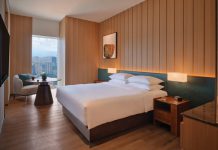
A polished urban retreat designed for business travellers, Hyatt Regency Kuala Lumpur at KL Midtown combines thoughtful design, seamless service, and exceptional facilities.
The five-star property excels in backing its expansive facilities with seamless service and personalised attention, setting the benchmark for luxury in Bangkok.