

Asia/Singapore Thursday, 18th December 2025
Page 534

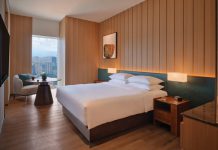
Park Hyatt increases meeting options available in Suzhou

0

The Park Hyatt brand has opened an outpost in Suzhou, eastern China, located near Jinji Lake in the heart of Suzhou Industrial Park.

There are five function venues spread over 2,400m2 within, suitable for gatherings for intimate groups of 12, up to 900 attendees.

Accommodations can also be arranged for overseas attendees in Park Hyatt Suzhou’s 178 rooms and suites, ranging from 50 to 173m2 in size.

Facilities on-site include a pool, fitness centre, spa with six treatment rooms, as well as three F&B venues – Xizhou Hall serving locally-inspired fare, the Living Room for light refreshments and tipples, and Apartment 208 which specialises in prime steak and sustainable seafood.

New challenges with online shift

0
Hybrid events may well be the future of the MICE industry

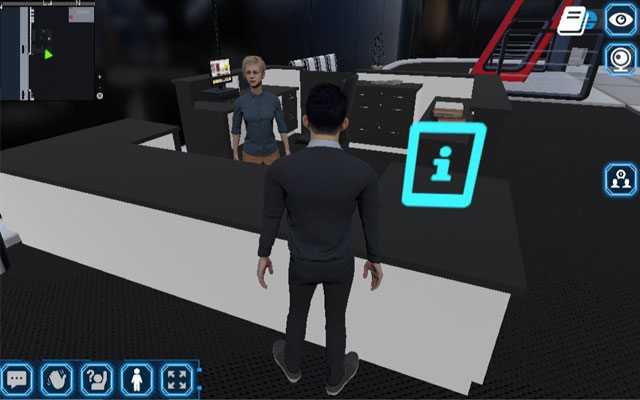
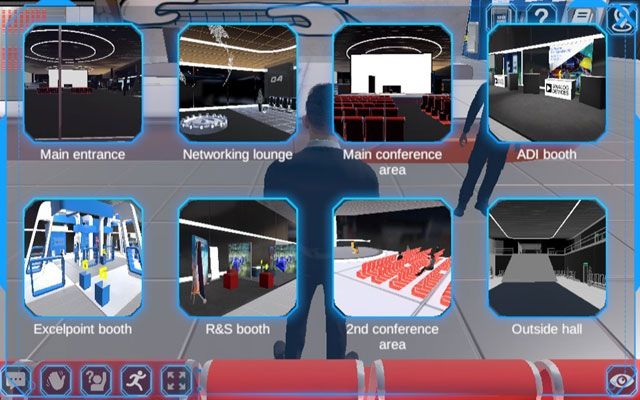
The extended reliance on online meeting technology during the ongoing pandemic has allowed business event organisers to be more attuned to virtual event formats, planting the seed for a hybrid model even after travel resumes and mass gatherings are allowed again.

This expectation was put forth by panellists who participated in the hour-long TTG Conversations: The end of events as we know it? webinar – the first of a series created by TTG Asia Media to help industry players stay connected during the disruptions caused by Covid-19.

Hybrid events may well be the future of the MICE industry

Held on April 29, the webinar chaired by group editor Karen Yue featured four speakers: Iain Bitran, executive director, The International Society for Professional Innovation Management (ISPIM); Veemal Gungadin, CEO, GlobalSign.In; Joe Ciliberto, global director-sales and marketing, EventsAir; and Cheryl Tan, head of events, TTG Events.

With varying levels of border controls across the world likely to remain in the coming months, corporate restrictions on travel are not set to loosen anytime soon. As such, physical conferences and tradeshows can continue to expect challenges in terms of attracting international attendees. The panellists opined that a mix of face-to-face and virtual events will become a solution to ensure healthy participation.

Gungadin cautioned that event organisers will, however, need to rethink their event programming instead of just replicating a physical event online.

“It requires a whole new thought process… to build a great online attendee experience,” he remarked, adding that organisers must ensure virtual events are “seamless for attendees”. To achieve this, functions such as sign-on, live streaming, breakout features and Q&A capabilities should be available on a single platform.

Gungadin also emphasised that the content aspect of virtual events “is just going to get better and better very quickly” as organisers gain experience.

“Content quality has always been critical for any event. With physical events, you can play up the overall experience with great food, a stellar venue and (other elements at) the gathering. But online, you have only just the content (to impress the audience),” he added.

Additionally, delegates are often motivated to participate in events for networking purposes. Hence, organisers are also being challenged to create new ways to socialise online.

For the annual ISPIM Innovation Conference – which has been transformed into a virtual event from a live one in Berlin this June – Bitran shared that his team is preparing unique social activities. These include a pre-event live concert featuring bands from Portugal and Germany, and a professional DJ spinning live from Penang while delegates join in with their own cocktails remotely.

Meanwhile, Ciliberto suggested that gamification could be employed to encourage online audience engagement. He explained that delegates could earn points by joining sessions or answering trivia questions; with the points being used to redeem digital gifts like a Starbucks gift card.

One other topic brought up was a common misconception surrounding virtual events – the cost. While organising a virtual event requires just as much effort as planning a physical one, with cost savings from venue rental and F&B being channelled instead to technology and technical support, Bitran said it was common for the audience to believe that virtual events should be free to attend.

“It is critical to monetise a virtual event as you do with a physical event,” said Ciliberto, who suggested that organisers facilitate paid one-to-one engagements online, bring advertising opportunities onto the interface, and allow sponsors to facilitate or speak on webinars.

“You want your event to have good ROI, be it in terms of good engagement or financial benefits. There needs to be some (way to achieve) sustainability,” he added.
At present, Bitran’s team is implementing honour-based pricing for the virtual ISPIM Innovation Conference; delegates who can afford it can offer to pay more. “An ISPIM conference usually costs around €800 (US$864) to attend, but a fair amount now would be around €300,” he said.

Another group of industry players that would need to adapt to the industry’s shift to hybrid events are venues. Tan shared that Wi-Fi infrastructure, service support and technical know-how will influence her venue decision-making.

“(We are looking for) insights from the venue on how to work with their space (in delivering a hybrid event). Having that ability to help organisers conceptualise what they could achieve would make the venue more compelling,” she noted. – Additional reporting by Karen Yue

Creative executions

0
Guests milling about ACC’s South Australian wonderland

World Routes 2019 Networking Evening & Awards
World Routes is the world’s largest B2B aviation conference, bringing together the world’s leading airlines, airports and tourism authorities for three days of meetings, industry presentations and social events. Significantly, it chose to celebrate its 25th anniversary in Adelaide last September, the first time the event had been held in the Southern Hemisphere.

Guests milling about ACC’s South Australian wonderland


Working with Lumino Events, Adelaide Convention Centre (ACC) played host to the outdoor welcome reception.

But its showcase function was the finale Networking Evening, where the brief was to deliver a “taste of Adelaide” with “big impact” and “lots of fun”. In response, ACC transformed their FGH Halls, a pillarless space that accommodated the conference’s 1800 guests, to resemble some of South Australia’s most iconic festivals and destinations.

The idea was to create a South Australian wonderland that let guests choose their own adventure at their own pace between four distinct zones.

To mark a departure from an otherwise usually structured evening, guests arrived to see a giant big top tent for a “wow” factor before moving to the Awards proceedings, which was condensed by half the usual time to just 20 minutes and opened with a 44-piece flashmob.

The programme then seamlessly transitioned into an entertainment mode with four event zones, designed to inspire curiosity and networking. These four divided zones feature Adelaide’s cabaret and fringe festivals, outback South Australia, local world-class vineyards, and a Side Show Alley with nostalgic fun games like a milk can toss.

Food was also themed for each zone, with the cabaret section featuring a giant grazing station, and the vineyard showcase offering seafood and premium wines, for example. As a grand finale, delegates enjoyed a performance by a Billy Joel Tribute band, which was chosen for its global appeal.

Following the successful event, ACC received feedback that the evening exceeded expectations for World Routes’ agreed objectives and vision. – Adelaine Ng

Singapore FinTech Festival
SingEx took advantage of its resident event, Singapore FinTech Festival (SFF), to parade the capabilities of its new culinary innovations.

SWITCH Startup Zone during Singapore FinTech Festival


Held in November 2019, the show was combined with the Singapore Week of Innovation and Technology (SWITCH) to form SFF x SWITCH 2019, which drew more than 60,000 participants from 140 countries.

Visitors at the festival experienced six halls packed with immersive stages and bustling exhibition booths, with each space customised to suit the event’s various segments and meetings. These included the massive Plenary Stage, the SLINGSHOT Stage for start-up pitches and the SWITCH Startup Zone. The event also tapped into the culinary team’s expertise and catering network to deliver tasty local fare in the style of a communal hawker centre.

A dedicated event app was also created, providing a one-stop platform for attendees to discover conference themes, understand speakers’ profiles, engage in live Q&A, navigate the event floor, keep up to date with upcoming highlights through push notifications and connect with other businesses for business matching. – Pamela Chow

Asialawyers
As one of Asia’s largest convention centres, IMPACT Arena and IMPACT Exhibition and Convention Center is no stranger to catering to a wide spectrum of events.

Lawyers participating in a friendly competition


One memorable event that stood out last year was the Asian Football Cup for lawyers, bar associations and law firms.

Held in April 2019, more than 500 participants from eight Asian countries – such as Mongolia, Japan and Nepal – attended, and the 23 teams competed in over 65 football matches over four days.

Every participating team was greeted with a special welcome at the airport, and the event kicked off with a draw ceremony on the first night, to see who would square off in the first round.

Matches were staged at a football stadium adjacent to IMPACT, and attendees were accommodated at the Novotel Bangkok Impact Hotel. The welcome cocktail reception and gala award ceremony were hosted in IMPACT’s Sapphire room.

To ensure that guests would recall the experience fondly, organisers hired a professional videography and photography team to capture the event.

All the teams also got to wear their football gear to the buffet dinners and award ceremony, during which everyone enjoyed a slideshow and reel of all match highlights. The winners and runner-ups were also given trophies.

Loy Joon How, general manager of Impact Exhibitions Management, shared that planners are increasingly looking to incorporate sports and fun related-activities in their meetings.

The IMPACT Sports Club and Tennis Academy is a result of this, and offers event organisers various ideas and ways to engage their meeting participants.

For instance, they can arrange for teambuilding activities with a wellness slant such as gym glasses like Zumba or yoga, to tennis lessons, all conducted by its in-house professional trainers.

The activities can be tailored to requirements as well depending on the event’s aims.

Currently, IMPACT is looking to expands its portfolio of in-house experiences.

“We are looking at establishing an international cooking school. Equipped with a fully-fledged kitchen, classrooms and living quarters, this facility will provide us the opportunity to design and incorporate cooking classes and other cooking-related activities into our meeting & event offerings as well,” shared Loy. – Anne Somanas

SE Asia collaborates to rebuild business events sector

0
South-east Asian nations

As countries cautiously begin to reopen borders, business events associations in South-east Asia have come together to spur the recovery of the region’s meetings and events sector.

Sharing protocols for the safe reopening of events, exchanging advocacy tactics, and building resilience in South-east Asia is the focus of ongoing talks between trade associations in Singapore, Thailand, Malaysia, the Philippines, and Indonesia.

MICE stakeholders in South-east Asian nations are working together to make the regional bubble a reality

“A rising tide lifts all boats,” said Aloysius Arlando, president of the Singapore Association of Convention & Exhibition Organisers & Suppliers (SACEOS), which is leading the charge to strengthen regional cooperation.

“A strong industry fraternity exists within South-east Asia, but the domestic situation in each market differs considerably,” Arlando explained.

He added that SACEOS is working closely with local government agencies to define a safe operating environment, and help guide Singapore’s industry towards a safe transition.

“We are sharing our plans with our South-east Asian neighbours, including learnings from our recent advocacy efforts, to ensure we remain resilient and emerge stronger in a post-Covid world,” he added.

SACEOS also spearheaded the Asia Community Building Pledge, which was signed at SMF 2019 by TICA (Thailand Incentive and Convention Association), TEA (Thai Exhibition Association), MACEOS (Malaysian Association of Convention and Exhibition Organisers and Suppliers), PACEOS (Philippine Association of Convention/Exhibition Organizers and Suppliers), and ASPERAPI/ IECA (Indonesian Exhibition Companies Association).

TICA president, Sumate Sudasna, said collaboration between trade association leaders has been fruitful, with talks of a regional travel bubble underway.

“We have pledged to maintain communication through the crisis and have indeed learnt from each other,” he said.

“I believe South-east Asia can definitely work together to emphasise our connectivity and complementary attributes, and to be recognised as a safe and hospitable region for MICE.”

Sharing knowledge is the first step towards regional recovery, but hurdles to effective cooperation remain.

Octavio B. Peralta, founder and CEO of the Philippine Council of Associations and Association Executives (PCAAE), said collaborative efforts similar to the recent agreement between BECA and CINZ will prove difficult as the pandemic has affected South-east Asian countries in different ways.

“Factors like government policies on health protocols, immigration rules, the opening of the economy, as well as incentive support for the MICE industry, differ from country to country,” he said.

“In the Philippines, for example, business and association events will be largely organised and held locally to rebuild confidence, before attracting international events.”

Malaysia is also taking an ‘inside-out’ approach. The Business Events Council of Malaysia is working with government and industry to support a Let’s Meet Locally campaign, which will include a second phase, Let’s Meet Tomorrow, to help revive regional market demand.

MACEOS, meanwhile, is collaborating with local associations to standardise event protocols and contact tracing across Malaysia, while sharing best practice with regional neighbours.

“Each and every respective country needs to address control measures and public confidence first, and thereafter, cross-border initiatives can be taken,” remarked MACEOS president Vincent Lim.

“Overall, strong government support is needed to revive the industry beyond (the establishment of) a travel bubble,” he added.

The ASEAN Tourism Association (ASEANTA) will be hosting the New Normal in Tourism and Creating Travel Bubble webinar on June 25, which may provide clarity on regional cooperation efforts to revive travel, tourism and business events.

Singapore M&E planners revamp recovery plans

0
Singapore

Event solution companies in Singapore have been busy revving up and adjusting their business models in accordance with the predicted future of smaller gatherings and hybrid events in a post-Covid-19 business landscape.

Ian Cummings, vice president of commercial, CWT Meetings & Events, expressed: “It is likely group sizes will be much smaller, with more local events, less travel, shorter lengths of meetings and hopefully wider audience reach via digital. Customers should use this opportunity to finally pivot to virtual and hybrid.”

Event companies in Singapore are readying themselves for future events with new products and ideas; the cityscape of Singapore at night pictured

Cummings added it was important to adapt to the hybrid-heavy future, and look into solutions such as live-streaming to reach a wider audience. Not to mention this was also a cost-effective solution in the mid- and longer terms.

While countries such like New Zealand have gradually allowed business events up to a 100, the Singapore government has indicated that only Phase Three: Safe Nation will see the return of business gatherings with imposed capacity caps; Singapore is currently in Phase One.

Sino Elite M.I.C.E. Services estimates that the country will enter Phase Three in end-August or early-September this year, and as such, has taken steps to overhaul its products.

For instance, Sino Elite will emphasise on safe meeting measures in its proposals and continue to promote live broadcast products to reduce “unnecessary in-person gatherings”, shared Sean Xiao, the comapny’s director and president.

“We will adopt more intelligent elements as soon as possible to create real digital conference products and make the existing business conference model more efficient,” he said.

Meanwhile, Congress Rental Singapore has found unexpected success in a previously unused product. Its remote interpretation platform has garnered interest as online events are the only way to move forward now. The company will also look into offering virus screenings once physical gatherings return.

Meanwhile, Chab Events is looking into combining live events with “at-home experiences”, particularly for brands with more targeted audiences like the luxury sector, said Alexis Lhoyer, its chief business officer.

He continued: “Every touchpoint and contract-signing for an event will have to take into account the new standards of hygiene. Registration might become contactless with health screenings, and you can forgo buffets or cramped spaces for networking. Live experiences will become the new luxury, as both brands and people will be cash- and environmentally conscious.”

Moving forward, the company has pivoted to train its staff into digital product experts in order to drive the growth of its digital platforms under Chab LAB.

TCEB rolls out Covid-19-related resource centre and framework, alongside new MICE campaign

0

The Thailand Convention & Exhibition Bureau (TCEB) has launched a real-time news service dedicated to business events during the Covid-19 pandemic, created a framework entitled Exhibition New Norm Standard Operation Procedures, as well as rolled out a new campaign.

The website includes government insight and measures on the status of the Covid-19 infection in Thailand and worldwide, as well as online resources for organisers and visitors.

Business is underway in Thailand as the sector restarts under new normal conditions; its capital, Bangkok pictured

Information is collated in real-time from both domestic and international news feeds, gleaned from official sources such as World Health Organization (WHO), World Tourism Organization (UNWTO), Department of Disease Control, Department of Public Relations, and Tourism Authority of Thailand.

Further updates on the impact of Covid-19 have been sourced from World MICE & Events associations active in Thailand and overseas, such as ICCA, GBTA, SITE, UFI, PCMA, as well as local associations, venues, airlines and leading business establishments.

TCEB has also worked closely with Thailand’s Ministry of Public Health and business event industry partners such as Thailand Incentive and Convention Association (TICA); Thai Exhibition Association (TEA); Event Management Association (EMA) and Thai Hotels Association (THA) to develop a new set of guidelines and measures.

Named Exhibitions New Norm SOP (Exhibition New Norm Standard Operation Procedures), the framework covers nine strict hygiene and public safety measures:

  • Screening measures before entering the building
  • Screening measures before entering the events
  • Measures for exhibitors and visitors during the event
  • Measure for personnel during set-up and tear-down
  • Hygiene measures inside the buildings
  • Meetings and seminar activities during the event
  • Emergency plan in case of encountering with people at risk of infection
  • Communication
  • Health records

Significant changes have also been applied to crowd control and safety management at exhibitions in Thailand. TCEB has worked alongside organisers to develop and promote hybrid exhibition solutions, encouraging exhibition businesses to implement some form of online innovation and technology solution when organising tradeshows throughout the Covid-19 pandemic.

To further stimulate the industry, TCEB has additionally unveiled a new marketing campaign, I M PEOPLE FOCUSED, that gives event organisers access to US$500,000 worth of financial support and an equivalent value in complimentary products and services from participating partners.

The campaign is underpinned by the EASE UP Recovery Campaign, which will also include up to five million baht (US$158,843) in grants to industry members.

These announcements come as Thailand’s exhibition industry gradually resumes business, following the third-phase easing of lockdown measures and the reopening of convention and exhibition centres.

The third phase, active as of June 1, 2020, lifts restrictions on the operation of economic and social activities, provided they abide by new health and safety rules and regulations imposed by Thailand’s Ministry of Public Health.

These measures include the reopening of convention and exhibition centres for business, provided they close by 21.00 and limit event size to 20,000m2, and the creation of meetings, seminars and conferences limited to 200 participants.

Forty-seven pioneering Thai tradeshows are set to resume under new guidelines. These include the Asian Paper & Tissue World Bangkok 2020, Food & Hotel Thailand, Concrete Asia 2020, Intermat Asean 2020, Intermach 2020, Subcon Thailand 2020 and Cosmoprof CBE Asean Bangkok.

A difficult trek back to normalcy

0

With lockdowns easing, Australia’s business events industry is eager for restrictions to be completely lifted on corporate events and meetings as they’ve done in New Zealand. When will that happen?
The problem…in Australia is that we have six states and two territories. At the moment in the Northern Territory, it’s pretty much open but in other states like New South Wales (NSW) and Queensland, there are quite a few restrictions not only on travel and tourism but on events, with social distancing a big factor.

There is no one story that you can actually tell about Australia; there are actually eight stories and they’re all very, very different. With the uncertainty over the next few months, I wouldn’t want to put a date on when we’re going to (open) for conferences and conventions.

(Editor’s note: Since this interview was conducted, Queensland has indicated it may re-open its borders on July 10, subject to Covid-19 case numbers, and South Australia has announced it will re-open its borders on July 20. Western Australia will remain shut until Victoria and New South Wales show no community transmission of the coronavirus for four weeks.)

The months of December through February is traditionally quiet for business events and we might just lose a lot of momentum if we don’t start soon. Any thoughts on that?
I know the industry desperately wants to get events going again and understandably so. But I think what we’ve got are two competing interests here, of the business interests of travel and tourism versus the health and safety interests of both federal and state governments.

Unfortunately, business cannot operate in a vacuum separate from health interests. In the weekly Tourism Australia briefings, we often have a very big input from the deputy health officer of the country. Health does take precedence.

There’s been much talk about the trans-Tasman travel bubble, with calls for it to start in July. Are you optimistic that the arrangement would kickstart the travel industry?
I don’t think it’s going to happen in July. I’ll be happy if I’m wrong. The New Zealand prime minister said that and so has (Australian prime minister) Scott Morrison in so many words, that you can’t really have the trans-Tasman bubble until you have (a single) health and quarantine policy and border protection policy throughout the whole of Australia. My gut feeling is it probably will start happening around September.

The fact that we don’t have a unified approach across the states and territories has been a big barrier for us to get travel bubbles going. Many countries have approached Australia for a travel bubble but the inconsistency that we have across the country with regards to border access, quarantine, etc, is proving to be a very, very big barrier. From the travel industry’s point of view, that is a huge irritant.

How much can we rely on the Australian Tourism Restart Taskforce’s timeline for the reopening of tourism?
We can’t. It’s an aspirational timeline. In fact, it’s been made very clear by the executive chair of the Australian Chamber of Commerce and Tourism, John Hart himself, when he was interviewed by the media, that it’s an aspiration.

I think it’s fair to say that Australia has done a pretty amazing job in limiting the spread of coronavirus and the regulations have generally worked very, very well, by global standards. It’s a fairly common attitude throughout the tourism industry (to think that) it is definitely time to relax the restrictions. The authorities (need to) allow that, and we have some states, Queensland and Western Australia in particular, that have been very resistant to opening up their borders to people from the rest of Australia, let alone the rest of the world.

Shouldn’t business events be treated differently from other mass events and allowed to meet in its usual larger numbers because participants can be monitored and they are in a much more controlled environment?
I totally agree with you but that may not be necessarily how our state governments or federal government actually see it. The same thing with tour groups as tour companies can control the number of people and how they might fit into the transport they’re using.

I guess it’s a matter of consistency. If you can’t have crowds going to a football match, art gallery or a museum, why would you then say corporate events are in a different area? So you need a certain level of consistency and I think what’s going to start happening with a lot of events, at least initially, is that they probably won’t be able to attract the numbers that they usually would.

There are also other issues when it comes to many events, particularly for catering which have traditionally had buffet-style food service. The way in which events are run are going to have to change quite a bit.

The projection is that Australia’s international borders won’t reopen till December or January. That would be almost a year of locking out international visitors for business events. What key changes do you think the sector needs to be prepared for?
As an interim measure it’s certainly moving to running as many events online as possible. That’s not going to be as financially viable as having people come and visit.

But I can give you a classic example where I’m involved with the Council of Australasian University Tourism and Hospitality Educators. We have a conference every year. When we ran it in February in Auckland, we had nearly 300 delegates and it was fantastic. The plan for next year was to have it in Perth in February but we’ve decided now to do it online even though restrictions on face-to-face conferences could lift sooner, because of the uncertainty and difficulties for planning.

So until you have certainty in those lead times that you can actually run a proper face-to-face conference, it’s probably the stop-gap method or fallback position to do some of these online. That’s not as satisfying in any way, shape or form as doing them face-to-face but at least it is a means by which people can actually get together and discuss the issues they need to discuss. And if it’s done in a really professional manner you can still charge money for it.

That will affect the venues that specialise in business events though.
Absolutely it will. What you could do in some areas is run exhibitions sooner than you can actually run conference events. And that is because you can actually guarantee or ensure social distancing in an exhibition framework.

But when it comes to events, particularly if you’re trying to attract thousands of people to a convention, obviously you just cannot have them under current regulations, packed in like sardines. This whole coronavirus has actually been a major paradigm change to every single sector of the tourism and hospitality industry, including events.

(Another thing to think about is that) the cost of events may, on a per capita basis, go up somewhat as well because of the fact that numbers might be restricted. So we’re looking at a very complicated future for business events.

Eventually, it will probably go back to the way it was because people are hungry for loosening themselves from the constraints that they’ve been under. But it will be a fairly lengthy transition period between the way that we are now and the way we were before.

What can Australia expect from China in the current climate?
We have a number of factors at play with China. Firstly, we don’t have tourists coming in from China and it was our biggest market, certainly in 2019. So we’ve gone from basically 1.5 million Chinese visiting Australia to next to zero. Secondly, we have fairly testy political relations between the two countries at the moment.

As you know, we’ve played for a long time on our reputation of being a preferred destination for China since about 1997, when we were the first non-Asian country to get that status. But recent events have made the political relationship a little frosty. I wouldn’t assume that Australia would be, for Chinese conventions and business meetings, the number one choice destination.

A lot of Chinese or Chinese businesses are aligned in one way or another with the government and if the government says we don’t like Australia very much, they’ll probably try and run those events in other places. The relationship with China on a tourism and business basis is going to be a little bit complicated for quite a few months or even years to come.

And that will definitely have an impact on business events in Australia.
Oh, I think it will. We have to face the reality that we’ve been very reliant on China. We really need to diversify our source market. We can’t assume that China is going to go back to the way it was, however desirable that would be. We’re already starting to look at diversifying our trade with the prime minister having talks with the prime minister of India.

It’s been the same with our universities, in that we’ve been so reliant on China for international students that we kind of forgot about the rest of the world. And that has come back to bite our sector very heavily, I can assure you.

Osaka takes step towards restarting business events

0

The Osaka Convention & Tourism Bureau has released a set of Guidelines for MICE Event Organizers for Infectious Disease Control, formulated to help event organisers incorporate infectious disease risk mitigation when holding events in the city.

The guideline offers recommendations, as well as a checklist on what to implement pre-event and during the event. It outlines the support that event planners will get from the Osaka Convention & Tourism Bureau, with the aim of ensuring the peace of mind of event attendees.

The guidelines will help ensure that attendees of business events can attend events in Osaka with peace of mind

These recommendations were crafted by the bureau, with consensus from the Osaka prefectural and city governments, has taken various factors into consideration including government policies, the voices of business events industry partners, the precedent of other industries, and the resumption of business events activities around the world.

The guidelines can be found in Japanese or English here.

ICC Sydney outlines operating framework

0

International Convention Centre Sydney (ICC Sydney) has launched the ICC Sydney EventSafe Operating Framework, a set of operating principles that will enable the venue to safely reopen and run events in an environment transformed by the pandemic.

The comprehensive set of protocols spans 16 key areas of event management, including the customer journey, environmental hygiene, food service, technology and equipment, employees and public awareness, and covers meetings, conferences, exhibitions, live events and internal operations.

ICC Sydney Convention Centre has signalled it is ready to recommence running events, pending the further rollback of Federal and State restrictions

It integrates best practice from parent group ASM Global’s soon to be launched VenueShield – a programme of the most advanced hygienic safeguards, informed by public health authorities, medical and industry experts – which will be deployed in ASM Global’s 325 worldwide facilities.

The framework also operates within the safety protocols of Safe Work Australia’s Codes of Practice, which underpins how ICC Sydney works under the Work Health Safety law and, more recently, the Covid-19 Safe Workplace Principles.

The plan further draws on ICC Sydney’s work with national and international industry bodies, to develop industrywide protocols in response to Covid-19. These have been evolved into a venue-specific framework, which responds to the need of clients for a level of detail that will allow them to confidently start planning future events.

This signals the venue’s readiness to recommence running events, pending the further rollback of Federal and State restrictions.

Geoff Donaghy, CEO of ICC Sydney, said in a statement: “As Australia and the rest of the world starts to return to business as usual, it is critical that we all continue to safeguard against further outbreaks of Covid-19, especially when bringing people together.”

“We are confident that ICC Sydney’s EventSafe Operating Framework not only delivers against this challenge by establishing best practice, but will also reinstall confidence in people to start hosting and attending events. This is critical for rebooting our industry and the many other businesses and parts of Australia’s economy that will benefit from that success”.

To view the ICC Sydney EventSafe Framework and for more information, click here.

Collinson puts forth new safety measures for airport lounges

0

Global loyalty and benefits firm Collinson has announced a trio of new initiatives to boost health and safety for airport lounge staff and guests, as a new era of contactless travel takes hold.

The initiatives include a new set of global health and safety standards for airport lounges within the Priority Pass network, a new digital solution to enable more socially-distant and touch-free food and beverage ordering in the lounge, and a further digital enhancement to enable a more contact-free entrance.

Collinson has announced a trio of new initiatives to boost health and safety for airport lounge staff and guests

The new standards for airport lounges comprise a number of recommended steps, including:

  • Provision of PPE and increased health and safety training for staff
  • Floor markers for social distancing in queues or other areas where people congregate
  • New evaluation of furniture layout to adhere to social distancing guidelines while maximising space and allowing traveller groups to sit together
  • Increased cleaning and disinfection using health authority-recommended products
  • Switching air filtration systems to 100 per cent outside air where possible
  • Contact-free solutions where possible, including collection point options for F&B
  • Removing print media and replacing with digital where possible

The standards will be implemented in all Collinson-owned lounges and recommended for use in all partner lounges across the Collinson airport lounge network, which comprises over 1,200 airport lounges in the market-leading programmes Priority Pass, LoungeKey and Lounge Pass.

Collinson also is partnering with e-commerce company Grab to launch a new pilot solution that will enable airport lounges to introduce a digital F&B ordering solution.

The Collinson solution enables travellers to use their own smartphone or tablet to place their order for F&B available within the lounge and receive it via safe to-table delivery by a staff member or collect it from a dedicated collection point. This will help airport lounges to continue offering a range of options to travellers in a more controlled manner.

Further evolving the contactless airport experience, contact-free entry is now possible at Collinson lounges, removing the need for members to touch the device to process their transaction. Those using a digital membership card in the Priority Pass, LoungeKey or Mastercard Airport Experiences apps will have an entirely contact-free experience. Those using a physical Priority Pass or payment card will still need to insert it into the device, but not need to touch the device in any other way.

Andy Besant, director of travel experiences at Collinson, said: “Collinson fully supports getting the world safely travelling again to unlock the value that travel brings, both to the economy, as well as to society at large. At the same time, there’s no denying that the coronavirus pandemic has indelibly changed how we think about health and safety at the airport. Via Collinson’s airport lounge standards and our new digital innovation for a contact-free experience, we look forward to championing the travel recovery while making health and wellbeing a priority.”

Reviews

Hyatt Regency Kuala Lumpur at KL Midtown

A polished urban retreat designed for business travellers, Hyatt Regency Kuala Lumpur at KL Midtown combines thoughtful design, seamless service, and exceptional facilities.

A versatile powerhouse

Arena @ Expo, a multipurpose concert hall at the Singapore Expo is a flexible space for high octane concerts and lifestyle events.

Amari Bangkok

The five-star property excels in backing its expansive facilities with seamless service and personalised attention, setting the benchmark for luxury in Bangkok.