After years of working relentlessly to emphasise its critical contribution to the national and global economy, the business events industry has finally been presented with the perfect opportunity to drive home its point through the Covid-19 pandemic and resulting disruption of business activities.
The Future of Business Events is the second article by TTG Asia Media’s editorial team for the PATA Crisis Resource Center. Drawing observations and insights from leading industry organisations such as UFI, International Congress and Convention Association, and Exhibition and Event Association of Australasia, TTGmice reporters look at what governments and industry stakeholders are doing to sustain the industry as recovery begins slowly but surely, in an online/offline form for the time being.
Although business events are largely disabled today, industry leaders say that the legacy of pre-pandemic gatherings is still working its magic to spin off continued knowledge acquisition, trade possibilities, and wider community support.
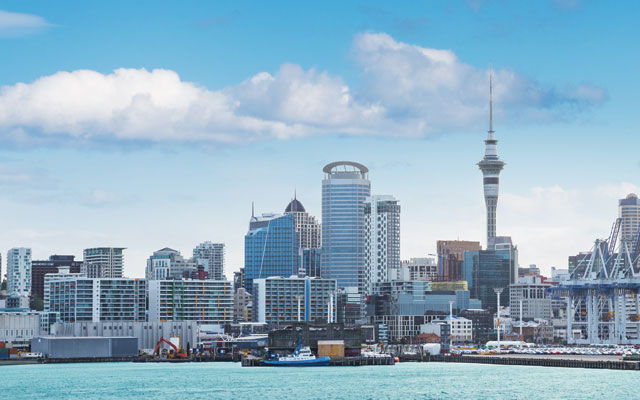
Auckland is home to more than half of the country’s top 200 tech companies
If there was a country that promised the exceptional experiences that come with corporate events but in a Covid-safe environment, New Zealand would easily tick those boxes.
Having managed the Covid-19 pandemic reasonably well, the country is in a better position than most to receive business groups when its borders reopen.
“There’s an absolute eagerness to get back on the radar for business events globally when it makes sense to do so,” said Lisa Hopkins, chief executive of Conventions and Incentives New Zealand (CINZ).
Auckland is home to more than half of the country’s top 200 tech companies
“Everyone’s prepared to be part of the journey and we’re working hard with our partners to bring visitors back into the country through our BE Reconnected event in December, which will be the only business events tradeshow in New Zealand this year and possibly the only one of its kind globally for international buyers”.
Auckland will be the focus as the host city for BE Reconnected but Christchurch is also attracting much attention, where CINZ, New Zealand’s annual business events showcase, will be hosted for the first time in 13 years next May.
“Following the completion of key urban regeneration projects in Christchurch, New Zealand’s most walkable city is now home to brand new business, shopping, arts and entertainment precincts,” said Ross Steele, general manager of Te Pae Christchurch Convention Centre. “It puts Te Pae within easy reach of more than 2,000 hotel rooms, and some of the city’s best restaurants, bars, galleries and markets.”
Meantime, Hopkins’ said her previous experience working in Singapore has made her aware of the importance of safety for Asian clients.
“Asia is a risk-averse market but the way New Zealand has handled itself during this crisis will give comfort that visitors’ health and safety sits at the heart of our response and how we conduct business moving forward. This includes the Covid Code, an industry initiative designed to amplify health and safety measures at events, but also tracking and tracing,” she elaborated.
Christchurch: city on the rise
The South Island’s largest city has shaken the dust off its last major earthquake nine years ago to emerge as the country’s newest business events destination, complete with brand new meeting spaces, inspiring public art, and restored heritage venues.
Christchurch is also described as New Zealand’s future-focused city, leading in its strategic strength sectors it calls “Supernodes”, in areas such as global health tech, aerospace and future transport.
The much-anticipated opening of Te Pae Christchurch Convention Centre early next year will be its crown for conference meetings, located 20 minutes from the international airport.
Te Pae will offer 24 meeting rooms, a 1,400 seat auditorium divisible into two 700 seat spaces, and a 200 booth exhibition hall. It will be operating the new VenueShield environmental hygiene programme as a member of the ASM Global group.
Christchurch is also a doorway to many of the South Island’s stunning array of options for pre- and post-event touring. These include visiting vivid turqoise lakes in Mackenzie, thermal spas in the resort town of Hanmer Springs, and Kaikoura three hours north of Christchurch, where visitors can find the country’s leading eco-tourism destination and whale-watching capital.
Auckland: a seasoned, buzzing metropolis
New Zealand’s largest and internationally most accessible city offers the sophistication of a big metropolis without compromising on the experiences the country is famous for.
Playing host to the 36th America’s Cup next year, Auckland is also an innovation and technology centre with 60 per cent of New Zealand’s top 200 tech companies based here.
There are several themes to choose from when it comes to experiences that may be incorporated as part of a business event or conference. For instance, bucket list adventures can include oyster-shucking on Waiheke Island, an America’s Cup Sailing Experience, or a seafood cooking masterclass at Auckland Fish Market.
High adrenaline experiences are also on offer, where options such as eco-ziplining, luxury helicopter transfers, a seaplane ride or a climb on the Auckland Harbour Bridge are on the table.
Groups can also combine Kiwi culture with a culinary experience at the Maori Kitchen, which serves indigenous food cooked the traditional hangi way that uses heated stones in a process that takes six hours to prepare.
Auckland’s showcase convention centre, the New Zealand International Convention Centre is scheduled to open in 2023. But there are several other venues that can host more than 3,000 delegates, such as the Vodaphone Events Centre and ASB Showgrounds.
Queenstown: small town big on experiences
This famous resort town is a perennial favourite for visitors with good reason. Queenstown is synonymous with stunning landscapes and adventure-rich activities where nature does the heavy lifting for wow experiences.
Ideal for groups of up to 400 at a time, the town will be able to incorporate more experiences in a shorter itinerary with new products like the Oxbow Adventure Company, scheduled to open this year at the iconic Nevis Bluff. Guests are promised quite a ride with a world-exclusive jet sprint boating experience, 4WD off-roading and clay bird shooting on offer all in one place, function space included.
Also new and unique to Queenstown is the ability to rent handmade nordic tipis from Sweden to create distinctive, rustic glamour style pop-up settings for events and further increase event capacities.
This town is especially suited for small incentive groups with access to great wine growing regions, several international standard golf courses and diverse ski areas. There’s even the opportunity to fit in a flight and crayfish trip where visitors can also take in views of Lake Wakatipu and glaciers of the Forbes Mountain range.
Queenstown’s largest single function space is the Coronet Peak Base Building which accommodates 600 people in a theatre setting.
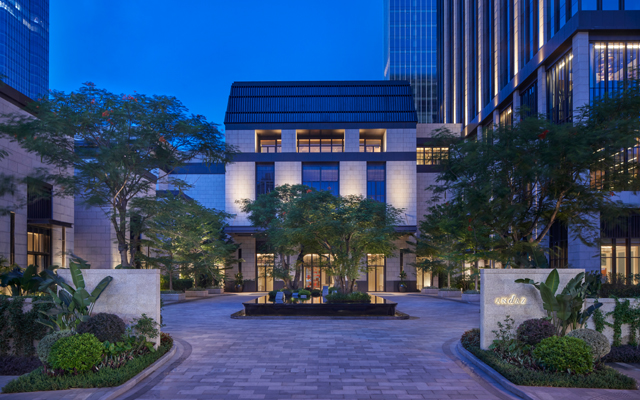
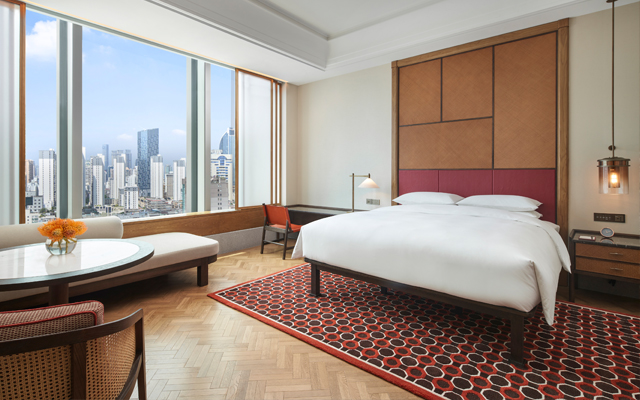
The Andaz Xiamen has opened in south China, within the mixed-use development of The MixC and close to Xiamen Botanical Garden.
The property houses 304 rooms, including 20 suites with separate living rooms. Business travellers will be happy to know that all non-alcoholic minibar drinks and snacks are complimentary in each guestroom, as are local telephone calls and Wi-Fi.
Andaz Xiamen
1 of 8
Exterior
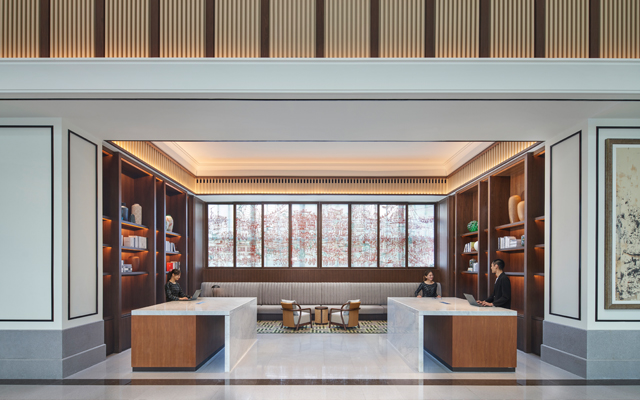
Front desk
Standard Guestroom
Standard Bathroom
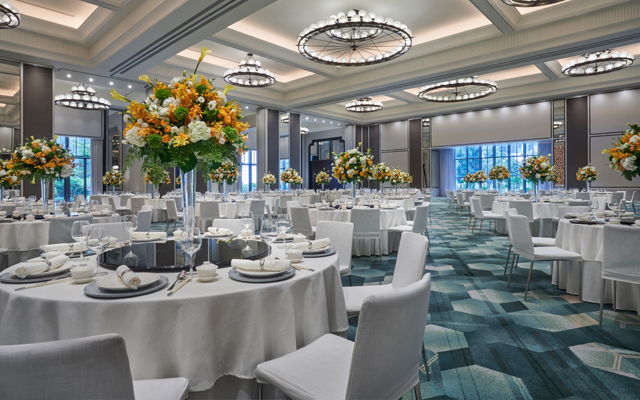
Ballroom banquet set-up
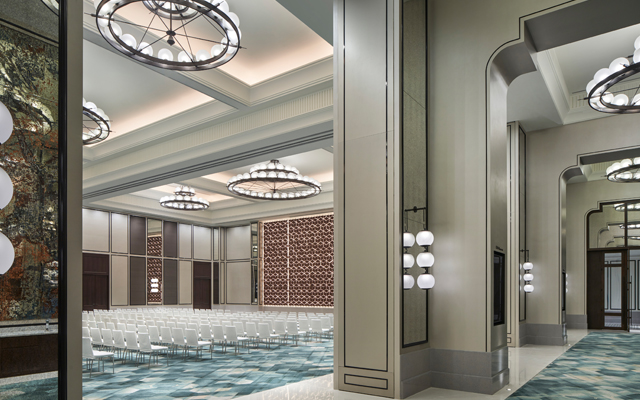
Ballroom meeting set-up
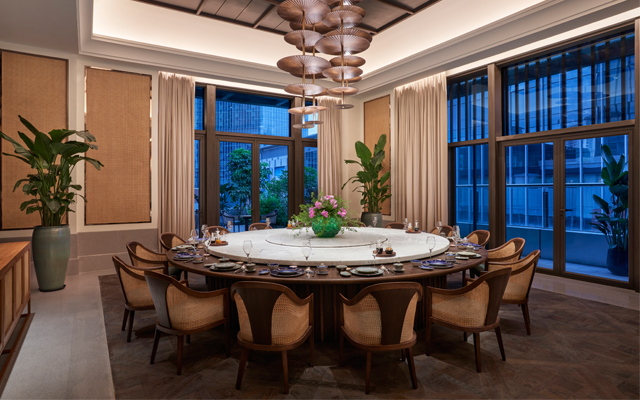
Restaurant
Private room within the restaurant
The hotel offers almost 2,000m2 of Nanyang-inspired event space, including seven standalone spaces ranging in size from 80m2 to 900m2, where the latter can cater up to a maximum 800 guests.
Other spaces include the 900m2 Ballroom with a 9.5m-high ceiling, the 200m2 Pool House complete with a show kitchen which can house 72 for a board meeting or 170 guests theatre-style.
After meetings, business travellers can unwind at the 24-hour fitness centre, yoga room, heated 25-metre outdoor swimming pool, or have a tipple at one of the four F&B venues. Choices include the Andaz Lounge where guests can drop by anytime for complimentary non-alcoholic drinks and snacks; the No. 101 Chinese Restaurant serving local Minnan and Chaoshan cuisines with a twist; More Than Wine for cocktails; and the all-day European cafe and bar Sugar Pavilion.
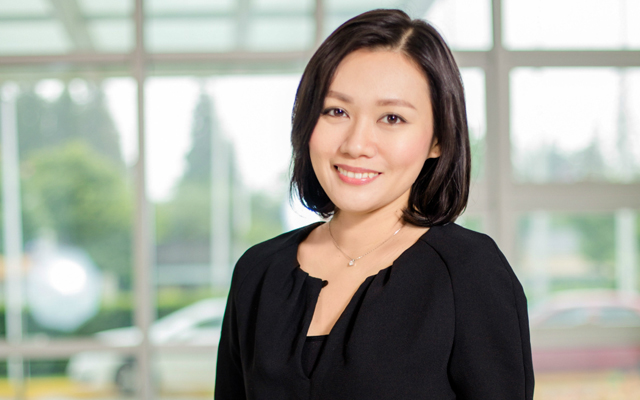
Claire Chong has joined events agency Uniplan as managing director, Shanghai.
She will report directly to CEO, Greater China, Geraldine Chew, and work closely with COO, China, Tracy Zhou and office heads across the region to serve current clients and strengthen the agency’s presence in Greater China.
The marketing professional has worked across a range of platforms, as well as managed partnerships with key players in the automotive, tech and consumer goods sectors.
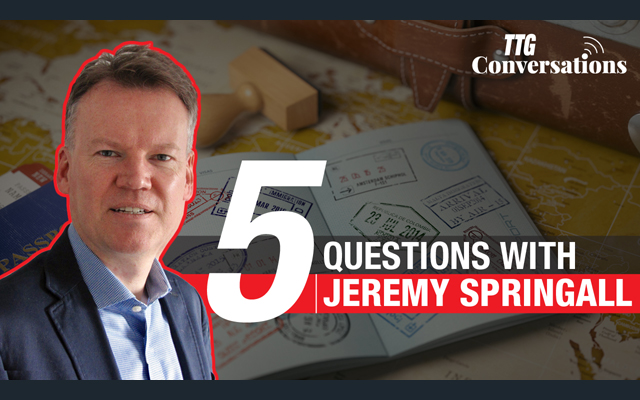
The Covid-19 pandemic has fast-tracked border control evolution, moving the world closer to a safe and contactless security and health clearance.
In this new episode of TTG Conversations: Five questions video series, Springall explains how a safe, controlled and practical border control looks and why it takes time for airports of the world to deploy biometric technology. He also talks about Beijing Capital International Airport’s recent biometric deployment, and why it matters to our current fight against Covid-19.
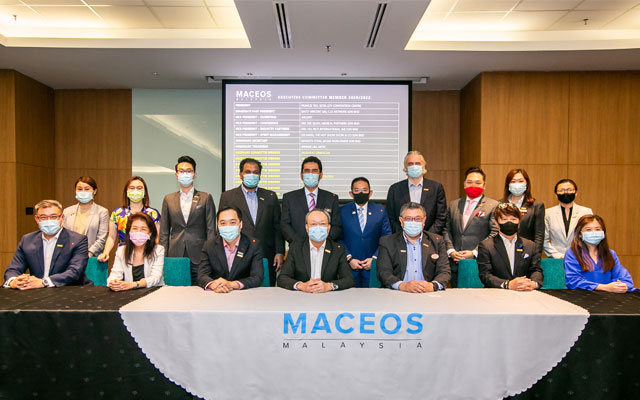
Vincent Lim (seated in the centre) and Francnis Teo (seated, third from right) with MACEOS' Executive Committee Members for the 2020-2022 term
Francis Teo, head of Setia City Convention Centre, was elected as president of the Malaysian Association of Convention and Exhibition Organisers and Suppliers (MACEOS), for the 2020-2022 term at the association’s 30th Annual General Meeting.
Teo takes over the reins from Vincent Lim, who has served the association as president for the past three consecutive terms.
Vincent Lim (seated in the centre) and Francnis Teo (seated, third from right) with MACEOS’ Executive Committee Members for the 2020-2022 term
During his acceptance speech, Teo voiced his hopes that the new committee members would lead MACEOS with dedication, commitment, and passion in facing the challenge that is impacting the business events industry.
He elaborated: “We have to learn to change the way we operate in this industry. We have to learn to pivot and also embrace event digitalisation. We believe that event digitalisation will complement our industry but would never replace it.
“We also need to be less dependent on international markets. Instead, we must learn to create opportunities for ourselves. We need to network more, connect, and collaborate with each other so that we can survive this period together.”
Lim said in his outgoing speech: “The early days of the pandemic was a very intense period. However, that didn’t stop us from playing our role as industry advocates through Zoom meetings, webinar programmes, members’ survey, information updates, governmental meetings, media interviews by local news/international news agencies, and press releases.
“We also worked closely with the Malaysia Convention & Exhibition Bureau (MyCEB), Business Events Council Malaysia (BECM), and various government ministries to formulate the Business Events Standard Operating Procedures. This was eventually submitted, approved, and accepted by the Malaysian National Security Council,” he added.
Lim added that MACEOS would also be able to attract new and younger members to take on an active role in the association.
During his tenure as president, Lim was instrumental in the formation of BECM, which was an initiative of MyCEB.
The Professional Convention Management Association (PCMA) has released more details for its inaugural Convening Asia Pacific: The Global Recovery Forum, which will be held in a hybrid format on November 10, from 12.00 to 16.00.
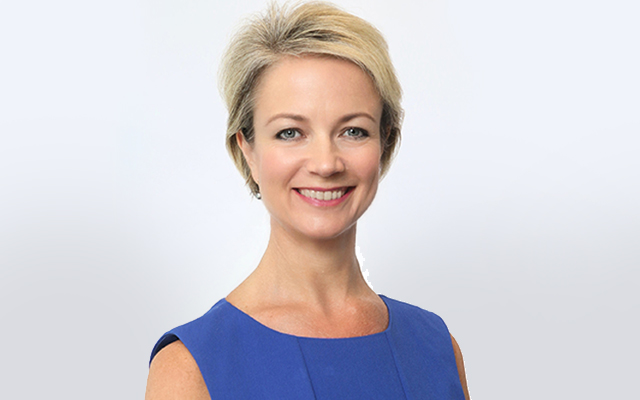
Nicki Kenyon, a globally experienced strategic marketing leader and growth strategist, will share her practical insights and experiences on how to transition events
Held at ICC Sydney, the programme will be a mix of panels, seminars and workshops, will feature renowned event professionals, including:
Nicki Kenyon, board member, Australian Grand Prix Corporation, ex-Facebook, Visa, Visit Victoria and experienced marketing and growth strategist
Rebecca Hallett, APAC head of events & experiences, Google
Anna Patterson, vice president and managing director, George P. Johnson Experience Marketing, Singapore
Jack Delosa, founder, chairman and executive director, The Entourage
Lucille Marie Essey, senior vice president, executive creative director & show director, Greater China, Jack Morton Worldwide
Lisa Ronson, chief marketing officer, Coles Group, ex Tourism Australia
James Bennett, director of creative technologies APAC, Project Worldwide Hong Kong
Kenyon, who will moderate a panel session at Convening Asia Pacific with other CMOs, said the marketer’s role in driving growth and engagement for a company or event is more important now than ever.
“Building successful marketing campaigns is reliant on clear business goals, a detailed, well thought out strategy and a customer-centric approach. Events are built on a foundation of entertainment, and even though not many events are running face-to-face at the moment, we need to remember what the essence of events are – engaging with our audiences.
“Covid-19 may have changed the events industry and how we appeal to audiences, attract sponsors and sell tickets, but with it there has also been opportunities to adapt, test new channels to use and consider new ways to engage with audiences outside of our regions,” she said.
Kenyon revealed that the panel will share their experiences in building successful marketing strategies, adapting tactics in a data and technology-enabled world, and discuss how to appeal to a B2B landscape virtually.
Karen Bolinger, PCMA’s managing director of APAC, added: “Some key sessions will provide valuable insights into digital marketing from the technical, creative, data insights and distribution channel perspectives.
“This will appeal to audiences who want to boost attendance and engagement, setting the event up for success and answering the ‘how’ of events today.”
Aux Media Group houses these next-generation digital tools in a single facility in Singapore
Singapore-based creative content development agency in events and media production, Aux Media Group, has unveiled its newest facility – Aux Immersive Studio.
The studio has been billed as an environment that merges physical and virtual events, through Extended Reality (XR) technology and game engine systems.
Aux Media Group houses these next-generation digital tools in a single facility in Singapore
Aux Immersive Studio is a 4000 square-foot space, equipped with state-of-the-art XR equipment, motion trackers, multi-cameras, as well as modern live-streaming capabilities. This set-up allows environments and graphics (for example lifelike animations or data overlays) to be rendered in real-time around the presenter.
Unlike traditional formats of presentation where the presenter needs to memorise tracking patterns, XR creates graphics that are also visible and interactable on the live-set by the presenter, allowing for more engaging visual content and more dynamic storytelling.
Viewers watching behind their screen will be able to see CGI animations and lifelike set side-by-side with the actor or presenter, delivering a seamless 360-degree visual experience that is three-dimensional.
“Traditional digital experiences don’t cut it anymore. To allow brands to engage better and share their messages, we need to push the boundaries of storytelling in the digital realm. With Aux Immersive Studio, we are bringing XR technology to Singapore and integrating it with our capabilities in existing technologies, to widen the scope of what is creatively possible. This will allow for new opportunities and tailored solutions to bridge brands and organisations with their communities,” said Choong Chyi Kei, chief executive of Aux Media Group.
Aux Immersive Studio is powered by Aux Media Group’s partnership with UK-based creative technology company Disguise, and Japanese audio-visual leaders Yamaha and Panasonic.
Alexandre Frenkel has joined Santiburi Koh Samui in the capacity of general manager.
The Swiss hotelier possesses almost three decades of experience, having worked with leading hotels and resorts across five countries. He also has a deep knowledge of Thailand’s hotel industry, having spent the last 16 years living and working in the Kingdom.
Frenkel started out his professional career at Hilton, where he rose through the ranks to become director of operations and director of business development at Hilton Beijing.
He then moved back to Thailand with Amari/Onyx Hospitality Group, achieving his first general manager role in 2006. He has since managed some of Bangkok’s leading properties, including Centara Watergate Pavillion Hotel.
Wharf Hotels welcomes Joanna Liang back, as she takes up the post of general manager of Marco Polo Changzhou in southern Jiangsu province.
Prior to her return, she held the position of general manager at Artisse Place Shenzhen Hotel Residence, where she led the hotel’s pre-opening team into its launch.
Liang’s 24-year track record began in hotel operations, with a focus on rooms. During her previous stint with Wharf Hotels, her roles included executive assistant manager of rooms at Niccolo Changsha, and director of rooms at Niccolo Chengdu.
The newly-opened Ritz-Carlton, Bangkok anchors the One Bangkok development with cosmopolitan elegance. Featuring the city's largest ballroom and a spectacular new penthouse suite, it delivers exceptional hardware and deeply authentic, soulful service for business and leisure travellers alike
Behind the imposing, Brutalist concrete that defines Zurich’s Oerlikon district lies a surprising secret. While its exterior honours the neighbourhood’s industrial roots, stepping inside Mama Shelter reveals a vibrant, neon-soaked world that is a far cry from its rigid shell
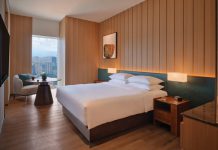
A polished urban retreat designed for business travellers, Hyatt Regency Kuala Lumpur at KL Midtown combines thoughtful design, seamless service, and exceptional facilities.












Alexandre Frenkel has joined Santiburi Koh Samui in the capacity of general manager.
The Swiss hotelier possesses almost three decades of experience, having worked with leading hotels and resorts across five countries. He also has a deep knowledge of Thailand’s hotel industry, having spent the last 16 years living and working in the Kingdom.
Frenkel started out his professional career at Hilton, where he rose through the ranks to become director of operations and director of business development at Hilton Beijing.
He then moved back to Thailand with Amari/Onyx Hospitality Group, achieving his first general manager role in 2006. He has since managed some of Bangkok’s leading properties, including Centara Watergate Pavillion Hotel.