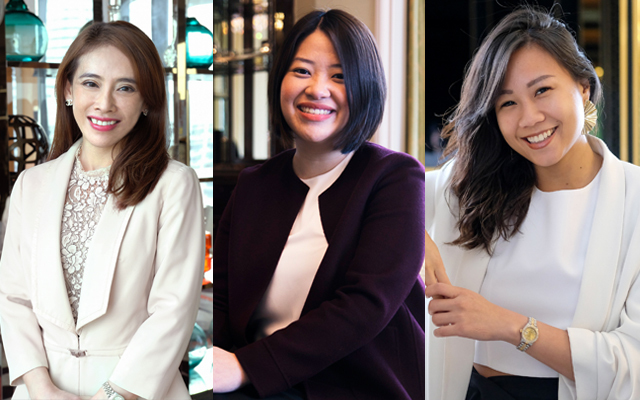
From left: Audrey Seow; Marisa Ng; Nicole Ann Chew
JW Marriott Singapore South Beach and The St. Regis Singapore have announced the clustering of the sales and marketing departments for both properties.
Audrey Seow is now cluster director of sales & marketing, where she oversees and directs all aspects of sales and marketing activities of JW Marriott Singapore South Beach and The St. Regis Singapore.
From left: Audrey Seow; Marisa Ng; Nicole Ann Chew
A hospitality veteran with 18 years of experience, she has a solid track record in hotel sales for various international hotel management companies including Hyatt, Ritz Carlton and Westin.
Seow reports directly to Stephane Fabregoul, managing director of JW Marriott Singapore South Beach and The St. Regis Singapore, as well as Radu Cernia, general manager of The St. Regis Singapore.
Meanwhile, Marisa Ng has transitioned into her new role as cluster director of sales, where she is responsible for managing and leading the sales team across corporate sales, MICE and leisure functions. She reports directly to Seow.
With over 14 years of industry experience, Ng’s previous roles include stints with Accor, Banyan Tree and Conrad.
Lastly, Nicole Ann Chew has assumed the position of cluster director of marketing communications of JW Marriott Singapore South Beach and The St. Regis Singapore, where she is has been tasked with driving the brand presence for both properties.
In her new role, Chew also oversees the full spectrum of the marketing function, including communications, partnerships and brand management for both properties.
She brings extensive experience in the luxury hospitality industry having spent over eight years in progressive marketing roles.
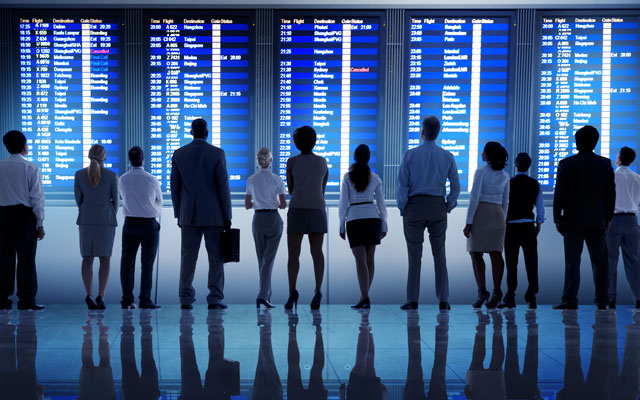
Weak corporate travel appetite globally has indirectly put TMCs at risk
New approaches needed for flight, hotel contracting
Different, pricier TMC pricing models likely to hit Asia
CTM role at risk as corporate travel remains suppressed
Weak corporate travel appetite globally has indirectly put TMCs at risk
Domestic business trips in countries like China and the US may have clawed back to between 70 per cent and 80 per cent of 2019 levels, but regional buyers in Asia say international travel demand at the start of 4Q2020 is still languishing and continues to be restricted to essential travel.
Lamenting the airline conundrum, one CTM overseeing 10 markets in the pharmaceutical sector, quipped: “Our management is conservative but even if our travellers are allowed to fly, which airline is operating? We have shut down our online booking tool (OBT) since we can’t book anything.”
While Ericsson is busier than ever with a number of new projects, regional travel manager Asia-Pacific, Florence Robert, is facing a challenge in having to “work manually with the airlines as the Chinese government has removed almost everything from the GDS and we do not know why”.
There is also “risk in buying air tickets”, Robert added, as IATA has forecast that 21 major airlines may cease operations during this crisis.
It is a different situation in hotel contracting, with a buyers’ market situation emerging in most major cities, observed a Singapore-based CTM in charge of South-east Asia.
This CTM is shrinking the number of global chain partners to leverage on dynamic discounts instead of static rates.
“Before the Covid-19 outbreak, the take-up rate was 50-50. For chains happy to stay in our programme – four global and two local – we are in preliminary discussions for dynamic and static rates to be loaded and the agreement is to allow us to ‘cherry-pick,” he told TTGmice.
Different TMC pricing model likely
With TMCs hurting from the travel slump, CTMs worry that a different pricing model may be adopted to help them tide through the tough times.
Ericsson has “running contracts” with three global TMCs in different regions and Robert is aware that one of them is going to increase its transaction fee in the US although no other regions have been alerted to such a change. Still, she is bracing for the same thing to happen in Asia soon.
Robert said: “Not only are TMCs downsizing in some areas, it is difficult to predict if they will survive. With consolidation and fewer vendors because of the (Covid-19) situation, we decided to push back our RFP.”
A CTM in the pharmaceutical sector told TTGmice that her TMC “needed help” and her company is now paying a “contact fee” for every call or email received to provide service.
She acknowledged: “Going forward, the TMC pricing model will change. TMCs cannot survive on transaction fees. It is not sustainable. It boils down to when we can start to travel. We thought it would happen in 3Q2020 but it has not started yet and plans keep changing.”
On her wishlist is a “more proactive” TMC ecosystem which employs “modern technology”, something which agencies cannot afford to invest in now because cashflow is very tight.
She explained: “Singapore Airlines has just rolled out NDC but our TMC is not ready for NDC hence we have to go back to manual and two systems – GDS and NDC.”
Diminishing job security
A severely impacted corporate travel appetite has also meant a reduced need for professional CTMs.
A Singapore-based CTM expressed worries about his role: “There is a worldwide recession, there is not so much travel and I am concerned about the industry as many have been furloughed or have lost their jobs.”
He explained that his company has a core team of CTMs as well as a team of nearly 100 people, including support staff, looking after travel, meetings and card services in the region.
He opined that if the situation drags on, the current headcount could be reduced to just one person in each of the 14 markets the company operates in.
However, Adriana Nainggolan, travel programme manager, Asia-Pacific, Autodesk, and a Shanghai-based CTM remain optimistic.
Nainggolan said: “The situation now is very complicated with many borders closed and many travel bubbles. There is no point predicting who can travel as the news keeps changing. We need to wait and have to prepare to conduct refresher training for staff and with our preferred vendors.”
The Shanghai CTM added: “We need to find a way around Covid-19. We just have to find the right balance to keep the business going and keep our travellers safe. We have to learn to adapt, as Covid-19 could be around for a long time.
Virtual events are the way forward for events organisers in this current climate
Swivelling quickly from physical to online events was crucial to their company’s survival these few months, revealed Philippine Association of Convention/Exhibition Organizers and Suppliers (PACEOS) members, during the recent MICECON 2020.
Global-Link MP’s chief operating officer, Jing Lagandaon, shared: “If we did not try to pivot (to virtual events) as early as possible, we could have been out of business.”
Virtual events are the way forward for events organisers in this current climate
The company used to handle 30 physical events yearly, all of which had been cancelled due to the pandemic. As such, Global-Link MP put its in-house team – that previously did 3D renders for physical exhibitions – to create 3D venues online.
This resulted in an online participant being able to have a 360-degree view of exhibition halls, conference halls, showrooms, lobbies and lounges, as well as featured products like furniture from various angles, and the texture of paints.
Business is brisk now, with Global-Link MP now handling over 20 virtual shows for several clients, including an online business matching platform between exhibitors and buyers with partners in China.
However, PEP Tarsus’ president Joel Pascual chipped in to say that while event organisers needed to have the technology know-how and skills to pivot, the “biggest need now” is the improving of the country’s Internet connectivity.
“No matter how much you plan and even though everything is in place, the first Internet disconnection (can ruin an event),” he pointed out.
PEP Tarsus is one of the biggest pushers of online content, and has been successfully organising virtual events and paid webinars from new markets. The company has begun bidding for government projects, and will. soon be launching two editions of WOFEX 2021 (World Food Expo), the country’s biggest food show.
Another company that made a quick pivot is Exlink Management and Marketing. Its CEO, Orly Ballesteros, said that it has handled over 80 digital events, and the number is increasing as associations and organisations are keen to hold meetings and shows on its virtual platform.
However, earnings from digital events cannot compare to physical events, he lamented.
Moreover, one of the pain points in moving virtual was his clients’ “fear of technology”. To avoid glitches, Ballesteros advises doing several pre-event technical runs.
Lagandaon added that going virtual wasn’t easy, and likened it to “setting up a new business”, and had to explain what a virtual tradeshow was to her clients, who took time to trust in the product.
ICCA being the global meetings industry association decided to create a framework which will enable and support ICCA members and the wider business events industry to utilise the knowledge, best practices and understand new business models
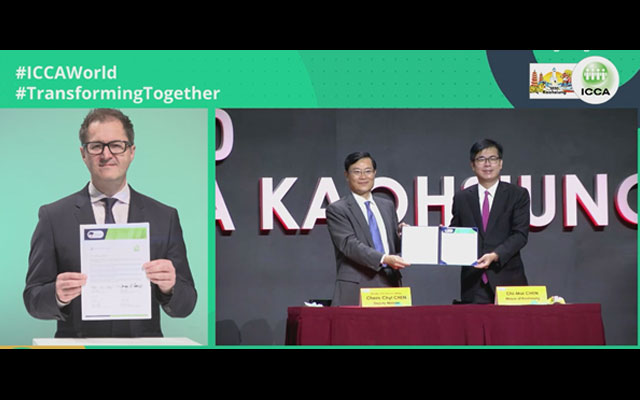
ICCA – the International Congress and Convention Association – in collaboration with the city of Kaohsiung, has revealed the Kaohsiung Protocol Framework as the major legacy outcome of the 59th ICCA Congress.
The Kaohsiung Protocol is a crowdsourced framework identifying major trends and key strategies which will enable the international meetings industry to thrive, now and into the future. The trends identified include Innovative Business Models, Shared Risk, Digital Restructure & Hybrid Events, and Enhanced Engagement & Value Strategies.
ICCA decided to create a framework which will enable and support its members and the wider business events industry to utilise the knowledge, best practices and understand new business models
ICCA president James Rees described the Kaohsiung Protocol as a tangible, documented framework “that will be the true legacy of this year’s event – and that will resonate with members for years to come”.
This new framework is ICCA’s response to the major global trends such as technological advancement, safety and health, and understanding the next generations of attendees, all impacting the global events industry.
The conclusion is that it is the duty, as well as privilege, of the event industry to contribute to the advancement of the society through promoting core values such as knowledge economy, sustainable development, and global connection.
The flow of visitors to the exhibition was beyond my expectation
Hot idea
Consult with your stakeholders and weigh out the pros and cons of whether the exhibition would be better staged online or offline
The exhibition was a welcome platform to connect with customers face-to-face after months of distance working and remote communications
Event brief
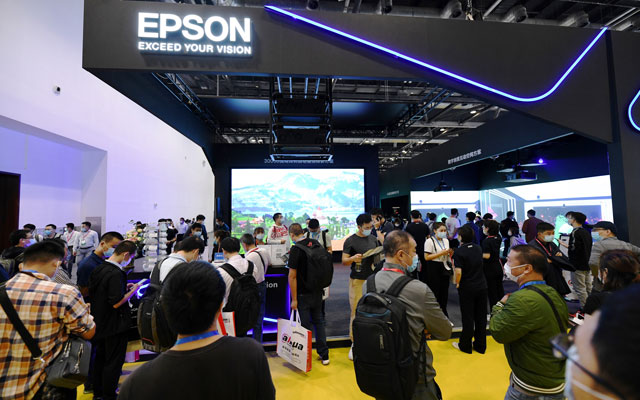
Despite the ongoing Covid-19 pandemic, the physical edition of Beijing InfoComm China 2020 proceeded as planned from September 28-30.
Billed as Asia Pacific’s premier Professional AudioVisual (Pro-AV) and Integrated Experience solutions platform, the tradeshow needed to have numerous precautionary measures in place to help safeguard the health and safety of participants.
Held at the China National Convention Center in Beijing, the three-day event connected global and regional solution providers, vertical market end-users and the supply chain.
Beijing InfoComm China 2020 attracted more than 450 exhibiting companies from around the world, of which more than 100 companies were participating for the first time.
The Summit, which also ran for three days in parallel to the exhibition, attracted 5,589 delegates who gained valuable insights from keynote presentations and discussions across 53 sessions.
Event highlights
The solutions featured during the show some of the best in Chinese innovations, including automation, artificial intelligence, machine learning, big data, Internet of Things and other smart technologies that are transforming Pro-AV and Integrated Experience applications.
Among the 450 exhibiting companies were 107 exhibitors who showcased products that were either new in China or new in Asia.
Richard Tan, executive director of InfoCommAsia, said: “The strong exhibitor turnout was a powerful endorsement of Beijing InfoComm China as the industry preeminent showcase, and our ability to stage a premier trade exhibition efficiently and safely under unprecedented conditions.”
Tan said the inaugural Start-up and Incubator Zone “generated much excitement among visitors”, who were among the first to preview next-generation integrated experience solutions by 25 start-ups.
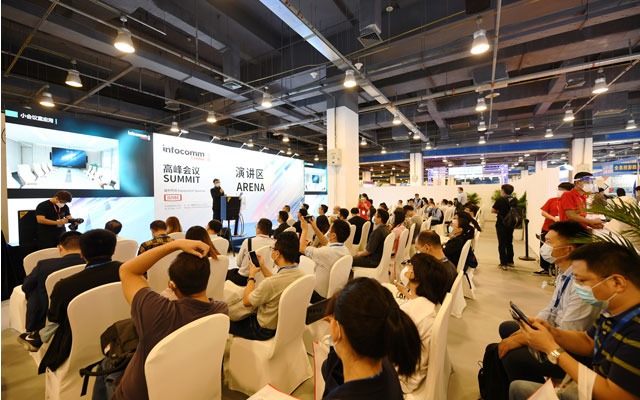
Delegates listening intently at The Summit
A new feature introduced at The Summit was the AV Managers Day, where the programme was curated to cater to the specific needs of operational managers seeking to share experiences in project management. Diverse experiences in project and operations management were shared, and many participants took away valuable knowledge and information relevant to their professional work.
Another highlight at The Summit was the NIXT Conference, held for the second time following a successful debut in 2019. Here, case studies were presented to participants on the transformative power of artificial intelligence, Internet of Things, robotics, smart wearables, extended reality and 5G, on various industries including media and entertainment, manufacturing, retail, smart cities and transportation.
Challenges
“When the pandemic broke out in early 2020, and business operations were disrupted and movement of people was curtailed, we were not sure if Beijing InfoComm China could be staged (in-person).
“However, the encouragement of exhibitors gave us the confidence to proceed with organising the show, with the support of venue and industry partners. We are heartened by the positive response and feedback, validating our decision and justifying the confidence of participants and industry players,” recalled Tan.
As one of the major challenges was safeguarding the wellbeing of all delegates, Tan said: “Precautionary measures such as mandatory mask-wearing and ensuring there were safe-distancing measures in place.
“Exhibitors and visitors engaged in lively discussions and extensive networking activities also took place in the booths and meeting rooms, showing that the quality of experience at the show was not compromised.”
Event Beijing InfoComm China 2020 Organiser InfoComm Asia Venue China National Convention Center, Beijing Dates September 28-30, 2020 Attendance 30,866 visitors
Singapore-based MICE Matters has unveiled a new division, Virtual Edge @ MM, as the typically incentives-focused company shifts its focus and business model to ride through the pandemic.
The end-to-end digital platform is able to implement, manage, and operate customised tech solutions, from pre-event communication and preparations, to event-day logistics and management, rounding off with post-event services.
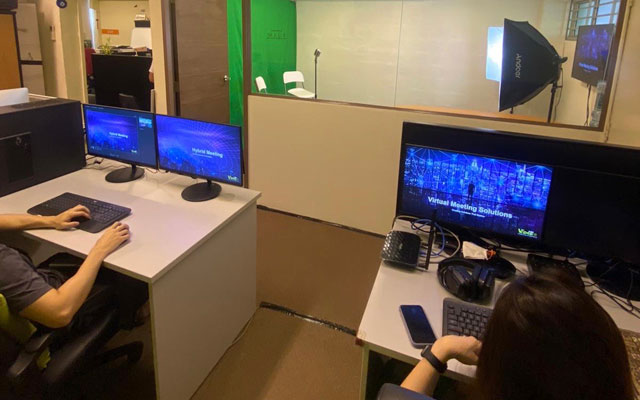
MICE Matters’ working digital studio dubbed The Upper Room
As such, MICE Matters has also set up a working digital studio within its Singapore office, and named it The Upper Room.
Its director, Melvyn Nonis, shared with TTGmice one of the main objectives of setting up Virtual Edge @ MM is so that the company can continue to value-add and remain relevant for its incentive clients in the new normal.
He added that it was “important to upskill the team digitally” along with the times. Moreover, learning about digital technology can be applied to various facets of the incentive tour experience to ensure tours run more efficiently, especially so for large groups of 1,000 people the company regularly managed prior to the pandemic.
In line with this, the team has also commenced on a new project entitled GMX. GMX takes its lead from a teambuilding mobile app MICE Matters previously ran for its client’s event. However, the current objective is to design and create a corporate teambuilding gamification app that will help rediscover Singapore.
Nonis said: “We are targeting to complete this project by year-end and roll it out to the market at the beginning of 2021.”
When asked about its incentives business, Nonis said: “MICE Matters’ post-Covid-19 core business and clientele will mainly revolve around the organising of outbound corporate meetings and incentive programmes.”
He strongly believes that “virtual reality tours will not replace actual incentive tours”, and hence the company will also be diversifying its core services to other industries. Currently, its incentive groups hail from the financial planning, insurance, and multi-level marketing industries; and meeting and conferences from the IT sector.
MICE Matters is also exploring several corporate programmes based on the recent initiatives rolled out by Singapore Airlines. Possibilities could include behind-the-scenes tours of Singapore Airlines’ training facilities, or experiencing its flight simulator.
The Malaysia Latte Art Championship will be a highlight at ICBS
Montgomery Asia, a global exhibitions company with 125 years of experience, has partnered Malaysia Specialty Coffee Association (MSCA) to launch the inaugural International Café & Beverage Show (ICBS) next year in Kuala Lumpur, Malaysia.
Taking place from June 10-12, 2021, the three-day event will showcase artisanal food, beverage and café products from businesses and brands, both from Malaysia and the greater region of Southeast Asia.
The Malaysia Latte Art Championship will be a highlight at ICBS
Coffee enthusiasts, as well as F&B professionals, can look forward to an exciting roster of exhibitors, including suppliers of coffee beans, general beverages, café food items, the latest machinery and equipment, and innovative packaging designs.
As part of the partnership, Montgomery Asia will be hosting the next three years of the internationally-recognised Malaysia National Coffee Championship (MNCC), first organised by the MSCA in 2014.
MNCC 2021, the major headlining event of ICBS, will bring back annual events such as the Malaysia Barista Championship, Brewers Cup, and Latte Art Championship.
At the Malaysia Barista Championship, baristas compete in a brew-off to showcase their service and personalities. The Malaysia Brewers Cup highlights the craft of filtered coffee, challenging the baristas’ ability to extract outstanding flavours while brewing coffee by hand. Lastly, the Malaysia Latte Art Championship will see baristas present their art according to planned routines which will be judged on consistency and aesthetics.
For brewers and baristas seeking to compete on the world stage, winners of each event category will stand a chance to represent Malaysia at the World Coffee Championships, sanctioned by World Coffee Events. The stage, which is hosted by a different country yearly, will see competitors, judges and volunteers from across the country taking part.
ICBS is the first step in Montgomery Asia’s growth plan across the South-east Asian region. The tradeshow is also supported by the Malaysia Convention & Exhibition Bureau.
Hyatt Hotels has opened the Hyatt Regency West Hanoi, the first Hyatt to debut in Vietnam’s capital.
Located in Nam Tu Liem district, the Hyatt Regency West Hanoi was rebranded from an existing hotel, and undergone extensive renovation throughout. It is situated near to the National Convention Center, and various business districts home to global companies, making the property a convenient base for corporate guests.
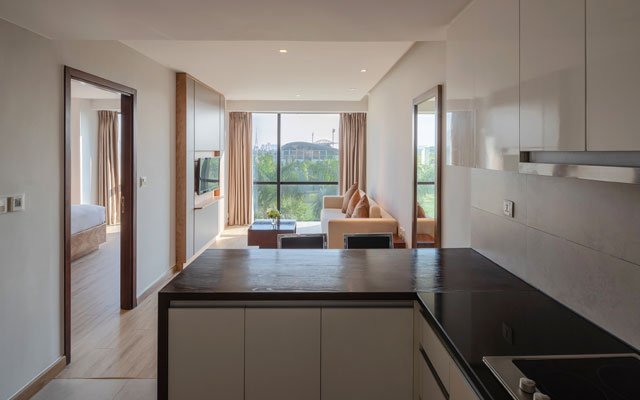
Long-stay room
Spanning two towers, the hotel offers 519 guestrooms, including 114 suites and 129 long-stay rooms with kitchenettes and washing machines.
The hotel also features 823m2 of meeting and event space comprising a ballroom and several multifunctional meeting rooms. Other facilities include an outdoor swimming pool, 24-hour fitness centre, spa, and three F&B venues including a rooftop bar.
A company’s productivity and efficiency are especially tested in challenging times, but business owners are able to improve on these aspects without incurring high costs and making large investments in cutting-edge technologies.
In this new episode of TTG Conversations: Five questions video series, Uzaidi Udanis, chairman of Tourism Productivity Nexus and president of the Malaysian Inbound Tourism Association, shares ideas on what the travel trade can do to maximise their productivity while at the same time keep costs down and stay relevant.
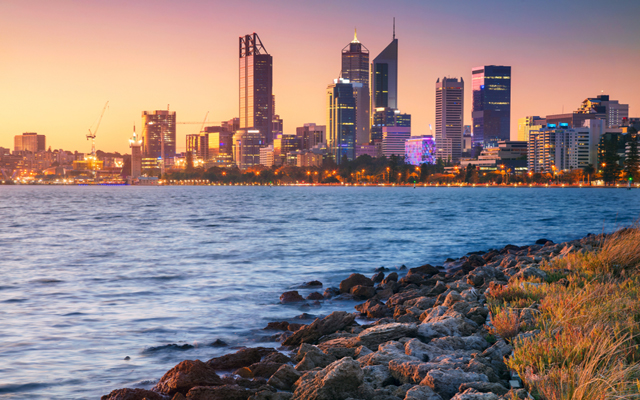
Western Australia opens up to more Australian states; Perth, its capital, pictured
Western Australia (WA) is set to welcome interstate delegates back, following premier Mark McGowan’s announcement today that the State’s border will move to a ‘controlled border’ from November 14, 2020.
Visitors from Queensland, South Australia, Tasmania, the Australian Capital Territory, and the Northern Territory, which are considered ‘very low risk’ areas (no community cases for the past 28 days) will be allowed to travel into the State, and will no longer be required to self-quarantine.
Western Australia opens up to more Australian states; Perth, its capital, pictured
Those travelling from New South Wales and Victoria will be allowed to enter Western Australia but will have to isolate for 14 days in a suitable location on arrival.
Business Events Perth chief executive Gareth Martin welcomed the announcement, and said it would give a huge boost of confidence to event organisers to plan their next business event in WA.
This move is also critical to the local industry’s recovery and Western Australia’s broader economic recovery.
Business events are already underway in WA, following the success of the local Event Here Now campaign, aimed at supporting the industry and getting Western Australians meeting and collaborating again.
Martin shared that since the Event Here Now initiative was launched in August, the state has supported more than 50 business events and brought more than 18,000 locals together to connect, collaborate and share ideas and knowledge. A further 47 State-based events are currently under development.
Through the Event Here Now initiative, Business Events Perth is offering event organisers up to A$30,000 (US$21,019) in sponsorship for new business events. Events that attract considerable numbers of in-person attendees from outside of the State are eligible for higher levels of funding.
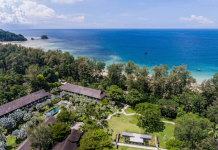
Just 10 minutes from Phuket International Airport on the serene northern coast, this 178-key, Bill Bensley-designed resort offers delegates a quiet, tropical paradise steeped in Phuket’s tin-mining heritage
The newly-opened Ritz-Carlton, Bangkok anchors the One Bangkok development with cosmopolitan elegance. Featuring the city's largest ballroom and a spectacular new penthouse suite, it delivers exceptional hardware and deeply authentic, soulful service for business and leisure travellers alike
Behind the imposing, Brutalist concrete that defines Zurich’s Oerlikon district lies a surprising secret. While its exterior honours the neighbourhood’s industrial roots, stepping inside Mama Shelter reveals a vibrant, neon-soaked world that is a far cry from its rigid shell










Western Australia (WA) is set to welcome interstate delegates back, following premier Mark McGowan’s announcement today that the State’s border will move to a ‘controlled border’ from November 14, 2020.
Visitors from Queensland, South Australia, Tasmania, the Australian Capital Territory, and the Northern Territory, which are considered ‘very low risk’ areas (no community cases for the past 28 days) will be allowed to travel into the State, and will no longer be required to self-quarantine.
Those travelling from New South Wales and Victoria will be allowed to enter Western Australia but will have to isolate for 14 days in a suitable location on arrival.
Business Events Perth chief executive Gareth Martin welcomed the announcement, and said it would give a huge boost of confidence to event organisers to plan their next business event in WA.
This move is also critical to the local industry’s recovery and Western Australia’s broader economic recovery.
Business events are already underway in WA, following the success of the local Event Here Now campaign, aimed at supporting the industry and getting Western Australians meeting and collaborating again.
Martin shared that since the Event Here Now initiative was launched in August, the state has supported more than 50 business events and brought more than 18,000 locals together to connect, collaborate and share ideas and knowledge. A further 47 State-based events are currently under development.
Through the Event Here Now initiative, Business Events Perth is offering event organisers up to A$30,000 (US$21,019) in sponsorship for new business events. Events that attract considerable numbers of in-person attendees from outside of the State are eligible for higher levels of funding.