Meetings & Events Australia (MEA) has launched its new accreditation programme, designed to recognise events industry practitioners who have reached the highest levels of professionalism in event management.
The standard for becoming an MEA Accredited Event Professional will be based on both quantitative and qualitative assessments of career achievements, work history, industry knowledge, qualifications, continuing skills development, and education in addition to the applicant’s contribution to the events sector.
The new programme acknowledges practical experience, industry knowledge and previous qualifications
MEA’s CEO, Robyn Johnson, said in a statement: “MEA’s individual accreditation programme has undergone a long-overdue review… It acknowledges event professionals who are committed to continued learning and improvement of their skills and knowledge. Having the AEP (Accredited Event Professional) post-nominal will be the highest accolade in the Australian events community and will be highly prized.”
The association has indicated it will be promoting the benefits of becoming a MEA Accredited Event Professional to industry and government, and the value to clients and employers of engaging such an individual.
Facebook now has a video conference platform called Messenger Rooms
On April 24, Facebook introduced a video conferencing tool and expanded livestreaming features, capitalising on a surge in demand for video chats during the coronavirus pandemic, according to Reuters.
The video conferencing tool, Messenger Rooms, will enable as many as 50 people to participate in a call, the company said in a statement. It will display a tiled layout of participant videos – up to 16 on desktop and eight on mobile – resembling the design offered by competitor Zoom.
Facebook now has a video conference platform called Messenger Rooms
Facebook users will be able to share links enabling non-users to join Rooms via a web browser on both desktop and mobile, eliminating requirements to download an app, or create an account as on other services.
There will be no time limits on the calls.
Elements of the product had been slated for release in 3Q and 4Q2020, but Facebook accelerated its plans after observing a spike in group calling during the lockdowns, Facebook’s head of Messenger, Stan Chudnovsky told Reuters.
“Our video calls doubled, and when we’re looking at the group calls usage, that went up even higher,” said Chudnovsky. “So we figured out a way to build those things faster.”
Facebook said in its statement there were now more than 700 million accounts participating in calls on WhatsApp and Messenger every day.
Chudnovsky said Facebook’s free offering is focused squarely on the consumer market with Messenger Rooms and is not currently making overtures to businesses, the main source of revenue for most other video conferencing apps.
The company is simultaneously expanding its livestreaming offerings, such as an option to add a guest to a live video on the core Facebook app and the ability to save live videos on Instagram to the IGTV video-sharing app.
Its decision to build Rooms on Messenger’s infrastructure asserts the app’s preeminence as the company begins to realise chief executive Mark Zuckerberg’s vision to weave together its messaging services, offering a first glimpse at how that integration will be structured.
Messenger Rooms will be accessible across the social network’s sprawling array of online gathering spaces, enabling users to jump into group video meetings directly from News Feed, as well as in Groups and Events pages.
Facebook is also planning to add buttons within messaging service WhatsApp and the chat function of Instagram, although those users will be prompted to open Messenger to create Rooms, said Chudnovsky.
The company is simultaneously expanding group video calling within WhatsApp, which has more users than Messenger, but is capping the number of participants there at eight.
Chudnovsky said Zuckerberg’s plan to extend end-to-end encryption across messaging services would also apply to Messenger Rooms. “We would like to have it all encrypted if possible,” he said.
The former tourism secretary of the Philippine Department of Tourism (DOT), Ramon “Mon” Jimenez, Jr has passed away this week at the age of 64.
The DOT’s present chief, Bernadette Romulo Puyat, has issued a statement, paying tribute to the “immeasurable contributions of secretary Jimenez who laid down the foundation for the country’s most famous tourism campaign, It’s More Fun in the Philippines”.
Ramon Jimenez Jr
Puyat added that he was also behind many DOT policies that helped shape the National Tourism Development Program (NTDP) for 2016-2022.
“Today, we mourn the loss of Mon Jimenez but we will be forever grateful to him for the growth of the tourism sector, and for promoting the Philippines as a place that is wonderful, joyous and fun,” said Puyat.
With metro Manila still on lockdown, friends and former colleagues from the Hotel Sales and Marketing Association as well as other tourism sectors have arranged for a virtual eulogy in remembrance of Jimenez.
The virtual eulogy will be held on Facebook on April 29, 19.30 local time, right after the virtual mass on Jimenez’s Facebook account.
The UFI European Conference skips this year's edition and will be held in Poznan, Poland (pictured) next year
The UFI European Conference skips this year’s edition and will be held in Poznan, Poland (pictured) next year
UFI European Conference cancelled for 2020
UFI has cancelled the UFI European Conference, which was due to take place from June 3-5, 2020 at the Swedish Exhibition & Congress Centre in Gothenburg.
Registration fees for industry professionals who have already registered for both events will be reimbursed. The UFI team will reach out to all participants and partners.
UFI also announced that the next European Conference will take place from May 5-7, 2021 in Poznan, Poland, hosted by Grupa MTP in their centenary year.
“We are sorry not to be joining our colleagues in Gothenburg in June, however we are happy nonetheless to be confirmed as the hosts of next year’s UFI European Conference. Founded in 1921, next year marks 100 years of organising trade fairs, a very important milestone for our company and the Polish exhibition industry. Please join us in Poznan to celebrate together in style,” said Tomasz Kobierski, chairman of the board of Grupa MTP.
CTICC and Ladles of Love join forces to feed the city
The Cape Town International Convention Centre (CTICC) has partnered with Ladles of Love, a non-profit organisation which aims to help those who do not have access to food during the pandemic.
Ladles of Love is a soup kitchen and a feeding scheme that helps vulnerable people within Cape Town. In under a month, the organisation has increased its cooked meal production by 1,000 per cent from 200 meals per day to over 2,000 meals per day.
As such, the CTICC has volunteered the use of an exhibition hall and a kitchen as a temporary headquarters.
Founder of Ladles of Love, Danny Diliberto, said: “This sudden high demand has stretched our organisation at a logistical level, seeing us completely outgrow our current headquarters. We are immensely grateful to the CTICC for coming to the rescue. The centre has offered us more than 1,500m2 of space to serve as Ladles of Love’s temporary logistics headquarters from April 27 to June 30, 2020.”
UK events industry eyes September as turning point
The UK events industry believes that September 2020 is expected to be the most significant month when it comes to post-Covid-19 recovery, as it forecasts a rise in both enquiry and booking levels, according to a new survey released today.
The Business Events Sentiment Survey, created by communications agency davies tanner, in partnership with the Business Visits & Events Partnership (BVEP), received responses from 556 business events professionals across the UK.
In the survey, 38 per cent of respondents stated September 2020 as the primary month when they expect to see both enquiries and bookings begin to increase, though some believe this will happen sooner, with 12 per cent indicating July as the beginning of the recovery period. A further 10 per cent believe this will be August, with 13 cent indicating this will begin in October.
In terms of industry-wide recovery, respondents believe that the impact of Covid-19 on the business events industry will be longer-lasting. Half of the respondents believe that the industry as a whole will not return to any form of normality for at least 12 months, with only 27 per cent believing that this could be achieved within none to 12 months.
The Business Events Sentiment survey was completed by buyers (corporate planners, associations and agencies), venues and suppliers between April 6-14, prior to the further lockdown measures introduced on April 16th.
To download a free copy of the report, please click here.
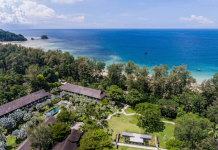
Herbert Laubichler-Pichler has taken charge of the opening of the 196-pavilion and 384-suite resort in Vietnam’s Cam Ranh peninsula.
The hospitality veteran’s work in Vietnam spans almost 14 years and includes management of properties such as The Anam (also in Cam Ranh), Ho Chi Minh City’s Reverie Saigon, and Nam Hai in Danang.
The Austrian’s experience in Asia also includes overseeing the opening of Raffles Hainan in China; working for Shangri-La Hotels and Resorts in mainland China, Hong Kong, Singapore, Malaysia and the Philippines; and managing GHM (General Hotel Management) properties in Malaysia.
Born into a hotelier family, Laubichler-Pichler started out in the industry working at his parents’ guesthouse in Austria as a bellboy at 10 years of age during the summer season. He later studied hotel management and became a certified chef before rising through the ranks to become the general manager at properties in Austria, Germany and Cyprus.
Industry professionals attending a GBTA event. Photo: GBTA's Facebook
The power of Global Business Travel Association’s (GBTA) 7,000-convention delegate database at its annual US conference, including a large exhibition component, makes it an important association to stay connected to, say corporate travel managers (CTM).
This is despite GBTA’s complete withdrawal from Asia last year, to focus on North America and Europe. And this has left a vacuum for CTMs who want access to trends and direct contact with suppliers in those regions.
Industry professionals attending a GBTA event. Photo: GBTA’s Facebook
“For example, GBTA can work closely with airlines and OAG (a global travel data provider) on how fast the aviation industry is rebooting and when we can activate staff travel and redeploy bookings,” according to a CTM who works for an American multinational technology company.
Another Shanghai-based CTM in a retail multinational company noted that attending GBTA’s Europe events was important for him.
“The contacts and reference partners that I need for my current role are in Europe. I already have some contacts there but I need more. Asia is still important but I have the contacts here,” he said. He added that the poor state of the meetings industry now might force companies to close or be conservative with spending even until the end of the year.
Elsewhere, Association of Corporate Travel Executives (ACTE) has suspended operations until end May.
The South-east Asian CTM belonging to a German multinational conglomerate, added: “These associations are important as they can gather corporate travel managers for updates, exchanges and experience sharing to help us improve work processes.”
The ACTE and Corporate Travel Community (CTC) member continued by saying education topics on suppliers such as airlines, accommodation, ground transportation, and events, and how they are moving forward after Covid-19 could shed light for her when reviewing or making certain decisions.
Five years ago, GBTA closed its Bangkok regional office, followed by Shanghai a year later and kept its representive office in Mumbai until last year.
While there were many reasons GBTA’s withdrawal, an informed source said it was primarily because “membership (numbers) didn’t grow as fast as expected”, and “overheads were not covered by local income”, even though the Asia conferences “did quite well on sponsorship”.
The source believed GBTA withdrew from Asia because of internal politics just as growth in Asia was gaining momentum.
Tourists visiting Wat Saman Rattanaram in Chachoengsao
Thailand’s business events stakeholders are expecting business to resume from 4Q2020, and they foresee that sustainability, alongside health and safety, will be key concerns moving forward, as well as the pick up in a physical-digital hybrid event format.
These were some of the observations revealed during an online webinar on April 23, hosted and moderated by David Barrett of DBC Asia. The panel featured four experts, who discussed the way forward for the country’s tourism and business events industry in this tough period.
Tourists visiting Wat Saman Rattanaram in Chachoengsao
David Litteken, senior vice president Asia Pacific Region, BI Worldwide, believes that the domestic market will make a come back first, starting with leisure travel, then corporate travel.
“We might see the return of domestic MICE in Australia and perhaps in China in 4Q this year. For Thailand, international business events delegates might come back between March and June next year,” he predicted.
Nichapa Yoswee, senior vice president, strategic marketing & business development, Thailand Convention & Exhibition Bureau (TCEB), is also hopeful for the end of this year, and into 2021.
“Since March, TCEB has received 41 new business leads worth approximately 4.5 billion baht, with the majority coming from China, India, Singapore and Japan. Over 65 per cent of the enquiries are for 4Q2020, with the remaining for next year and beyond,” she added.
Moving forward, business events stakeholders also expect future events to be smaller, and sport a digital-physical hybrid as “digital will become an integral part of our business”, stated Sumate Sudasna, president, Thailand Incentive and Convention Association (TICA).
Additionally, as sustainability has been a hot topic among international corporate clients even before Covid-19, Nichapa believes that those who manage to integrate sustainability into their operations will emerge better from this crisis.
To encourage venues and operators to be more sustainable, TCEB and TICA have produced event sustainability guidelines and provided funds to support sustainability practices.
Litteken added that the crisis is a good opportunity to incorporate sustainability with health and safety practices. For instance, due to social distancing measures making buffets no longer feasible, food waste can be eliminated.
However, with all the bright sparks, due to the Covid-19 crisis, Litteken predicts that future contracts may be tightened, with more venues demanding larger upfront deposits. This is as force majeure comes into effect, with hotels and venues needing to be flexible in allowing event cancellations or postponements.
To help hasten travellers’ return to Thailand, panellists also agreed that the government should develop a brand new, unified marketing programme – similar to the successful Amazing Thailand campaign – with inputs from all tourism stakeholders.
“The next crisis is right around the corner… after this one ends,” Imtiaz Muqbil, executive editor, Travel Impact Newswire, warned.
“Thailand tourism and MICE industries need an introspective analysis to learn from the past and listen to those outside – such as NGOs, social activists and diplomats – to understand future challenges. Moreover, the country should resolve overtourism, environmental degradation, safety, labour, nightlife and entertainment issues to attract higher quality travellers that will lighten environmental impact and prepare for the more intense competition that lies ahead.”
Lim: Malaysian government needs to financially help small- and mid-sized event companies to avoid them going belly up
Even if Malaysia’s movement control order (MCO) is lifted on May 12 – the end of its third extension – a six-month ban on public gatherings will mean that the entire business events industry has generated almost no revenue for 2020, lamented the travel trade.
Vincent Lim, president of the Malaysian Association of Convention and Exhibition Organisers and Suppliers (MACEOS), said in a recent webinar titled Sustainability & Resilience in the Age of Covid-19: How do Employers and Employees Navigate Together During Crisis? that the situation remains uncertain as the industry awaits post-MCO guidelines from the Ministry of Health (MOH).
Lim: hopes that some business events can still proceed at the end of this year
Lim explained: “We estimate a few thousand business events will be affected, and this includes over 300 trade and consumer exhibitions, as well as hundreds of local and international conferences and other events.”
According to a MACEOS survey, losses from these cancelled events will total around RM2.4 billion (US$551.1 million), and more than 10,000 employees will be affected. This is as many events companies will also not have any revenue for this year.
Lim hoped the MOH will consider a ban on public gatherings for three months instead, so that in 4Q2020, some business events will be able to go on, which will minimise the impact on the industry.
He assured that if this were to happen, MACEOS “will implement the new standard operating procedures (SOPs) which will be endorsed by MOH”, for the events.
In collaboration with the Business Events Council Malaysia and Arts, Live Festival and Events Association, MACEOS has set up a special task force to develop SOPs for the business events industry in the post-MCO period. These SOPs will include social distancing guidelines, hygiene precautionary measures, and more.
Lim shared that the SOPs are vital for the industry as the way meetings, conferences and exhibitions will be conducted in future will differ.
“Event organisers will place the safety of delegates as a priority. Hand sanitisers, temperature screenings and social distancing are a given until a vaccine for Covid-19 is found. Furthermore, coffee breaks and lunches may also be packed (in lieu of) buffet set-ups.”
Overall, Covid-19 has seriously impacted the country as there have been no public gatherings of any kind since the MCO came into effect on March 18.
These virtual events-targeted courses aim to help event professionals upgrade during this downtime
Indonesia’s Ministry of Tourism and Creative Economy has rolled out a virtual events short course programme, designed to aid trade members in upgrading their professional knowledge, during the Covid-19 pandemic.
In partnership with the Australian Marketing Institue, there will be two learning courses that span three weeks starting from May 1. Topics include marketing and virtual event management for 100 participants.
These virtual events-targeted courses aim to help event professionals upgrade during this downtime
During the course, participants will also be challenged by creating virtual event idea proposals. The best six proposals will then receive support from the ministry to hold their virtual event.
Each proposal will be assessed based on creativity and the level of absorption of the workforce event, where the target for each selected event is to absorb 20 workers.
Rizki Handayani, deputy of tourism products and events at the Tourism and Creative Economy Board explained that the virtual event programme is one of the stimuli to help Indonesian event workers upskill during this downtime.
Rizki elaborated: “We are willing to help event organisers, and want to collaborate with industry players. We need to work together from now on, and start thinking about recovering from the impact of Covid-19.”
Tiara Hasibuan, project manager at Damia Convex, applauded the ministry’s initiative was timely and opined that technology and online solutions were going to be the new normal after Covid-19.
“Investing in digital or hybrid events will fuel our development even when the industry recovers. It will be a new opportunity because there is an immediate need for it,” she said.
To ensure the initiative will benefit even more industry players, Tiara put forth a suggestion to the ministry to create specific digital short courses, such as how to create an attractive virtual event, or how to become a reliable webinar operator. The ministry can also look at topics for designers, to help them design and visualise te real world in 3D or 4D animations.
However, for Firda Yahya, account director at Dyandra Communications, the programme does not seem as interesting because there are no experts from Indonesia in the speakers’ line-up.
“Although the material provided will help to increase knowledge, the ministry should have included experts from Indonesia as one of its speakers, as they can provide input on what is suitable for the (Indonesian) market,” noted Firda.
This is because she feels that event companies require insights about the local market conditions before they decide to shift to hybrid events.
China’s inbound tourism market will take a long time to recover from the coronavirus as the country must work on repairing its brand image, which has been marred due to negative narrative in international media as well as its close ties to the virus outbreak, according to GlobalData.
Pre Covid-19, China was predicted a steady CAGR of two per cent between 2016 and 2020, reaching 63.9 million international arrivals, found the study.
China needs to work on repairing its brand image and assuring tourists that the country is a safe destination: GlobalData; tourists wearing medical masks in Yu Garden, Shanghai this April pictured
However, the fallout from the global pandemic which originated in China has severely impacted China as a tourism destination as well as Chinese travellers.
China outbound tourism is a significant contributor to the global tourism industry, accounting for 159 million global outbound travellers in 2019, according to GlobalData.
Moreover, the Chinese outbound market had the second-highest spending last year, with an expenditure of US$275 billion. As such, the introduction of travel restrictions impacted not only China as a tourism destination, but also many other destinations that rely on high-yielding Chinese visitors.
Amber Barnes, travel and tourism analyst at GlobalData, said: “China as a tourist destination will not be able to rebound quickly and it is uncertain how long it will take the tourism industry to recover. Additionally, the brand image of China as a destination may be damaged. This is due to the virus starting in China which means tourists may have fear of the destination.”
GlobalData’s latest report, Case Study: Impact of Covid-19 on Destinations, revealed that the predicted forecast of 64 million international arrivals in 2020 will be impacted due to Covid-19. International arrivals were predicted to increase from the 62.6 million international arrivals which China received in 2019.
Barnes continued: “This steady increase will change to reflect a slowdown in 2020. The uncertainty of Covid-19 indicates tourism destinations will take time to recover and travellers will have doubts and fears about travelling in the future.
“Tourism organisations and authorities must promote and reassure tourists that China is a safe tourism destination to attract tourists once Covid-19 is controlled.
“China does have the potential to recover as a destination. The country previously has shown robustness to recover from a pandemic. This was severe acute respiratory syndrome (SARS) which originated in China and quickly spread globally in 2002. This emphasises that although a lengthy process, the brand image and tourism destination can be restored, provided the relevant DMOs engage travellers with effective campaigns.”
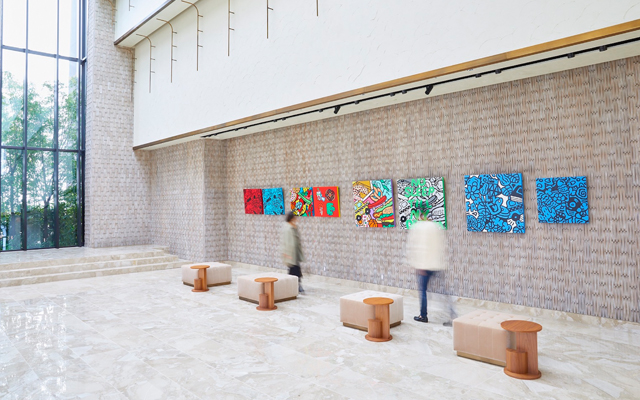
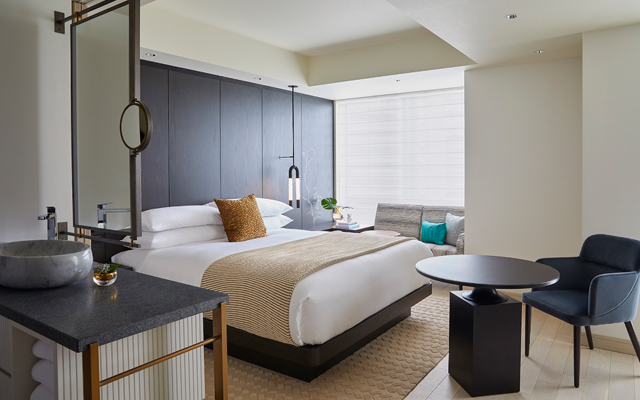
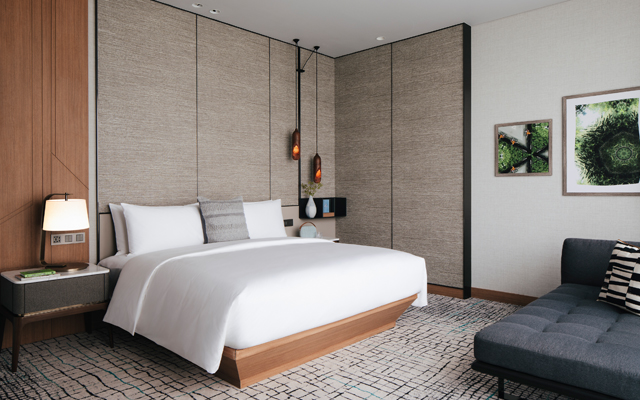
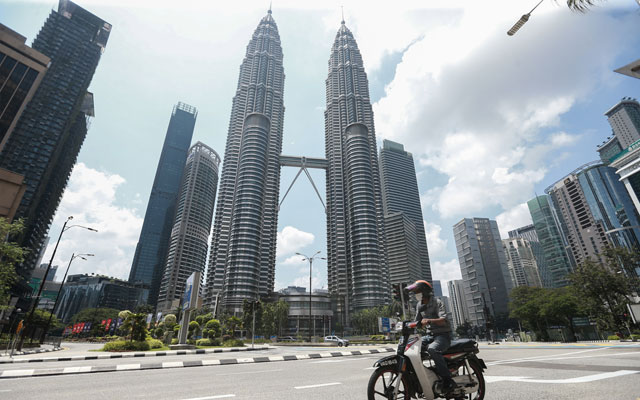
A polished urban retreat designed for business travellers, Hyatt Regency Kuala Lumpur at KL Midtown combines thoughtful design, seamless service, and exceptional facilities.
The five-star property excels in backing its expansive facilities with seamless service and personalised attention, setting the benchmark for luxury in Bangkok.