Mövenpick Hotels & Resorts has unveiled its latest property in Khao Yai, the first international brand to call the city home.
Mövenpick Resort Khao Yai
1 of 6
Located less than a three-hour drive from Bangkok on the fringes of the Khao Yai National Park, the 112-key Mövenpick Resort Khao Yai offers corporate groups a European castle-esque experience surrounded by a mountainous landscape.
Its only event space is the Ozone Hall on the ground floor, which can accommodate 120 guests in theatre style, or 200 guests for cocktail parties.
However, for C-suite meetings, the five-bedroom pool villa, or several of the villas can be booked instead. In addition to 50 villas, the resort has 62 guestrooms, starting from the 45m2 Deluxe Room.
Amenities onsite include a swimming pool, Panacee Wellness Khao Yai spa, and an 18-hole golf course. Meanwhile, F&B options include the all-day dining Flavours of Khao Yai, and farm-to-table Castleton Cafe.
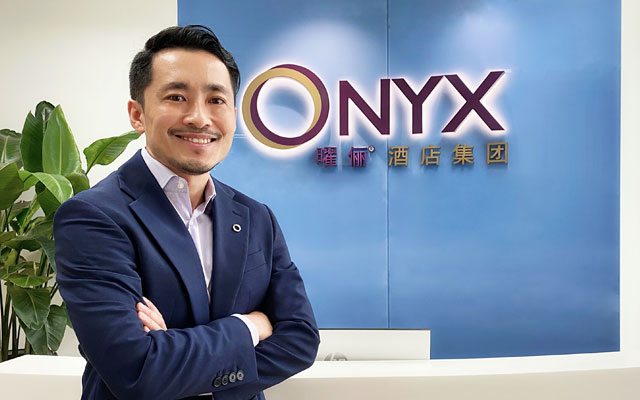
Onyx Hospitality Group has appointed Ethan Cai as senior vice president and head of China, as part of its long-term commitment towards the China market.
Based in the Shanghai regional office and reporting to Craig Bond, executive vice president, operations, Onyx Hospitality Group, Cai will lead the operations and development of the company’s portfolio of hotels and serviced apartments in China. He will be in charge of exploring new businesses and project deals, while overseeing the group’s ongoing expansion and pre-openings, including the upcoming Shama Hub New City Changchun and Shama Hub West Coast Haikou.
Cai brings over 20 years of experience to his new role. Prior to joining Onyx, he co-founded a start-up company pioneering the use of robots for the hospitality business.
He started his hospitality career with Hyatt, where he was the pre-opening team member of Grand Hyatt Shanghai. His other roles include general manager of the hotel division of China Jin Mao Group, as well as various senior positions at Morgan Stanley within the real estate investment and property divisions.
Cai also spent time with PVCP Group, a European leader in development and operation of tourism residences, as one of the core founding members of its China JV, where he led the business development team in signing 11 different development projects over a period of 18 months.
What challenges are Malaysia’s meetings and exhibitions stakeholders facing?
The business events industry, as well as the travel and tourism industry, was one of the first sectors hit by the pandemic and will be the last to recover.
A key challenge is how businesses will be able to sustain through this period. It is a tough time for everybody in the travel and business events sector, but when we come out of it, we will be a stronger industry. I have no doubt about this.
Another challenge is restoring public confidence by assuring visitors that venues are complying and enforcing government standard operating procedures (SOPs), and that it is safe for them to attend live events.
There is a greater need today for industry stakeholders to collaborate and support each other to maximise all available resources.
How has Covid-19 impacted and changed the way S P Setia does business?
Both Setia City Convention Centre in Selangor, as well as Setia SPICE Convention Centre in Penang, have been deeply impacted by the pandemic.
Since the government allowed the resumption of business events on July 1, we are hitting around 25 to 30 per cent of our original targets. However, organisers of big events have either postponed their events to next year, or they have changed the format to a virtual event.
Due to reduced business activity, we have also taken a hard look at our venue operations in Penang and Selangor, and cut down on unnecessary expenditures to lower our operating costs.
We are in the midst of reinventing the way we do things according to the current needs of our clients. We know one of the things they want are reassurances that safety and security protocols set by the National Security Council are being followed and this includes health checks and physical distancing. Hence, we have provided reassurance by publishing a checklist on our website to which we abide to.
We have also used this downtime to create innovative meetings and conference packages that are suited for the current market conditions.
For instance, we developed a hybrid annual general meeting package that provides a live feed, as this can accommodate shareholders who are participating off-site. We have also launched the Grab and Go Conference package, which offers packed meals at very attractive rates to meet the demand of budget-conscious organisers.
How is the company managing its human resources during this downtime?
We are facing low demand for our venues, yet we have to keep our staff engaged with work and their morale high. We have deployed about 30 per cent of our idle manpower to other business units within the S P Setia Group that are still doing well, so they can contribute their talents effectively to the Group.
How are event requirements different from previous ones?
We hosted a lot of big events in the past. It is different now, with events having 250 people or less.
Organisers are unaware of the latest changes in the SOPs set by the National Security Council, for instance, group sizes are no longer limited to a maximum of 250 people per event. Bigger groups are allowed, provided venues are able to cater to the numbers with social distancing in place. Thus, we are constantly educating and updating organisers on the latest government SOPs.
With new normal parameters in place such as physical distancing, events not exceeding four hours and packed meals instead of buffet lunches and tea breaks, we are in constant engagement with event organisers to find out their event objectives and how we can help them meet these objectives within the new parameters.
What is your projection for recovery?
We expect the domestic market to slowly recover by the end of 2020 and we hope regional markets will return by mid-2021.
The Malaysian government is holding talks with foreign governments in the region to create travel bubbles. I think it will take at least six months after the commencement of such travel bubbles before we can see the resumption of regional events.
There has been much talk about hybrid events and their longevity. What are your views?
I think it is here to stay. It will not die completely after a vaccine for Covid-19 is found. Instead, it will complement live events but the percentage of hybrid to live participation will vary depending on event profiles.
For an organiser, having a live event is the best option. It also allows delegates to meet face-to-face and network. However, hybrid events have the advantage of attracting participation from speakers and attendees who may not be able to attend the event in person. There are also ways for organisers to generate revenue streams from hybrid events.
We are certain that hybrid events are not a short-term fad and we are looking at increasing bandwidth in the near future at both our convention venues as high-speed Internet is required for a successful execution of hybrid events.
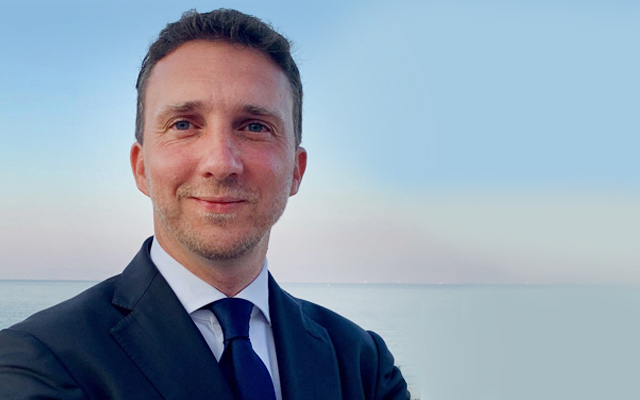
Roberto Bruzzone has joined Silversea Cruises as its new senior vice president of marine operations, reporting directly to president and CEO, Roberto Martinoli.
Bruzzone will be responsible for the marine and technical operations of the fleet, oversee newbuilding and refitting activities, as well as handle the technical procurement and crew management functions.
He has extensive experience in the shipbuilding industry, having held various positions at major international cruise lines in a successful career that has spanned almost 20 years.
Following a five-year stint as vice president of technical operations at a major cruise corporation – part of a 14-year period at the same company – Bruzzone took the position of COO to oversee the company, acting as the newbuilding division of another major cruise line holding.
The Hong Kong government will finally be launching the Convention and Exhibition Industry Subsidy Scheme, worth HK$1,020 million (US$131 million) on October 3, 2020.
The monetary injection, under the government’s Anti-epidemic Fund, was supposed to be launched in July 2020, but was postponed due to a third outbreak in the city. It will be in place for a year until October 2021.
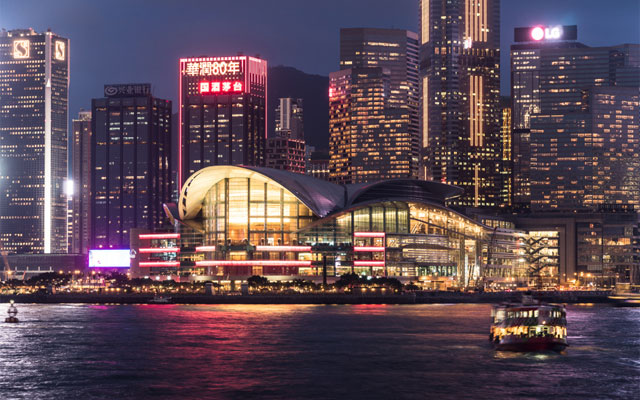
The anti-epidemic fund is aimed at easing the financial pressure on event organisers; HKCEC pictured in the foreground
The Subsidy Scheme covers 100 per cent of the venue rental cost for organisers of exhibitions and international conventions scheduled at the Hong Kong Convention and Exhibition Centre (HKCEC), and AsiaWorld-Expo. To qualify, the events must have more than 400 participants and at least 50 per cent from outside Hong Kong.
A spokesman for the Commerce and Economic Development Bureau (CEDB) said that recurring exhibitions at HKCEC and AsiaWorld-Expo over the past five years can apply for an advance subsidy of 50 per cent of the venue rental. The remaining will be disbursed after the exhibition concludes.
While the scheme was met with overall support from Hong Kong’s business events stakeholders, business leaders sounded some concerns.
Hong Kong Exhibition & Convention Industry Association (HKECIA), chairman, Stuart Bailey, highlighted that with several large exhibitions unable to proceed in 2020 and postponed to 2021, many will not be able to qualify for the subsidy.
Monica Lee-Müller, managing director of Hong Kong Convention and Exhibition Centre (Management), agreed, saying that mega exhibitions typically have long planning lead-times, and relaunching them before the October 2021 deadline for the Subsidy Scheme may be “challenging”.
“Given this and several other factors, we are in the process of petitioning the government to extend the scheme so that all recurring exhibitions in Hong Kong can benefit and help to revitalise the badly damaged economy,” Bailey told TTGmice.
He shared that HKECIA has also been campaigning the government for “targeted relief”. Some suggestions put forward included an extension of the employee subsidy scheme for workers in the MICE industry with no income; and rent relief for suppliers struggling to meet their overheads.
Meanwhile, Katerina Tam, director of International Conference Consultants, told TTGmice that the subsidy would not apply to her events as most – mainly medical conferences – are conducted in a virtual format and on hotel premises.
She added that it was also not easy to meet the attendee requirements.
“If travel restrictions are not lifted, how are we to draw international visitors? People are still hesitant to travel without a vaccine,” Tam said.
TKS Exhibition Services, founder and managing director, KS Tong, opined that for business events in Hong Kong to truly rebound, the government must “push for a travel bubble or corridor” and “establish a standardised programme for Covid-19 prevention which can be used as a benchmark for safer events”.
Japan is preparing to gradually reopen its borders to business travellers from countries that have shown success in bringing Covid-19 transmission under control.
From October 2020, up to 1,000 travellers will be granted entry per day to stay in Japan for business or other non-tourism purposes for more than three months.
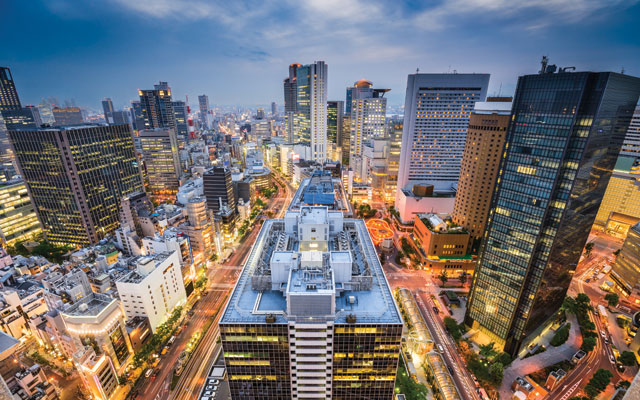
Business travellers will soon be allowed to stay in Japan for more than three months; Osaka’s Umeda district pictured
All entrants will be required to pass a polymerase chain reaction test before departing for Japan and again on arrival. They will also have to self-quarantine for two weeks and agree to abide by rules to prevent the spread of Covid-19, which include signing a “commitment form” and naming someone in Japan who can be their guarantor.
The move builds on steps Japan took in July to resume travel with 16 countries that have contained the spread of the virus. Japan now allows entry to expatriates and long-term residents of seven countries in Asia, including Cambodia and Malaysia, and launched its first green lane to welcome business travellers from Singapore from September 18.
For outbound travel, Japan is also set to ease its advisory in next month. The Foreign Ministry currently classifies 159 countries and regions with a travel advisory of Level 3, which warns against all travel, but is expected to lower the advisory for countries that have shown control over Covid-19 transmission. Australia, New Zealand and Vietnam might be among the first countries to be reduced to Level 2, meaning that non-essential travel should be avoided, according to a report in The Japan Times.
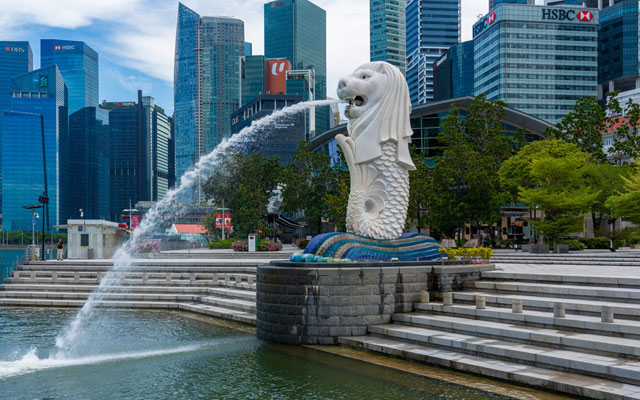
A lonely Merlion spews water at Merlion Park, a tourist attraction in better days
• International tourism recovery could take “three to five years”, says Singapore’s tourism chief
• Agility and creative innovation key enablers to drive tourism recovery
• Businesses that harmonise tech and human touch will be more prepared to play in the new normal of travel
A lonely Merlion spews water at Merlion Park, a tourist attraction in better days
Nine months into the Covid crisis, which has rewritten the playbook for Singapore’s tourism industry, local players have proven their agility in adapting to a new reality. In this changed landscape, brands have had to seek out new growth opportunities, retune their business plans, unlearn old habits and adopt new ones.
However, tackling the pandemic and its aftermath will be a marathon, not a sprint. And more needs to be done to ensure the long-term survival of the tourism sector as it braces itself for recovery.
Painting a gloomy forecast of the path forward, Singapore Tourism Board CEO Keith Tan said “there is a long road to recovery ahead” and “frankly, from where I stand, I am not sure I see any light at the end of the tunnel”.
He predicted that even if a vaccine was found by year-end or at the start of 2021, it would take “possibly three to five years” for international arrival numbers to return to 2019 levels.
“We must be prepared for a long winter,” he said, but stressed that in the interim, “we cannot simply be in hibernation”. Rather, Singapore needs to continue working to ensure that the destination remains top of mind for high-value business and leisure travellers.
Tan was speaking to industry stakeholders at the SG Tourism Roundtable: Navigating the Covid Storm webinar organised by PATA. The two-hour session saw players from the hotel, retail, travel agency and attractions sectors sharing how Covid-19 has disrupted their industry, and lessons learnt.
In his opening remarks, Tan urged tourism stakeholders to identify their existing capabilities that set Singapore apart from her competitors, and pledged the government’s support in sustaining those capabilities.
He also encouraged players to be creative in finding new revenue streams, such as pivoting to digital platforms, and called on businesses traditionally reliant on foreign visitors to reposition their business to target locals more effectively.
Tan warned stakeholders not to expect the tourism industry to return to pre-Covid normal, even after travel rebounds. “There will be permanent, lasting changes to the mindsets and expectations of travellers. So we must change, we must improve or else many of us will not survive,” he said.
Predicting that in the new normal where people will travel less and seek unique travel experiences, Tan said the industry needs to be prepared to meet that thirst for more exclusive and smaller-scale experiences.
Likewise, Kevin Cheong, chairman, Association of Singapore Attractions, urged local attraction operators to create unique, authentic and original experiences.
“Nobody came to Singapore to see more of China… For too long a time, we have been copying (from our foreign counterparts). We need to develop our own unique content (and) our own local stories (that) really pull the heartstrings of our guests,” he said.
Creating new revenue streams With sustained international border closures, the hotel industry remains in “critical financial crisis”, said Margaret Heng, executive director, Singapore Hotel Association (SHA).
However, she noted, nimble-minded hotels in Singapore have been quick to pivot to incremental revenue streams, such as creative takeaways, F&B delivery services, online gift shops, and most recently, ‘workations’ – a staycation for work – to boost weekday demand.
The pandemic has also forced brick-and-mortar brands to rethink their business model. In light of current capacity limits due to safe distancing measures, local cinema operators have struggled to break even, according to Terence Heng, vice president, Shaw Theatres.
This will still be the case when capacity limits at cinemas are raised from October 1. Large cinema halls with more than 300 seats will be allowed to admit up to 150 patrons in three zones of 50 patrons, while smaller cinema halls will be permitted to up their capacity to 50 per cent of their original operating capacity or stick to the current limit of up to 50 patrons per hall.
Adding on to the woes of cinema operators is the move by many studios to push back movie release dates, or air titles on streaming services.
To diversify its business, Shaw Theatres in July launched a virtual cinema, KinoLounge, streaming indie, arthouse flicks not screened in local theatres. Unlike its physical counterpart, the online platform can showcase Q&A sessions with the directors and filmmakers, offering “a new level of in-depth interaction”, Heng said.
He added that the company is on a constant hunt for alternative content for its physical cinemas. It also has plans to expand its F&B offerings, with the possibility of pivoting to home delivery, he said.
Stronger together
During times of crisis, it becomes all the more crucial for industry stakeholders to band together for a stronger fight.
Tan urged various establishments to come together to create meaningful and exclusive packages and bundles to appeal to more discerning travellers, including locals.
Collective synergies play a key role in recovery, said SHA’s Heng, noting that “without the government’s support, the private sector alone cannot survive the crisis”. She added that collaboration has helped Singapore “to emerge stronger in comparison to many other countries”.
Singing the same tune, Steven Ler, president, National Association of Travel Agents Singapore (NATAS), urged agents to be more open to sharing resources and working collaboratively. There is room for greater collaboration, even across sectors, he stressed.
Looking ahead, NATAS plans to create more collaborative platforms for agents to work together to explore new opportunities such as jointly developing back-end solutions, Ler shared.
In the retail sector, collaboration between landlords and tenants needs to be strengthened, opined Rose Tong, executive director, Singapore Retailers Association. “There should be more equal sharing of responsibilities in shopper traffic and sales acquisitions. We will be looking and expecting more flexible lease structures, shorter lease periods, and less onerous lease terms,” she said.
Marrying high-tech and high-touch
Technology has become a critical enabler for businesses across the tourism value chain to continue engaging with customers and generating revenue amid the pandemic.
This point was driven across by Tan, who urged the industry to step up to create more seamless and digitally-enabled experiences for visitors. “To survive and to thrive, all of us have to be armed with the right data, insights and the abilities to scale new products and experiences faster,” he said.
He urged stakeholders to leverage STB’s suite of smart services that allow businesses to tap into data to target customers more smartly and to guide their business decisions.
But while Covid has hastened the shift to contactless interactions, panellists stressed that high-touch still play a key role in a high-tech world.
“The relationship between offline and online retail is now more important than ever, and brands that cannot combine or marry the two will find it hard to sustain or even be profitable,” Tong said.
Stressing the importance of human touch, Ler said the role of travel agents has become “more relevant in this critical time” where uncertainty surrounding travel has thrown up a lot of questions for aspiring travellers. “We (agents) can be better prepared to have (relevant travel) information (on hand) to share with the customers as we guide them through the booking process,” he said.
At the end of the day, the sector must unite to push for growth, and accept that the new normal is here to stay.
The International Dental Exhibition and Meeting (IDEM) will call Marina Bay Sands its new home from 2022 onwards, as well as unveiled its new logo.
Due to the pandemic, the event went digital this year, but organisers have noted that “immersive and interactive nature of physical events cannot be replicated remotely”, and gone ahead to announce that the next edition will be held from April 8-10, 2022.
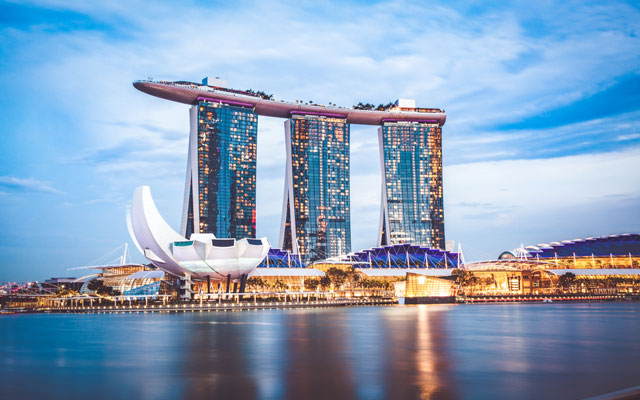
Singapore’s MBS will host IDEM 2022 and future editions
IDEM 2022 expects to welcome over 500 exhibiting companies and over 9,000 participants over the course of three days. Attendees can look forward to a compact event experience from the point of arrival, with registration counters and all exhibition halls located on a single level.
In keeping with the future forward philosophy and driven by the success and positive feedback received from the online edition of IDEM 2020, IDEM will debut an online platform in 2021. This new platform aims to continuously engage and connect with the community, commencing with the introduction of insightful content.
Organisers have also presented a refreshed visual identity for IDEM, symbolised by its logo, which will underscore the new vision, Bridging Business and the Future of Dentistry, at future editions of the event.
The dental exhibition and conference has been in session since 2020.
What inspired the creation of the Japan MICE Association?
Historically, Japan has been very good at doing conventions. Japanese newspapers often refer to MICE with the word “conventions” in parentheses so, to a Japanese, MICE is about big tradeshows, conventions or summits. There is still this miscommunication.
In the past few years, I’ve been running meetings and incentives with my company Luxurique, but I couldn’t get people to work with me for smaller meetings, incentives or tailored events. As there was this huge gap in understanding, I decided to set up the association, which focuses on the meetings and incentives aspects of MICE.
What other challenges does Japan face and how is the association helping to address them?
With a lack of experience and knowledge related to meetings and incentives, Japanese companies can have problems communicating with clients. Our goal is to help them speak the same language. We want Japanese companies to understand that a meeting or incentive needs to be on brand, managed to perfection and reflect the values of the company, from the moment the client touches down in Japan to the moment they leave. That’s the component that we’re trying to bring to the table, not a cookie-cutter offering.
What are the association’s goals?
Japan’s inbound market has grown so rapidly, but there is still room to grow and room for us to become better in what we do. We want members to grow the market together and ensure that Japan becomes a destination for meetings and incentives.
To achieve that, we are putting together study groups and educational seminars. We exist to educate everyone, encourage peer learning and offer mentorship for companies. Our goal is a community in which members work together rather than fight for market share. In five years, I envision every member to have grown profoundly, maybe even fivefold.
How is the association working with partners and stakeholders?
We are working very closely with PATA (Pacific Asia Travel Association) and hope to learn from our peers across the Asia Pacific. Lots of Asian countries have grown substantially in the meetings and incentives space in the past decade, but Japan has stayed put. I think a lot of companies in Asia Pacific want to send their meetings and incentives here, so we are in a strong position as long as we develop our knowledge and capability together.
In Japan, we are working with a lot of cities and prefectures because they believe their city is not big enough for a huge convention but can be a good place for a meeting or incentive. Osaka, Fukuoka and Kyoto are currently popular for meetings and incentives, but we are only seeing the tip of the iceberg in terms of demand. Third-tier cities will become popular, particularly in the next few years, as they are smaller and more isolated. We want to educate them to help them prepare for business groups.
How has the association been affected by Covid-19 and what does the future hold?
It’s made us take a step back a few years and has impacted business for members. We’re now holding online conferences because we want members to understand the full meaning and potential of MICE and be ready when people come back. Japan has been listed as a number one destination that people want to travel to once borders open.
Post-Covid-19, we may not have huge conferences coming in for a while, but we will see demand among smaller incentive groups of five, 10 or even 20 people. These groups will want deeper experiences, so members must ensure they offer value. In the next few months, we want to educate members on the value that meetings and incentives need to offer in order to appeal to inbound clients.
Destination Marketing Organisations’ (DMOs) traditional role has been to develop and promote the destination and attract visitors that generate direct and indirect expenditure in the local economy along with intangible social and economic benefits.
Attracting “visitor expenditure” is the underlying motivation for public sector investment in DMOs and convention centres. Expenditure in venues, hotels, dining, retail, attractions, etc.
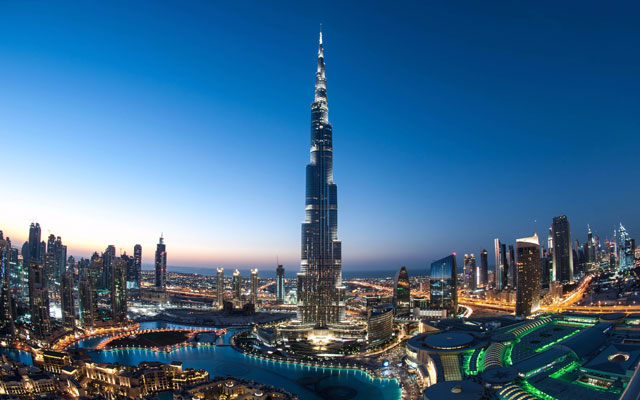
Dubai is actively building its capacity to host hybrid events, which in turn will bring about visitor expenditure
As Covid-19 continues to wreak havoc, it is accelerating the shift of conference and meetings to virtual and hybrid formats. It is extremely difficult to predict when freedom to travel and confidence will return.
But it will not be any time soon.
Few DMOs are actively pursuing hybrid events. DMOs’ reluctance for virtual events is logical. But DMOs ignoring hybrid events will be a mistake.
Virtual only events are attractive right now due to regulatory barriers on travel and gatherings. The demand is expected to subside once the barriers to physical events are lifted and confidence returns. A small share of events will opt to remain in virtual only mode. An extended Covid period will favour this level of permanent shift due to a longer take-up period and rapid improvement in technology.
But virtual events have no physical attendance i.e. no visitor expenditure. They are not typically anchored to a destination.
DMOs cannot justify pursuit of virtual events that don’t directly lead to visitor expenditure or hotel taxes, except in instances that present a compelling destination profiling opportunity.
Hybrid events are different. These events are a mix of physical and virtual. They are anchored to a destination and lead to actual visitor expenditure.
Prior to Covid-19, hybrid events had a negligible market share. DMOs did not invest resources in this. After Covid-19, hybrid events will represent a market share that DMOs cannot ignore.
This will occur despite the aggressive response of governments, airlines, hotels, and DMOs to attract physical events that generate visitor expenditure.
DMOs don’t know specifically which events will choose this format but it will be many. They can’t afford to wait. Singapore and Dubai are examples of destinations actively building their capacity to host hybrid events.
DMOs need to prioritise resources on physical events that generate maximum expenditure and taxes. But they should also pursue hybrid events that meet set thresholds for expenditure and destination profile.
Planners need to know if the DMO will support hybrid events, and how. DMOs need to take inventory of their hybrid-ready venues, figure out how best to support hybrid events, how to leverage the vastly larger audience, and how to deal with multi-site hybrid events that involve competing destinations. They need to revise the incentives and sales tools focused on physical events to next-gen events.
Rod Kamleshwaran is a partner at GainingEdge, and leads the Convention & Exhibition Centre Development advisory team. His expertise is in the development and asset management of hospitality assets – convention & exhibition centres, hotels, and casino integrated resorts. A specialist in mixed-use developments, Kamleshwaran has advised government and private sector clients on projects with a completion value exceeding US$20 billion.
Just 10 minutes from Phuket International Airport on the serene northern coast, this 178-key, Bill Bensley-designed resort offers delegates a quiet, tropical paradise steeped in Phuket’s tin-mining heritage
The newly-opened Ritz-Carlton, Bangkok anchors the One Bangkok development with cosmopolitan elegance. Featuring the city's largest ballroom and a spectacular new penthouse suite, it delivers exceptional hardware and deeply authentic, soulful service for business and leisure travellers alike
Behind the imposing, Brutalist concrete that defines Zurich’s Oerlikon district lies a surprising secret. While its exterior honours the neighbourhood’s industrial roots, stepping inside Mama Shelter reveals a vibrant, neon-soaked world that is a far cry from its rigid shell




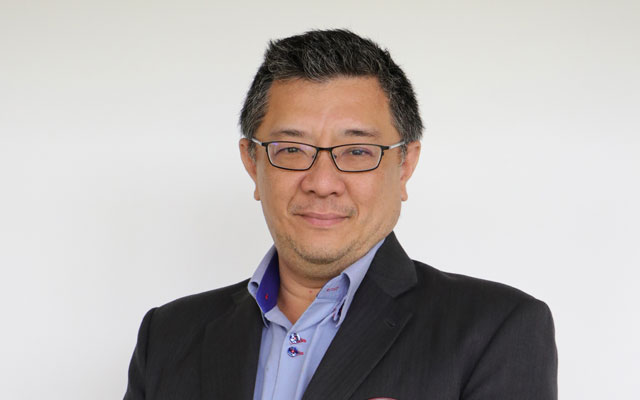

 Rod Kamleshwaran is a partner at GainingEdge, and leads the Convention & Exhibition Centre Development advisory team. His expertise is in the development and asset management of hospitality assets – convention & exhibition centres, hotels, and casino integrated resorts. A specialist in mixed-use developments, Kamleshwaran has advised government and private sector clients on projects with a completion value exceeding US$20 billion.




Onyx Hospitality Group has appointed Ethan Cai as senior vice president and head of China, as part of its long-term commitment towards the China market.
Based in the Shanghai regional office and reporting to Craig Bond, executive vice president, operations, Onyx Hospitality Group, Cai will lead the operations and development of the company’s portfolio of hotels and serviced apartments in China. He will be in charge of exploring new businesses and project deals, while overseeing the group’s ongoing expansion and pre-openings, including the upcoming Shama Hub New City Changchun and Shama Hub West Coast Haikou.
Cai brings over 20 years of experience to his new role. Prior to joining Onyx, he co-founded a start-up company pioneering the use of robots for the hospitality business.
He started his hospitality career with Hyatt, where he was the pre-opening team member of Grand Hyatt Shanghai. His other roles include general manager of the hotel division of China Jin Mao Group, as well as various senior positions at Morgan Stanley within the real estate investment and property divisions.
Cai also spent time with PVCP Group, a European leader in development and operation of tourism residences, as one of the core founding members of its China JV, where he led the business development team in signing 11 different development projects over a period of 18 months.