Asia/Singapore Sunday, 14th June 2026
Page 555

Three trends that will change business travel in the Covid-19 era

0

Brought to you by Amadeus

Renaud Nicolle, vice president, business travel, Amadeus Asia-Pacific

Since Covid-19 first hit, business travel has ground to a halt. Companies across Asia-Pacific shifted to remote working models almost overnight, amid border closures and social distancing restrictions. According to data from Global Business Travel Association (GBTA), almost every member company – up to 98 per cent – cancelled or suspended international business travel, with 92 per cent ceasing domestic travel as well.

Now, as some markets begin reopening, companies are considering how to return to the new normal in an environment where lockdowns will ease, but could be reinstated at any time.

With many APAC countries planning arrangements or “business travel bubbles” – Japan and Malaysia being the latest to negotiate quarantine-free business travel – companies are starting to think about their Covid-19 recovery.

While some business travellers may be missing human interaction and want to visit clients and colleagues, others may be wary of traveling due to the exposure to Covid-19. The situation will have a lasting impact on business travellers’ expectations on health and well-being, as well as flexibility and connectivity. Leaders therefore, need to ensure they can meet duty of care obligations at every step of the journey.

As companies look to resume business travel, they need to design a comprehensive corporate policy that can evolve with the changing environment and have the right technology in place to manage it. To do this, here are three trends that companies and their travel management companies (TMCs) should consider:

1. Design a flexible corporate travel policy

The first step in designing a travel policy is to understand the needs of travellers and the business. Employees will want to exercise greater control over their travel arrangements such as choosing a route with direct flights or better sanitisation checks. They will also want access to real-time information to help them make informed decisions such as schedule changes, cancellations or other potential disruptions.

Corporate travel policies also need to be agile to evolve in a changing environment. Companies will need to have the latest information on a specific country’s travel or quarantine restrictions, the health and safety measures which hotels and local restaurants have implemented, and local regulations on social distancing such as compulsory mask wearing. Each trip might also have an appropriate risk management process.

To efficiently manage this, companies will require tools such as Amadeus Mobile Messenger which can provide real-time status and alerts about specific regions and countries at risk and locate all travelers globally at a glance by region / country / city to keep employees safe and their business continuity plans on track.

TMCs like BCD Travel have created assessments to help companies gauge whether duty of care practices and policies are effective and comprehensive enough to cover travel risks. In addition, Expedia Group has introduced new initiatives to collect and display property-level health and hygiene information for travellers to view on its platform and understand the health and hygiene measures suppliers have in place.

2. Make travel contactless and frictionless

With new social distancing regulations at airports and traveller expectations for hygiene at all touchpoints, companies and TMCs will need to be aware of new technology that will emerge to create touchless and frictionless experience. With cloud technology, travelers can now check in from their home, workplace or hotel. Travelers can receive a boarding pass barcode on their mobile phones to print their bag tags.

Once at the airport, travellers can drop their bags at an automated bag drop unit, where touchless barcode scanners scan the bag and an automatic 3D analysis will ensure the bag is suitable to accept. Some airports are also trialing “off-airport check-in” enabling check-in and bag-drop to take place at different areas within the airport such as car parks, and dining areas, or off the airport entirely at hotels, train stations, and events.

The implementation of biometric-based technology for passenger processing at border control, security and boarding gates might also be accelerated by this crisis, as well as automated health testing. Companies need to ensure employees are informed on new developments that will impact their journey, as well as check with TMCs on new services like Airport VIP security access or ground transfer for a safer trip.

3. Focus on long-term digitisation and sustainability

Prior to Covid-19, there were growing expectations from employees and companies for more sustainable travel options. As corporations look to build long-term resilience into their operations, we can expect digital transformation and sustainability to be major areas of focus over the next decade. Today, many companies factor in sustainability in their air, ground and hotel sourcing processes in their corporate travel programmes.

Across the business travel space, there are a raft of initiatives to help companies, TMCs and travelers reduce their environmental impact. TMCs such as FCM Travel are working with airlines to offer companies carbon offsetting schemes for travelers. Hotels such as the Intercontinental Hotel Group (IHG) are reducing plastic consumption and using recycled materials for bedding. Amadeus’ corporate tools also enable TMCs to track and understand their carbon footprint for business travel in the booking and pre-trip phase.
Singapore to gradually resume MICE events

0
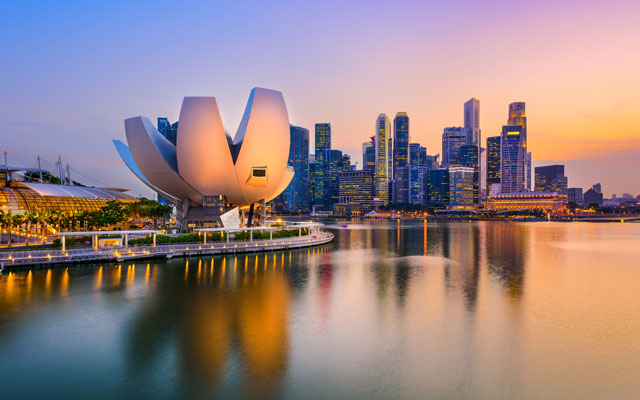
Applications to hold MICE events in Singapore will finally begin next month

Business meetings, incentives, conventions and exhibitions can soon resume in Singapore, as the Singapore Tourism Board (STB) will open applications to organisers from October 1, 2020.

These events must be limited to 250 attendees, and organisers must demonstrate their ability to implement Safe Management Measures that meet a set of health and safety outcomes, including that all foreign delegates will be required to use TraceTogether to facilitate contact tracing. More details will be released at a later stage.

Applications to hold MICE events in Singapore will finally begin next month

STB and the Ministry of Trade and Industry will review all MICE event proposals to launch pilot events, with the first being the Singapore International Energy Week Conference in October 2020. These events will provide insights and data for STB to adjust future protocols for safe business events.

For large-scale tradeshows and exhibitions, a new prototype has also been developed that will enable the same degree of interaction as pre-Covid times, but with minimised infection risks. This prototype was formulated by Singapore’s Alliance for Action on Enabling Safe and Innovative Visitor Experiences, co-led by Lee Seow Hiang of Changi Airport Group and Kwee Wei-Lin of Singapore Hotel Association.

The prototype will be tested at several pilot events later this year, starting with TravelRevive – powered by ITB Asia & STB in November. In preparation for this event, the Alliance is working with relevant government agencies and industry stakeholders to facilitate a seamless and safe visitor experience from arrival to departure.

To prepare Singapore for the resumption of leisure travel, the Alliance has also designed safe itineraries to also be trialled with the MICE delegates of TravelRevive. These itineraries comprise leisure activities that comply with safe management guidelines and also provide high-quality bespoke experiences.

Keith Tan, chief executive, STB, said: “The MICE sector is a strategic one for the Singapore economy, and its safe and gradual resumption will safeguard jobs and core capabilities. Public health and safety remain our utmost priority, and we have worked closely with the industry to create strict protocols and develop new ways of organising events. These pilot events and solutions will help Singapore lead the way as a safe, trusted and innovative destination for MICE events.”

By 4Q2020, a new travel insurance product for inbound travellers covering critical Covid-19-related expenses will also be introduced. It is currently being developed by the industry in hand with government agencies.

These announcements come on the back of STB’s Safe Business Events Framework for business events of up to 50 attendees, which was first announced in July 2020 and commenced with two pilot events, the 2020 IEEE International Conference on Computational Electromagnetics on August 24-26, and the Asia Pacific MedTech Virtual Forum 2020 on September 24.

To guide the MICE industry on safety measures during the gradual resumption of business events, STB is collaborating with the Singapore Association of Convention and Exhibition Organisers and Suppliers (SACEOS) and Enterprise Singapore to launch an Event Industry Resilience Roadmap later this month.

IAPCO launches virtual educational platform

0
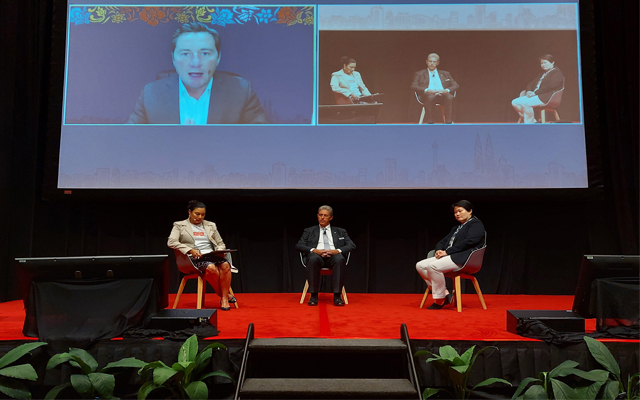
IAPCO's Martin Boyle (on screen) joins in the launch event virtually; with KLCC's Alan Pryor (middle) and MyCEB's Tan Mei Phing (right) in physical attendance

More than 130 Malaysian business events industry players have signed up for International Association of Professional Congress Organisers (IAPCO) virtual training platform webEDGE, with more – especially from the PCO sector – expected to sign up in the coming days.

The IAPCO Congress Management Programme, IAPCO webEDGE, is aimed at upskilling Malaysia’s professionals to help them the highest standards of project management skills for conference and event delivery, and to provide Malaysia with a competitive advantage when bidding for international events.

IAPCO’s Martin Boyle (on screen) joins in the launch event virtually; with KLCC’s Alan Pryor (middle) and MyCEB’s Tan Mei Phing (right) in physical attendance

The Congress Project Management Package comprises 14 online modules of educational content which can be accessed from any Internet-enabled device and learnt at one’s own pace. Delivered by 24 meeting industry experts, the 14 modules in the Congress Project Management Package covers areas such as risk and crisis management, budgets and cash flows, cultural intelligence, sponsorship, legacy and project planning.

Through the partnership Malaysia Convention & Exhibition Bureau (MyCEB) and Kuala Lumpur Convention Centre (KLCC) secured with IAPCO, Malaysians who sign up for the course will obtain a 50 per cent discount on the total course fee.

IAPCO webEDGE was launched by Tan Mei Phing, director of business events, MyCEB; Alan Pryor, general manager, KLCC and chairman of Business Events Council Malaysia; and IAPCO’s CEO Martin Boyle last week. During a panel session, they also discussed the importance of continued professional development and why Malaysia needs to address this skills shortage.

Tan shared: “In the pre-Covid years, MyCEB was supporting more than 300 events annually, but the challenge was a lack of internationally recognised PCOs in Malaysia to manage these events held in Malaysia on an international level.”

Tan opined there will be “a surge of events in Malaysia in the coming years” and urged event professionals to seize the opportunity to arm themselves with skills that will help them be ready for future demand. Having more certified homegrown PCOs, she added, will be imperative to the growth of Malaysia’s conference and congress sector.

Following the panel discussion, Barbara Calderwood, divisional lead associations with MCI Group and IAPCO council member presented an introduction to IAPCO webEDGE. This was followed by a workshop session to help participants identify their professional strengths, weaknesses, opportunities and threats which will be used as a base in developing the custom training module for Malaysia.

Sarawak chosen as regional host for upcoming ICCA congress

0
The ICCA Sarawak local host committee ready and raring to go

Sarawak has won the bid as the Asia Pacific host of the Regional Hubs ICCA (International Congress and Convention Association) Congress 2020, which will run simultaneously alongside the Global Congress in Kaohsiung, Taiwan.

The Sarawak Asia Pacific Regional Hub ICCA Congress 2020 will take place from October 31 until November 5, 2020, at the Borneo Convention Centre Kuching with BESarawak as the local host and organiser.

The ICCA Sarawak local host committee ready and raring to go

As Malaysia’s borders remain closed, the hybrid event in Sarawak will see the physical convergence of association executives, local and national industry professionals and ICCA members from all over Malaysia while their counterparts from other parts of Asia Pacific can join virtually.

The Sarawak Asia Pacific Regional Hub ICCA Congress 2020 will be themed ICCA Tribe Legacy and will focus on the broader value of conventions which goes beyond direct delegate expenditure.

Sarawak’s Minister of Tourism, Arts and Culture and Minister of Youth and Sports, Abdul Karim Rahman Hamzah, said: “Sarawak is in the midst of consolidating preparations for the implementation of our all-new “Tribe Legacy Sarawak” programme that will be adopted from 2021 onwards. This will provide a ground-breaking take on evaluating the contributions of business events from a Malaysian perspective to promote a healthy balance between social inclusivity, environmental sustainability and economic prosperity.

“Legacy building is a “win-win” for the local host organisations, professional sectors, government entities and the society at large. In short, everyone benefits from convention legacies.”

Penang welcomes a Courtyard by Marriott

0

Marriott has opened the Courtyard by Marriott Penang – the first Courtyard in Malaysia.

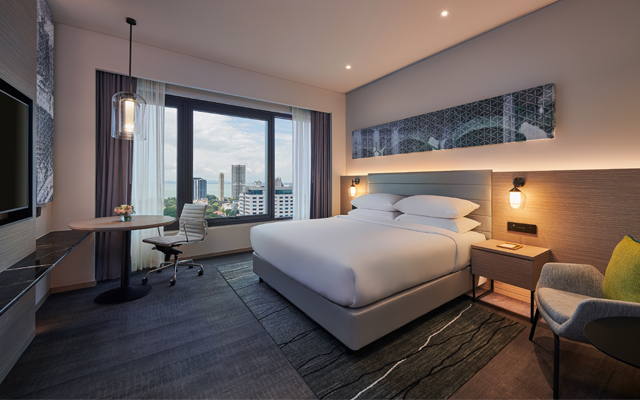
Located along the bustling Jalan Macalister in the heart of Penang’s UNESCO-listed George Town, the 199-room hotel boasts event spaces such as a pillarless ballroom good for 150 guests. There are also eight more meeting rooms and one VIP room for smaller corporate groups, each fitted with the latest audio-visual equipment.

Additional facilities include a business centre in the lobby, 24-hour fitness centre, an outdoor infinity pool overlooking Penang Hill, the Gin Library bar, and an all-day dining restaurant Penang Kitchen.

High hopes for Asia

0

Considering the rise of hybrid events, how would you gauge the future demand for business events to Asia?
Hybrid events are here to stay, even when the pandemic goes away. (The technological aspect) brings many benefits – flexibility, cost effectiveness, scalability, environment, etc – but it cannot beat live events because of its emotive aspect. There is still pent-up demand for F2F meetings, and Asian travellers have been shown to have more demand for travel and are itching (to fly).

There is also still a demand for European travellers to Asia. Many have the mentality that at some point in 2021, physical events will return, because of the perception that Asian countries have handled the crisis well.

How much will a country’s response to the pandemic define how quickly business will return?
Within Asia, the countries that have proven their procedures are effective against the virus will see the fastest return of actual demand. Their ability to control the pandemic and the measures they have taken will play a huge role in the countries that travellers decide to fly to.

What other factors will influence this interest to be converted into actual business in the new world?
Air travel is another large factor – the ability of airlines to disinfect planes and ensure social distancing. Chartered planes will be something groups will look into for safety, and many charter companies are trying to push lower rates. It also provides more control. Safety is the new luxury and gold standard.

Hotels also need to be sufficiently prepared to enable as many contactless points as possible, with procedures in place for hygiene and social distancing. Hotels can help isolate events by compartmentalising into different areas, floors or wings, to manage people flow and reduce intermingling.

Bilateral agreements will also play a large part. Green lanes between countries will act as a facilitator.

What are some examples of countries in Asia that are inspiring traveller confidence?
Aside from Singapore, which I truly feel is a great example of inspiring confidence, two countries that I feel are doing well on keeping local transmissions low and hygiene standards high, while also being proactive in their approaches, are Thailand and Taiwan.

Some examples of proactive and out-of-the-box thinking include how Thailand is considering opening up to long-stay tourists by creating a closed-loop resort area on the island of Phuket. After a specified number of days and testing within this area, they would be allowed to explore the island outside the resort area.

Taiwan has also created cruises around its islands and “flights to nowhere” for domestic tourism, to generate income for these two hard-hit industries.

Which markets do you believe are most likely to see the fastest return of actual demand?
Our Belgian agencies are very optimistic about organising events, and they were the last to cancel or postpone their planned events for 2020. We have also been surprised by new requests for incentives next year – as early as March 2021 – from our German and Swiss markets. Those are definitely the markets that we are keeping an eye on.

What developments are you keeping a keen eye on?
A lot of hotels are building digital studios in their meeting rooms, to facilitate smaller meetings that can be broadcast or streamed for hybrid or virtual events. This studio-like environment is a game changer, and will likely become the new AV standard in hotel offerings.

There has also been a creation of small pods of domestic meetings in different destinations that are connected globally with equipment. In these cases, the moderator and panel can be totally virtual, but they are connected to smaller (physical) meetings across the world.

How is 8th Wave innovating to support your customers and to pre-empt new and emerging demands?
We are focusing on capability growth and becoming digital event managers. A lot of effort has gone into researching and comparing platforms, technological developments and the surge of vendors globally, to keep abreast (of trends) and be able to select the best option for our clients.

We have also been finding creative and emotive ways to engage participants through various platforms and activities, for pre-, during and post-event. In pre-empting demand for hybrid events, we are exploring what physical events cannot achieve and how to use these technologies to safeguard against future unforeseen events, be they natural or political.

To keep our clients abreast of developments, we have also adopted new communication channels – Telegram, Twitter and LinkedIn – and developed our own SOP to deal with the crisis.

TTG Conversations: Five questions with Carl Jones, vice president and head of travel, SAP Concur Asia Pacific and Greater China

0

Travel will continue to be a necessary activity in meeting critical business needs, notes Carl Jones, vice president and head of travel, SAP Concur Asia Pacific and Greater China, in reference to the company’s latest research.

However, corporate travellers now have new concerns as they prepare for the resumption of travel assignments.

In this new episode of TTG Conversations: Five questions video series, Jones talks about how future corporate travel policies should look to answer new traveller concerns, the relevance of travel management companies as travellers seek greater control over their own trips, the rising importance of AI and data science in travel management, and more.

TTG Conversations: Five questions with Gregg Wafelbakker, Tourism New Zealand

0

Destination communications and market presence must not fade out even when tourism is restricted, opine Gregg Wafelbakker, general manager Asia with Tourism New Zealand.

In this new episode of TTG Conversations: Five questions video series, Wafelbakker shares his views on how destination marketing strategies and the role of a national tourism organisation have to evolve with present challenges.

Meliá Koh Samui welcomes new wellness manager

0

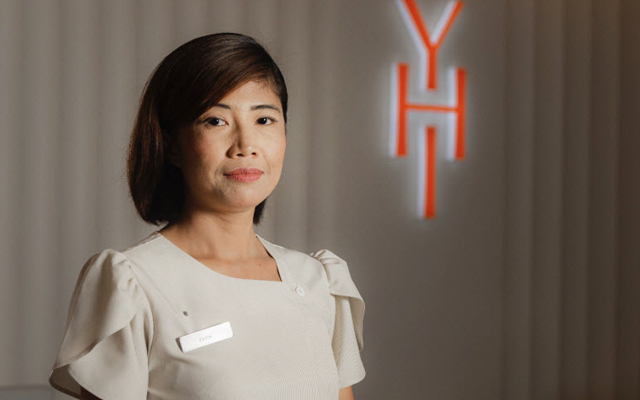
Kantima Chompoolad has been hired as Meliá Koh Samui’s wellness manager.

In her new role, Chompoolad oversees Meliá Koh Samui’s health and safety measures to combat Covid-19 as well as YHI Spa’s daily operations.

Under the Stay Safe With Meliá global programme, which involves the introduction of sweeping measures at Meliá Koh Samui in response to the pandemic, Chompoolad is tasked with verifying the resort’s programme compliance and taking care of guests’ emotional wellbeing.

Kantima Chompoolad, Wellness Manager, Meliá Koh Samui

In addition to developing YHI Spa’s menu, she will introduce wellbeing programmes that include spa therapies, healthy cuisine, as well as activities such as yoga, meditation, tai chi, and Muay Thai boxing.

With more than 15 years of hospitality wellness experience, the Thai national spent the last decade serving as the spa manager at Hansar Samui, also located on the Koh Samui Island.

New GM for Sheraton Grand Mirage Resort, Gold Coast

0

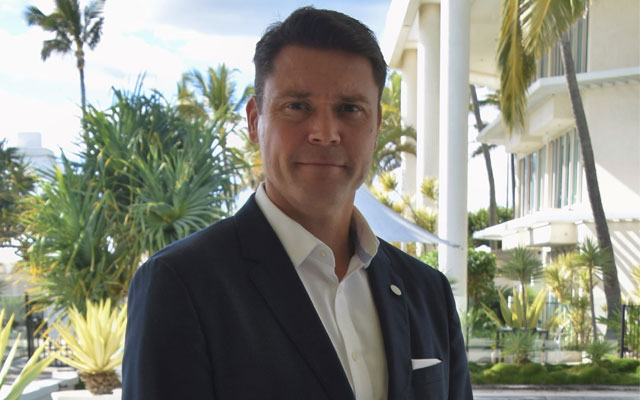
The Sheraton Grand Mirage Resort, Gold Coast has appointed Keith Massey as its general manager.

Boasting over 25 years’ experience in the hospitality industry, Massey was most recently the general manager of the JW Marriott Khao Lak Resort & Spa in Thailand. Prior to that, he has held various positions across the globe in Singapore, China, India, France, Hong Kong and Malaysia.

Reviews

The Slate Phuket

Just 10 minutes from Phuket International Airport on the serene northern coast, this 178-key, Bill Bensley-designed resort offers delegates a quiet, tropical paradise steeped in Phuket’s tin-mining heritage

The Ritz-Carlton, Bangkok

The newly-opened Ritz-Carlton, Bangkok anchors the One Bangkok development with cosmopolitan elegance. Featuring the city's largest ballroom and a spectacular new penthouse suite, it delivers exceptional hardware and deeply authentic, soulful service for business and leisure travellers alike

Mama Shelter Zurich

Behind the imposing, Brutalist concrete that defines Zurich’s Oerlikon district lies a surprising secret. While its exterior honours the neighbourhood’s industrial roots, stepping inside Mama Shelter reveals a vibrant, neon-soaked world that is a far cry from its rigid shell