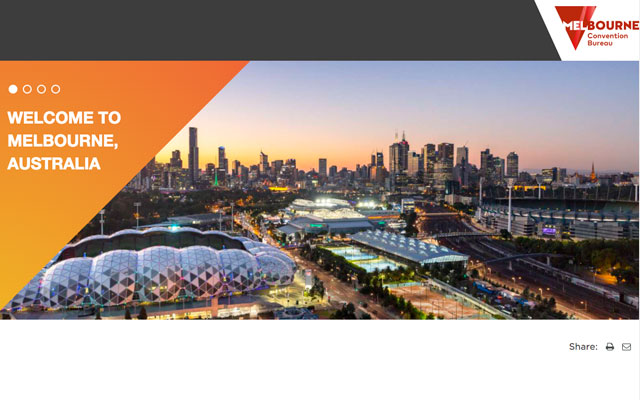
A screenshot from the recently-launched site dedicated to planners
The Melbourne Convention Bureau (MCB) has established a new Delegate Destination Site for Melbourne and the rest of Victoria, to help event planners and organisers step up on their digital marketing efforts for these destinations.
Conference organisers who have begun tapping on the Delegate Destination Site for their marketing efforts have leaned towards the site’s virtual reality and experiential resources, a testament to the rise of hybrid and virtual events in a Covid-19 business environment, said the bureau in a statement.
A screenshot from the recently-launched site dedicated to planners
Also available on the website are key travel information, inspiring itineraries featuring the destinations, as well as special offers from MCB’s partners.
Event planners and organisers can access the Delegate Destination Site through a button on their own conference websites and easily synthesise it with existing marketing channels.
The Delegate Destination Site was established to ease the load of MCB’s clients – who are grappling with travel curbs, financial challenges, shifting trends in consumer sentiment, and a new level of health and safety expectations – by offering new ways to market the destination and “(boost) delegate registration to upcoming events”, said Julia Swanson, CEO, MCB.
Swanson emphasised the need to rethink marketing amid the disruptions caused by the pandemic.
“We need to be providing alternative solutions (to usual, traditional conference promotion and marketing strategies) to ensure clients can keep promoting their meetings, particularly as face-to-face engagement opportunities are limited,” she said.
A consolidated policy will help make the management of safety and security issues for business travellers much easier
While the Covid-19 pandemic has caused companies across the globe to restrict non-essential business travel, it has also served as a reminder to many about the importance of having a consolidated travel programme.
Over the last few months, as countries began closing their borders and airlines cancelled thousands of flights, organisations have hurried to locate and evacuate their travelling employees. At the same time, they have also sought ways to track unused and cancelled bookings in an effort to secure compensation from airlines, hotels and other suppliers.
In this fluid and fast-changing environment, it’s likely that companies who have taken a more consolidated approach to managing their travel have fared better than those with more fragmented programmes.
What does consolidation mean?
Consolidation refers to the convergence of all components of a managed travel programme at a local, regional or global level. In practice, this means leveraging a company’s total travel volume and concentrating sourcing with an optimal number of suppliers, as well as standardising travel policies, processes and tools, and using data to drive decision making.
This approach helps organisations achieve many key goals including driving cost savings, being better positioned to meet their duty of care obligations, creating an improved experience for their travelling employees – and by and large being more strategic in how they manage their travel programmes. Simply put, when choosing supplier partners, the goal should be to maximise coverage and minimise overlap.
Still, a relatively small proportion of companies in Asia Pacific have well-consolidated travel programmes. Many fast-growing multinationals in India and China still have incredibly fragmented programmes, with wide variations in policies, processes and suppliers across different countries, and sometimes even within the same country. Often, this is viewed as a risk management strategy, as companies are worried about suppliers going bust. Furthermore, there is a sense that working with multiple suppliers keeps them all on their toes as employees can choose between them, and this in turn improves service levels.
However, this also impedes the ability of companies to meet many of the key objectives outlined above. Instead, they should do proper due diligence on suppliers to address concerns around the viability of their businesses. At the same time, they should secure commitments from suppliers to ensure their service expectations are met.
From our conversations with travel managers in the region, we have learnt that while they generally recognise the importance of consolidation, they often face resistance to change from within their organisations and find it difficult to articulate the benefits to senior leadership.
So while now might not be the best time for companies to initiate large-scale RFPs, it is a great opportunity for travel managers to start building the case for consolidation with their internal stakeholders by outlining the clear advantages.
What are the benefits of consolidation?
Greater transparency – Having centralised data in a standard format gives a clearer picture of what is happening with your programme across the world. When you are able to quickly retrieve crucial information from a single platform, analysing and strategically improving your travel programme becomes much easier, and it also yields many other benefits.
Cost savings – Research from CWT Solutions Group has shown that consolidating travel programmes can help companies reduce their total travel cost by up to 20 per cent on average. This is partly because you are able to more efficiently analyse data related to your travel programme – such as booking behaviours and spend patterns – and identify opportunities to drive savings. At the same time, you can also leverage bigger travel volumes and spending to negotiate lower rates with suppliers like airlines, hotels and ground transport providers.
Improved safety & security – Centralised data also makes it easier to quickly locate all of your travelling employees in the event of a security risk, and make arrangements to bring them home safely, instead of trying to piece this information together from multiple data sources.
Better travel experience for employees – Working with a single TMC globally means your organisation’s travelling employees will have a more consistent experience, no matter where they are based or where they are travelling to, leading to greater satisfaction and well-being.
Reduced complexity – Working with fewer suppliers makes it easier to implement changes across your travel programme. This includes the ability to standardise travel policies such as class/category rules, advance booking etc., as well as implement new technology solutions such as booking and pre-trip approval tools across different markets.
Consolidation has long been considered a best practice in managed travel on account of its many benefits. However, moving from a highly fragmented programme to one that’s consolidated requires some planning and preparation.
In our years of experience helping companies advance their travel programmes, we have observed some common mistakes. In the next instalment of this series, we will discuss a few important things to consider before starting on your consolidation journey.
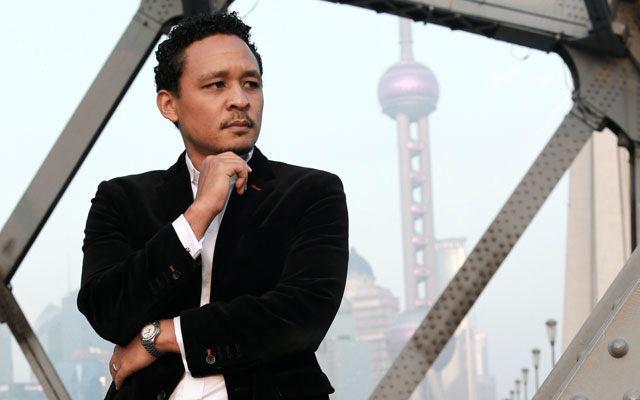
Akshay is responsible for driving CWT’s growth strategy, and has played an instrumental role in creating a winning sales culture in the region.
Prior to his current role, he led the APAC CWT Solutions Group, the company’s consultancy division, where the team delivered significant value in areas including supplier negotiations, travel policy and compliance, traveller engagement, and data insights. Akshay also frequently represents CWT at various industry and non-industry forums.
A masterclass being conducted by chefs from Ngapali Beach Myanmar
Organiser of Food & Hotel Asia, Informa Markets, successfully held its inaugural virtual event, Food & Hotel Digital Week, from May 25-29, 2020, as well as launched Saladplate, an online-to-offline marketplace for the food and hospitality industries.
Ian Roberts, managing director-hospitality, food & beverage, Informa Markets, shared that the first Food & Hotel Digital Week, brought home the importance of digital platforms and tools, particularly in the current Covid-19 business climate.
Food & Hotel Digital Week
1 of 2
Speakers on the Accelerating Change panel
A masterclass being conducted by chefs from Ngapali Beach Myanmar
He added that digital events “are here to stay”, and will complement face-to-face events in aiding the recovery and growth of businesses after the pandemic.
The five-day event, which comprised of 12 webinar sessions and eight online product showcases, featured items from more than 300 suppliers worldwide, and registered an attendance of more than 5,000 industry players.
Of the 1,500 attendees – hailing from more than 20 countries and regions – who participated in the industry webinar series on May 28, more than 250 tuned into for five hours or more consecutively.
Tailored towards the needs of the industry amid the business and supply chain disruptions due to Covid-19, the webinars focused on areas such as food security and sustainability, food technology, and business intelligence.
Meanwhile, the Live Webinar Day on May 29 was attended by 428 industry professionals. Guest speakers from Google Hong Kong, the World Association of Chef’s Societies and the Malaysian Association of Hotels shared about buying food stock online, digital marketing for the F&B industry, and provided updates on tourism and hospitality in Malaysia.
There was also a Country Pavilion online product showcases featuring countries like France and Malaysia, which hotel buyers seemed the most engaged in. It was also found that many attendees were on the lookout for food-tech related products and disposables. There were also exhibitions on the Top 100 Foods and Top 100 Drinks, which seemed to appeal mostly to distributors.
A bi-monthly online event, the next Food & Hotel Digital Week is set for July 13-17, 2020.
The first edition of gamescom Asia, originally planned to debut in Singapore this October, has been postponed to October 14-17, 2021.
Gamescom asia is the first satellite event of the world’s largest event for computer and video games: gamescom. The event aims to showcase the diversity of gaming within the world’s fastest-growing games market – South-east Asia, while covering the global spectrum of the games industry, gaming culture, esports, regional and international releases and more.
The event aims to showcase the diversity of gaming in the region
It also seeks to serve as a platform for Asian game developers to explore partnerships globally, and act as a hub for international publishers who are looking for the next big thing in games. Attendees can also expect to see new releases and gaming-related offerings.
“As much as we would have loved to bring the event to life this October, the current global crisis has forced us to recalibrate our wants for gamescom asia. The health and safety of our visitors, exhibitors and staff is paramount.
“Moreover, for an inaugural event, we felt it was important to give the regional gaming community and fans the full experience of what an international event of this scale would be like, and not anything less,” said Mathias Kuepper, managing director of Koelnmesse Singapore, the organiser of gamescom Asia, in a statement.
Kuepper added that Koelnmesse will be refocusing its effort on 2021, as well as offer digital engagements leading up to next October.
The 2021 event will be held at the Suntec Convention & Exhibition Centre.
Dusit takes over management of Guam resort
Dusit International has taken over the management of the former Outrigger Guam Beach Resort with effect from June 1.
The Thai hospitality company will also assume management of the luxury retail centre next to the resort, The Plaza.
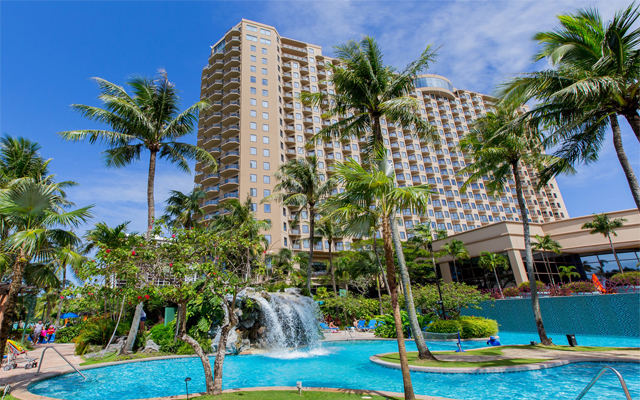
Located in tourist hotspot Tumon Bay, the 604-room resort has been renamed Dusit Beach Resort Guam and is currently undergoing renovations. So far, a splash pad has been added for families.
The two properties will add to the company’s existing portfolio in Guam, which includes the 421-key Dusit Thani Beach Resort, located next to the Dusit Beach Resort Guam.
IBTM Americas postponed to 2021
IBTM Americas will be postponed to May 19 and 20, 2021, due to controls posed by the Covid-19 pandemic.
Event organiser Reed Exhibitions Mexico said that these curbs, including travel restrictions, would “significantly impact the quality of the event”.
In the meantime, before the next face-to-face exhibition in Mexico City next year, Reed Exhibitions Mexico will hold a succession of virtual events during the remainder of 2020, through to 2021.
This year’s IBTM Americas was originally scheduled for August 26 and 27 in the Mexico City, host city for the event since its first run in 2018.
Fira de Barcelona readies to resume events in September
Spanish trade fair institution Fira de Barcelona (Fira) is planning for the resumption of its business events within the country soon.
Currently, Fira is working with Barcelona public health institution The Hospital Clinic to come up with health and safety protocols for its Montjuïc and Gran Via venues. The protocols will come into effect in September.
Once the green light is given by the authorities, Fira is planning to restart events with business fair BizBarcelona, and gastronomic trade show Alimentaria in September. However, the organisation acknowledges that resumption of activity will only be possible through the use of hybrid event models.
Queensland is one of the Australian states that may not even reopen domestically until perhaps September
Staggered state borders reopening throw wrench into domestic MICE plans
Stakeholders believe industry will find its footing by September
Strong message needed from venues to instil confidence in planners and attendees
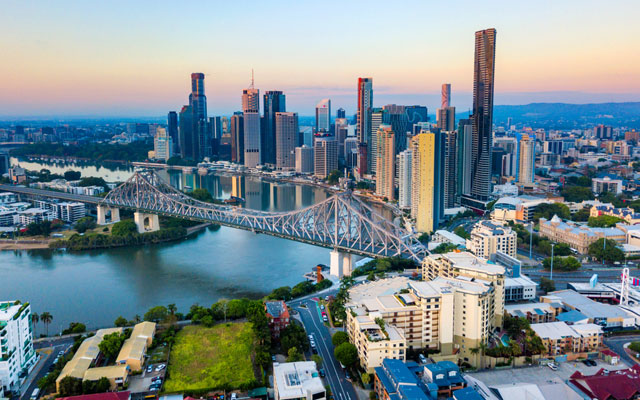
Queensland (its capital Brisbane pictured) is one of the Australian states that may not even reopen domestically until perhaps September
State leaders of South Australia, Western Australia, Queensland, Northern Territory and Tasmania are continuing to lock down their borders, putting the brakes on hopes of an imminent revival in domestic interstate travel as new Covid-19 cases dwindle.
The situation may also have implications for the business events sector, which relies on long lead times and certainty of lifted travel and meeting restrictions.
“It is difficult and it’s something that we are struggling with,” admitted Claudia Sagripanti, CEO of Exhibition and Event Association of Australasia.
“I wouldn’t call it a setback but there’s a challenge in Australia with the different state regulations that we can’t ignore,” she told TTGmice.
Nevertheless, industry leaders say domestic events will start happening within weeks, which will build confidence within the sector for more corporate gatherings to take place.
“Special events like weddings or awards nights will be ready to go, I would say from July onwards,” said Sagripanti. “Some of the major tradeshows and consumer shows will probably need a longer lead time but a lot of the venues I know have used this hibernation to do deep cleaning, restructure their kitchens, review menus and train staff on safe food handling. Hence, many organisers are ready.”
Noting the inconsistent state border reopening timelines, ICC Sydney CEO Geoff Donaghy, also a member of the Tourism Restart Taskforce, expected business events to start running in September, with confidence that interstate borders would be well and truly lifted by then.
“The agenda that we’re pursuing (with the government) is very cohesive coming from the industry, presenting solutions and options targeted at getting our events back and running in September,” said Donaghy. “If we get some indication that that could happen, then organisers could start their planning processes and work towards that date and that end.”
Queensland’s premier Annastacia Palaszczuk has indicated the state’s borders will remain shut until September, citing advice from the state’s medical authorities. It may lead to a scenario where residents in open border states can travel to New Zealand under a trans-Tasman bubble arrangement before they can travel to Queensland.
Still, Australian industry leaders say their months of advocacy with government authorities are beginning to pay off, with Sagrapanti noticing a shift in tone from state and national decision-makers.
“There has been a change in sentiment from the government. The drive has been coming less from the health department because they understand there are safety and hygiene protocols in place, and more from the economic drivers,” she said.
“For example in Western Australia we’ve seen, particularly in the last week, that they are willing to review the four square meter rule, dropping it to two square meters and that will make it more economically viable for venues to (re)open”.
But there are other hurdles apart from reopening borders that the industry needs to address, according to Donaghy. “It’s important to point out that there’s a journey of confidence and trust for not just for our clients, but for the delegates, attendees and exhibitors who make up those events as well,” he said.
“There has to be very, very strong messaging to the market that all the elements that make up the journey of someone deciding to attend a conference or trade exhibition have been addressed. They have to have confidence in the hotels they’ll be staying in, the venues where those events will take place, and the transport systems. Otherwise, we will be governed by the weakest link of confidence and trust in that chain,” he stated.
At press time, there is now also mounting pressure on state governments to reopen their borders and allow for larger numbers to gather after tens of thousands took part in Black Lives Matter street protests across the country, most wearing masks.
Australia’s health authorities are expected to meet today (June 8) to discuss easing lockdown restrictions to stage three, which allows for gatherings of up to 100 people.
For updates on the reopening of borders, check Tourism Australia’s interactive travel status map here.
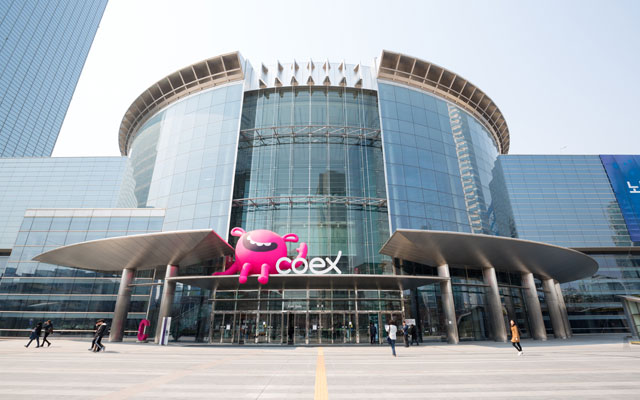
COEX will still hold physical exhibitions while also exploring online solutions
Seoul’s Coex convention and exhibition venue has launched an e-commerce service to facilitate contact-less business transactions for its exhibitors during the time of Covid-19 considerations.
The service, offered through a partnership with online commerce platform, Grip Company, is expected to commence from 2H2020. Once activated, consumers will be able to purchase products from exhibitors participating in shows held at Coex without having to visit the event in person.
COEX will still hold physical exhibitions while also exploring online solutions
“This service will allow consumers to purchase products and services of export companies through mobile apps in real-time,” shared Lee Dong-won, president of Coex.
He added that the online service will help to reduce face-to-face contact during business transactions, and will benefit small- and medium-size companies looking to expand their distribution channels and boost domestic demand.
Although Coex is investing in moving transactions online, the venue has not neglected face-to-face events. It held its first physical exhibition in three months since the outbreak of Covid-19, an event specialising in gardening and landscaping on June 3.
Coex also played host to the Seoul International Dental Exhibition & Scientific Congress (SIDEX) from June 5 to 7, where some 7,800 dentists were pre-registered for the event. It is regarded as the largest dental festival of the year. To encourage participation, event organisers dangled a lottery with prizes to be won by participants.
Although concerns were raised by the Ministry of Health and Welfare and the Seoul Metropolitan Government, the Seoul Dental Association pushed ahead with the event but with strict quarantine measures in place. This included the installation of thermal imaging cameras, the compulsory use of KF94 masks by attendees, as well as the disinfection of exhibition spaces.
Lee indicated that SIDEX’s push ahead will “help boost lacklustre sales from 1H2020”, and urged associations to work together with Coex to create a successful event instead of choosing to cancel their meetings.
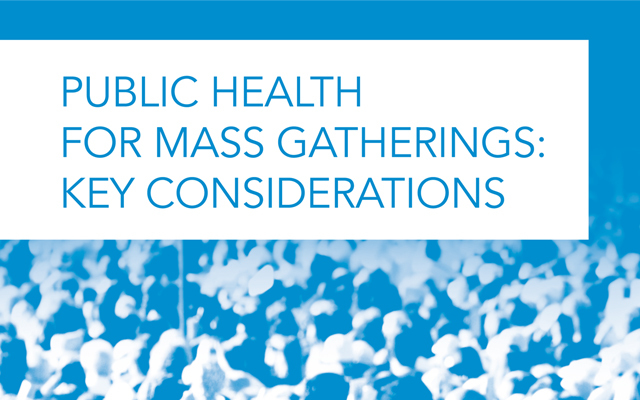
The cover page of the guideline document released recently
The World Health Organization (WHO) has revised its guidance document, Key planning recommendations for mass gatherings in the context of Covid-19, on May 29, to reflect recent new knowledge on the pandemic.
In the guidance document, WHO acknowledged both the risk of transmission posed by mass gatherings as well as the extensive political, cultural, social and economic benefits such events could bring to people and countries.
The cover page of the guideline document released recently
As such, it urges authorities to “assess the importance and necessity of an event and consider the option that it may take place, provided all associated public health risks are adequately addressed and mitigated”.
A three-step risk assessment exercise for mass gatherings is recommended.
First, the normative and epidemiological context in which the event takes place, which is defined as the host country’s existing regulations on public health and social measures to control the spread of the virus.
Second, evaluation of risk factors associated with the event, to assess the likelihood that the event may contribute to the spread of the virus and that the health services capacity may be exceeded by such spread.
Third, the capacity to apply prevention and control measures, which is defined by the ability to implement actions that can reduce the risks associated with the event in the planning, operational and post-event phases.
Recommended actions for each of these steps are fleshed out the document, which is accessible online.
In addition, WHO has developed tools that assign a numerical score to each risk factor and control measure, thus allowing for the calculation of a resulting overall risk score, which corresponds to a defined risk category and to a recommendation for the event.
It urged a regular review of the risk assessment, as the relative importance of the risk factors associated with the event, and consequently, the relevance of prevention and control measures, are dynamic.
WHO emphasised in the guidance document that it does not have the mandate to enforce any restriction, modification, postponement or cancellation of a mass event, or to authorise that the event may proceed. It recognises that it can only play an advisory role.
Interest in China from European meeting planners is warming up with the SITE Poland Chapter reaching out to suppliers last week (May 28) and DMCs reporting positive outcomes for targeted marketing initiatives since the Covid-19 outbreak.
There are still no details on when China will open to international travellers and the Covid-19 prevention steps that have to be followed, but optimism is being fuelled by reports that Chinese airlines have been mounting more international flights.
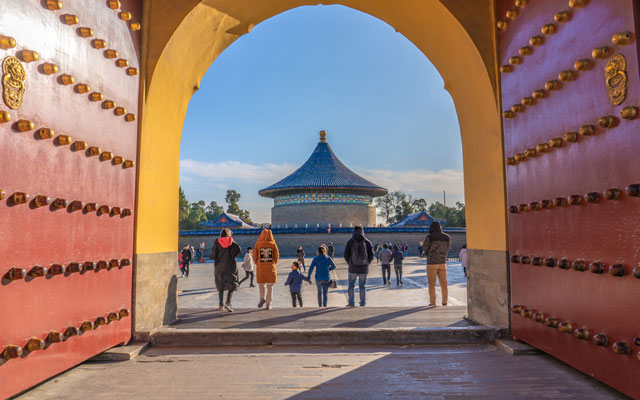
Gateway cities like Beijing are likely to remain uncrowded when China opens up; Temple of Heaven in Beijing pictured
Air China has launched flights between Taiyuan – a manufacturing base in Shanxi province about three hours by train to Beijing – and Warsaw, and Lot Polish Airlines is looking at restarting Warsaw-Beijing flights in July or August.
According to founder Liu Ping, China Star has received requests for face-to-face and hybrid meetings from two Chinese associations and a roadshow for a UK company. She added a construction company from the Netherlands is looking at China for a 2021 event.
Liu noted: “As we are also receiving requests for the 2022 Winter Olympic Games in Beijing from Japan, South Korea and the Netherlands, we are now updating our brochure for the event,” adding it would appeal to Polish meeting planners with clients who are “crazy about winter sports”.
SITE chapter Poland’s chairman, Grażyna Grot-Duziak, said picking China would depend on its borders opening up and adequate air capacity. And as companies have to take a risk going overseas, proper insurance and guarantees of safety will also need to be in place.
Chapter vice president for research and development Cezary Wilemajtys commented that “clients are keen to choose destinations with a high level of medical services” and this was a key factor for events to some destinations being cancelled.
Liu noted it would be a good time to visit Beijing and Shanghai immediately when China opens up as its gateway cities will not be crowded, five-star hotel rates have softened and domestic air ticket prices have also been reduced.
Moreoever, as a big country with a lot to offer, she observed post-pandemic itineraries can feature more natural elements and outdoor activities.
Kris Van Goethem, managing director MICE, leisure and sport, Thomas Cook China, commented: “The only people who will be coming in 4Q are here for site inspections. For future planning, we hope we can go to one or trade fairs (in Europe) in 4Q to catch up with our clients and the marketplace.”
Goethem added that it is welcome news that the authorities are said to be supporting the industry by providing free booth space at major European shows.
What do you think the new normal of travel will be?
Business travel will return… in phases. We’re already seeing some signs of what that might look like in terms of the rise of international travel bubbles – like the New Zealand and Australia air corridor, and the China Green Channel programme where quarantine periods between designated countries are exempted.
Self-service will be a big trend as travellers and travel arrangers demand more choice on how they manage their bookings whether through an app, a chat window or a travel consultant. Social distancing trends will even extend the self-service trend into new arenas, such as self-check-ins at hotels.
What will be the most important to travel managers in the new normal?
This guidance around movement is changing all the time so travel managers need to have a good understanding of what the ‘new normal’ for travel looks like globally – such as what is required by countries in terms of quarantine periods and what are the hygiene protocols across hotels and different modes of transport.
For example, Hong Kong, Germany and even the UK are set to have 14-day quarantines on arrival which can easily run up the cost of a trip end to end.
It’s also important that travel managers align their travel programme with their organisation’s goals and roadmap for their business post-Covid-19. Defining a return on investment (ROI) for each trip will help travel managers define what an essential trip is for their particular company.
So, how would you define an essential business trip?
Companies will need to define what that means for them, and it will be different for each company, as will the strategic value of each trip to a business. It’s important to include new factors like quarantine periods when considering if a trip needs to be taken or not.
How will this affect corporate travellers?
Corporate travellers, particularly those who venture out on the road first, will be cautious and will need more reassurance from their company in line with government advice that the risk is low, and that they have access to 24/7 support if needed pre, during and post a trip.
Although we expect early business travel to be domestic, corporate travellers may need to be prepared to work from a hotel for two weeks if they cross a border which carries a 14-day quarantine.
How can both travel managers and corporate travellers prepare for this new normal?
That’s exactly what we’re doing now with our customers – getting them ready to get their travellers back on the road.
For travel managers, the focus is on managing travel risk across all aspects of business travel; from ensuring pre-trip approvals, to understanding suppliers new social distancing and/or health and safety measures so that their travellers can go on the road feeling confident that they have visibility to all the safest available options.
Important sources of information include government advice for official notifications or first-hand feedback from TMC traveller communities to get tips and tricks from what is happening on the ground from the business travel re-emergence pioneers.
Now is a good time to come up with a plan to maximise time on the ground, making sure travellers are equipped when heading out to the office from a hotel room for instance, or building in a leisure policy to include downtime for extended stays.
For travellers, they need to make sure they familiarise themselves with the details of their trip, any precautions that need to be taken, and know-how they can access support on the road, if needed, via their travel manager or TMC like us.
Which markets do you think have the highest chance of a full recovery soon?
As we’ve seen in Asia, recovery in terms of the easing of lockdown measures is linked to reduced infection cases. In countries like China, for instance, consumer confidence in domestic travel was up 60 per cent at the end of April, with people feeling safe to return to work according to a recent McKinsey report.
We’re also starting to see that across Europe, countries like France and Spain starting to reopen businesses and domestic travel picking up.
We expect to see recovery in line with ‘travel bubbles’ where neighbouring countries have quarantine exemptions in place like for China’s Green Channel Program where media outlets report that countries like South Korea, Singapore, Japan, Britain, Germany, France, Italy and Switzerland have already been given the green light.
What other business travel trends has Egencia noticed?
In terms of how we gather to do business, we’re likely to see a hybrid of digital connection and domestic travel in the near future. The further afield the journey, the more complications (and costs) may arise, which is why we may see companies focusing business travel in markets where they have a team on the ground who are able to maintain those in-person connections with domestic clients, partners, and suppliers.
As new facets – such as redefining trip ROI and maintaining a flexible travel policy – are being added to business travel management, one thing remains unchanged: smart organisations will approach business travel as a strategic investment and aim to align their travel programme within the new normal to achieve their business goals.
The newly-opened Ritz-Carlton, Bangkok anchors the One Bangkok development with cosmopolitan elegance. Featuring the city's largest ballroom and a spectacular new penthouse suite, it delivers exceptional hardware and deeply authentic, soulful service for business and leisure travellers alike
Behind the imposing, Brutalist concrete that defines Zurich’s Oerlikon district lies a surprising secret. While its exterior honours the neighbourhood’s industrial roots, stepping inside Mama Shelter reveals a vibrant, neon-soaked world that is a far cry from its rigid shell
A polished urban retreat designed for business travellers, Hyatt Regency Kuala Lumpur at KL Midtown combines thoughtful design, seamless service, and exceptional facilities.




 Akshay is responsible for driving CWT’s growth strategy, and has played an instrumental role in creating a winning sales culture in the region.