Asia/Singapore Thursday, 9th April 2026
Page 561

TCEB rolls out Covid-19-related resource centre and framework, alongside new MICE campaign

0

The Thailand Convention & Exhibition Bureau (TCEB) has launched a real-time news service dedicated to business events during the Covid-19 pandemic, created a framework entitled Exhibition New Norm Standard Operation Procedures, as well as rolled out a new campaign.

The website includes government insight and measures on the status of the Covid-19 infection in Thailand and worldwide, as well as online resources for organisers and visitors.

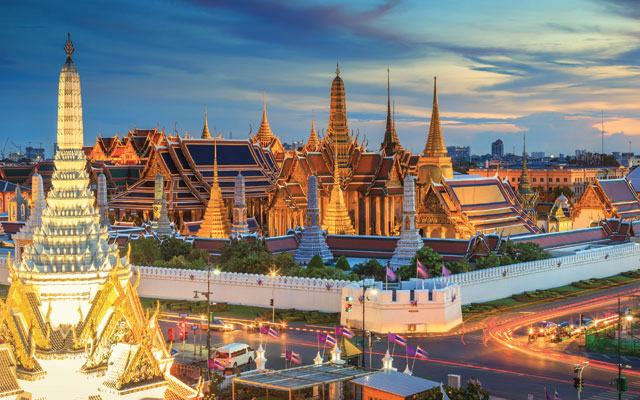
Business is underway in Thailand as the sector restarts under new normal conditions; its capital, Bangkok pictured

Information is collated in real-time from both domestic and international news feeds, gleaned from official sources such as World Health Organization (WHO), World Tourism Organization (UNWTO), Department of Disease Control, Department of Public Relations, and Tourism Authority of Thailand.

Further updates on the impact of Covid-19 have been sourced from World MICE & Events associations active in Thailand and overseas, such as ICCA, GBTA, SITE, UFI, PCMA, as well as local associations, venues, airlines and leading business establishments.

TCEB has also worked closely with Thailand’s Ministry of Public Health and business event industry partners such as Thailand Incentive and Convention Association (TICA); Thai Exhibition Association (TEA); Event Management Association (EMA) and Thai Hotels Association (THA) to develop a new set of guidelines and measures.

Named Exhibitions New Norm SOP (Exhibition New Norm Standard Operation Procedures), the framework covers nine strict hygiene and public safety measures:

  • Screening measures before entering the building
  • Screening measures before entering the events
  • Measures for exhibitors and visitors during the event
  • Measure for personnel during set-up and tear-down
  • Hygiene measures inside the buildings
  • Meetings and seminar activities during the event
  • Emergency plan in case of encountering with people at risk of infection
  • Communication
  • Health records

Significant changes have also been applied to crowd control and safety management at exhibitions in Thailand. TCEB has worked alongside organisers to develop and promote hybrid exhibition solutions, encouraging exhibition businesses to implement some form of online innovation and technology solution when organising tradeshows throughout the Covid-19 pandemic.

To further stimulate the industry, TCEB has additionally unveiled a new marketing campaign, I M PEOPLE FOCUSED, that gives event organisers access to US$500,000 worth of financial support and an equivalent value in complimentary products and services from participating partners.

The campaign is underpinned by the EASE UP Recovery Campaign, which will also include up to five million baht (US$158,843) in grants to industry members.

These announcements come as Thailand’s exhibition industry gradually resumes business, following the third-phase easing of lockdown measures and the reopening of convention and exhibition centres.

The third phase, active as of June 1, 2020, lifts restrictions on the operation of economic and social activities, provided they abide by new health and safety rules and regulations imposed by Thailand’s Ministry of Public Health.

These measures include the reopening of convention and exhibition centres for business, provided they close by 21.00 and limit event size to 20,000m2, and the creation of meetings, seminars and conferences limited to 200 participants.

Forty-seven pioneering Thai tradeshows are set to resume under new guidelines. These include the Asian Paper & Tissue World Bangkok 2020, Food & Hotel Thailand, Concrete Asia 2020, Intermat Asean 2020, Intermach 2020, Subcon Thailand 2020 and Cosmoprof CBE Asean Bangkok.

A difficult trek back to normalcy

0

With lockdowns easing, Australia’s business events industry is eager for restrictions to be completely lifted on corporate events and meetings as they’ve done in New Zealand. When will that happen?
The problem…in Australia is that we have six states and two territories. At the moment in the Northern Territory, it’s pretty much open but in other states like New South Wales (NSW) and Queensland, there are quite a few restrictions not only on travel and tourism but on events, with social distancing a big factor.

There is no one story that you can actually tell about Australia; there are actually eight stories and they’re all very, very different. With the uncertainty over the next few months, I wouldn’t want to put a date on when we’re going to (open) for conferences and conventions.

(Editor’s note: Since this interview was conducted, Queensland has indicated it may re-open its borders on July 10, subject to Covid-19 case numbers, and South Australia has announced it will re-open its borders on July 20. Western Australia will remain shut until Victoria and New South Wales show no community transmission of the coronavirus for four weeks.)

The months of December through February is traditionally quiet for business events and we might just lose a lot of momentum if we don’t start soon. Any thoughts on that?
I know the industry desperately wants to get events going again and understandably so. But I think what we’ve got are two competing interests here, of the business interests of travel and tourism versus the health and safety interests of both federal and state governments.

Unfortunately, business cannot operate in a vacuum separate from health interests. In the weekly Tourism Australia briefings, we often have a very big input from the deputy health officer of the country. Health does take precedence.

There’s been much talk about the trans-Tasman travel bubble, with calls for it to start in July. Are you optimistic that the arrangement would kickstart the travel industry?
I don’t think it’s going to happen in July. I’ll be happy if I’m wrong. The New Zealand prime minister said that and so has (Australian prime minister) Scott Morrison in so many words, that you can’t really have the trans-Tasman bubble until you have (a single) health and quarantine policy and border protection policy throughout the whole of Australia. My gut feeling is it probably will start happening around September.

The fact that we don’t have a unified approach across the states and territories has been a big barrier for us to get travel bubbles going. Many countries have approached Australia for a travel bubble but the inconsistency that we have across the country with regards to border access, quarantine, etc, is proving to be a very, very big barrier. From the travel industry’s point of view, that is a huge irritant.

How much can we rely on the Australian Tourism Restart Taskforce’s timeline for the reopening of tourism?
We can’t. It’s an aspirational timeline. In fact, it’s been made very clear by the executive chair of the Australian Chamber of Commerce and Tourism, John Hart himself, when he was interviewed by the media, that it’s an aspiration.

I think it’s fair to say that Australia has done a pretty amazing job in limiting the spread of coronavirus and the regulations have generally worked very, very well, by global standards. It’s a fairly common attitude throughout the tourism industry (to think that) it is definitely time to relax the restrictions. The authorities (need to) allow that, and we have some states, Queensland and Western Australia in particular, that have been very resistant to opening up their borders to people from the rest of Australia, let alone the rest of the world.

Shouldn’t business events be treated differently from other mass events and allowed to meet in its usual larger numbers because participants can be monitored and they are in a much more controlled environment?
I totally agree with you but that may not be necessarily how our state governments or federal government actually see it. The same thing with tour groups as tour companies can control the number of people and how they might fit into the transport they’re using.

I guess it’s a matter of consistency. If you can’t have crowds going to a football match, art gallery or a museum, why would you then say corporate events are in a different area? So you need a certain level of consistency and I think what’s going to start happening with a lot of events, at least initially, is that they probably won’t be able to attract the numbers that they usually would.

There are also other issues when it comes to many events, particularly for catering which have traditionally had buffet-style food service. The way in which events are run are going to have to change quite a bit.

The projection is that Australia’s international borders won’t reopen till December or January. That would be almost a year of locking out international visitors for business events. What key changes do you think the sector needs to be prepared for?
As an interim measure it’s certainly moving to running as many events online as possible. That’s not going to be as financially viable as having people come and visit.

But I can give you a classic example where I’m involved with the Council of Australasian University Tourism and Hospitality Educators. We have a conference every year. When we ran it in February in Auckland, we had nearly 300 delegates and it was fantastic. The plan for next year was to have it in Perth in February but we’ve decided now to do it online even though restrictions on face-to-face conferences could lift sooner, because of the uncertainty and difficulties for planning.

So until you have certainty in those lead times that you can actually run a proper face-to-face conference, it’s probably the stop-gap method or fallback position to do some of these online. That’s not as satisfying in any way, shape or form as doing them face-to-face but at least it is a means by which people can actually get together and discuss the issues they need to discuss. And if it’s done in a really professional manner you can still charge money for it.

That will affect the venues that specialise in business events though.
Absolutely it will. What you could do in some areas is run exhibitions sooner than you can actually run conference events. And that is because you can actually guarantee or ensure social distancing in an exhibition framework.

But when it comes to events, particularly if you’re trying to attract thousands of people to a convention, obviously you just cannot have them under current regulations, packed in like sardines. This whole coronavirus has actually been a major paradigm change to every single sector of the tourism and hospitality industry, including events.

(Another thing to think about is that) the cost of events may, on a per capita basis, go up somewhat as well because of the fact that numbers might be restricted. So we’re looking at a very complicated future for business events.

Eventually, it will probably go back to the way it was because people are hungry for loosening themselves from the constraints that they’ve been under. But it will be a fairly lengthy transition period between the way that we are now and the way we were before.

What can Australia expect from China in the current climate?
We have a number of factors at play with China. Firstly, we don’t have tourists coming in from China and it was our biggest market, certainly in 2019. So we’ve gone from basically 1.5 million Chinese visiting Australia to next to zero. Secondly, we have fairly testy political relations between the two countries at the moment.

As you know, we’ve played for a long time on our reputation of being a preferred destination for China since about 1997, when we were the first non-Asian country to get that status. But recent events have made the political relationship a little frosty. I wouldn’t assume that Australia would be, for Chinese conventions and business meetings, the number one choice destination.

A lot of Chinese or Chinese businesses are aligned in one way or another with the government and if the government says we don’t like Australia very much, they’ll probably try and run those events in other places. The relationship with China on a tourism and business basis is going to be a little bit complicated for quite a few months or even years to come.

And that will definitely have an impact on business events in Australia.
Oh, I think it will. We have to face the reality that we’ve been very reliant on China. We really need to diversify our source market. We can’t assume that China is going to go back to the way it was, however desirable that would be. We’re already starting to look at diversifying our trade with the prime minister having talks with the prime minister of India.

It’s been the same with our universities, in that we’ve been so reliant on China for international students that we kind of forgot about the rest of the world. And that has come back to bite our sector very heavily, I can assure you.


Osaka takes step towards restarting business events

0

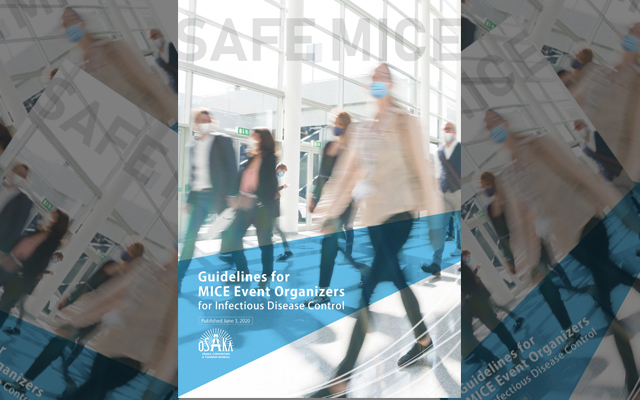
The Osaka Convention & Tourism Bureau has released a set of Guidelines for MICE Event Organizers for Infectious Disease Control, formulated to help event organisers incorporate infectious disease risk mitigation when holding events in the city.

The guideline offers recommendations, as well as a checklist on what to implement pre-event and during the event. It outlines the support that event planners will get from the Osaka Convention & Tourism Bureau, with the aim of ensuring the peace of mind of event attendees.

The guidelines will help ensure that attendees of business events can attend events in Osaka with peace of mind

These recommendations were crafted by the bureau, with consensus from the Osaka prefectural and city governments, has taken various factors into consideration including government policies, the voices of business events industry partners, the precedent of other industries, and the resumption of business events activities around the world.

The guidelines can be found in Japanese or English here.

ICC Sydney outlines operating framework

0

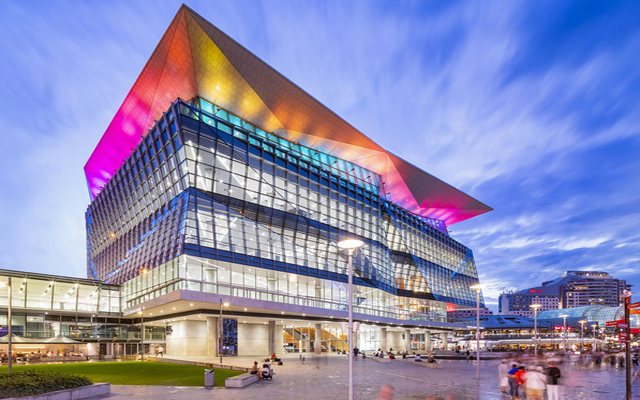
International Convention Centre Sydney (ICC Sydney) has launched the ICC Sydney EventSafe Operating Framework, a set of operating principles that will enable the venue to safely reopen and run events in an environment transformed by the pandemic.

The comprehensive set of protocols spans 16 key areas of event management, including the customer journey, environmental hygiene, food service, technology and equipment, employees and public awareness, and covers meetings, conferences, exhibitions, live events and internal operations.

ICC Sydney Convention Centre has signalled it is ready to recommence running events, pending the further rollback of Federal and State restrictions

It integrates best practice from parent group ASM Global’s soon to be launched VenueShield – a programme of the most advanced hygienic safeguards, informed by public health authorities, medical and industry experts – which will be deployed in ASM Global’s 325 worldwide facilities.

The framework also operates within the safety protocols of Safe Work Australia’s Codes of Practice, which underpins how ICC Sydney works under the Work Health Safety law and, more recently, the Covid-19 Safe Workplace Principles.

The plan further draws on ICC Sydney’s work with national and international industry bodies, to develop industrywide protocols in response to Covid-19. These have been evolved into a venue-specific framework, which responds to the need of clients for a level of detail that will allow them to confidently start planning future events.

This signals the venue’s readiness to recommence running events, pending the further rollback of Federal and State restrictions.

Geoff Donaghy, CEO of ICC Sydney, said in a statement: “As Australia and the rest of the world starts to return to business as usual, it is critical that we all continue to safeguard against further outbreaks of Covid-19, especially when bringing people together.”

“We are confident that ICC Sydney’s EventSafe Operating Framework not only delivers against this challenge by establishing best practice, but will also reinstall confidence in people to start hosting and attending events. This is critical for rebooting our industry and the many other businesses and parts of Australia’s economy that will benefit from that success”.

To view the ICC Sydney EventSafe Framework and for more information, click here.

Collinson puts forth new safety measures for airport lounges

0

Global loyalty and benefits firm Collinson has announced a trio of new initiatives to boost health and safety for airport lounge staff and guests, as a new era of contactless travel takes hold.

The initiatives include a new set of global health and safety standards for airport lounges within the Priority Pass network, a new digital solution to enable more socially-distant and touch-free food and beverage ordering in the lounge, and a further digital enhancement to enable a more contact-free entrance.

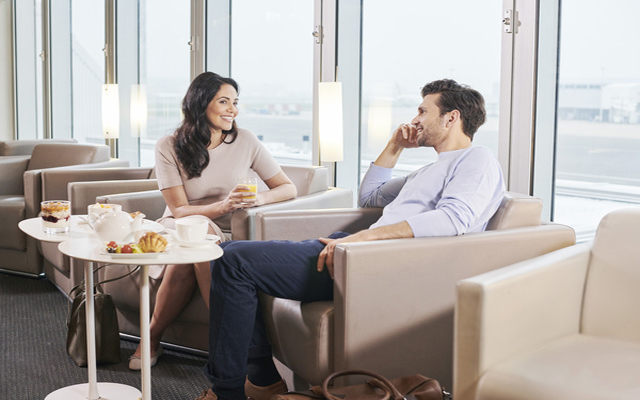
Collinson has announced a trio of new initiatives to boost health and safety for airport lounge staff and guests

The new standards for airport lounges comprise a number of recommended steps, including:

  • Provision of PPE and increased health and safety training for staff
  • Floor markers for social distancing in queues or other areas where people congregate
  • New evaluation of furniture layout to adhere to social distancing guidelines while maximising space and allowing traveller groups to sit together
  • Increased cleaning and disinfection using health authority-recommended products
  • Switching air filtration systems to 100 per cent outside air where possible
  • Contact-free solutions where possible, including collection point options for F&B
  • Removing print media and replacing with digital where possible

The standards will be implemented in all Collinson-owned lounges and recommended for use in all partner lounges across the Collinson airport lounge network, which comprises over 1,200 airport lounges in the market-leading programmes Priority Pass, LoungeKey and Lounge Pass.

Collinson also is partnering with e-commerce company Grab to launch a new pilot solution that will enable airport lounges to introduce a digital F&B ordering solution.

The Collinson solution enables travellers to use their own smartphone or tablet to place their order for F&B available within the lounge and receive it via safe to-table delivery by a staff member or collect it from a dedicated collection point. This will help airport lounges to continue offering a range of options to travellers in a more controlled manner.

Further evolving the contactless airport experience, contact-free entry is now possible at Collinson lounges, removing the need for members to touch the device to process their transaction. Those using a digital membership card in the Priority Pass, LoungeKey or Mastercard Airport Experiences apps will have an entirely contact-free experience. Those using a physical Priority Pass or payment card will still need to insert it into the device, but not need to touch the device in any other way.

Andy Besant, director of travel experiences at Collinson, said: “Collinson fully supports getting the world safely travelling again to unlock the value that travel brings, both to the economy, as well as to society at large. At the same time, there’s no denying that the coronavirus pandemic has indelibly changed how we think about health and safety at the airport. Via Collinson’s airport lounge standards and our new digital innovation for a contact-free experience, we look forward to championing the travel recovery while making health and wellbeing a priority.”

JLL reshuffles APAC leadership

0
Mike Batchelor

JLL’s Hotels and Hospitality Group has made several new appointments for its Asia-Pacific leadership team.

Mike Batchelor will take on the role of CEO, JLL Hotels and Hospitality Group, Asia-Pacific. He will divide his time between Asia and Australia, overseeing a team of 80 across seven countries and territories.

Mike Batchelor

In his new role, he will provide Asian clients with access to Australia, New Zealand and the Pacific Islands hospitality markets. Batchelor was previously CEO, JLL Hotels and Hospitality Group for the Asian region.

Meanwhile, Craig Collins will be stepping down from his role as CEO, Australasia. Peter Harper will assume the roles of managing director, head of investment sales, Australasia.

Nihat Ercan’s current role as head, investment sales, JLL Hotels and Hospitality Group, Asia, will be expanded to comprise Asia-Pacific. He will be working closely with the Australasia investment sales team to help Asian capital sources expand their investment portfolios worldwide.

Currently head, advisory and asset management, Asia, Xander Nijens’ role will expand to involve asset management across the Asia-Pacific region.

Fresh appeal

0
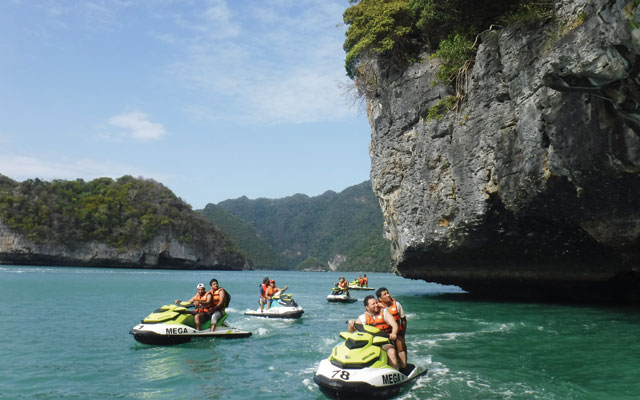
Jet ski tours in Langkawi is one way to explore the archipelago’s natural heritage

Ask any travel planner working with deep-pocketed incentive groups about Malaysia five years ago, and you would likely hear that capital city Kuala Lumpur is the preferred choice.
However, with greater flight connectivity, as well as a growing number of experiences and lodging catered to the niche segment today, second-tier destinations are fast becoming more popular.

Selangor, Langkawi and Penang are three such destinations that are increasingly appearing on luxury incentive itineraries. They have the culture, nature and heritage attractions the segment is looking for.

Jet ski tours in Langkawi is one way to explore the archipelago’s natural heritage

While some travel planners choose to promote them as incentive destinations in their own right, others include them in a multi-destination itinerary.

One player that is tapping on the natural heritage of these emerging destinations, while still looking to capture groups that prefer to be based in the capital city, is Saini Vermeulen, executive director of B2B travel agency Within Earth Holidays.

For instance, Within Earth Holidays had a Middle Eastern incentive group choosing to be accommodated in Kuala Lumpur due to convenience, while the itinerary featured Batu Caves and Forest Research Institute in Selangor.

With incentive delegates being well-travelled individuals themselves, greater expectations of a unique destination experience is driving a growing desire for authentic cultural interactions with the local community, opined Mint Leong, managing director of Sunflower Holidays.

These changing travel demands are helping to elevate Malaysia’s status as an incentive destination, and rightfully so. After all, the country is home to geological features dating back hundreds of millions of years, as well as historic, colonial towns recognised by UNESCO as living testaments to a bygone era of trade between Europe and Asia.

Accessible attractions
A short drive from Kuala Lumpur would bring incentive groups to Gombak district in the state of Selangor, home to the indigenous people or Orang Asli of Peninsular Malaysia.
The district’s easy accessibility from the capital city – where some incentive groups choose to have their main event – has led Arokia Das, director, WL Travel, to propose its inclusion in luxury incentive itineraries.

Das shared that a day visit to Gombak is usually recommended, along with activities such as jungle trekking with local guides who point out endemic bird and animal species, as well as medicinal plants during the walk.

The company has also hosted mocktails and luncheons in the Orang Asli Museum at Gombak, with approval from local authorities. The experience is an opportunity to learn about the history and traditions of the indigenous peoples through artefacts such as hunting equipment, personal garments and musical instruments.

The museum has a mini theatre hall and a library, and facilitates research into the heritage of the indigenous people.

On the outskirts of Kuala Lumpur is the Batu Caves, one of Malaysia’s most popular attractions, with limestone formations that are said to be about 400 million years old. Nearby the Batu Caves is the Forest Research Institute Malaysia. Surrounded by lush greenery, the 486ha reserve presents a choice location for luxury incentive travellers to go on a jungle trek and learn about the properties of herbs and trees in its gardens and arboretums.

Arresting archipelago
Over at the state of Kedah in northern Malaysia is a charming group of 99 islands that form Langkawi. The entire archipelago was designated as a UNESCO Global Geopark back in 2007, making it another choice offbeat destination for the segment.

According to Vermeulen, taking a private cruise, exploring the islands on jet skis, or having a gala dinner on Paradise 101 – one of Langkawi day-resort islands with its own range of water activities – are some popular experiences.

Vermeulen is careful to remember that luxury incentive travellers do not simply want to experience; they also seek to be educated.

“We always include an educational element in our tours. For instance, we would introduce the concept of a Geopark to groups, as well as explain the state government’s efforts to preserve the (area’s) natural beauty. Guests have found such information valuable and insightful,” he shared.

For Vermeulen’s Within Earth Holidays, Langkawi is a premier additional destination for groups based in Kuala Lumpur, should they have more time and wish to explore more of the country.

However, Langkawi can stand as an upmarket incentive destination on its own. The archipelago has its fair share of luxury resorts, which means lodging will not be a challenge.

In fact, many of Langkawi’s luxury resorts – The Datai Langkawi and The St Regis Langkawi – are located close to rainforests, making it easy to include jungle treks and nature walks in the itinerary, shared Leong.

“We have organised teambuilding activities in the forest at Langkawi… where groups have had to pitch tents, start a fire and cook their own meals. Such soft adventure activities are favoured by (well-heeled) incentive groups from Europe,” she explained.

Cherishing Malaysia’s culture
The northern Malaysian state of Penang is a popular haunt for culture vultures. Its capital George Town features restored colonial buildings and impressive Chinese clan houses, and has been recognised as a UNESCO World Heritage Site since 2008.

It is little wonder that Penang has such colourful heritage: the city was a former port along trade routes from Great Britain and Europe through to China.

For groups to make the most of their time in Penang, Vermeulen suggested a treasure hunt incorporating two of the state’s most celebrated spots.

Beginning at the Eastern & Oriental Hotel, the hunt can take travellers around George Town and end at the famed Leong San Tong Khoo Kongsi clanhouse, where guests can enjoy a sumptuous private dinner party.

The appeal of the Clan House is also apparent to Sadie Yeoh, general manager, Destination Asia Malaysia. She recommended that groups head to the building on trishaws, and learn about vanishing local trades, such as Nonya beaded shoe making, before or after dinner.
Although travel restrictions remain at the time of writing, KL Tan, president of the Malaysian Association of Tour and Travel Agents is hopeful that inbound incentive travel from Asia will rebound in early 2021.

When luxury incentive travel resumes, these emerging destinations are likely to be on planners’ lists when they think of Malaysia.

Bleisure extensions unlikely, modifications to insurance policies expected: CTMs

0
Leisure extensions seem unlikely in the near future, with CTMs predicting that travel insurances policies to reflect the current pandemic

Bleisure is not forbidden, but corporate travel managers expect demand tagged to overseas business trips to be soft, as more governments negotiate bilateral green lanes to fast track the resumption of international business travel.

Adriana Nainggolan, travel programme manager, Asia-Pacific, Autodesk, said: “Bleisure is allowed. Nothing has changed with our travel insurance policy where a work trip and personal trip up to seven days’ extension is covered by medical insurance paid by the company.

Leisure extensions seem unlikely in the near future, with CTMs predicting that travel insurances policies will be modified soon to reflect the current situation

Adopting a Covid-19 travel policy of “business-critical and with vice president approval”, travel is still currently restricted and many borders are not fully open, she noted. But while the company has not looked at changing its travel policy, it will have to soon.

“Insurance, in general, is under the compensation and benefits department of HR, so this is a topic that we need to have a discussion on internally.”

Another corporate travel manager also said there was no change if travellers want to mix business and leisure, “but we don’t foresee anyone taking this up at this moment”.

However, if a traveller is infected by Covid-19 during the leisure portion of the business trip, then it is not covered under the company’s business travel insurance, he explained.

Noting that Covid-19 is a new disease that is highly contagious with more than 400,000 deaths around the world and counting, Benson Tang, executive director, corporate travel, Informa Markets, said: “It is not just the issue of insurance. If a traveller is infected, the hospital stay and the possible consequence of not being cured is much higher than before.”

Tang added the overall consideration is not just limited to personal interest, for corporate interest is a major consideration as asymptomatic travellers returning to the office could infect others.

When asked if travel insurance premiums would rise and by how much, a corporate travel manager based in Shanghai said he was unsure.

But Tang opined “this is very certain,” though he acknowledged it was still too early to comment further as the pandemic is still not over yet.

On seeking support from insurance companies, a corporate travel manager in the pharmaceutical industry wanted “verbiage” specific to the coverage of pandemic situations. This is necessary with more countries starting to reopen, he commented.

CINZ and BECA ink partnership

0
Working together

Conventions and Incentives New Zealand (CINZ) and the Business Events Council of Australia (BECA) jointly agreed to collaborate on issues mutually affecting their markets.

While CINZ chief executive, Lisa Hopkins, acknowledges that Covid-19 has impacted business events on both sides of the Tasman in an extraordinary way, “it has also created opportunity and conversation among organisations who would not normally align”.


Both organisations will be working closely together 

BECA chair Vanessa Findlay added that the collaboration will facilitate maximum economic, trade and investment benefits for both countries.

Both organisations also see the benefit in leveraging government advocacy.

“The Australian government publicly acknowledged the difference between controlled gatherings, such as business events, and mass gatherings when they released their three-step COVIDSafe Roadmap, while five weeks ago the New Zealand government gave the go-ahead for events of up to 100. We would have liked to have seen our government follow their Australian counterparts and I am sure, vice versa,” Hopkins said.

“The close relationship between our countries, and the reliance we have on each other, means it makes sense to have a common voice when advocating for change, especially at this time of tremendous economic impact on our industry,” Findlay shared.

With New Zealand now functioning under Alert Level 1, events are now able to operate without any restriction, but both organisations believe keeping an eye on the future is critical.

“When it comes to competitive bids, each association will continue to act in the best interests of their markets. However, this is a unique relationship at a unique time. Both Vanessa and I believe a unified voice from this part of the world makes sense, giving customers and our industry greater confidence that it is safe to attend business events,” Hopkins commented.

Back into the hubbub

0

What was it like to run the first exhibition since the Covid-19 outbreak?
Everyone was excited. The entire Hong Kong Convention and Exhibition Centre (Management) (HML) team worked together to make sure every detail was well thought through.

We have demonstrated our strength in providing professional services and customer care for the organiser of the 98th Hong Kong Wedding Fair, exhibitors and visitors, while maintaining a safe, hygienic and comfortable event environment.

It was a thrill to see exhibitors and soon-to-wed couples engaging in enthusiastic discussions. Their smiles were obvious even under face masks. It’s a beautiful wedding show and ‘love’ was in the air!

What else is Hong Kong Convention and Exhibition Centre (HKCEC) doing to reassure future exhibitors and visitors?
Throughout the last few months, HML has continued to communicate with our local and international customers, and stakeholders, on the latest situation, addressing their needs and concerns. As much as possible, we have extended flexibility for rescheduling their events.

With the success of the Wedding Fair, we shared our experience to assure customers that we are indeed ready and confident to welcome their events back to the HKCEC. Photos and videos have been sent to our customer database and via traditional and social media platforms to demonstrate HML’s strength and professional services and hygiene measures.

Experience at the Wedding Fair has also been shared with other exhibition organisers for consideration at their own events.

Is the MICE sector getting enough support help from the government?
The Hong Kong SAR government has a series of relief measures for different industries, employers, employees and the general public. For the exhibition and convention industry, an allocation of over HK$1,020 million (US$130 million) will be injected to subsidise exhibition and convention organisers and participants, in order to reinvigorate Hong Kong’s reputation as the event capital of Asia.

Although not directly benefiting from the scheme, HML appreciates the financial support from the government, which serves as a timely relief measure for the industry that has been greatly affected by the Covid-19 pandemic.

It recognises the significant contribution of the exhibition and convention industry to the economy of Hong Kong. We believe that organisers of exhibitions and international conferences will benefit and events can resume normal soon.

What are your predictions on Hong Kong’s MICE recovery?
Vast majority of exhibitions in the HKCEC are recurrent and well established in the business calendar of the respective industries. Despite recent challenges, these events are staying with Hong Kong and HKCEC.

The 98th Hong Kong Wedding Fair was well attended. The 99th version of the event will be held from June 12 to 14, 2020. There are many other events lined up afterwards. Some of them are at their original time slots. For example, the annual Hong Kong Book Fair, along with Hong Kong Sports & Leisure Expo and other associated events, will take place as planned from July 15 to 21, 2020, taking up almost the entire HKCEC.

What operational changes will happen as events return?
HML, and other MICE and travel industry members, have implemented preventive measures since the breakout of Covid-19. I believe these stringent hygiene considerations are not one-off. They will become the ‘new normal’ even after the pandemic subsides. Design of facilities and procedure in all aspects of the industry must be adjusted accordingly, to meet the market’s growing health and safety concern.

Another escalating trend during the pandemic has been the wide adoption of Zoom or other similar virtual meeting technology as a means of social distancing. Some are predicting that this kind of technology will replace exhibitions and conferences after Covid-19.

However, I strongly believe that technology can never fully replace face-to-face interactions in building a long-term relationship and trusted business partnership. Human beings, after all, are social beings!

For example, Hong Kong’s exhibition portfolio comprises events that showcase high-value, sophisticated products and services that cannot be fully appreciated through visuals and descriptions on a website. Wine needs to be tasted. High-quality fabrics and expensive jewellery need to be felt. Art pieces and antiques need to be appreciated in their original glamour.

I am however mindful that we are in an increasingly competitive environment in which businessmen and professionals are becoming more selective about event attendance.

This drives me and my HML colleagues to ever strive for improvement. I am also mindful that there will be more demand for hybrid events. One of HKCEC’s anchor exhibitions, Art Basel, initiated an online platform this year with the full physical version to return in March 2021. This kind of new business model will require creative planning from the organisers and infrastructure support from venues.

Reviews

The Ritz-Carlton, Bangkok

The newly-opened Ritz-Carlton, Bangkok anchors the One Bangkok development with cosmopolitan elegance. Featuring the city's largest ballroom and a spectacular new penthouse suite, it delivers exceptional hardware and deeply authentic, soulful service for business and leisure travellers alike

Mama Shelter Zurich

Behind the imposing, Brutalist concrete that defines Zurich’s Oerlikon district lies a surprising secret. While its exterior honours the neighbourhood’s industrial roots, stepping inside Mama Shelter reveals a vibrant, neon-soaked world that is a far cry from its rigid shell

Hyatt Regency Kuala Lumpur at KL Midtown

A polished urban retreat designed for business travellers, Hyatt Regency Kuala Lumpur at KL Midtown combines thoughtful design, seamless service, and exceptional facilities.