Global events and experiences specialist, MCI Group, has launched a new approach to audience engagement that will help corporate and association clients in their live, digital and hybrid activities.
The new D.I.V.E. by MCI, which draws its name from Define, Ideate, Visualise and Engage, promises to help brands gain a holistic understanding of their audience; ideate and design user-focused live, digital and hybrid experiences; and implement engagement solutions that meet their needs and strategy.
D.I.V.E. by MCI is a new, scalable solution for digital needs based on engagement tools and fuelled by new business model frameworks
D.I.V.E. is said to be a proprietary methodology based on the creator’s online and offline expertise, combined with 30 years of strategic insights and knowledge of how to activate audiences and address people engagement needs.
It builds an agile, effective and scalable framework tailored to brand’s objectives, be it to enhance employee engagement, build brand loyalty or activate new audiences.
The tailored approach comes with solutions, clear milestones, ROI and action plans.
Commenting on the new engagement model, Oscar Cerezales, global executive vice president corporate division, MCI, said: ‘We analysed thousands of customers’ goals, resource allocations, plus brand and engagement strategies, and we realised that customers are approaching the challenge with tech ‘anchored’ solutions, simply pivoting pre-existing (face-to-face) meetings into digital.
“In our opinion, it is a short-term approach. Thus, we created D.I.V.E. – a scalable solution for digital needs based on engagement tools and fuelled by new business model frameworks.”
Avinash Chandarana, group learning & development director, MCI, added that D.I.V.E. was also created to enable breakthrough experiences in live, hybrid or virtual format so that client and audience connections can continue to be meaningful, memorable and shareable.
Pico can help to blend physical and virtual spaces to increase an event's reach
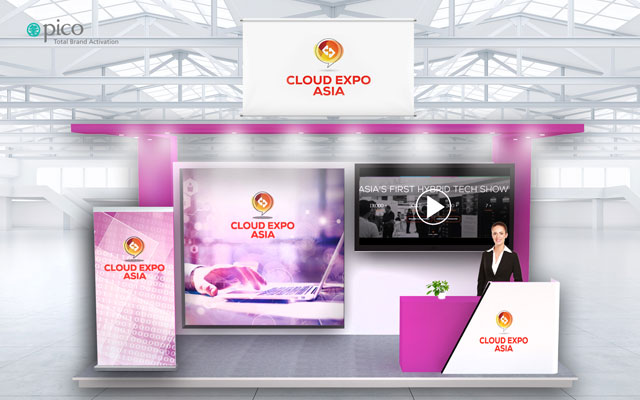
Pico Hong Kong (Pico) has been appointed Official Virtual Exhibitors Service Provider for the upcoming Cloud Expo Asia, Hong Kong, a leading B2B tech exhibition and conference.
Pico has been the event’s official service provider for the previous four years, but this will be the first the company has been engaged by organiser CloserStill Media to create a new platform for the event’s first-ever digital edition.
Pico can help to blend physical and virtual spaces to increase an event’s reach
As Official Virtual Exhibitors Service Provider, on top of standard and customised virtual booth design packages for exhibitors, Pico also offers a premium package which allows 360-degree panoramic view of their virtual booths. A host of complimentary event management services will come with any chosen packages for exhibitors.
Other than providing services for virtual exhibitors, Pico will also custom-design a virtual lobby augmented with animation and a virtual hall for the organiser.
The two-day tech show will go live from September 23-24, 2020, and will feature more than 50 global tech service suppliers, alongside more than 160 industry leaders and high-profile speakers. The virtual exhibition will continue to be accessible for three weeks after the live event.
Pico’s technology partner is EventXtra, a developer that has served more than three million guests and organised 10,000 events for companies and organisations including Amazon, Apple, Cisco, Hong Kong Trade Development Council, Siemens, The International New York Times, and more.
More businesses now buying into tech to improve duty of care and expense management
We are all being urged to get back to work, get the economy going again, start networking and meeting up. Even though Zoom has been a lifeline for many, the demand for face-to-face business meetings will return, and when it does you need to be ready.
Budgets are tight for every travel business and many are rethinking their technology spending plans in preparation for when people in business start travelling again. Others are being more cautious. They know they need to adopt new technologies but they’re holding back.
More businesses now buying into tech to improve duty of care and expense management
Agents are looking to improve the services they provide and for many this starts with the way they manage their business budgets. Businesses want to track staff expenses more efficiently. According to the Aberdeen Group which collects and analyses data on buyer behaviour, up to 70 per cent of companies want new ways to manage their travel-related corporate expenses.
In 2019, The New York Business Journal reported that companies were spending 10 per cent or more of their annual expenditure on employee travel expenses.
According to Travelex, staff want to explore when they travel on business. Three in five people like to visit local attractions while just under half make a point of exploring the local cuisine. Many are taking clients with them and paying for their expenses on the company’s corporate credit card.
Agents are buying solutions that optimise expense report processes and budget monitoring so that businesses can easily control their expenses and ensure compliance measures are in place when their staff start travelling again.
While this pandemic has forced a scaling back of efforts in certain areas, many TMCs are prioritising their tech needs. There is an increased demand to self-manage the commercials, suppliers, back-office, and management information while corporates are able to configure the travel policies, approvals, and reporting.
TMCs are looking for systems that provide New Distribution Capability (NDC) with direct airline connects and hotel consolidators and aggregators. These platforms give TMCs, travel agencies, and consolidators an option to generate bookings outside of many global distribution system processes and related fees.
Trust and duty of care
Unique travel restrictions imposed by each country and the subsequent effect on business travel have placed an even greater emphasis on duty of care within TMCs.
Roles and responsibilities have changed for travel managers in businesses and agents. Managers now have to review all trips, conduct risk assessments and create internal guidelines and policies on travel. New platforms such as the Egencia Covid-19 travel reporting hub help them mitigate the financial impact to their business by providing downloadable data for air and hotel bookings.
Travel consultants need to be fully compliant with these new procedures. Correct information is difficult to access and usually found by searching through lengthy online resources. Fact-checking and dependency on human interpretation increases financial and reputational risks for the TMC and many are investing in technology that gives them access to trusted information. TMCs are installing the latest permission-based applications such as Travel Radar that enable them to configure and manage their client’s policies and ensure that the travel consultant can access the correct information and booking capability.
TMCs spending on technology that configures the policy for each client around the allowed countries, cities, airlines and hotels. These new applications close the entire loop of sufficient information and immediate decision making and will drive the next duty of care level for TMCs when the “return to travel” policies and processes are in place.
Technology is playing a critical role in the recovery of the travel industry and this year we are seeing new deals being struck and partnerships happening.
Recently, Flight Centre Travel Group acquired tech company WhereTo for its AI platform that recommends hotels, flights and transportation to employees. Sabre integrated Mindsay technology to enable automated customer service for TMCs and airlines. At Element, we partnered with tech company Zenmer to provide its booking solutions for TMCs.
Similarly, businesses are sharing complementary data to better understand their clients’ travel needs, concerns and behaviour in order to provide greater client personalisation.
The industry is getting ready for when travel is high on the agenda and it points toward innovation and technology. TMCs are investing in tech to improve or change the way they do business and helping people stay safe. Those that offer improved processes and greater duty of care will stand out. Don’t get left behind.
Gavin Smith is the director of Element, a travel technology company that helps TMCs to gain access to cutting-edge travel technology. A former manager at SAP Concur, Smith has vast experience across various functions within TMCs. He has worked with TMCs of all sizes supporting their goals to deliver technology and payments to their clients.
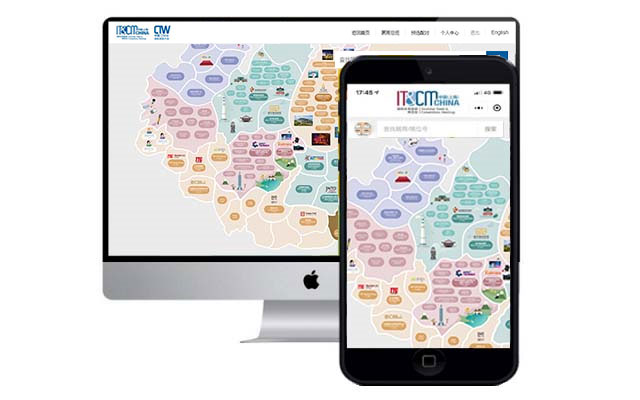
The inaugural Virtual IT&CM China and CTW China, held from August 3-5 this year, have reported a successful conclusion, with a high percentage of fulfilled scheduled appointments and strong buying intention for the next two years.
Post-show statistics revealed that over 800 validated and qualified unique delegates had participated in the three-day event, with 242 exhibitors from 26 territories/countries meeting with 383 buyers from 38 territories/countries, and 20 hours of business activity being conducted at 130 virtual exhibition booths.
90 per cent of pre-scheduled appointments were fulfilled at Virtual IT&CM China and CTW China 2020
The event organiser, TTG Asia Media, has also found strong business and lead generation throughout the MICE and corporate travel event.
Close to 3,000 pre-scheduled appointments and walk-in meetings were conducted in 15 hours, with 90 per cent of pre-scheduled appointments being fulfilled.
Ninety-four per cent of exhibitors have rated buyers a minimum of three stars and up to five full stars, indicating a high level of satisfaction with the buyer community.
Noteworthy during the ongoing travel and tourism crisis is that 94 per cent of exhibitors and buyers expect to receive or place MICE and corporate travel orders over the next 12 to 24 months.
Eighty-seven per cent of delegates said they have achieved their objectives of attending Virtual IT&CM China and CTW China 2020, while 86 per cent stated that the event outcome has either met or exceeded their expectations.
The post-show study has also found that delegates were most impressed by the Appointment Scheduling Process, Pre-scheduled Appointments system, Walk-in Meetings, Brand Showcase Presentations, and the Buyer Procurement Showcases which is a new addition for the virtual format.
Erlinda Tan, past president/president of NAITAC/JLT Travel & Tours, Philippines, remarked that it was her first encounter with such a well-integrated virtual business event.
“I’ve joined a few virtual events and this is one of the best. Well planned event with interesting interaction capability,” agreed Stanley Yew, MICE sales, Pacific Arena, Singapore.
Concept
The Covid-19 pandemic has spawned a whole generation of online tours that enable consumers to ‘visit’ destinations from the comfort and safety of their own homes. Many of these tours, however, feature pre-recorded walkthroughs with little audience engagement.
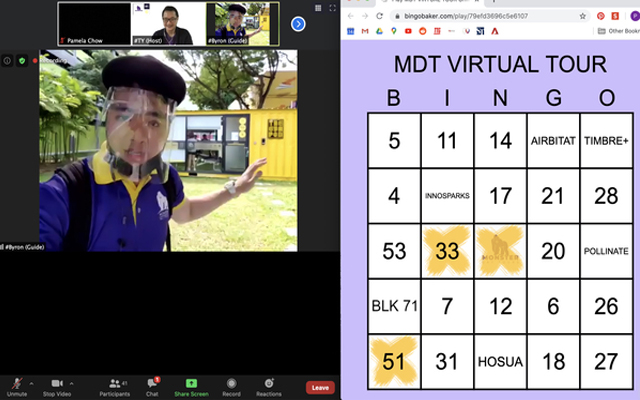
Seeing a gap in this space, Monster Day Tours has rolled out a series of Virtual Bingo Tours in Singapore, where tour guides stream live commentaries from both beloved and lesser-known places, and participants can stand to win prizes by playing along with a Bingo card and trivia games.
MICE application
As the Virtual Bingo Tours are hosted on Zoom, they can take sizeable groups of up to 100 – but smaller groups would enjoy a more conducive and intimate experience. Each ticket priced at S$10 (US$7.30), and participants can win a variety of mini prizes, as well as a grand prize of S$1,000.
I joined the first Virtual Bingo Tour with about 45 other participants to explore the unique region of one-north, known as Singapore’s Silicon Valley, where entrepreneurs and innovations are born.
With my own Bingo card loaded on one half of my screen and the Zoom tour on the other half, I dove into the depths of Singapore’s Silicon Valley, led by Monster Day Tours’ co-founder, Byron Koh.
As Koh introduced the history of one-north and how it came to be the country’s hotbed for innovation, we kept our ears peeled for boxes on our Bingo cards we could cross out. The cards were populated with a mix of keywords – to be marked once they were mentioned – as well as numbers.
The numbers could be checked off during intervals, when a number wheel was spun or when co-founder and moderator TY Suen dropped the group a trivia question. The first two respondents to send the right answer in the chat could each pick a number to be crossed out. At some junctures, we could even receive discounts from featured merchants.
By the second leg of the tour, Bingos were called across the chat. Every line of five boxes would entitle the participant to one spin on the mini-prize wheel, where we could win vouchers from Grab or Starbucks, or even fresh fruit to be delivered.
If a participant achieved three lines on their Bingo card, they would be entitled to one spin on the grand prize wheel. Unfortunately, none of the guests on my tour were quite so lucky.
These one-north tours have been held twice a month since July and were sold out. The next tour will be held on September 5. The following series will visit St John’s Island, with dates to be announced. More attractions, including behind-the-scenes visits, are also in the works.
Service
A tour in Singapore might ordinarily be a hot and humid affair in the sun, but from the comfort of my own room, the two-hour Virtual Bingo Tour flew by too quickly. The Bingo game and trivia questions were excellent ways to keep the audience immersed and engaged, while ensuring guests kept up with the contents of the tour.
Both Suen and Koh, serving as our guides, were highly personable and enjoyable. Corporate participants interested in the working spaces and inventions of Singapore’s entrepreneurs may even find the tour reminiscent of TV shopping– we found ourselves curious about creations such as a recycling compactor and an environmentally friendly air-cooling unit.
The guides instructed participants to turn on their cameras, which was not explicitly indicated before the session. Participants should ensure that they are decently dressed, or perhaps inform the Monster Day Tours beforehand if they are not comfortable with having their camera activated.
The Virtual Bingo Tours are currently open to corporate groups of up to 100 pax.
Hot idea
Get creative to establish tangible links with the audience of virtual events.
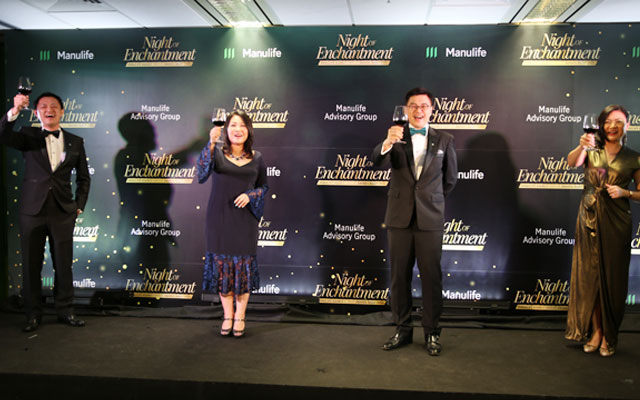
Safe distancing measures were enforced during the live-stream
Brief
To commemorate their top performers’ outstanding achievements, the company planned to host a gala awards dinner event in a ballroom. However, due to the Covid-19 outbreak, the Manulife Singapore Awards Gala Night could not proceed as originally planned.
But it was paramount for the company to celebrate and recognise their employees’ successes in spite of the challenges of the current global climate. As such, the company decided to take the event virtual instead.
Highlights “It was a memorable achievement that the company organisers, hotel and event planner were able to come together to execute a program that was as close to a face-to-face event with the safety management retraction in place, and within such short notice. The event upheld the congratulatory recognition and celebratory honour that our top performers deserve, albeit in a virtual setting,” said Gladys Tai, head of events for Manulife Singapore.
On the day of the event, delivering the experience to all the guests hinged on keeping to a tight schedule. For optimum freshness and for food safety, the four-course dinner was served to all 335 guests within a window of 1.5hrs prior to the start of the event. To present an experience as close to that of receiving their awards at a physical event, the trophies portraits, and commemorative gifts for the top performers were not pre-delivered but also scheduled to arrive at the awardees home just before the start of the event.
Coordinating the live streaming session from the office was no easy feat, but with the cooperation of the team members who strictly abided by the safe distancing measures, it all went smoothly. Management members were held in separate rooms until it was their turn to present on stage in the screening room. For the customary toasting, the management was represented by no more than five people, who were standing at least one-metre apart. Everyone donned masks at all times unless it was their turn to be on stage.
Challenges A sit down, multi-course dinner is usually provided during a gala, and this event was no different. But the difference was Shangri-La Hotel, Singapore, had to recreate a four-course culinary experience – without the usual glitz and glamour of a ballroom setup – for guests to enjoy in their own homes.
There was also only a month to execute this plan, so Shangri-La Hotel, Singapore, had to quickly get the two rounds of tasting with Manulife Singapore’s organisers done quickly.
The hotel also had to take extra care in ensuring the meals were prepared with the highest hygiene standards. For instance, the banquet and culinary teams had to work within the strict maximum allowance of four hours from the time food is prepared to when it is consumed.
The hotel team came together to prepare 335 meals, or 1,340 dishes that were sent to Manulife Singapore’s top performing agents and associates. As manpower was lacking, colleagues from across the hotel’s different functions also pitched in to help prep and pack the meals.
Meals were packed into individual kraft bags, labelled with stickers indicating each guest’s choice of main course and dietary requirements, and transported to the pick-up area – atypical of how each course would otherwise have been plated and served from the kitchen.
In a span of two hours, 335 meals were delivered with a fleet of 30 vehicles.
In addition to the meals, logistics also had to be worked out by Se7enFriday, the appointed events agency, for various other items to be delivered at the same time. These items included trophies, A3 canvas portraits, customised wine bottles with visuals that reflected the gala nights’ themes,
It was crucial that all deliveries arrived at guests’ homes by 18.50 to be in time for guests to log in and join their virtual awards event.
“This is a new experience for us and the Shangri-La Hotel, Singapore team has made it smoother than we expected it to be with the professionalism and support that they have shown,” said Gladys Tai, head of events for Manulife Singapore.
Event Manulife Singapore Awards Gala Nights Organiser Manulife Singapore Dates July 24, 2020 Attendance 200 online attendees
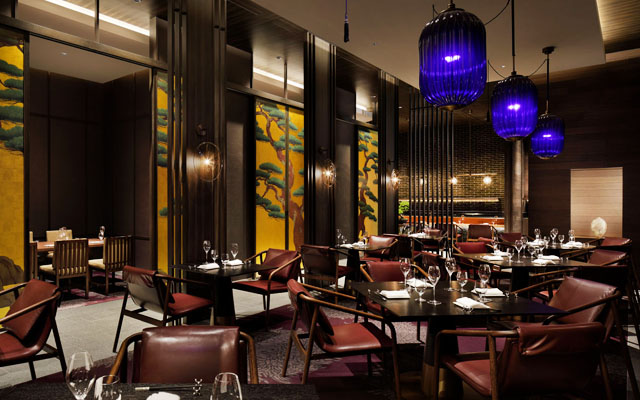
Marriott International has opened the JW Marriott Nara, the first international luxury hotel brand to open in Nara, as well as marks the debut of JW Marriott brand in Japan.
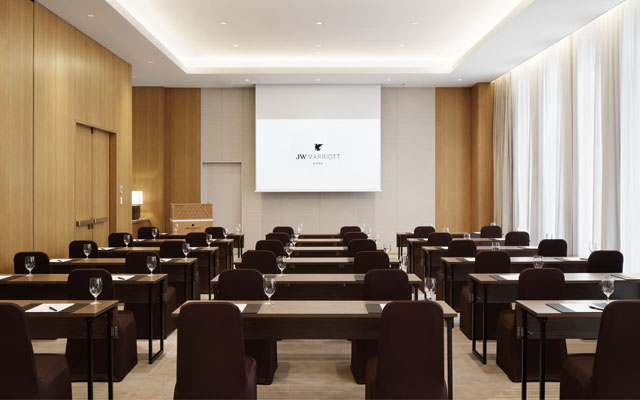
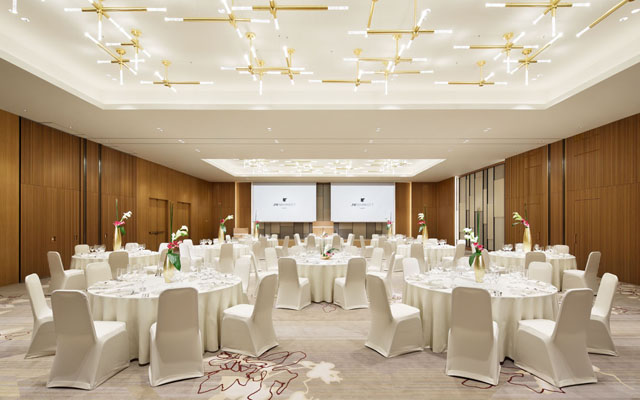
For meetings and events, a ballroom and four customisable meeting rooms lead off from the main lobby via a Grand Staircase, and collectively offer 640m2 of event space. Along with a dedicated events team to help with planning, the hotel also offers a bespoke “JW Wellness Break” programme during meetings, which provides participants with mindfulness exercises and activities to re-energise and enhance focus.
JW Marriott Nara
1 of 9
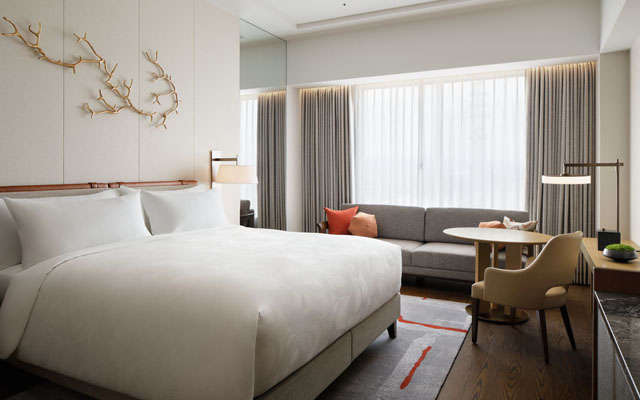
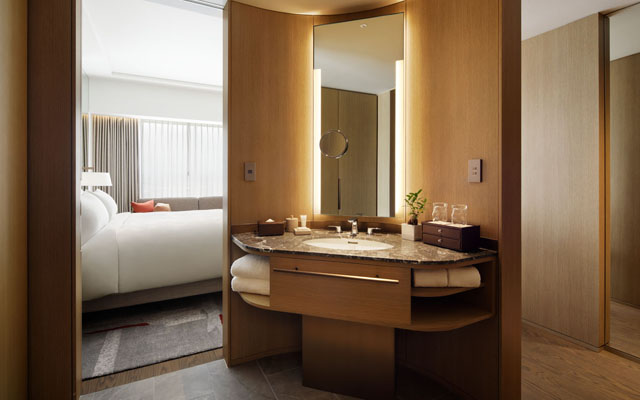
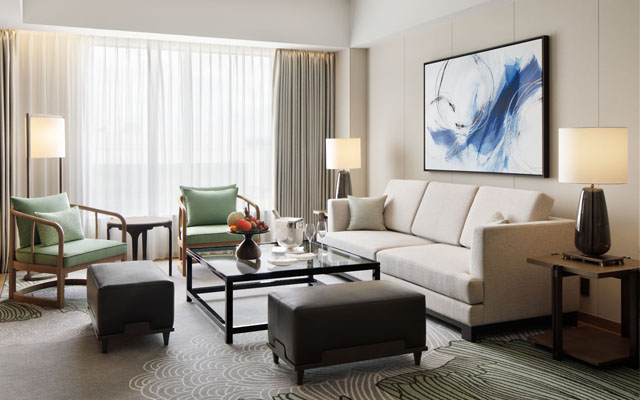
The hotel offers 158 guestrooms including 16 luxurious suites featuring warm tones of timber, bronze and leather as found in the traditional homes of Nara.
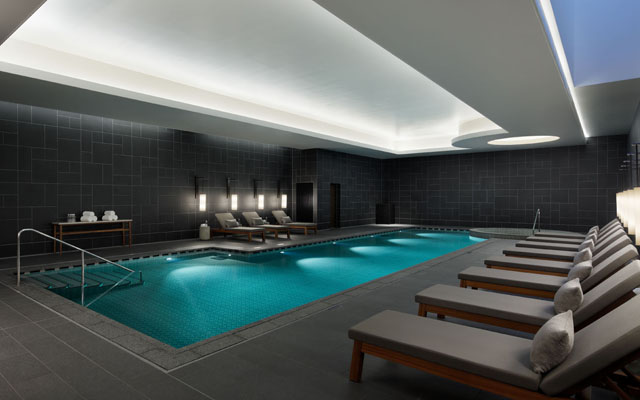
Amenities include an Executive Lounge, a 24-hour fitness centre, spa, indoor swimming pool, as well as three F&B options – the all-day dining Silk Road Dining; Japanese speciality restaurant Azekura; and Flying Stag lobby lounge and bar.
There is even a JW Garden, a plant-filled space where guests can harvest fresh herbs and greens to be incorporated into their menu choices and cocktails at the bar.
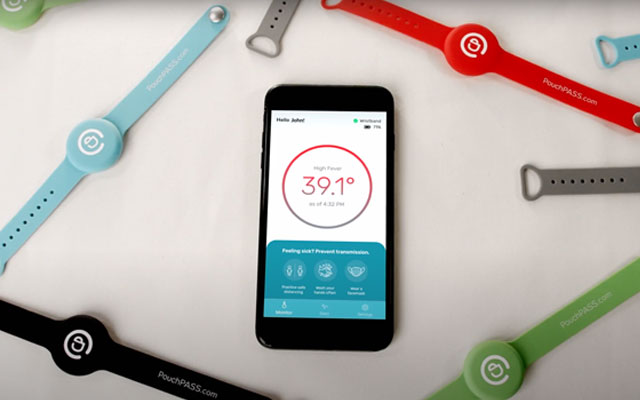
Singapore-based event technology company PouchNation has unveiled PouchPass, a new contactless, real-time temperature monitoring wristband that event organisers can use to better control health and safety of their attendees.
PouchPass promises accurate temperature tracking and enables contact tracing
PouchPass is complemented by a PouchBand, where the waterproof wristband measures one’s body temperature using a clinical-grade thermostat. The band is powered by a lithium coin battery, which can last months.
Compared to an infrared gun thermometer which can be “tricked” easily, the PouchPass is able to track a person’s temperature continuously over a period of time.
“For an event, wristbands can be pre-collected, and attendees can start wearing them for a few days before the event,” explained Ilya Kravtsov, CEO of PouchNation.
As a wristband is specific to an attendee, it allows for contact tracing post-event. It is also able to identify all the people the attendee came in close contact with during the event.
There are two ways to access the readings of the temperature wristband. The first is to have it synchronised with a smartphone, while the other is to synchronise it with a Bluetooth Gateway. In both cases, data will be stored on the cloud, and accessible through a dashboard.
For event organisers, Kravtsov suggests purchasing a set of wristbands, and re-using them across multiple events. Other uses for PouchPass include enabling corporate travellers smoother journey through an airport, where lengthy airport queues can be avoided through more efficient ways of monitoring a traveller’s temperature.
The company has active clients in Singapore, the Philippines, Indonesia, Australia and the US.
While it now delves into medical technology, Kravtsov said the core competency of his company remains focused on crowd control technology. Besides PouchPass, PouchNation also offers technology-driven solutions such as NFC-based systems, RFID enabled cashless payments, geolocation, ticketing, and POS development.
“Before the pandemic, the event industry was where crowd control was needed. Now, the whole world is an event so our market size grew exponentially. The underlying principles of technology and expertise haven’t changed. Our vision is to focus on digital health identity, which we believe will be more relevant in the future,” he added.
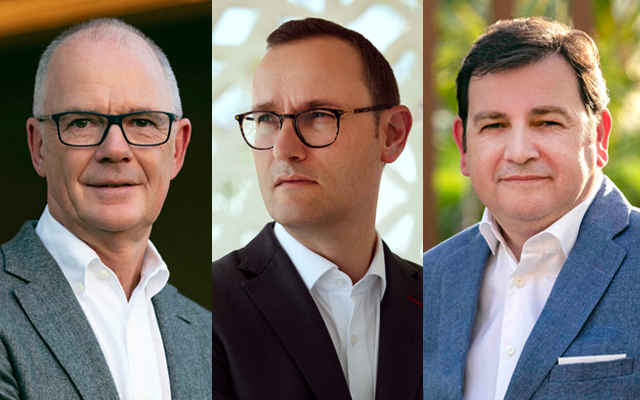
Kerzner International Holdings, the owner of the Atlantis Resort and Residences and One&Only Resorts brands worldwide, has appointed its current COO, Philippe Zuber, as its new CEO.
Zuber will replace Michael Wale, who has held the role of CEO since February 2018. Zuber most recently served as the COO for Kerzner International, also overseeing Mazagan Beach & Golf Resort and the Atlantis brand globally.
From left: Michael Wale; Philippe Zuber; Michel Checoury
Zuber originally joined the company in December 2015 as president and COO of One&Only Resorts, where he launched the evolution of One&Only beyond beach resorts, to include Nature Resorts, Urban Resorts and One&Only Private Homes.
He also led the multi-million-dollar rebirth of the One&Only Le Saint Géran in Mauritius and introduced one of the first exclusive communities for guests to own a piece of One&Only in the destination.
Stepping down from the CEO seat at the end of September, Wale will join the board of directors of Kerzner International.
During Wale’s tenure, he oversaw the opening of Atlantis Sanya, China, as well as two resorts in Rwanda – One&Only Nyungwe House and One&Only Gorilla’s Nest.
He also introduced One&Only Private Homes at exclusive destinations around the world and signed another five confirmed resorts in the pipeline.
As well, Michel Checoury, who has held the position of CFO since October 2018, will be adding chief administrative officer to his role.
In addition to overseeing finance, Checoury will lead development, technical services, information technology and legal, reporting directly to Zuber.
An industry veteran, he has extensive luxury experience across the globe including Aman, Mandarin Oriental, Jumeirah, InterContinental, Starwood and Euro Disney.
Business Events Sarawak is building its database on tribal-based products that can be showcased as “once in a lifetime unique and authentic experiences that reflect the true beauty and spirit of Sarawak to incentive delegates".
Business Events Sarawak has unveiled several marketing videos to provide domestic organisers with a peace of mind when organising incentives and meetings in the state, and is also in the process of developing a rewards programme for them.
Business Events Sarawak’s acting CEO, Amelia Roziman, shared that the bureau hopes the marketing videos will instil confidence in corporate incentives and meetings organisers by demonstrating several that have already taken place in Sarawak in abidance with the guidelines and SOPs set by the government.
Business Events Sarawak is building its database on tribal-based experiences for incentive groups; Bidayuh ring ladies from Sarawak pictured
These videos will be uploaded on social media platforms and promoted through related business events digital media platforms.
As the border remains closed to international business events delegates, these promotional activities will be targeted at Sarawak and Sabah in East Malaysia and West Malaysia.
“We are working closely with organisers to understand their needs and we have also created a delegate wellness pack to ease their worries about safety when away from home,” shared Amelia.
Business Events Sarawak is also in the midst of developing a rewards programme for corporate meetings and incentive planners which is expected to be finalised by this year-end and rolled out next year.
Amerlia pointed out that the overall aim was to grow the corporate meetings and incentives segment, which has traditionally been contributing about 15 per cent share of business events to the state. The biggest share is made up of conventions.
Mok Venia, honorary secretary, Malaysian Association of Tour and Travel Agents (Sarawak Chapter) said there is a need for more experiential tours for the corporate incentives segment.
Citing an example, she said: “Instead of selling a tour to Semenggoh Orang Utan Rehabilitation Centre, we can combine this with a (local experience such as a) manok pansoh (chicken cooked in bamboo) cooking demonstration and lunch.”
To this end, Amelia added that Business Events Sarawak is building its database on tribal-based products that can be showcased as “once in a lifetime unique and authentic experiences that reflect the true beauty and spirit of Sarawak to incentive delegates”.
Meanwhile, The Sarawak Economic Action Council is developing a masterplan for business events in Sarawak for the next 10 years, which include increasing assistance and grants to the sector, and encourage more home-grown events, revealed Hii Chang Kee, permanent secretary, Ministry of Tourism, Arts and Culture Sarawak.
All were speaking at a recent webinar entitled, Sarawak is open for business, jointly organised by Business Events Sarawak and Conference People.
Last year, Sarawak attracted 99 business events, which attracted 40,000 delegates and direct delegate expenditure of RM122.2 million (US$29.2 million).
Just 10 minutes from Phuket International Airport on the serene northern coast, this 178-key, Bill Bensley-designed resort offers delegates a quiet, tropical paradise steeped in Phuket’s tin-mining heritage
The newly-opened Ritz-Carlton, Bangkok anchors the One Bangkok development with cosmopolitan elegance. Featuring the city's largest ballroom and a spectacular new penthouse suite, it delivers exceptional hardware and deeply authentic, soulful service for business and leisure travellers alike
Behind the imposing, Brutalist concrete that defines Zurich’s Oerlikon district lies a surprising secret. While its exterior honours the neighbourhood’s industrial roots, stepping inside Mama Shelter reveals a vibrant, neon-soaked world that is a far cry from its rigid shell





 Gavin Smith is the director of Element, a travel technology company that helps TMCs to gain access to cutting-edge travel technology. A former manager at SAP Concur, Smith has vast experience across various functions within TMCs. He has worked with TMCs of all sizes supporting their goals to deliver technology and payments to their clients.