Asia/Singapore Thursday, 9th April 2026
Page 570

Digital teambuilding programmes are on the uptick

0
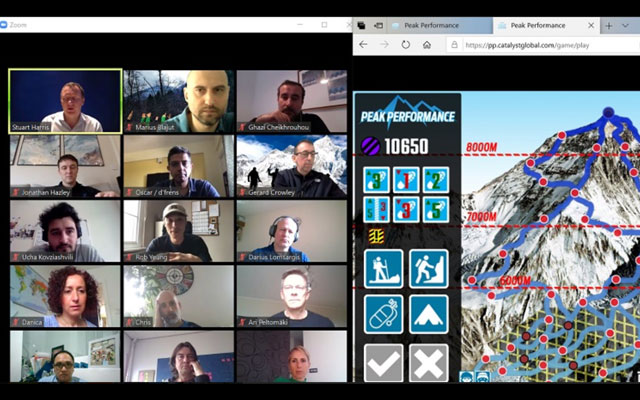
One of the virtual teambuilding programmes that

Corporate organisations are increasingly turning to virtual solutions for teambuildings, and more products are coming online to meet demand.

This is as companies are forced to design new offerings to fill the need for connection and boost morale in workplaces, even while employees practice social distancing and isolation.
One of the virtual teambuilding programmes in the Be Challenged stable

Australian teambuilding company Be Challenged said they are seeing a “strong increase in demand” for their virtual teambuilding programs, with enquiries coming from both local and Asian sources.

“We’re still getting fewer enquiries than we were (before Covid-19) but we’re now getting anywhere up to 25 or 30 enquiries per week as managers and organisations know they need to do something. (But) what exactly they want to do, they’re not sure,” Kingsley Seale, director of operations at Be Challenged, told TTGmice.

“That’s the biggest difference. In the past, they were quite clear on what they wanted to do. But this week we will be running five remote or virtual programmes which seems to be about the norm at the moment as some teams exit crisis mode,” he continued.

Be Challenged currently offers about 12 virtual products for teambuilding, with more possibly coming online as new programs are developed and offered through their license agreement with the global Catalyst Group.

Compared to traditional teambuilding sessions that can run for up to three hours, these online programmes come in shorter at 30 to 90 minutes. There’s also a priority of inclusion so that employees who don’t have access to high Internet speeds or gaming computers are not left out.

Kingsley shared that the available programmes catered to different team needs. These range from games that teach staff the benefit of learning from others in isolation, to connections that are organised just for fun with people divided into teams and challenges involving everyday household items like teaspoons or cups to “take people’s minds off the pandemic”.

Their most popular programme however, is the DISC self-profiling tool which has been adapted for virtual application.

“People are being forced to work remotely which is quite a big change for most of us,” said Kingsley. “You’re seeing some interesting behaviours coming across from teams, and as a result some teams are maybe becoming a little dysfunctional or not performing at the higher level that they need.”

“DISC allows people to explore why certain people react the way they do, or why certain people communicate in a certain way. It helps to bring that cohesion back and work towards being a more functional team, and as a result, you get better output,” he continued.

Kingsley believes while virtual offerings will not replace face-to-face meetings when lockdown restrictions are lifted, they are here to stay and will likely increase in future.

Hybrid the way forward for many South-east Asian events

0
Hybrid events will be the norm until travel restrictions are completely lifted

South-east Asian companies are likely to continue to leverage on virtual platforms and host hybrid events in the near future, perhaps until a Covid-19 vaccine is available.

This view was raised by M Gandhi, group managing director-ASEAN business, Informa Markets, at the recent Exhibitions: Key to Rebuilding Economies webinar on May 6.

Hybrid events will be the norm until travel restrictions are completely lifted

Hosted by the Malaysian Association Of Convention & Exhibition Organisers & Suppliers (MACEOS), other attending speakers include Mohd Mustafa Abdul Aziz, deputy CEO, Malaysia External Trade Development Corporation (MATRADE) and Abdul Khani Daud, CEO, Malaysia Convention & Exhibition Bureau (MyCEB).

Moderated by Francis Teo, honorary secretary, MACEOS, the webinar was set up to bring MACEOS, MATRADE and MyCEB together to discuss plans and frameworks that needed to be put in place to support the recovery of the exhibition sector.

During the webinar, Gandhi also predicted that the South-east Asian exhibitions industry will reopen in three phases. First, events will see domestic participation, which will be followed by bilateral participation, made possible by agreements between countries with lower-risk of transmission. Eventually, at the last stage – when a vaccine is available – exhibitions will be open to participants worldwide.

However, before the industry reaches the final phase and operates at pre-Covid-19 capacity, virtual elements and exhibitions will continue to supplement and complement physical exhibitions, Gandhi reckoned.

For instance, general managers in charge of South-east Asian countries at Informa Markets were working to allow more exhibitors to connect with buyers online, through the company’s Digital Showrooms platform.

While the virtual solution fulfils its purpose of helping business overcome pandemic-caused disruptions, Gandhi did not foresee complete digitalisation of exhibitions, emphasising the importance of buyers being able to touch and test products at physical events.

Nevertheless, hybrid events and the use of online elements will be here to stay, providing delegates with the option to attend events virtually, which would open up the exhibitions to more attendees worldwide.

Vincent Lim, president, MACEOS, agreed that hybrid exhibitions will become more common going forward, especially as organisers seek to engage participants across a range of countries who will be emerging from the pandemic at different times.

One industry player that seemed to be leaning more toward digitalisation than the rest, however, is Mohd Mustafa. He shared that MATRADE has held 474 virtual B2B meetings between March 18 – when the Movement Control Order (MCO) was first enacted – and press time. The agency is also looking at allowing online trade exhibitions to apply for its Market Development Grant.

Currently, the Malaysian government has not given a concrete date for the resumption of live gatherings and business events in the country. The sector is however, taking action to provide policymakers with the information they need to legislate a restart of exhibitions.

According to Lim, a task force – comprising MACEOS, the Business Events Council Malaysia, and the country’s Arts, Live Festival and Events Association – has submitted a set of standard operating procedures (SOPs) for live and business events post-MCO, to the Ministry of Tourism, Arts and Culture for approval.

Gandhi reckoned that, in following the SOPs put forward by the task force, Malaysia could be ready to resume trade exhibitions in August or September this year.

MyCEB and Kuala Lumpur Convention Centre debut online training platform

0

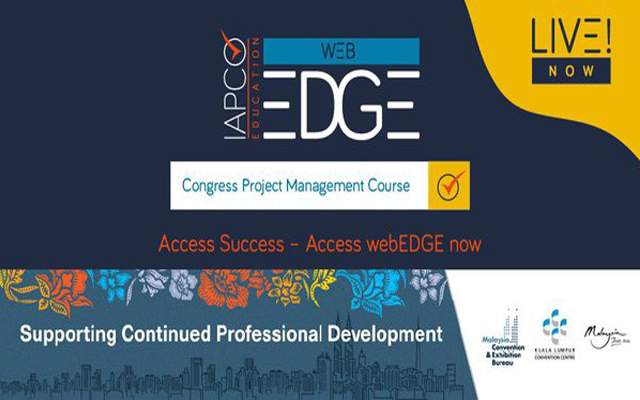
The Malaysia Convention & Exhibition Bureau (MyCEB), in partnership with the Kuala Lumpur Convention Centre, have debuted virtual training platform webEDGE.

Starting out with 14 courses on congress project management, the platform was launched to help industry professionals upgrade their skills amid travel disruptions.

Digital education will be here to stay

Developed by the International Association of Professional Congress Organisers (IAPCO), webEDGE will feature courses delivered by 24 meeting industry experts from IAPCO accredited member companies. Topics covered include risk and crisis management, budgeting, negotiations and cultural intelligence.

IAPCO’s involvement means issues will be addressed from an international perspective, a factor that drew MyCEB to offer the platform for the industry, which depends on business between countries, shared Abdul Khani Daud, CEO, MyCEB in a press statement.

Abdul Khani said he believes the platform’s content, which also incorporates real-life case studies, will help raise professionalism across the supply chain in the business events industry.

MyCEB’s launching of webEDGE follows a series of efforts by tourism industry players in various countries to step up training during the current downtime.

“It is time to take a step back and not only plan for the future, but to include learning and development as part of the process for a bigger and better comeback,” said Abdul Khani.

Training on webEDGE will not be a “touch-and-go process”, said Abdul Khani, as participants will be able to earn certification and a social media badge for their time. Additionally, the modules are, in total, approved by the Events Industry Council, for 15.25 Certified Meeting Professional Program (CMP) hours.

Another factor that differentiates the platform is a community forum that promotes knowledge sharing and allows participants to clarify doubts.

MyCEB is promoting the virtual learning channel through its database and digital platforms, urging professionals to make full use of the advantages of digital training to learn at their own time.

Kuala Lumpur Convention Centre will also be hosting an IAPCO EDGE Seminar in 2021.

Second TTG Conversations webinar to seek clarity around the return of physical business events

0

The future format of physical business events as life returns to a new normal will be debated at the second edition of the TTG Conversations webinar series, to be held on May 21 from 15.00 to 16.00.

Titled, Setting the stage for a return in business events, the hour-long session will feature panellists: Ian Cummings, global vice president, commercial, CWT Meetings & Events; Kerry Healy, vice president sales Asia Pacific, Accor; and Vincent Yap, director, integrated marketing solutions, Pico Art International.

Cummings, Healy and Yap will share their views on how offline business events will evolve

Panellists will paint a picture of the state of recovery in meetings and tradeshows, discuss how new necessities – from heightened awareness of personal and public hygiene to physical distancing – will impact the way business events are conducted in time to come, and share what the new considerations will mean for event suppliers and specialists.

The session will be moderated by Karen Yue, group editor of TTG Asia Media.

Registration for TTG Conversations: Setting the stage for a return in business events is now open. Capacity is limited and registrations are on a first come, first served basis.

TTG Conversations joins the company’s stable of widely-read and established trade titles, including TTGmice and TTGassociations, as well as the many knowledge sessions of IT&CM Events and CTW Events that take place several times a year.

The debut session was held on April 29, focusing on the value of virtual meetings and considerations needed in transitioning physical events online. A recording can be viewed here.

Mandarin Oriental offers flexible meeting packages

0

Mandarin Oriental Hotel Group has rolled out Booking with Confidence group meeting packages, valid at all its properties till January 31, 2021.

Besides group concessions, planners are given greater flexibility, as cancellation fees will be waived should governments’ travel restrictions result in event cancellation.

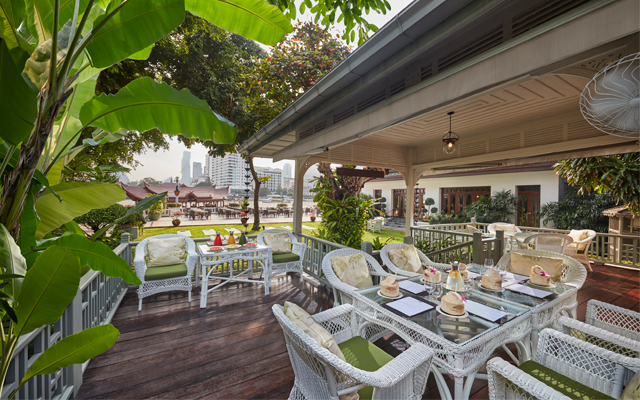
Mandarin Oriental Bangkok Mindful Meetings

Planners need to book a minimum of 10 rooms for two nights or more to enjoy the package benefits. These include one complimentary guestroom, as well as a free guestroom upgrade to a suite, both applicable for every 20 guestrooms booked, with the latter being subject to availability.

Delegates who wish to arrive or leave three days before or after the group to enjoy the sights and sounds of the destination will also be able to enjoy concessional room rates applicable for event groups.

The package also includes a two-night complimentary stay for planners to conduct site inspections ahead of the event.

Not only will attendees be given amenities upon arrival, they can access free Wi-Fi once they register for loyalty programme Fans of MO and be guided through a half-hour wellness session such as meditation or yoga in a pre-booked meeting space.

Planners are also encouraged to work with the on-site conference service manager to tap on Mindful Meetings by Mandarin Oriental, a service that incorporates wellness-focused solutions into business events.

Ingo Stöneberg joins Alma as executive chef

0

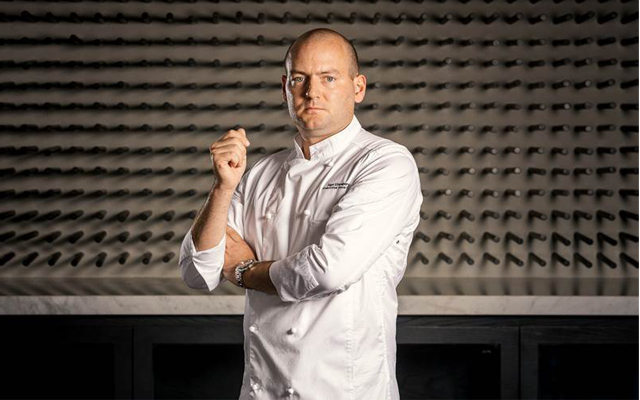
Ingo Stöneberg has joined Alma resort in Vietnam as executive chef, where he will oversee the resort’s 14 dining venues and event needs.

Before joining Alma, the German was the executive sous chef at Emirates Flight Catering in Dubai for four years. At the time, Emirates Flight Catering had a clientele of 120 airlines and airline-hospitality lounges at Dubai International Airport, cooking up some 225,000 meals daily.

Before that, Stöneberg was chef de cuisine at the Hilton Hotel in Abu Dhabi for more than two years, where there were 12 F&B outlets and conferences catering for up to 2,000 people.

Other five-star properties he has worked for include Kempinski Hotel Mall of the Emirates in Dubai, and was part of the pre-opening teams for Jumeirah at Etihad Towers and for Starwood Hotels and Resorts at The Romanos, A Luxury Collection Resort, and The Westin Resort in Costa Navarino, Messinia, Greece.

Spotlight: Mark Meehan

0

Travelport recently published it Global Digital Travellers Research. What are some of the interesting findings?
We surveyed 23,000 leisure and business travellers from 20 countries, and found that more millennial business travellers in Asia-Pacific use a mobile device when researching (68%) and booking (67%) a trip than in any other region worldwide. Use is second highest in North America (64% and 55%, respectively) and lowest in Europe (54% and 45%, respectively). One-third (36%) of millennial business travellers here even claim they use mobile devices to both book and pay for ‘every trip’.

The study also revealed, however, that millennial business travellers here have a growing list of pain points with current digital offerings. Around half are frustrated by companies not giving them access to their booking information on all of their mobile devices (53%), not using data to remember their preferences (45%) and not giving them the option of booking everything in one place (48%).

These findings indicate that corporate travel in this region is on the verge of leaving the digital age and entering a ‘post-digital era’ as defined by Accenture. In this post-digital world, digital is simply the price of admission for doing business – it is no longer a differentiation advantage.

Why do you think Asia-Pacific is ahead of North America and Europe in digital usage?
According to McKinsey, China and India account for one-third of the world’s Internet users. The region’s enormous pool of digital consumers supports a flourishing and innovative technology sector.

The superb digital experiences that Asia-Pacific consumers receive elsewhere – particularly from online and offline retailers – mean they expect to receive the same level of digital convenience and an enjoyable experience from travel providers.

It is the strong demand for change that sets Asia-Pacific travellers apart from their peers. Demand in this region is now among the highest worldwide for three types of digital offerings: memorable and engaging digital experiences, technology that makes travel easier to manage, as well as technology that improves personalisation.

For the foreseeable future, we believe the success of companies in the travel industry, as well as the technology companies supporting them, will largely be defined by their ability to effectively act like sophisticated modern retailers.

What can companies do to make business travel more seamless for millennial corporate travellers?
BCD Travel, one of the world’s biggest TMCs, has set a benchmark on providing a seamless travel experience. They defined their digital strategy as providing anytime access to trip information and tools from any connected device – from phones, tablets, PCs to Macs – through their engagement platform TripSource.

During travel disruptions, travellers can be reached by TripSource in close to real time with location-based risk alerts and emergency response check-ins. They can also instantly connect with their travel programme through a connection to DecisionSource, BCD Travel’s proprietary data intelligence and insight platform.

How is Travelport helping to manage the pain points of current digital offerings?
Travelport has been helping agencies apply various emerging technologies to optimise different touchpoints throughout a traveller’s journey. A buzzword in the airline industry today, NDC (New Distribution Capability) is also a technology that can provide flexibility to shoppers.

Travelport is a strong advocate for new ways of unbundling services, selling fares and ancillaries through menu style pricing and tailoring, through Travelport’s Rich Content and Branding solution. This provides new opportunities for agencies to build more direct relationships with their customers.

What does the post-digital era look like to you, and how is Travelport planning to capture this market?
Travellers are increasingly prioritising value over cost, demanding more autonomy over personalisation and using digital solutions to research and manage their trips. These are among the key findings of our Global Digital Traveller Research, which also depict our view of the post-digital world.

In this new era, we are helping travel sellers use digital channels to deliver value in more modern and sophisticated ways. For instance, by analysing consumer data signals from the GDS platform, we are in a unique position to inform and improve the traveller buying journey. From shaping how and when to market and detailing the most relevant content, we can advise on what to do next to increase agencies’ conversions, loyalty and retention and maximise the value of every trip.

UFI asks members to lobby for exhibitions kickstart

0

UFI members were urged to build on the global exhibition association’s newly-released global framework for hosting exhibitions and trade fairs post-Covid-19, and present their adapted framework to the authorities to lobby for a license from their governments to resume such events.

Drawn up by a task force comprising UFI members, the framework “gives policymakers the criteria they need to confidently support the reopening of exhibitions by adopting these guidelines”, said the association in a press statement.

UFI urges associations to persuade governments to prioritise exhibitions as they are critical to national and global economic recovery

Recommended health and safety measures across all stages of event management were presented across five categories. These comprise ensuring personnel and personal safety, enabling physical distancing, increasing health and safety measures, implementing crowd control, and encouraging adherence to measures.

Suggestions across the various categories include allowing a longer time frame for tear-down, and using technology such as mobile app heatmaps and specially-designed wristbands to track attendees.

In the framework, UFI pointed out the importance of exhibitions in providing small- and medium-sized enterprises with an effective sales channel, which they said would help in economic revival post-Covid-19.

The association also called for exhibitions and trade fairs to be considered separately from mass gatherings so they do not face the same restrictions, as the density of people at business events can be better controlled.

UFI shared that it intends to add to the document by providing examples of best practices worldwide.

Singapore births framework for tourism recovery, development

0

To help tourism businesses tide through the downtime amid the Covid-19 pandemic, the Singapore Tourism Board (STB) has developed a new framework featuring new platforms for easier digitisation and potentially faster recovery.

Under the three-step framework coined Learn Test Build, companies can learn to identify gaps and opportunities in their business models through the STB Tech College, as well as a new self-diagnostic tool, the Tourism Transformation Index (TXI).

Quek: the Learn Test Build framework helps companies to identify gaps and opportunities in their business models

TXI provides a holistic gauge of a company’s current state of digital transformation across six areas: leadership and organisation, process and operations, customer, innovation, technology, and data. Businesses can then identify the next steps that they should take to advance their state of transformation. TXI is being launched this quarter.

“TXI is like a company’s annual health check-up in this age of disruption. On STB’s end, this is an important first step that will allow us to identify areas of intervention for our stakeholders,” explained Quek Choon Yang, chief technology officer, STB.

Under the “Test” stage, STB will launch ThreeHouse, a new physical space at its headquarters where companies can collaborate, workshop and prototype new ideas and solutions. If successful, these ideas will be picked by STB to be scaled to a bigger platform. ThreeHouse will be launched in 4Q2020, and co-located with the Singapore Tourism Accelerator, another programme under the “Test” section of the framework.

Finally, the “Build” stage encourages businesses to formulate viable and lasting solutions. Besides information provided on open-sharing platform, the Tourism Information and Services Hub, STB has also opened its tourism data pool, the Singapore Tourism Analytics Network (STAN), to the tourism industry.

Businesses can now access 10 years’ worth of Singapore’s visitor arrival data broken down by market, region, visitor profile and mode of arrival. They will be able to gain consumer insights, create visualisations, analyse datasets and collaborate with other players on data analytics projects.

This platform is essential for businesses to “identify where the pockets of opportunities are once the tourism industry shows signs of recovery”, said Quek, elaborating that “certain sectors and certain source markets will recover quicker than others”.

He continued: “Post-Covid, we expect consumer behaviour and the norms for travel to change for good. Consumers are likely to come out of the pandemic with a heightened sense of hygiene, both personal and environmental.

“Hence, it is important for tourism businesses to build trust with consumers, provide safety for visitors and be able to influence consumer choices. To survive and even thrive in this new normal, businesses need to be armed with the right data, insights and ability to test and scale new products fast.”

STB will soon conduct an industry-wide capability upskilling programme and engage stakeholders, including hotels, attractions, business event companies and travel agencies, on how to adopt STAN and data analytics in their businesses.

Future updates for STAN include enhanced capabilities such as advanced data visualisation and analytics, as well as sandboxes for users to collaborate and co-create data models.

Australian MICE sector outlines road to recovery

0
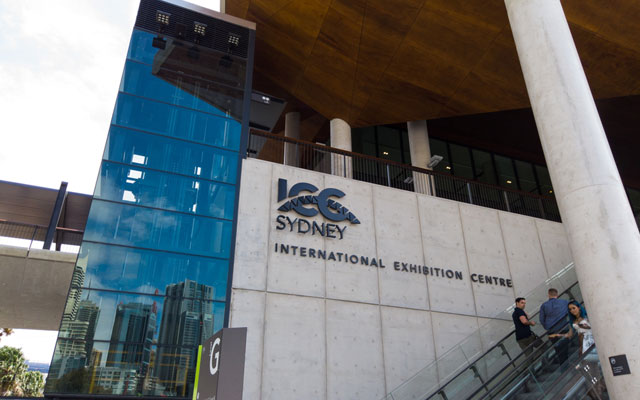
; ICC Sydney pictured

Business events in Australia could take place as early as July according to a three-step recovery plan announced by prime minister, Scott Morrison, last week.

The COVIDSafe Australia plan outlines steps to gradually remove baseline restrictions and reopen the economy. Phase one, in effect this week, will see some businesses and schools reopened, with gatherings of up to 10 people allowed, along with some local and regional travel.

Australia government has distinguished business events from mass gatherings; ICC Sydney pictured

Phase two will see entertainment venues like galleries and cinemas reopen in June and gatherings of up to 20 people allowed. Phase three, described as the ‘new normal’, will come into effect in July and will allow gatherings of up to 100 people. International travel and mass gatherings over 100 people will remain restricted.

Chair of the Business Events Council of Australia (BECA), Vanessa Findlay, praised the announcement, saying the plan will allow industry operators to reactivate sales leads.

“This is a great kickstart to the industry and with gatherings of up to 100 people, many venues will be able to reopen,” she said.

Last month, BECA reported that more than AU$35.7 billion will be lost over the next 12 months, as nearly all business events scheduled for 2020 (96 per cent) have been cancelled or postponed.

BECA has also successfully lobbied the Federal Government to make a distinction between mass gatherings and B2B events such as conferences and exhibitions.

Speaking to TTGmice, Findlay said the body is working to establish new incentive schemes and operational procedures to ensure business events can swiftly and safely return.

“We’ve been working with the government from the very beginning and are now finalising guidelines for hygiene and safety that we hope will provide the confidence, incentive and motivation to rebook and hold events as soon as restrictions are lifted,” she said.

“We’re also working with individual State and Territory jurisdictions to ensure clarity and consistency across the country so that delegates can travel interstate to attend business events.”

BECA’s Covid-19 Business Events Response & Recovery Framework, developed in consultation with the Exhibition & Event Association of Australasia (EEAA) and the Venue Management Association (VMA), will be released in coming weeks, in line with government funding provisions.

“We will continue to work with decision-makers to ensure they understand the mechanisms we have in place to establish Covid-safe environments at business events – which are controlled gatherings, not mass gatherings,” Findlay said.

“If the infection rate continues to fall, we are quietly confident that we will see events return in 2020,” she added.

Similar appeals to distinguish business events from ‘mass gatherings’ have been made by industry associations in New Zealand and Malaysia. In China, the State Council has already issued guidelines to clear the way to restart conferences and exhibitions.

Reviews

The Ritz-Carlton, Bangkok

The newly-opened Ritz-Carlton, Bangkok anchors the One Bangkok development with cosmopolitan elegance. Featuring the city's largest ballroom and a spectacular new penthouse suite, it delivers exceptional hardware and deeply authentic, soulful service for business and leisure travellers alike

Mama Shelter Zurich

Behind the imposing, Brutalist concrete that defines Zurich’s Oerlikon district lies a surprising secret. While its exterior honours the neighbourhood’s industrial roots, stepping inside Mama Shelter reveals a vibrant, neon-soaked world that is a far cry from its rigid shell

Hyatt Regency Kuala Lumpur at KL Midtown

A polished urban retreat designed for business travellers, Hyatt Regency Kuala Lumpur at KL Midtown combines thoughtful design, seamless service, and exceptional facilities.