Asia/Singapore Thursday, 9th April 2026
Page 569

Duty of care takes centre stage in new normal of business travel

0
Covid-19 has brought to the surface issues that CTMs are facing with hotel and TMC partners

Duty of care has become the battle cry for corporate travel managers now that domestic business trips are restarting in markets such as China, India and other parts of Asia.

This is as buyers have been frustrated by travel supplier services in managing disruptions amid the pandemic, citing situations where some airlines are not giving the option of refunds, the shuttering of hotels, and TMCs reducing staff numbers and work hours.
Covid-19 has brought to the surface issues that CTMs are facing with hotel and TMC partners

A corporate travel buyer from the pharmaceuticals industry commented: “There were a lot of cancellations in the beginning and the lag for issuance of invoices – usually two to three days – became two to three weeks, which affected our business movement controls and billings to the corporate card.

“When the TMC saw the problem, it outsourced the function to South Asia, and the local team was retrained to get on top of the situation.”

He added: “The market is now quiet, so TMCs can put staff on furlough and cut hours. Eventually they need to have their finger on the pulse.

“Moving forward, we would need our TMC to hit the ground running, and the airlines must be clear about scheduling and requirements because once our manufacturing standard operating procedure is enforced, it cannot be stopped.”

The buyer of another pharmaceutical company shared that “US$100,000 was spent last year – it is a lot of money – to work with our TMC to monitor our hotel programme”.

To manage costs this year, the company has opted to move away from static to dynamic hotel rates which come with fewer restrictions and allow the company to mix and match hotels depending on requirements.

She added: “It is complicated with airline cancellations. Many are giving refunds but the US carriers are offering credit. It is a problem because that is going back to the employee’s account and we are pushing our TMC to come up with a solution. The pharmaceutical industry is in demand now and we need our TMC to be proactive.”

With little business travel activity this year due to Covid-19 travel and movement restrictions, one Shanghai-based travel manager has found himself having to “carry over 2019’s pricing” in his RFP activity due to a lack of “meaningful data”.

He added: “Volumes and changes in the pattern of international travel have also become very controlled, and 2020 budgets will be conservative because many of our stores have closed, (impacting) sales and profit.

“Perhaps there will be no full 2020/21 RFP. With so many unknowns, we may have to rely on spot contracting. Flexibility is the key as we would have to review the situation all the time in moving towards recovery.”

During a May 13 Corporate Travel Community webinar that discussed the new state of travel programmes, Gavan Fraser, global head of travel and expenses, BHP, said duty of care and the travel manager’s role in rebuilding traveller confidence when international borders reopen, was now “front and centre”.

Rajdev Bhattacharya, Wipro’s global head of travel and hospitality, added the focus was also shifting to the traveller and “the ability for him to decide (to take or reject a trip)”, which was not so before.

“Of course cost and compliance will still be important, but convenience to the traveller will take centre stage,” he added.

In urging airlines to do more, Bhattacharya said the aviation ecosystem did not support multiple itineraries and changes, adding that aviation partners would have to change the way they work and distribute their products.

He believes that this would be possible post-Covid-19, as consolidation could result in a standard code of operation, with Fraser hopeful of a change in airline support for online booking tools by “talking to one another” to facilitate the booking and changing of multi-sector itineraries.
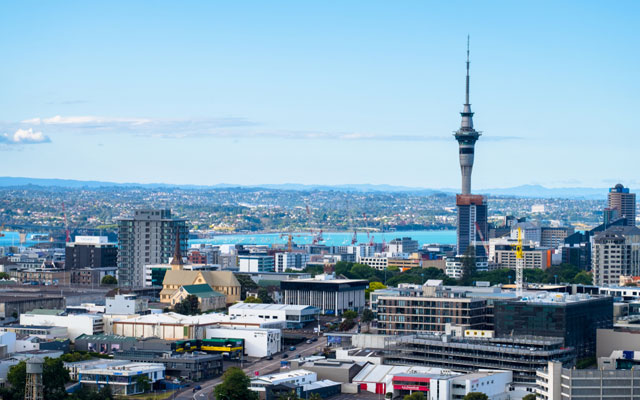
New Zealand allows business events of up to 100

0
The New Zealand government has allowed business events of no more than a 100 to start; Auckland skyline pictured

After the recent easing of restrictions on social gatherings and travel, the New Zealand government has confirmed domestic business events and conferences can now go ahead with a 100-person limit.

New guidelines for New Zealand state that large ticketed events and business events must be seated with a one-metre distancing requirement, they must allow for contact tracing, have physical distancing in place, good hygiene procedures, and any food and drink must meet the hospitality provisions.

The New Zealand government has allowed business events of no more than a 100 to start; Auckland skyline pictured

Conventions & Incentives New Zealand (CINZ) chief executive, Lisa Hopkins said the industry welcomes clarity on numbers from the government, and the acknowledgement that business events should be viewed differently to social gatherings.

“This helps the New Zealand business events sector restart for domestic attendees, and is the first step in the right direction,” Hopkins said.

“We understand the cap on numbers is set by the Ministry of Health based on the ability of public health to be managed in the case of an outbreak, including contact tracing, isolation and critical care facilities.

“An increase in a cap from 100 attendees to 200 attendees, for example, is exponential in risk – the contract tracing requirements alone following on from an event becomes much greater, so caps are set at a level where safety can be managed from a public health perspective.

“The Ministry has confirmed this is not a reflection on the ability of event organisers to mitigate risk or fail to do so. It is about allowing New Zealand to keep stamping out Covid-19. Keeping numbers low, for now, will help New Zealand be able to respond swiftly and effectively and possibly prevent an increase in restrictions by doing so,” Hopkins elaborated.

The current caps across all aspects of New Zealand business and social gatherings are for the first stage of Alert Level Two and will be revisited on May 25. There is still no timeframe for when Alert Level 1 will come into place.

Singapore, Tokyo part of ICCA’s top 20 city rankings for 2019

0

ICCA has released its annual city and country rankings, where two Asia-Pacific cities and countries feature within the top 10 for their respective lists.

In the number one spot in the ranking by number of association meetings in 2019, Paris holds on to the title and remains in first position. This is followed by Lisbon, the city with the highest increase in number of events (+38) moving up four places from being sixth last year.

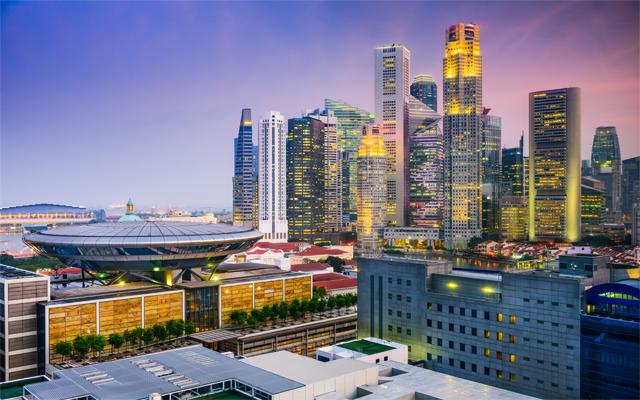
Singapore (pictured)ICCA takes seventh spot in top 10 cities list

Singapore comes in the seventh spot with 148 meetings, while Tokyo sits at 10 with 131 meetings. Other regular contenders like Berlin, Barcelona and Madrid are third, fourth, and fifth respectively.

Other Asia-Pacific cities that have made it to the top 20 list are Bangkok (13), Seoul (15), Taipei (19), and Sydney (93).

Meanwhile for the country rankings, US remains tops; the country has been the titleholder for the last two decades. The list remains relatively unchanged with countries moving up or down a spot. Within this list, two Asia-Pacific countries feature – China in seventh, and Japan in eighth.

Other Asia-Pacific countries within the top 20 list are Australia (12) and South Korea (13).

ICCA CEO Senthil Gopinath said: “ICCA’s annual statistics report is one of few that compares destinations’ meetings-related performance on a global scale and therefore provides great insight into global trends in the meetings industry. Given the current circumstances, it is great to once again highlight the consistent growth in association meetings globally. These figures show the need and importance of face-to-face events, and consequently that the industry will be instrumental in the global recovery when the time is right.”

In 2019, ICCA’s statistics captured 13,254 rotating association meetings, the highest ever recorded annual figure in its yearly statistics, with an increase of 317 from the previous year’s figures.

Year on year, ICCA has seen a promising consistent growth pattern in the association meetings market. The ICCA Association Database now includes 21,000 regularly occurring meeting series, 260,000 meeting editions and 12,000 international associations.

Only meetings that meet ICCA’s stringent assessment criteria – rotating between at least three countries, have a proven attendance of at least 50 participants, and are held on a regular basis – are recorded within the global association’s annual statistics.

The full ICCA statistics reports are available now to ICCA members only in the ICCA Destination Comparison Tool. A public abstract of the report, including rankings for all countries and cities will be released to the public in mid-June.

Thailand’s extended flight ban draws mixed trade reactions

0

While Thailand has scaled back its evening curfew by an hour, reopened malls and allowed 10 types of businesses and activities to resume, the Civil Aviation Authority of Thailand (CAAT) has chosen to extend its ban on international flights until June 30.

Travel and tourism Industry stakeholders are divided on the announcement, with some feeling that the extension is unnecessarily harsh given the country’s low numbers of daily new coronavirus cases which have hovered close to zero for several weeks on end.

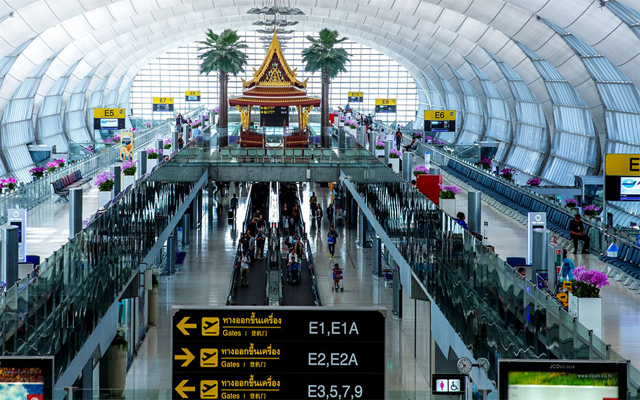
Thailand has reopened 14 airports, including Suvarnabhumi Airport pictured

“I feel it’s the suitable thing to do for now while hygiene measures and protocols are (in the process of) being applied towards the entire business events sector,” opined Max Boontawee Jantasuwan, president of the Society for Incentive Travel Excellence (SITE) Thailand chapter and founding CEO of Events Travel Asia Group, referencing the joint effort between the Thailand Convention and Exhibition Bureau and other business events associations to launch MICE Venue Hygiene Guidelines to prepare the sector for the new normal.

“It also echoes the situation outside Thailand, because even if we were to open the airspace now, nobody would start travelling here as of yet,” he added.

The ban, which covers all international passenger planes, means that the earliest foreigners could come to Thailand is in July.

“Thailand has maintained a low number of cases and few fatalities in this crisis. The focus is, understandably, on a regulated return to normality in the country. For the suffering Thai tourism industry, a return of domestic tourists will be the fastest way to (secure) some revenue. However, even if Thais will engage in some ‘revenge travel,’ it will not by far be enough to replace the full stop on international travellers,” said Willem Niemeijer, CEO and co-founder of Khiri Travel.

As the rest of the world begins the process of reopening, “CAAT’s decision to extend the ban on international arrivals until July 1, six weeks from now, seems an unnecessary overreach,” Niemeijer added, citing Italy’s decision to reopen for all international travel on June 3 and the ‘bubble tourism’ bilateral agreements being pioneered now, such as those between Spain’s Mallorca and Germany, or between New Zealand and Australia.

Flight consultant Luc Citrinot suggested that a gradual reopening of international travel would make sense, by first facilitating small travel corridors between Thailand and neighbouring countries with low numbers of infections, such as Vietnam, and gradually extending to South Korea, Taiwan and China.

Niemeijer believes that a gradual reopening would help to “plant the seed of confidence” in longhaul travelers who are in the process of making longer-term travel plans now.

“Thailand is risking trampling the excellent handling of the crisis compared to other countries, and giving first-mover advantage to other tourism destinations in the world, prolonging the crisis for the country’s recovery,” he said.

The country’s beleaguered national carrier, Thai Airways, which is still hovering between bankruptcy and bailout, has also scheduled its first flights on July 1, 2020.

Thailand last week removed China, Hong Kong, Macau and South Korea from its dangerous disease zone list, meaning travellers from those countries will be subject to fewer restrictions and less monitoring.

Fourteen of Thailand’s airports are currently operating, with Bangkok Airways being the latest Thai airline to resume domestic flights, since mid May. Phuket International Airport remains closed indefinitely; though scheduled to reopen May 15, CAAT issued an order the same day for the airport to remain closed.

Visas for all foreigners currently in Thailand have automatically been extended until July 31, 2020. Forty-two inter-provincial train lines, some longhaul, have resumed with inter-provincial buses also now running select routes.

Meanwhile, the Thai government is still debating whether to lift its state of emergency by end-May.

The Fun Empire launches a virtual escape room

0

Singapore-based events company The Fun Empire has opened its Virtual Escape Room Experience, building on its previous Escape Room Experience.

The experience – with facilitation via video web platforms – promises a host of challenging puzzles and storyline, where participants will have to work together to uncover secrets and solve mysteries.

One session will last around 1.5 hours, not including 30 minutes for set-up and debrief. A minimum of two pax is required for a session to run, with no maximum limit. Prices start at S$20 (US$14) per pax, and prizes for the winning team is included in the pricing.

Should clients have overseas-based team members, or are based overseas themselves, the virtual teambuilding sessions can also be conducted.

The Fun Empire offers over 30 different teambuilding games and activities, and other online activities in their portfolio include virtual creative workshops, party mania, and nightfall.

Contact hello@thefunempire.com for more information.

Wyndham names new APAC head

0

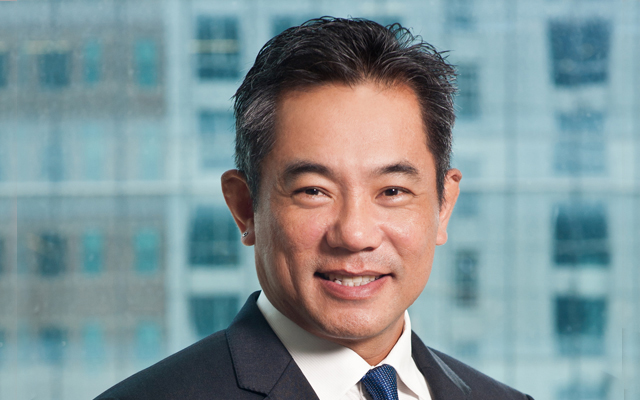
Wyndham Hotels & Resorts (WHR) has appointed Joon Aun Ooi as president, Asia-Pacific, effective June 1, 2020.

In his new role, Ooi will lead the growth of WHR’s portfolio of brands across the Asia-Pacific region – which combines South-east Asia and Pacific Rim (SEAPR) with Greater China, following a restructuring – and drive its strategic objectives, as the tourism industry recovers from Covid-19.

“These are extremely challenging times for the hotel industry and it is more crucial now than ever for Wyndham Hotels & Resorts to be agile in adapting to the evolving situation to be able to drive greater value for our owners and partners,” Ooi said in a press statement.

“Across Asia-Pacific, the consolidation will enable the company to leverage on a broader pool of resources – allowing it to strengthen its strategic positioning to support existing operations, drive further expansion and create additional opportunities for cross-border collaborations.”

With nearly two decades of experience in the hospitality industry, Ooi joined Wyndham in 2013 as vice president, openings and operations, Greater China. In 2018, he was appointed president and managing director for SEAPR and led WHR’s regional growth and development after its spin-off from Wyndham Worldwide.

Prior to Wyndham, Ooi held leadership roles across Asia and Greater China including vice president strategy at InterContinental Hotels Group in 2002. He moved to China in 2005 to take on the role of vice president, hotel openings (Greater China) where he played a key role in establishing and implementing the China growth strategy for the group.

In 2009, he was appointed vice president strategy and hotel openings (Asia Pacific) at Hilton Worldwide where he oversaw the growth of the Hilton portfolio in China.

Before joining the hospitality industry in 2002, Ooi spent more than seven years at The Boston Consulting Group as a principal.

FCM promotes Calvin Xie to China GM

0

FCM Travel Solutions has appointed Calvin Xie as general manager for China based in Shanghai.

In his new role, Xie will drive the company’s business in China through a multitude of business aspects to accelerate its strategic and digital transformation, while increasing growth in managed travel through new wins and implementation of multinational and national businesses.

Xie has been the CFO for FCM in North Asia since 2018, where he focused on transforming the FCM China business and improving its financial stability.

Practically Perth-fect

0
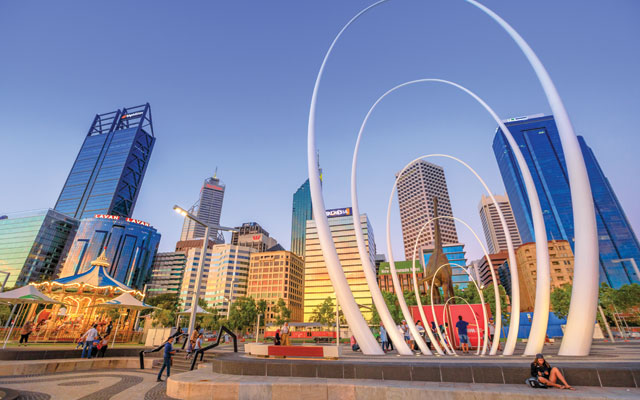
Elizabeth Quay Carousel and Spanda Sculpture juxtaposed against Perth’s gleaming CBD

Perth was once talked about as the city where a restaurant could charge A$50 (US$35) for a humble plate of fish and chips. Thankfully, the economy that reflected that market has since disappeared and so has extravagant pricing in the city’s hospitality and tourism sector.

Elizabeth Quay Carousel and Spanda Sculpture juxtaposed against Perth’s gleaming CBD

No longer same-same, plenty has become different for corporate events in Perth. It’s not even a secret anymore, with Tourism Australia effectively shining a prominent spotlight on the city when it decided Perth should host not one, but all three of its main trade events last year.

Perth has undergone a surprising transformation. The West Australian (WA) capital has spent A$10 billion in new infrastructure and accommodation over the past five years to improve its tourist offering at an “unprecedented” level.

“There’s never been a better time to bring delegates to Perth,” said Business Events Perth’s CEO Gareth Martin. “The capability of our events has really changed with a 40 per cent increase in internal meeting space in the city alone”.

Fresh infrastructure developments
Some developments that have recently come online include the Elizabeth Quay mixed-use waterfront precinct along the Swan River, boasting at its doorstep Australia’s first Ritz-Carlton which opened last November. There’s also the 60,000-seater Optus Stadium, which won last year’s Prix Versailles Architecture Award for the Most Beautiful Stadium in the World.

Travel into Perth is getting more efficient too, with more than A$1 billion invested into an expansion for Perth Airport. An MoU was also signed to create a A$510 million Australian Biome Project at the airport, comprising five high-tech domes showcasing WA’s unique climates and environments in the vast state, and local indigenous culture and art. It’s believed the 15-hectare project will become a major attraction for international visitors.

A new airport link which will get passengers to the CBD in 18 minutes, is also scheduled for completion by 2021.

Before Covid-19 happened, more routes were on the cards. Singapore Airlines launched a fifth daily flight last year, while in January 2020, China Eastern Airlines trialled a new direct flight from Shanghai to Perth three times a week, with the intent of make it permanent. This would connect WA to about 25 million people in Shanghai, which could potentially translate into an additional A$40 million in tourism spend for the state’s economy.

Meanwhile, WA’s key tourist location of Fremantle is undergoing a A$270 million once-in-a-generation redevelopment to be completed this year. Known as Kings Square Fremantle Renewal, the project is designed to transform the port area into a vibrant retail, commercial, hospitality and community space complete with sustainably-built building and designs, and free Wi-Fi throughout the precinct.

These products and more were given the front stage at Tourism Australia’s key trade events –the Australian Tourism Exchange, Corroboree West, and Dreamtime in April, October and December respectively.

New luxurious digs
But what really excited event planners was the city’s new accommodation offering.

Perth has seen a 45 per cent increase in four- and five-star accommodation over the last three years, bringing the total room offering to 13,800 and tourism organisers have promised the prices are pleasantly not what you might expect.

“Five years ago, accommodation rates were ridiculously expensive in Perth. That’s changed dramatically for a number of reasons,” said Perth Convention and Exhibition Centre (PCEC)’s CEO Nigel Keen.

“For one, there was the initial investment in the mining sector where billions were spent with a lot of corporate travel which pushed the rates up and there wasn’t enough accommodation supply. Once the investment cycle came off and they went into production, we found low occupancy. The rates improved (and) at the same time, we’ve had an influx of new accommodation,” he continued.

The new product and pricing reality is the injection Perth needed to re-energise its tourism sector and become a viable international business events destination against its eastern competitors.

The glamorous Crown Towers Perth – which played function host at all three of Tourism Australia’s earlier-mentioned trade events in Perth – has also seen increased international and domestic visitation. “This is (due) to the Optus Stadium and (better) flight access into Perth,” said Crown Hotels Perth’s director of sales, Scott Alderson.

“There is more flexibility and variety in itineraries as we are connected more fluidly through air access, coach transport and now river access too. The whole state is more open and flexible to provide unique itineraries,” he elaborated.

The future looks promising
WA tourism stakeholders including PCEC, The Westin, Crown Towers, Captain Cook Cruises and Sandalford Wines shared with TTGmice that business has been good.

“(We are) 180 years old but this financial year has been the most successful in the company’s history,” said Grant Brinklow, CEO of Sandalford Wines which served 200,000 paying guests last year.

“And that’s due in no small part to the culmination of collective efforts by the (state) government, and significant additional investment by Sandalford and our proprietors in creating wine-related experiences.”

Returning from a day of incentive experiences in Perth during Dreamtime, director of Singapore-based MICE Matters, Melvyn Nonis, said he was convinced Perth deserved another look.

“This was a destination that was tired. People had visited Perth before and as MICE planners we discounted the place because of the high cost and lack of hotel availability.

“But I had a wonderful seafood lunch on a cruise with champagne, and sashimi lobster on the way to Rottnest Island where there are teambuilding possibilities. And there’s a certain uniqueness to Perth so it’s timely for us to introduce Perth to our incentive clients,” he elaborated.

As for geographical markets, with Perth’s isolation from Australia’s bigger eastern cities and close proximity to its northern Asian neighbours, there’s no question where the state will be focusing its efforts. Asia-Pacific already accounts for 90 per cent of incentive business for the state, with the largest source country coming from Malaysia, followed by China and Singapore.

But there is a gnawing fact. “In terms of Australia’s total trade with China, WA accounts for 60 per cent of that total trade, yet only five per cent of Chinese visitors come here,” said Martin. “So there’s an imbalance around the importance of the relationship that WA has with China. And I think that our opportunity is immense.”

Malaysia looks inwards to jumpstart MICE sector

0
Abdu Khani:

Business events industry leaders in Malaysia predict that the recovery of the sector will take between six months to a year, starting with domestic events.

However, this assumption is built on the premise that the Ministry of Health Malaysia would soon announce that business events will be allowed, with strict guidelines and standard operating procedures in place.

Abdu Khani: domestic meetings first to return, with regional meetings being MyCEB’s next target

Abdul Khani Daud, CEO, Malaysia Convention & Exhibition Bureau (MyCEB), said he was pushing for 500 people as the maximum limit for business events, raising the limit of 250 which the National Security Council is considering.

Abdul Khani was speaking at a webinar called The Future of BE in Malaysia. The session was organised by Place Borneo, a local MICE management company, and was moderated by Place Borneo’s managing director, Mona Abdul Manap.

For domestic business events, Abdul Khani believes that the local corporate sector is showing lots of potential. But this alone will not be enough, where the next step will be tapping business from neighbouring countries – Singapore, Thailand, Brunei and Indonesia – when borders are reopened.

However, the road ahead will be long. He said: “There are a lot of marketing activities we have to do in order to rebuild the confidence level of our destination and bring business back to Malaysia.”

For now, MyCEB is creating packages for the domestic market called Let’s Meet Locally, while the international market will have a similar initiative called Let’s Meet Tomorrow. MyCEB stressed that it be working closely with “hotels and integrated resorts” to develop these packages.

Eventually, he hopes that Malaysia will be able to collaborate with regional destinations during the bidding process, so that more than one destination will benefit from an international business event. MyCEB is looking at creating a one-stop online booking site where international meeting planners can find information about the various venues in Malaysia and make bookings.

Another speaker, Ashwin Gunasekeran, CEO at Penang Convention & Exhibition Bureau (PCEB), said the initial focus for Penang will be about getting national business events to choose Penang.

To this end, PCEB is putting together an enhanced Privilege Penang programme that provides support for local and regional meeting organisers starting from 20 delegates.

Meanwhile, the Sarawak Convention Bureau and Sabah Tourism, both acknowledged they stood a better chance of winning bids to host business events by collaborating with each other.

Noredah Othman, general manager at Sabah Tourism, said: “We should take advantage of our natural assets – islands, beaches, cultures and find ways to collaborate and win businesses because together we are stronger.

Amelia Roziman, COO at Business Events Sarawak, proposed bidding for business events as a “Borneo bid team” instead of as an individual destination.

On post-Covid-19 trends in the business events industry, Noor Ahmad Hamid, regional director ICCA Asia Pacific pointed out there will be likely more virtual and hybrid events in 2021.

Agreeing that this will be the new norm, Amelia shared that Business Events Sarawak was also looking at the feasibility of collaborating with partners to hold virtual site inspections to attract international business events to Sarawak post-Covid-19.

Covid-19 brings about increased sustainability awareness in Japan

0
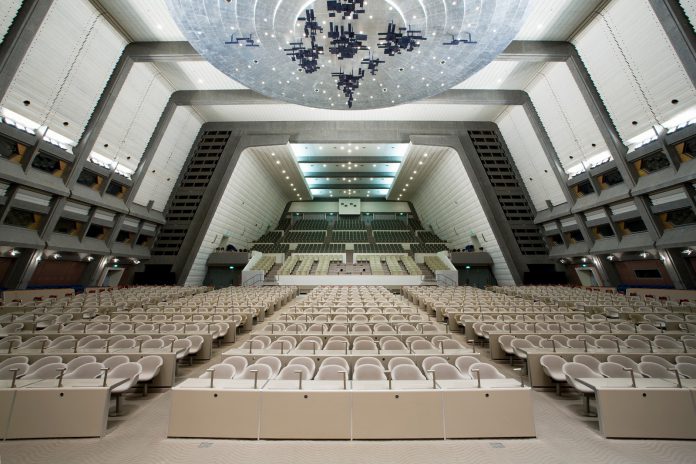
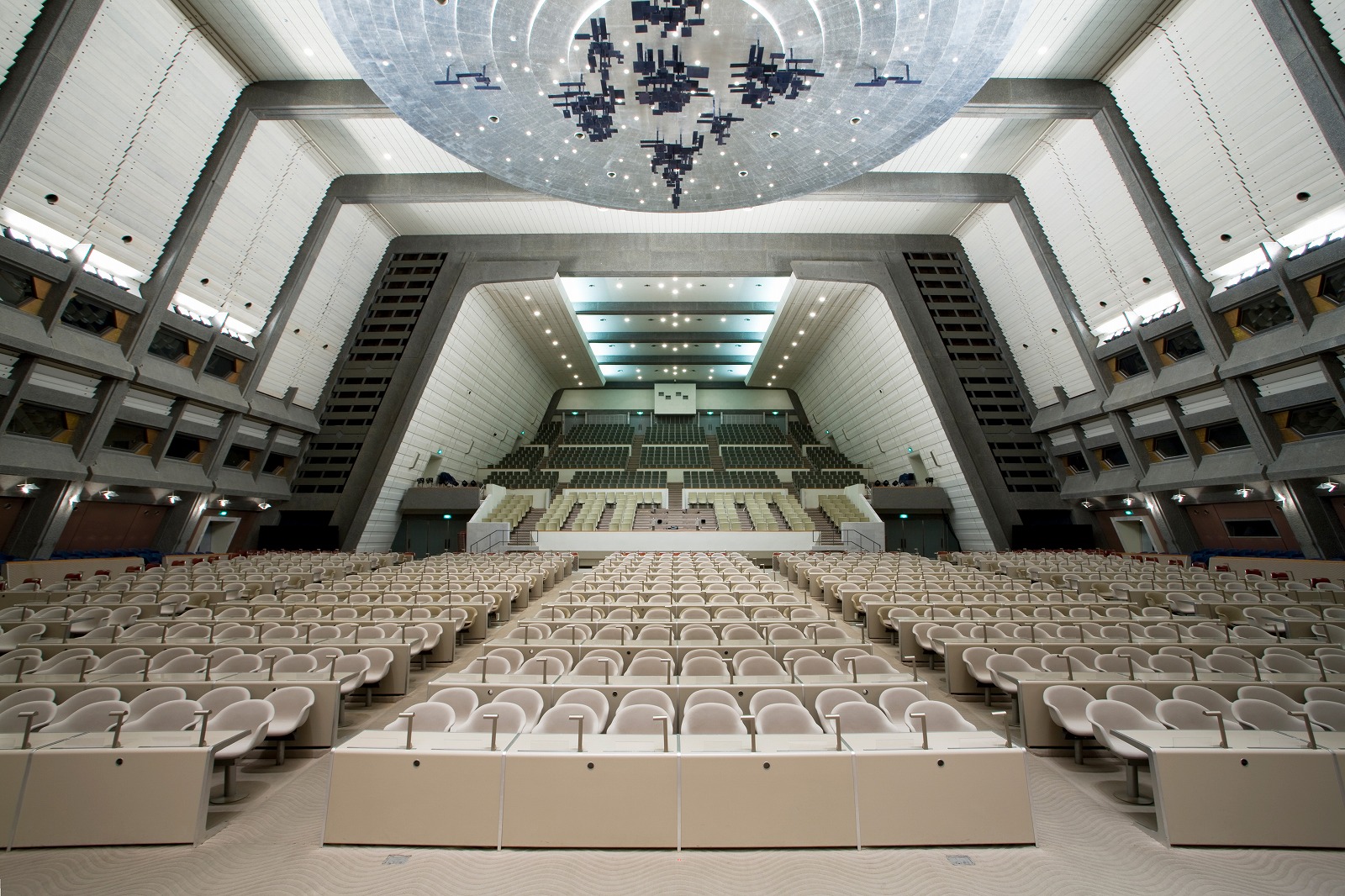
ICC Kyoto, where the Kyoto Protocol was signed in 1997, is surrounded by greenery and has an eco-friendly certification.

Organisations in Japan are more likely to be interested in sustainable business events post-pandemic, thanks to increased awareness among the public of green issues, according to experts in Tokyo.

Lockdowns introduced to control the pandemic have resulted in improved air and water quality in major cities worldwide as well as more sightings of wildlife, leaving people considering how they can continue to reduce their impact on the environment even after the crisis subsides.

ICC Kyoto, where the Kyoto Protocol was signed in 1997, is surrounded by greenery and has an eco-friendly certification; its main hall pictured

“The crisis has given people pause to stop and think (about sustainability). This is an opportunity to reboot,” Tove Kinooka, co-founder and director of sustainability consultancy Global Perspectives, told TTGmice.

Furthermore, the pandemic has dispelled concerns and myths that more sustainable options for businesses were not possible.

“It has proved that massive, fast change is possible when we put our minds to it,” she said.

This greener consciousness, boosted by the 50th anniversary of Earth Day on April 22, is giving the concept of sustainable events greater traction in Japan.

Industry experts say organisations view greener options as a way to help them better engage with staff, clients, investors and stakeholders.
As such, an uptick in demand is expected across the business events spectrum, from choosing greener venues and local plant-based cuisine to minimising waste and introducing sustainability-focused teambuilding activities.

As transportation to events is a big environmental consideration, Nobuaki Koshikawa, deputy general manager of human resources and general affairs at sustainable development company Cerespo Co., believes that post-pandemic, the number of online events will continue to increase.

“Up until now, it has been said that the value of an event lies in everyone sharing the same space and time and having direct communication,” he said. But since Covid-19 happened, this idea has been disrupted, with seminars and conferences held successfully online.

“After Covid-19, we need to think whether events will be online or offline, whether all programmes should be offered directly, and how we can reach more people. By considering this, the environmental and economic cost of events will be lighter,” he opined.

Koshikawa also predicts that increased interest in environmental issues will result in increased expectations for sustainable events, as well as more events about sustainability.

Reviews

The Ritz-Carlton, Bangkok

The newly-opened Ritz-Carlton, Bangkok anchors the One Bangkok development with cosmopolitan elegance. Featuring the city's largest ballroom and a spectacular new penthouse suite, it delivers exceptional hardware and deeply authentic, soulful service for business and leisure travellers alike

Mama Shelter Zurich

Behind the imposing, Brutalist concrete that defines Zurich’s Oerlikon district lies a surprising secret. While its exterior honours the neighbourhood’s industrial roots, stepping inside Mama Shelter reveals a vibrant, neon-soaked world that is a far cry from its rigid shell

Hyatt Regency Kuala Lumpur at KL Midtown

A polished urban retreat designed for business travellers, Hyatt Regency Kuala Lumpur at KL Midtown combines thoughtful design, seamless service, and exceptional facilities.