Event technology and services provider, Aventri, has welcomed Lisa Choi Owens to its Board of Directors.
Owens is currently the chief revenue officer and head of global partnerships at TED, and a recognised leader in the media, content and event industries.
At TED, Owen is responsible for growing the media platform’s reach and impact through strategic partnerships with organizations around the world. In addition to her being chief revenue officer, she also serves on TED’s Diversity Council and is an executive member of She Runs It, an organisation that has been encouraging and promoting the role of women in advertising for over 100 years.
Prior to TED, Owens served on the senior leadership team for the Scripps Networks as the co-founder and chief operating officer of Ulive, an internally funded start-up inside of Scripps Networks Interactive. Before founding Ulive, Lisa was the general manager of Digital Media for Scripps which included oversight of websites FoodNetwork.com, HGTV.com, and TravelChannel.com.
TTGmice will be taking a news break on Thursday, May 7, which is Vesak Day public holiday in Singapore. News will resume the following Tuesday, May 12.
Here’s wishing all our Buddhist readers a happy Vesak Day!
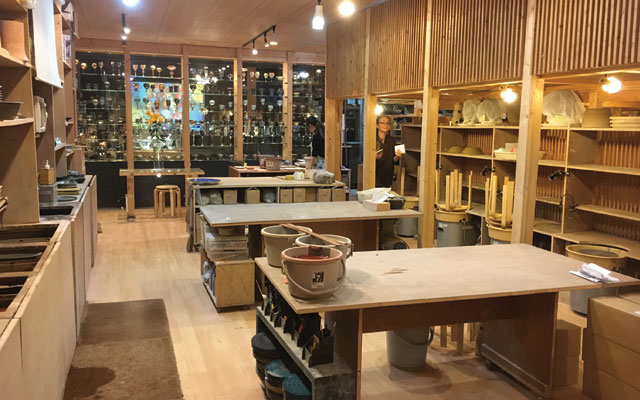
Tucked away in Tokyo’s luxury boutique district of Omotesando lies Saideigawa Pottery Studio, where founder and ceramic artisan Taku Nakano teaches kintsugi (gold joinery) to a growing number of business groups.
A look inside Saideigawa Pottery Studio
The traditional skill of using powdered or lacquered gold to repair broken pottery was born out of practicality, before it became a respected artform in the 14th century. Today, this rare activity offers insight into a fascinating side of Japanese culture and gives participants a stunning, luxury souvenir.
At Saideigawa, Nakano begins each 90-minute session by explaining the three philosophies behind kintsugi: nothing should be wasted; every object should get a second chance; and what people perceive as flaws can be beautiful.
The seven-step process involves choosing a broken plate, outlining the cracks with a marker, taping the pieces together, smoothing the surfaces, filling the cracks with resin and lacquer, adding the gold powder and polishing to perfection. With English instructions and patient, helpful staff, the activity is interesting, interactive and fun.
The basic package costs ¥6,600 (US$61) and offers a choice of three modern plates with old designs. Under the premium package, at ¥10,500, participants can work on a plate from the Edo-period (1603-1868), enabling participants to bring home a piece of history.
The studio can cater for up to 80 pax at one time and offers deals for groups dependent on their needs.
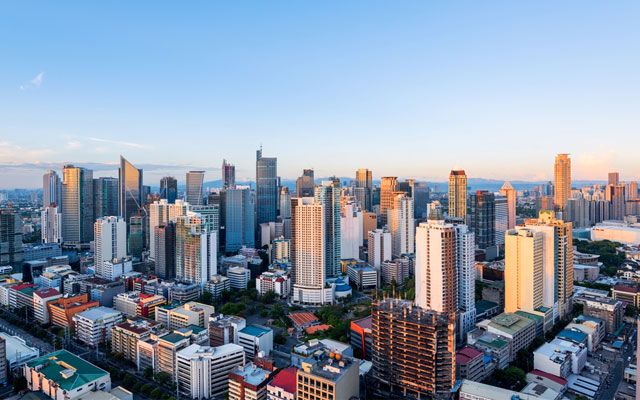
PACEOS calls for Philippine government to prioritise recovery of the business events sector
The Philippine Association of Convention/Exhibition Organizers and Suppliers (PACEOS) has called on the government to prioritise business events, as it is the faster way to get the economy back on track.
“Nurturing MICE is actually a faster way of jumpstarting the economy rather than leisure tourists, because not only do you get tourism, you also get economy starters, catalysts for businesses to proceed,” PACEOS’ president Joel Pascual said in the webinar MICE In The Time of Pandemic Coping and Moving Forward hosted by the association recently.
PACEOS calls for the Philippine government to prioritise recovery of the business events sector
Fellow panellist, SMX Convention Center’s vice president sales and marketing, Agnes Pacis, shared that she anticipates a 50 per cent reduction in the capacity of the eight SMX convention centres, as the venues will have to provide enough space to follow physical distancing.
She listed the new normal of heightened focus on the level of hygiene, sanitation and safety, including limiting the number of attendees at tradeshows; restricting the number of people in a lift to four persons; more plated events over buffet reception; cosier social events as the normal round table for 10 will be reduced to six pax; temperature testing; and provision of hand sanitisers throughout the facility.
On the hotel side, Hotel Sales and Marketing Association’s president Christine Urbanozo-Ibarreta said they have “to revisit our business direction” to determine how to manage room occupancies and rates under the new normal.
There’s also the need to ask the Departments of Tourism and Health to come up with protocols and guidelines to protect workers and participants of business events, Ibarreta said.
She noted that events, mainly large accounts, in the convention months of October and November were already cancelled and that large hotels in Metro Manila have a “very big problem” of zero revenue.
On a more optimistic note, Team Asia’s managing director Bea Lim said: “What I’d love the industry to do is to strengthen and nurture our virtual community. It’s not about when MICE bounces back, but what we in the industry can do now to ensure MICE is alive. We cannot wait for post-Covid-19; we have to bounce back now.”
For instance, as virtual and augmented reality have been trending for a few years now, Lim believes now is a “great time to experiment and make it happen”.
The digital technology aiding hybrid or virtual events has really taken off during the lockdown, which was extended from April 30 to May 15. For instance, one of these is tech platform Kumu, which offers live streaming using cellphones.
Lim also suggested having a government-run online platform to connect industry players so they can support each other.
However, overall, panellists could not ascertain when the sector will normalise, saying it depends on when the vaccine is invented.
Meanwhile, Karem Miranda, Tourism Promotions Board’s (TPB) acting head, MICE Department, expects the recovery of Philippine business events to be staggered, with the domestic component recovering first, followed by regional, and finally international events.
Aware of the challenges the city’s business events sector is facing, the Seoul Convention Bureau (SCB) has promised training opportunities and financial support to Seoul MICE Alliance (SMA) members.
These initiatives, outlined in a press statement from SCB, have been rolled out as part of the bureau’s Stand Strong Together with Alliance campaign, which will continue till May 22.
Bukchon Hanok Village in Seoul, South Korea, pictured
Upon registration, each business event personnel will gain access to various courses either directly or indirectly related to the industry. They can take up to one hundred hours’ worth of classes.
Direct financial support will also be provided for private businesses in the sector that are operating from the South Korean capital. This will be drawn from the 2.5 billion won (US$2 million) set aside to tide Seoul’s tourism and business events industry through the pandemic, according to SCB.
Meetings & Events Australia (MEA) has launched its new accreditation programme, designed to recognise events industry practitioners who have reached the highest levels of professionalism in event management.
The standard for becoming an MEA Accredited Event Professional will be based on both quantitative and qualitative assessments of career achievements, work history, industry knowledge, qualifications, continuing skills development, and education in addition to the applicant’s contribution to the events sector.
The new programme acknowledges practical experience, industry knowledge and previous qualifications
MEA’s CEO, Robyn Johnson, said in a statement: “MEA’s individual accreditation programme has undergone a long-overdue review… It acknowledges event professionals who are committed to continued learning and improvement of their skills and knowledge. Having the AEP (Accredited Event Professional) post-nominal will be the highest accolade in the Australian events community and will be highly prized.”
The association has indicated it will be promoting the benefits of becoming a MEA Accredited Event Professional to industry and government, and the value to clients and employers of engaging such an individual.
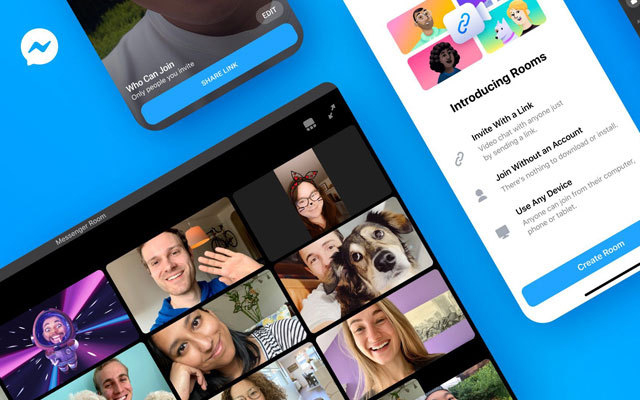
Facebook now has a video conference platform called Messenger Rooms
On April 24, Facebook introduced a video conferencing tool and expanded livestreaming features, capitalising on a surge in demand for video chats during the coronavirus pandemic, according to Reuters.
The video conferencing tool, Messenger Rooms, will enable as many as 50 people to participate in a call, the company said in a statement. It will display a tiled layout of participant videos – up to 16 on desktop and eight on mobile – resembling the design offered by competitor Zoom.
Facebook now has a video conference platform called Messenger Rooms
Facebook users will be able to share links enabling non-users to join Rooms via a web browser on both desktop and mobile, eliminating requirements to download an app, or create an account as on other services.
There will be no time limits on the calls.
Elements of the product had been slated for release in 3Q and 4Q2020, but Facebook accelerated its plans after observing a spike in group calling during the lockdowns, Facebook’s head of Messenger, Stan Chudnovsky told Reuters.
“Our video calls doubled, and when we’re looking at the group calls usage, that went up even higher,” said Chudnovsky. “So we figured out a way to build those things faster.”
Facebook said in its statement there were now more than 700 million accounts participating in calls on WhatsApp and Messenger every day.
Chudnovsky said Facebook’s free offering is focused squarely on the consumer market with Messenger Rooms and is not currently making overtures to businesses, the main source of revenue for most other video conferencing apps.
The company is simultaneously expanding its livestreaming offerings, such as an option to add a guest to a live video on the core Facebook app and the ability to save live videos on Instagram to the IGTV video-sharing app.
Its decision to build Rooms on Messenger’s infrastructure asserts the app’s preeminence as the company begins to realise chief executive Mark Zuckerberg’s vision to weave together its messaging services, offering a first glimpse at how that integration will be structured.
Messenger Rooms will be accessible across the social network’s sprawling array of online gathering spaces, enabling users to jump into group video meetings directly from News Feed, as well as in Groups and Events pages.
Facebook is also planning to add buttons within messaging service WhatsApp and the chat function of Instagram, although those users will be prompted to open Messenger to create Rooms, said Chudnovsky.
The company is simultaneously expanding group video calling within WhatsApp, which has more users than Messenger, but is capping the number of participants there at eight.
Chudnovsky said Zuckerberg’s plan to extend end-to-end encryption across messaging services would also apply to Messenger Rooms. “We would like to have it all encrypted if possible,” he said.
The former tourism secretary of the Philippine Department of Tourism (DOT), Ramon “Mon” Jimenez, Jr has passed away this week at the age of 64.
The DOT’s present chief, Bernadette Romulo Puyat, has issued a statement, paying tribute to the “immeasurable contributions of secretary Jimenez who laid down the foundation for the country’s most famous tourism campaign, It’s More Fun in the Philippines”.
Ramon Jimenez Jr
Puyat added that he was also behind many DOT policies that helped shape the National Tourism Development Program (NTDP) for 2016-2022.
“Today, we mourn the loss of Mon Jimenez but we will be forever grateful to him for the growth of the tourism sector, and for promoting the Philippines as a place that is wonderful, joyous and fun,” said Puyat.
With metro Manila still on lockdown, friends and former colleagues from the Hotel Sales and Marketing Association as well as other tourism sectors have arranged for a virtual eulogy in remembrance of Jimenez.
The virtual eulogy will be held on Facebook on April 29, 19.30 local time, right after the virtual mass on Jimenez’s Facebook account.
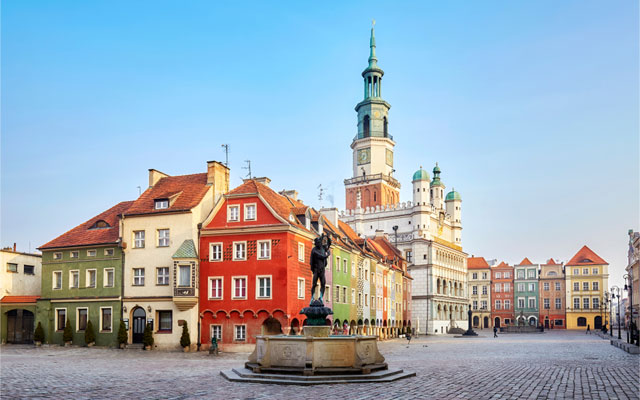
The UFI European Conference skips this year's edition and will be held in Poznan, Poland (pictured) next year
The UFI European Conference skips this year’s edition and will be held in Poznan, Poland (pictured) next year
UFI European Conference cancelled for 2020
UFI has cancelled the UFI European Conference, which was due to take place from June 3-5, 2020 at the Swedish Exhibition & Congress Centre in Gothenburg.
Registration fees for industry professionals who have already registered for both events will be reimbursed. The UFI team will reach out to all participants and partners.
UFI also announced that the next European Conference will take place from May 5-7, 2021 in Poznan, Poland, hosted by Grupa MTP in their centenary year.
“We are sorry not to be joining our colleagues in Gothenburg in June, however we are happy nonetheless to be confirmed as the hosts of next year’s UFI European Conference. Founded in 1921, next year marks 100 years of organising trade fairs, a very important milestone for our company and the Polish exhibition industry. Please join us in Poznan to celebrate together in style,” said Tomasz Kobierski, chairman of the board of Grupa MTP.
CTICC and Ladles of Love join forces to feed the city
The Cape Town International Convention Centre (CTICC) has partnered with Ladles of Love, a non-profit organisation which aims to help those who do not have access to food during the pandemic.
Ladles of Love is a soup kitchen and a feeding scheme that helps vulnerable people within Cape Town. In under a month, the organisation has increased its cooked meal production by 1,000 per cent from 200 meals per day to over 2,000 meals per day.
As such, the CTICC has volunteered the use of an exhibition hall and a kitchen as a temporary headquarters.
Founder of Ladles of Love, Danny Diliberto, said: “This sudden high demand has stretched our organisation at a logistical level, seeing us completely outgrow our current headquarters. We are immensely grateful to the CTICC for coming to the rescue. The centre has offered us more than 1,500m2 of space to serve as Ladles of Love’s temporary logistics headquarters from April 27 to June 30, 2020.”
UK events industry eyes September as turning point
The UK events industry believes that September 2020 is expected to be the most significant month when it comes to post-Covid-19 recovery, as it forecasts a rise in both enquiry and booking levels, according to a new survey released today.
The Business Events Sentiment Survey, created by communications agency davies tanner, in partnership with the Business Visits & Events Partnership (BVEP), received responses from 556 business events professionals across the UK.
In the survey, 38 per cent of respondents stated September 2020 as the primary month when they expect to see both enquiries and bookings begin to increase, though some believe this will happen sooner, with 12 per cent indicating July as the beginning of the recovery period. A further 10 per cent believe this will be August, with 13 cent indicating this will begin in October.
In terms of industry-wide recovery, respondents believe that the impact of Covid-19 on the business events industry will be longer-lasting. Half of the respondents believe that the industry as a whole will not return to any form of normality for at least 12 months, with only 27 per cent believing that this could be achieved within none to 12 months.
The Business Events Sentiment survey was completed by buyers (corporate planners, associations and agencies), venues and suppliers between April 6-14, prior to the further lockdown measures introduced on April 16th.
To download a free copy of the report, please click here.
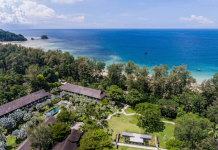
Herbert Laubichler-Pichler has taken charge of the opening of the 196-pavilion and 384-suite resort in Vietnam’s Cam Ranh peninsula.
The hospitality veteran’s work in Vietnam spans almost 14 years and includes management of properties such as The Anam (also in Cam Ranh), Ho Chi Minh City’s Reverie Saigon, and Nam Hai in Danang.
The Austrian’s experience in Asia also includes overseeing the opening of Raffles Hainan in China; working for Shangri-La Hotels and Resorts in mainland China, Hong Kong, Singapore, Malaysia and the Philippines; and managing GHM (General Hotel Management) properties in Malaysia.
Born into a hotelier family, Laubichler-Pichler started out in the industry working at his parents’ guesthouse in Austria as a bellboy at 10 years of age during the summer season. He later studied hotel management and became a certified chef before rising through the ranks to become the general manager at properties in Austria, Germany and Cyprus.
Just 10 minutes from Phuket International Airport on the serene northern coast, this 178-key, Bill Bensley-designed resort offers delegates a quiet, tropical paradise steeped in Phuket’s tin-mining heritage
The newly-opened Ritz-Carlton, Bangkok anchors the One Bangkok development with cosmopolitan elegance. Featuring the city's largest ballroom and a spectacular new penthouse suite, it delivers exceptional hardware and deeply authentic, soulful service for business and leisure travellers alike
Behind the imposing, Brutalist concrete that defines Zurich’s Oerlikon district lies a surprising secret. While its exterior honours the neighbourhood’s industrial roots, stepping inside Mama Shelter reveals a vibrant, neon-soaked world that is a far cry from its rigid shell