Asia/Singapore Thursday, 9th April 2026
Page 593

DiDi ride-hailing service zooms off in Sydney this March

0

Come March 16, Chinese ride-hailing giant DiDi will launch ride-sharing services in Sydney, Australia with DiDi Express (carpooling) and Didi Max (seven-seater) services.

Getting around Sydney will be even easier with the entry of a new ride-hailing service

DiDi Australia general manager Lyn Ma said: “We are eager to work alongside local stakeholders in the Sydney transportation industry, using leading AI technologies and local operational expertise to innovate and build a better, trusted product with the aim of becoming Sydney’s preferred ridesharing platform.”

The company first moved into the Australian market in May 2018. So far, it has served more than two million passengers in seven cities across four states.

Avani opens in Busan’s financial hub

0

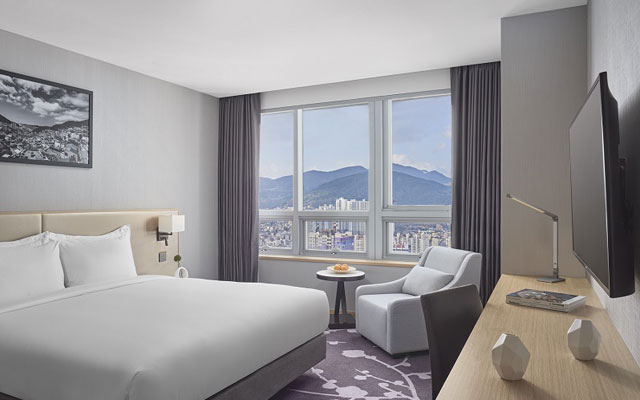
Avani Central Busan Hotel has opened in the heart of Busan’s financial centre.

There are 289 rooms across seven categories on offer, where guestrooms feature either city or mountain views. Room amenities include flatscreen TVs, free Wi-Fi, rain showers, and tea and coffee making stations.

Business travellers may avail facilities such as a meeting room, as well as The Lobby Lounge which doubles up as a casual meeting area. There is also an all-day dining restaurant that serves Korean and international fare, as well as a 24-hour gym.

The hotel is directly connected to the Busan subway system and is a 15-minute drive to Korean Train Express (KTX) stop and international cruise terminal.

Destinations on the rise

0
Three giraffes roam a protected national park in Kenya, Africa

Asia hots up
The hallmarks of a hot meetings destination have shifted as demand for bleisure and unique events is on the rise, and Asia has taken centrestage. Due to increased sourcing volume to the region, Cvent last year unveiled two standalone Top 25 Meeting Destinations lists for Asia, and Australia & Oceania. The expanded list highlights Asia-Pacific’s strength and growing popularity as a destination for business events.

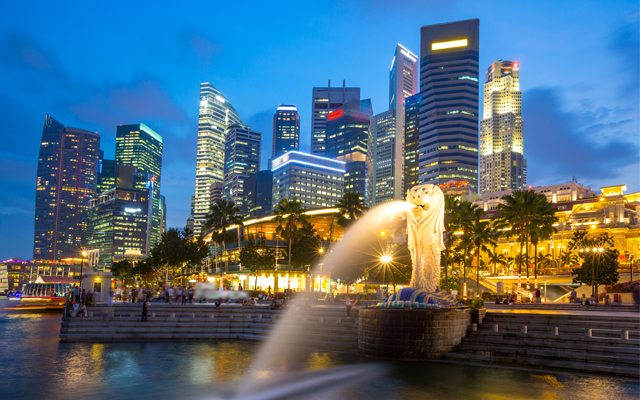
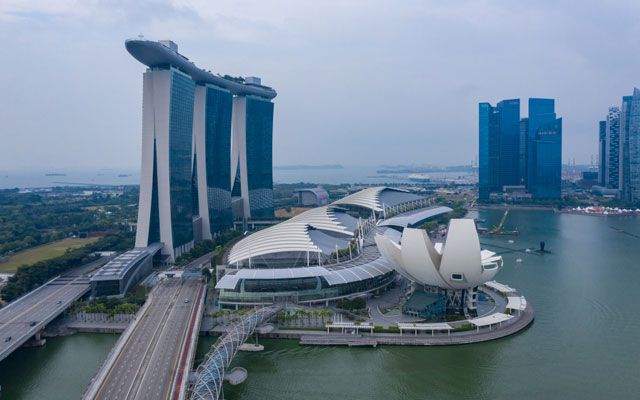
Singapore skyline

Topping the rankings was Singapore, followed by Bangkok, Hong Kong, Kuala Lumpur, Shanghai, Tokyo, Seoul, Beijing, Bali and Mumbai. The list reflects how Asia-Pacific cities have enhanced their infrastructure and positioned their destination as prime event locations, noted Chris McAndrews, vice president of marketing for Cvent Hospitality Cloud.

“For example, Bangkok, which moved up one spot on this year’s list, has elevated its MICE profile with support from the Thailand Convention and Exhibition Bureau in hosting industry-facing events such as its first Thailand MICE Forum. The destination has seen incredible investment in luxury hotels in recent years, offers great value, and the country delivers on desirable offerings including unique culture, world-class dining and shopping, vibrant nightlife, and some of the best beaches in the world,” he explained.

Meanwhile, the 2020 Summer Olympics has cast a spotlight on Tokyo, which has in turn boosted its room hotel inventory and tourist facilities. While infrastructure and accessibility have traditionally been critical in pulling events, these alone are no longer enough as “event organisers are looking for different locales to deliver more memorable events and offer their delegates a truly unique experience”, observed McAndrews.

Instead, next year will see demand strengthen for bleisure and unique events, which may serve to shake up the top 25 list as planners look to unexplored destinations.

McAndrews predicted: “Event organisers will now look beyond accessibility (and consider) if a particular destination can deliver a more exclusive cultural experience. For example, Pasay City in the Philippines, which is new to the list this year, could see even more traction in the years ahead as 9,000 additional rooms across hotels and serviced apartments open by 2021.

“We’re keeping our eye on other cities that are new to the list this year including Osaka, Hanoi and Chiba. It will also be interesting to see if Nadi in Fiji, which came in at number 10 on the Australia/Oceania Top 10 list, will continue to rise in rank within the Australia-heavy list.” Pamela Chow

Allures beyond Asia
Los Angeles Spurred by increased connectivity and expanding attractions, Los Angeles (LA) Tourism & Convention Board has launched the LA Insider Specialist Program in Asia to equip trade agents with destination facts, products and updates.

The programme provides agents with incentives for completing courses, such as vouchers and attraction tickets, as well updates on LA’s upcoming attractions.

The following years will see several new points of interest in the destination, including The Academy Museum in 2020; the LA Stadium, which will open in 2020 and host the 2022 Super Bowl; 30 new hotels in the next four years; as well as new and expanded airport terminals before the 2028 Summer Olympic Games.

To this end, Los Angeles Tourism’s regional director for Australia/New Zealand Craig Gibbons’ portfolio has been expanded to also oversee Indonesia, Malaysia, the Philippines, Singapore, Thailand, Vietnam – in addition to Australia and New Zealand – in August 2019.

Panoramic view of Baku, the capital of Azerbaijan

Azerbaijan Azerbaijan Tourism Board (ATB) debuted at ITB Asia 2019, led by CEO Florian Sengstschmid, to explore collaborative opportunities with Asia’s travel agencies and encourage travellers to explore the country’s rich blend of modernity and antiquity through its Take Another Look campaign.

In Asia, China and India are Azerbaijan’s biggest visitor source markets, while South Korea and Japan have posted a strong increase in overnights. In response, ATB is set to open a marketing office in Seoul.

For South-east Asia, Singapore, Malaysia and Indonesia are on the radar for ATB.

More recently, Azerbaijan implemented a simplified e-visa procedure that is available to Thai and Vietnamese travellers. Singaporeans, Malaysians and Indonesians are eligible for visa upon arrival.

However, destination promotions are still nascent, admitted the NTO chief, as the former Soviet state looks towards tourism as a new economic revenue generator following sharp declines in global oil prices in recent years. ATB itself, Sengstschmid said, was only founded in 2018.

Malta Tourism arrivals to Malta have traditionally been dominated by European markets, with the UK, Germany and Italy as forerunners. However, recent economic and political issues in Europe have spurred the island to look towards the Far East to expand visitorship.

As part of its latest efforts to court Asians, Malta struck up a partnership with Manchester United Football Club as an official destination partner. The agreement, inked in September 2019, sees Malta being featured as the “players’ destination of choice” during the club’s overseas events, as the country is a popular holiday spot among the players and home to the oldest active Manchester United supporters’ club. Such a partnership would be effective in Asia, where Manchester United is a household name, and can lend its star power to the destination.

Malta has also been added to Qatar Airways’ roster of flights, which can bring even more travellers from Asia. The destination has also recently signed a MoU with four Chinese tour operators.

Three giraffes roam a protected national park in Kenya, Africa

Kenya Though small in numbers, South-east Asia is a high-yield travel market for Kenya and its tourism board has taken notice.

Kenya Tourism Board’s chairman, Jimi Kariuki shared that his bureau is engaging several airlines in talks for direct flights to the region. The only destination that Kenya Airways flies to in South-east Asia today is Bangkok.

For now, Kenya is targeting the FIT market and small private groups, and showcasing its core tourism draws: its wildlife safari and pristine beaches, and its two large cities, Nairobi and Mombasa. The board is also looking at engaging local destination experts in key markets it has identified – Thailand, Singapore, Malaysia, Indonesia and Vietnam.

The year 2018 saw around 90,000 tourists from South-east Asia, a 25 per cent growth over 2017. – Rachel AJ Lee

John Woolley helms The Ritz-Carlton, Bali

0

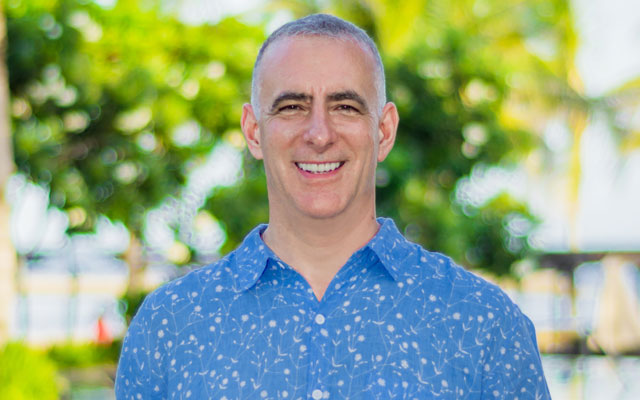
John Woolley has joined The Ritz-Carlton, Bali, as general manager.

He brings over 20 years of experience with Marriott International to his new role, where his career has taken him around the globe.

Prior to his move, Woolley was general manager at Courtyard by Marriott Bali Seminyak Resort from 2015 to 2019.

The dual US/UK national’s career highlights include positions of area director of sales and marketing, South Asia and then the Caribbean. In addition, Woolley also launched a sales engine – the European Convention Network – that supports Marriott’s large group hotels in Europe before his move to Bali.

New cluster DOSM for Crossroads Maldives

0

Crossroads Maldives, an integrated entertainment destination developed and operated by S Hotels and Resorts, has appointed Audra Arul as cluster director of sales and marketing for the complex, where she will be overseeing the SAii Lagoon Maldives, a Curio Collection by Hilton; and Hard Rock Hotel Maldives.

In her new role, Arul will be responsible for the overall commercial objectives of Crossroads Maldives and the two resorts, including achieving goals in revenue generation, yield management and brand engagement.

With more than two decades of experience, Arul has served in a variety of hotel sales and marketing positions with hospitality companies such as Accor, Marriott, Hyatt, and most recently, Banyan Tree Hotels and Resorts.

Cisco Live’s conference pull-out keenly felt by Melbourne

0
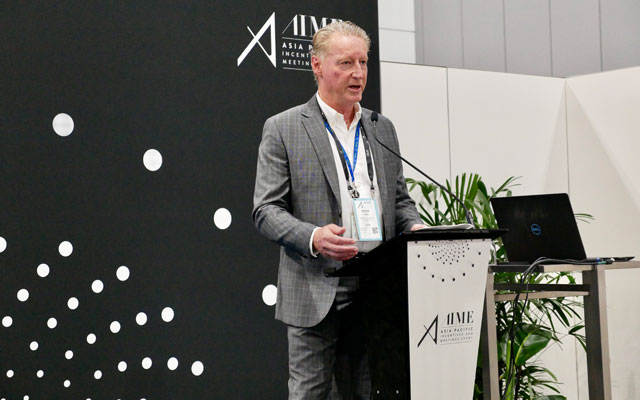
Peter King, MCEC's chief executive speaking at AIME. Photo: Adelaine Ng

Cisco Live’s cancellation of its 8,500-pax conference in Melbourne will have a ripple effect on the city’s economy, and is one of the latest in a string of tradeshow cancellations that have swept through Asia-Pacific.

Melbourne Convention and Exhibition Centre’s chief executive Peter King voiced his disappointment at the digital giant’s “difficult decision” to pull the plug on the annual flagship conference initially scheduled for March 3-6, 2020, due to concerns surrounding the Covid-19 outbreak.

Peter King, MCEC’s chief executive speaking at AIME. Photo: Adelaine Ng

King pointed out that the decision was made by Cisco’s US corporate office, and was not reflective of the current business events environment in Melbourne or Australia.

“Cisco is one of our largest events,” said King at a press conference at AIME. “It was an extremely disappointing cancellation because we as a business, (and) also the local business events community, invested a huge amount of time in Cisco. It’s a wonderful event that brings high-yield delegates to Melbourne and to have that cancelled at such a late stage (last week) was a hit.”

“We have hundreds of casual workers and also stand builders who will no longer have an income that week. And we’ve got many, many hotel rooms that are going to be vacant, many (cancelled) restaurant bookings, (bringing about) a ripple effect from such large events,” King continued.

The cancellation is a setback in what has been otherwise a successful run for MCEC, which earlier reported its best-ever result in excess of A$100 million (US$67 million) in turnover, an increase in diversity of events and a growing foray into live music entertainment as a result of their expansion in 2018.

Business from the incentive and corporate meetings in Asia are also proving to be strong sources of revenue, with international bookings making up about 12 to 15 per cent of income.

MyCEB extends subvention programme for another year

0
MyCEB extends Twin Deal

The Malaysia Convention & Exhibition Bureau (MyCEB) has extended its subvention programme for another year, in conjunction with Visit Malaysia Year 2020.

Titled Malaysia Twin Deal (MTD) – the original run date was until December 31, 2019 – the programme was aimed at incentivising international corporate groups and meetings to hold their events in Malaysia this year.

MyCEB extends its subvention programme to the end of this year; Petronas Twin Towers in Kuala Lumpur pictured

MTD rewards both participants and meeting planners, and is applicable for bookings up to November 30, 2020, and groups need to arrive by December 31, 2020.

Deal 1 offers international corporate meetings and incentive groups with a minimum of 30 participants, various value-added supports where larger groups stand to gain more, such as a complimentary cultural performance, photo booth set-up, welcome banner and partial sponsorship for a gala dinner.

Meanwhile, Deal 2 offers incentive rewards for corporate meetings and incentive planners, and is based on cumulative numbers of participants. Under this deal, planners will stand a chance to be rewarded with iPad, a vacation for two to Kuala Lumpur or any two preferred destinations in Malaysia.

Additionally, the MTD rewards programme also includes special cumulative rewards for planners – with a minimum of 3,000 participants – for an educational trip to Malaysia, and up to 10 corporate clients of international corporate meetings and incentive planners.

Uzaidi Udanis, president, Malaysian Inbound Tourism Association, shared: “The inbound business events industry is appreciative of the assistance provided by MyCEB especially during this Covid-19 crisis. But it takes more than perks and incentives to materialise groups as there are so many destination choices, and many destinations in this region also provide subventions.

“What we need is better collaboration and synergy between industry players and MyCEB in order to materialise more business events. Knowledge sharing and strategising session with industry players will help Malaysia to become more competitive and move forward faster.”

Two major Singapore-bound tradeshows postponed

0
Two tradeshows in Singapore happening in May have been postponed to next year

Reed Travel Exhibitions has postponed two of its events in Singapore, the inaugural edition of IBTM Asia Pacific, and ILTM Asia Pacific, due to the Covid-19 situation.

Originally scheduled to be held from April 6-8 this year, IBTM Asia Pacific’s inaugural edition will instead be held from April 13-14, 2021. Luxury travel event, ILTM Asia Pacific, originally scheduled for May 18-21 this year, has been pushed to May 31 to June 3, 2021.

Two tradeshows in Singapore happening in May have been postponed to next year

Shane Hannam and Alison Gilmore, portfolio directors of IBTM and ILTM respectively, indicated that the postponements were decided after in-depth discussions with customers, whose welfare were their priorities.

Both have also stressed that these decisions were not taken lightly. They recognise that “business has to continue”, and as such, expressed that they will be creating ways to keep the respective communities connected, “to support and collaborate to keep our world moving during this difficult period”.

Meanwhile, the rest of the events in ILTM’s global portfolio for 2020 remain unchanged at press time: ILTM Latin America, Sao Paulo (May 5-8); ILTM North America, Riviera Maya, Mexico (September 21-24); ILTM China, Shanghai (October 28-30); and ILTM Cannes (December 7-10).

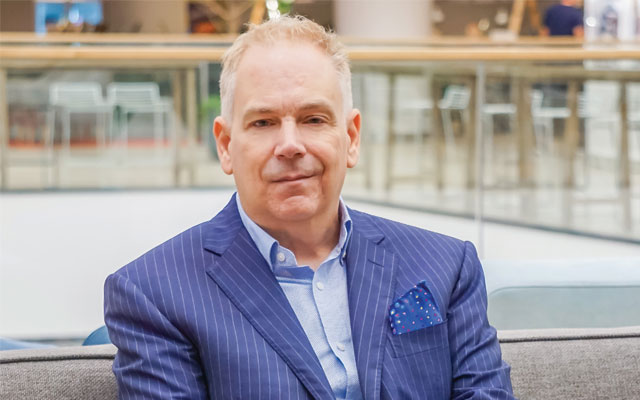
Mario Hardy: A precise juggle

0

The world today is facing many challenges all at once, from trade wars to political upheavals. How is the travel industry faring in such a state of affairs?
Unfortunately, I think these challenges will (become) even greater moving forward. We have political, economic and climate challenges, and what we read in the news has a direct impact on currency fluctuation. For example, the Thai baht is extremely strong at the moment, and that impacts us at PATA (which is based in Bangkok), and many other businesses, too. We have very little control over these situations.
At the same time, there’s been an impact with less Chinese coming over to Thailand (due to a tour boat accident in Phuket that led to other traveller security concerns), South Koreans not going to Japan at the moment (due to political disputes), and so on. There are other crises in other parts of Asia where numbers are significantly dropping for a period of time. What’s important is to understand what (the crises) are and how long they are going to last.

The actual number of tourists coming to Asia is still increasing. Although it is not growing as much as it did before, there’s still phenomenal growth in the region.

How is PATA helping the industry to navigate through these times?
What we can do as an organisation is stay ahead of the curve to understand what the current trends are, what the potential impacts are, how we can mitigate these problems, and if things improve, how we can benefit moving forward.

We’re an advocacy organisation, but at the same time, we also want to support our members, share (insights on) trends and understand the implications of all of these changes. It’s challenging because (the world) changes at a really fast pace. All you need is a tweet at 03.00 from someone living far away, and the world changes, mostly in a negative way.

What we’ve been telling our government members is that it’s extremely important for a destination to diversify their product offerings and not rely on one source market. The more balanced your source markets are, the less risk of being impacted by a drop in numbers.

Is that also a pertinent consideration for the western destinations?
Yes, that’s one thing we’re monitoring very closely with organisations such as WTTC and UNWTO through Uniting Travel.

Meanwhile, over in Europe, there is a sentiment at the moment about flight shaming, which is shaming people for flying because it’s creating carbon dioxide emissions. This is growing at a really fast pace in Europe, where (regional travellers) are encouraged to take the train, find alternative ways to travel or not fly at all. It impacts outbound travel via longhaul flights because the longer the flight, the more emissions.

Do you think flight shaming will drive the airline industry to look more seriously at their emission levels?
They have to, for many reasons. The price of fuel is going up, which is a big push for them. Greta Thunberg has been doing a great job speaking the truth and what people don’t want to hear, and this will put pressure not only on airlines, but on the entire travel industry – and other industries – to seriously look at solutions. There are solutions out there but they’re costly and not accessible to everybody.

Speaking of environmental solutions, PATA ran the BUFFET Initiative, aimed at cutting food wastage in the travel industry. It ended in May 2019. How did it fare?
We ran the campaign for more than 12 months – probably 14 months in total – and it got a lot of publicity and interest from various parties in the industry. We had a lot of people asking questions, such as “can we implement it?”.

The BUFFET Toolkit is a set of 10 tools that are available on our website. They’re copyright-free, so anyone can replicate and use them, be they organisations, hotels, convention centres, restaurants or canteens. These are DIY solutions for anybody to implement, and to measure how they’re actually succeeding in food waste reduction.

Probably the most successful part was the competition we organised among students. We had seven teams around the world that competed by implementing the tools in either staff canteens or local hotels in their communities, and then measure the results from it. The winners were a group of students from Bangalore, who implemented the solution in their student canteen and were able to measure a 50 per cent reduction in food waste, which was enormous.

How confident are you in seeing sustainability efforts continue beyond the programme?
We know that many other organisations have since implemented the BUFFET Toolkit. Even today we meet up with people who ask about where they can find it. We met with Kempinski (a luxury hotel chain) recently, and they said they’d definitely look into it.

Even though the campaign is officially finished, we’re still going to continue promoting it. We may actually do some campaigns on and off during different periods of time to remind people about these tools. As new solutions and technologies become available, we may update them and continue to promote the initiative.

What else is PATA doing to encourage improved sustainability in travel and tourism?
We’ve announced our partnership with the Asian Development Bank and Plug and Play Singapore to develop the Plug and Play Travel Asia Pacific platform. Through this, we want to work with the hospitality sector. PATA brings our vast network of members who may want to use (innovative) tools, and Plug and Play will help us to find a solution.

We’re (targeting to have) five hotel groups. So far, Hilton, Minor Hotels and Jetwing Hotels in Sri Lanka have signed up. We’re looking for two more and have ongoing discussions with a few others. Graham Harper (PATA’s director of sustainability and social responsibility) was in Sri Lanka a few months ago, and sat down with the Jetwing team to identify what problems and pain points they had.

What are some concerns that have already surfaced?
For instance, Jetwing is already known as one of the most sustainable hotel groups in the world. They want to go further. They have joined the programme to explore what else they can do, (especially since) they have so many properties. It could be about renewable energy, implementing clean technology in their properties, water consumption, or food or general waste.

The programme will work to understand what would have the most positive impact on the organisation – of course for their bottom line and profit margins – but at the same time doing good for the environment and community. It will then source from more than 10,000 solution providers around the world that can solve the problem, which will be scalable across all properties. If we can do this with five hotel groups, implementing some of these technologies in thousands of properties can have a significant impact and make our industry more sustainable. We don’t want to publish just a research report. That could be one aspect, but I also want tangible, measurable results.

What kinds of hospitality solutions will become more accessible through this platform?
To give one simple example, there’s a technology company that provides high-pressure showers that can reduce water consumption by 50 per cent. One simple little widget that they put into the shower can make a significant difference in Thailand, Singapore and many other places with a shortage of water.

PATA plays an active role in stimulating tourism business in unique destinations by holding its own events there. How have such destinations benefitted?
I’m really proud to say that PATA has had a very direct impact here in Thailand, where the campaign promoting 12 hidden gems in 2014 is now promoting 55, and it keeps increasing every year.

Based on this initiative, Indonesia has started to promote 10 new destinations, and the Philippines is promoting islands that are lesser known. Hosting events has certainly helped to raise awareness for those destinations, and other tourism boards are now starting to embrace this idea.

For PATA Travel Mart 2019, Kazakhstan and (capital city) Nur-Sultan were completely new destinations. For the majority of delegates, it was their first time visiting Kazakhstan. Everyone I talked to at the event said they were happy that we selected this destination, because they may not have gone to Kazakhstan otherwise. It was a country they weren’t familiar with, but it has so much potential.

(Kazakhstan travel and tourism stakeholders) were extremely pleased with the publicity, the satisfaction of people visiting, and the trade deals done with Air Astana and other service providers in the country.

There were big discussions between Vietnam and Kazakhstan to develop some flights as well. I personally had a meeting with an investment firm that was looking at developing duty-free (shops) in the country and they have started to advertise for it, which is something Kazakhstan has never had before.

How do you select which destinations to support through PATA events?
We always have to look at accessibility and the support from both the government as well as the private sectors in terms of presence and promotion of the event.

What are PATA’s plans going into 2020?
Our vision and theme for 2020 is Partnership for Tomorrow, based on United Nations’ Sustainable Development Goals.

We always talk about the unique strength of this public-private membership that we have, and how we actually bring the two sectors together. Now we’re bringing education, youth technology and other parts of the (travel) industry together to form partnerships – even between government departments. A lot of our focus in 2020 will be on discussions around how we can form very successful partnerships between organisations.

We also want to continue to grow. We are trying to find new ways to partner with different organisations to encourage students to not only join as a member, but engage with us, with other students and with leaders within the industry.

This is really important as we’re a 68-year-old organisation. In order for us to continue to grow for many years to come, future leaders have to be involved with us and be part of it from an early stage.

Tell me about PATA’s youth programme.
We’ve started our youth symposiums and a new programme where we hold workshops at universities with industry leaders sharing insights. In a space of four years, we now have more than 5,000 students affiliated with the organisation. We have 23 student chapters globally: Singapore, Malaysia, Thailand, Nepal, New Zealand and Canada. We have university members in Europe as well.

Is it a challenge for legacy associations to relate to the younger
generation?
Yes, old trade associations in every sector have faced challenges in recent times. Only those who are willing to adapt to the new marketplace will continue to survive. We’re constantly looking at new ways to engage with youth and also existing members.

We recently assigned people as community managers, and the youth (department) was our first and most successful one. Our new Youth Ambassador engages students all the time.

We want to do the same thing with other members, so now we have someone engaging with our government members, and another with the rest of our community through events and activities year-round.

This article was first published in TTGassociations January 2020, a sister publication of TTGmice


Double the goodness

0

Brief
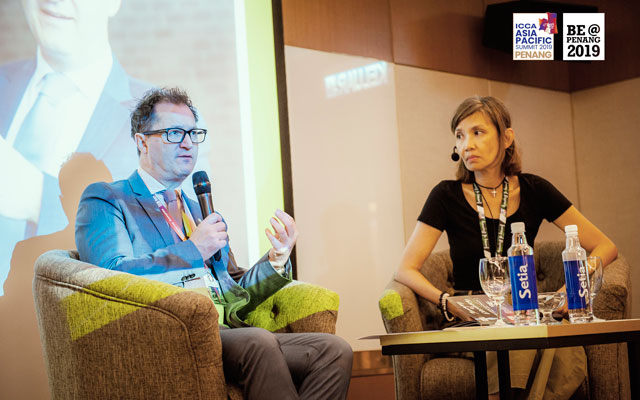
Penang Convention & Exhibition Bureau (PCEB) and Malaysian PCO Anderes Fourdy Events jointly won the bid to host the inaugural ICCA Asia Pacific Summit; the summit was co-organised by the ICCA Asia Pacific Chapter. The ICCA summit was run concurrently with the fourth edition of BE@Penang, an annual conference organised by PCEB.

The idea behind concurrently running two conferences in a single venue was to provide networking opportunities and promote knowledge sharing among local and foreign delegates. It was also an effort to expose delegates to what ICCA was about and the benefits it brings to the industry.

The co-located conferences featured 40 speakers comprising industry leaders from 20 countries, and 300 delegates from the global business events industry.

Highlights
In his keynote address, ICCA president, James Rees, conveyed the importance of ICCA as the leading voice within the meetings industry. Later in a Q&A coffee shop-styled interactive session, delegates posed questions to Rees and gained insights on how to leverage their membership in an increasingly competitive industry. Attendees also learnt about the changes and trends in the meetings industry which could, in turn, influence their business strategies.

On the morning of the second day, delegates of both conferences convened for an interactive workshop session with meeting designers from Orange Gibbon, Mike van der Vijver and Han Chiang. The takeaway from the 1.5-hour workshop was that for meetings to be effective, meeting owners had to put the audience and their needs first, and create a format that engaged the audience.

For foreign delegates who were short on time to experience Penang, co-organisers worked with venue provider Setia SPICE Convention Centre to offer themed coffee breaks and lunches that included local entertainment and an array of dishes Penang was known for.

PCEB also organised a post-tour on December 7 to the Penang Turtle Conservation and Information Centre. Located on Pantai Kerachut beach, it provided an opportunity for delegates to learn more about turtle conservation efforts undertaken by the centre and an example of a corporate social responsibility programme in Penang.

Challenges
Hosting the dual conferences proved to be challenging as it involved two different organisers.

Tricia Loh, head of sales at PCEB, shared: “Good and effective communication was vital for the success of this event. Our team at PCEB worked very closely with Anderes Fourdy Events which was based in Kuala Lumpur. Anderes Fourdy Events in turn, had face-to-face meetings and provided regular updates with the ICCA Asia Pacific office based in Petaling Jaya.”

Another challenge was to obtain a good representation of delegates from Asia-Pacific, in addition to the target of 60 per cent local delegates.

Loh shared: “We marketed the event to the various CVBs in Asia-Pacific which in turn, helped market it to the travel trade in their respective countries. We also made sure the programmes had topics that were relevant and useful to all, regardless of nationality.”

Event ICCA Asia Pacific Summit 2019 and BE@Penang 2019
Organisers PCEB, Anderes Fourdy Events, and ICCA Asia Pacific Chapter
Venue Setia SPICE Convention Centre
Dates December 5-6, 2019
Attendance 300 people

Reviews

The Ritz-Carlton, Bangkok

The newly-opened Ritz-Carlton, Bangkok anchors the One Bangkok development with cosmopolitan elegance. Featuring the city's largest ballroom and a spectacular new penthouse suite, it delivers exceptional hardware and deeply authentic, soulful service for business and leisure travellers alike

Mama Shelter Zurich

Behind the imposing, Brutalist concrete that defines Zurich’s Oerlikon district lies a surprising secret. While its exterior honours the neighbourhood’s industrial roots, stepping inside Mama Shelter reveals a vibrant, neon-soaked world that is a far cry from its rigid shell

Hyatt Regency Kuala Lumpur at KL Midtown

A polished urban retreat designed for business travellers, Hyatt Regency Kuala Lumpur at KL Midtown combines thoughtful design, seamless service, and exceptional facilities.