Asia/Singapore Monday, 22nd December 2025
Page 597

Photo of the day: Graceful powers to descend on Thailand next year

0
PHOTO CAPTION: TAT's Kitsana Kaewtumrong, and Tanes Petsuwan; GlobeWomen Research and Education Institute's Irene Natividad; Thailand's former Minister of Tourism & Sports Kobkarn Wattanavrangkul; and Thai Host Committee's Chonchanok Viravan

The 2020 Global Summit of Women will be held in Bangkok next year, from April 23-25.

From left: TAT’s Kitsana Kaewtumrong, and Tanes Petsuwan; GlobeWomen Research and Education Institute’s Irene Natividad; Thailand’s former Minister of Tourism & Sports Kobkarn Wattanavrangkul; and Thai Host Committee’s Chonchanok Viravan

The conference, in its 30th edition, sports the theme Women: Revolutionising Economies. It is expected to welcome over 1,000 leaders in business and government from around the world.

Key topics include Changing the Face of Economic Leadership Globally; Promoting Ethical Corporate Governance through Diverse Perspectives; Creating Innovative Enterprises for 21st Century Global Market; Increasing Countries GDPs While Uplifting Families and Communities; and Leading the Fight to Preserve the Planet’s Resources for Future Growth.

Technology focus for inaugural Hotelexpo Indonesia and Specialty Food Indonesia

0
There will be countless networking opportunities at the expo

Indonesian trade fair organiser Pamerindo Indonesia will debut the Hotelexpo Indonesia and Specialty Food Indonesia – previously known as Hotelex Indonesia and Finefood Indonesia – on July 22-24, 2020, with content weighing heavily on smart technology.

Held at the Jakarta International Expo, the expo will attract retailers, business owners, and industry professionals from across the globe to learn about key advances in hospitality and food services.

There will be countless networking opportunities at the expo

Ben Wong, managing director of Pamerindo Indonesia, said the upcoming tradeshow will be more focused on products and smart technology in the food and hospitality segments.

The expo will tackle topics related to automated hospitality appliances, smart food storage, sustainable amenities and food production, which have been identified as trends for the industry in 2020.

Astied Julias, event director of Hotelexpo Indonesia and Specialty Food Indonesia, added that the expo will also spotlight artificial intelligence products, as the self-service hotel concept is on the rise.

Responding to the rise in sustainable accommodation, eco-friendly products, including packaged food and amenities with paper-based and biodegradable packaging material, will also be featured.

HRS debuts product to improve travellers’ hotel payment process

0
HRS announces Invisible Pay Platform, a two-click payment solution for business travellers

Hotel and travel technology provider, HRS, has launched Invisible Pay, a new corporate hotel payment platform that promises to simplify travellers’ hotel payment process through automation.

The solution leverages HRS’ proprietary hotel management platform to combine innovative check-in/out payment technology with the company’s proven solutions.

HRS announces Invisible Pay Platform, a two-click payment solution for business travellers

It is built to accommodate the data requirements of both corporate accounting departments and hotels, speeding up payments and securing financial data with 98 per cent acceptance.

What this means for the traveller is lesser time spent in the check-out line and reduced expense report effort, thanks to the fully itemised digital receipt data that will be uploaded into the corporate expense system.

For the employer, the account department stands to benefit from improved invoice accuracy, while travel managers will see reduced rogue bookings and increased usage of preferred hotels.

Hotels will gain from secure data processes that minimise engagement for their finance departments.

“As we’ve piloted with integrated hotel payment solutions around the world in recent years, the programme compliance metrics are clear,” said HRS CEO Tobias Ragge. “When our clients use our payment solutions, we’ve seen hotel compliance rise by 23 per cent on average. The downstream savings – both in room rate and more seamless expense processing – increasingly drive CFOs to deploy across oceans and maximise the incremental savings.”

Invisible Pay is said to address the industry’s longstanding challenge – high levels of out-of-policy spend and insufficient use of preferred hotels. According to a GBTA research released in July 2019, 88 per cent of business travellers surveyed said if their company offered central or direct payment with a hotel, they would book that property over one that does not offer this method.

Ent-Vision harnesses AI to improve buyer-seller connections at tradeshows

0
Find the perfect match with the help of AI

Singapore-based Ent-Vision is piloting a master data platform that seeks to facilitate right connections between tradeshow visitors and exhibitors.

Ent-vision’s platform uses a combination of search technology, natural language processing and machine learning algorithms, as well as attendee data which is collected, filtered and standardised into a set of information.

Find the perfect tradeshow match with the help of AI

Tan Kim Heng, director, Ent-Vision, explained that from there, artificial intelligence (AI) can profile trade visitors, recommend the most relevant booths, and propose business matching, which in turn improves the event experience for both exhibitors and visitors. AI can also provide a tangible map of an event participants’ journey at a tradeshow, thereby allowing the organiser to view the data to improve future shows.

Tan added that the platform is compatible with various event technology sources with an open API.

Citing Cvent as an example, Tan explained that Ent-Vision’s master data platform can work with the event registration solution to provide event organisers with business matching and profiling capability. However, he cautioned that training is needed for every AI solution, and this would take time.

“The longer the platform is used, the better trained the AI will be, as it has been fed with all available pieces of information. Information can be gathered by the event organiser, or gathered from public domains such as job sites,” he elaborated.

The master data platform has just completed a pilot test with a company in Singapore, with one more scheduled for 2020.

Looking ahead, Tan envisions expanding the product to Indonesia where it can absorb content in Bahasa Indonesia. There are also future plans to integrate more multilingual content such as Chinese, Korean and Japanese.

A role model for sustainability

0

What inspired you to steer The Athenee down the sustainability path?
A few years ago, I attended a forum organised by TCEB (Thailand Convention and Exhibition Bureau), where the MCI director of sustainability, Guy Bigwood, shared stories of how the London Olympics achieved ISO20121 (the international standard Event Sustainability Management System accreditation).

I thought to myself, wow, if the London Olympics can do that, surely we can achieve the certification as a hotel too. It took us nine months to prepare for it, and we received our first certification in 2013. We were also the first hotel in the world to achieve it. But achieving the award is just the beginning of a journey, not the end. (The Athenee also passed recertification in 2016 and 2019)

How do you encourage your team to keep sustainable at the core?
While I had the vision, there was no way I could do it alone. To first broach the sustainability idea to our colleagues, we conducted a competition between the departments, where each would draw or build something based on the idea of ISO20121.

Another part of the launch comprised a skit during townhall which revolved around why we needed to have green initiatives. It was such a funny drama that the team remembered it. That’s how we got our colleagues on board.

But as staff turn over quickly in the hotel industry, we ensure that every new colleague goes through a sustainability education where we share more about ISO20121 with them.

How does the hotel’s planning team work with corporate planners to ensure Green Meetings?
We start off by sending proposals to clients electronically. Once they confirm, the contract is also done electronically, then we talk about the setup. We have a checklist, and as clients go down the list, a sustainable setup is always offered.

When they ask what it means, we’ll explain more. For instance, meeting rooms are linen-free, the air-condition is set to a more eco-friendly temperature, and if there’s excess food from the event, organisers can choose whether they want to donate it to a church or an orphanage located in the vicinity. Most of our corporate partners agree to this, which is great. In 2013, (when Green Meetings first started), we had 35 sustainable meetings. The number has grown to over 200 this year.

Aside from meetings, could you share a few examples and successes of sustainability on-site?
We have reduced our preparation waste for our buffet line by 10 per cent with better planning. For example, the team will calculate the approximate number of people eating, and mid-way through the buffet, they will prepare a dish a la carte instead of refilling the buffet tray. Because once the food is displayed, it cannot be saved or reused anymore.

At the start of 2018, we partnered with Scholars of Sustenance Foundation (a Bangkok-based organisation that collects excess food from hotels, restaurants and supermarkets, and delivers them to those in need across the city). When we started, we were donating about 270kg per month. This year, our donation has been reduced to 200kg per month.

This means that the team is more conscious of certain menu items. If an item is not popular, they won’t be making so much of it.

Next, all our guestrooms provide glass-bottled water. We used to provide 190,000 straws per year – when we started counting in 2017. The hotel’s current paper straw consumption is about 80,000. We do not provide a straw unless someone asks for it, but certain items, like drinking from a coconut, is difficult without a straw. We also have signs that encourage our guests to skip the straw.

We have also reduced our staff canteen food waste by 20 per cent this year.

Moreover, 100 per cent of the rice served at this hotel is organic and locally-sourced, which helps to reduce our carbon footprint, and provide Thai farmers with a livelihood as we source directly from them, which in turn pushes our food costs down.

What’s your next big project?
I want to move to organic fruits and vegetables, which is better for our guest’s health, and the environment.

Although 50 per cent of the population in Thailand is in the agriculture business, less than one per cent of the country’s produce is organic. We can encourage these farmers to plant more by consuming directly from them. The hotel serves over half a million people per year, which averages to about 1,000 people per day.

If I can purchase a large volume of organic products, these farmers will see demand and be encouraged to plant more. But this is challenging as fruits and vegetables are more perishable than rice.

I had some questions raised by the chefs, who weren’t sure about going organic, as these farmers cannot guarantee what vegetables they could produce. But I pointed out that we didn’t have to name the vegetable in menus, and call the item seasonal organic vegetables instead. It’s all about changing our mindsets.

As the general manager, what is your sustainability goal for the property?
My personal goal for the hotel is to keep on doing what is best (for the hotel and the environment), because it’s all about progress. What we did last year, we can definitely do better, while looking for something else we can improve on.

How can the hospitality industry as a whole, be more sustainable?
We can learn from each other’s best practices. For example, we – myself, the F&B manager, and hotel manager – speak a lot at forums, share our sustainability efforts and try to lead by example. Since 2014, we’ve already shared our knowledge with more than 5,000 people. Hopefully, we can inspire people to do the right thing.

In our business, especially luxury hotels, there is a lot of waste. Travelling itself is already considered a waste for a lot of people. We cannot do zero waste, but at least we can start reducing.

I was recently appointed sustainability champion for TCEB, and for Thailand as a whole. This initiative will kick off next year. In the next three years, TCEB wants to market Thailand’s sustainable venues (such as hotels and convention venues) to the world. My job is to gather the heads of these meeting spaces, and hopefully inspire them to become more sustainable. So when an international events organiser wants to hold a meeting or incentive in Thailand, they can be assured they are choosing a sustainable destination.

Beyond Asia: Hamad International Airport; Global Wellness Summit; and COP26

0
A rendering of the Hamad International Airport

HIA outlines second expansion phase
Hamad International Airport (HIA) will improve on capacity and passenger experience in its second expansion phase, with plans for additional wide-body aircraft stands, a new transfer area, and more retail and F&B space.

Split further into two phases, the first round of works will commence by early 2020 to add a central concourse linking concourses D and E and expand the airport’s capacity to more than 53 million passengers annually by 2022.

The second round, which will be completed after 2022, will extend concourses D and E to further enhance the airport’s capacity to more than 60 million passengers annually.

The expansion plan also includes 11,720m2 of landscaped greenery with flora brought in from sustainable forests from around the world, retail and F&B space, a new transfer area which will help shorten passengers’ connection times, as well as nine additional wide-body aircraft stands in the central concourse.

Passengers can look forward to the 9,000m2 Al Mourjan lounge located above the retail space with views of the tropical garden. The lounge will offer spas, fitness facilities, restaurants and business centres, and more.

Global Wellness Summit goes to Israel next year
For the first time in its 14-year history, the Global Wellness Summit (GWS) will head to the Middle East, with an Israel edition from November 10 to 13, 2020.

A consortium of companies will serve as host sponsors, such as Welltech, a wellness innovation hub and microfund in Tel Aviv; Comtecgroup, an international event production company specialising in medical/scientific conferences; and Geneva-based L.RAPHAEL and R.RAPHAEL in Israel, a luxury beauty brand and technological innovator in anti-ageing skin care.

Susie Ellis, GWS chair and CEO, described Israel as an “extraordinary location – one with deep spiritual significance and also firm roots in wellness, including its proximity to the Dead Sea, one of the earliest known wellness destinations”.

Nancy Davis, GWS chief creative officer and executive director, noted that Israel, which is home to the highest concentration of start-ups after Silicon Valley and known for its cutting-edge technology, is often referred to as “The Start-up Nation”.

Against this backdrop, the 2020 Summit will include an Innovation Pavilion, which will give delegates the opportunity to meet with the many and varied start-ups in the wellness industry in Tel Aviv and around the world.

This year’s summit was held in Singapore.

Glasgow to host COP26 climate change conference
The Scottish Event Campus (SEC), Glasgow has been nominated to host global climate change event, the 26th Conference of the Parties (COP26).

The conference is due to take place in November 2020, and over 30,000 delegates, including up to 200 world leaders, are expected to attend.

The UK bid worked in partnership with Italian colleagues to clinch the event, which was designed to produce a response to the climate change emergency. Glasgow will host the main conference with the preparatory and youth events being held in Italy.

HKTB names new executive director

0
Dane Cheng

Travel industry veteran Dane Cheng will take up the executive director mantle at Hong Kong Tourism Board (HKTB) from November 1, 2019, replacing previous chief Anthony Lau who stepped down from the role in end July.

HKTB chairman Pang Yiu-kai said that Cheng was chosen for the role because he had considerable experience of marketing and management in the tourism industry.

Dane Cheng

“I am very pleased to have Mr Cheng joining the HKTB at this moment in time when the tourism industry faces huge challenges. I am certain that Mr Cheng will lead the team to overcome the current difficulties. Later, when the time is right, he will join forces with the travel trade and other sectors to launch a far-reaching global promotion, attracting visitors from every continent back to Hong Kong and rebuilding Hong Kong’s reputation as one of the world’s leading travel destinations,” he said.

With over 30 years of experience in the travel and tourism industry, Cheng has held senior positions in general management, marketing, communications and international affairs in various regions during his time with Cathay Pacific Airways. He was also the executive director of Hang Lung Properties from 2017 to 2019.

JA Manafaru Maldives names new female GM

0

Karen Merrick has been appointed as general manager of JA Manafaru Maldives to lead a team of 350 associates at the luxury island resort, making her the second female general manager in JA Resorts & Hotels’ portfolio of eight properties.

With a career spanning 30 years across a variety of boutique hotels in the Indian Ocean and Europe, Merrick spent the last three years running the Song Saa Private Island in Cambodia.

Her previous tenures include roles at The Taaras Resort & Spa in Malaysia, Kemang Icon by Alila in Indonesia, Ackergill Tower in Scotland; as well as Soneva Fushi Resort & Residences, Diva/White Sands Resort & Spa and The Rania Experience – all based in the Maldives.

Spotlight: Koe Peng Kang

0
Koe Peng Kang

Penang has seen accelerated growth in business events over the past five years. Has it significantly changed the way local players, like yourself, work the destination?
The way Penang is presented to business event groups has changed. In the past, Penang attracted more domestic events. Event organisers were mainly locals who knew what Penang was all about.

Koe Peng Kang

Now, Penang attracts more global business events and international organisers who have different requirements and expectations. Some of them want to see our cultural diversity; they love it so we market this strongly. Others desire a look at our heritage or our environment, so we have made these aspects more prominent in our destination marketing.

We have had to change our strategies according to the needs and requirements of international event organisers to bring out the best of Penang. For example, what would a European organiser want for his delegates after an event? Probably want a city tour. A Chinese organiser with a Chinese group probably want to feast on durian.

Do you see Penang’s strong leisure offerings as a real advantage in the contest for business events?
Business tourism is no longer just about people going to a destination for conferences, meetings and exhibitions. It has become a convergence of business events and leisure.

In the past, delegates would return home immediately after their conference. Today, heads of department can accept when their staff take a few days leave after a conference to discover the destination.

Seeing this trend, we have to market both the business events side of Penang as well as its tourism components.

What other trends in the business are you seeing that Penang should pay attention to?
Business events will be seeing more attendance from China, India and the Middle East. Malaysia has not fully marketed herself as a business events destination in these important markets. We have to dive deeper into secondary and tertiary cities in China and India to promote Malaysia better.

How about trends in the way event venues are used?
When we were planning for Setia SPICE Penang (prior to its opening in 2017), we provisioned for state-of-the-art technology, including projectors. When we opened, the world had moved on to LED screens. We had to pump in another RM4.5 million (US$1 million) to upgrade our equipment to LED screens in the main conference hall.

A few years back, we never thought green buildings were so important. When we started to market Setia SPICE Penang in Europe, organisers asked how green we were, and if our building was designed to be sustainable. So we moved on to incorporate green technology into our hardware. We became the first hybrid solar powered convention centre in the world (and the biggest solar farm in Penang), which is also Eco Green (Green Building Index) certified.

We’ve won a number of events from Europe for Setia SPICE simply because of its green features.

Let’s zoom out now. Has the global economic slowdown impacted business events this year?
Nothing major, as conventions are usually planned two years ahead. There are still enquiries for future events although organisers today are more conscious about costs.

There are so many factors – Donald Trump and China, Donald Trump and Europe, and Brexit. If there is an impact, we will only see it in two or three years’ time for convention and exhibition business. Thankfully, because the market is so big, there is always demand.

What are some of the challenges for Malaysia’s MICE industry?
We need more international, direct flights to Penang. We have to work harder for Asian markets and cannot depend on the domestic market alone. This year, we planned eight business trips to generate awareness mainly for Setia SPICE. We have to dive deeper, be competitive and give value for money – the keys to driving business.

Another challenge is finding the right manpower with the right service mindset and then retain them. We are happy that a lot of colleges are running hospitality courses. Hopefully, those who have been trained well do not move to Macau, China, Singapore and the Middle East to work. Due to salary disparity from (our weak) exchange rate, we lose talent. But we cannot rely on foreigners all the time, and need a systematic long-term business tourism strategy.

If you have your way, what do you wish to do to improve the MICE landscape in Malaysia?
I would like to work with the government to develop a long-term strategy to further drive business tourism in the country.

We also hope the government would give preferential incentives to business event employers who can create jobs for locals, as such incentives will further drive the sector.

Japan’s less-explored towns power up corporate campaigns

0

Smaller destinations surrounding Japan’s popular cities of Tokyo, Osaka and Kyoto are taking promotions into their own hands, to attract corporate traffic to lesser-known attractions and activities.

This comes in the lead up to the Tokyo Olympic and Paralympic Games next May, which are expected to drive up crowd density and hotel prices in the city. This concern may potentially discourage visitors from choosing Japan altogether, expressed Tadashi Kaneko, executive vice president, Japan National Tourism Organisation (JNTO).

Kobe City launched its After MICE programme in August

While JNTO plans to focus on promoting local gems in outlying regions – it has worked with local prefectural governments and suppliers to launch the 100 Experiences in Japan book – local CVBs are also rolling out their own programmes.

For instance, Kobe City launched its After MICE programme in August this year, which encourages delegate and corporate groups to experience the city through 20 shortlisted activities in a guidebook.

One hour by train outside Tokyo, Shizuoka City is shouting out to groups who might be interested in “green tea tourism” – tours that feature picking green tea leaves, brewing green tea and experiencing an affordable tea ceremony in a private garden led by a tea ceremony master.

“A lot of people know the big city experiences of Tokyo and Osaka, but not a lot of people know what this kind of (peaceful) experience in Japan is like,” said Motohiro Yamashita, sales sub manager, Shizutetsu Retailing, which runs private tea inn Cha No Hana Tei.

Meanwhile, Nikko City located two hours north of Tokyo, is also launching a programme for large groups of visitors to participate in the local float festival, and is rolling out free tourist admission to a slate of attractions from January to February next year. Nikko City will also be welcoming a MICE-ready hotel, The Ritz-Carlton, Nikko, next summer, positioned at the east end of Lake Chuzenji.

Furthermore, several DMOs are also stepping up their trade outreach efforts to market their myriad offerings. For example, Kansai Nara Treasure Travel is participating in more international tradeshows, such as Visit Japan Travel Mart, to promote its night tours and private access tours to restricted temples and shrines in Nara.

“We can also conduct night visits with a special dinner in the temple,” said Sayuri Fujimoto, inbound division, concierge, Kansai Nara Treasure Travel.

Reviews

Hyatt Regency Kuala Lumpur at KL Midtown

A polished urban retreat designed for business travellers, Hyatt Regency Kuala Lumpur at KL Midtown combines thoughtful design, seamless service, and exceptional facilities.

A versatile powerhouse

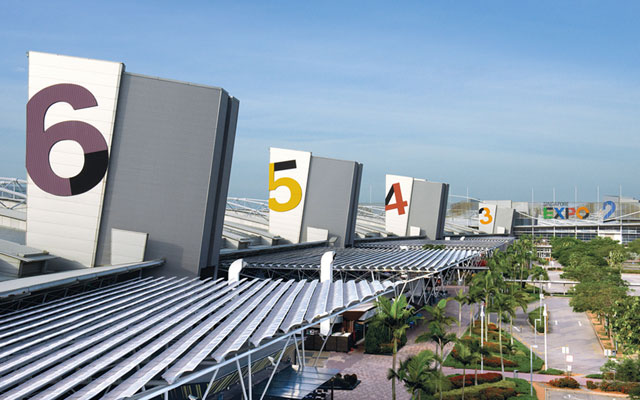
Arena @ Expo, a multipurpose concert hall at the Singapore Expo is a flexible space for high octane concerts and lifestyle events.

Amari Bangkok

The five-star property excels in backing its expansive facilities with seamless service and personalised attention, setting the benchmark for luxury in Bangkok.