The age-old art of cormorant fishing in Gifu Prefecture can be experienced by incentive groups
The Japan National Tourism Organization (JNTO) has introduced a new range of content for incentive tours to Japan in 2020 to maximise Tokyo’s hosting of the Olympic and Paralympic Games.
Launched on February 20 and running until the end of the year, The “Your Japan. Your 2020. Your Way.” campaign offers unique venues and team-building activities in 15 locations nationwide.
The age-old art of cormorant fishing in Gifu Prefecture is one of the experiences on offer
For groups of up to 400 pax, Naha in Okinawa Prefecture is offering a traditional music session. Split into four groups, attendees will learn to play the string and percussion instruments of sanshin, sanba and shima-daiko. Part of the fee will be donated to Shuri Castle – which was ravaged by fire last year – and participants will receive a traditional Bangata-dyed tapestry featuring Shuri Castle and the name of their company.
Over in Gifu Prefecture, groups of up to 40 pax that use Nagaragawa Convention Center or Juroku Plaza, can rent a river boat for a night of fishing using trained cormorants free-of-charge. The fishing technique boasts 1,300 years of history and can be experienced between May and October.
Meanwhile, groups from 10 pax can head to international curling competition host city Karuizawa in Nagano Prefecture to learn the sport from international-level players. Often called “chess on ice”, the offered teambuilding activity lasts three hours, and can be customised based on participants’ fitness levels and desired outcomes.
A new unique venue – Rinkokaku, a historic building, annex and teahouse, located about 80 minutes by Shinkansen from Tokyo – is also being offered to business events. It can hold a seated party of up to 100 pax.
According to JNTO, the initiative is designed to “add originality to incentive tours and create a Japan journey that will make a lasting impression” during Japan’s special year.
“We hope the upcoming Olympic and Paralympic Games will get people interested in Japan and think that now is the time to visit, so we asked local governments to put together this special programme,” Etsuko Kawasaki, executive director of Japan Convention Bureau, told TTGmice.
She added that if the programme is successful, the bureau will look into expanding its offerings.
What is the one narrative you’d love to change about women in the workforce, and why?
What would help greatly for young ladies joining this industry is to have a good support system, and more importantly a women’s mentoring programme tailored for them.
The business events industry is a very vibrant one; long working hours are the norm, with networking and entertaining being part of the business to cultivate relationships. Newcomers, especially young ladies, may find this initially daunting. Hence, the mentor plays a very crucial role in guiding the juniors, while teaching them how to strike a good work-life balance.
Are you able to change this narrative at Marina Bay Sands? How?
The spirit of inclusion is entrenched in the overall human capital strategy at Marina Bay Sands, so it is not about making big changes but I hope to have a platform to share our experiences and provide a good support system.
My managers and I have monthly one-on-one sessions where we share the challenges faced and simply just catch up! Back in 2018, a couple of female executives in the company got together and we started a Women’s Connect Lunch. We started small but we hope that more female employees can join the group. These no-agenda lunches are great – we get to know each other better and over time, build friendships with our fellow co-workers, even those from other departments.
As gender equality is for everyone, not just for women, how are you encouraging this in your workplace and your community?
With women rising in leadership positions, employees of all genders need to be treated equally. We also need to respect the work/life balance of our male colleagues. In the Sales department at Marina Bay Sands, we do not have a lot of men. The team makes it a point to ensure that our male colleagues are not always the ones working beyond office hours to entertain clients.
What community cause are you most passionate about that you can use your professional skills or position to support?
I am particularly passionate about sustainability and causes for disadvantaged women.
On a personal front, I support a group of stay-at-home mums (SAHM) who sew cushions and table cloths for sale. These SAHMs cannot go to work because they are caregivers for their families or they were sick before. I will buy these cushions and give them as gifts to my friends.
I am also involved in numerous mentoring programmes, including one for the Singapore Deaf Association. I was previously mentoring the team on their fundraising project, giving professional feedback on their sales and marketing collateral to help the association better position their deaf or hard-of-hearing clients to potential employers.
A lot of them may not know how to assimilate into the workforce, so together with the team, we developed the messaging by interviewing current employers. We also produced a simple handbook on how these employers can embrace people with special needs at their workplace.
On a professional level, I’m always helping my clients push the boundaries of their events at Marina Bay Sands. As each event is unique, we will customise and incorporate either Corporate Social Responsibility or sustainability activities to enhance their overall programme and create unforgettable memories for their delegates.
Together with Marina Bay Sands Sustainability team, we pushed the green envelope for the 2018 Schneider Electric Global Innovation Summit where we worked with the client to inspire their delegates through sustainable food storytelling.
What secret talent do you have?
I play classical guitar and in my free time, I bake for fundraising.
My late husband and I started a Cards for Hope Project, where we make cards from recycled material and give them to cancer patients. We wanted to inspire and encourage these patients who are undergoing chemotherapy or have hit a low point in their lives. Through giving the patients these cards, we want to let them know there will always be someone out there who cares for them. Some of the cancer patients who recovered are so inspired by the project that they serve as our volunteers, paying it forward to other patients.
Since 2009, my family and I are also involved in the Medical Mission Foundation (MMF), a trust fund set up for Singapore doctors to go on voluntary trips to third-world countries. My two children have been involved in voluntary work since young and it is part of their formative years. As working adults now, they continue to contribute back to society in whatever little ways they can.
What is the one narrative you’d love to change about women in the workforce, and why?
I have worked with, learnt from, and mentored many women over my years of experience at Cvent. One of the top challenges I face in my line of work is changing the mindset of both men and women equally. For instance, sales, the field I work in, is dominated by men. It seems far-fetched for women to travel the globe for meetings, negotiate top contracts, lead a team, etc, which is why we see fewer women in sales. I would want more women to open up to these challenges, support other women in doing so, and be equally competitive.
Are you able to change that narrative at Cvent? How?
At Cvent, we have set up a Women in Leadership (WIL) committee. Being a core member, we reviewed some top achievable goals: representation in leadership, guidance to women in middle management through mentor and mentee programmes, work-life balance for working moms, and a system that lends support to women in their careers. Apart from that, an initiative very close to my heart is for more women to take up sales roles, especially in senior management.
As gender equality is for everyone, not just for women, how are you encouraging this in your workplace and your community?
You’re absolutely right – and this ties perfectly into this year’s International Women’s Day theme: Each for Equal! An equal world is an enabled world – and that’s equality across cultures, gender, religion, etc.
At Cvent, we truly believe that an equal workplace means that every voice is heard and each person is valued, and we live and breathe that every day. We have a set of six principles – called the Soul of Cvent – which drives our company culture, one of which is “Be Direct.” It highlights the importance of giving your perspective, challenging the status quo, and being open and honest with everyone – no matter what your role or title.
Cventers truly work on an even playing field – and all of our senior leadership, including our CEO, are huge supporters of this.
What community cause are you most passionate about that you can use your professional skills or position to support?
I am passionate about literacy – I believe this could be the greatest gift we can give to our youth. Literacy empowers human beings and makes them independent. Being a part of our WIL committee at Cvent, I partake in mentor-mentee programmes to mentor young women, who have just joined the organisation and are new to the world of sales, to help them figure out their career path, work on their improvement areas, and build on their strengths to accomplish their short and long term goals.
What secret talent do you have?
I learnt to make a Singapore sling from one of my clients and must say, I am pretty good at it.
What is your ambition at work?
I joined the company in 2002 and I have been witnessing Pacto Convex, and DMCs Pacto and Bali Prima growing year after year, thanks to the solid teamwork between the board of directors, middle management and staff.
Pacto Group being one of the biggest – if not the biggest – travel companies in the country, we are required to be one step ahead of our competitors.
As such, my ambition going forward is that the economic achievements of the company must be coupled with its contribution to environmental sustainability.
It is true that bringing tourists or organising events at destinations bring benefits to the local economy, but what we need is to find ways to bring sustainable benefits to the community. Sustainability, at times, requires people to stop doing what they have been doing for a long time. When we tell them to change, we need to provide them with solutions.
This cannot be done by individual companies sporadically, but (can only be achieved through) a joint industry effort. I am sure other industry players are also doing their part (to contribute to sustainability efforts). After all, today’s clients are also working towards sustainability and looking for such travel products. The challenge is to conceptualise and work towards the goal of making Indonesia an environmentally-friendly destination.
Given your position, what can you do to help improve the lives of those around you?
It is my passion to improve the welfare of women in Indonesia. I always believe that a great nation starts with good childhood education. To enable that, you need mothers who are both educated and healthy, so that they can stand on their own two feet should anything happen to their family.
Therefore, education for women is important. My position allows me to tap into my network and influence others to join in CSR programmes. This is something that I am still working on.
It is my dream to create an NGO specialising in women’s welfare, looking at mothers’ health and also empowering women economically. This will require the cooperation of my network to achieve.
Does the tourism industry provide a level-playing field for both men and women?
The way I see it, it is common for female staff to assume entry-level and middle management posts, but I want to see more women taking top positions. What the industry needs is the same opportunity given to women to obtain an education and career path opportunities as males. Having more (women in) top decision-maker positions will allow us to create policies that incorporate the interests of women.
There are needs specific to women, like motherhood responsibilities. As a single woman and a leader in the company, I have to remind myself that my female colleagues also have their obligation as mothers to their kids. When their kid is sick, for example, it’s fine if the mother needs to stay at home.
Technology has allowed us to get our work done without having to be physically present at the office. Our business is not a factory. In our industry, the middle and top management level, in particular, can still do our work outside office boundaries. So, we accommodate (flexibility) within a set of rules and regulations.
In many (Western) countries, not only do women get long maternity leave, but their husbands (are also eligible for paternity leave). We do not have that (policy in Indonesia).
How can you encourage gender equality in the workplace?
When hiring, we apply a diversity policy where job openings are for all. However, the industry itself is shaping our company to have more women than men in the middle and top management levels, particularly in the business events sector. In the leisure sector, it is 50-50.
Our recruitment and career selection are not based on gender, but professional capacity and capability. However, we have received more female applicants.
We provide equal opportunities for staff members to build their career path with us. We rarely recruit professionals from other companies – many of those sitting at the management level (were promoted) from within.
You sit at the top management level of a company which also employs your older siblings and family members. How do you harmonise work and family life?
At work, my eldest brother Ismail Ning is on the board of commissioners, while my elder sister Anty Ning is a director at Pacto Convex. I also have two other elder sisters.
The key is not to take on a leadership role back home. In the office I have to lead, but once I am home, I behave the way the youngest sibling in the family should.
I admit this is not easy. We spend eight hours a day, five days a week at work, and sometimes (we unwittingly bring our work problems) home. We just have to remind ourselves of who we are.
However, I do not believe that the term “family business” applies anymore. It is true that the majority of the company’s shares belong to (the Hasyim Ning) family, but the way we conduct business is strictly professional.
(Family members) can work in the same company but we have to prove ourselves, otherwise it will create an unhealthy environment. My nephew has started working at Pacto DMC and we treat him like a new staff.
On the other hand, Pacto Convex’s president director is Ibu Susilowani Daud, a professional who has built her career from the bottom up with us.
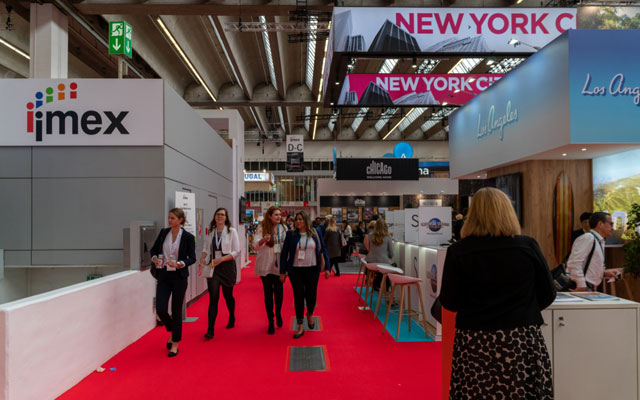
Even though major events are being cancelled in Europe, organisers of IMEX Frankfurt have reiterated their stand that the show will continue to be held on May 12-14, 2020.
Organisers have indicated that attendees are continuing to register and plan for the show slated to be held in two months, and there have been no “substantial impacts” thus far.
IMEX Frankfurt to carry on as planned; last year’s event pictured
Regardless, organisers share that they are in close contact with their German partners, as well as relevant health authorities, and will remain watchful on the situation. IMEX also remains mindful of our duty of care, and consulting with experts on what the appropriate sanitary and health measures.
IMEX is also advocating for the substantial social and economic power of meetings and events, noting that the long-term impact of speculation, hype and over-reaction will be damaging to both the business events industry and local communities.
In the words of Gloria Guevara, president and CEO, World Travel & Tourism Council, “containing the spread of unnecessary panic is as important as stopping the virus itself.”
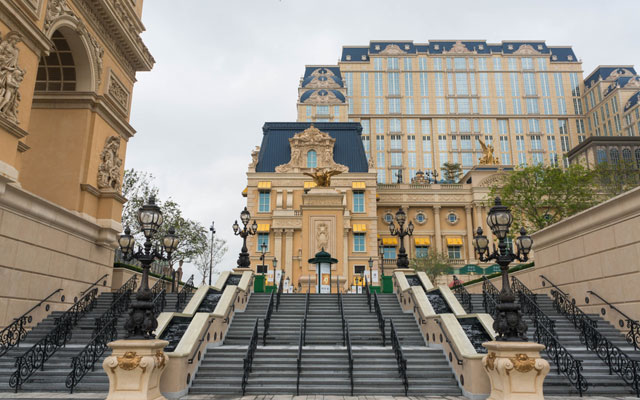
There is no change to the event venue, the Parisian Macao (pictured)
The new date for the UFI Asia-Pacific Conference in Macau has been set for August 27 and 28, 2020, with the Digital Innovation Forum to happen on August 26.
This comes following the postponement of the 15th edition of the conference due to Covid-19, supposed to be held from March 3-6. The venue for the conference remains unchanged, The Parisian Macao.
There is no change to the event venue, the Parisian Macao (pictured)
Registration will be re-open in March all the way through to the opening of the event. Previous registrations will be kept in place for the new August dates – unless UFI receives a request to cancel the registration – which then can be made free of charge. Approximately 300 delegates are expected to attend.
The theme for the conference will remain Thriving in Challenging Times – which was selected well before the Covid-19 outbreak. In addition to the virus issue, the world is in a state of constant change – due to trade wars, slowing global economic growth, and digital disruption – and the exhibition industry faces more challenges than ever.
Most of the speakers from the original programme will remain on the programme. UFI is in the process of confirming the availability of all speakers and the UFI Asia-Pacific Conference website will be updated in due course.
In addition to the UFI Asia-Pacific Conference, there will also be a Digital Innovation Forum (August 26), a meeting of UFI’s Asia/Pacific Chapter, an association committee meeting, and a gathering of the UFI China Club. In addition, after the closing of the conference, there will be post-event tours.
FCM Travel Solutions has appointed Joanne Taylor as director of account management Asia, based in the Singapore regional office.
In this role, Taylor is part of the commercial strategy team and will oversee the full spectrum of account management function across Asia.
She brings with her over 20 years of global procurement, business development and account management experience in the travel and resource sectors.
Prior to joining FCM, Taylor was most recently head of travel and expense management at mining company BHP. She was also a member of BHP’s global enterprise leadership team, where she spearheaded strategic transformational initiatives in travel services, expense management and payment solutions, and was also responsible for optimising travel partnerships and enhancing traveller personalisation.
Before that, she spent time in Rio Tinto and most of her career leading corporate and leisure sales in various airlines including Qantas, Air New Zealand and Japan Airlines.
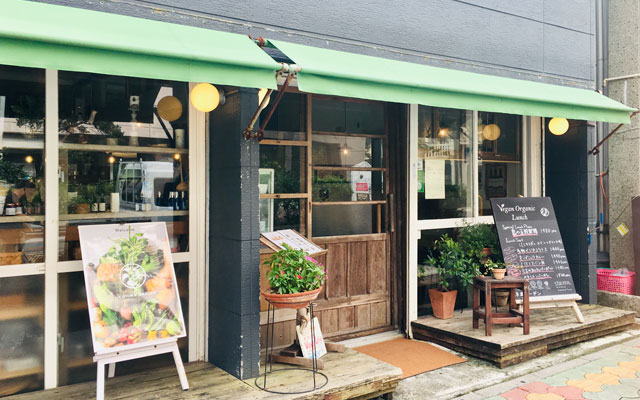
Ukishima Garden in downtown Naha, Okinawa, has launched a range of stunning boxed meals designed for event attendees, in response to the rising number of South-east Asian and European visitors with dietary needs.
Building on the menu of traditional Okinawan favourites using vegetables and grains, these Japanese bentos are vegan, organic and contain no genetically modified organisms or MSG. The locally-sourced vegetables are from community-supported agriculture programmes, while the rice comes from paddy fields that have been pesticide-free for more than three decades.
All meals are halal- and kosher-certified and suitable for Buddhist vegetarians who cannot consume allium vegetables such as onion, garlic and leek. Chefs can also create gluten-free options and cater to people with specific food allergies upon request.
There are three meal types, all of which are seasonal. The ¥1,300 (US$11.90) box offers taco rice made with speciality island tofu, and two side dishes. The ¥2,300 box includes croquettes made from rice cake flour and millet, eight varieties of vegetables, and meatballs. Diners who purchase the ¥4,000 box will get to nosh on several of the above-mentioned dishes, a hamburger made from millet, vegetable sushi and traditional sweets.
The goodness continues, as every beautifully-presented meal is packaged without single-use plastic, making it a great option for organisers seeking to reduce their carbon footprint.
Pan Pacific Yangon has appointed Cheong Hai Poh as its general manager.
With 30 years of hospitality experience, Cheong was most recently the general manager of operations and asset optimisation at Stamford Land Corporation.
Having started his career as banquet sales manager and F&B trainer at Orchard Hotel Singapore, he has also worked with SHATEC, Star Cruises, Conrad Centennial Singapore, Grand Park City Hall and Grand Copthorne Waterfront.
Virtual meetings emerge an option for some exhibitors
No immediate response from Messe Berlin on refunds
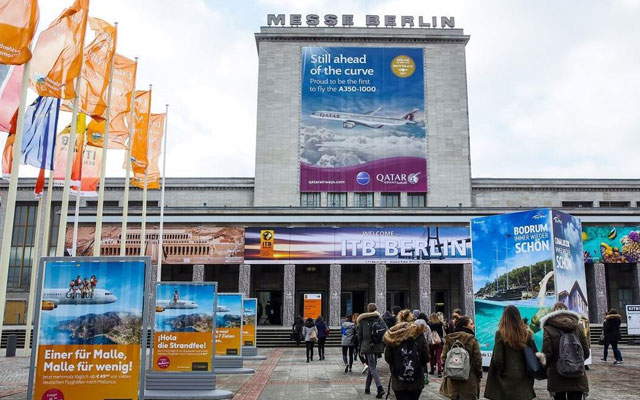
ITB Berlin 2020 was axed five days before showtime
As debate within the industry heats up over Messe Berlin’s sudden decision on Friday evening – or early Saturday morning here in Asia – to axe its Berlin tradeshow, travel and tourism players who have had their sales and marketing plans at the event derailed are determined to carry on with their business activities as much as possible.
The Asian Trails, for instance, will be continuing with sales trips as planned.
Laurent Kuenzle, CEO of Asian Trails, told TTGmice that his team typically conducts pre- and post-event sales trips to “as many of our key clients in Europe as possible”, and their time in Berlin is not limited to just the tradeshow.
“Since my entire team is already in Europe for a week, we will continue with our sales trips as scheduled. We also have some overseas clients who are already in Europe, and we will try to meet them as well if they do not cut their trips short,” Kuenzle said, adding that they are adapting their schedules to the new situation.
Hussein Mohd Said, director of MegaWaterSports Jetski Tours in Langkawi, had just arrived in Berlin when news of the cancellation reached his ears. He intends to use his time in the city to conduct sales visits to local agents who are selling Malaysia.
Singapore tour operator Oriental Travel and Tours will also be keeping to sales meeting plans in the city, and will be relying on instant messaging services to fix appointments, shared co-founder Jasmine Tan.
The Safer Tourism breakfast seminar, co-sponsored by PATA, will proceed as planned on March 5. The event will be led by Peter E Tarlow, a world-renowned speaker and expert specialising in the impact of crime and terrorism on the tourism industry, event and tourism risk management, and tourism and economic development.
PATA CEO Mario Hardy said the cancellation of ITB Berlin “has no direct impact” on his association, as offsite meetings arranged earlier on will continue as planned.
As well, Kempinski Hotels will keep to its planned media breakfast event on March 4 at Hotel Adlon Kempinski Berlin.
Virtual alternatives
For Vox Group, virtual meet-ups will replace physical meetings. Its chief marketing office, John Boulding, went on social media on Saturday to propose a “face-to-face revival (of impacted business meetings) using Google Hangouts, Skype, Meet, etc.”
At press time, Boulding’s post on LinkedIn suggested that he would on Monday connect with partners Vox Group has appointments with at ITB Berlin, to reconfirm a virtual alternative.
Vox Group’s suggestion on LinkedIn to meet online drew many positive responses
Similarly, COTRI (China Outbound Tourism Research Institute) has also taken to social media to propose webinars to keep conversations going.
Nigel Wong, honorary secretary-general, Malaysian Association of Tour & Travel Agents (MATTA), agrees that going digital is a safe bet. “We will also encourage our members to focus more on digital marketing as this is an effective way to market, and does not require on-the-ground meetings,” he said.
An announcement that came too late
Industry players appear split in their opinion on whether Messe Berlin did the right thing to cancel the annual tradeshow – the first time it has done so in its 54-year history.
On social media, comments flew in from both sides. Those in support of the organiser’s decision said that it was a painful but responsible thing to do as the well-being of all event participants and Berlin residents were at stake.
Hardy, whose own association had just announced the cancellation of the PATA Annual Summit 2020 in Ras Al Khaimah from March 31 to April 3 out of consideration of the safety and well-being of it members, admitted that the decision on event continuity was a tough one to make.
“What I have learnt in the past few weeks is that the current situation is extremely volatile and dynamic, constantly evolving on a daily basis. Therefore, I do not think there is one simple answer to this question. Each situation needs to be analysed individually as there are a number of external factors in play. Are there a large number of active cases in the area? Are there any restrictions on entry to the destination or necessary quarantine requirements for the traveller on their return? What are people’s sentiments towards travelling or attending an event? Will you be able to gather sufficient attendance? These are just a few questions that we need to consider during the current situation,” he explained.
Wong told TTGmice his organisation was “appreciative of the cancellation in light of the economic factors involved and safety concerns”, but acknowledged that the “cancellation of ITB Berlin is a blow to our European plans”.
Wong said 30 MATTA members were supposed to head to Berlin to engage with the trade and media.
“However, ITB Berlin is not the only European show. There will be other opportunities to promote to the European market. World Travel Mart for instance, is always on MATTA’s itinerary. This is a major show Malaysia will be participating in,” he added.
For those who oppose the cancellation, the common argument is that it runs counter to the travel trade’s persistent messaging that it is still safe to travel.
Luzi Matzig, chairman of Asian Trails, said: “The decision to cancel ITB was wrong. If we, the leaders in tourism, cancel our own industry events, we project a very negative image to our potential customers, tourists whom we would like to visit our own destinations in the future.”
“I believe that the global media hype has blown the Covid-19 problem out of proportion, which is a sorry state of affairs. It will take major recovery campaigns to get travel back to normal once the situation has improved, and I do hope that this will happen sooner rather than later.”
Agreeing, Umberto Cadamuro, COO inbound of Pacto, who was already in Europe when the news broke, said: “Why should tourists travel when stakeholders in the travel industry themselves are not doing so? This is the very negative message that this cancellation has sent (to the public).”
Whether or not Messe Berlin’s decision was right, most industry players agree that the decision to cancel ITB Berlin 2020 should have been made earlier. At just five days to showtime on March 4, many exhibitors and buyers, especially from faraway Asia, were already bound for the show. Sales and marketing materials had, as well, already been shipped up.
Several event planners TTGmice spoke to suggested that a month’s notice of cancellation would be ideal.
Hardy said: “Each situation may be different, but I would say that generally more advanced notice is advisable, preferably at least a month before the event if at all possible.”
Untangling the mess
Sources have told TTGmice that calls and emails to their point of contact at Messe Berlin for ITB Berlin 2020 have mostly gone unanswered. Some concerned participants have taken to Twitter to seek answers on refunds from the ITB team.
In a Twitter post on February 29, ITB Berlin said: “Due to the short notice of cancellation and the large number of exhibitors, we ask for your understanding that we will check these questions internally. This can take from 10 days to two weeks.”
Noorzaleha Baharudin, honorary secretary-general, Malaysia Tourism Council, said: “We now have to work on getting refunds for our flights and hotels on our own. We do not expect Messe Berlin to assist us on this. The hotel we were supposed to stay in is charging us a cancellation fee.”
Similarly, several Indonesian travel operators TTG Asia spoke to said that they now have to shoulder the losses incurred for the tickets and accommodation, as well as time and efforts prepping for the event.
Budi Susanta, corporate general manager, The Ubud Village Resort, who received the news about the cancellation upon his arrival in Munich on Saturday, said: “I consider myself lucky that I’m travelling with my owner so we can rearrange our trip plan and budget on the spot. However, many of the Indonesian delegates are staff whose budget are set before they even left the country. Can you imagine that they now have to switch programmes while they are here? We don’t know whether we can get refunds for our hotels and flights.”
Umberto said that Messe Berlin’s last-minute cancellation of the tradeshow was “unacceptable”.
“(At press time,) we are unable to evaluate our losses since Messe Berlin has so far avoided to address the refund issues,” he said.
Jojo Clemente, president of both Rajah Tours and the Tourism Congress of the Philippines, said the Philippine Tourism Promotions Board, the marketing arm of the Department of Tourism, which has paid for a country pavilion at ITB Berlin 2020, will be writing to the organiser about refunds.
In a statement, Wishnutama Kusubandio, Indonesia’s minister of tourism and creative economy, said that the first batch of delegates who were participating in the show had arrived in Istanbul, Turkey for transit and were summoned home, while the second batch were scheduled to leave on Sunday.
“However, we respect the decision to cancel the event as protecting the public’s health and prevention measures are priorities (amid) the spread of the coronavirus,” he said. – Additional reporting by S Puvaneswary, Mimi Hudoyo, Pamela Chow and Rosa Ocampo
Just 10 minutes from Phuket International Airport on the serene northern coast, this 178-key, Bill Bensley-designed resort offers delegates a quiet, tropical paradise steeped in Phuket’s tin-mining heritage
The newly-opened Ritz-Carlton, Bangkok anchors the One Bangkok development with cosmopolitan elegance. Featuring the city's largest ballroom and a spectacular new penthouse suite, it delivers exceptional hardware and deeply authentic, soulful service for business and leisure travellers alike
Behind the imposing, Brutalist concrete that defines Zurich’s Oerlikon district lies a surprising secret. While its exterior honours the neighbourhood’s industrial roots, stepping inside Mama Shelter reveals a vibrant, neon-soaked world that is a far cry from its rigid shell