In these extraordinary times, Singapore continues to stand as a premier business events destination connecting the world to Asia. While COVID-19 has altered the events landscape, the fundamentals that have made Singapore successful – our vibrant business environment, outstanding infrastructure and future-ready workforce – remain unchanged.
Raising the bar for health and safety
As international business travel resumes, you can trust that Singapore will safeguard the well-being of visiting delegates and staff. We remain committed to upholding the highest standards of health and safety and to giving all our visitors peace of mind when they come to the Lion City. Hotels, restaurants, exhibition halls and other establishments have adopted new Safe Management Measures, such as social distancing and heightened cleaning of premises, to ensure reduced public health risk. Beyond these, the Singapore Government also launched SG Clean, a national mark of excellence for cleanliness, hygiene, and infection control.
Unique solutions by the events industry hark the dawn of a new era in business travel
Innovating for the future of business events
Singapore’s events industry is also implementing unique solutions to meet the emerging demands of a new era of business travel. Local companies are reinventing themselves – from enhancing digital offerings to developing forward-looking concepts for hybrid and virtual events.
For example, in June, homegrown event organiser Web in Travel (WiT) engaged more than 750 tourism business leaders to discuss the future of the industry in a global virtual summit. During the dinner break, WiT sent curated care packages to Singapore-based attendees and later even held a virtual dance party. With this mindset of continuous innovation, it is no wonder that Singapore was recently named the world’s most competitive economy for the second consecutive year (IMD World Competitiveness Ranking, 2020).
Singapore is where great minds converge, connect and create the future of business.
Plan your next business event at VisitSingapore.com/MICE.
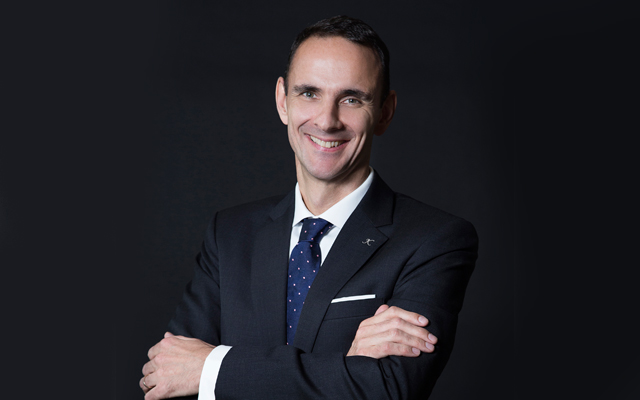
Edward E Snoeks has been appointed as the general manager of Sindhorn Kempinski Hotel Bangkok and The Residences at Sindhorn Kempinski Hotel Bangkok, which is slated to open in April 2020.
Prior to his current role, Snoeks held senior executive positions with Marco Polo, IHG, and most recently, Okura Hotels, across major destinations in Asia such as Kuala Lumpur, Hong Kong and Bangkok.
He has also served as vice president hotel operations for Hong Kong Parkview Group, and also played a key role in the openings of Eclat hotels in Taipei and Beijing, as well as other projects in Hong Kong.
The world has seen images of bushfires destroying what tourists love about Australia, including on Kangaroo Island. Is the worst over yet?
Today is a bad day for Kangaroo Island. The conditions are not favourable. It’s very hot, 38°C, and for this afternoon, it’s predicted that winds will pick up.
You need three things for fires – heat, oxygen, and fuel – and today we will have all three. Fire services are working extremely hard to try and make sure the fires don’t break out. With the extent of the fires on Kangaroo Island, you don’t put them out; you have to contain them and hopefully, they’ll burn where they are, all of the fuel, and they’ll slowly go out unless we get significant rain. Today we’re on tenterhooks.
So to answer your question if the worst behind us, well, we hope so.
Which parts of the island are affected?
The west has been affected by fires. It hasn’t all burnt, but from Parndana in the middle of the island heading west, nearly all of the Flinders Chase National Park has been burnt. That’s at the extreme end of Kangaroo Island.
A lot of the north-west part of the island outside of the park also had catastrophic fires and has been burnt extensively. (But) if we are able to get through today, and the fire doesn’t break out, we are hopeful we can put the situation to rest (as there’s some rain predicted for tomorrow and Saturday).
But it very much depends on what occurs today. The east part of the island where our motel is, and areas such as Seal Bay to Penneshaw where the ferries come through, haven’t been affected by the fires at all. A lot of people don’t understand that the island is 150km long, so as I speak with you, the closest fire to me here in Kingscote could be about a hundred kilometres away.
And yet fire can spread very fast. What’s morale like? How are locals holding up?
I think the best way to describe morale is that it comes and goes.
I have a lady who works for me in the office, and she’s working right now (even though) her family farm was burnt to the ground. They didn’t lose their stock but they lost their houses, sheds, machinery, pastures, and fences. Everything was destroyed except for their cattle and sheep which they were able to move before the fire.
And here she is working today; she needs her job even more than ever. There’s a lot of stories like that on Kangaroo Island. They’ll have to rebuild.
(But) we are resilient and we will bounce back. The west end won’t return straightaway. It will need significant rain but farms will rebuild and restock. One thing we do know in Australia, although these are exceptional fires and they are unprecedented, when fires occur, the parks, forest and wildlife, they do bounce back.
You’ve just had a visit from the Prime Minister and the South Australian Premier.
Yes, and I was one of the tour operators that met with both of them yesterday. Their message was one of support and pledging that both federal and state governments will do a great deal (to provide) assistance in rebuilding Kangaroo Island. In fact, I think it’s up to about a billion dollars between them. They’ve also pledged a great deal of support and money to the tourism industry, because we will need to start a tourism recovery (programme).
You know, half the island is still open for business, but obviously right now, it’s appropriate that people are cancelling. We understand that as the wildfires are still prevalent.
But unfortunately with the international coverage, people are cancelling in February, March, April, May and June. That’s not really appropriate as half of the island is open for business. We’ll need tourists (more than ever) to return, or else we’ll have a double down. It’ll be an economic disaster (on top of) the destruction that has been done to property and wildlife.
A wild Kangaroo on Kangaroo Island South Australia
What is the current economic impact on your business?
We’ve got a cancellation folder and it’s pretty thick. It’s too early now to start adding it up, but (the cancellations are going to be worth) tens of thousands of dollars. At some stage, we will need the world, tourism industry, social media, TripAdvisors and meta sites to get the message out that you can visit Kangaroo Island because there’s still plenty to see.
I know that’s not (the right) message now, but it will be the message shortly.
International and Asian tourists are a significant part of your clientele. Are you concerned about the Lunar New Year approaching – a time that’s peak visitation period for Chinese-speaking markets – that tourism numbers will suffer?
I anticipate by that stage, the fires will have little impact on the island. We are cautiously optimistic that within a week the fires will be under control.
But the impact from the Asian market during that period (will stem) from the perception – due to the image of destruction and property loss on one-third of the island – that you can’t come to Kangaroo Island. This perception is why people are cancelling for (the months ahead).
You spoke of your cancellation file. Are other tourist businesses on Kangaroo Island reporting similar impacts?
We’re probably a little bit more resilient than some of the other businesses on the island. The smaller bed-and-breakfasts, and the smaller holiday places where people own one, two or three holiday units, it’s their only income/livelihood.
And because of the perception (that the island isn’t safe to visit or the fires are still raging), a lot of these businesses are threatened. They might not be in danger of burning down, but if all the tourists stay away, those businesses will be in peril.
You mentioned a tourism recovery plan. What is that going to look like?
First of all, we need to get a panel established. We’re at the stage where we know we’re going to do that. But too many people are either involved in (fighting) the fires, or trying to manage their business which has been impacted by the fires. I had two of my staff spend 12 hours the other day handling cancellations.
(But) the first thing we’ll do is (define) the message we want to get out to the Asian market, Europe, North America and the rest of Australia. A message that will say something like, don’t abandon us, there’s still plenty to see, it’s still a great place to visit. And then we will work with state and federal governments and agencies, national parks, and local council authorities and operators to get that message out. I know that social media is going to play a big part in that.
What about environmental and wildlife recovery? How long would that take?
I’m not an expert, but I know people who are working to enter areas that have experienced a fire, to assess the extent of the damage and the amount of wildlife that’s been impacted.
It’s (still) very early to say how long will it take, as some areas were minimally damaged. The north coast, normally a very picturesque and beautiful part of the island, has areas completely ravaged by fire. But (when driving it is possible to) come across an area completely untouched.
Can Kangaroo Island still be regarded as a wildlife paradise after losing so many animals to the fire?
There has been a terrible loss of wildlife and in some areas, devastating.
We went through this in 2007, when we had devastating fires. At that time, it was the biggest fire in our state’s history. I was chairman of the Kangaroo Island tourism board at the time, and I worked closely with all of the agencies to recover.
No doubt this fire event is worse, but the principle is the same. We will bounce back, Kangaroo Island is resilient, and so is the flora, fauna and wildlife. Kangaroo Island will always be a wildlife destination.
It sounds like the battle is far from over, and you certainly got your work cut out for you.
The battle is not over but we will win it. But we need people to hear (about what’s really going on). A lot of people who live all over the world have been sending their best wishes. And that does help.
Suppliers eyeing growth in the corporate travel business are relying on enhanced mobile products and services to address and engage travellers in areas such as duty of care and compliance, as well as enhance the traveller experience.
Travelport’s Chris Ramm, vice president Asia Pacific, air commerce, shared the travel technology company was seeing an acceleration in expectations of a travel experience that was as easy and engaging as the best retailers, products and services in the world.
Investing in mobile products will help companies in the corporate travel space capture more of the market
Ramm noted: “Our Global Digital Traveler Research 2019, which surveyed 23,000 people from 20 countries, showed that 45 per cent of travellers – up nine per cent on 2018 – get frustrated when they are unable to access their booking information round-the-clock on mobile devices.”
Moreover, Ramm revealed that Travelport’s Mobile Travel Trends 2020 report supported this mobile shift, as “87 per cent of respondents downloaded more travel apps this year than they did last year”.
Among customers that have intensified their mobile engagement are BCD Travel and easyJet, according to Ramm.
BCD Travel’s strategy is to provide anytime access to trip information and tools from any connected device. In collaboration with Travelport, it recently launched its next-gen mobile platform to leverage traveller engagement to satisfy corporate travel programme needs such as duty of care and programme compliance.
Travelport claims the native iOS and Android app TripSource is the highest-rated, most-reviewed TMC app in the Apple App Store, with over 900k app downloads, four-plus-star average app rating and over 94 per cent returning users YoY.
Ramm: travellers are increasingly downloading more apps to manage their travel
With easyJet’s growing focus on business and loyalty-related offerings, Ramm said the British budget airline was extending the mobile app’s functionality to offer holiday packages and rewards which are key strategic developments to grow the app’s loyal user base.
Mobile innovations easyJet has introduced include an augmented reality cabin-bag sizer to scan and check if carry-on luggage is within the airline’s dimensions, while Speak Now finds fights in a few seconds instead of 12 taps of the smartphone.
The mobile app is delivering nearly US$750 million in booking revenue annually and growing, and approximately 21 per cent of all easyJet bookings are now done via the easyJet app.
Users, Ramm noted, also used the app to generate and use 561,000 mobile boarding passes in the last week of November 2019, more than 271,000 passports were scanned in the same month, and more than 499,000 check-in bags were added to bookings as of end November 2019.
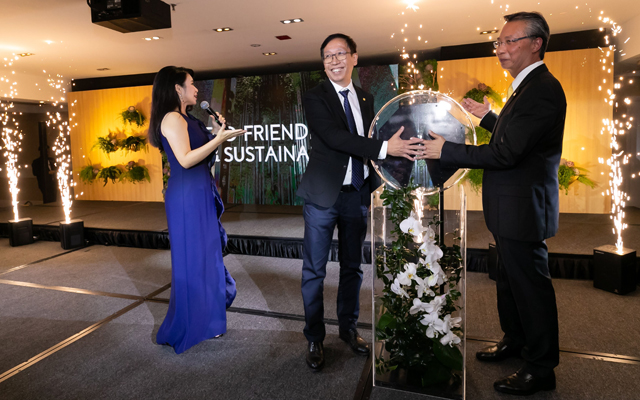
UOL Group’s Liam Wee Sin, and PPHG’s new CEO Choe Peng Sum at the launch of Parkroyal Collection brand
UOL Group and hotel subsidiary Pan Pacific Hotels Group (PPHG) unveiled the new Parkroyal Collection Hotels & Resorts brand on January 7, cementing their commitment towards sustainable hospitality.
Parkroyal Collection carries a strong sense of responsibility towards the environment and self with eco-friendliness, sustainability and care for overall well-being as its brand ethos.
UOL Group’s Liam Wee Sin, and PPHG’s new CEO Choe Peng Sum at the launch of Parkroyal Collection brand
Sitting under the new brand are Parkroyal Collection Pickering (previously Parkroyal on Pickering) and the latest addition to the family, Parkroyal Collection Marina Bay (previously Marina Mandarin).
Liam Wee Sin, group chief executive, UOL Group, explained that the brand launch comes at a time when environmental challenges are becoming more prominent and there is a growing eco-consciousness among travellers who want to do their part to protect the Earth.
Recounting the journey from when the first seed of a green hotel product was planted a decade ago with the birth of Parkroyal Collection Pickering, Liam said: “When we developed Parkroyal on Pickering – now known as Parkroyal Collection Pickering – we knew we wanted a hotel with real green attributes, not just one (filled) with lots of plants. So, we made sure it has eco-friendly operation practices, zero-energy skygardens, 200% Green Plot Ratio, and more.”
Parkroyal Collection Pickering’s green credentials have won it many awards, including being named as one of the 50 Most Influential Tall Buildings of the Last 50 Years by The Council on Tall Buildings and Urban Habitat, as well as the World’s Leading Green City Hotel and Asia’s Leading Green Hotel at the World Travel Awards 2019.
“Last year, we gained full control of Marina Mandarin through the shares of Marina Centre Holdings. With UOL wholly-owning this hotel, we have the opportunity to rise above what we have done with Parkroyal Collection Pickering. While Parkroyal Collection Pickering has a lot of green on the outside, for Parkroyal Collection Marina Bay, we will bring green inside,” he added.
Embarking on a year-long progressive renovation from March 2020, Parkroyal Collection Marina Bay will be transformed into a garden-in-a-hotel, sporting many new features such as a 13m landscaped vertical wall flanked by raised planters, lush indoor gardens with birds’ nest-inspired pavilions, a skybridge across the atrium on level four to provide guests with a treetop experience, and more.
Parkroyal Collection Marina Bay Level 4 Atrium Birds’ Nest Pods
In terms of sustainability, the hotel will use UV-treated glass to allow in natural light, guestrooms will be fitted with water filters to discourage the use of disposable plastic water bottles, and premium bath amenities that are paraben- and cruelty-free will be provided to guests.
“The launch of Parkroyal Collection brand marks an important milestone in PPHG’s journey. This launch is exciting and timely because we are building on what Parkroyal Collection Pickering has achieved,” Liam said.
Liam said the group “will not stop at two”, and added that PPHG’s new CEO Choe Peng Sum has a mandate “to go out and find us more properties”.
Choe, who also addressed the audience at the launch, described the new brand as consumer-centric “with a sense of purpose and responsibility at heart” and which “demonstrates that sustainability and modern lifestyle can co-exist through conscious design and efforts”.
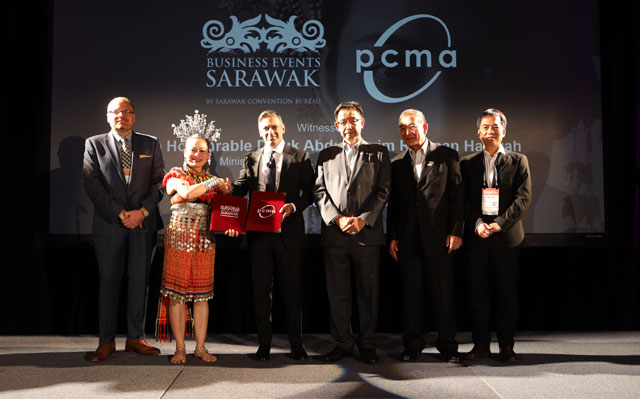
From left: PCMA Board of Directors' Stuart Ruff-Lyon; Business Events Sarawak's Amelia Roziman; PCMA's Sherrif Karamat; Minister of Tourism, Arts and Culture, Sarawak and Minister of Youth and Sports Sarawak Abdul Karim Rahman Hamzah; Business Events Sarawak's Muhammad Leo Toyad; Ministry of Tourism, Arts and Culture, Sarawak's Hii Chang Kee at the MoU signing
PCMA has announced two partnerships, one with Corporate Event Marketing Association (CEMA), and the other with Business Events Sarawak (BESarawak), both of which aim to educate, as well as encourage networking and knowledge-sharing.
The strategic alliance with CEMA, which started on January 1, 2020, will see cross-promotion and collaboration through educational initiatives to help increase brand presence and membership.
From left: PCMA Board of Directors’ Stuart Ruff-Lyon; Business Events Sarawak’s Amelia Roziman; PCMA’s Sherrif Karamat; Minister of Tourism, Arts and Culture, Sarawak and Minister of Youth and Sports Sarawak Abdul Karim Rahman Hamzah; Business Events Sarawak’s Muhammad Leo Toyad; Ministry of Tourism, Arts and Culture, Sarawak’s Hii Chang Kee at the MoU signing
For instance, CEMA will co-develop education at each of PCMA’s four events: Convening Leaders, EduCon, European Influencers Summit and Asia Pacific Annual Conference. In return, PCMA will deliver education at the annual CEMA Summit and during CEMA Study Tours. In addition, both organisations will also collaborate on webinars and other services.
“CEMA and PCMA share a vision for the advancement of event marketing as a vital element in the marketing stack, and each brand offers unique and complementary qualities and services to help event professionals learn and grow,” said CEMA’s president and CEO, Kimberley Gishler, in a statement. “We look forward to collaborating on new and exciting research and educational programming, as well as expanding access to professional networking, knowledge-sharing and rich event experiences to both PCMA and CEMA members.”
In addition to the CEMA alliance, PCMA has also signed a Memorandum of Understanding (MoU) with BESarawak to provide education, business development opportunities and increase awareness of the transformative power of business events.
Effective immediately through December 31, 2022, the MoU calls for business events training and education to help showcase Sarawak’s unique value proposition to international associations and corporate markets, in addition to developing the local meetings industry.
To kick things off, BESarawak hosted a gathering of business events strategists, industry leaders and government officials from Asia-Pacific at PCMA’s Convening Leaders event this week to network with some of the world’s most prominent figures in the industry and discuss current growth strategies and disruptors.
“Sarawak has already begun its quest to position business events as economic and community game-changers in the region through the Legacy Impact Programme,” said Abdul Karim Rahman Hamzah, Sarawak’s Minister of Tourism, Arts and Culture and Minister of Youth and Sports. “The programme is focused on four pillars of legacies which are Advancing the Field, Community Benefits, Economic Outcome and Public Policy; driven by 27 drivers.”
Associations have access to education, connections, tools and resources to organise more effective meetings
ICCA has rolled out the welcome mat to associations with the launch of the ICCA Association Community yesterday, a move that brings all major stakeholders in the world of association meetings into its embrace.
ICCA’s president James Rees said in a press statement: “The launch of the ICCA Association Community will integrate associations with our membership, helping to shape ICCA’s future and provide opportunities for ever-closer collaboration.”
Associations will have access to education, connections, tools and resources to organise more effective meetings through ICCA
By joining ICCA, associations will have full access to resources such as Association Meetings Intelligence, ICCA’s events, peer-to-peer networking, and thought-provoking education and expertise.
Associations will also be able to make their voice heard – in ICCA’s global community for the international meetings industry – on how their association and meetings will make a difference in the future.
ICCA’s CEO Senthil Gopinath is “delighted that ICCA has managed to create a new platform to officially include associations in its midst”.
Thomas Reiser, executive director of the International Society on Thrombosis and Haemostasis, said peer-to-peer sharing and learning were critical for the success of international associations’ activities, and being able to perform these activities at ICCA events and with the community of destination partners would be “even more beneficial to our joint efforts to professionalising the way to collaborate in planning and executing successful events”.
Indonesia
The Indonesia Convention and Exhibition Bureau (INACEB) is taking steps to maximise the potential of business events destinations – namely Jakarta, Bali, Bandung, Yogyakarta, Surabaya, Medan and Lombok.
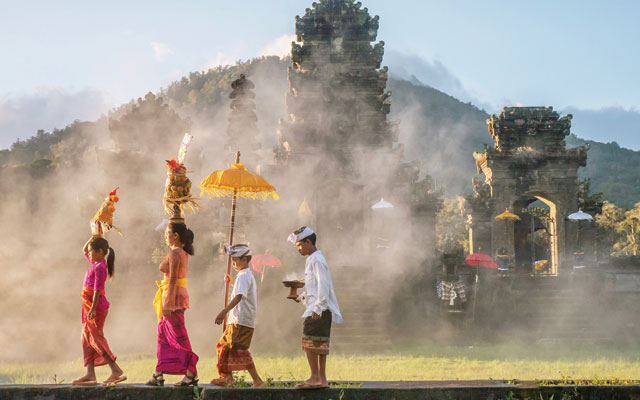
Locals making religious offerings in Ubud, Bali
In Bali, for example, event delegates can choose from activities such as watching cultural performances, cycling through villages, water sports or relaxing by the beach. Meanwhile, Bandung and its surrounds offer unique culinary experiences.
Local DMCs and event organisers can incorporate local attractions into business events programmes, such as having dinner in a palace, or providing a traditional massage service during coffee breaks. – Mimi Hudoyo
Japan
The Japan National Tourism Organization (JNTO) has banded together with the Japan Convention Bureau (JCB) to stimulate and promote attractive bleisure offerings to overseas travel planners and agencies.
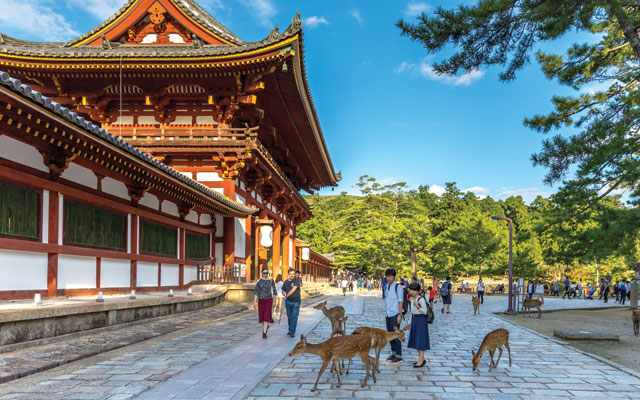
Nara, Japan has a rich collection of traditional sites
For instance, JCB is working to encourage more unique and historical venues to open their doors to meetings and event functions. These can range from traditional Japanese gardens to supermarkets, which corporate groups can use exclusively.
JNTO promotes local gems in outlying regions, and is working with local prefectural governments and suppliers to launch a 100 Experiences in Japan book.
Local CVBs and DMOs are also rolling out their own promotions. In August 2019, Kobe City launched its After MICE programme to business travellers to experience the city through 20 shortlisted activities, while DMO Kansai Nara Treasure Travel is promoting its night tours and private access tours to restricted temples and shrines in Nara. – Pamela Chow
Macau
The Macao Government Tourism Office (MGTO) has been encouraging bleisure travel through its Travel Stimulation Program, which enriches incentive travel through support schemes such as complimentary tourist information kits, souvenirs, cultural performances and half-day historical tours.
MGTO recently launched a promotional campaign under a social and digital media partnership with Bloomberg to highlight the city’s bleisure offerings through a stylish video mini-series. The campaign targets high net-worth and well-travelled millennials with increasing purchasing power and openness to explore authentic destinations. – Pamela Chow
Malaysia
The Malaysia Convention & Exhibition Bureau has positioned the country by showcasing its endless list of activities and places to explore for pre- and post tours, or for after work-trip extensions.
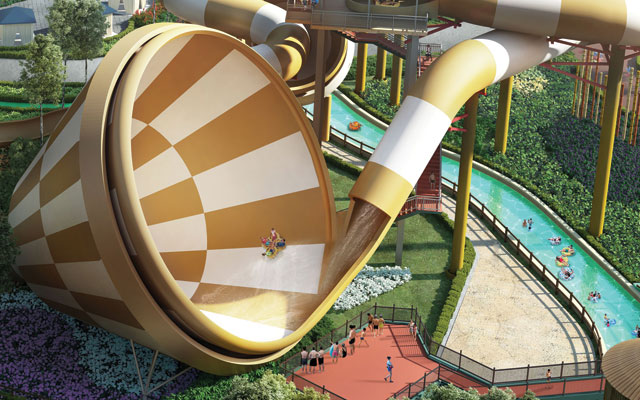
Desaru Coast Adventure waterpark
These include ecotourism and soft adventure activities such as whitewater rafting, snorkelling and diving, hiking, mountain climbing, glamping and bird-watching. The country is also a destination for more relaxed activities such as retail therapy, theme parks, golfing or visiting museums.
Such options are plentiful and diverse, and is never far from the main cities where business meetings and conferences are held. – S Puvaneswary
Philippines
The country’s destination branding is More Fun in the Philippines, which is also reflected in the CVBs MICE marketing materials, promotes both meeting facilities and activities in locations namely Manila, Cebu, Boracay, Palawan, Bohol, Davao, Clark-Subic, Bacolod-Iloilo, Vigan-Laoag and Baguio-Banaue.
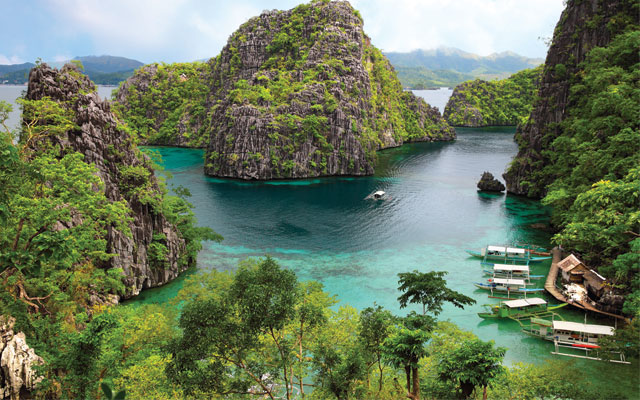
Crystal-clear waters in Busuanga Island, Philippines
While there are more than 7,000 islands in the Philippines, the country offers more than sun, sand and sea. Individuals can indulge in soft adventure such as jungle and volcano trekking, cycling, ziplining, or attend one of the country’s vibrant festivals.
The Philippine Convention Bureau assists event planners by coordinating onsite inspections and planning tour itinerary, as well as offering support in-kind. – S Puvaneswary
Singapore
The Singapore Tourism Board (STB) launched the In Singapore Incentives & Rewards (INSPIRE) aimed at small- to mid-sized MICE groups. The incentive programme offers 63 complimentary group experiences designed to complement MICE group itineraries and provide exclusive experiences. These fall under four categories: dining, entertainment and nightlife; thematic tours and learning experiences; tailored attraction-based experiences; and distinctive teambuilding activities.
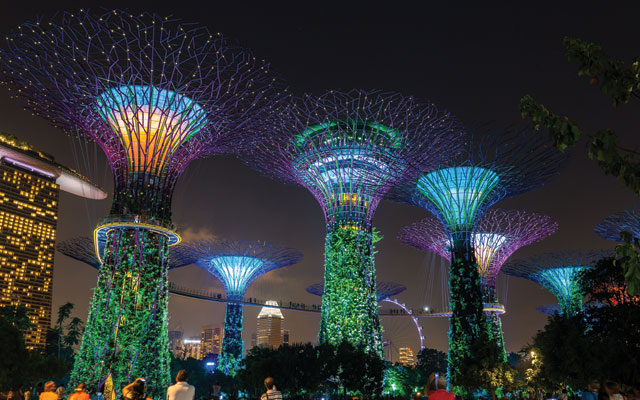
Garden Rhapsody show at Gardens by the Bay
Experiences include creating bespoke cocktails using herbs and spices found in UNESCO World Heritage site, the Botanic Gardens; an insider’s tour of Singapore’s Silicon Valley, the One North vicinity, with exclusive fireside sharing sessions by founders of successful businesses; as well as a private after-hours Garden Rhapsody show at Gardens by the Bay.
To qualify for INSPIRE, groups must travel to Singapore between now and December 31, 2021, with a minimum of 20 foreign attendees and stay for at least three days in the Lion City. – Pamela Chow
South Korea
Korea Tourism Organization (KTO) has created pre-and post tour programmes for bleisure travellers, and is ready to provide support in the form of arranged transportation.
Korean kimchi
The country has myriad attractions both in the day and night, though the nights tend to be more lively. Bleisure travellers can visit night markets, or enjoy shimmering views from a vantage point in Seoul or Busan. For a more traditional experience, the palace is an interesting place to visit, as travellers can wear the hanbok and tour its expansive grounds.
KTO also has a list of experience programmes for travellers such as learning how to play a traditional instrument, or learning to make kimchi. – Mimi Hudoyo
Taiwan
Meet Taiwan welcomes bleisure tourists, and has a strategy in place that entices business travellers to stay longer after their trip by encouraging them to bring their spouses, families and friends and stay on after their work is complete to explore the destination.
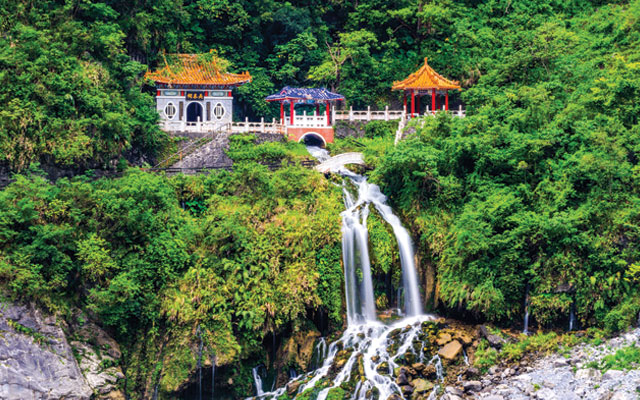
Bleisure options in Taiwan range from hiking in Taroko National Park and soaking in hotsprings in Taichung, to paragliding in Puli and exploring the various night markets in Taipei.
Waterfall within the Taroko National Park in Hualien, Taiwan
Aside from its attractions, Taiwan also positions itself as a friendly and welcoming nation, is a safe place to travel in, and convenient to get around by public transport. All these and more are heavily promoted by the CVB, which will also support planners by providing information on all things from sightseeing to venue arrangements, to fit a whole range of budgets. – Rachel AJ Lee
Thailand
To entice business travellers to extend their stay, the Thailand Convention and Exhibition Bureau (TCEB) created Thailand 7 MICE Magnificent Themes – such as Fascinating History and Culture and Exhilarating Adventures – in its five MICE cities (Bangkok, Phuket, Khon Kaen, Pattaya, and Chiang Mai).
TCEB has also launched a MICE Thailand Signature campaign, where it works with over 300 establishments to offer business travellers attending TCEB-supported events, special discounts and privileges across six categories such as health & wellness, and gourmet & cuisine.
Heavy promotion of Khon Kaen is now underway, with efforts to play up the destination’s fun activities such as bicycle rides in Nam Phong National Park and Isaan silk weaving at Ban Hua Fai.
The bureau works very closely with the local private sector as well as trade associations like Thailand Incentive and Convention Association, to ensure that event planners have access to a diverse range of bleisure products and services. – Rachel AJ Lee
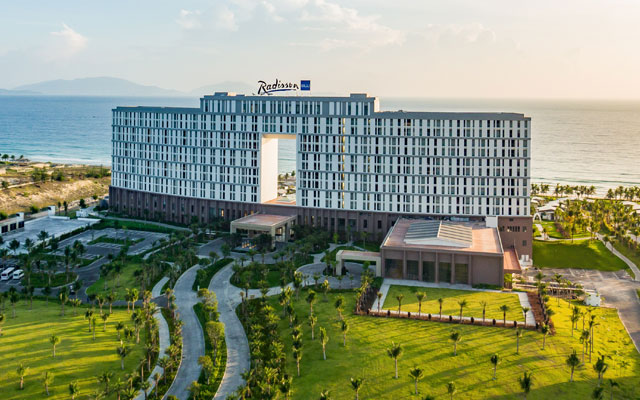
Radisson Blu has expanded its presence in Vietnam with its latest beachfront resort at Cam Ranh Bay.
The new Radisson Blu Resort Cam Ranh is nestled on Long Beach, an 18km-long stretch of sand in Khanh Hoa province, on Vietnam’s south-central coast. It is located 10 minutes’ drive from Cam Ranh International Airport, which offers direct connections to and from major Asian cities including Bangkok, Hong Kong, Seoul and Shanghai.
Aerial view of Radisson Blu Resort Cam Ranh
There are 292 rooms, suites and pool villas here, which range from 45m2 to 140m2 in size. The 36 villas also boast private pools, cabanas and alfresco dining areas. Guests staying in premium rooms, suites and villas will enjoy access to the Executive Lounge and an array of services including breakfast, all-day refreshments and evening cocktails.
Facilities on-site include six restaurants and bars, ranging from all-day dining restaurant Sunrise, to Waves Beach Bar, a casual beach club; a spa complete with a Himalayan crystal salt chamber and ice grotto; outdoor infinity pool; and fitness centre. Water sports activities can also be had on the beach.
In addition, event planners can organise meetings or functions in one of the nine available spaces, such as the Grand Ballroom which can seat up to 385 people for a gala dinner.
Radisson Blu Resort Cam Ranh is the group’s second seafront resort in the country, following Radisson Blu Resort Phu Quoc. Radisson Hotel Group is currently embarking on a significant expansion strategy in Vietnam, with five further projects are in the pipeline – Radisson Blu Hoi An, Radisson Blu Resort, Quy Nhon, Radisson Resort Phu Quoc Long Beach, Radisson Hotel Danang and Radisson Hotel Quang Bin.
Bangkok Venue Collection – a group of five hotels in the Thai capital – has come together to offer a free teambuilding session for meetings held at its properties.
The five hotels involved are Novotel Bangkok on Siam Square, Novotel Bangkok Ploenchit Sukhumvit, Pullman Bangkok Grande Sukhumvit, Pullman Bangkok King Power, and Swissotel Bangkok Ratchada.
A teambuilding activity in session
The teambuilding activity, entitled Amazing Chase, will take participants out of the meeting room, and immerse them in the local culture, community and neighbourhood. The activity is usually sold for 1,900 baht (US$63) per person.
Lasting two to three hours, groups sizes can range from 15 to a maximum of 500 participants. Amazing Chase can organised daily in either the morning or afternoon, subject to the availability of resources. Drinking water for participants, a video introduction, coloured team identification apparel, facilitation in English and fun prizes for three outstanding teams are also included.
This residential meeting offer must be booked and confirmed before May 31, 2020, but can happen from now to October 31, 2020. This promotion can also be combined with other offers.
Just 10 minutes from Phuket International Airport on the serene northern coast, this 178-key, Bill Bensley-designed resort offers delegates a quiet, tropical paradise steeped in Phuket’s tin-mining heritage
The newly-opened Ritz-Carlton, Bangkok anchors the One Bangkok development with cosmopolitan elegance. Featuring the city's largest ballroom and a spectacular new penthouse suite, it delivers exceptional hardware and deeply authentic, soulful service for business and leisure travellers alike
Behind the imposing, Brutalist concrete that defines Zurich’s Oerlikon district lies a surprising secret. While its exterior honours the neighbourhood’s industrial roots, stepping inside Mama Shelter reveals a vibrant, neon-soaked world that is a far cry from its rigid shell