Asia/Singapore Monday, 6th July 2026
Page 632

China reaches out

0

Just as China’s open Belt and Road Initiative (BRI) has spurred Chinese cities to aggressively court international association meetings, the Middle Kingdom’s own industry associations are making firm moves to build business exchange and knowledge-sharing platforms with their country partners and international peers.

To prepare Chinese associations going international, the China Association For NGO Cooperation (CANGO) – under the Ministry of Civil Affairs – and the China Council for the Promotion of International Trade (CCPIT) Commercial Sub-council launched the China Congress of Associations and Chambers of Commerce in 2018.

Held on October 17 to 18, 2019, the congress welcomed associations, investment promotion and commercial bureaus and meetings management suppliers from China and beyond, national and city-level convention and exhibition bureaus, as well as CCPIT chapters.

Alicia Yao, the event’s organising committee chairman, said the event aimed to “guide associations’ management of research institutions, conference development and investment promotion, help trade associations to carry out brand building, establish a cooperation mechanism between the Belt and Road trade associations, and provide a platform for international and domestic cross-border exchanges”.

Emphasising the Chinese government’s full support of the local associations’ move to go beyond their borders, Yao pointed to the issuance of the Notice on Fully Hearing the Opinions of Chambers of Commerce and Industry Associations in the Process of Formulating Administrative Regulations and Regulations Administrative Standardization Documents by The General Office of the State Council in March 2019.

Vivian Zhang, director of event specialist MCI China, observed many Chinese domestic associations had begun to market themselves as international entities that were committed to being academically authoritative, raising the influence of the industry and having a strong voice.

Zhang said: “Chinese industry associations have resources and academic status. The challenge is how to make use of these resources to develop healthily.”
She observed that Chinese association heads were now younger and more exposed internationally, adding that association communication had also changed from one-way – external to internal – to two-way.

Citing an example, she said the China Infection Control Annual Conference of the China Association for Infectious and Preventive Medicine had Chinese experts and scholars deeply involved in the planning stage of the International Academic Annual Conference.
For long-established associations to grow, Zhang said new strategies and professional support were needed.

Faced with limited staff headcount, Chinese associations must re-examine their core focus, advised Zhang. Her suggestion is to outsource operations to a professional management team and for the association to concentrate on building its core content.

Mike Williams, senior partner and consultant at GainingEdge, an agency that advises the convention and meetings industry, also suggested that Chinese association executives attend training by Union of International Associations (UIA) and International Convention and Convention Association (ICCA) held in China on governance, financial management, membership growth, and case studies of association best practices.

While Chinese associations are eager to do more, the ongoing US-China trade war could impact their efforts, opined Kitty Wong, president, K&A International and past-president, World DMC Alliance.

She explained that associations needed “approval” from the central government to organise any event. With China tightening up surveillance, Wong opined the national associations cannot do much without approval and may not even consider bidding for international conferences to be held in China.

She added: “Without a local organising committee to back them up to obtain approval and/or sponsorship, there is no reason for international NGOs to bring a conference to China.”

Still, she encourages Chinese associations leaders to attend international congresses, conventions and seminars outside China “to make friends and exchange ideas with colleagues in their own fields globally”.

“Don’t be shy in connecting with the world,” she advised.

This article was first published in TTGassociations January 2020, a sister publication of TTGmice
Taipei plays to her strengths

0

Earlier this March, the Taipei City Government established its first MICE office – a breakthrough after years of effort – in a bid to create a sound environment to further develop the city’s business event sector against a backdrop of an ultra-competitive Asia market.

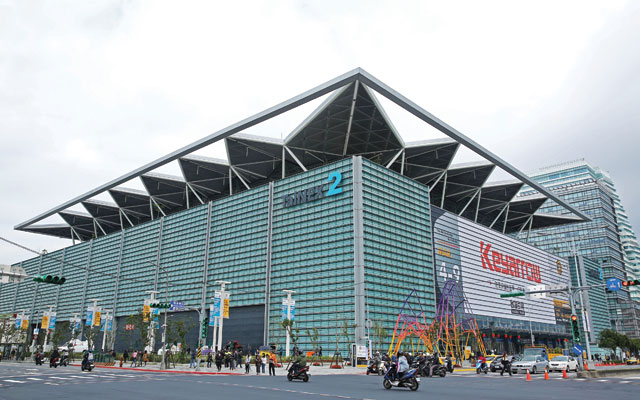
TaiNEX 2 opened in March this year, and when combined with TaiNEX 1, makes for the country’s largest venue

And the city is smartly playing to her strengths, vividly highlighting unique locations where business events can be held such as the Huashan 1914 Creative Park and Taipei Expo Park; bettering its infrastructure with the recent launch of TaiNEX 2; and wearing its newly-minted Michelin-star status proudly.

Pu Lin, director of arts, Taiwan Creative Industry Development (which oversees Huashan 1914 Creative Park), said: “There is only one Huashan. Foreign companies like Google like to come here, and make use of our unique indoor and outdoor spaces to present their products. TedX Taipei is also held here every year.”

In addition to being a function space, Huashan 1914 Creative Park also doubles up as lifestyle destination for delegates to explore in their free time, as there are quaint shops and hole-in-the-wall cafes that have set up homes here.

Similarly, the 14-hectare Taipei Expo Park has a lifestyle component – the 9,900m2 Maji Square, filled with more than 80 lifestyle shops and F&B options. The park has numerous indoor and outdoor spaces, three of which are dedicated for corporate and association groups: the Expo Dome, Eco Ark, and Expo Hall.

Rich Shen, director administration management of Taipei EXPO Foundation which manages Taipei Expo Park, shared: “We can hold tradeshows and gala dinners at the Eco Dome; while large-scale performances or speeches can head to the Expo Hall which can seat 1,200 comfortably.”

Elsewhere in the city, the Taipei Nangang Exhibition Center Hall 2 (TaiNEX 2) began operations on March 4 last year year, expanding the city’s MICE infrastructure. The US$240 million venue features 30,240m2 of exhibition space, a 6,100m2 Sky Garden (opening in November), and 14 conference rooms – where the largest can hold 3,600 guests.

Just across the road, TaiNEX 1 has 45,360m2 of exhibition space, a 22,680m2 column-free Sky Dome, and nine conference rooms. When combined, TaiNEX is the country’s largest exhibition venue.

“It is very convenient to hold events here, as within a five-minute-drive radius are six hotels, and in 2022, there will be an additional hotel and shopping centre nearby,” revealed Philip Huang, executive director of TaiNEX 2.

When asked how Taipei’s MICE business has fared over the years, project manager of ABLY Conference and Exhibition (part of Taiwan Tour DMC), Lilly Lee, shared that she has seen the city’s business event sector grow year-on-year, since the company started handling such events around a decade ago.

“But competition is pretty tough,” she opined. “While Taiwan may be cheaper than South Korea and Japan, we are more expensive than Bangkok.”

Hence, she stressed that during a pitch, they focus on Taiwan’s unique points and cultural attractions. One new way to sell Taipei was through gastronomic adventures, thanks to the inaugural Michelin Guide Taipei which launched in 2018, featuring a total of 110 dining establishments.

For instance, groups can arrange to dine in a private room at three-Michelin-star Cantonese restaurant Le Palais, the only restaurant to be bestowed with three stars. Delegates can also go on a gastronomic hunt for the 10 street food vendors listed in the guide during the evenings after a long day of meetings.

“We are also working closely with private stakeholders like PCOs, to identify the best chances of bringing in an international meeting,” Lee Jerchin, deputy managing director, Taipei MICE Office, shared.

The ultimate goal, he pointed out, was to “bring Taipei’s name to the international masses”, as “we want to be the top business event city in Asia”, acknowledging that it is going to be a tough road ahead. Currently, Taipei sits at sixth position on ICCA’s 2018 city rankings.

However, the destination is making strides. A recent large win was the Rotary International Convention 2021 which is expected to bring 40,000 people to Taipei, and generate NT$4 billion (US$219 million) for the economy. Organisers say it is the largest meeting of its kind in decades.

Before that, the World Trade Centre Assembly 2020 is expected to bring in another 300 delegates.

Tetsuya Sakai, professor and head of department, department of computer science and communications engineering, Waseda University, organises an annual computer science and information retrieval conference for 800 pax, and shared he was pleased with Taipei’s offerings.

He elaborated: “As the conference attracts students, academics and professors, I need a destination that has a wide range of choices in terms of accommodation and food. For example, students will be able to stay in cheaper hotels and explore night markets for cheap eats, while professors may be able to eat at restaurants and stay in star hotels.”

Meanwhile, professor Rindit Pambayun, department of agricultural technology, Palembang-based Sriwijaya University, talked about how halal-friendly Taiwan is, and is a great destination for conferences with a Muslim majority.

“There are halal-vending machines and prayer rooms in convention centres, while I was surprised to find a Koran in my room at the Howard Taipei. My dietary needs was also adhered too. This shows that the government is putting in the effort (to attract Muslim visitors).”

PATA Travel Mart to spice travel up in Sichuan in 2020

0
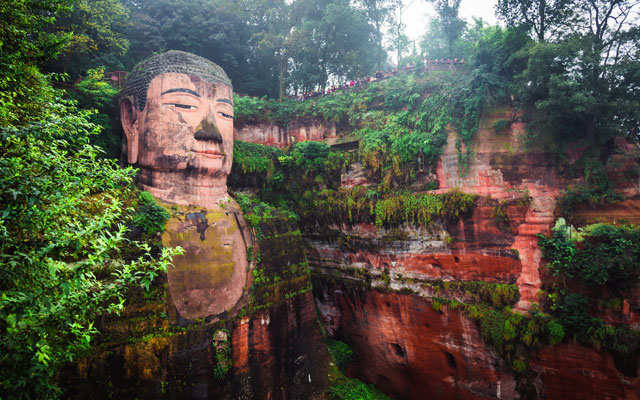
The UNESCO-listed Giant Buddha in Leshan is the largest Buddha statue in the world

The Pacific Asia Travel Association (PATA) has revealed next year’s PATA Travel Mart will be held in Leshan, Sichuan, China from September 3-6.

“We are delighted to be returning to Leshan, Sichuan, China for PATA Travel Mart 2020, having previously worked closely with our various partners to organise the PATA Annual Summit 2015, as well as the annual Emei Global Summit,” said PATA’s CEO Mario Hardy.

The UNESCO-listed Giant Buddha in Leshan is the largest Buddha statue in the world

The UNESCO-listed Giant Buddha in Leshan is the largest Buddha statue in the world
Leshan is a prefecture-level city located at the confluence of the Dadu and Min rivers in the Sichuan Province of China. The city is located on the south-western fringe of the Red Basin in southern Sichuan, about 120km from Chengdu.

Leshan annually receives over 25 million visitors, with its centrepiece tourist attraction being The Leshan Giant Buddha of Mount Emei – a Cultural, Heritage and National 5A tourist attraction. Other leisure activities in the area include hot springs, skiing and rural tourism.

Travellers can connect to Leshan via Chengdu Shuangliu International Airport, then board a car, bus or speed train from the airport to Leshan city. It takes approximately 1.5 hours by car or bus, or 40 minutes by speed train.

New GM for Eastin Hotel Makkasan Bangkok

0

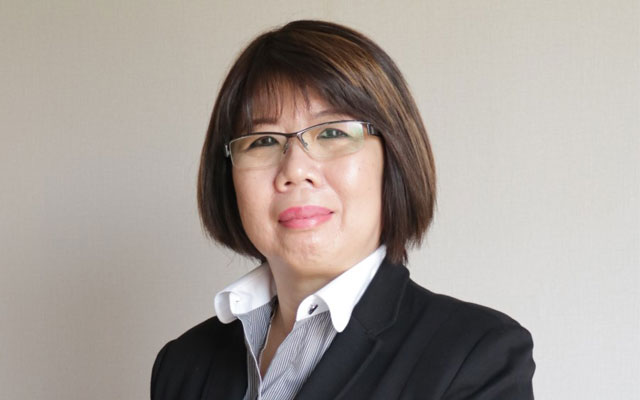
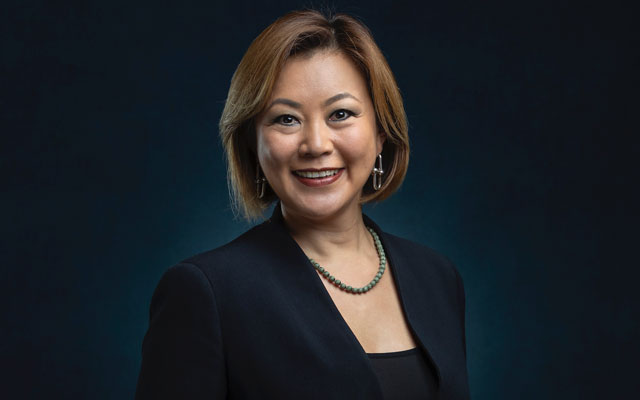
Pauline has been appointed the new general manager of Eastin Hotel Makkasan Bangkok.

With more than 25 years’ experience in the hospitality sector, Pauline started her career as the public relations manager at a four-star hotel in Kuala Lumpur, before moving into the general manager role at The Naviti Resort in Fiji.

Hertz makes inroads into Cambodia

0
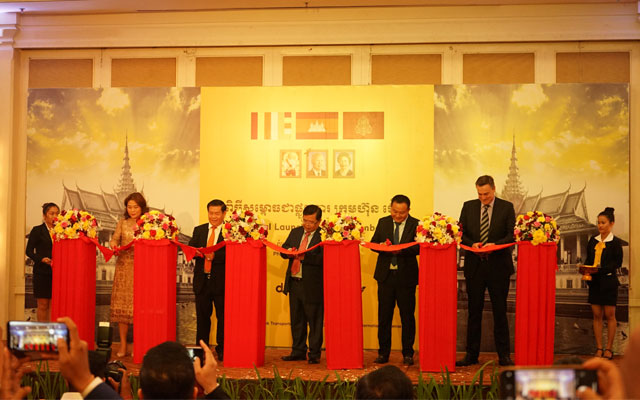
Liao Xi; Ly Hour Group's Oknha Ly Hour; Cambodia's secretary of state for Public Works and Transport Poeu Marly; City Link's Oknha Ly Sopheark; and Hertz Asia Pacific's Nicholas Waring

Hertz Asia has announced City Link Transportation (Cambodia) as its franchise partner in Cambodia.

The Cambodian rental company will operate several Hertz brands – Hertz, Dollar, Thrifty and Firefly – in Phnom Penh, where vehicles range from sedans to luxury limousines. City Link will also offer Hertz Chauffeur Drive service for airport transfers and business travellers.

Liao Xi; Ly Hour Group’s Oknha Ly Hour; Cambodia’s secretary of state for Public Works and Transport Poeu Marly; City Link’s Oknha Ly Sopheark; and Hertz Asia Pacific’s Nicholas Waring

Eoin Macneill, vice president Asia Pacific, Hertz, said: “This is the first time Hertz has awarded all four brands to a single franchisee in Asia; showcasing that we’re confident City Link has the expertise to deliver a range of mobility solutions with the great service that our customers have come to expect.”

In a statement, Hertz said that rental demand will grow in the future, with more than 15 million international and domestic tourists expected to explore Cambodia annually by 2030.

“As travellers become more aware of Cambodia and all the self-drive opportunities available, Hertz can help people discover the beauty of the country through a range of car rental services. We are excited about the Hertz and City Link partnership and believe there is a great future for us here with our new franchisee partner in Cambodia,” noted Macneill.

Photo of the day: China’s WEINA gifts 3,500 staff with South Korean trip

0

Earlier this month, South Korea welcomed 3,500 international employees from Shanghai-based multinational retail company WEINA Cosmetic for an incentive trip that featured some of the best sights around Gangwon Province.

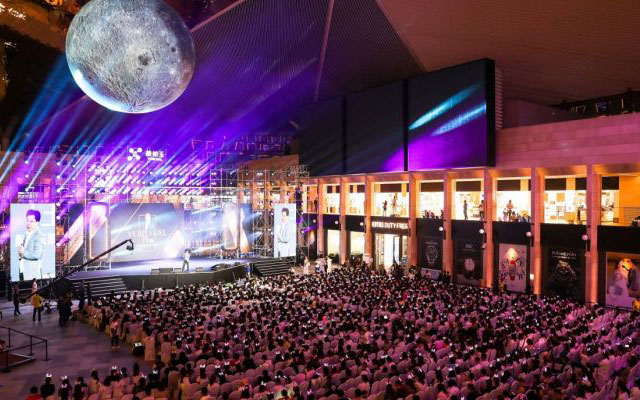
To manage the massive movement, participants were split into three groups. All were accommodated at a resort-style hotel in Gangwon, with a star-studded welcome ceremony at the Gangneung Curling Center on December 17. The grand event featured Korean-themed cultural entertainment arranged by the Korea MICE Bureau (KMB), such as performances by Korean traditional music artiste Gukak; B-boy group S-Flava; and a Korean musical. The group also enjoyed an exclusive K-POP performance at Yongpyong Resort in Pyeongchang, featuring Hallyu star, Min Kyung-hoon.

Over the course of six days, they visited attractions such as the Jade Garden Natural Arboretum in Chuncheon, Ojukheon House, and Gangneung Coffee Street.

This past year, KMB has been pushing to recover the Chinese incentive market, promoting new, Hallyu-related contents as part of its programme. Efforts have borne fruit, with official figures for the number of Chinese incentive travellers to South Korea in 2019 as of November estimated at 99,857, indicating an increase of 200 per cent year-on-year.


Cape Fahn Hotel, Koh Samui gets new GM

0

Cape & Kantary Hotels has appointed Timo Kuenzli as general manager of the five-star Cape Fahn Hotel, Koh Samui.

The Swiss has nearly 15 years of experience in the hospitality industry, and has worked in a range of tourist environments including America, Europe and Asia.

Kuenzli has been with Cape & Kantary Hotels for several years, having spent time at Cape Nidhra Hotel, Hua Hin; Kantary Hills Hotel, Chiang Mai; and Cape House Hotel, Langsuan, Bangkok. He was then appointed to the post of general manager at Cape Kudu Hotel, Koh Yao Noi.

Twin sales appointments at Outrigger

0

Outrigger Hospitality Group has appointed two new additions to its sales team at the all-new Waikiki Beachcomber by Outrigger.

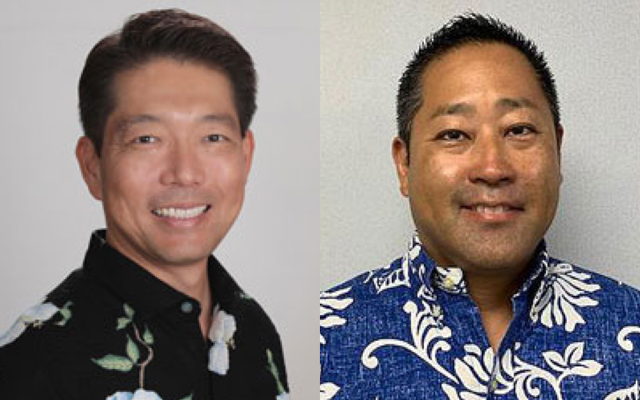
Marcus Ito has been named director of sales and marketing, where he will be responsible for driving revenue to the Waikiki Beachcomber by Outrigger through sales and promotional activities by maximising prospective business opportunities from various business channels.

Ito will also work closely with key property partners, including Maui Brewing Company, Hawaii’s largest craft brewery; Hawaiian Aroma Caffe, one of Hawaii’s most Instagrammable coffee shops; and Magic of Polynesia. He will further drive brand fame with promotions surrounding the Beachcomber Originals, a collection of local artists and tastemakers who have helped shape Outrigger’s first lifestyle hotel.

Before joining Outrigger, Ito served at various properties such as G.Lion Hawaii; Trump International Hotel Waikiki; Wyndham Vacation Resorts; PacRim Marketing Group; and The Ritz-Carlton, Kapalua.

Meanwhile, Taro Sawabe has been appointed assistant director-market development with a focus on Asia and Japan.

In his new role, Sawabe is tasked with developing and facilitating progressive business flow with Outrigger’s Asia and Japan accounts through effective communication and account management.

Previously, Sawabe has held positions at Kahala Resort, Ritz Carlton Okinawa, Sheraton Grande Tokyo Bay, and Westin Resort Guam.

The South-east Asia Special: Philippines

0
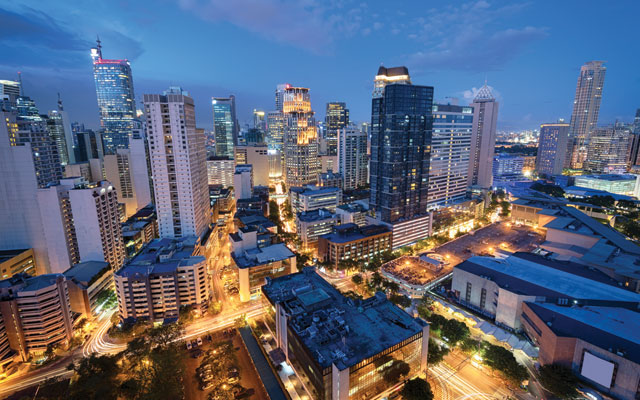
Makati, the business district of Metro Manila, lights up at night

While the Philippines has not kept abreast with its Asian neighbours in drawing international business events, milestones over the past decade are lifting it closer to its aspiration of reclaiming its place as one of the region’s premier destinations.

As an archipelago of 7,641 islands, the Philippine challenge is to make them accessible and connected by air, land and sea domestically and at least regionally, which is gradually taking place.

Makati, the business district of Metro Manila, lights up at night

Another milepost is the private sector efforts in building convention centres not just in metro Manila but in other urban destinations too, in the absence of government investment. SMX Convention Centre, for example, has invested in eight convention centres all over the country and more are forthcoming while the Iloilo Convention Centre and the Marriott Grand Ballroom are also birthed from private sector money.

Agnes Pacis, vice president-sales and marketing, SMX Convention Center, explained: “We would like to place the Philippines in the global market, as most of the events happening in the Philippines are still local”.

The shortage of accommodation is also being addressed as inbound traffic grows, with more homegrown hotel brands being developed and proving to be steady competitors of international brands.

For one of the most successful homegrown hotel brands, Seda, the strongest business events markets are mainly from Asia – Japan, South Korea, Singapore and Taiwan, according to Seda Hotels group director of sales and marketing, Melissa Carlos. The US is a strong source market too, outside of this region.

Carlos said “healthy economies which mean more disposable income that creates opportunities for MICE, cooperation among countries in the region, intellectual development, and IT accessibility” can expand Asia-Pacific’s business events potential.

While the Philippines has a yoyo love-hate relationship with China, Duterte administration has cast a rosy light on the two since 2016. China’s former ban on its citizens travelling to the Philippines has been replaced by an open season, with both business and group travellers from the mainland becoming the Philippines’ second biggest source market.

The business events sector has not fully taken advantage of this coy relationship that is shoring up the real estate markets and hotel occupancies, but the industry is starting to see events coming from China.

Another milepost is Boracay’s six-month closure last year for its continued rehabilitation, stalling business events particularly incentive trips and corporate meetings. However, the bold move demonstrates the government’s commitment to cleaning up destinations. Hopefully, lessons learned from Boracay will not be lost on other areas including Bohol and Palawan.

Meanwhile, the biggest development in the country’s business event community is the comprehensive MICE roadmap 2030, detailing how the Philippines can attract more corporate gatherings from Asia and the Middle East a decade from now.

For Tourism Promotions Board (TPB) COO, Marie Venus Tan, the “battle cry is Bid! Bid! Bid!” for international events, create and develop MICE cities including Iloilo and Bacolod, and being in international MICE shows, among other things.

Presently, there is an urgent need for the creation of a national convention and visitors bureau. Right now, there is just a small department within the TPB that takes care of business events; TPB is the marketing arm of the Department of Tourism.

The defunct Philippine Visitors and Convention Bureau was successful in attracting business events, recalled Renato Padilla, general manager of the Philippine Convention and Exhibition Center (PICC). In other countries, cities have their own convention bureau while the Philippines has none, he lamented.

Another tricky issue is the Philippines’ lack of big convention and exhibition centres, which keeps it from taking advantage of the international trend for mega events. The country’s largest convention centres, SMX Manila and PICC, dwarf in comparison with those in other Asian countries but they could no longer expand, said Marisa Nallana, president of PETCO.

“To be more competitive in Asia, we will have to build bigger spaces to accommodate the demand of international events,” she said.

Chikako Shimizu hired as new GM for Andaz Macau

0

Veteran hotelier Chikako Shimizu has been appointed general manager of Andaz Macau, which is set to open in 1H2021.

In her new role, Shimizu will serve as brand ambassador to bring the lifestyle hotel’s culture to life. She will also proactively promote the Andaz philosophy of providing each guest with an authentic local experience.

With more than 25 years of experience in hospitality leadership positions around the world, Shimizu most recently served as director of operations at Andaz Singapore where she was involved in the hotel’s successful opening.

Reviews

The Slate Phuket

Just 10 minutes from Phuket International Airport on the serene northern coast, this 178-key, Bill Bensley-designed resort offers delegates a quiet, tropical paradise steeped in Phuket’s tin-mining heritage

The Ritz-Carlton, Bangkok

The newly-opened Ritz-Carlton, Bangkok anchors the One Bangkok development with cosmopolitan elegance. Featuring the city's largest ballroom and a spectacular new penthouse suite, it delivers exceptional hardware and deeply authentic, soulful service for business and leisure travellers alike

Mama Shelter Zurich

Behind the imposing, Brutalist concrete that defines Zurich’s Oerlikon district lies a surprising secret. While its exterior honours the neighbourhood’s industrial roots, stepping inside Mama Shelter reveals a vibrant, neon-soaked world that is a far cry from its rigid shell