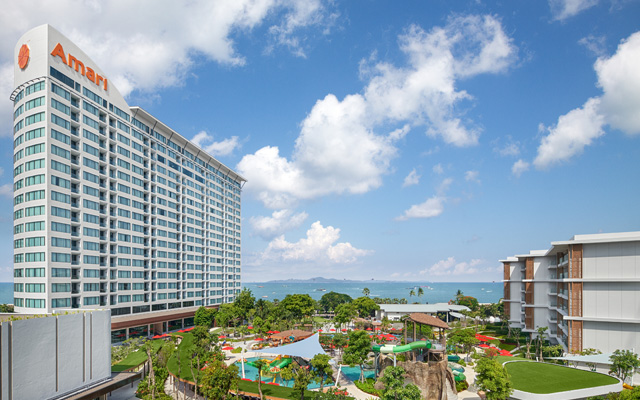
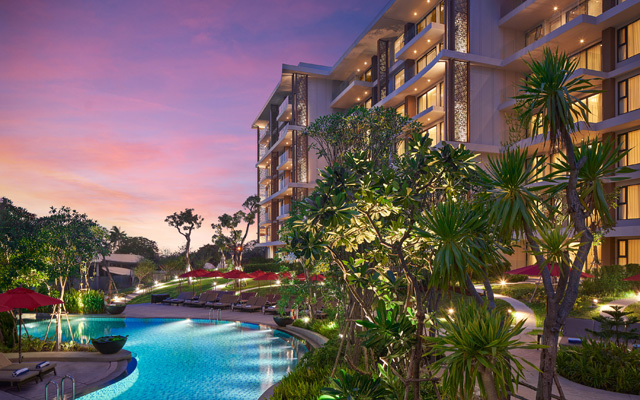
Amari Pattaya on the northern end of Pattaya Bay has completed its redevelopment, and with it has unveiled a host of new features.
Amari Pattaya
1 of 5
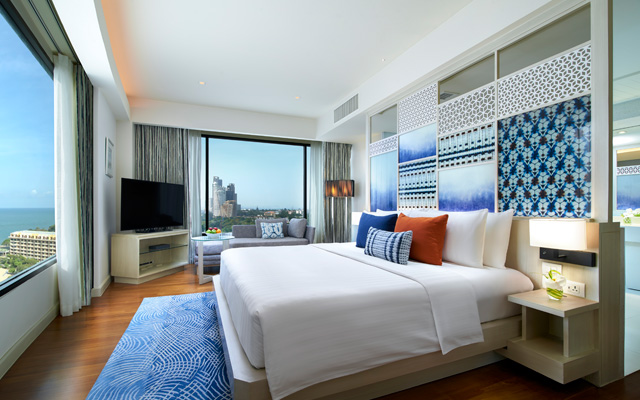
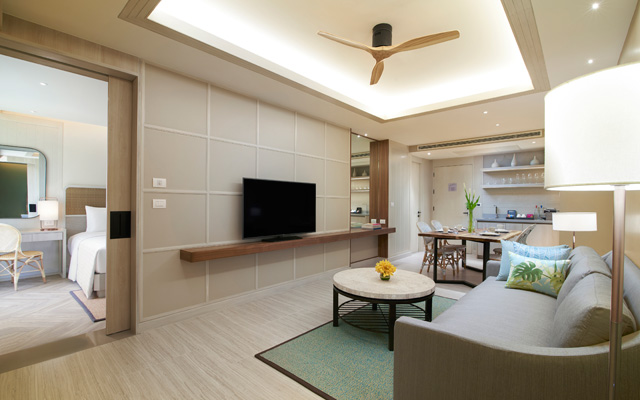
The Amari Suites offer 49 one- and two-bedroom suites in a separate building from the other 248 guestrooms in the Amari Tower. All-new facilities on the property include free-form swimming pools, waterpark, Breeze Spa, fitness centre, and several F&B options such as the Amaya Food Gallery.
The Amari Pattaya also offers refurbished function spaces, and its venue offerings include the newly-built pillar-free ballroom, four additional meeting rooms in Amari Tower, and the Beach Lawn. The property is able to handle meetings, conferences, incentives, and teambuilding activities for group sizes from 10 to 1,000 people.
The up-and-coming Thai city has both the hardware and software to handle corporate groups
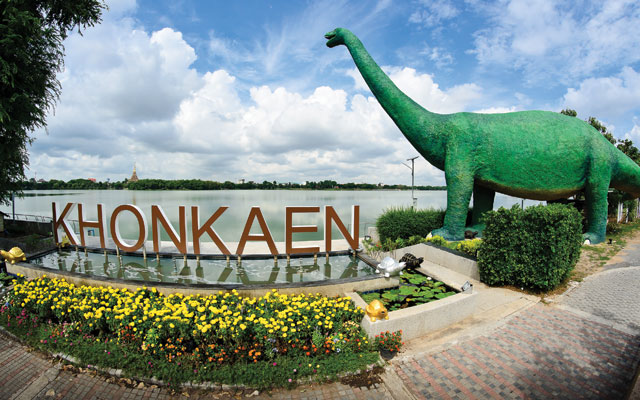
Designated as one of Thailand’s five key MICE cities since 2013, secondary city Khon Kaen is on track to live up to the Thailand Convention and Exhibition Bureau’s (TCEB) expectations of evolving into a more well-rounded business event destination.
Khon Kaen was chosen for its strategic location, close to the Indochina and Mekong Subregions, both of which hold “bright futures” for the Thai city’s business events sector, Chiruit Isarangkun Na Ayuthaya, president of TCEB, said. In addition, the north-eastern region of Thailand comprises 19 provinces and one-third of the country’s population, which also represented “huge room for business opportunities”.
The up-and-coming Thai city has both the hardware and software to handle corporate groups
“It is our policy and mission to grow the MICE industry, to help distribute income to regional areas apart from Bangkok,” he added.
As such, TCEB’s current marketing activity for Khon Kaen is centred on promoting the up-and-coming Thai city’s capabilities through roadshows held in Myanmar, Cambodia and Vietnam.
“TCEB has been leveraging MICE shows in neighbouring countries as a platform for the city to gain exposure in these potential markets. Since last year, Khon Kaen city officials have joined us at roadshows,” Chiruit said.
In addition to roadshows and relevant marketing activities, TCEB has also launched a guidebook, which can be used as a marketing tool for the city by DMCs and suppliers.
Since the opening of Khon Kaen International Exhibition and Convention Centre (KICE) in 2017, a number of shows have been held. For example, the Khon Kaen Coffee Bakery Ice-Cream & Franchise is a cloned event from Bangkok that attracted around 10,000 delegates from both Laos and Thailand in August 2018.
From February 28 to March 3 saw the 2019 E-San Industrial Fair take place. The largest show for industrial and agricultural machinery in the country’s north-east also saw the participation of Laos, Cambodia and Vietnam in the form of pavilions. The three countries, and China, also sent trade missions who visited the show for business talks.
“All these events are proof of Khon Kaen’s location as a gateway of business into the Indochina region,” Chiruit said. He added that another B2C event, by the Thailand Chamber of Commerce, would also be relocating its fair to Khon Kaen for the first time.
The Thai city has also expanded its repertoire from exhibitions to the conferences and meetings segment.
For instance, the city played host to the PATA Destination Marketing Forum 2018 in November. The event welcomed over 300 delegates, and comprised fam trips which showcased what other activities the city could offer for corporate groups.
According to ICCA statistics, Khon Kaen hosted seven international conferences in 2017 and 2018; attracting around 2,600 delegates. Previously in 2015 and 2016, Khon Kaen only hosted one international conference per year.
Aside from KICE, other business-ready hardware Khon Kaen offers include several hotels with facilities capable of hosting meetings.
The Pullman Khon Kaen Raja Orchid has a ballroom that can hold 1,800 pax theatre-style, while Charoen Thani Khon Kaen has a similar space that can hold 1,300 pax theatre-style. Each property also features 10 breakout rooms, and both have hosted international conferences before.
Elsewhere in the city, Central Plaza Khon Kaen has a hall capable of hosting 3,000 pax theatre-style, and is also connected to a shopping centre. There are also smaller properties that offer six to 10 meeting rooms for smaller-sized groups of between 250-300 pax.
When asked about the difficulty in marketing secondary cities, Chiruit shared: “The challenge is how to convince event organisers about the readiness of such a destination, especially when it’s less well-known when compared to the other more popular Thai destinations of Phuket, Pattaya and Chiang Mai.”
He added that event planners also had to be assured the city has infrastructure and facilities that were business events ready, and are able to cope with the scale of events, especially international ones.
In Khon Kaen’s case, Chiruit reiterates that the up-and-coming Thai city is definitely business events capable.
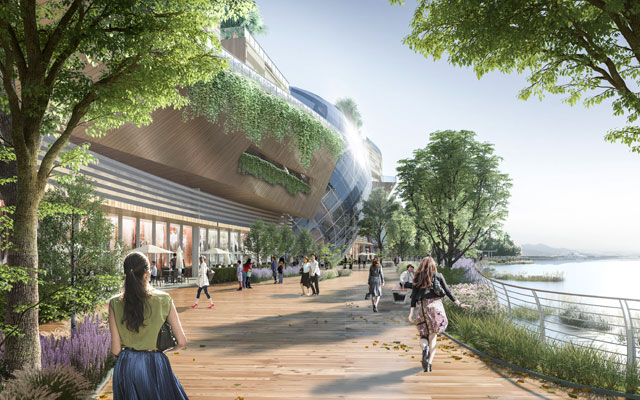
An artist’s impression of the promenade along RWS’s future waterfront lIfesytle complex
Large-scale transformations across Singapore are set to boost the business events capacity and appeal of the island. The bulk of the announcements came in April, when Resorts World Sentosa (RWS) and Marina Bay Sands (MBS) proclaimed a total investment of S$9 billion (US$6.5 billion) in expansion plans, with each pumping in S$4.5 billion.
These investments will be channelled into non-gaming facilities, and mark about two-thirds of the integrated resorts’ (IR) initial S$15 billion investment in 2006.
An artist’s impression of the promenade along RWS’s future waterfront lIfesytle complex
Under its expansion scheme coined “RWS 2.0”, RWS will increase its gross floor area by about 50 per cent. The additional 164,000m2 will be largely achieved through intensification of existing land, and will include a waterfront lifestyle complex headlined by two new destination hotels.
Coupled with the expansion of the Central Zone, up to 1,100 more guestrooms will come online and there will be a “significant expansion” of RWS’s business events capacity with which to “garner more top-tier events”, announced RWS.
RWS 2.0 will also feature a raft of new entertainment and lifestyle launches. By end-2020, a pirate-themed “adventure dining playhouse” will replace the Resorts World Theatre.
Coming down the line are a public seafront attraction with free evening light shows, two new areas for Universal Studios Singapore, and the redevelopment of the S.E.A. Aquarium by three times its current size into the Singapore Oceanarium.
RWS’s expansion will be delivered in phases, with new experiences opening every year from 2020. Completion is projected for 2025.
Tan Hee Teck, RWS CEO, said: “RWS will form an integral part of the future Greater Southern Waterfront and become a centrepiece of the transformative journey to enliven the southern corridor.”
On the main island, MBS has plans to build a fourth tower designed by the property’s original architect, Moshe Safdie. This new tower – which will rise on roughly eight acres of land – will include a 15,000-seat entertainment arena, a luxury hotel with some 1,000 keys and additional events spaces that will grow MBS’ business events capacity by about 30 to 40 per cent. MBS has not shared a timeline for completion.
Shortly after this announcement, Singapore’s Senior Minister of State for trade and industry and education, Chee Hong Tat, unveiled plans to develop the Jurong Lake District (JLD) in western Singapore into an integrated tourism development with attractions, hotels, retail and F&B offerings. Confirmed developments include an overhaul of the Science Centre Singapore by mid-2020, as well as the introduction of Singapore’s third national garden, measuring 20ha.
The ministry has launched an Expression of Interest which will remain open until November this year.
Keith Tan, chief executive of the Singapore Tourism Board, said depending on developer interest, JLD could open up opportunities for business events, such as purpose-built spaces like a convention centre.
He added that with the “greater push towards bleisure”, this development may encourage visitors to extend their stay in Singapore by one to two nights as well as “create an ecosystem of seeing tools trialled and tested live, making for a more compelling destination”.
Other broader tourism push for Singapore includes the redevelopment of greater Sentosa as part of the Greater Southern Waterfront, the cultivation of the sprawling Mandai ecotourism area which will include an eco-tourism resort run by Banyan Tree Holdings, and the rejuvenation of Orchard Road.
Kerzner International Holdings, the owner of Atlantis Resort and Residences and One&Only Resorts brands worldwide, has announced the promotion of two key executives.
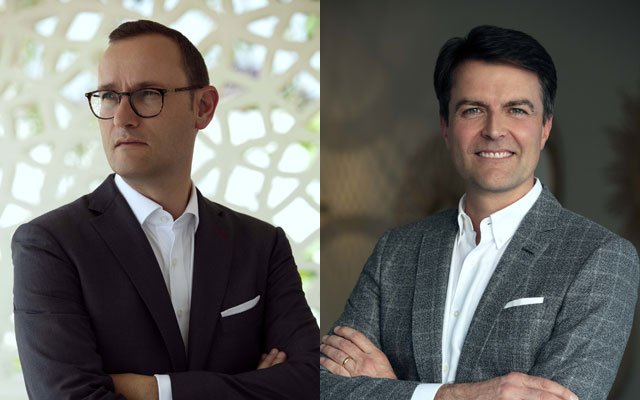
Philippe Zuber is now COO, while Brett Armitage has been promoted to the newly created role of CCO. Both will report to Michael Wale, CEO of Kerzner International.
From left: Philippe Zuber and Brett Armitage
Aside from leading the operation of all Kerzner resorts, Zuber will oversee the company’s strategic growth and expansion plans of its resorts and F&B concepts.
Zuber joined the company in 2015 as president and COO for One&Only Resorts, where he launched the evolution of the brand beyond beach resorts to include Nature Resorts, Urban Resorts and One&Only Private Homes.
As CCO, Armitage, will lead all commercial functions of Kerzner International, overseeing global revenue, distribution, communications, marketing and sales. He is also responsible for the launch and integration of new resorts.
Armitage joined Kerzner International back in 2007 when he successfully launched the Atlantis and The Palm in Dubai. In 2013, his role expanded to oversee the entire portfolio, leading Atlantis and One&Only Resorts worldwide and driving the integration of new resorts into the Kerzner sales structure.
The Thailand Convention & Exhibition Bureau (TCEB) has kicked off a new incubation programme that will help elevate promising Thai PEOs to global standards through mergers of operations or events with international peers looking to expand into Asia.
Revealing the programme details to TTGmice, TCEB’s senior vice president – business, Nichapa Yoswee, said TCEB has shortlisted a number of local PEOs and, based on their event specialisation, matched them with some of the 12 industry sectors that are key to Thailand’s new generation 4.0 economic policy. The 12 sectors include Digital, Robotics and Automation, and Aviation and Logistics.
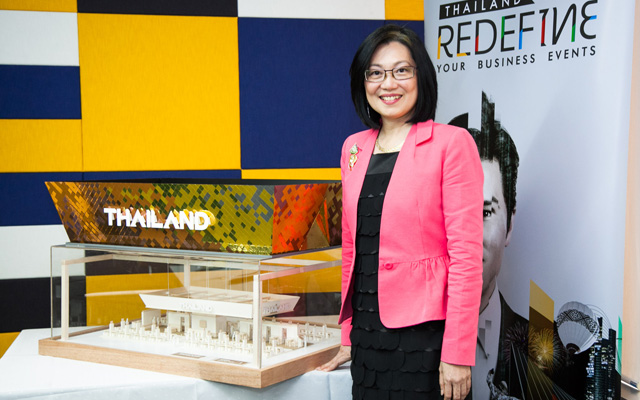
Nichapa: plans in motion to grow Thailand’s exhibition sector and push it to global standards
Furthermore, TCEB has also matched the world’s top three trade exhibitions for each of the 12 sectors.
This three-way matching process allows TCEB to help local PEOs identify their potential growth track – international trade exhibitions they could aspire towards and/or join forces with for expansion.
Coming up in August, TCEB will begin a training programme for shortlisted PEOs, where they will learn what preparations are needed should a merger and acquisition with a global peer be on the cards. At the end of the training programme, shortlisted PEOs will also need to identify at least five areas they think they need to improve in order to grow.
Nichapa said: “We – as well as the Thai Exhibition Association – will play the role of a consultant to Thai PEOs. We will show them the trends in the industry (their events serve), and tell them what would happen should they fail to raise their events to global standards. Their events will survive for now, but they will not be sustainable in the long run. We will show them how they can benefit from growing and becoming international players.”
To guide them along the way, TCEB has established milestones that shortlisted PEOs must attain, and will provide incentives to do more at every stage.
“This is additional work for my exhibitions team, but this is important work, good work and the only way to help local PEOs fast-track to global standards,” remarked Nichapa.
“The end goal is survival and the opportunity to make more money. If local PEOs resist globalisation, they need to know that they may not survive,” she said.
TCEB’s desire for local PEO growth is also to support the growing number of new international exhibitions it has been able to bag in recent times.
“Now that TCEB is bringing in so many new international exhibitions, we hope to see our local players getting a fair share of the investment. There is no point (in TCEB working so hard only) for international organisers to benefit from their expansion into Asia,” she said.
Nichapa expects the whole process, from shortlisting promising local PEOs and eventually creating a successful match with international peers, to take one to two years.
She believes that Thailand has “several very good local PEOs that are ready for this”.
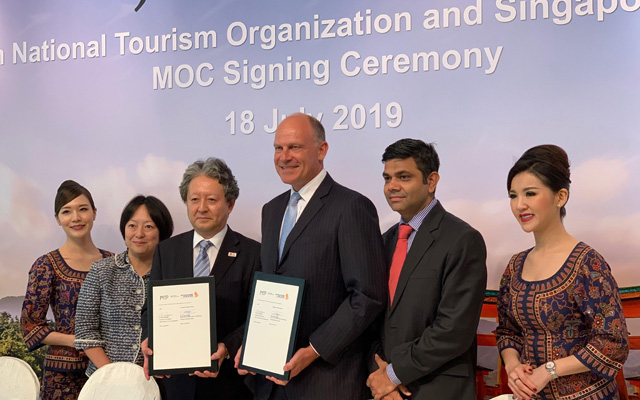
From left: JNTO’s Reiko Fujita and Akira Ninagawa; SIA’s Campbell Wilson and Ranjan Jha
Japan National Tourism Organization (JNTO) and Singapore Airlines (SIA) have signed a Memorandum of Cooperation (MOC) to further promote travel and tourism to Japan from five key markets in the region – Singapore, Australia, India, Indonesia and Malaysia.
As part of the partnership, JNTO and SIA will roll out joint promotional activities such as fam trips and marketing activities. The two-year agreement has been pegged at ¥48 million (US$445,536) for the first year, with the second year of funding currently undecided.
From left: JNTO’s Reiko Fujita and Akira Ninagawa; SIA’s Campbell Wilson and Ranjan Jha
This collaboration also marks the first time JNTO is partnering with an airline, coming at a time as Japan works towards its goal of 40 million inbound visitors by 2020.
“Inbound passenger traffic from South-east Asia and the neighbouring region have been growing steadily, and these regions are some of the most important markets for Japan. Through this partnership with SIA, we hope to boost the number of visitors to Japan not only from Singapore but from all over South-east Asia and the other regions including those who transit in Singapore,” said JNTO executive vice president Akira Ninagawa.
The number of tourists to Japan from Singapore increased 2.3 times over the past five years. In 2018 alone, traveller numbers from Singapore climbed 8.2% year- on-year to 437,280. Similarly, there was a 14.7% year-on-year jump in tourists from India to Japan, 11.6% from Australia, 6.5% from Malaysia and 12.7% from Indonesia.
SIA senior vice president sales & marketing, Campbell Wilson, elaborated: “This part of the world may not be our largest contributing market for Japan tourism… but this agreement was initiated by SIA because we felt that there was more opportunity. Looking at the key markets covered by this MoC, all of them have grown by double-digit rates so far this year.”
He further revealed that more than 70 per cent of Singaporeans have already been to Japan more than once, a figure significantly higher than other markets covered under the MoC. For instance, 56 per cent of Indians have only travelled once to Japan; while 48 per cent of Indonesians and 45 per cent of Australians have never been to Japan, so there’s “definitely plenty of opportunities”.
But as the Japanese government charges towards its target of 40 million inbound tourist arrivals by 2020, wouldn’t overtourism become a greater challenge for already-popular destinations such as Kyoto, asked TTG Asia.
Ninagawa remarked: “Actually, (the number of) tourists who head to the northern part of Kyoto, are not that great yet. There are also a lot of hidden places there, which is what we’re trying to promote. We’re also trying to get temples to open for longer hours to the public, so that they can be visited at different times in the day (to spread out the visitor traffic).”
To help combat overtourism in popular locations, Ninagawa revealed that a brand-new travel brochure, 100 Experiences in Japan, was launched last month to feature lesser-known experiences, such as training with a mountain mystic in Yamagata Prefecture and spending a night in a funaya boathouse in Gifu Prefecture.
When asked if SIA is planning to fly to more Japanese cities, especially to lesser-known areas to help disperse tourism, Campbell told TTG Asia: “We currently fly to seven cities in Japan (across the SIA group). For the moment we feel like we’ve geographically covered north to south, so there are no immediate plans to add new cities.”
Instead, SIA will be adding flights, such as a third daily flight to Osaka and a fourth daily flight to Tokyo Haneda; as well as upgrading the sizes of its aircraft to Nagoya and Fukuoka; so there’s “plenty of additional capacity”.
“Given Japan’s fantastic land transport network, any of those gateways can get you to anywhere in Japan pretty easily,” Campbell noted.
Malaysia agrees on green lane reciprocal travel bubble with Indonesia
Malaysia has become the first Asian country to host the Soroptimist International (SI) Convention, which took place last weekend (July 19-21) at the Kuala Lumpur Convention Centre.
The convention was a gathering of members from SI, headquartered in Cambridge, UK, whose work centres on transforming the lives of women and girls through a global volunteer movement.
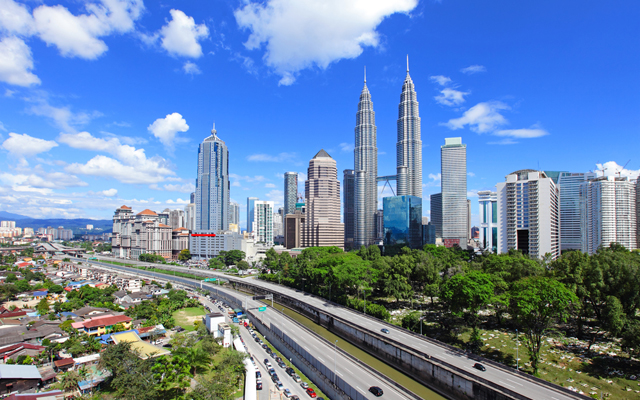
This three-day summit in Kuala Lumpur (pictured) was the organisation’s 21st international convention
There are over 80,000 club members and more than 3,000 clubs in the SI network today. The SI Region of Malaysia (SIROM) has 15 clubs and a highly regarded committee of chairpersons.
The 21st SI Convention adopted the theme – Soroptimist Enable A Sustainable World: Global Connections, Empowered Women – and drew an attendance of over 1,500 participants, with 70 per cent from overseas.
Sessions discussed the status of women and girls around the world, showcased and celebrated SI efforts in each federation, and provided a platform for women to embrace, create and prosper together with fresh ideas.
The event was supported by the Malaysia Convention & Exhibition Bureau (MyCEB), and MyCEB CEO Zulkefli Haji Sharif said in a statement that the SI Convention was expected to contribute RM18.3 million (US$4.4 million) in economic impact and generate some RM9 million from visitor expenditure to the country.
Beyond the financial benefits, the hosting of the convention demonstrated and profiled Malaysia as a nation that values empowering women and girls, and promotes gender equality as it moves towards developed status.
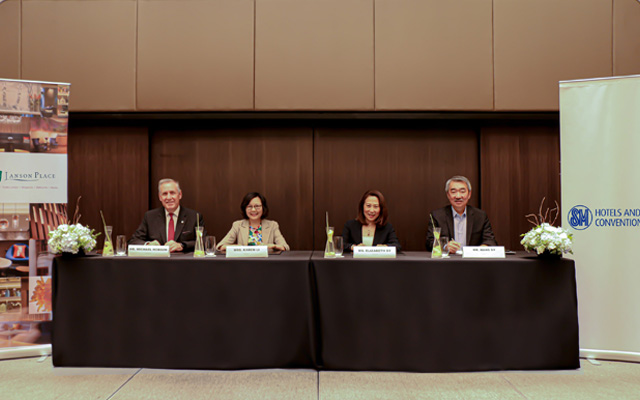
From left: Lanson Place Hospitality Management's Michael Hobson, Wing Tai Properties's Karen Li, SM Hotels and Conventions Corp's Elizabeth Sy and SM Prime Holdings' Hans Sy
SM Hotels and Conventions (SMHCC) has entered the serviced residences market by choosing Hong Kong-based Lanson Place to manage its first hotel and serviced suites, which will be located near its flagship SMX Convention Center Manila and eCom office buildings.
Opening in 2022, Lanson Place Hotel and Serviced Suites Mall of Asia – which is also the country’s first Lanson – will feature a 250-key hotel and 150-key serviced suites targeting long- and short-stay corporate clients and business events participants.
From left: Lanson Place Hospitality Management’s Michael Hobson, Wing Tai Properties’s Karen Li, SM Hotels and Conventions Corp’s Elizabeth Sy and SM Prime Holdings’ Hans Sy
Built with business events in mind, the future property will have an 800-pax ballroom, al fresco facility on the podium for relaxing events and all-day dining restaurant. Guests will also have access to recreational amenities such as a fitness centre and rooftop swimming pool.
SMHCC’s president Elizabeth Sy said the company’s foray into the serviced residences market is to meet the demand from a growing foreign business clientele into the Philippines. SMHCC’s first partner Lanson Place is a management company with a stable of luxury boutique hotels and premium serviced residences in Hong Kong, China, Malaysia, Singapore and Australia.
Lanson Place Hospitality Management CEO’s Michael Hobson said in a press statement that the partnership “is an important milestone for our Group, as we establish our first foothold in the Philippines”.
SMHCC is expected to open more serviced apartments in key areas where it is building more convention centres, and where its parent company, SM Prime Holdings, is developing lifestyle cities.
Apart from existing SMX convention centres at the Mall of Asia, Bonifacio Global City, Davao and Bacolod, SMHCC is currently building new venues in Cebu and Clark.
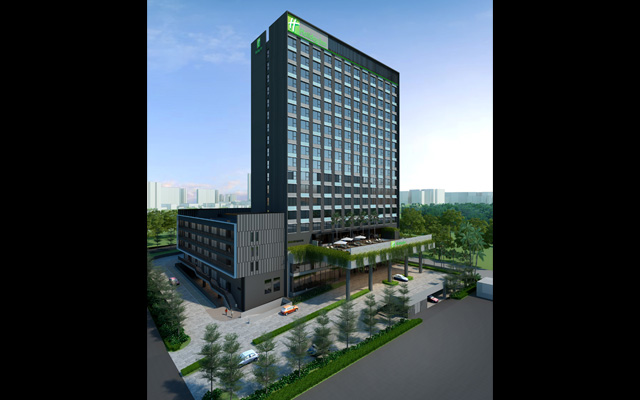
The InterContinental Hotels Group (IHG) has signed a management agreement with Warisan City Development – part of the Kienta Group of Companies – for a Holiday Inn within the Kuala Lumpur International Airport (KLIA) vicinity.
Slated to open in 2021, Holiday Inn Sepang will feature 250 rooms, alongside facilities such as a cafe, restaurant, lounge-cum-cocktail bar, pool, restaurant, gym and business corner.
A rendering of the upcoming Holiday Inn
The hotel’s “substantial” events capabilities will include four state-of-the-art meeting rooms, including a ballroom that can host banquets of up to 400 people. The property will also feature an event space that opens out to the hotel’s pool area where receptions can be held.
The new-build will be located in Kota Warisan, a 15-minute drive from the airport’s main terminal. Also in the vicinity is the Xiamen University Malaysia, Mitsui Outlet Park KLIA and the Sepang International Circuit. In 2020, E-commerce giant Alibaba will also be launching the Digital Free Trade Zone within the airport compound, serving as a regional logistics hub for SMEs.
IHG has five hotels operating across three brands in Malaysia, including: InterContinental, Holiday Inn, and Holiday Inn Express, with a further 10 in the development pipeline due to open within the next five years.
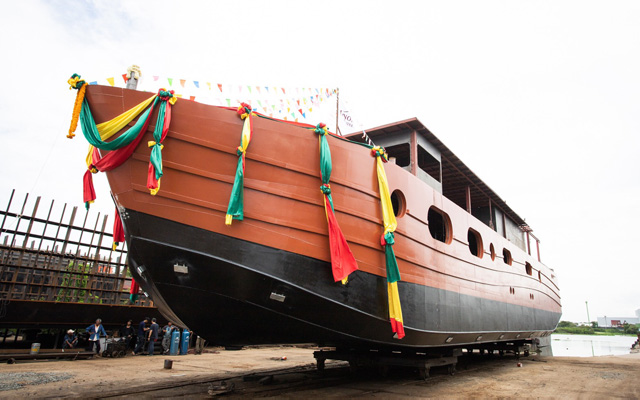
Anantara Riverside Bangkok Resort has unveiled plans to roll out a second luxury cruise vessel, Manohra River Song, by end this year to capitalise on the high-end travel market in Thailand.
Mark O’Sullivan, complex general manager, Anantara Riverside Bangkok Resort and Avani+ Riverside Hotel, said: “The vessel will be the most luxurious in the destination, helping us to activate the Chao Phraya River waterfront and hopefully drawing increased economic activity to the area.”
Manohra River Song
The new US$1.5 million boat will complement Manohra Dream, which currently offers cruises along the Chao Phraya River.
The 30m-long Manohra River Song will boost three decks, including an open-air deck, and four cabins that can accommodate up to eight guests. It will feature round-the-clock butler service onboard as well as a design inspired by traditional Thai architecture.
Manohra River Song will initially provide overnight cruise journeys from Bangkok to Ayutthaya.
“Another option that we may introduce is a downstream cruise from Bangkok to Pattaya. The cruise boat is designed to a standard that allows it to sail out into the ocean, hence a four-day, three-night cruise to Pattaya is possible,” O’Sullivan said.
These features make Manohra River Song a unique and exceptional cruise experience that combines an exotic itinerary comprising views of land, river and ocean with world-class dining, luxurious accommodation and an elite butler service, he added.
The new cruise boat will be available for special events and private charters. Charter fees will be priced approximately 230,000 baht or US$1,787 per private charter during high season.
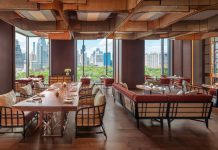
The newly-opened Ritz-Carlton, Bangkok anchors the One Bangkok development with cosmopolitan elegance. Featuring the city's largest ballroom and a spectacular new penthouse suite, it delivers exceptional hardware and deeply authentic, soulful service for business and leisure travellers alike
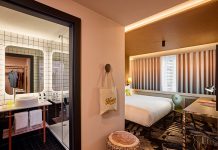
Behind the imposing, Brutalist concrete that defines Zurich’s Oerlikon district lies a surprising secret. While its exterior honours the neighbourhood’s industrial roots, stepping inside Mama Shelter reveals a vibrant, neon-soaked world that is a far cry from its rigid shell
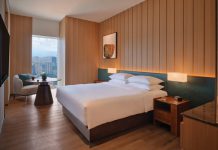
A polished urban retreat designed for business travellers, Hyatt Regency Kuala Lumpur at KL Midtown combines thoughtful design, seamless service, and exceptional facilities.