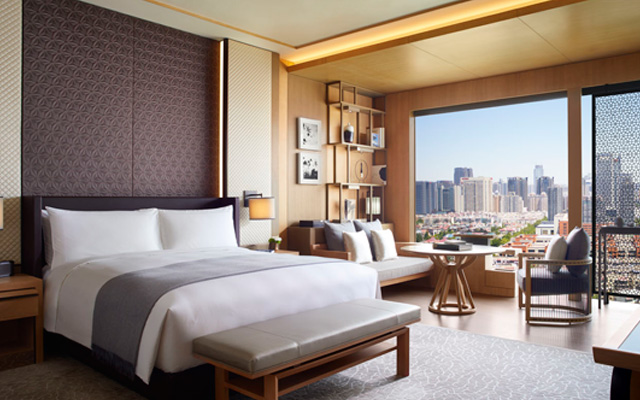
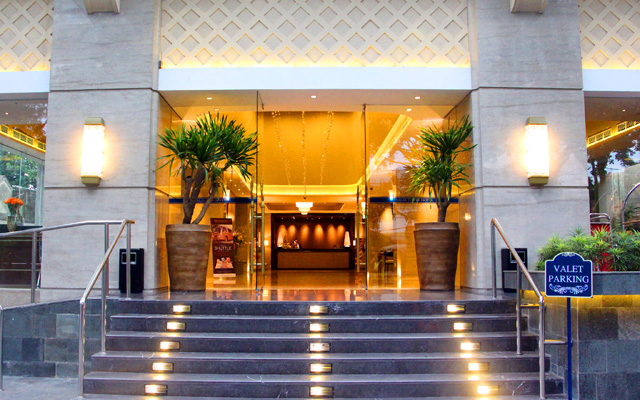
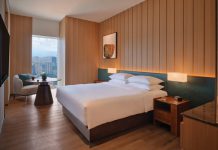
The Ritz-Carlton has opened in the city of Xi’an, the ancient provincial capital of Shaanxi Province in central China.
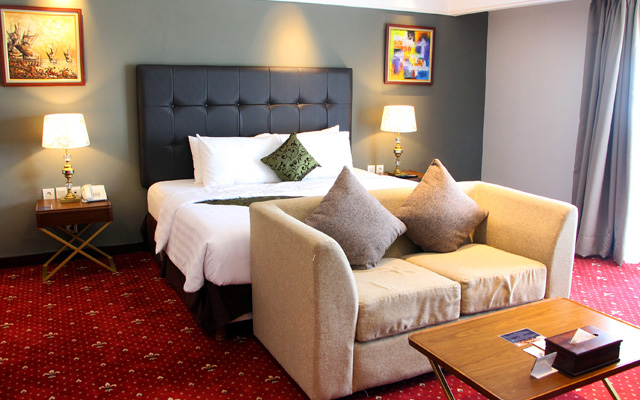
Located in the business centre of the Gao Xin District, the hotel offers 283 guestrooms including 31 suites. Guests staying on the Club Floor can enjoy access to The Ritz-Carlton Club Lounge on the 23rd floor.
Recreational facilities at the hotel include a fitness centre, yoga studio, and The Ritz-Carlton Spa which specialises in treatments steeped in Chinese traditions. There are also five dining experiences on-site, ranging from the Japanese teppanyaki restaurant, Tasuro, with its six live cooking stations; to Jing Xuan, which offers Cantonese cuisine.
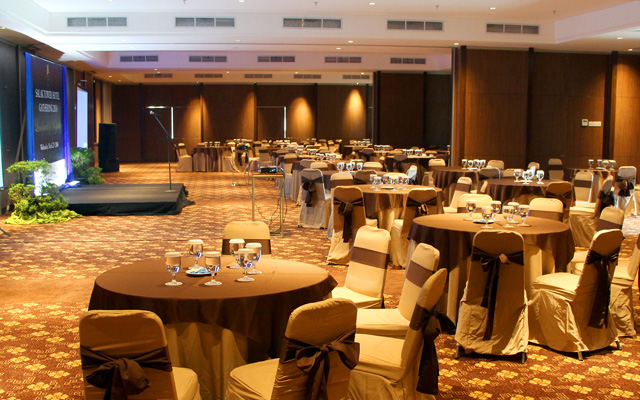
Event planners may avail the more than 2,780m2 of space available, which includes several multifunction rooms, as well as a Grand Ballroom for up to 900 guests. There is also a smaller ballroom that affords access to an outdoor garden area suitable for al fresco events.
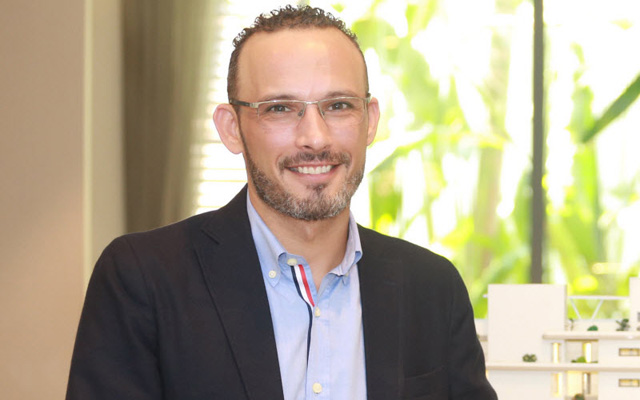
The Spanish-born hotelier has been with Meliá Hotels and Resorts for the past 15 years, steadily rising through the ranks before becoming acting resident manager at Gran Meliá Fenix in Madrid, and resident manager at TRYP Palma Bellver By Melia in Mallorca.
In 2014, Ferriol was appointed director of operations at Meliá Hanoi, the Spanish group’s flagship hotel in Vietnam, and spent two years as general manager at Meliá Danang prior to his latest appointment.
Singapore-based startup Travelstop, which specialises in business travel and expense management in Asia, has raised US$3 million in Pre-Series A funding led by Silicon Valley-based venture capital firm Accel, with participation from Strive (formerly GREE Ventures), and existing investor SeedPlus.
As part of this new round of fund injection, Accel’s Prashanth Prakash will be joining the company’s Board of Directors.
Kirtane: Travelstop is on a mission to redefine business travel
This latest round of funding comes just 10 months after the company launched its business travel and expense management product in August last year. At the time, Travelstop had announced a Seed funding round of US$1.2 million led by SeedPlus, with participation from several travel industry veterans from Expedia and Yahoo!.
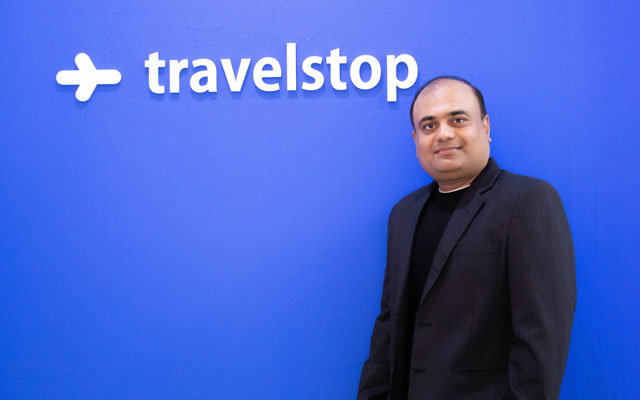
“Travelstop is on a mission to redefine business travel and has already been adopted by some of the fastest growing brands in Asia,” said Prashant Kirtane, co-founder and CEO of Travelstop.
According to a press statement, Travelstop intends to use the new funds to further invest in technology and accelerate adoption of its product across Asia.
“Travelstop is building a locally relevant solution for the millennial generation of business travelers,” said Prakash. “In less than a year, they’ve built a solid, category-defining business and launched a world-class product that has been adopted by a growing number of companies and their employees. We are excited to join Travelstop on their mission to shape the future of business travel.”
Additionally, Travelstop has entered into a partnership with Traveloka, a travel technology company in South-east Asia, to deliver flight and hotel inventory to business travellers in Asia.
“Traditional business travel management tools have not kept pace with modern times. They’re complicated, disjointed, expensive, and they don’t offer choice – we want to change that,” explains Kirtane.
He added: “Our partnership with Traveloka and other leading online travel booking platforms will allow us to offer the most comprehensive travel inventory to our business customers. We believe that the convenience of having such an extensive range of travel options on a single platform, along with our product-centric approach, will allow us to continue innovating and helping businesses reduce costs, while boosting productivity.”
The partnership is expected to roll out in the next few months, along with other core features such as 24×7 travel disruption management and hassle-free travel insurance. These additions are expected to allow Travelstop to target bigger businesses within the region.
The Department of Tourism (DoT) will mount its first Philippine International Dive Show (PHIDEX) from September 20-22 as part of concerted efforts to position the country as a prime dive destination in the world.
This ends its partnership with China-based LX Development Group, which holds the franchise for the Diving and Resort Travel Expo (DRT Show) in Asia. The company had organised the DRT Show Philippines the past three years.
The Philippines embarks on its own dive show
PHIDEX will focus more on B2B, targeting an estimated 65 international buyers and 45 sellers. The programme includes a panel discussion on sustainable dive tourism, featuring at least 20 international experts, as well as an expo that is open to the public, said Rowena Sorioso, DoT head, Office of Product and Market Development for Dive.
Sorioso told TTGmice that DoT intends to invite more buyers from opportunity markets, mainly in Europe such as Scandinavia, France, Italy, Spain and Germany, as well as tap the established markets of the US, China, South Korea and Japan.
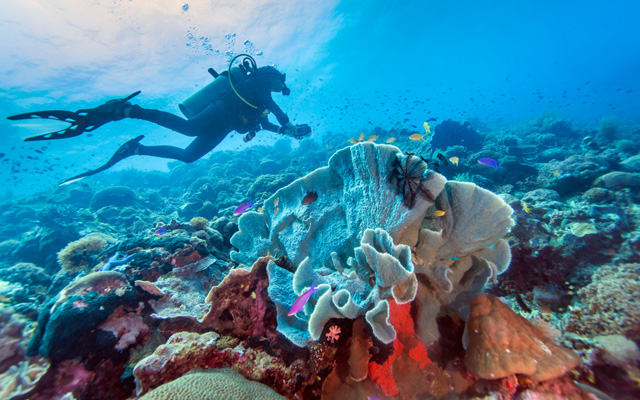
As the Philippines is part of the Coral Triangle, the most diverse underwater ecosystem in the world, PHIDEX will launch new dive sites in Ticao and Camiguin in addition to the well-known Anilao, Puerto Galera, Coron, Dumaguete, Malapascua, and Moalboal.
Also on offer will be 5D/4N post-tours and fam tours not just to top dive sites but also to actual diving services and facilities.
PHIDEX will be held at the Conrad Hotel and the adjacent SMX Convention Center Manila at the Mall of Asia.
DoT, as the lead organiser, is now inviting tenders for a PR and marketing partner.
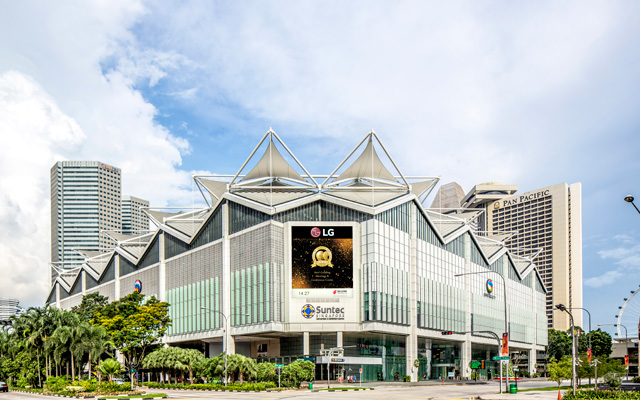
Suntec Singapore Convention & Exhibition Centre (Suntec Singapore) is deploying a new Essential Virtual Assistant (EVA) come August 6, a knowledge-based online platform that provides a wealth of information on the venue.
EVA removes the need for customers to call or email Suntec Singapore, allowing them to go on SuntecSingapore.com and access information they seek, such as services and products, access forms and permits.
Suntec Singapore
Suntec Singapore will continue to expand EVA’s capability. While the system now accepts queries that are typed into a search bar, it will eventually become a chatbot, as well as acquire artificial intelligence capabilities to meet the evolving needs of the venue’s customers.
Event organisers keen to test EVA can write to sales@suntecsingapore.com and request for login details.
BESydney has just marked 50 years. What are you most proud of?
(As) part of a consortia across governments and industry, a lot has been achieved from the markets perspective. In 1969 when we opened, the world conference market was fairly small. Lobbying to have a purpose-built convention centre in Sydney, which opened in 1988, was a major challenge for the industry at that time.
Importantly, I think the state government (now) acknowledges the value of business events coming into the city and the federal government recognises the value of business events beyond the tourism expenditure. I would say that’s probably one of the greatest achievements. BESydney (played a) leadership (role) in that dialogue around moving international meetings to the beyond tourism benefit.
Also, we did groundbreaking research with University of Technology Sydney, which acknowledged that while overnight visitation is very valuable to the economy, it’s the legacies beyond the event – the impact it has on that particular community, sector development, trade and investment opportunities, and talent attraction – that (is even more precious). Not only has that attracted the attention of the New South Wales government but we’re seeing cities across the world duplicating that messaging for their own stakeholders and government.
What trends have you observed in the business events space?
The association market is placing a greater focus on legacy. Global associations want to understand what benefits there will be to their members across the world as well as within the local community. They are not only looking at where profits can be put towards, or knowledge exchange between attendees, or best practices. They are also focusing on things like CSR, and we are fortunate that Sydney has taken a very strong leadership in terms of sustainability as one of its three pillars.
On the incentive side of things (our other key market), programmes coming to Sydney don’t just want to have a great time and do a business session about new products and driving sales. They are looking at potentially doing some professional development with their in-market teams as well. So we are exploring how they can interact more directly with our universities to get exposure to short courses while they’re here. We are certainly seeing that as a trend.
How is Sydney re-inventing itself so clients keep coming back?
Broadly there’s a huge infrastructure programme underway. The state government is undertaking an A$20 billion (US$14 billion) infrastructure project across the state. That includes light rail development in the CBD. On the private investment side of things, a number of new hotel projects are on the cards.
These are ballpark figures (but there are) almost 7,500 rooms at different stages just in the CBD. And that’s fantastic. A lot of them are sparked by the global meetings that we’ve attracted. We hosted Sibos last year, the World Congress of Accountants and many others, and that is sparking confidence in the market to develop new hotel products. There’s also a number of venue developments underway.
But you’ve also got rising competition from other cities in Australia. Are they adversaries or do they actually help you sell Sydney?
Exactly that last point. We often hear this from the international market, that Australia punches above its weight in the global meetings market. We have several very strong and active cities with purpose-built facilities and governments that back them.
When an organisation is selecting a region to go off to, they will think of the country first and then they will narrow down on the city. Therefore often, we are positioned (with) Australia as a great destination and then naturally Sydney is the most well known.
As you say, everyone is upping their game in this space. When it comes to selling Sydney to an overseas market, do you still consider it an easy sell?
I often get friends and family saying you must have the easiest job in the world selling Sydney because it is such a beautiful city (laughs). But the reality is the competition has never been greater. Cities understand the value of hosting global meetings and actively look to align policy and resourcing to compete for (these events).
There’s something like a 40 per cent increase in the Asia-Pacific on cities actively competing for the global meetings market, either because they’ve built purpose-built facilities like a convention centre or they’ve created a convention bureau like ourselves. It’s a very noisy market these days.
We invest significantly in overseas representation, so our staff are based in-market. We have two people each in Europe and North America for the association market, as well as five in Asia – in Shanghai and Singapore. We are competitive, (but) it is tough.
I think it’s also a challenge at times that people see Sydney for its beauty rather than its brains. We’ve done a lot of work in the last five years especially to reposition Sydney’s brand, that it is not only a place that you go to because it is on your bucket list but a place to see the world’s best practice taking place.
Did you know one of our universities is competing to build the first quantum computer in the world? The blackbox was invented here; we were significant players in the development of Google map; we are a significant contributor as a country through our research and development teams in the development of Wi-Fi. (We need to ensure) that we unearth those types of stories, so that such sector strengths shine through in a noisy and competitive environment.
I think we’re well on that path now.
What is the vision for the next 50 years?
It’s very much to continue that focus on alignment with industry, academia and government to become even sharper on the sectors that we are looking to develop or enhance.
But we have a game changer happening in the next 10 years or so. In 2026, the new Nancy-Bird Walton airport will be open at Badgerys Creek and that’s going to be significant. Not only is there going to be a city the size of Adelaide developed around the airport precinct, but there will also be new sectors being developed around aerospace, defence and agribusiness that we can help enhance by bringing global leaders into Sydney to showcase them. As well, the new airport will bring 10 million new passengers into Sydney, which means an opportunity to create new tourism experiences – particularly through the incentive market – beyond the CBD.
Let’s have fun with the last question. You must have had some crazy requests to entertain over the past 50 years.
There have been multiple requests for a corporate logo to be emblazoned on the Sydney Opera House. While that would be truly wonderful, the Sydney Opera House is a natural heritage icon and it’s not appropriate to have a corporate logo emblazoned on it. So we work with clients on how can we create a wow, never-done-before factor in other ways, and there are many ways we can do that in Sydney.
We’ve had a client sky-write their company name at the time they were having their photos taken, so they could capture that against the blue sky with the Sydney Opera House in the background.
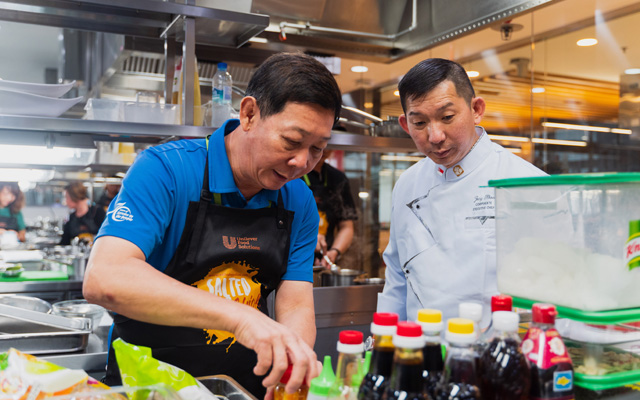
PPHG's chef Tony Khoo (right) guiding Sree Narayana's resident cook
Ten hands-on culinary sessions are now underway, led by senior chefs from Pan Pacific Hotels Group (PPHG) who are determined to arm cooks from 20 charity homes in Singapore with tasty local recipes that will eventually feed 4,000 residents on National Day, August 9.
Corporate executive chef, Tony Khoo, leads the effort with five executive chefs from PPHG’s Singapore hotels, utilising a central training kitchen sponsored by Unilever Food Solutions.
PPHG’s chef Tony Khoo (right) guiding Sree Narayana’s resident cook
Recipes are tweaked to suit residents, featuring blended dishes such as crab claw, ginger and pumpkin congee to cater to those on softer diets; vegetarian dishes that comprise healthy ingredients instead of mock meat and flour; and nutritional soups.
The activity is part of PPHG’s refreshed Eat Well With Us community programme, which was launched in 2015 in partnership with the National Council of Social Service. The programme imparts healthy recipes through regular chef visits and culinary training at charity homes. From serving just four charity homes then, Eat Well With Us today benefits 20.
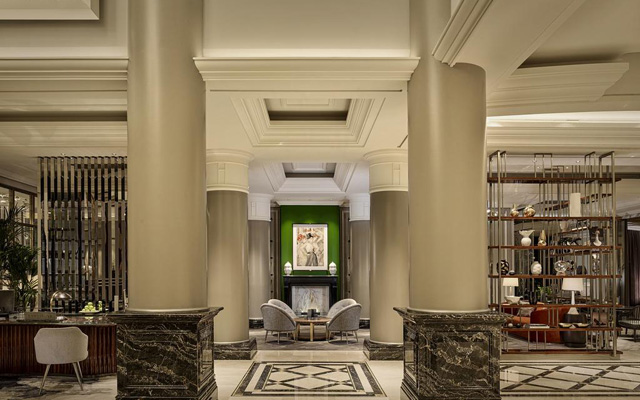
Ritz-Carlton, Berlin completes renovations
The Ritz-Carlton, Berlin has completed its €40 million (US$44.8 million) renovation which encompassed its guestrooms and suites, conference, wellness, lobby and lounge areas.
New restaurant Pots offers “German classics with a modern twist” and features an open kitchen, while the terrace overlooking Henriette-Herz Park has been redesigned.
Other facilities include The Curtain Club with a stage for live music, Fragrances Bar with a cocktail menu inspired by perfumes, a revamped wellness space with two saunas, swimming pool and fitness centre, and eight meeting and events spaces including a 910m2 divisible ballroom.
Six Senses plants flags in France and Costa Rica Six Senses Hotels Resorts Spas will open new properties in France’s UNESCO-listed Loire Valley, and Costa Rica’s Papagayo Peninsula.
The resort in France will be situated within the Les Bordes Estate, a 560ha site in the Sologne forest, home to Les Bordes Golf Club. The development will incorporate equestrian and tennis centres, an organic farm, an art gallery, a petting farm, a swimming lake with beach, watersports, and biking and walking trails. Although the golf club’s two 18-hole courses are private, hotel guests will have access to a new Gil Hanse-designed par three course and a new golf practice facility.
Six Senses Loire Valley will boast 88 guest suites and villas and a range of on-site amenities that will serve incentive groups well – a meeting and conference centre, outdoor event facilities such as walled gardens and lawns, an all-day restaurant and lounge bar, and a speciality restaurant. Six Senses Loire Valley is expected to open in May 2022.
Over in Central America, Six Senses Hotels Resorts Spas has teamed up with US-based The Canyon Group to develop its first resort in the subcontinent.
Six Senses Papagayo will be part of the 930ha Papagayo Peninsula, a mixed-use luxury development. Conceptualised by London-based architect John Heah, the property will comprise 41 pool villas, alongside 31 residences that will be available for sale.
The highlight of the resort will be Six Senses wellness programming along with a spa and fitness centre. There will also be an organic farm located in the property including fruit, vegetable and herb gardens.
Emaar opens Vida Emirates Hills hotel
Emaar Hospitality Group has unveiled the upscale, 160-key Vida Emirates Hills hotel in Dubai, the UAE.
Amenities and facilities include complimentary bicycles and electric scooters that guests can use to explore the neighbourhood, three F&B options, a fitness centre, a swimming pool, as well as 10 meeting rooms.
Corporate events favouring a friendly golf tournament on the side have two options: Emirates Golf Club, a par 72, 7,301-yard layout, designed by architect Karl Litten, and the 265-acre Address Montgomerie championship golf course, designed by Colin Montgomerie in association with Desmond Muirhead.
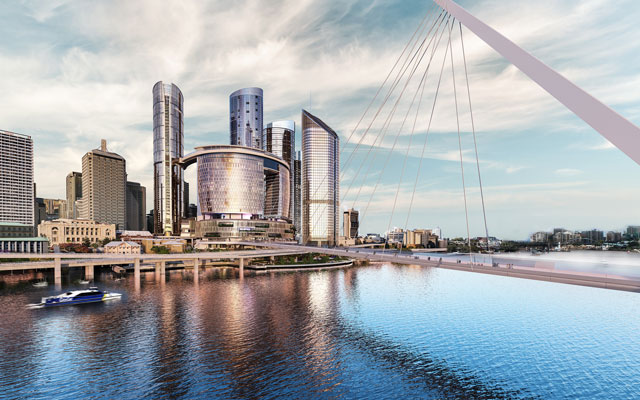
Artist’s impression of the future Queen’s Wharf integrated resort in Brisbane
Yes, that’s a soaring skydeck but it’s not in Singapore; it’s in Brisbane. Or at least it will be soon, as part of a massive development underway in the city to boost tourism and significantly up the ante as a destination for incentive programmes.
Brisbane has an impressive A$15 billion-plus (US$10.9 billion) currently in major projects either under construction or planned to 2026. This includes a new parallel runway at Brisbane Airport and a new International Cruise Ship Terminal by next year, and a much anticipated Queen’s Wharf integrated resort which will change the city’s skyline and give Australia’s third biggest city a leisure and entertainment precinct worthy of incentive tourism prospects.
Artist’s impression of the future Queen’s Wharf integrated resort in Brisbane
The airport redevelopment itself will cost A$3.8 billion, with A$1.3 billion going into the new runway which will double the airport’s capacity, drawing comparisons to Singapore’s Changi Airport and Hong Kong Airport. Once completed next year, it will be lauded the best runway system in Australia.
“The parallel runway at the airport is really critical,” said Juliet Alabaster, general manager of business events for Brisbane Marketing.
“The more aviation access we can get into the city, the more opportunity we have to attract incentive groups,” she said.
In fact, optimism about the airpot’s developments and Brisbane’s new offerings have already begun working its charm to secure additional flights, according to Brisbane Airport’s executive general manager of aviation development and partnerships, Jim Parashos.
“It’s (been) a key enabler for us to attract new services,” he said.
“Particularly for key growth markets in Asia, where we can now serve long-range narrow body aircraft like the A321neo. Even in the lead up to the new runway opening we’ve had most of our growth come in from Asia including Hainan Airlines from Shenzhen, Malaysia Airlines resuming its four-weekly service, Philippine Airlines starting non-stop flights, and in June the launch of Thai AirAsia X flights.”
As for that skydeck, which will be the jewel in the crown when the Queen’s Wharf integrated resort is finished in 2022, imagine a connected space of five- and six-star hotels, 50 bars and restaurants, a cross-river pedestrian bridge, boutique shopping, vast green spaces, casino, meeting spaces, theatre and nine restored heritage buildings.
The arc-shaped skydeck will offer 360-degree views of Brisbane river and the city, provide spaces for events, and is anticipated to be the destination’s hot new selfie spot.
This is in addition to infrastructure developments in the next five years including a tunnel rail line that will unlock bottlenecks in the city’s transport network and a new rapid transit system called Brisbane Metro.
Already a lure for the events market is the recently completed Howard Smith Wharves which revitalised an 1880s-era site and now offers a five-star Art Series Hotel, an exhibition and events centre, craft brewery and 2.7 hectares of public space for markets and festivals.
There’s also new hotel stock to whet planners’ appetite.
Thirty new hotels will be delivered between 2014 and 2024, which is good news even for established accommodation like Brisbane Marriott, which has just celebrated 21 years and finished a major redevelopment earlier this year (see Marketplace, page 8).
“I think we’ve got some of the best new hotels in Australia which makes it so much easier for us to sell what Brisbane can offer to all customers,” remarked general manager John Douglas.
So what turned Brisbane on its head? “Probably three years ago we really looked at our strategy as the CVB for the city and we hadn’t been doing a lot in the incentive space. We didn’t have the products and we were seen as a corporate town,” said Alabaster.
Fast forward to hosting Tourism Australia’s signature incentive event Dreamtime in 2017 with 100 international incentive buyers as guests, and Brisbane was “leapfrogged into consideration”.
Douglas, Parashos and Alabaster also speak from the same page when it comes to the Asian market, confirming that it is front and centre of their marketing strategies. From Chinese language wayfinders at Brisbane Airport to Marriott’s Chinese-friendly Liyiu programme, the city’s key tourism stakeholders are fully on board with Brisbane Marketing’s Asia-centric vision. And the efforts are paying off.
“Last financial year we only placed 14 financial bids,” said Alabaster.
“For this year we’re already up to 26. So I guess we’re starting to see the fruits of our labour in terms of opportunities coming through those relationships that we are growing and building on. In terms of percentage, in the past our overall economic impact figure for the bureau would’ve been five per cent – small.
“This year it’s moving towards 20 per cent of what we (anticipate winning) for the city,” she continued, also noting that a lot of business events are booked independent of the bureau.
The developments have earned an approving nod from Tourism Australia’s former managing director John O’Sullivan, who noted that Brisbane is making an impression in Asia.
“On my travels throughout Asia, (the Queen’s Wharf development) is a project that has captured the imagination of many of our Asian partners,” he said. “The expansion of Brisbane Airport with the second runway will give the city the potential to become the nation’s gateway to Asia”.
So towering business event possibilities for Brisbane? You might say they’re sky-high.
Swiss-Belhotel International has expanded its Indonesian portfolio with the launch of a hotel in Bogor, West Java.
The 20-storey property has 150 rooms and suites, where all rooms come with free Wi-Fi and IPTV systems. VIPs can be housed in the Presidential Suite – a sanctuary on the 20th floor which features an open-plan living and dining area.
Swiss-Belhotel Bogor
1 of 3
The hotel, conveniently located on Jalan Salak, also offers facilities such as an outdoor swimming pool with a cafe on the eighth floor, a fitness centre, an all-day restaurant on the seventh floor; and a business centre.
Meanwhile, event planners may avail the 14 flexible function spaces, able to host a variety of events for groups between 12 and 800 delegates.
The newly-opened Ritz-Carlton, Bangkok anchors the One Bangkok development with cosmopolitan elegance. Featuring the city's largest ballroom and a spectacular new penthouse suite, it delivers exceptional hardware and deeply authentic, soulful service for business and leisure travellers alike
Behind the imposing, Brutalist concrete that defines Zurich’s Oerlikon district lies a surprising secret. While its exterior honours the neighbourhood’s industrial roots, stepping inside Mama Shelter reveals a vibrant, neon-soaked world that is a far cry from its rigid shell
A polished urban retreat designed for business travellers, Hyatt Regency Kuala Lumpur at KL Midtown combines thoughtful design, seamless service, and exceptional facilities.