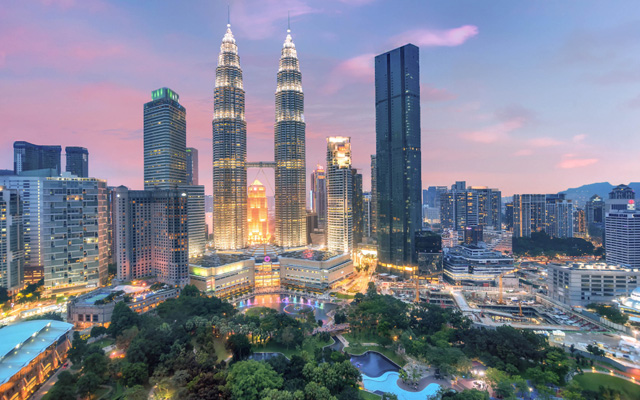
Malaysia Convention & Exhibition Bureau (MyCEB) is intensifying efforts – with strong backing from the government – to attract more Asian business events through the building of MICE infrastructure, creation of more events, and increase in attendance at more overseas tradeshows.
In line with this, MyCEB is targeting new incentive markets such as Vietnam, Taiwan and Indonesia in addition to its traditional markets of China, India and South Korea.
Malaysia is working to attract more MICE groups from Asian markets, in line with its Visit Malaysia 2020 campaign
Zulkefli Sharif, CEO, MyCEB, on the sidelines of Malaysia Business events Week (MBEW), elaborated: “Asian markets provide quick wins, high growth numbers as well as volume.”
MyCEB intends to attend additional tradeshows in the UK and US next year, in addition to AIME, IMEX, IT&CM China, IT&CM Asia and IBTM World, to promote Malaysia.
It is also encouraging and supporting local exhibition organisers to create more events.
Zulkefli noted: “The future of business events looks bright, as we have strong commitment and support from industry players and government agencies. Since this year, every ministry has been tasked to set up a dedicated focal point to facilitate requests from MyCEB, on behalf of relevant associations for hosting of international events in Malaysia.
“This commitment from the government will help us to become a preferred business events destination in Asia. We are on track with our Business Events Roadmap 2020 goals which include being in the top five ICCA ranking in Asia-Pacific, and having business events contribute eight per cent of total tourists to Malaysia, from the current six per cent.”
This is in conjunction with the year-long Visit Malaysia 2020 campaign, aimed at attracting 30 million tourists and RM100 billion (US$23.7 million) in tourism revenue.
This year’s MBEW, themed Progressive Momentum, attracted more than 200 participants from the business events industry.
Malaysia plans to collect data as a leveraging tool to better its MICE industry
Malaysia’s MICE sector aims to build a more compelling case for government agencies to focus on efforts to draw more business events, through information collected from data analysis of international business events held in the country.
Zulkefli Sharif, Malaysia Convention and Exhibition Bureau’s (MyCEB) CEO, revealed that MyCEB will be collaborating with Business Events Council Malaysia (BECM) on data collection.
Malaysia plans to collect data as a leveraging tool to better its MICE industry
There are plans to start the collection of data this year, Zulkefli said, but first both MyCEB and BECM had to determine the kind of data needed by association meetings and the industry as a whole.
This data, Zulkefli revealed, will then be “used to explain the benefits of business events”, as well as “convince relevant ministries on the importance of business events and how it will complement their efforts in achieving their goals”.
Alan Pryor, BECM’s chairman, supported the data collection, and said that this was required for Malaysia to move forward and become the preferred destination in Asia for business events.
“Data will give us access to ministries and government departments, (allowing us) to present our case on the importance of the sector which includes legacy building, knowledge transfer and capacity building,” Pryor noted. He added that this was required as not all in the government sector could differentiate business events from leisure tourism.
Isham Ishak, secretary-general at the Ministry of Tourism, Arts and Culture Malaysia, noted that data will also enable BECM to build a strong case on how they are planning to grow the MICE industry in the next decade, in order to obtain support and incentives from the government.
Both Isham and Pryor were panellists in a session entitled, The Collaboration of Business Events and International Trade, at the recent-concluded Malaysia Business Events Week.
Some 18 Hangzhou-based conference companies and hotels, led by Hangzhou Municipal Bureau of Culture, Radio, TV and Tourism, participated in the Hangzhou PLUS: MICE Roadshow on Tuesday in Beijing, to promote the city’s appeal for business and association meetings.
Beijing was chosen for the roadshow as it is a major source market for meetings bound for the capital of Zhejiang province.
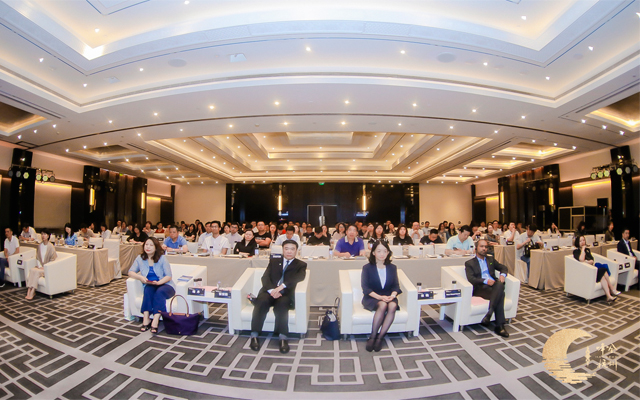
Hangzhou launches MICE roadshow in Beijing, which 60 associations and societies, and 30 PCOs specialising in association meetings, attended
The event was graced by VIP speakers such as the Bureau’s Zhang Ansheng, Zhejiang Association for Science and Technology’s Tian Mei, ICCA’s Noor Ahmad Hamid and Hangzhou International Expo Center’s Tang Xue. Attendees include representatives of 60 associations and societies, and 30 PCOs specialising in association meetings.
A statement issued by the Bureau noted that “Hangzhou has been vigorously transforming itself into the number one city of digital economy, and powering the city’s industrial cluster growth with technology innovation” in recent years, and that new economy industries are now driving the growth of the local MICE industry.
The roadshow sought to demonstrate Hangzhou’s upgraded events infrastructure and strengths, in hopes of “anchoring” the city’s image as a preferred destination for business and association events.
One of the key messages was centred on Hangzhou as an academic stronghold and industrial trendsetter. The city is home to many reputable universities and research institutions, such as Zhejiang University, Westlake University and Alibaba DAMO Academy. Hangzhou is also a thriving base for technological research, with 51,213 patents originating from it.
These capabilities are conveyed by 53 convention ambassadors from all academic backgrounds, who have also been instrumental in attracting high-end association conferences to Hangzhou.
The roadshow also underlined Hangzhou’s picturesque scenery, time-honoured history and culture, complete conference facilities and professional services as “guarantees of wonderful conference experiences”.
Hangzhou boasts nine clusters of upmarket hotels, 10 large professional convention and exhibition centres, 10 characteristic towns with conference facilities, and more than 301,000m2 of venue space.
This hardware is supported by the city’s accessible network of public transport, as well as rich culture and tourism developments that have created unique destination experiences and products for event attendees. In addition, the statement noted that 10 subway lines will come into operation before Hangzhou’s hosting of the 2022 Asian Games.
Attention is also being paid to raising the city’s service standards, with the local MICE industry benchmarking itself against the international standards set for the G20 Summit held in Hangzhou in 2016. Continued efforts have surfaced in this area, with new standards established to regulate and improve the services of the local MICE industry. A MICE Talent Program was launched to lift the competence of local event practitioners.
Supporting these efforts is the Hangzhou municipal government’s commitment to market exploration and development of the local MICE industry by issuing favourable policies concerning conference bidding and execution.
Spotlighting Hangzhou’s achievement in the association meetings space, an exhibition was set up within the roadshow, featuring case studies of top 10 professional association conferences held in the city.
The roadshow not only presented an upgraded version of Hangzhou, it also connected buyers with PCOs through a business matchmaking process.
There are plans for a larger conference for corporate meeting players in October.
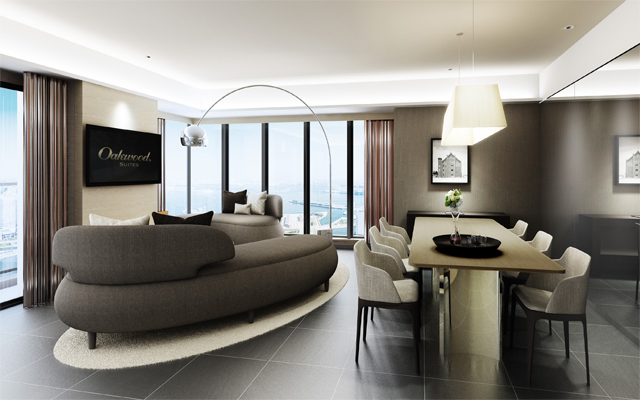
Oakwood, a wholly owned subsidiary of Mapletree Investments, has announced the signing of two Oakwood Suites, one in Bangkok and the other in Yokohama.
Oakwood Suites Bangkok is located along Sukhumvit Soi 24 within the Phrom Phong district, a four-minute walk to the BTS Skytrain Station. The property will have 232 studios, one- and two-bedroom apartments, and is scheduled to open by the end of this year.
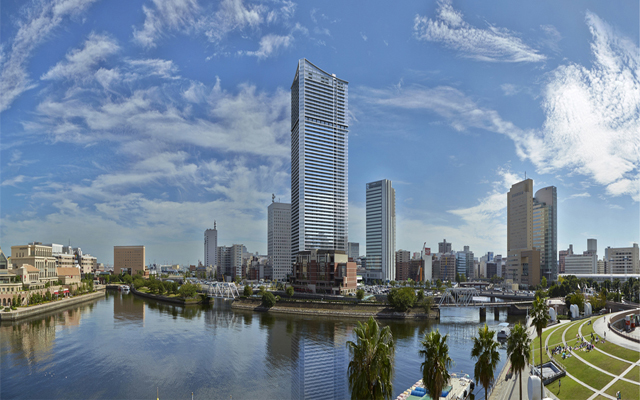
Oakwood Suites Yokohama
1 of 2
Set to open in mid-2020 ahead of the 2020 Tokyo Olympics, Oakwood Suites Yokohama will be the second Mapletree-owned serviced apartment in Japan, following Oakwood Apartments Azabudai, Tokyo. The property offers 175 keys across levels 46 to 51 of The Tower Kitanaka, which sits next to Yokohama Bay in the Minato Mirai area, with direct access to the Bashamichi Train Station.
Oakwood first launched its Oakwood Suites property in December 2016 with the opening of Oakwood Suites La Maison Jakarta in Indonesia.
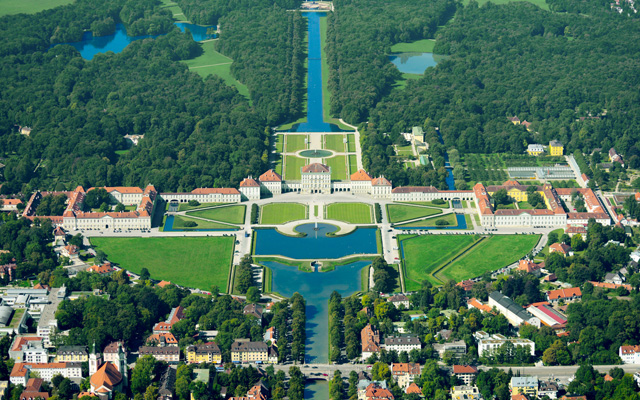
An aerial view of the sprawling Nymphenburg estate
An aerial view of the sprawling Nymphenburg estate
Langham adds Munich royal residence to Europe collection
Langham Hospitality Group has announced that it will manage The Langham Nymphenburg Residence, located within the 198-hectare imperial estate of Nymphenburg Palace, a 15-minute drive from the Munich city centre.
Scheduled to open in winter 2019 after an extensive refurbishment, The Langham Nymphenburg Residence marks the maiden entry for The Langham brand in Germany and is the first privately managed residence for the group.
The three-storey, 18th-century manor – steeped in royal Bavarian history – will feature four bedrooms, three living rooms, two wine cellars, seven bathrooms, a home cinema, an elevator and a dining room that seats 12 people. There’s even a terrace, complete with a water feature and sculptures, available for events for up to 100 seated guests.
Evolution Event Solutions joins Global DMC Partners network
Global DMC Partners has welcomed Evolution Event Solutions to its 65-strong global network of independently-owned DMCs that represent over 500 destinations around the globe.
Founded and grown in Nashville, Tennessee, Evolution Event Solutions has in total booked over 11,000 room nights, managed events hosting more than 289,000 attendees and negotiated contracts resulting in more than 77 per cent savings for clients.
Don Killingback elected IMA board president
The Incentive Marketing Association (IMA) has elected Don Killingback its 2019-2020 board president.
Killingback, who is director of business development with Wyndham Destinations, has been involved in the travel industry for nearly 30 years, pioneering new individual travel awards for Wyndham Destinations and is a strong advocate for both group and individual incentive travel.
He is a past president of the Incentive Travel Council and a member of the Incentive Manufacturer Representative Alliance which are Strategic Industry Groups within the IMA. In addition, Killingback has served on several IMA committees.
Hilton Niseko Village in Hokkaido has appointed Fabio Berto as general manager.
Prior to his move to Japan, Fabio was commercial director at the Waldorf Astoria Shanghai on the Bund for five years since 2014. In 2017, he took on the additional role of hotel manager to his portfolio.
Starting from the F&B department of a hotel in St Moritz, Switzerland, he expanded his career to the rooms department including the front desk of an established luxury hotel in Pari. Berton gradually progressed his career in London through different appointments within various international brands.
He joined Hilton in 2003 and held key positions such as director of sales at the Hilton London Metropole, followed by cluster commercial director at the West London Hilton hotels for about five years. Fabio then returned to his native Italy in 2011 as commercial director at the Rome Cavalieri, A Waldorf Astoria Resort for three years.
Regional cities in Japan with a compelling tale to tell, the facilities to host major events and the desire to build up their business events sector are reaching out to organisations and planners that are open to the idea of alternative host cities.
And Hiroshima – best known around the world for its dark history – is leading the charge, with the aim of building a brighter economic future with the help of the business events sector.
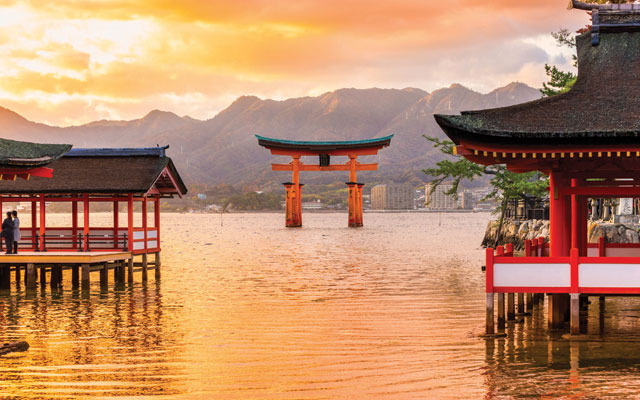
Miyajima Island’s floating torii gate
“After Hiroshima was devastated by the atomic bomb in 1945, people said that no plants would grow here for the next 75 years,” Akemi Sakaguchi, spokesperson of Hiroshima Convention & Visitors Bureau’s promotion department told TTGmice.
“But Hiroshima has achieved remarkable development, thanks to local businesses such as Mazda Motor that have contributed to the city’s prosperity.
“Hiroshima’s position as an international city of peace and culture was further enhanced in 2016, when then-president Barack Obama – who won the Nobel Peace Prize for his efforts to achieve a world without nuclear weapons – became the first sitting US president to visit Hiroshima,” she elaborated.
Events that Hiroshima has staged since then include the G7 Foreign Ministers’ Meeting in April 2016; a 900-pax 25th International Congress on Sound and Vibration in July 2018; and the One World, Many Voices: Science and Community that drew 604 delegates, also in July 2018.
But the city has ambitions for larger events, and will test its mettle this coming November when 10,000 people are scheduled to take part in the 58th Orient and South-east Asian Lions Forum.
To prepare itself for more business events, Hiroshima has created four distinct convention zones, which can be utilised in isolation or combined for larger events.
The Peace Memorial Park Zone brings together the International Conference Center Hiroshima, Hiroshima City Cultural Exchange Hall, and JMS Aster Plaza; while the adjacent Kamiyacho Zone covers the Hiroshima Prefectural Sports Center, Rihga Royal Hotel Hiroshima, NTT Cred Hall, and Hotel Mielparque Hiroshima.
Next, the Hiroshima Station Peripheral Zone includes the Hiroshima Convention Hall, Hotel Granvia Hiroshima, Sheraton Grand Hiroshima Hotel, and Hiroshima Prefectural Medical Association Hall. The Grand Prince Hotel Hiroshima makes up the final designated area, the Retreat Meeting Venue.
Takefumi Yoshida of the city’s MICE Strategy Division, shared that the sector is working hard to “raise the profile of Hiroshima at domestic and international trade fairs, (and)reaching out directly to academic organisations and through the nation’s MICE ambassadors.”
Sakaguchi added that Hiroshima is the “ideal destination for MICE events because it can encourage solutions to problems and promote research”.
The city is also promoting individual venues and post-conference attractions and facilities. These include 12 unique venues within the Hiroshima Regional Urban Area, including art galleries, traditional Japanese gardens and temples. Similarly, the A-Bomb Dome and Itsukushima Shrine, on the nearby island of Miyajima, are both UNESCO-recognised sites and consistently in TripAdvisor’s top three must-see sites in Japan.
James Kent of Tokyo-based DMC The J-Team, said an event in a regional city like Hiroshima would give visitors to Japan a better sense of what the country was like before mass international tourism arguably took away from the experience at some of Kyoto’s most famous sights, for example.
“One of the joys of (organising) MICE events in Japan in 2005 and before was the fact that business events could interact with experts in its field that are from Japan and the chosen event destination,” Kent said. “Put simply, the event could be somewhere truly Japanese, and truly focused on the destination.”
Hiroshima still needs to add hotel accommodation, preferably at the higher end of the spectrum, Kent opined, while business events would also appreciate opportunities to interact with some of the companies that have a presence in the city.
But Kent believes that the outlook for a city with a globally known history and a commitment to improving its offerings is positive.
“Getting off the Golden Route allows this situation to still be true in 2019,” Kent added. “And it allows the investment of coming to Japan (to yield) a high return, by exposing participants to what they have come to experience – interaction with and learning from Japanese expertise and culture, both traditional and modern.
“Despite being home to one of the world’s megacities in Tokyo, and despite the accepted wisdom that Kyoto is the spring from which all Japanese culture flows, the essence of Japan is very much in its provincial and rural communities where cooperation, collaboration, mindfulness and sustainable living – all the big words in global society today – continue to be the sinews of Japan’s famed communal strength,” Kent elaborated.
“These are the communities that grow the rice that fuels the cities and provide MICE events with exquisite sake-tasting experiences.”
As Matsuo Basho, Japan’s own Shakespeare, so beautifully put it, the true essence of Japan, and the true learnings about Japanese people, society and culture, really are to be found in abundance on The Narrow Road to the Interior (a travel diary of linked prose and haiku), and away from the Golden Route.
Graeme Rutherford has joined Sage Hotel West Perth (under Next Hotels & Resorts) in Australia as general manager.
The industry veteran began his hospitality career with Rydges Hotels, working his way up to his first general manager position in Melbourne. Since then, Rutherford has managed a number of hotels in Australia and New Zealand, including Rydges Perth and Frasers Suites Perth.
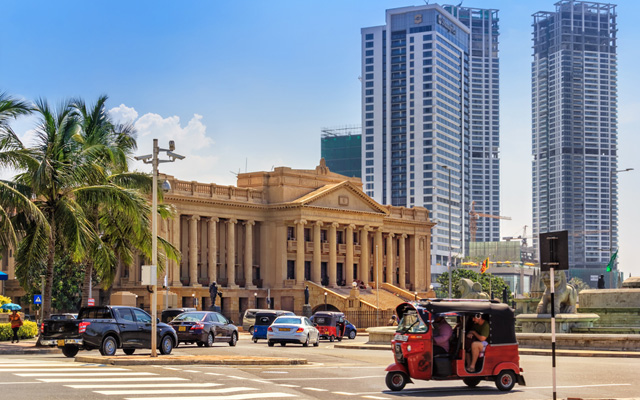
uilding of Old Parliament (Secretariat of the president Sri Lanka) against the backdrop of modern skyscrapers on a sunny day - Image
Sri Lanka has lifted its state of emergency – imposed after the Easter Sunday bombings in April – bringing hopes to the travel trade that the move will lead to a much-needed boost to arrival numbers.
Trevor Rajaratnam, president of the Travel Agents Association of Sri Lanka, said the move would send a positive message to the rest of the world that Sri Lanka is open for travel. “It’s a huge positive move and will also help airlines which depend on more inbound travellers,” he noted.
Old Parliament Building juxtaposed against the backdrop of Colombo’s modern skyscrapers
Arrivals have dipped monthly since the attacks, and travellers have stayed away. Officials also believe winter arrivals will drop by 30 to 40 per cent, but hope that since the month-on-month emergency lapsed last Thursday, the situation could improve. Emergency rule permits the government to mobilise the armed forces on the streets among other security-related measures.
Mahen Kariyawasam, former president of the Sri Lanka Association of Inbound Operators, said that the removal of emergency rule was a very positive move and would help in the recovery of tourism efforts.
As well, tourism industry officials said that even though several countries have relaxed travel advisories, these advisories were still at the category 2 and 3 levels, which denote ‘be cautious’ when travelling to Sri Lanka. Some countries like Russia have not relaxed its travel advisory.
“Even though many countries have relaxed travel advisories, they were at a category where government officials are not advised to travel (to Sri Lanka). A forthcoming major business conference was unable to invite government officials from other countries for this reason, which would now help in their participation,” Kariyawasam said.
Meanwhile, Achini Dandunnage, senior manager at the Sri Lanka Convention Bureau, said: “With the lifting of the emergency, hopefully, travel advisories will be further relaxed.”
But there is light at the end of the tunnel, as authorities are in the midst of preparing for 21,000 to 25,000 followers of the minority Bohra Muslim community from 40 countries that will descend into Sri Lanka for a mega international convention. The event, to be held from September 1-10 in Colombo, is a positive boost to business tourism.
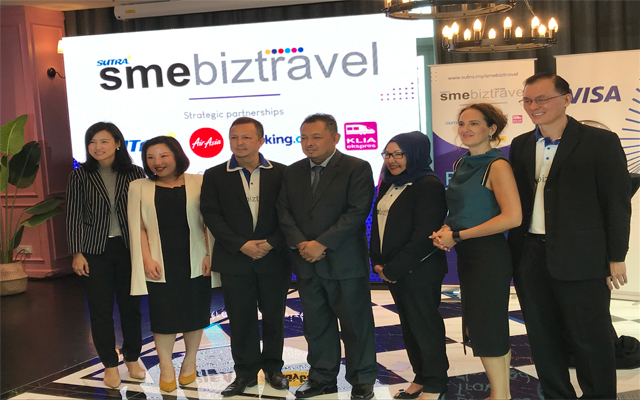
Syed Razif Al-Yahya (third from left) and his partners at colleagues at the launch of the new Sutra SMEBiz Travel platform
Malaysia’s Sri Sutra Travel has launched a travel booking platform that was built with the needs of small- and medium-sized enterprises (SMEs) in mind.
The new Sutra SMEBiz Travel platform is powered by TravelCompute, an award-winning travel technology platform. With just a few clicks, users can select and book flights, accommodation, transfers, and access other services that suit their budget, preferences and needs.
From left: Visa’s Pimjai Athijagravudh; AirAsia’s Athena Pang; Sri Sutra Travel’s Syed Razif Al-Yahya; Ministry of Entrepreneur Development Anis Mahmud; Express Rail Link’s Noormah Mohd Noor; Booking.com’s Lola Kursataite; and Maybank’s Yee Pok Meng at the launch of the new Sutra SMEBiz Travel platform
Syed Razif Al-Yahya, group managing director and CEO of Sri Sutra Travel, as well as owner of Sutra SMEBoz Travel, said: “Sutra SMEBiz Travel platform acts as the digital travel aggregator and coordinator. We provide full reporting and analysis in real-time so that our clients can manage and track their bookings directly, anywhere and at any time.”
The platform went live on August 22 with “more than a million travel and tourism products, including ancillaries such as travel insurance”, and a network of partnerships including with AirAsia, Booking.com and KLIA Ekspres, and payment gateways Visa and Maybank.
An interesting service offered on the platform is Blue Ribbon Bags, a service that protects every checked-in bag for a minimum fee and pays up to US$1,000 per bag if it is not returned within four days of arrival.
“Clients will enjoy exclusive promotions from partners and enjoy special rates when they book via SMEBizTravel,” Syed Razif said.
For instance, airline partner AirAsia is offering exclusive access to its MyCorporate products. As well, SME clients will also be able to enjoy a preferred rate when they purchase their KLIA Ekspres tickets through the platform.
Just 10 minutes from Phuket International Airport on the serene northern coast, this 178-key, Bill Bensley-designed resort offers delegates a quiet, tropical paradise steeped in Phuket’s tin-mining heritage
The newly-opened Ritz-Carlton, Bangkok anchors the One Bangkok development with cosmopolitan elegance. Featuring the city's largest ballroom and a spectacular new penthouse suite, it delivers exceptional hardware and deeply authentic, soulful service for business and leisure travellers alike
Behind the imposing, Brutalist concrete that defines Zurich’s Oerlikon district lies a surprising secret. While its exterior honours the neighbourhood’s industrial roots, stepping inside Mama Shelter reveals a vibrant, neon-soaked world that is a far cry from its rigid shell