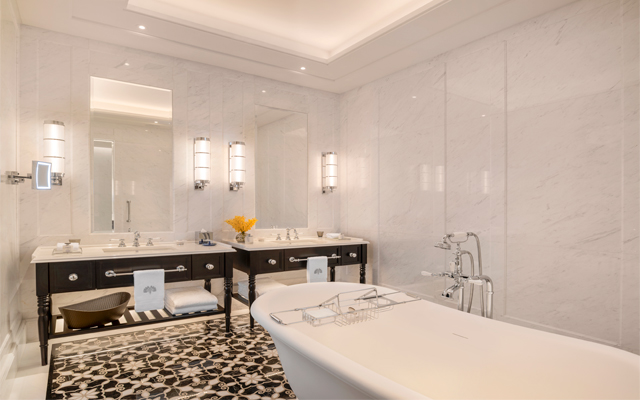
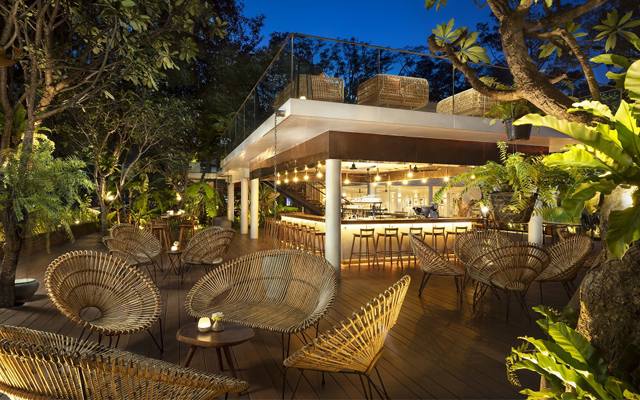
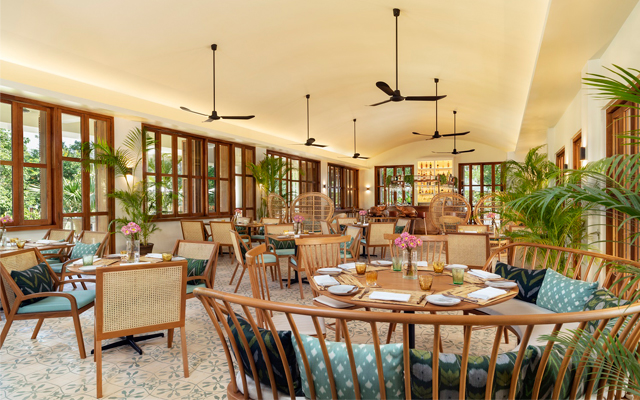
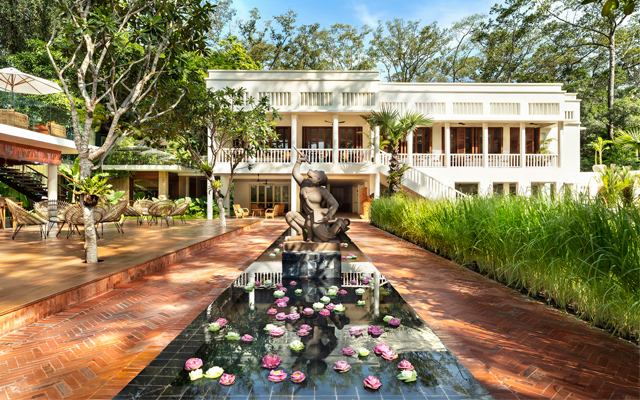
An extensive renovation of one of Siem Reap’s most iconic colonial sites has transformed the FCC Mansion into FCC Angkor, managed by Avani Hotels & Resorts.
Located across the Royal Independence Gardens and Royal Residence, FCC Angkor was once the residence of the French colonial governor as well as the Foreign Correspondent’s Club – a favourite haunt among journalists during the war years which later became a popular meeting place for travellers from around the world.
1 of 5
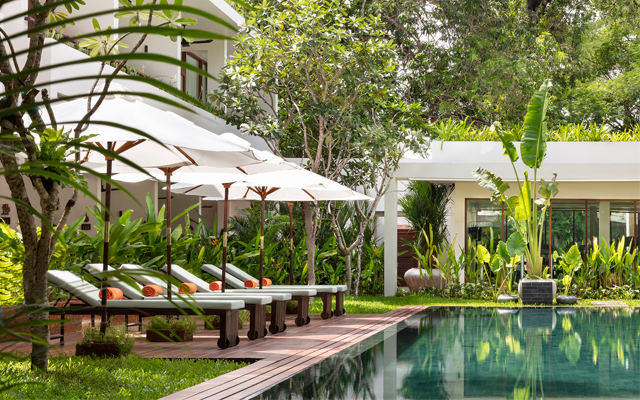
In the latest makeover spearheaded by Dutch-born, Bangkok-based talent Malee Whitcraft, alongside Phnom Penh-based Bloom Architecture, the rebranded FCC Angkor now boasts the restored Mansion restaurant, the Scribe bar, Visaya Spa, and two outdoor saltwater pools.
The 80 revamped rooms and suites feature vintage typewriter, rotary dial phones, Khmer carvings and framed front pages of regional newspapers among its decor, plus large windows and terraces that open to lush greenery.
A member of Preferred Hotels & Resorts, FCC Angkor has reopened as the first renovated heritage hotel within the FCC Collection, with sister property FCC Phnom Penh currently undergoing renovation and anticipated to open in November 2020.
As a swathe of internationally-branded hotels geared towards the business market open, and more innovative attractions and activities emerge, Qatar is positioning itself as an attractive destination for business meetings and incentive travel.
Huge efforts are being ploughed into transforming Qatar into a tourist destination, with the government outlining the industry as a major player in its Qatar National Vision 2030, and the business events market’s potential is being realised.
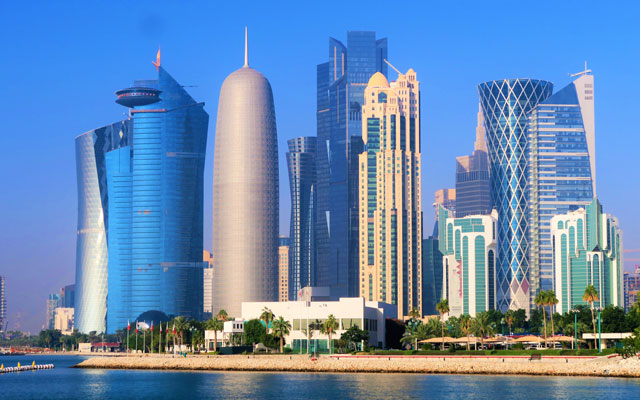
Doha’s ultra modern cityscape
Gerhard Stutz, general manager of Dusit Doha Hotel, which opened its doors in April, said: “The Qatar government is leaving no stone unturned in making the tourist journey in Qatar one of the most cherished.”
As part of the push, Qatar National Tourism Council (QNTC) launched the country’s first global destination campaign to highlight visitor experiences, and celebrate the nation’s heritage last year. The campaign has being rolled out across 15 existing and target markets, with the goal of reaching more than 250 million travellers.
As part of this, QNTC is aiming to capture business event travellers. Added Stutz: “There are exciting opportunities on the horizon as QNTC works towards enhancing the MICE sector.”
Ahmed Al Obaidli, director of exhibitions at Qatar Tourism Authority (QTA), said Qatar was awarded the rights to host six major business events between 2019 and 2022, last year. This year, it will host the World Corporate Games – the first time it has been held in the Middle East – and is expected to attract about 8,000 participants.
Al Obaidli added that Qatar offers a variety of authentic experiences, including explorations of archaeological sites, forts and towers, as well as helicopter rides and a variety of city and desert tours that can be curated for incentive groups.
Qatar’s rich seafaring heritage can also be explored with a cruise along Doha’s shoreline in a traditional wooden dhow boat, and camel racing and a 4WD dune-bashing adventure can be carried out in the southern desert. There is also a range of watersport activities along Doha’s coastline.
The nation is also home to a range of sophisticated convention and exhibition facilities.
The Qatar National Convention Centre (QNCC) features a 4,000-seat conference hall, 2,300-seat theatre, three auditoriums and several meeting spaces. The centre also offers 40,000m2 of column-free exhibition space across nine halls, providing seating for up to 10,000 delegates.
Meanwhile, Doha Exhibition and Convention Centre spans 90,000m2 spread across five pillarless halls, capable of seating more than 34,000 visitors.
Several of the destination’s heritage sites also provide a unique setting for business events, such as the Katara Cultural Village and the Museum of Islamic Art.
Stutz noted that with the country gearing up to host the FIFA World Cup 2022, a range of state-of-the-art infrastructure is being developed, which will help raise the destination’s profile globally.
He added: “Aside from its globally trending monuments and cultural heritage, Qatar boasts of hosting global trade fairs and conferences, which make it one of the most lucrative destinations for business travellers, where they can double up for their work, as well as plan some leisure activities.”
And Qatar’s tourism and business events potential is drawing investors. Thailand’s Centara Hotels recently opened Centara West Bay Residences and Suites in Doha, and a second 509-key Centara Grand property is slated to open in the same city before 1Q2020.
Markland Blaiklock, Centara’s deputy chief executive, said: “We want to develop in the region as we saw a great opportunity. Its location is the gateway between two continents and has an exotic nature. Taking buggy rides to bash the dunes isn’t something you can do anywhere.”
He added that while tourism is still in its infancy – in 2018, the country welcomed two million visitors – the potential is there.
Blaiklock remarked: “The government has an appetite to stage events. I think Doha can position itself as a great MICE destination.”
While Dubai remains the top choice in the Middle East for business events, Blaiklock observed that many corporates are now seeking somewhere different. He said: “People are looking for new places to go. Qatar is interesting, affordable, easy to get to, and somewhere that provides choices and alternative activities.”
Qatar’s connectivity is another selling point, with it serving as a major transit hub between the east and west. The government has eased visa restrictions for many nationalities and Qatar Airways operates its QMICE arm, a one-stop-shop for meeting and incentive planners and conference organisers.
The Asian MICE Cruise Conference (AMCC), organised by TTGmice and TTG Events, will return this September 24 for its second edition, featuring an expanded programme that aims to bring greater awareness of cruising opportunities for corporate event planners.
Cruise Lines International Association’s Jiali Wong (left) and Genting Cruise Lines’ Michael Goh will hold keynote spots
Kicking off AMCC 2019 will be two keynote speakers – Jiali Wong, regional manager – Asia, Cruise Lines International Association and Michael Goh, president, Dream Cruises and head, international sales, Genting Cruise Lines.
Wong will shine a spotlight on Asia’s cruise development and explain how the business events industry can benefit from it, while Goh will take the audience through Genting Cruise Line’s growth in Asia and behind the company’s motivation for developing a MICE specialisation.
Joining Wong and Goh is a panel of high-profile industry players: Angie Stephen, managing director, Asia Pacific, Royal Caribbean Cruises; Felix Chan, vice president, Asia, Norwegian Cruise Line Holdings; Freddy Muller, vice president, corporate & incentive sales, Silversea Cruises; Steve Bloss, co-founder and president, Worldwide Cruise Associates; and Henry Yu, director, Asia, Uniworld Boutique River Cruise Collection & U River Cruises.
Throughout the day, five intense panel sessions will tackle topics such as cruises’ ability to support business events; the state of luxury cruise development in the region and its impact on incentive programmes; the role land programmes play in providing a complete reward trip; and cruise companies’ commitment to sustainable efforts.
Programme developer and TTG Asia Media’s group editor, Karen Yue, will moderate the sessions along with her colleagues, Xinyi Liang-Pholsena, editor, TTG Asia and Rachel AJ Lee, sub-editor.
The first Asian MICE Cruise Conference, held last year, was well received
Commenting on the expanded programme, Darren Ng, managing director of TTG Asia Media, said: “Our launch edition last year was attended by more than 400 people from across Asia – most of them being business event planners who were keen to know how cruises could be the next ‘destination’ for their upcoming gatherings. We also had a good number of NTO and CVB representatives in our midst. Feedback from attendees post-conference was positive, and many asked for additional sessions and more time to learn from cruise stakeholders. That encouraged us to create a full-day programme this year.”
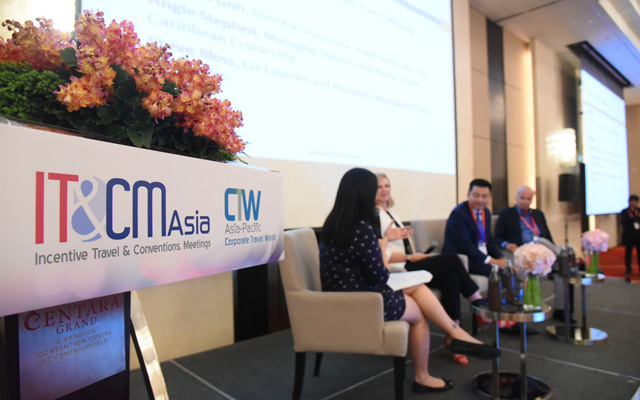
AMCC 2019 will run from 8.30am to 3.10pm at the World Ballroom, Bangkok Convention Centre at CentralWorld, Thailand. It is part of the larger IT&CM Asia and CTW Asia-Pacific, and welcomes all registered attendees of the doublebill event.
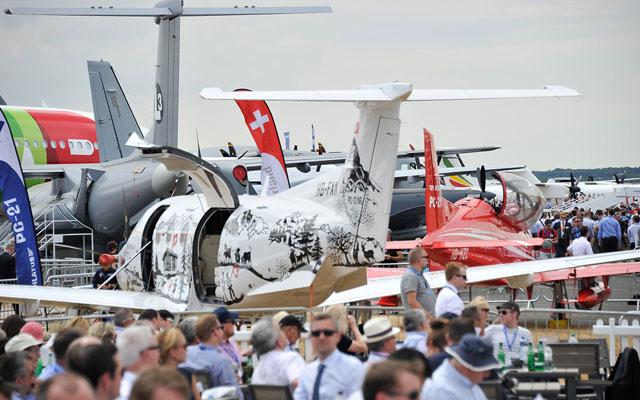
Thailand is working to bring the Farnborough International Airshow to the country
Thailand Convention and Exhibition Bureau’s (TCEB) commission of a feasibility study on an Asian spinoff of the popular Farnborough International Airshow is now complete, placing Thailand closer to her goal of launching her own international airshow to emphasise the country’s aviation hub potential.
Farnborough International Airshow is a trade exhibition for the aerospace and defence industries, held in England every even year. Its 2018 edition drew 80,000 visitors and more than 1,500 exhibitors from across the world.
Thailand International Airshow will touch down in the country once U-Tapao Rayong Pattaya International Airport is completed
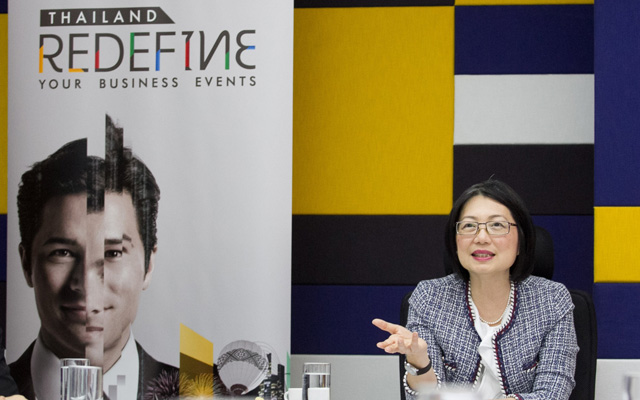
In an interview with TTGmice, Nichapa Yoswee, TCEB’s senior vice president – business, revealed that the idea of launching an international airshow in Thailand emerged when the bureau was looking for an impressive manner to inaugurate the opening of the new generation U-Tapao Rayong Pattaya International Airport, which forms an important part of the Aerotropolis project in the Eastern Economic Corridor (EEC) development.
The Aerotropolis will speed Thailand towards its goal of making Thailand a hub for aviation MRO (maintenance, repair and overhaul). To facilitate this, U-Tapao Rayong Pattaya International Airport is being upgraded to a commercial airport and an MRO facility, shared Nichapa.
Nichapa said: “Not only will the airshow amplify Thailand as the region’s MRO hub and bring attention to the Aerotropolis, it will also be a very good opportunity for the world to see Thailand’s business events capability.”
She recalled: “When we first approached Farnborough International (organiser of the event), they were sceptical. So I hired them to do some research. They did, and they came back with a different tone. This time, they said, “Yes, Thailand!”
Nichapa: confident in Thailand’s hosting ability of the airshow
During a press conference on July 31, Nichapa explained that the Thailand International Airshow feasibility study covered global overview, regional market potential, industry feedback, competitive landscape, Thailand’s EEC development and the government’s Thailand 4.0 initiative (which aviation and aerospace is part of), while providing recommendations for Thailand to stage the event and economic impacts.
Besides the feasibility study and domestic industry hearing, TCEB visited Farnborough International Airshow in UK in 2018 as well as Bahrain International Airshow and Paris Air Show in 2019 to get an overview of how to attract major airshow events to Thailand.
Nichapa said the action plan to stage Thailand International Airshow enhanced TCEB’s role as co-creator under its Thailand Redefine Your Business Events branding, which aims at generating business opportunities in the 12 industries under Thailand 4.0 economic model.
When asked when the Thailand International Airshow will happen, Nichapa said it would come soon after the completion of U-Tapao Rayong Pattaya International Airport in five years’ time.
“But before that, we will have soft launches and conventions for aerospace parts and manufacturing, and others,” she revealed.
As for how the Thailand International Airshow will set itself apart from other international airshows as well as those in the region, Nichapa said research on this was still being worked on by Farnborough.
“I have asked the team to spell out distinct differentiation for our airshow. We probably would like the airshow to also celebrate certain occasions in Thailand, not just to inaugurate U-Tapao Airport,” she said.
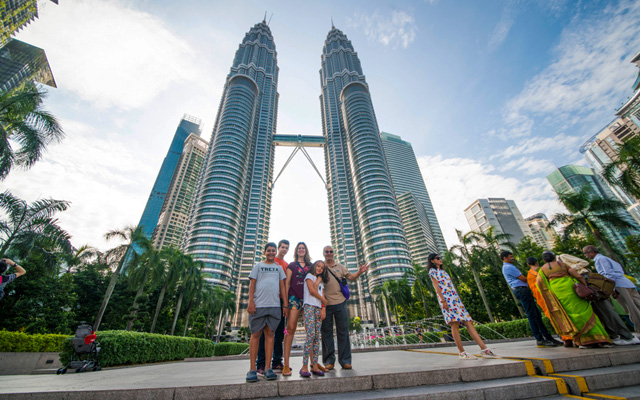
Tourists taking a photo in front of the Petronas Twin Towers in Kuala Lumpur
Anyone flying out of Malaysia will have to pay a departure tax ranging from RM8 (US$1.92) to RM150 from September 1, the government has announced.
The amount will vary based on the destination and flight class, according to a ministerial order gazetted by the Federal Government on July 31.
Tourists taking a photo in front of the Petronas Twin Towers in Kuala Lumpur
Economy class passengers travelling from Malaysia to other South-east Asian states will have to pay a departure levy of RM8, while those travelling non-economy will be charged RM50. Those travelling on economy class outside of South-east Asia will have to fork out RM20, while those in non-economy class will have to pay RM150.
The departure levy will not be imposed on children below 24 months old, as well as passengers transiting via Malaysia to another destination abroad not exceeding 12 hours.
Adam Kamal, general manager, Tour East Malaysia, said: “The introduction of this levy coupled with the tourism tax which has been imposed since September 1, 2017, will directly affect the competitiveness of Malaysia. Our competition for groups and MICE movements are with other destinations within South-east Asia.”
He suggested that the departure levy be postponed until after Visit Malaysia 2020 and that the government announce signature events for next year to attract more international tourists to Malaysia in conjunction with the Visit Malaysia campaign.
Arokia Das Anthony, director, Luxury Tours Malaysia, said: “The departure levy will affect arrivals to Malaysia. The destination is becoming more and more expensive, what with the tourism tax imposed two years ago, followed by an increase in the passenger service charge at klia2 from RM50 to RM73 for travel outside South-east Asia imposed from January 1, 2018, and now the departure levy added on.”
He added: “Agents are selling the same old products, but we keep adding additional charges into the total package cost. It is also not the right time to impose the departure levy as it will make it harder to reach the targeted volume of 30 million tourists that the government is targeting for Visit Malaysia 2020.”
However, Musa Yusof, director-general, Tourism Malaysia, was more optimistic. He shared: “I believe that Malaysia has attractive tourism products and offerings that strongly appeal to a wide market. It would be unlikely for tourists to discount Malaysia solely due to the imposing of these extra charges, some of which are considered minimal.”
The well-known English idiom “a game of cat and mouse” means constant pursuit, near captures, and repeated escapes.
For a nation of Singapore’s size, Singapore’s success as a tourism destination is a product of constantly striving to stay ahead of the curve. This success extends to large business and corporate events as well, commonly abbreviated as Meetings, Incentives, Conferencing, Exhibitions (MICE).
Alibaba Cloud is also working closely with Singapore hospitality industries like event organisers, hotels and resorts, restaurants and retail companies
Singapore continues to be a top MICE destination, with the industry playing an important role in driving visitors to the city-state. Tourism receipts from MICE grew by 10 per cent in 2018 and MICE visitors increased by 14 per cent as compared to the same period in 2017.
However, competitors in the region are eager to grow their tourism receipts beyond leisure and sightseeing and into business travel as well, especially when the Asia-Pacific MICE industry is expected to grow at a CAGR of 8.6 per cent to reach US$441.1 billion of revenue by 2025.
Not only do these countries have much more space to offer, but lower costs as compared to Singapore. After all, more visitors mean more flights, more stays, more transport, more shopping, more entertainment and more revenue for the country.
A game of tech and MICE
Just like the game of cat and mouse, Singapore’s focus on using technology for its MICE sector will help the country maintain a lead in the region.
For example, artificial intelligence technologies like Natural Language Processing (NLP) solutions from machine translation, speech-to-text, and text-to-speech can provide faster yet reliable communications regardless of language. This supports a crucial function to any corporate events, especially when delegates are more fluent and comfortable with their native tongue.
Simply visualising data better can be beneficial too. Events traditionally will employ many ushers on the ground to manually assess crowds and capacity. With a few simple sensors around the event site, we can visualise this data much better and in real-time, helping organisers better manage crowding and safety. This is already something in use at airports and large-scale conferences to deliver a better experience overall for visitors.
A rising tide lifts all boats
As another common English saying goes, a rising tide lifts all boats. Providing a better experience for MICE visitors has a knock-on effect for the entire tourism and hospitality industry as a whole.
Organisers will have amassed business data on events. It is not data, but data intelligence that makes a difference in delivering a seamless and convenient, yet still secure and comfortable experience for visitors.
With data intelligence, organisers can partner with the wider hospitality industry to make recommendations beyond just travel and transport advisories and discounts on accommodation. The data can be transformed into actionable insights and create innovations for the industry, such as more personalised services and targeted marketing.
This should not be limited to the hospitality industry only. Restaurants and retail brands can consider partnering with event organisers, hotels and resorts to offer a holistic experience to visitors.
The future is now
This is by no means a futuristic imagination of what technology can do for the industry. The Singapore Tourism Board is already applying cloud technology to consolidate and analyse tourism data, including visitor spending and movement patterns to help the MICE industry evolve and stay ahead of changing consumer demands.
As the global leader in cloud and data intelligence, Alibaba Cloud understands the inherent value technology brings. Using tech, and using it effectively, will be the key for Singapore to stay ahead in the wider hospitality and tourism race beyond just MICE.
After all, technology is the great enabler that has allowed Singapore to stay plugged in and relevant in the global economy. The same successes Singapore has had with technology will be instrumental in keeping Singapore a destination of choice for leisure and business visitors alike.
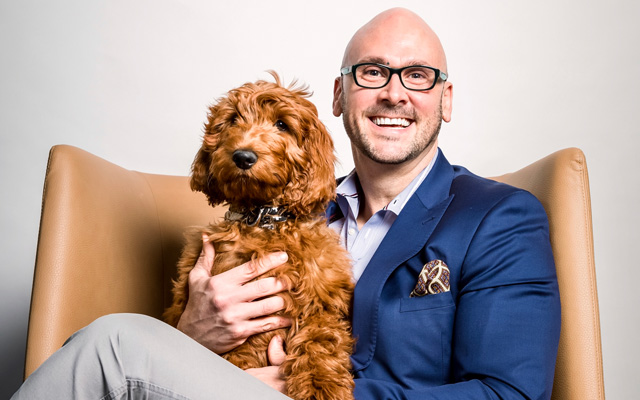
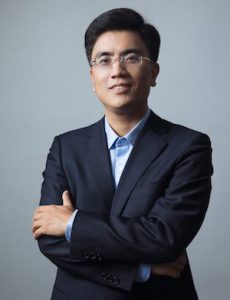
Derek Wang is the general manager of Alibaba Cloud Singapore, and leads the team across marketing, sales, pre-sales and technique support for the Singapore market. He joined the Alibaba Group in January 2014, and oversaw the global technical team responsible for Alibaba’s cloud solution design and delivery before he took on the current role.
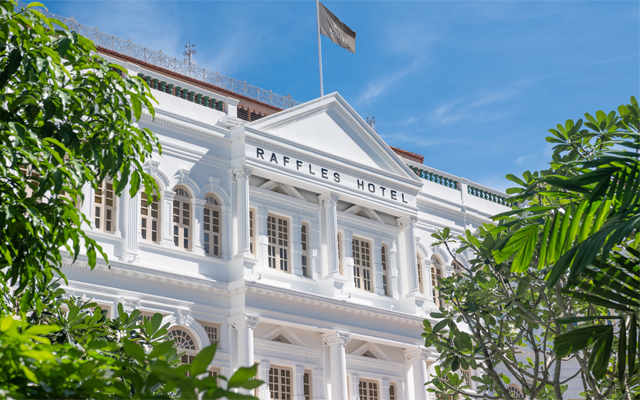
Raffles Hotel Singapore has reopened on August 1, after a top-to-toe restoration of its façade and facilities including event spaces that took approximately two years.
And even though the hotel has just reopened, Christian Westbeld, its general manager, told TTGmice that “quite a few MICE events are already on the calendar”.
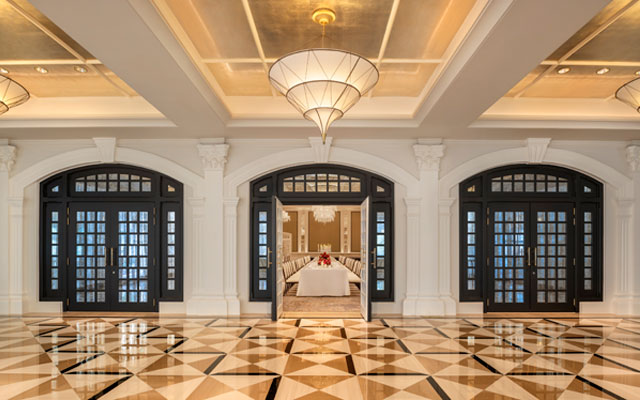
Foyer of the grand Jubilee Ballroom
He added: “It’s interesting that since we launched we actually have quite a bit of interest raised by MICE groups, a segment we did not expect (when plans were being outlined for the restoration) two years ago. We are a leisure-driven hotel overall.”
Having said that, Westbeld noted a growing trend for bleisure, where Raffles Hotel Singapore is currently seeing more high-level corporate visitors bringing their families along on business trips.
Besides having 115 all-new suites to choose from, event planners can also pick from seven indoor and outdoor function spaces, the largest being the Jubilee Ballroom which can hold up to 500 guests cocktail-style.
“We are hearing from lifestyle corporate and MICE that they love the Jubilee Ballroom. I think that has to do with our position as an iconic and legendary hotel of the 19th century that has just gone through a complete overhaul. In the next couple of weeks, we’ll also complete the installation of an LCD screen in that ballroom,” Westbeld added.
Formerly known as the Jubilee Hall, the venue now features 24 large, glittering chandeliers that hang from six-metre-high ceilings. In addition, the hotel offers three other redesigned function rooms: Casuarina Suite (80-180 guests); East India Room (120-180 guests); and Palm Ballroom (155-320 guests).
Westbeld revealed that the East India room was one of the more preferred spaces as it offered direct access from Beach Road. In this case, it was great for groups that had its VIPs housed at Raffles Hotel Singapore, while other delegates were put up at sister hotel, Swissôtel The Stamford, just across the road.
Meanwhile, all 10 of Raffles Hotel Singapore’s restaurants will also be tied in with event services, as Westbeld revealed that celebrity chefs can be brought into a gala dinner, or a Singapore Sling masterclass could be conducted at the Long Bar. Planners can also choose to cater from any of the restaurants and bars in the hotel.
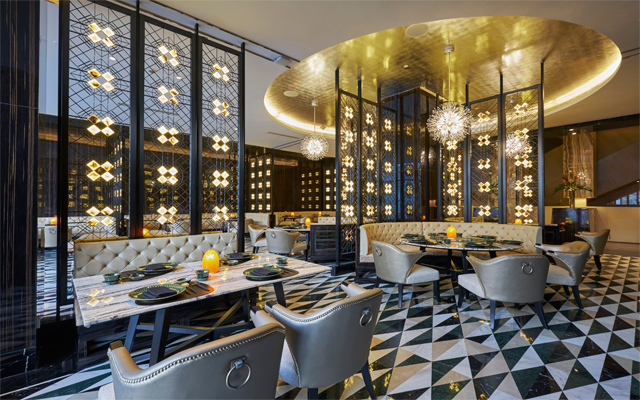
The 10 F&B concepts range from French restaurant La Dame de Pic by Anne-Sophie Pic of three-Michelin-star Maison Pic in Valence, France; to the Tiffin Room serving up North Indian cuisine in tiffin boxes. Meanwhile, chef Jereme Leung will oversee both his restaurant yì by Jereme Leung, as well as the banquet kitchen handling Chinese cuisine.
Westbeld gave an example of a C-suite event making use of several hotel spaces: “It can be welcome cocktails in the Palm Garden, followed by a meeting in East India Room, and then a board dinner in La Dame de Pic.”
When asked what he thinks of Singapore’s business events sector, Westbeld said: “I think in general, the sector will keep growing as the city has such an amazing infrastructure that will support the market.
“And Raffles is absolutely ready to be part of it.”
Rooms
For 4D/3N, home for me was Hilton Manila’s 40m2 executive room. It’s five-star plush: a spacious, dedicated work desk; two Serenity double beds with the softest beddings and pillows; tasteful furniture and fixtures with attention to details – why, even the air vent is artistically camouflaged. This aesthetic is continued in the four-point bathroom that boasts a separate vanity area, toilet, bathtub, and rainshower.
The room is also smart. For instance, the motion sensor automatically switches the light on and off accordingly when leaving and entering the room; and the door automatic closes and locks. Hilton Honors members can also make use of their smartphone or tablet as their room key.
MICE facilities
The elegant ballroom for up to 600 guests, and the hotel’s six meeting and event spaces have up-to-date MICE technology expected of hotels of this calibre.
For me, the humongous resort-style lagoon pool (which Hilton shares with its partially-opened neighbour Sheraton Manila), complete with a freestyle pool bar, promises a number of creative ideas for corporate events and incentive trips.
On Valentine’s Day for instance, I watched from my 11th floor room how the hotel transformed the pool into an al fresco dinner rendezvous with tables set on the edge of the shallow part of the pool, while myriad lights glimmer under and above the waters. Gorgeous!
Another promising MICE venue that is creatively decorated is the Hua Yuan Brasserie Chinoise Chinese restaurant. It exudes luxury, from the gilded ceilings and chinoiserie to the intricately-designed cutlery. Moreover, the restaurant has three private dining rooms that fit up to 12 persons each, perfect for a business C-suite luncheon.
Other facilities
Hilton Manila has five restaurants including Madison Lounge and Bar whose high tea I just love; as well as an executive lounge for club guests. There is also a 24-hour fitness centre, complimentary Wi-Fi, and free airport shuttle service.
I also had a meal at all-day dining Kusina Sea Kitchens, but found that the flavour on certain Asian offerings – such as laksa – could be improved on.
Service
Warm hospitality distinguishes this hotel, right from the entrance when the staff politely assisted in the security check for my bags, up to the genial greet staff in the check-in area. Some housekeeping staff are shy, perhaps because they are young and new in the industry, but they are helpful.
Verdict
As a woman traveller, Hilton Manila makes me feel safe. As a business traveller, I’m satisfied with thoughtful touches such as free Wi-Fi throughout the hotel and the ergonomic desk chair.
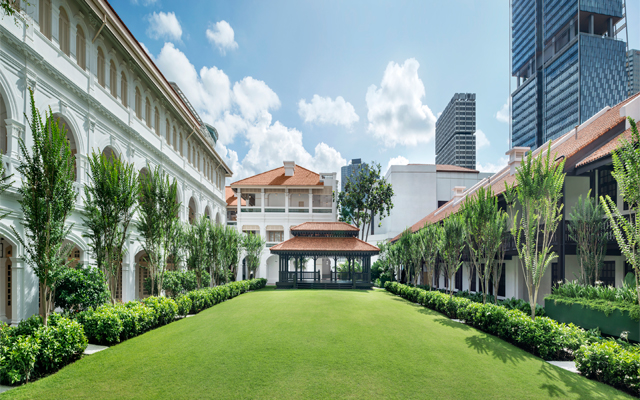
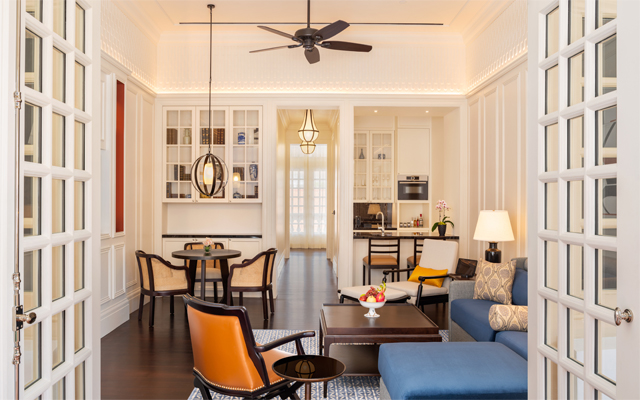
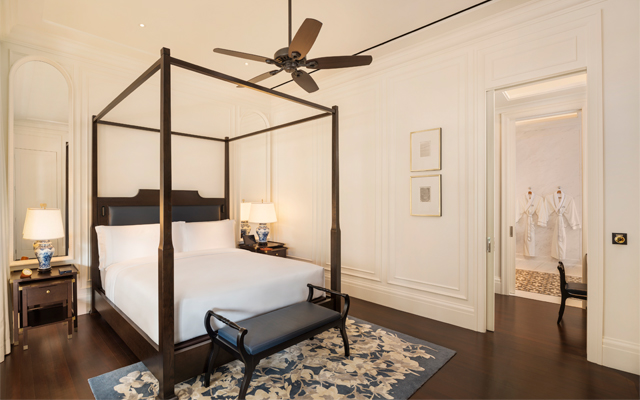
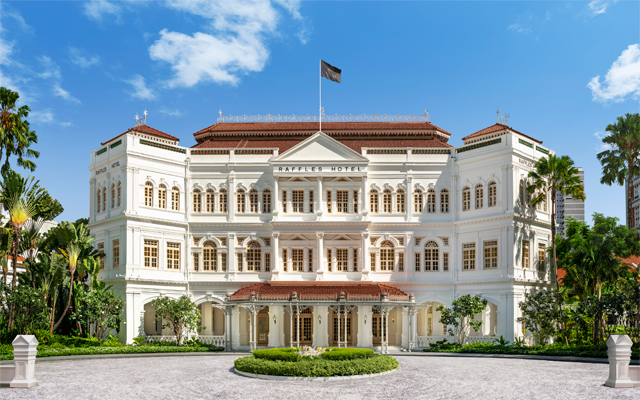
After 2.5 years of restoration work, the iconic Raffles Singapore hotel has reopened completely, now offering an all-suite concept.
The restoration of the property, which was designated a national monument in 1987, was led by interior designer Alexandra Champalimaud and was also supported by Aedas, a global architecture and design firm.
1 of 7
The Lawn
Swimming Pool
Residence Suite - Living Room
Residence Suite - Bedroom
Hotel Facade Side
Full Hotel Facade
Courtyard Suite - Bathroom
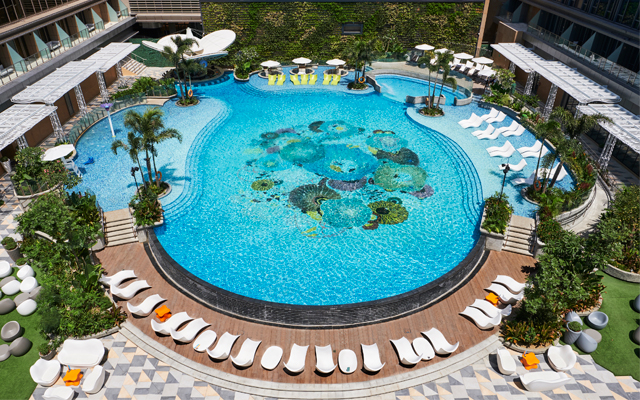
There are 115 keys across nine suite categories, from the lead-in State Room Suites to the Presidential Suites. Recreational facilities on-site include the Raffles Spa, 24-hour gym and a rooftop swimming pool. Hotel guests may also avail the service of Raffles Butlers.
There are 10 F&B concepts, ranging from the well-known Long Bar where its most famous cocktail, the Singapore Sling, can be enjoyed; to French restaurant La Dame de Pic by Anne-Sophie Pic of three-Michelin-star Maison Pic in Valence, France.
Event planners have seven indoor and outdoor function spaces to choose from, the largest being the Jubilee Ballroom which can hold up to 500 guests cocktail-style.
Boutique hotel Zagame’s House in Melbourne has appointed Adam Taloni as its new general manager.
Taloni brings with him over 20 years of managerial experience within the Australian hotel sector for both boutique, and large sector businesses.
Before joining Zagame’s House, Taloni launched Sydney’s Ovolo Wooloomooloo, and Peppers Broadbeach on the Gold Coast, where he was general manager at both properties.
Prior to Ovolo, Taloni worked as group general manager for Vanity Group, as well as area manager for the Mantra Group.
Just 10 minutes from Phuket International Airport on the serene northern coast, this 178-key, Bill Bensley-designed resort offers delegates a quiet, tropical paradise steeped in Phuket’s tin-mining heritage
The newly-opened Ritz-Carlton, Bangkok anchors the One Bangkok development with cosmopolitan elegance. Featuring the city's largest ballroom and a spectacular new penthouse suite, it delivers exceptional hardware and deeply authentic, soulful service for business and leisure travellers alike
Behind the imposing, Brutalist concrete that defines Zurich’s Oerlikon district lies a surprising secret. While its exterior honours the neighbourhood’s industrial roots, stepping inside Mama Shelter reveals a vibrant, neon-soaked world that is a far cry from its rigid shell







 Derek Wang is the general manager of Alibaba Cloud Singapore, and leads the team across marketing, sales, pre-sales and technique support for the Singapore market. He joined the Alibaba Group in January 2014, and oversaw the global technical team responsible for Alibaba’s cloud solution design and delivery before he took on the current role.