Asia/Singapore Thursday, 23rd April 2026
Page 692

Japan and South Korea use business events to mend strained China ties

0
XXX

Refusing to be defined by political tensions, corporate travel companies and event organisers in Japan and South Korea are actively reaching out to Chinese MICE suppliers to build stronger relationships and encourage more business travel.

Public concern about the political climate in North Asia has led to misconceptions that Japanese travel companies do not organise events in China.

MICE can help to mend or even build stronger business ties between countries

Calvin Tan, JTB’s manager, MICE department, Singapore outbound office, shared: “This year, I’m targeting to meet more Chinese suppliers, because a lot of people still have the perception that JTB is a Japanese company and we don’t do business in China. We want to break away from that. It’s very untrue because there are actually a lot of Japanese companies in China.”

South Korea-based MICE management and event promotion company Premium Pass International is also using IT&CM China as a platform to meet more Chinese venue and convention suppliers.

“The relationship between China and Korea is not good now, so we would like to do something to develop ties between the two countries. Doing this through conventions and meetings can help,” shared Feng Li, assistant manager, strategic planning department, Premium Pass International.

Jesmond Lam, event planner with Japan-based Event Services, remarked that young Japanese corporates are starting to be interested in Chinese culture and are picking up Mandarin.

Lam explained: “The Japanese tend to be traditional. My clients have always preferred incentive destinations like Singapore, Hawaii and Guam. But now, they are opening up to visit China.

“We want to grow Japan’s outbound numbers next and hope to establish an outbound MICE team in the next three to four years,” he added.

TCEB refines role as ‘growth driver’ for business events industry

0
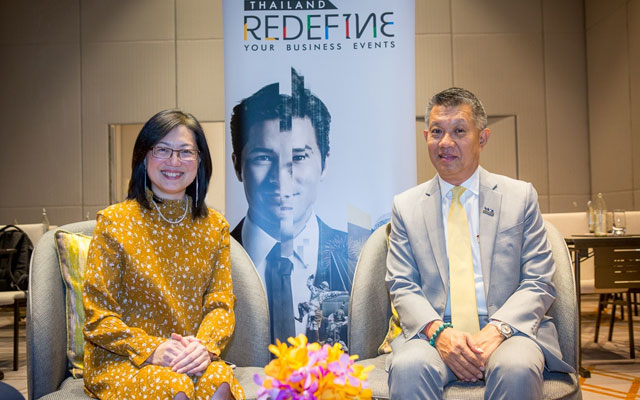
TCEB's Nichapa Yoswee and TICA's Sumate Sudasna at the press briefing yesterday

Not content to be just a facilitator in the business events sector, the Thailand Convention and Exhibition Bureau (TCEB) is repositioning its role into that of a co-creator, partner, collaborator and thought leader (CPCT) as it seeks to proactively raise Thailand’s profile globally and woo international business events into the country.

The new CPCT role that TCEB seeks to assume is a natural extension of the ‘Thailand: Redefine Your Business Events’ branding launched last year, informed Nichapa Yoswee, TCEB’s senior vice president – business, who unveiled the CVB’s latest marketing push and tradeshow strategy at a press conference in Bangkok yesterday.

TCEB’s Nichapa Yoswee and TICA’s Sumate Sudasna at the press briefing yesterday

TCEB’s redefined positioning is essentially a vision of the organisation to move with the times and be “at the forefront” of the business events sector, Nichapa told TTGmice.

“We need to be a growth driver, not a growth supporter. A facilitator role is not enough and is too passive,” she said. “We also need to present a standardised voice to attract events into Thailand.”

Nichapa also pointed out that the government’s Thailand 4.0 model, which identified 10 key industries for growth (future automative, smart device, health tourism, biotechnology, food processing, robotics, aviation and logistics, biofuel and biochemical, digital, and integrated medical service) has given “tremendous clarity” on the focus sectors for TCEB.

“Deepening partnerships” with major business events players will now form a key tenet of TCEB’s new marketing plan and tradeshow strategy. “2019 will be the year of partnerships. This year the key aim is not just selling destinations and winning business,” said Nichapa.

TCEB’s partnership strategy is already evident in its SITE inspection scheme, which sees the organisation joining forces with major local industry partners including Thai Airways International and Bangkok Airways to launch the ASEAN MaxiMICE and Fly & Meet Double Bonus subvention schemes respectively earlier this year to attract MICE events from the regional market.

At IT&CM China in Shanghai last week, it also rolled out the Golden Pig Reward – named after the current Year of the Pig – to reward Chinese meeting and incentive groups visiting Thailand with a financial subsidy of 200,000 baht (US$6,305) per group.

Moving forward, tradeshows will be a key “launching pad” for deepening partnerships, as they not only provide a platform to showcase Thailand’s MICE readiness to attract overseas events, but also improve confidence of overseas delegates’ confidence in the country, said Nichapa.

TCEB will look at strengthening partnerships with existing partners and identifying new ones at upcoming tradeshows where it has confirmed attendance, including IMEX Frankfurt, IMEX America and IBTM World in Spain.

A key example of this new partnership effort can be seen with TCEB’s partnership with the Asian Association of Conventions and Visitors Bureau to develop a model for economic impact assessment of the business events industry to equip Asian CVBs with a common and reliable tool to justify and show the industry’s impact on economic growth.

TCEB will also seek to match local and international PCOs for collaboration in organising business events in Thailand. One key way is to work with ICCA to target overseas PCOs who are ICCA members.

As well, Thailand Incentive and Convention Association (TICA) is set to play an integral and enhanced involvement as a long-time partner of TCEB, said president Sumate Sudasna. He said: “We want to be a vehicle to assist event growth and investment into Thailand.”

Not only will TICA offer more training and education opportunities for members to grow their professionalism, the association has been also appointed by TECB to select industry applicants for overseas tradeshows.

Australia takes personalisation to new level for Chinese corporates

0
Hogg:

As the Chinese incentive segment for Australia continues to swell, the country has enhanced its event personalisation offerings to sustain interest and encourage frequent returns.

For example, Tourism Australia has intensified working relationships with city governments and other partners, such as public transport agencies, to create programmes that include a ‘city takeover’ concept.

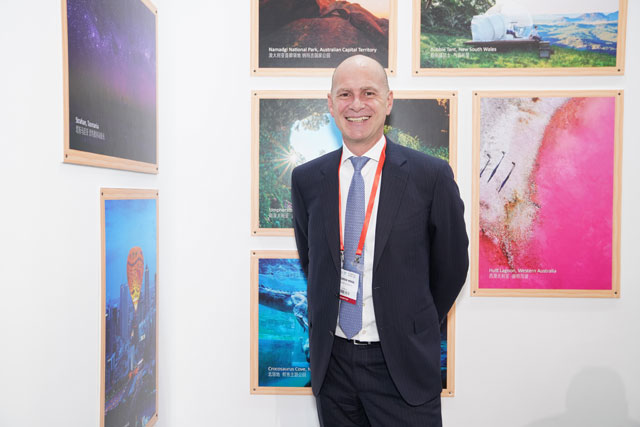
Hogg: enhance offerings to entice repeat Chinese corporate groups

This concept enables incentive or conference groups of up to several thousands to enjoy free facilities and services within a city, such as street banners, free Wi-Fi and free tram rides with the flash of an event badge. Groups have also enjoyed a ‘market takeover’ where a city market is closed for a private corporate gathering.

Such initiatives have helped Australia shorten the rotational cycle of incentive trips. Groups that used to choose Australia as a destination every four to five years now return every other year.

Andrew Hogg, regional general manager, Tourism Australia, told TTGmice: “We work very closely with all of our partners, so that when the business is confirmed, what we’ve put forward is actually real. We’ve had groups of up to 10,000 at one time, and still make it very personalised. We also want groups that are smaller, as we can do more unique events, such as in a vineyard lunch.”

Burgeoning international business events arrivals in Australia have also sparked a host of developments for various cities.

Hogg explained: “Many new hotels are being built in Adelaide to accommodate not only the rising (leisure) traveller, but also to capitalise on what we’ve been doing with the MICE market.”

China’s tier-two cities, such as Kunming, Nanjing and Hangzhou, have also opened up to Australia and are strong opportunities for large incentives and conferences thanks to a growing roster of direct flights, said Hogg.

Australia currently registers some 120,000 MICE arrivals from China, posting an increase of 33 per cent year-on-year as of September 2018.

Pushing all the right buttons

0
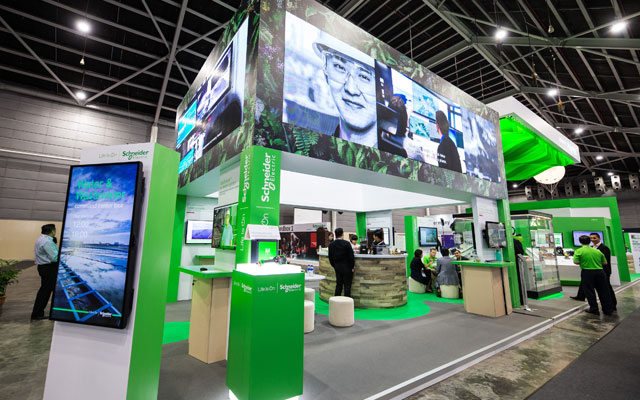
Schneider Electric booth

Event brief
Organiser SingEx Exhibitions and international partner Deutsche Messe decided against replicating the world-renowned Hannover Messe as an Asian edition. Instead, they chose to focus on specific applications and opportunities for Asia-Pacific businesses to start, scale and sustain their industrial transformation journey.

The event covered sectors such as aerospace, automotive, biomedical sciences, chemicals, consumer goods manufacturing, electronics, marine and offshore, oil and gas, and precision engineering.

The aim was to create a strategic platform that could evolve with these industries, shaped by current leaders and experts, yet encouraging newcomers as well. Companies could exchange best practices and forge new partnerships to tap on the region’s growth.

Challenges
Starting a new tradeshow isn’t easy, let alone running it well to satisfy partners, exhibitors and attendees. From stimulating awareness and interest among companies to participate, the organising team then had to market the event, and draw buyers and visitors to the exhibition and simultaneous conference.

“We recognised the strategic importance of the event in spearheading economic progress and also synergies that can be drawn through community collaboration,” said James Boey, executive director, SingEx Exhibitions.

“However, companies would also have to recognise that transforming an organisation requires a mindset shift among leaders and staff alike. It is Workforce 4.0 who are crucial to the success of Industry 4.0.”

Another challenge was to maximise exposure for exhibitors while enabling buyers and visitors to cover the two halls (20,000m2) efficiently. A further consideration was to live up to the event’s name by using innovative technologies and creating multi-faceted, seamless touch points for attendees.

Solution
SingEx set about engaging governments and the business community. For a solid foundation, it first tapped Singapore government agencies to form the steering committee. An international advisory committee was also formed, comprising leading MNCs from the European Union and Japan with strong presence in Singapore, and trade associations.

The show featured five country pavilions. Many advisory committee members became partners with prominent stands.

While transformational roadmaps are important, in reality, players are of different sizes and at varying stages of adoption.

“We developed a unique ‘Learning Journey’ to help attendees navigate the event and maximise their return on engagement and learning,” Boey explained.

Beginners, early adopters and trailblazers were channelled to well-laid-out exhibition sections and sessions, which included two learning labs, two ‘sandboxes’ and a novel interchange booth – a SingEx knowledge-exchange platform to facilitate offline to online engagement among exhibitors and attendees. On the sidelines were a plenary hall and two ‘theatres’.

Some 2,400 visitors registered for 110 guided tours over three days.

“ITAP 2018 was well-represented by professionals from a wide spectrum of industrial sectors who shared their valuable knowledge and skills with over 15,000 global attendees,” noted Boey.

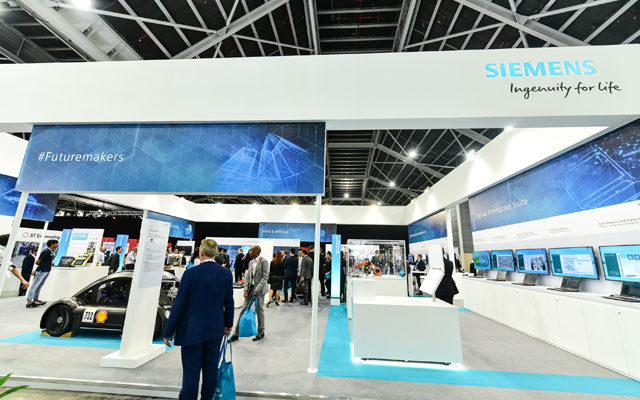
Founding partner Siemens’ big islands, for instance, stood out in the industrial automation and digital factory sections. Siemens had a separate registration desk in the foyer for invited visitors and conducted special tours of its pavilions.

For sustenance, Rasel Catering offered international F&B with local elements, such as curry puffs, laksa and chicken rice. It also introduced new technology – the ‘IBOX’, an innovative way to reduce queues and waiting time. People could use a tablet or download the app to order food in advance and collect at scheduled times.

Six food kiosks also drew a steady stream of people throughout the day, as did the casual dining area with complimentary refreshments for VIPs, speakers, conference delegates and media.

Key takeaways
ITAP 2018 was one year in the making. With strong public and private sector support, and creative planning and design, it drew a good turnout. It showed the business of Industry 4.0, not just gadgets or slick presentations.

Post-exhibition, several exhibitors hosted technical visits to demonstrate various advanced manufacturing facilities and innovation centres.

Event: Industrial Transformation Asia-Pacific
Organiser: SingEx Exhibitions, with international partner Deutsche Messe
Venue: Singapore EXPO Halls 1 and 2
Date: October 16-18, 2018
Number of participants: 15,000 from 55 countries


Penang’s MICE sector reports 31% growth in latest review

0
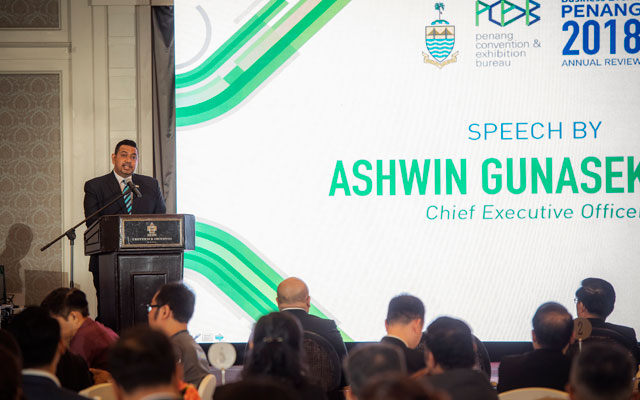
PCEB's Ashwin Gunasekeran

Penang’s business events sector achieved an estimated economic impact (EEI) of RM1.3 billion (US$322.7 million) for the year 2018, a 31 per cent increase from 2017, announced Penang Convention & Exhibition Bureau (PCEB) in its annual review.

An astounding increase of 285 per cent was recorded in the number of room nights, the most significant growth experienced since the state bureau was established in 2016. This growth has been attributed to an increase in the number of business events delegates, as well as the duration of events held in the Malaysian state.

PCEB’s Ashwin Gunasekeran speaking at the launch of Penang’s Business Events 2018 findings

Among the top contributing segments for business events in Penang in 2018 include international associations (20,601 delegates, EEI of RM129.2 million), international corporates (85,664 delegates, EEI of RM470.2 million) and national corporates (176,778 delegates, EEI of RM528.9 million).

PCEB’s CEOAshwin Gunasekeran said that PCEB would be focusing more on garnering more association meetings, as this segment proved to be the highest contributor to the business events sector.

He said in a statement: “This positive increase of association meetings coming into Penang allows us to look beyond the numbers and focus on the long-term benefits they have for the destination in the form of a legacy, as well as (the creation of) an interconnected network and partnerships, and growth between the association, suppliers and participants.”

Penang’s chief minister Chow Kon Yeow added: “Ensuring the sustainability and continuous growth of the business events sector falls in line with the vision of Penang2030. Two of the key tenets of Penang2030 are creating a variety of high-quality tourism products across Penang Island and Seberang Perai, as well as to foster an ecosystem that nurtures creative industries and niche business services.”

SITE India Chapter elects new board

0
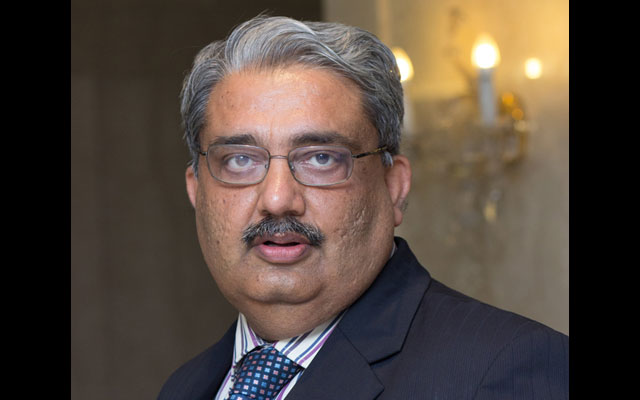
Sanjeev Joshi

Sanjeev Joshi, director of Tourism India Management Enterprise, has been elected as president of Society of Incentive Travel Excellence (SITE) India Chapter for 2019-2021.

He will be assisted by vice president Nitin Sachdeva, executive director of Venture Marketing.

Sanjeev Joshi

The other office bearers are Barun Gupta, vice president of Corporate Alliance Group, who will serve as vice president – secretariat; and Vikrant Gulani, head – commercial and operations of Icon Planners, who will serve as vice president – finance.

Other board members include:

  • Amaresh Tiwari, managing director, A T Seasons and Vacations Abinash
  • Manghani, area manager and head, ITC Hotels
  • Vikas Suda, managing director, VDOIT4U
  • Prashant Yadav, managing director, Liberty India DMC
  • Vishal Yadav, director, IDMS
  • Naveen Rizvi, executive director, Pacific World
  • Rajeev Kohli, joint managing director, Creative Travel
  • Anup Nair, managing director, Inspiration India
  • Shoba Mohan, Give & Seek will be director of communications – ex officio

St Regis Singapore opens doors to Caroline’s Mansion

0

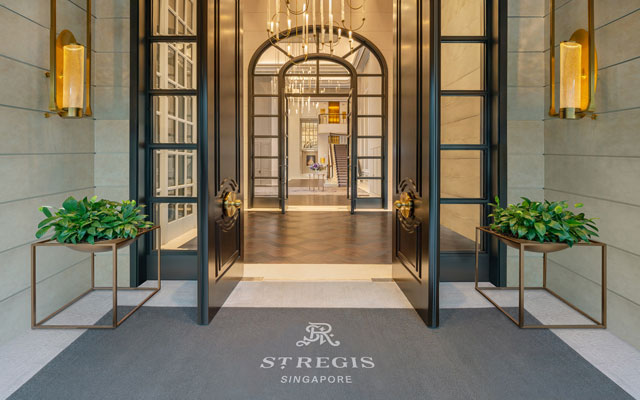
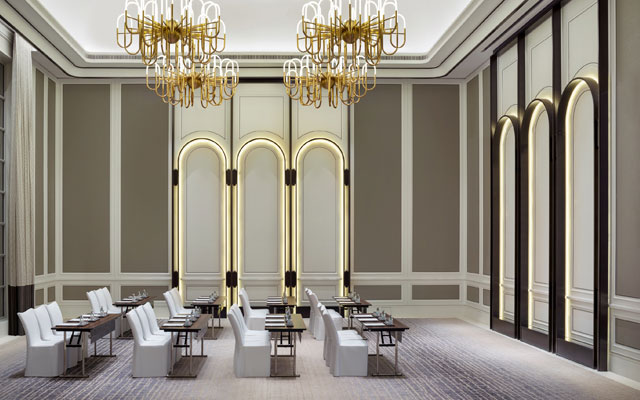
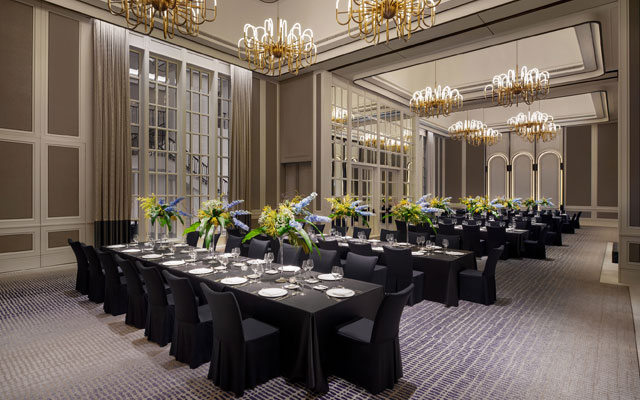
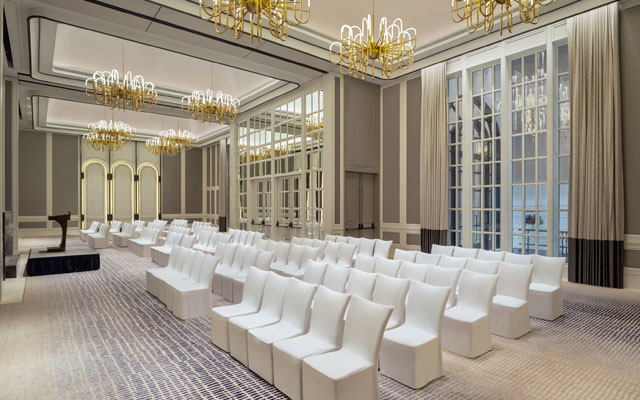
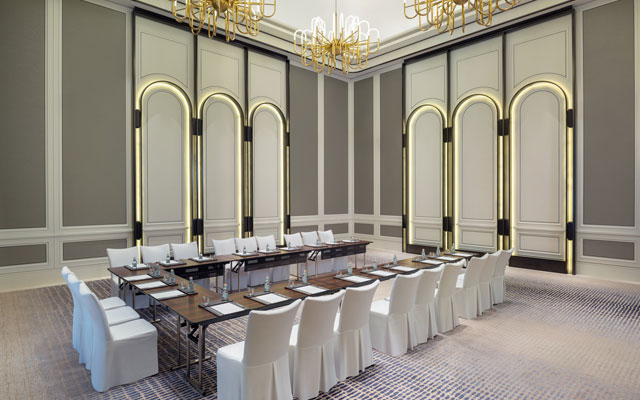
Caroline’s Mansion is the St Regis Singapore’s newest event space, converted from tennis courts.

The function area offers over 370m2 of interior space, comprising a pre-event area and foyer, as well as a eight-metre-high ballroom space which is divisible into three intimate venues. Meeting and event fixtures include five projection screens, elevated projectors and lighting equipment, all of which can be controlled via iPads.

The space, which sits adjacent to the hotel’s main building and is accessible via a private entrance from the driveway, is named after Caroline Astor, the founding matriarch of St Regis, who was fond of throwing lavish events.

In addition to Caroline’s Mansion, St Regis Singapore offers eight other meeting and event venues.

Meeting packages are priced from S$130++ (US$96++) per meeting delegate, inclusive of two coffee breaks and a lunch, while dinner events start from S$138++ per guest.

Rachael Harman helms Le Méridien Singapore, Sentosa as GM

0

Le Méridien Singapore, Sentosa has appointed Rachael Harman as general manager.

With over two decades worth of hotel experience, Harman began her hotelier career with a F&B role at Sheraton on the Park, Sydney, before moving on to various roles at Sheraton Mirage Port Douglas, The Westin Melbourne and The Westin Auckland Lighter Quay.

In 2010, the Aussie moved to Malaysia to join The Westin Kuala Lumpur where during her six year stint, she was given key management positions including hotel manager and director of sales and marketing.

In her most recent role prior to her Singapore posting, Harman was general manager at Le Méridien Kota Kinabalu in Malaysia.

Recent safety scares unlikely to deter business events travel

0
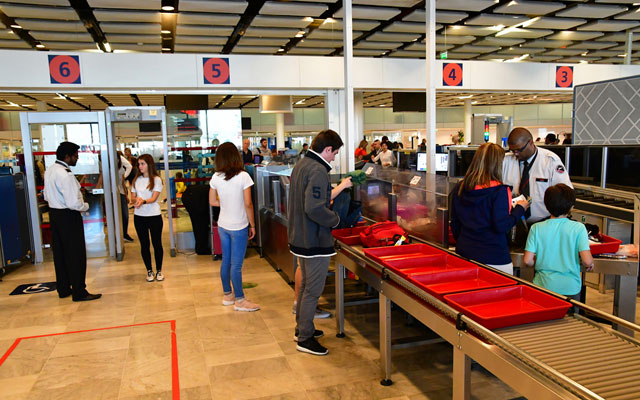
Security checks at Paris' Chares de Gaulle airport

Safety and security may be fresh on the minds of the public following the tragic shootings in Christchurch and the Ethiopian Airlines flight crash in recent weeks, but this has not dampened the outlook of business event buyers at IT&CM China, who see the incidents as isolated occurrences.

Delegates interviewed believed the impact of recent incidents on meetings in Asia would be limited, and the solidarity of the industry in tackling participant and organiser concerns about safety and security would be positive steps moving forward.

Security checks at Paris’ Charles de Gaulle airport

For Avinash Kumar Khanapur, travel consultant at Avni Holidays, India, clients are asking more safety-related questions and buying comprehensive insurance that covers terrorism. Some of his clients are avoiding Paris. “Small groups in a foreign destination are asking for escorted tours, rather than free time to explore the city,” he continued.

On the other hand, Noor Ahmad Hamid, regional director of ICCA Asia-Pacific, does not believe the recent attacks in Christchurch will affect the industry. “It is important for the industry to come together to show support, while event organisers have to be vigilant.” ICCA has 11 members in New Zealand.

“I do not think random acts of terrorism will stop people from attending business events. However, organisers will have to take more precautions and steps to ensure the safety of their personnel. For instance, we have added more questions to the security evaluation forms that staff have to complete before they are given permission to travel,” added Saurav Chakrabartty, corporate travel buyer, Siemens, India.

Russia’s Oksana Tcoi, MICE operation manager, Rozintour, pointed out that other incidents such as the 2003 SARS outbreak had a much bigger impact compared to terror attacks.

“For our programmes, travel insurance is a must and we also send a doctor on our educational programmes with young participants,” Tcoi said.

Other ways travel suppliers can act to address safety include having a risk management plan, advised Melbourne-based Mike Williams, senior partner and consultant, GainingEdge.

“No matter what, people will continue to travel for meetings and we will have to rely on our local partners to be well informed,” said Vietnam’s Robert Tan, executive director, JTR Events & Marketing.

Meanwhile, NTOs and governments have a key role to play in disseminating information and raising safety standards.

Mint Leong, director, Sunflower Holidays, Malaysia, commented: “In some destinations where there were incidents in the past, clients want us to guarantee that the destination is safe when they visit. We are not in a position to do so. This is where NTOs play an important role. Information should be readily available and accessible on what public safety steps have been taken.”

Biometric screening, face recognition and other new technology were cited as examples of what governments and businesses could invest in and utilise to raise safety and security standards.

ICCA Asia-Pacific’s Hamid suggested that governments could do more to ‘pre-clear’ bona fide delegates and make baggage screening compulsory, instead of random checking.

An industry veteran added that fingerprint scans at airports to enter a country should also be made compulsory for everyone regardless of age.

  • additional reporting by S Puvaneswary

Asian meetings industry shows growing strength and resilience

0
SMCC Council’s Albert Cao; Shanghai C&D International Travel Service’s Jeff Zhen; Skyway MICE Service China’s Yang Jiong; Shanghai Jinjiang Travel Holding’s Michael Li; BCD M&E China’s Carol Luan; and Sunflower Holidays Malaysia’s Mint Leong

The inaugural China Business Event Federation (CBEF) Forum, organised by the two-year-old association in conjunction with IT&CM China, reaffirmed the growing power of Asian association meetings and corporate incentives.

STEM (science, technology, engineering and math) is driving growth, said Mike Williams, senior partner GainingEdge and industry consultant specialist, in a trends keynote address yesterday.

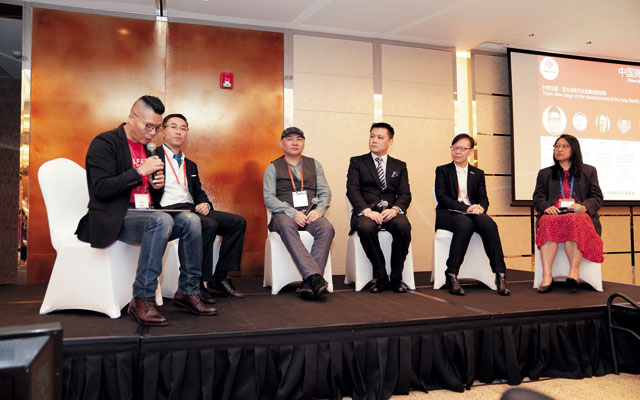
At a panel during the China Business Event Federation Forum, (from left): SMCC Council’s Albert Cao; Shanghai C&D International Travel Service’s Jeff Zhen; Skyway MICE Service China’s Yang Jiong; Shanghai Jinjiang Travel Holding’s Michael Li; BCD M&E China’s Carol Luan; and Sunflower Holidays Malaysia’s Mint Leong

Based on ICCA’s findings, Asia’s market share of association meetings has risen from eight per cent to 19 per cent from 1963 to 2017.

He described association meetings – characterised by smaller, shorter but more frequent events – as being the least affected by “recession and economic downturn”.

Williams noted annual growth of association meetings is around 10 per cent, with environmental management, disaster management, urbanisation, security/cybersecurity, food and water safety the hottest issues.

In addition, Williams pointed out: “Government recognition of, and investment in, the industry has also led to the development of regional associations.”

To demonstrate the rise of the region’s meetings industry, speakers at a panel highlighted the rise of “big numbers” and “big value”.

Nowadays, second-tier cities in Asia with the requisite infrastructure are capable of handling large groups and getting a slice of the pie, said Yang Jiong, president and CEO, Skyway MICE Service.

Yang added the region is also now home to big IT companies and other industries. Based on the individual industry’s growth, coupled with the economic growth of the region, will present more opportunities when combined with China’s Belt and Road Initiative.

But the industry is not without its challenges. Agreeing with Yang, Jeff Zhen, managing director, Shanghai C&D International Travel Service, observed the industry landscape in China was highly “competitive” with the entry of many players. The ability to value-add and the importance of service standardisation were also discussed at the forum.

Reviews

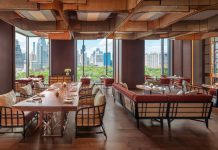
The Ritz-Carlton, Bangkok

The newly-opened Ritz-Carlton, Bangkok anchors the One Bangkok development with cosmopolitan elegance. Featuring the city's largest ballroom and a spectacular new penthouse suite, it delivers exceptional hardware and deeply authentic, soulful service for business and leisure travellers alike

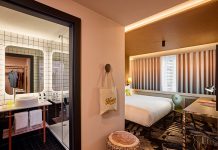
Mama Shelter Zurich

Behind the imposing, Brutalist concrete that defines Zurich’s Oerlikon district lies a surprising secret. While its exterior honours the neighbourhood’s industrial roots, stepping inside Mama Shelter reveals a vibrant, neon-soaked world that is a far cry from its rigid shell

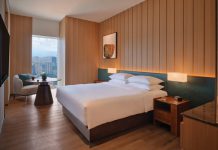
Hyatt Regency Kuala Lumpur at KL Midtown

A polished urban retreat designed for business travellers, Hyatt Regency Kuala Lumpur at KL Midtown combines thoughtful design, seamless service, and exceptional facilities.