Venue operator AEG Ogden Group has revealed that it is promoting two general managers, coming shortly after the group’s announcement that it has been appointed operator for the upcoming Te Pae Christchurch Convention and Exhibition Centre.
Speaking at AIME 2019 on Tuesday afternoon, AEG Ogden’s director of convention centres, Geoff Donaghy, announced that Cairns Convention Centre (CCC) general manager Ross Steele will manage the Te Pae Christchurch, which is on track for a October 2020 opening.
Hamilton moving into Steele’s vacated role in Cairns (Photo: Adelaine Ng)
Hours later, it was announced that Darwin Convention Centre’s general manager Janet Hamilton will move into Steele’s vacated role in Cairns.
Both Steele and Hamilton have impressive records in the industry, with the Association of International Congress Centres ranking CCC number one in the world under his watch; and Hamilton breaking records in terms of number of market bids and delegate numbers attending conferences in Darwin.
Both Steele and Hamilton told TTGmice that they will continue courting the Asian market in their new roles.
“In my previous appointment with Cairns we’ve been in Asia a lot, so I see that as a real opportunity for Christchurch to work especially with the association and incentive market in Asia in the long term,” said Steele.
Prior to the Christchurch earthquake in February 2011, Christchurch claimed 40 per cent of the Australasian events market for New Zealand, and the city is keen to regain its foothold in hosting conferences in the country.
Meanwhile, Hamilton says her successor, who is yet to be announced, will still need to work on changing Asia’s perception of Darwin.
“We’re the closest (Australian) city to Asia, so it’s actually (all about) getting that brand awareness out there for the territory,” she said.
Hamilton also revealed to TTGmice that Darwin has embarked on a research project into Asia focusing first on Singapore, which will see a delegation of potential clients visit the Australian city later this year. “And then we’ll broaden that as we continue our research and relationships,” she said.
HRS has unveiled its new Hotel Sourcing Report to provide intelligence on 2019 rate projections, the progress of continuous sourcing, rate trends in Shanghai and hotel scenarios for manufacturing companies.
Hotel sourcing is an an evolving practice, and as detailed in an ACTE Sourcing report from last year, 51% of companies have altered their approach to hotel sourcing in the past three years. Beyond changing the timing and frequency of their sourcing, multinational programmes are increasingly leveraging global performance data and benchmarking to drive better results.
HRS sheds light on rate trends and predictions as hotel sourcing evolves
Recent developments in hotel sourcing
Enhancements in automation and process improvement are making 2019 a watershed year for hotel sourcing. As detailed in last year’s ACTE report, more than 10% of companies have moved away from the traditional, once-a-year hotel RFP season to an engaged, year-round model.
Continuous sourcing ensures that companies can take advantage of rates fluctuating in select markets, as well as alter their procurement strategy as internal corporate priorities change. Continuous sourcing drives increased transparency in the relationship between corporates and hotel suppliers.
Hoteliers appreciate the elevated level of engagement from preferred partners that deliver consistent volume; corporate hotel programme leaders benefit from timely rate analysis that can drive faster implementation of newly-negotiated rates in all relevant shopping/booking channels.
With such benefits, it’s no surprise that 52% of programmes that practise continuous sourcing recorded both increased financial savings and flexibility. A whopping 44% measured increased programme compliance.
A deeper look at Shanghai as a business destination
Shanghai is China’s busiest hub for corporate travel and has retained
that status for several years. The government’s decision to create the country’s first free trade zone in Shanghai in 2013 has enhanced this position; more than 40,000 companies have established operations in Shanghai in the past five years.
While other first-tier cities like Beijing or Guangzhou have also seen major infrastructural changes, Shanghai has an advantage in its long history as an international hub. In the new millennium, buoyed by the opening of the free trade zone, the city has been transformed into one of the world’s most important and eclectic financial centres.
Overall in the Asia-Pacific, the hotel landscape is very fragmented. Ninety-five per cent of the hotels in the market are independent hotels, defining the environment as a pure buyer’s market. In Shanghai, specifically, market data showed an average rate increase for 2018 of 3.6% with an occupancy rate of 63% (source: ceicdata.com).
The traditional approach for hotel programmes is to drive high levels of optimisation; the main lever for improvements is the capability and willingness to innovate the approach. A growing number of hotel programmes are using an outsourced automated process (through benchmarking, volume bundling and alternative hotels), delivering rate decreases of 12% on average, with benefits in the quality of the hotel programme as well. In Shanghai, there are excellent opportunities for companies to save on all categories of hotels via automated outsourcing.
Here are the savings corporates were able to secure in 2018:
Corporates should aggressively negotiate to include Last Room Availability (LRA). An examination of Shanghai hotel contracts found a range of 60 to 87% of contracts including a clause for LRA.
Free Wi-Fi is a must. More than 90% of contracts include free Wi-Fi. Corporates should make this request up front in any Shanghai hotel negotiation.
*percentage of hotel contracts including LRA at the contracted rate
Data source: HRS analysis on 1 million room nights sourced for global clients in Shanghai in 2018
A deeper look at top vertical markets: manufacturing
Manufacturing firms book a significant number of hotel rooms around the world. With rare exceptions, manufacturing is a conservative sector when it comes to travel management. Hotel programmes are based on chains and historical agreements, despite the global market offering a fragmented landscape with 75% of global supply coming from independent local players. Leakage remains the main challenge to overcome.
Manufacturing companies also stand to gain from continuous sourcing, so they can take advantage of savings opportunities in different markets as rates evolve during any given year. Once-a-year hotel negotiations no longer suffice.
Based on sophisticated benchmarking and focused negotiation, the hotel programmes of more than two dozen global manufacturing companies reported rates (on average) 5% lower than average programmes.
In the past two years, HRS has found that manufacturing companies, in particular, have seen the quality of their hotel portfolios increase when they take advantage of outsourcing models during bidding seasons. As a result, these companies have registered increased traveller satisfaction, rising adherence to policies and better, the duty of care compliance.
Here are the savings corporates in manufacturing were able to secure in 2018:
As always, corporates in any vertical market should lock in LRA in their hotel supplier contracts. An examination of manufacturing company hotel contracts found a range of 58 to 69% of contracts including a clause for LRA.
Free Wi-Fi is a must. More than 90% of contracts include free Wi-Fi. Regardless of the vertical market, companies should make this a standard request in any hotel negotiation.
*percentage of hotel contracts including LRA at the contracted rate
Data source: HRS analysis on room nights sourced for global manufacturing clients in 2018
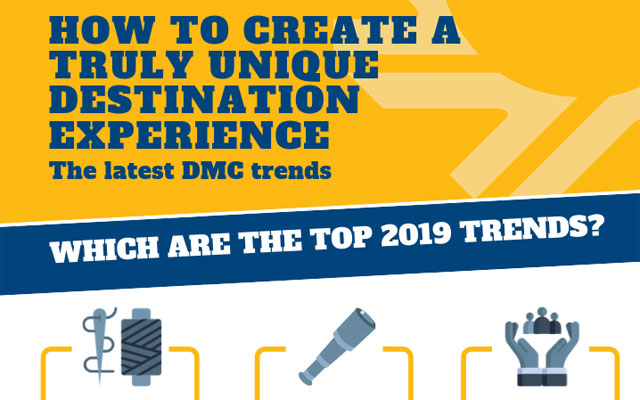
AIM Group discusses latest DMC trends in the White Paper
AIM Group International, a company specialised in congresses, events and destination management, has released a White Paper outlining the role and importance of DMCs in a changing environment.
“It is clear that nowadays the role of DMCs is evolving. Reserving accommodation, organising transport, booking restaurants or consulting event ideas are just a click away. Does that mean that DMCs are no longer needed? No, that is not the case,” Bob Novak, head of corporate & DMC department Prague office, argued.
AIM Group discusses latest DMC trends in the White Paper
Demonstrating that point, the White Paper specifies eight key reasons why clients can benefit from DMC services, from saving time to risk mitigation, economic savings and simplified finance management, and the ability to involve participants.
By having one partner to liaise with instead of a long list of local suppliers, clients can “cut out perfuse administration and simplify accounting and VAT recovery”, for example.
Meanwhile, the report noted that event organisation is a constantly evolving industry, influenced by new technologies, social change, new market offerings, and so on.
It highlighted top trends to watch in this changing environment, including:
– tailored experiences that are meaningful and have a direct link to the client or local community
– second-tier, emerging destinations or original locations
– greater social media engagement among participants
– CSR and local community legacies.
– ethical food: attention to organic, healthy, zero-Km requirements
– short notice and flexibility.
he move is part of the SIA group’s optimisation efforts
SilkAir is the only airline to operate a scheduled flight between the two cities
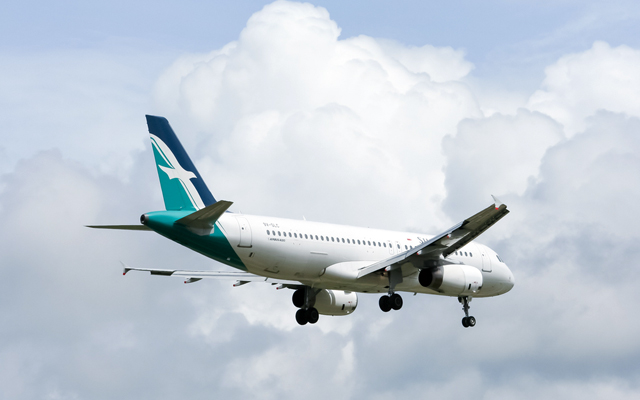
SilkAir, the regional wing of Singapore Airlines, will commence non-stop flights between Singapore and Busan, South Korea’s second-largest city, on May 1, 2019.
Busan is the first South Korean city added to SilkAir’s network, and Silkair is the only airline to operate a scheduled flight between the two cities.
The four-times weekly flight will be operated with Boeing 737 MAX 8 aircraft, offering both business and economy class cabins.
The property is built right next to the entrance of Ocean Park and a stone’s throw from the eponymous MTR station. As footbridges connect Ocean Park Station to the hotel, there are no traffic worries, and it took me less than five minutes to walk the distance.
Since the MTR connection to the south side of Hong Kong Island debuted a few years ago, it offers visitors an additional means of access other than buses. Travelling time from Admiralty Station to the park now takes only four minutes.
The hotel’s location is also close to hiking and jogging trails that lead through some of the Hong Kong’s finest coastline and country parks.
Rooms
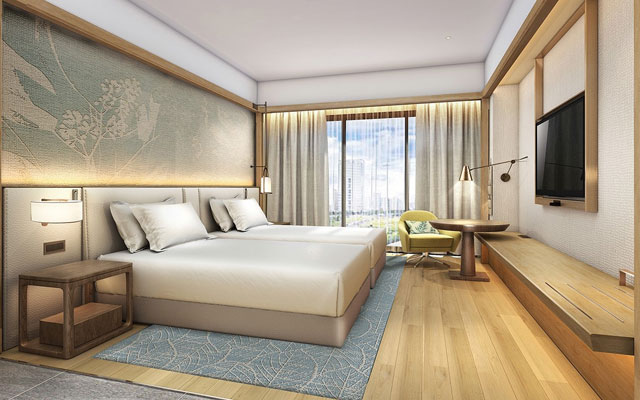
Hong Kong Ocean Park Marriott Hotel’s rooms are spread across three eight-storey towers.
My daughter and I stayed in the twin-bed, 29m2 Premium Room of Marina Wing which overlooks the swimming pool. I loved the abundance of USB and electrical plugs on the walls, which came in handy for the numerous electronic gadgets I brought along for work.
However, it would be more convenient if there was an additional wall socket near the coffee/tea corner as I preferred to make my capsule coffee while boiling hot water simultaneously.
Also, the lighting in the room was bright enough, and a drum pendant light above the writing desk allowed me to easily read documents at night.
Facilities
It was during the hotel’s soft-opening period when I stayed, so the Central Lagoon was not open yet (it just opened this week).
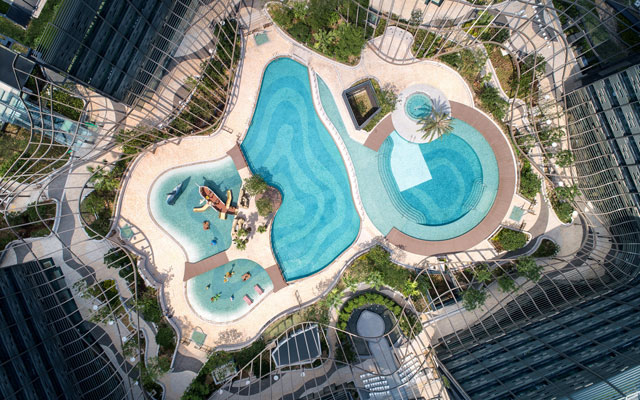
The landscaped 1,410m2 swimming pool has an upper pool for practice laps, as well as toddler and kid pools for families with young kids. Aside from the fitness centre that’s open 24-7, a Harnn Heritage Spa is expected to open on-site at a later date.
As a city resort hotel under Ocean Park’s umbrella, don’t miss the signature 16m-high floor-to-ceiling aquarium that spans across three floors of the hotel.
For business travellers, the Club Wing is also home to the executive lounge, M Club, who offers a quiet spot for work and bites. Function spaces on-site include a 1,200m2 pillarless ballroom that can hold up to 80 banquet tables, two outdoor venues and two meeting rooms.
For large groups, a dedicated check-in area is provided. Corporate groups can also make use of a dedicated entrance to Ocean Park when staying in the hotel, while event planners can easily organise teambuilding sessions, educational programmes or hold themed cocktail sessions in Ocean Park.
F&B
There are four F&B options spread across the property. I stayed in the Marina Wing, with access to the 171-seater, all-day Marina Kitchen & Marina Café and the 126-seater Pier Lounge & Pier Bar.
My Sunday morning breakfast at Marina Café was spiced up by the appearance of two of Ocean Park’s characters, which I provided fun moments for both kids and adults lining up for the photo opportunity.
In the Club Wing, there’s a 92-seater Canton Bistro for classic Cantonese cuisine, as well as a 118-seater steakhouse called Prohibition Grill House & Cocktail Bar.
Service
Friendly and attentive. I only realised that I left my jacket in the room 15 minutes after checking out. I called up the hotel to check and within 15 minutes, I received both a call and email asking what would be the best way for me to collect my stuff.
Verdict
It is not only ideal for family and multi-generational travellers, but also for FITs and business travellers as the Club Wing offers elevated experience.
No. of rooms 471 Rates From HK$2,950 (US$376) Contact details
Tel: (852) 3555 1688
Email: mhrs.hkgop.generic@marriotthotels.com
Paris: Ascott says bonjour with latest France opening
The Ascott has opened La Clef Champs-Élysées Paris in France, its third property under The Crest Collection.
The luxury serviced residence is housed in a five-storey Haussmannian-style building in the heart of Paris’ 8th arrondissement. There are 70 keys in a mix of suites and duplex apartments with balcony, which all come furnished with a fully-equipped kitchen, Nespresso machine, dishwasher and a washer-dryer.
Guests can avail of services such as the 24-hour concierge and room service, valet-parking, laundry, buffet breakfast, fitness suite, residents’ lounge, complimentary L’Occitane toiletries and high-speed Internet access.
Later in the year, the first restaurant in France by Michelin-star Singaporean Chinese cuisine group Imperial Treasure will also open within La Clef Champs-Élysées Paris.
Muscat: New airport opens in Oman
The brand-new Muscat International Airport in Oman has a handling capacity of 20 million passengers per year, with an expansion potential for 56 million. It can handle 40 flights per hour, with a new, wide runway that can accommodate the Airbus A380 and Boeing 747 aircraft.
The sultanate is also developing new airports in Salalah and Duqm, as well as building modern highways to connect interior destinations and improving its hospitality infrastructure.
Las Vegas: IMC breaks ground for The Expo at World Market Center
International Market Centers (IMC), owners and operators of World Market Center Las Vegas, has broken ground on the construction of The Expo at World Market Center Las Vegas, a new 29,264m2 exhibition facility.
Costing US$90 million, the completed exhibition space will feature more than 18,000m2 of space, and will be divisible into two halls. In all, the combined space can accommodate up to 1,000 booths. There will also be a lobby area, registration area, onsite shuttle bus depot, attached parking garage and two food service areas.
Construction is scheduled to begin fully in April, and the grand opening is expected for IMC’s Summer 2020 Las Vegas Market, a semi-annual marketplace for the gift and home furnishings industries.
The DoubleTree by Hilton Taipei Zhongshan has opened its doors in downtown Taipei, marking the second Hilton-branded property to launch in the city in recent months after the hospitality giant returned to Taipei following a 15-year hiatus.
This 14-storey offers 106 guestrooms including 11 suites, all equipped with the brand’s signature amenities such as a DoubleTree Sweet Dreams Sleep Experience bedding, alongside modern furnishings such as a 49-inch HDTV, Nespresso machine, and high-speed Wi-Fi. Some rooms also come with outdoor balconies.
Hilton Taipei Zhongshan
For exercise or relaxation, guests have access to a 24-hour rooftop fitness centre with training equipment and free weights. Business travellers also have access to the hotel’s meetings space, a 68m2 room that can hold up to 45 people complete with audio-visual equipment and an outdoor area for breakout sessions. Other amenities include the all-day dining restaurant Alley, and the La Salle lobby lounge.
The property stands 350m from the Zhongshan MRT train station, which provides easy access to Taiwan Taoyuan International Airport and Taipei Songshan International Airport. Guests can also explore nearby attractions such as the Museum of Contemporary Art and Linsen Park.
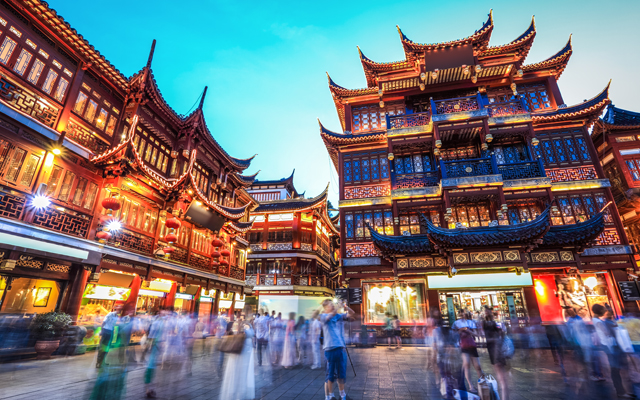
Yuyuan garden at night,traditional shopping area in shanghai, China.
Domestic business events demand to and from Shanghai in 2019 is expected to be stronger compared to Beijing and developments in southern China – such as the opening of the Hong Kong-Zhuhai-Macau Bridge and the US$3.9 billion mega Shenzhen International Convention and Exhibition Center – are expected to spur business and growth opportunities.
Kin Qin, deputy general manager, Century Holiday International Travel Group, said Shanghai continues to add new international air links, and there are plentiful domestic and overseas access choices to and from the city.
Julien Delerue, founder and CEO of 1000meetings, said domestic MICE demand for Shanghai is very strong and hotels rates are getting higher, which is a positive sign the market is doing well.
The technology sector and companies such as Alibaba, Huawei and Tencent, continue to drive demand, according to Sam Braybon, Shanghai ambassador, The Bespoke Travel Company, and the company is looking to extend its product range to Shenzhen to support business in the sector.
Meanwhile, 10-year-old 1000meetings, an RFP technology platform, recently set up a team to address the overseas outbound market, Delerue commented.
“The company has signed a partnership deal with Shangri-La worldwide, other international brands and independent hotels to raise their visibility in China,” he added, with increasing outbound MICE groups as the target for its second phase. – Caroline Boey
Business event players in Hong Kong are bracing for weakened demand in 2019, resulting from a global economic downturn and the US-China trade war.
Karen Cheng, director of BCD Meetings & Events Hong Kong, has estimated a downward trend in business for 2019 over 2018.
Rosanna Leung, head of MICE & business development, Towa Tours, echoed the expectation, saying that the Hong Kong market will likely respond with budget cuts. Further challenges will come in the form of increased presence of global business event players who compete with Hong Kong-based outbound events agencies.
When asked for predictions of top performing market segments, Cheng pointed to insurance companies which will maintain a hearty appetite for Japan, South Korea and Bangkok – destinations close to Hong Kong that also charm with good food as well as high quality and inexpensive shopping.
Leung believes that industry sectors specialising in new technology and finance will contribute the most business events bookings to Japan and Scandinavian countries, while Corporate Travel Management Hong Kong’s CEO Larry Lo expects banks, investment agencies and insurance companies to shine the brightest for his company.
Lo also noted a “growing trend for personalisation” among clients.
He said: “Hong Kong corporates are demanding for more innovative and unique venues, staff wellness and experiential learning opportunities, culinary experiences and a safe environment. And with an eye on cost efficiency, corporates are preferring to conduct a single, big event to consolidate activities and obtain bulk savings on transportation and accommodation.” – Prudence Lui
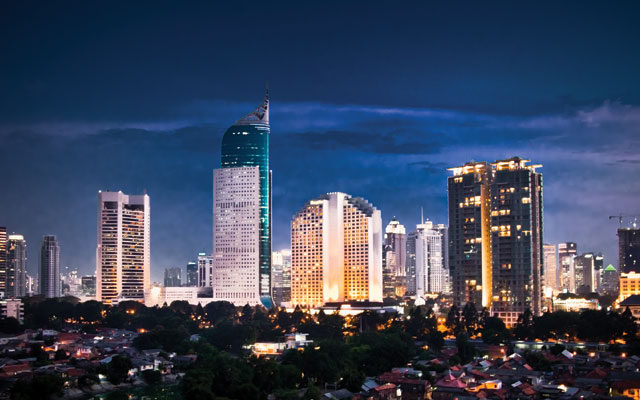
Panoramic cityscape of Indonesia capital city Jakarta at night
Indonesia corporates are hungry for business events both on home ground and outside of the country, noted industry players.
Multi-level marketing, automotive and heavy equipment companies are picking up in activity levels after a few sluggish years, observed industry players, while insurance companies are expanding their attendee numbers. Financial institutions are also organising more business events in and outside of Indonesia.
Rudiana, sales and marketing manager of WITA Tour said multi-level marketing, automotive, pharmaceutical and consumer goods companies “have put thousands of their members in our listing from year to year”. However, he cautioned that the rupiah’s poor performance and the resulting decline in consumers’ buying power might shift demand for longhaul destinations to shorter ones.
Simon Lomas, general manager of JI EXPO Convention Centre and Theatre Jakarta, credited the country’s “impressive economic growth over the past decade” for the strong corporate appetite for business events.
Jona Convexindo is seeing bigger exhibitions and awards events being planned for 2019 compared to 2018, noted director John Nainggolan.
With the country’s general and presidential election scheduled for April 17, 2019, business events demand and movement will likely slow down in the lead-up.
Destination wise, events specialists opined that Japan and South Korea will remain hot favourites for Indonesian incentive groups, due to easy visa processes and strong reach of digital destination marketing efforts.
Bali remains the top domestic destination option, as poor access and pricey airfares to other parts of Indonesia continue to make other local options less appealing. – Ade Siregar
While Malaysian companies are still incentivising their staff, travel spend on incentives have not improved much, mainly due to a weakened ringgit which isn’t showing signs of strong recovery in the near future.
Rosli Seth, managing director of Feel Japan with K, said: “Companies are requesting for more half-board packages, where one or two times during the entire stay dinner is not provided for. They say it is to give delegates a chance to explore on their own, rather than to reduce expenditure. But that is also how companies are managing their costs.
“Also, to catch the Sakura season, companies are opting to travel to Kawazu in the Izu Peninsula, where blooms happen from early February. This way, they save about 30 to 35 per cent on hotel rates as compared with a stay in Tokyo during the Cherry Blossom Festival (in peak March or April).”
Also pained by the weak ringgit, Abdul Rahman Mohamed, general manager at Mayflower Holidays, expects clients to turn away from longhaul destinations in favour of the more affordable regional ones.
Regional favourites among small and medium enterprises are Bali, Bangkok, Pattaya, Chiang Mai and Ho Chi Minh City, according to Nanda Kumar, managing director, Hidden Asia Travel & Tours. Malaysian clients are also favouring their own backyard for corporate incentives and teambuilding programmes, such as Langkawi, Penang and Pangkor Island. – S Puvaneswary
Parade of colorful smiling mask at Masskara Festival, Bacolod City, Philippines
The higher cost of travelling abroad due to the Philippine peso’s steep depreciation has not marred the appetite for foreign incentive trips, which remain the fastest-growing outbound business events segment.
Industry sources agreed that Europe remains high on the list for top-level corporate champions and it helps that Turkish Airlines and Middle Eastern carriers offer affordable airfares to the continent.
Bella Calleja, JTB’s manager for Corporate Team 2, MICE, said big corporations continue to reward their top sellers and dealers with their preferred European destinations although they will reduce the duration from say, 10 to eight days, and cut the number of countries featured in the itinerary.
For those on the lower rung of the ladder, Calleja said they are rewarded with Asian countries such as Taiwan, Thailand and Singapore.
Feliz Axalan, general manager, Tradewings Tours and Travel Corp. is “worried” about the impact on business events of the peso’s depreciation combined with the fuel surcharge that two Philippine airlines have imposed in 2018 due to rising fuel prices. She hoped to continue getting good rates with their airline partners to Europe.
Marlene Jante, president, Philippine Travel Agencies Association, noted that corporations will still send their top achievers to foreign trips all the more to reward and incentivise them, while meetings and conventions abroad still have to be attended for networking. – Rosa Ocampo
The volatile global political climate is expected to dent appetite for corporate travel to traditional longhaul business hubs from Singapore.
Geopolitical tension arising from the US-China trade war and Brexit has had a “dampening effect” on planners’ confidence in travel to the US and the UK, observed Crystal Sim, president & CEO, Albatross World.
Instead, longhaul incentives are heading elsewhere, to more exotic European destinations like Croatia, Portugal and Spain. Sim explained: “There will always be clients who will travel high-end. As long as there is no major economic malaise, people will travel, and we will continue to focus on luxury tours.”
Regional business cities are also gaining favour. According to a September study by YouGov, business travellers in Singapore rated Tokyo, Bangkok and Hong Kong as their top destinations. Tokyo was the top choice for respondents aged between 35 and 44, and those over 45 preferred Bangkok.
“Japan will be a hot destination in the next two years as it hosts the Rugby World Cup tournament next year and the 2020 Tokyo Olympics,” said Kerry Healy, vice president of sales Asia Pacific, AccorHotels. Singapore’s interest in Japan will be amplified by the partnership between the Singapore Rugby Union and JTB to promote rugby tourism to Japan and Singapore. To capture this crowd, AccorHotels last year opened the Pullman Tokyo Tamachi, featuring three banquet and meeting rooms. – Pamela Chow
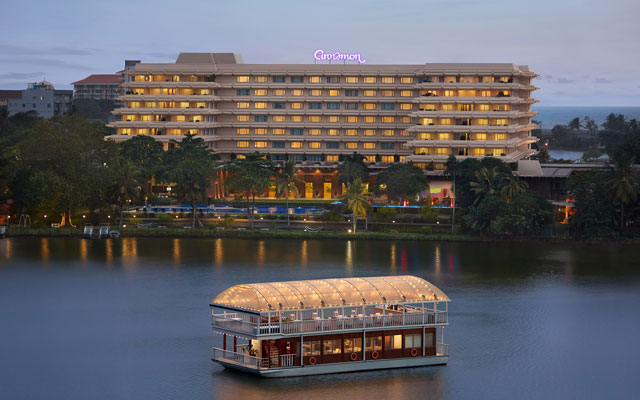
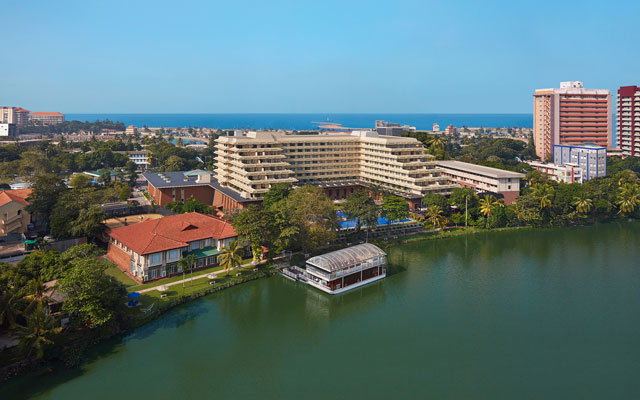
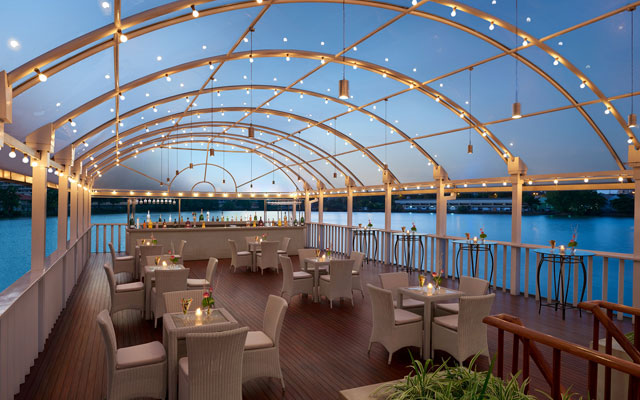
Cinnamon Lakeside Colombo in Sri Lanka has unveiled 8° on the Lake, billing it as the city’s first mobile floating venue in a five-star hotel.
1 of 3
8° on the Lake
8° on the Lake with attached pier
Deck area
The floating venue on Beira Lake boasts an open show-kitchen, two air-conditioned decks, a translucent roof and minimalistic, white interiors that can accommodate over 100 people. It is suitable for private events, business luncheons or intimate cocktail evenings.
Event planners can choose to float the pontoon during sunset for delegates to enjoy the stars through the translucent roof after; or dock it as an extension to the waterside or the hotel’s garden venue equipped with a pier.
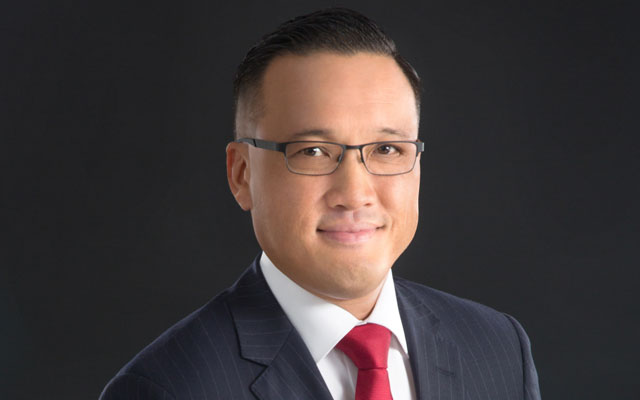
Singapore Marriott Tang Plaza Hotel has appointed Jason Leung as general manager, joining the hotel from his most recent role as general manager of Le Meridien Singapore, Sentosa.
The hotel veteran has more than 16 years of experience under his belt, having began his career in sales and marketing in the hospitality industry in Sydney.
In 2006, he assumed the role of business development director at Four Points by Sheraton, Sydney, and was quickly promoted to director of sales. He then transferred to The Westin Resort Nusa Dua, Bali in 2009, where he held various key management roles including director of sales & marketing, executive assistant manager and hotel manager.
Just 10 minutes from Phuket International Airport on the serene northern coast, this 178-key, Bill Bensley-designed resort offers delegates a quiet, tropical paradise steeped in Phuket’s tin-mining heritage
The newly-opened Ritz-Carlton, Bangkok anchors the One Bangkok development with cosmopolitan elegance. Featuring the city's largest ballroom and a spectacular new penthouse suite, it delivers exceptional hardware and deeply authentic, soulful service for business and leisure travellers alike
Behind the imposing, Brutalist concrete that defines Zurich’s Oerlikon district lies a surprising secret. While its exterior honours the neighbourhood’s industrial roots, stepping inside Mama Shelter reveals a vibrant, neon-soaked world that is a far cry from its rigid shell