Asia/Singapore Thursday, 1st January 2026
Page 725

Anderes Fourdy the chosen PCO for Asian Pacific Digestive Week in KL

0
The capital city has a successful track record in attracting and hosting large-scale congresses

PCO Anderes Fourdy has been appointed by the Malaysian Society of Gastroenterology & Hepatology (MSGH) for the upcoming Asian Pacific Digestive Week 2020, which will be held in Kuala Lumpur in September 2020.

Fu Kei Cheong, co-founder, Anderes Fourdy, said: “Our immediate task is to chart the direction to achieve the objectives of the MSGH Local Organising Committee. This includes providing strategic financial goals and studying the many venue options in Kuala Lumpur to provide the best return on investment for MSGH.”

The congress has returned to the Malaysian capital after a decade

Cheong said Kuala Lumpur had been chosen for the event as it had good air connectivity within the Asia-Pacific region, in addition to the appeal of a big metropolis. Close to 3,000 delegates are expected to attend the event.

Established three years ago, Anderes Fourdy has also been involved in other major international congresses on the abdomen medical sciences held in Malaysia such as the 14th Endoscopic and Laparoscopic Surgeons of Asia Congress 2018 and the 17th Congress of Asia Pacific Federation of Coloproctology 2019.

It has also played a prominent role of working with medical sciences non-governmental organisations in delivering quality congresses in Malaysia such as the International Forum on Disability Management 2016, 11th International Symposium on Paediatric Pain 2017 and 22nd World Congress of Enterostomal Therapists Biennial Congress 2018.

The Asian Pacific Digestive Week was last held in Kuala Lumpur in 2010.

Thai Airways smiles on corporates with CWT partnership

0

Thai Airways and Carlson Wagonlit Travel (CWT) signed a Memorandum of Understanding last Friday, making CWT the first travel agent to enter into a partnership with Thailand’s national carrier.

Under this agreement, CWT will sell the airline as a preferred choice and promote the airlines’ products in its corporate travel network. In turn, Thai Airways is hoping to pull in more business travellers. Thai Airways will also be aligning its sales activities with CWT with the partnership.

Officials at the signing

“Our clients look to us to provide a healthy range of options for business travel as they try to get the most out of their travel budgets,” said Wai Mun Wong, vice president, global supplier management, Asia Pacific, CWT.

She explained: “We want to give them the widest choice of business-relevant travel options, and partnering with Thai Airways makes a great addition to our offer in Thailand and the Asia Pacific region.”

Wiwat Piyawiroj, executive vice president commercial, Thai Airways, shared that the airline has been enhancing its inflight services to cater to the corporate travel market. This includes the introduction of a new service which is Live TV On Board.

“We can see that the sports segment and live news have become very popular. We have equipped 20 aircraft with Live TV On Board, which at the moment has four channels: BBC, CNN, NHK and Sport24,” elaborated Wiwat.

Thai Airways has consistently seen high demand from corporate travellers, but is aiming to increase its global reach and attract larger volumes of sales through the meetings, conference and exhibition segments.

Buoyant global economy to drive up air travel, hotel prices in 2019

0

Travel buyers can expect rising travel prices, more technology-driven personalisation and the continued ascent of ride hailing apps going into 2019, according to the fifth annual Global Travel Forecast recently released by GBTA and CWT with the support of the Carlson Family Foundation.

The report projects prices of hotels to increase 3.7%, and flights 2.6%, driven by a growing global economy and rising oil prices.

Global airfares and hotel rates are forecasted to rise in 2019

“Prices are expected to spike in many global markets even as inflation remains subdued,” said Kurt Ekert, president and CEO, Carlson Wagonlit Travel.

“The future of corporate travel can be summed up as accelerated personalisation – with mobile technology, AI, machine learning and predictive analytics all playing their part,” added Ekert. “Success is tied to technology, with sophisticated data-crunching at the very heart of it.”

The report forecasts that the aviation sector will be shaped by the introduction of ultra-longhaul flights and an increasing competition from LCCs, which are not only multiplying but also fighting for longhaul routes – and by the airlines’ push towards NDC.

Airfares are also expected to become more expensive due to rising in oil prices, the competitive pressure from the shortage of pilots, potential trade wars, and increasing fare segmentation to improve yield.

In Asia-Pacific, price of air travel is projected to increase by 3.2% in 2019 pricing. Chinese demand remains high and by 2020 the country is expected to become the world’s biggest air travel market.

In 2019, China’s flights are seen going up 3.9%, but the country will not be alone, the study shows. The vast majority of countries in the region are expected to see price rises, especially in markets like New Zealand (7.5%) and India (7.3%). The latter is expected to be the world’s largest aviation market by 2025, with airports operating beyond capacity.

Japan is the only country to buck this trend, with the study showing that prices will likely drop 3.9% due to added capacity in preparation for the Olympic Games in 2020.

Turning to EMEA, air travel is anticipated to continue growing in Western Europe, with prices rising 4.8%. The increase will be especially pronounced in Norway (11.5%), followed by Germany (7.3%), France (6.9%) and Spain (6.7%).

Eastern Europe and the Middle East & African countries, on the other hand, are projected to decline by 2.3% and 2% respectively.

Prices across Latin America are expected to drop 2% in 2019. However, México and Colombia will see slight increases –0.1% and 1.2% respectively – while Chile will experience a rise of 7.5%.

North America will see prices rise by a modest 1.8%, according to the analysis. In the US, airlines are recalibrating to reflect better areas of demand, depending on how trade relationships change with key US allies and adversaries, the study surmises.

The US aviation market is also expected to see capacity compression due to expanded fare fragmentation, with premium economy and basic economy reducing available seats, as carriers target margin improvement.

The increased air travel will in turn fuel the demand for hotel rooms

Meanwhile, the hotel outlook for 2019 is driven by the overall increase in air travel, which will fuel demand for rooms.

Technology will also play an important part as hotels introduce new developments to personalise the guest experience. The increase of mobile penetration, on the other hand, is forcing travel managers to offer their travellers apps, which could also serve to accommodate greater in-policy booking autonomy.

The analysis also projects further mergers in the hotels sector. Upscale hotels competing with midscale ones, due in part to a growing appetite for boutique accommodation among younger travellers, will also be on the agenda.

In Asia-Pacific, hotel prices are likely to rise 5.1% – with a large discrepancy as Japanese prices are expected to fall 3.2%, while New Zealand is set to rise a whopping 11.8%.

In Australia, 2019 and 2020 are expected to bring the largest number of new rooms becoming available, with an increase of 3.4% of total supply each year.

In Indonesia, Swiss-Belhotel International is embarking on an expansion of its budget brand, Zest Hotels, with plans to triple its portfolio of properties within three years. Singapore is embracing technology and smart hotels are on the rise. In Thailand, optimism is running especially high after a period of political tumult.

Mirroring air prices, hotel rates across EMEA are expected to rise by 5.6% in Western Europe, while declining 1.9% in Eastern Europe and 1.5% in the Middle East & Africa.

Again Norway will lead with a rise of 11.8%, followed by Spain (8.5%) – expected to replace the US as the world’s second most popular destination – Finland (7.1%) and France and Germany (6.8%).

Within Latin America, hotel prices are expected to fall 1.3%, with declines in Argentina (down 3.5%), Venezuela (down 3.4%), Brazil (down 1.9%) and Colombia (down 0.7%). However, Chile, Peru and Mexico are expected to see 6.4%, 2.1%, and 0.6% increases, respectively.

And for North America, the study projects hotel prices will go up 2.1% – 5% in Canada and 2.7% in the US.

Looking at ground transportation, prices are expected to rise only 0.6% in North America, while prices in the rest of the regions will remain flat. However, by the fourth quarter of 2019, travel buyers can expect to see a concerted effort by rental companies to raise prices, according to the study.

The projections also point towards a growing preference among travellers for ride-hailing apps while interest in high-speed trains is fading, due to high network costs and low-tech distribution systems.

On-demand, shared, electric, and connected cars are all expected to become more popular.

In Asia-Pacific rates will stay flat overall with increases in markets like New Zealand (4%), India (2.7%) and Australia (2.4%). In China, giant Didi Chuxing is making big bets on autonomous driving. This year, Uber has sold its South-east Asian business to Singapore-based Grab. Meanwhile, Indonesian Go-Jek is expanding to Vietnam, Thailand, Philippines and Singapore.

Prices in EMEA are expected to remain flat overall. However, countries like Finland, France, Germany, Italy and Spain are likely to see increases of over 4%, while Denmark and UK rates will grow 3% and 2% respectively. Norway will be in pole position with a 10% increase.

On the other hand, prices are projected to drop dramatically in Sweden (13.9% down) and very slightly in Belgium (0.9% down).

Prices in Latin America will also remain flat overall, according to the report, with strong decreases in Argentina (9.7% down) and Brazil (5.4% down) and a more moderated one in Mexico (0.3%). Chilean prices will be up 3.1%.

In North America, Canada is expected to see a 3.6% increase in 2019, but the overall region will only be up 0.6%. In the US, the Audi-owned, app-based car rental service, Silvercar, continues its aggressive expansion.

“While most major markets appear to be trending in the right direction, downside risks remain for the global economy given the rise of protectionist policies, the risk of stoking trade wars and Brexit uncertainty,” commented Michael W. McCormick, GBTA executive director and COO.

Fast tracking business events standardisation in China

0
Jack Yao
Jack Yao

What are the role, mission and vision of CCPIT Commercial Sub-council in promoting MICE in China?
As the official trade investment and promotion agency authorised by the Chinese government, CCPIT is an important bridge for economic and trade exchange and cooperation among domestic and international businesses.

It is an important force in promoting the development of an open economy and facilitate growth. As one of 23 industry sub-councils set up by CCPIT, the Commercial Sub-council focuses on, for example, the modernisation of services provided, the standardisation of conferences and exhibitions organised, international liaison, training and education.

CCPIT Commercial Sub-council, which plays inbound and outbound roles, is a bridge between international and domestic associations and MICE companies, and uses its international and domestic resources to promote the rapid and orderly development of China’s MICE industry and to build a platform for cooperation and exchange.

When did you assume the role of secretary general of CCPIT Commercial Sub-council and what are your goals in promoting MICE in China?
I have been secretary general of CCPIT since 2016 and my short-term goal is to integrate the resources of the MICE industry to organise activities such as forums, training, competitions and exhibitions in colleges and universities, etc.

The medium-term goal is to upgrade the MICE industry by organising forums, conferences, standardise data research, education and training, and to provide consultation to promote cooperation among government, related institutes and enterprise.

And the long-term goal is to leverage on CBEF to accelerate the sustainable and comprehensive development of China’s MICE industry.

China does not have a convention bureau. Can CCPIT Commercial Sub-council fill this role?
Local convention bureaus have been set up in different provinces and many of them are part of CCPIT local sub-councils, and many play the same role of a local convention bureau. CCPIT Commercial Sub-council, as one of 23 industry sub-councils of CCPIT, belongs to the same system as local sub-councils so we are able to cooperate with each other and streamline business transactions.

How can China create a unified strategy to promote MICE?
The development of China’s MICE industry varies from region to region and local convention bureaus adopt different policies to encourage and support MICE growth. They can jointly promote the development of China’s convention and exhibition industry through cooperation and win-win policies. CCPIT Commercial Sub-council is the channel of communication with these bureaus to realise a win-win effect of what we call “one plus one is greater than two”.

What are the role, mission and vision of the newly formed CBEF?
CBEF is a business event platform founded by the China Chamber of International Commerce Commercial Chamber of Commerce (CCOIC Commercial Chamber of Commerce). Its members include national meeting and exhibition and business incentive associations, influential business event enterprises, research institutes and universities.

Based on its core concept of “promoting China’s economic development via business events”, CBEF fuels the development of enterprise and association meetings, exhibitions and events and MICE business. CBEF aims to promote sustainability and the inclusive development of the industry by promoting enterprise improvement, strengthening national and international exchanges and cooperation among business communities, as well as to foster mutual understanding, sharing of experiences and to deepen cooperation.

As vice president of CBEF, what is your role and what do you want to achieve?
I am responsible for managing CBEF, regularly holding CBEF meetings, integrating resources of all parties and be the bridge between CBEF and its members.

In the short-term, I would like to create special CBEF activities that include the China Congress of Association and Chamber of Commerce, training courses and MICE-related industry standards.

As for the medium-term, I see the need to create a comprehensive transaction and communication platform to provide services such as forums, matchmaking events, industry standardisation, data research, education, training, consulting and so on.

The long-term goal is to set up a MICE industry platform for communication and cooperation between government and society to effectively promote the development of China’s MICE industry.

What are three wishes you have for the MICE industry in China?
I would say they are internationalisation, standardisation and compliance.

Since the Belt and Road Initiative was launched in 2013, China has actively expanded cooperation with countries along the Belt and Road and is committed to promoting globalisation. China’s MICE industry also needs to keep pace. We need to promote the MICE industry internationally, actively introduce international conferences to China and encourage related enterprises to venture out, increasing the international visibility of China’s MICE institutions and enterprises.

There is a saying that “third-rate enterprises make products, second-rate enterprises make brands and top enterprises make standards”, so standardisation plays a vital role in the development of enterprises and industries and help China’s MICE companies be on par with their international counterparts.

Advocating and encouraging MICE companies to establish a compliance management system is key to the healthy, stable and sustainable development of the entire industry.

First Asian MICE Cruise Conference to set sail at IT&CMA 2018

0
AMCC Panel

IT&CMA 2018 will debut the region’s first-ever Asian MICE Cruise Conference on September 18 as part of the show’s three-day business, education and networking programme.

Confirmed opinion leaders taking the stage include Dream Cruises’ president and Crystal Cruises Asia’s managing director, Thatcher Brown; Royal Caribbean Cruises’ managing director Angie Stephen; Worldwide Cruise Associates’ co-founder and president, Steve Bloss; Genting Cruise Lines’ senior vice president – international sales, Michael Goh; Silversea Cruises’ vice president, corporate & incentive sales, Freddy Muller; and Princess Cruises’ Southeast Asia director, Farriek Tawfik.

Asian MICE Cruise Conference panel

Said Karen Yue, editor of TTGmice and group editor of TTG Travel Trade Publishing: “The cruise industry is booming and MICE is undoubtedly the next big thing for the sector. Market leaders are already capitalising on the potential, while many are still coming into the game. TTGmice is proud to put forth this first and only platform of its kind in the region – an open conversation with the world’s leading cruise executives.”

Kicking off IT&CMA’s education highlights on its first day, this half-day event at the Bangkok Convention Centre at CentralWorld will feature an intense panel discussion led by cruise CEOs and an experts’ exchange on making the case for MICE cruises, among other sessions, as well as networking opportunities at its hosted breakfast, coffee break and luncheon.

On the motivation behind this conference, Darren Ng, managing director of TTG Asia Media said: “As a pioneer in the business events industry, TTG is always at the pulse of key developments impacting the profession. Cruise offers a huge playing field for its many stakeholders, where its potential rests on the immense collaboration between the private and public sector across verticals and geographies to ensure that the right policies, infrastructure, facilities, producs and services are in place.”

Organisers therefore expect 400 regional MICE stakeholders relevant to the cruise sector to attend, with at least half of attendees comprising of buyers covering corporate incentive, meetings and events, incentive trips, luxury travel, associations and academics. Hotels, resorts, airlines, destination management companies, government representatives from national tourism organisations, convention visitor bureaus and ports, and media professionals will form the remaining audience profile.

According to the Cruise Lines International Association (CLIA) 2017 Asia Cruise Trends, cruise capacity across all metrics (number of ships, voyages, operating days and passengers) has increased significantly since 2013 with greater uptrend expected in the foreseeable future. Asia remains at the heart of this growth with passengers from this region quadrupling over 5 years. Last year, passenger capacity was estimated at 4.24 million.

While leisure cruise demand has seen a revival, the concept of cruises as an appealing and viable option for business events is still relatively new. Shared panelist Tawfik of Princess Cruises: “Today, there is low awareness among organisers and companies that MICE events can be organised easily and held successfully onboard cruise ships. As a possible budget-saving, all-inclusive alternative to hosting a meeting at a luxury resort, cruises also offer plenty of interaction and teambuilding opportunities, as well as a unique experience to give delegates that “wow” factor, such as waking up in a new country every day while only needing to pack and unpack once. The advantages of a MICE event at sea are endless.”

Bloss of Worldwide Cruise Associates echoes the perspective that greater exposure is needed for MICE cruises. He said: “As a collective, we strive to foster understanding of what a modern cruise ship is, and make purchasers aware of how to buy cruises while embracing cruises’ different terms and requirements. Today, there are over 55 cruise lines, some 400 ships plus 100 new ships in the pipeline. It is possible to have an unbiased all-in-one cruise shopping experience with options that extend globally.”

In addition to being part of the inaugural conference’s panel, the organisation is also exhibiting under IT&CMA’s cruise cluster.

IT&CMA 2018 will be held from September 18-20, 2018 at the Bangkok Convention Centre at CentralWorld. It is co-located with the CTW Asia-Pacific – The Leading Corporate Travel Management Conference for the Asia-Pacific.

Hyatt Regency Zhenjiang opens in eastern China

0
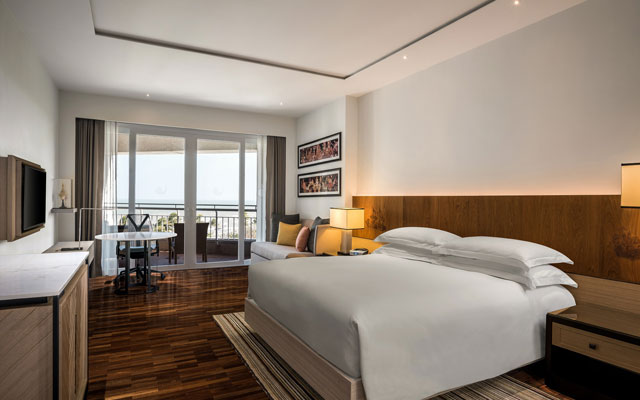
Standard Room

Hyatt Hotels Corporation has opened the Hyatt Regency Zhenjiang in East China’s Jiangsu province.

Set atop the East Tower of Suning Plaza – the highest skyscraper in Zhenjiang – the hotel will span the 59th to 76th floors and have 318 guestrooms, including 20 suites. Each guestroom will offer panoramic vistas of the Yangtze River or Nanshan Scenic Area through floor-to-ceiling windows, as well as in-room comforts such as free Wi-Fi, a 65-inch Smart TV, spacious working area, and a Nespresso coffee machine in suites.

Standard Room

Facilities include a rooftop helipad, four F&B options, a 25m-long indoor swimming pool, whirlpool, sauna and steam rooms, 24-hour gym, and yoga studio.

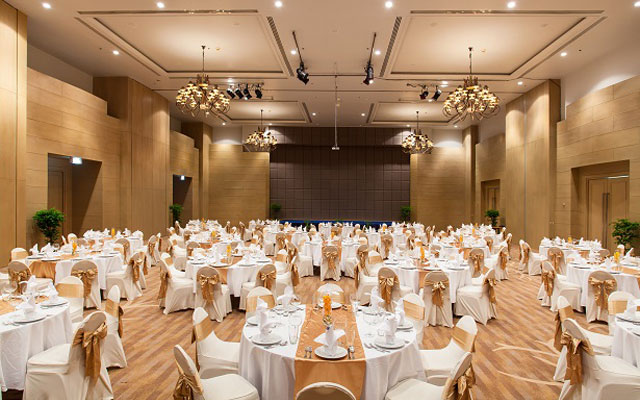
For events and functions, the hotel features more than 1,530m2 of space comprising the pillarfree 880m2 Regency Ballroom on the fifth floor which can accommodate up to 900 guests for a cocktail event or 450 guests for a banquet. There are also seven multifunctional meeting rooms on the fifth and sixth floors.

Located at the heart of the Da Shi Kou central business district, Hyatt Regency Zhenjiang is conveniently accessible to shopping, entertainment venues and famous tourism sites, including Xijindu Ancient Street, Beigushan Park, Zhenjiang China Vinegar Culture Museum and Nanshan Scenic Area.

The hotel is just 12 minutes from Zhenjiang Railway Station, 90 minutes from Nanjing Lukou International Airport and a 30-minute drive to the neighbouring city of Yangzhou via the Runyang Bridge.

TTG’s Michael Chow retires, Pierre Quek steps into new role

0

Michael Chow is stepping into an advisory role as publisher emeritus following his retirement after 30 years with TTG Asia Media.

While Chow’s position will not be replaced, the company has appointed Pierre Quek publisher of its TTG Asia Publishing division.

The appointments are effective tomorrow. Based in Singapore, Quek leads the group’s team of business managers overseeing advertising sales across its portfolio of integrated publication platforms including print, digital, in addition to new formats such as video solutions and social tech introduced in recent months.

From left: Michael Chow, Pierre Quek

The division has also re-structured its business development team by industry and geography verticals to better serve clients and the marketplace.

Quek works alongside Hong Kong-based Chimmy Tsui, who continues to drive the group’s efforts in the Greater China market as publisher of the group’s Chinese titles, namely TTG China and TTG-BTmice China.

The company’s roots are in TTG Asia Publishing, established in 1974 with the launch of the flagship title, TTG Asia. It now publishes other leading travel industry publications, including TTGmice, TTGassociations, TTG Asia Luxury, TTG India TTG China, TTG-BTmice China and TTG Show Dailies, led by an award-winning team of editors and the largest network of travel trade reporters in the region.

“Since its inception in 1974, TTG Travel Trade Publishing has evolved alongside the ever-changing and often challenging travel and media landscape. Michael’s business acumen, tenacity and passion for his work and clients over the last 30 years were instrumental in building the group to the leadership position it enjoys today.

“We are excited about our future prospects and believe that the present team will build upon Michael’s achievements,” said Darren Ng, managing director of TTG Asia Media.

The other three divisions of TTG Asia Media are TTG Maps & Guides Publishing, TTG Events and TTG Global Commerce.

Como Hotels and Resorts appoints new cluster DOSM Maldives

0

Singapore-based luxury hotel group, Como Hotels and Resorts, has appointed Fadzlon Bakar as cluster director of sales and marketing for the Maldives.

Fadzlon’s experience in the luxury travel industry includes three years with Shangri-La Hotels and Resorts, and 16 years with Four Seasons. She left Four Seasons to look after Alila Villas Soori in West Bali, which underwent a rebranding to become The Soori Bali.

Christopher James joins Ovolo Hotels as GM sales Australia

0

Ovolo Hotels has appointed Christopher James as its general manager of sales, Australia, managing sales across the Australian hotel portfolio.

His hospitality career spans more than a decade, and his previous appointments include assistant director of global sales (corporate and entertainment) at The Langham Hospitality Group, and business development manager at AccorHotels.

Michael Ayling takes reins at Blue Tree Phuket

0

Upcoming family entertainment complex Blue Tree Phuket in Thailand has appointed Michael Ayling as general manager.

Ayling has been working in a consulting capacity on the project for the past 24 months, but has now taken the reins to lead the development as it prepares for its public opening early next year.

The UK-born industry professional brings a wealth of experience to the role, including 12 years at Laguna Resorts & Hotels.

While working for Laguna Resorts & Hotels, Ayling oversaw the operations of eight different hotels and a golf course, in addition to property development, construction, marketing and sales operations for over 400 residences.

Prior to joining Laguna in 2000, he spent more than a decade working in the professional service industry for KPMG, initially at its Oxford, England office before relocating with the firm to Papua New Guinea.

Reviews

Hyatt Regency Kuala Lumpur at KL Midtown

A polished urban retreat designed for business travellers, Hyatt Regency Kuala Lumpur at KL Midtown combines thoughtful design, seamless service, and exceptional facilities.

A versatile powerhouse

Arena @ Expo, a multipurpose concert hall at the Singapore Expo is a flexible space for high octane concerts and lifestyle events.

Amari Bangkok

The five-star property excels in backing its expansive facilities with seamless service and personalised attention, setting the benchmark for luxury in Bangkok.