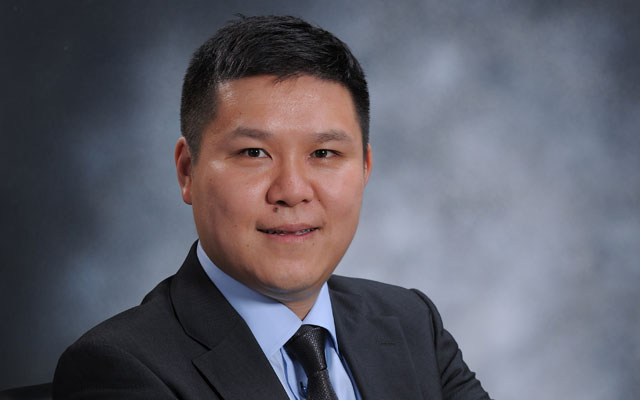
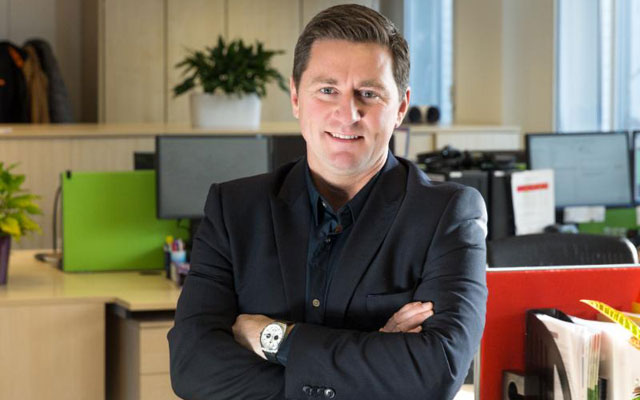
Franck Huang has been appointed head of development, China for Rosewood Hotel Group, which currently operates 14 hotels spanning its trio of brands – Rosewood Hotels & Resorts, New World Hotels & Resorts and penta hotels – in China.
Huang brings with him 15 years’ experience in the luxury hospitality industry and he was most recently vice president of development China at Marriott International.
The hospitality veteran has also held senior development roles at Starwood, where he spearheaded partnerships and deals for hotel brands such as Aloft, W Hotels and St Regis.
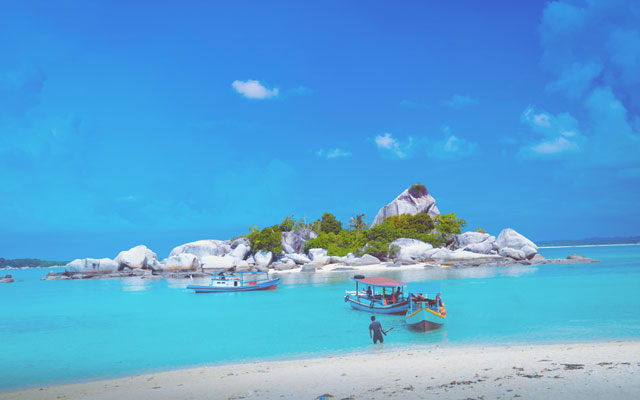
Tanjung Lesung beach, part of the affected Sunda Strait stretch
To speed up recovery of the tourism industry in the Sunda Strait area hit by a deadly tsunami last month, Indonesia’s Ministry of Tourism is now encouraging government agencies and other organisations to hold their events in Anyer and Pandeglang.
A coordination meeting with the local industry and government sectors has been scheduled for January 11.
Tanjung Lesung beach (pictured) was part of the affected areas
Arief Yahya, Indonesia Minister of Tourism said: “Our first (marketing) move is to (bring) events here. As the tourism minister, I invite government agencies and (other) organisations to organise their events here.”
The minister believes that the government-led move would speed up recovery, as was the case in Bali post Mount Agung’s eruption and Lombok following the earthquake and tsunami last year.
This is part of a three-step recovery undertaken by the government to get the affected areas on their feet, including trauma healing, institutional and destination rehabilitation as well as destination marketing.
Arief set a goal for the destination to be back on its feet within three months.
A devastating Sunda Strait tsunami hit the coasts of Banten and Lampung on December 22, causing damages along the tourism belt of Anyer, Carita, Labuan, Tanjung Lesung and Menes.
The affected areas were closed following the event, but operations gradually resumed from December 24.
According to Guntur Sakti, chairman of the Tourism Crisis Centre of the Ministry of Tourism, 69 hotels and villas were affected.
“Hotels along Carita Beach were the most severely damaged, (some) up to 90 per cent.
“While about 50 accommodations were not (directly) affected, they suffered just the same as no guest came to Carita following the tsunami,” Guntur said, citing data issued on December 25.
Banten, however, is not all about the beach, according to its provincial tourism authority.
Eneng Nuchayadi, head of Banten Tourism Office said: “Banten has many destinations and attractions – natural, cultural and man-made – located in Serang City, Serang Regency, Lebak, Tangerang City and South Tangerang City just to name a few.”
Some of the sites include Batoe Koewoeng hot water bath, the 25m-high Cihear Waterfall within the Halimun Salak mountain area and Banten Grand Mosque.
Tanjung Lesung is one of the 10 New Bali destinations the government has identified, with special economic zone and infrastructural development planned.
The city of Wellington in New Zealand will soon welcome a new conference and exhibition centre, with building approval having been recently granted by the city council.
Construction on the 18,000m2 venue, which will feature 10,000m2 of convention space spread across its top two floors and a 1,650m2 ground-floor exhibition gallery to accommodate touring exhibitions, is set to start next year.
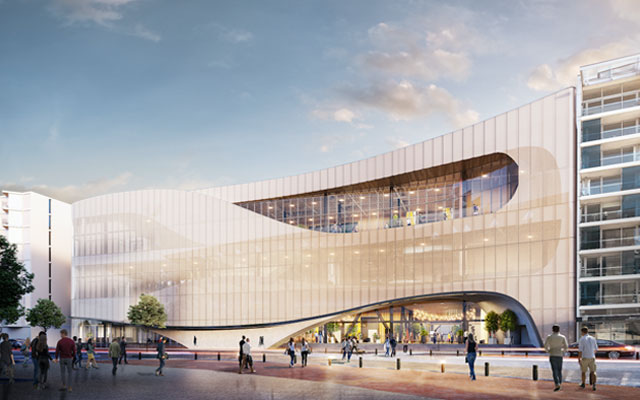
A rendering of the soon-to-be-constructed Wellington CEC
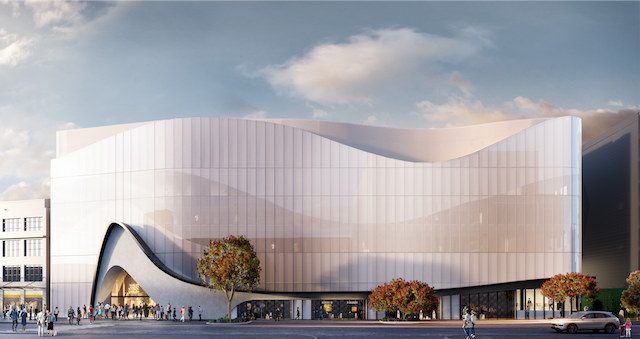
Designed by Wellington-based Studio Pacific Architecture, the venue draws inspiration from many sources including Wellington’s harbour, its wild weather, hilly landscape and Maori mythology.
Wellington Regional Economic Development Agency (WREDA)’s general manager, regional development destination and attraction, David Perks, said in a statement that the Wellington Conference and Exhibition Centre (WCEC) will “take things to a new level”.
For instance, the WCEC will enable the city to put in bids for larger international conferences, and put the city on equal footing with Auckland and Christchurch, where both have conference venues under construction, as well as Australia, where its major cities already have purpose-built convention facilities.
The completed WCEC will also free up Wellington’s core performance venues such as the Opera House and Michael Fowler Centre to focus entirely on performance events.
Perks said the business events market is currently worth around NZ$240 million (US$162 million) to the city, and added: “Business event visitors each spend on average NZ$299 a day compared to non-business event visitors who spend NZ$190 each a day. That spending gets spread across the city on things such as accommodation, transport, eateries and bars, and in the retail sector.”
Moreover, the new convention centre is slated to host 111 new events annually, delivering nearly 149,000 new delegate days to Wellington, stated a report by Business and Economic Research (BERL). This represents 16 per cent growth from the current position. The space is also expected to attract over 272,000 annual visitors, generating an additional NZ$3.8 million in direct visitor spend.
The building’s glass cladding emphasises the shimmering, sinewy skin which changes in transparency throughout the day
The BERL report also revealed the convention and exhibition spaces would contribute a NZ$90.6 million annual spend, adding NZ$44.8 million to Wellington’s GDP while creating 554 new jobs. It showed the three-year construction phase would generate an additional NZ$171 million spend, contribute NZ$76 million GDP to Wellington’s economy, and create 864 jobs.
Tourism New Zealand’s global business events manager, Anna Fennessy, said the development of a large-scale conference venue is a huge win for Wellington.
“International business events deliver a range of benefits beyond the significant economic contributions they provide to the local economy. They have the potential to generate long-lasting positive social change in our communities through the expert knowledge delegates bring with them and they allow Kiwis to share their expertise and knowledge too. The introduction of a large-scale conference venue for Wellington means these benefits will be absorbed across the region for years to come,” she said.
The International Congress and Conferences on Computational Design and Engineering (I3CDE) will leave its home base in South Korea for Malaysia’s Penang this year.
To be held from July 7-10, 2019 at ParkRoyal Penang Resort, I3CDE is by the Society for Computational Design and Engineering in South Korea and co-hosted by buildingSMART Korea, Asian Conference on Design and Digital Engineering (ACDDE), The Korea Contents Association, Korea Smart Factory Foundation and Korea Smart Manufacturing Industry Association.
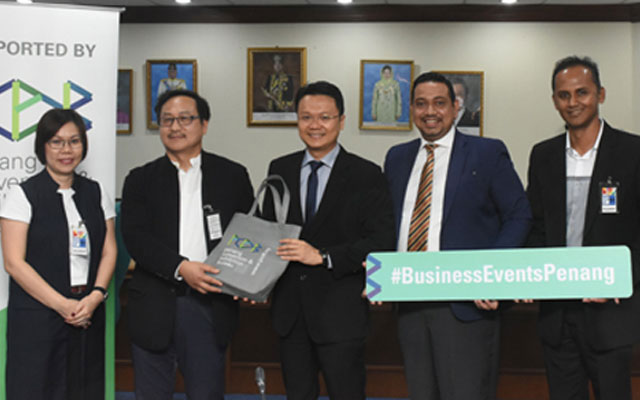
Organising chair of I3CDE 2019 Inhan Kim (second from left) Penang State’s Yeoh Soon Hin (centre) and PCEB CEO Ashwin Gunasekeran (second from right)
It is also supported by the Penang Convention & Exhibition Bureau (PCEB).
I3CDE 2019 will focus on computational design and engineering, where international experts in various fields will gather and discuss major issues and find solutions. Themes span from traditional computational design in all industrial areas to the new fourth industry issues such as big data and deep learning.
Participants are expected from Asia, Europe, North America and other regions.
“We are proud to welcome the upcoming I3CDE congress to Penang as the state is known as the Silicon Valley of the East for its industries, and is one of Malaysia’s most vital economic powerhouses,” said Ashwin Gunasekeran, PCEB’s CEO in a press statement.
“We are always looking to expand and improve on the Information Technology industry, as well as the Electric & Electronic and Manufacturing industry as they are recorded in the annual review published by PCEB as one of the main contributors to Penang’s economy,” he added.
Businesses and associations are increasingly incorporating a corporate social responsibility (CSR) element in their meetings and events programmes.
One of my favourite examples is by the International Congress and Convention Association (ICCA), which has for years substituted speakers’ gifts at its annual congress and General Assembly with a financial donation to a charitable organisation selected by the Local Host Committee.
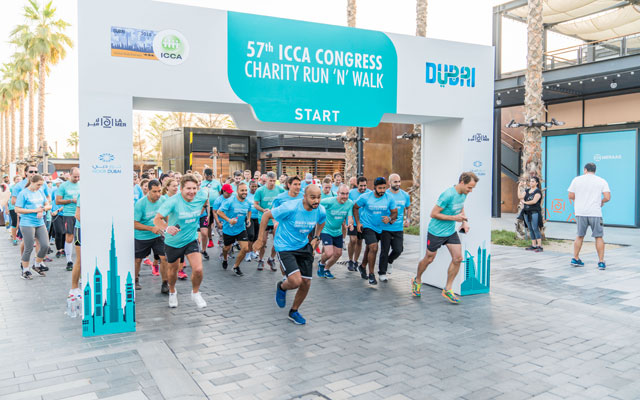
The ICCA Charity Run’N’Walk took place along the Arabian Gulf coastline at La Mer in Dubai
At its last two congresses in Prague and Dubai, a Fun Walk N Run was also organised for delegates who wanted to explore the city in a quick and fun way while taking the opportunity to offer a small financial donation to a local NGO. It was a great way to connect with other like-minded ICCA delegates and to start the day on an energetic note.
It is amazing how fast friendships can form this way.
Simultaneously, a grassroots project, ICCA Members Gift of Love (ICCA Members GOL), encourages delegates to bring a small gift with them to the congress. Since 2013, ICCA delegates have contributed wheelchairs, books, puzzles, children’s shoes, toys and spectacle frames to various NGOs around the world.
Past ICCA Members GOL partners include Local Host Committees and their selected charities – the Shanghai International Communication Center for The Disabled, China (2013); Losev Foundation for Children with Leukemia, Turkey (2014); Haciendo Camino, Argentina (2015); Malaysian Librarians Association Sarawak Chapter, Malaysia (2016); SOS Children’s Village, Czech Republic (2017); and Noor Dubai Foundation, the UAE (2018).
While everyone enjoys receiving gifts, even more people enjoy giving. I have seen how enthusiastically and carefully my fellow ICCA delegates have selected their gifts. Co-workers, mothers and neighbours have been recruited to expand the gift collection network as much as last-minute purchases at airports; with some even lovingly packed with a gift card and the warmest wishes.
Recently I participated in MICECON 2018, organised by the Tourism Promotions Board Philippines (TPB) in the city of Bacolod. Participants at this biennial national conference on business events – the sixth edition in 2018 – were encouraged to bring with them a small essential item in their suitcase. It could be a towel, blanket, children’s book or notebook with pen. These items were for the Holy Infant Nursery Foundation and the Bacolod Girls’ Home Foundation.
In addition, TPB worked with city officials – mayor Evelio “Bing” Leonardia and his team – and two food manufacturers which produce Bacolod’s famous delicacy, piaya (an unleavened flatbread). Tapping into the Philippines’ pasalubong culture or the practice of bringing home a food gift, the two food manufacturers Merczi and BongBong’s offered a percentage of their sales to the above-mentioned charities when any MICECON delegate produced his/her badge during purchase.
This was done not only at the factory outlets which were part of the pre-conference tour, but also at selected outlets around the city.
I was struck by the simple ingenuity of the organiser and its partners, and had no doubt that the two charities enjoyed a small boost in funding with the help of MICECON delegates who brought back their pasalubong to their families and work colleagues.
We do not need to try to save the whole world. If our conscious actions as an events organiser or a delegate can make a difference to just one individual, this is as good a start as any.
As part of the business events industry, we are a privileged community. Our work includes travel to exotic locations for learning, networking and business or partnership opportunities, and where the host communities welcome us so warmly and with such great hospitality. Doing good and giving back to the locals are just small ways of saying thank you and paying it forward.
We can make a difference.
Jane Vong Holmes is senior manager – Asia of GainingEdge, a consultancy specialising in the business events industry. She has co-authored two UNWTO publications on the Asian meetings industry and various destination market studies. She is an ardent advocate for giving back to communities through conventions and events. Most recently, she recently released a joint-report on universal accessibility in the meetings industry.
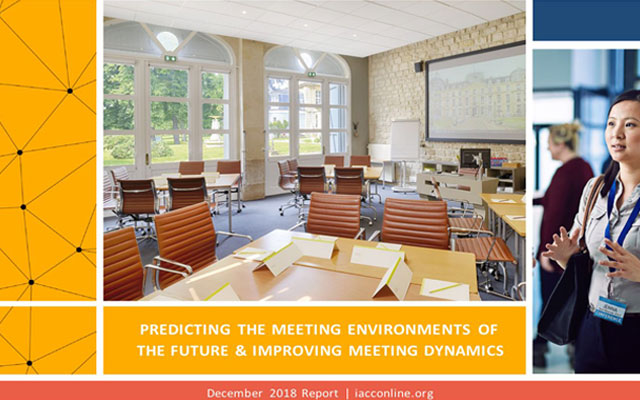
Experience creation is the top priority for event planners in Asia Pacific, according to IACC’s inaugural APAC edition of its Meeting Room of the Future report.
The report revealed that 66 per cent of the region’s meeting planners claim delegates now seek more engagement, personalisation and interactive technologies at business events than at any time in the past five years.
Having a dedicated Asia Pacific survey will help the industry understand regional differences in terms of delivery of meetings today
The trend is being driven by incoming generations with younger delegates looking for greater integration of new technology and mobile connectivity in business events, more opportunities for networking, collaboration and simulation, as well as shorter, more creative sessions.
The increasing appetite for memorable experiences means that planners are required to do more with less while being constrained by tighter budgets. The report, created in partnership with Biz Events Asia, shows that more planners are open to sharing their roles and responsibilities with venues and other third parties, with 59 per cent of respondents willing to outsource the off-site activity arrangements for delegates, and 56 per cent willing to outsource local services.
The importance of financial ROI has remained steady over the past five years in the region, illustrating the possibility that the importance of ROI in this market has always been high, and other elements critical to creating memorable experiences for delegates are shown a greater emphasis.
Meeting planners in the region consider in the following order of importance the venue elements to help create meeting environments that foster the greatest delegate productivity, collaboration, and generate the greatest ROI: interactive technology, venue flexibility, varied food and beverage offering, and event location and accessibility. In line with the 2017 global IACC study, access to interactive technology and the flexibility of meeting space are among the most important venue elements and will continue to be as important over the next five years.
Over the next five years, APAC planners are looking to incorporate more interactive technology that promotes delegate interaction and engagement. Audience polling and Q&A, although popular tools to generate engagement as per the global study (91 per cent), they have not proven as popular among Asia Pacific planners (63 per cent).
The report showcases the need for reliable and high-quality Internet infrastructure, with 50 per cent of respondents indicating that they would not consider a venue unless it had the guaranteed Internet capacity to support the needs of their event, such as video streaming; 61 per cent of respondents report that affordable or free high-speed Wi-Fi will be the most critical need for meetings in the next five years, versus 72 per cent in the global study. As a result, more venues are looking to include Internet costs in the venue hire fee or offer this as a complementary service.
F&B offerings have a powerful impact on delegate experience creation. More Asia Pacific planners report they are presented with dietary restrictions or custom dietary requests, in comparison the global study, with the highest number of dietary requests being vegetarian options at events.
In terms of meeting room design, respondents reported that flexibility in rooms such as the ability to move furniture, and the presence of alternative spaces for networking are the leading differences in the meeting spaces they need today versus five years ago.
The full Asia Pacific report is available for download here.
Macau remains a popular incentive destination thanks to a slew of old and new integrated resort (IR) developments that have kept business traffic coming back over time. And to remain at the forefront, the IR market has been constantly evolving and innovating to meet the increasing demands of luxe corporate incentives.
For instance, in addition to the ultra-luxury, Zaha Hadid’s Morpheus hotel (opened in June 2018), Macau welcomed MGM Cotai’s (opened in February 2018) striking jewellery box-design which houses dynamic theatre and entertainment facilities.
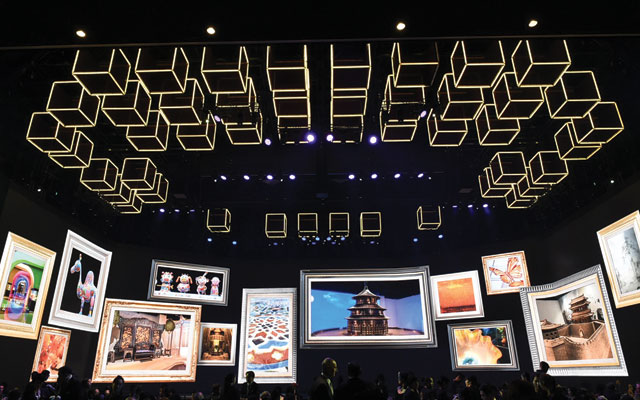
MGM Theater
The MGM Theater at MGM Cotai comes with a 900m2 4K LED screen – said to be the world’s largest of its kind. The theatre layout can be transformed to suit a group’s needs, be it for a gala dinner or a concert where 10 different seating configurations for up to 2,000 pax are possible.
“After our roadshows, we realised that a significant number of corporate groups are interested in using our theatre for a mix of events,” said Victoria Fuh, MGM’s vice president of resort sales.
Aside from the latest hardware, MGM Cotai is also running several promotions, such as a meeting experience which allows one to book a meeting space as well as accommodation at a special rate. The IR also offers art tours.
Other players have also developed new ways to add value to events hosted on their premises.
At Sands Resorts Macau, for instance, an on-site activity could include sunrise yoga or traditional Chinese taichi, held in one of the hotel gardens. Breakfast is taken care off as well. Other experiences that can be arranged include a Michelin-star street food experience in downtown Macau, and Portuguese cooking classes that incorporate a visit to the local market.
According to Sands China’s vice president of sales, Stephanie Tanpure, high-end incentive groups are mostly from longhaul markets such as Australia, the US and Europe.
She said: “While we capture medium- and large-scale incentive groups from across China and Asia-Pacific, it is the longhaul markets that are particularly drawn to the historical and cultural uniqueness of Macau.
“These international markets are very important to our growth strategy, as Macau and Sands Resorts Macau continue to evolve as a leading incentive destination within Asia. Personalisation is everything.”
That is why the Sands Resorts Macau team works closely with event organisers to ensure multiple touch points are created throughout the incentive journey.
“Incentive groups are an important segment of our business. Understanding what our customers want to achieve by hosting an incentive for their delegates is just as important as delivering on our integrated resort offerings. Once we understand what the objectives are, we encourage our team to personalise, anticipate and deliver,” Tanpure shared.
Over the next two years, Sands China will transform the Sands Cotai Central complex into The Londoner Macao. Like its other properties, the Italian-themed Venetian Macao, and the French-themed Parisian Macao, this property will be English-themed, and feature new entertainment and dining attractions.
By doing this, Tanpure believes that it will “offer huge potential for luxe incentives as we bring some of London’s most recognisable landmarks to Macau”.
As for the 400-key St Regis Macau, a venue popular with high-end corporate incentives, its spokesman said demand is expected to grow, thanks to the large proportion of return customers from neighbouring cities.
“With the opening of the Hong Kong-Macau-Zhuhai Bridge, we expect that to grow even more. Importantly, our efforts to push into markets including South Korea, Japan and India are beginning to show results, and we expect that growth to continue in the year ahead,” he said.
MCI Group’s director of live communications, Olinto Oliveira, told TTGmice that luxury incentives is “definitely on the rise”, as more groups are willing to invest in an event if it means delivering a unique experience for their guests.
He said: “Luxury groups want something that hasn’t been done before, or isn’t easily accessible. Such groups tend to be around 150 to 250 pax, and require extreme customisation.”
This is where the IRs come in perfectly, Oliveira opined, as they possess a robust in-house entertainment team and are able to create special touches such as a private viewing of a show, or integrating a specific entertainment act into a lunch or cocktail event. All these touches allow for unique experiences available only at specific venues.
He concluded: “Two concepts our clients are looking for are personalised and authentic. Groups look for elements and experiences that will resonate personally with each individual, yet still maintain an authenticity to the central theme of the experience.”
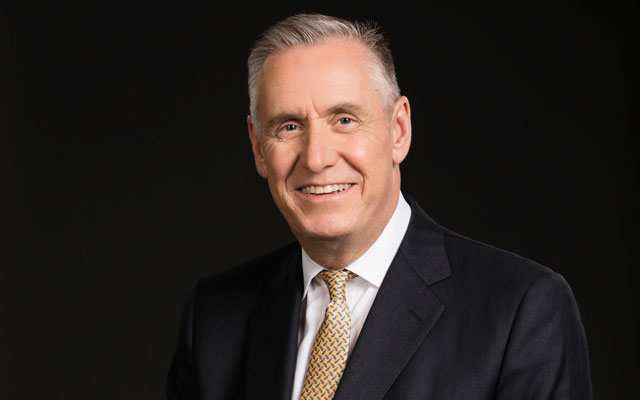
The International Association of Professional Congress Organisers (IAPCO) has appointed Martin Boyle as its new CEO, with effect from April 1, 2019.
He will take over from current executive director, Sarah Storie-Pugh, who will be stepping back into a part-time role within the association.
Boyle comes to IAPCO with a wealth of experience and a strategic vision that has been shaped over more than 20 years of working across a number of countries in the events and meetings industry. He has launched start-ups in Canada, driven sales at an international convention centre, worked with international associations while at a PCO in the UK and has, for the past six years, been the director of Europe for BESydney.
Lanson Place Hospitality Management, the hospitality arm of Wing Tai Properties, has appointed Michael Hobson as CEO.
Prior to joining Lanson Place, Hobson was chief marketing officer of the Mandarin Oriental Hotel Group and has played a pivotal role in their global development and brand efforts over a career spanning 25 years.
Hotel Nikko Bangkok at BTS Thonglor will be opening its doors at 27 Sukhumvit Soi 55 in Thailand next month.
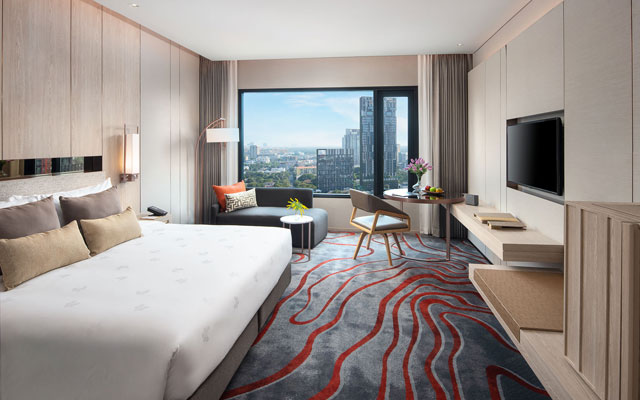
Located within walking distance from the BTS Skytrain Thonglor station, the Japanese luxury hotel boasts 301 guestrooms and suites, including 10 extended stay rooms featuring a kitchenette. Japanese bathrooms are a feature of the guestrooms.
The hotel will have four F&B outlets – Hishou Japanese restaurant, The Oasis all-day dining restaurant, Curve 55 lobby lounge and The Pool Bar. Breakfast choices include an international breakfast at The Oasis, or a full Japanese breakfast at Hishou.
As the group traditionally serves a mostly Japanese clientele with around 90 per cent of the guest profile from the corporate sector, meetings and events will be a major component of Hotel Nikko Bangkok.
Aside from the Fuji Grand Ballroom that can host 1,250 persons cocktail-style, there will also be eight small- and medium-sized function rooms together with an outdoor terrace and balcony which takes the total meeting space to over 1,800m2.
Just 10 minutes from Phuket International Airport on the serene northern coast, this 178-key, Bill Bensley-designed resort offers delegates a quiet, tropical paradise steeped in Phuket’s tin-mining heritage
The newly-opened Ritz-Carlton, Bangkok anchors the One Bangkok development with cosmopolitan elegance. Featuring the city's largest ballroom and a spectacular new penthouse suite, it delivers exceptional hardware and deeply authentic, soulful service for business and leisure travellers alike
Behind the imposing, Brutalist concrete that defines Zurich’s Oerlikon district lies a surprising secret. While its exterior honours the neighbourhood’s industrial roots, stepping inside Mama Shelter reveals a vibrant, neon-soaked world that is a far cry from its rigid shell