Stymied by limited space, the government-owned Philippine International Convention Center (PICC) is eyeing a nearby vacant lot, with the aim of building an exhibition centre.
A feasibility study is currently underway, brokered between the lot’s owner, the Cultural Center of the Philippines (CCP), and the Development Bank of the Philippines (DBP), the government’s infrastructure bank.
PICC is a convention centre located in the Cultural Center of the Philippines Complex in Pasay, Metro Manila
PICC general manager Renato Padilla shared with TTGmice that in the past, an exhibition held at the PICC was usually part of a congress, but the trend now is that the exhibition becomes the main event, where organisers sell the space on a per square metre basis or on a per booth basis.
That is why Padilla believes that there is a need for an international exhibition centre that connects to the PICC, where “we can exhibit heavy duty items such as military equipment, boats and trucks”.
Currently, PICC is part of the CCP Complex, which owns 60 hectares that will be developed into seven revenue-producing clusters. He hopes that CCP would be willing to sell a cluster to PICC for the supposed international exhibition centre.
Without the exhibition centre, the Philippines will not be able to bid for big trade exhibitions, and PICC would not be eligible to become a member of the United Federation of Exhibition Centers, as it did not possess the basic requirement of 30,000m2 of exhibition centre space.
Even with the combination of the three largest convention centres in Manila, the capital city offers no more than 30,000m2 of event space. PICC offers 5,000m2, while the World Trade Center and SMX Convention Center featured 10,000m2 each.
Padilla lamented that because of this issue, the Philippines lagged behind its regional neighbours, some of whom already boast structures as large as 100,000m2.
He further suggested that the Philippines should set up a convention and exhibition bureau, lamenting that “practically every city in the world” has one. The lack of one meant that the PICC had to market itself in order to lure business events.
“What we need is a mindset from the Department of Tourism to strengthen and work on selling and marketing the Philippines as a (business events) destination,” concluded Padilla.
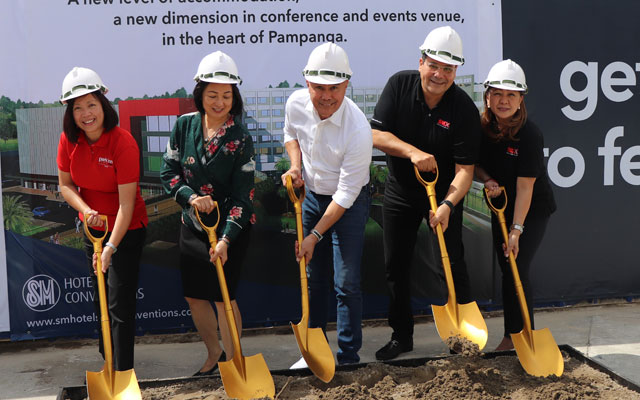
SM Hotels and Conventions (SMHCC) has announced that it has launched two major projects in Clark, Pampanga – the construction of SMX Convention Center Clark, and the expansion of Park Inn by Radisson Clark with 100 additional rooms.
Both projects are scheduled to open in 1Q2020.
A rendering of the upcoming SMX Clark and the Park Inn by Radisson Clark
SMX Convention Center’s vice president and general manager Walid Wafik said in a statement: “The SMX Convention Center Clark will cater to the increasing demand for more venues for MICE events being held in the Northern Luzon area. Instead of the clients travelling all the way from Northern Luzon to Manila to hold their big conventions and other events, we are bringing SMX Convention Center closer to them”.
SMX Convention Center Clark will have a gross leasable space of more than 4,000m2 over two levels, and a mezzanine floor for offices. To be constructed adjacent to the Park Inn by Radisson Clark extension, the convention centre will feature three trade halls, three function rooms, complemented by 14 smaller meeting rooms.
The groundbreaking ceremony
Similar to its flagship property in Manila, SMX Convention Center Clark will have eco-friendly features. A connecting bridgeway from the SM City Clark will easy access to and from the SMX Convention Center Clark, and the Park Inn by Radisson Clark.
SMX Convention Center Clark will be the second standalone convention center – after SMX Manila – and the eighth convention center in the SMHCC portfolio.
Meanwhile, Park Inn by Radisson Clark is also set to add another 100 rooms to its current inventory of 150 rooms.
Both SMX Clark and Park Inn by Radisson Clark will be situated a 20-minute drive from the airport via Manuel Roxas highway.
PAA looks to grow from hosting national conventions to a South-east Asian edition
The Philippine Association of Agriculturists (PAA) is working towards an annual regional convention beginning July next year, the first step towards expanding its reach amid the ASEAN economic integration.
It is scouting for an event management company to handle the initial convention, which will feature commercial and technology components, to be held in Manila for up to 5,000 delegates, PAA president Arthur R Baria said on the sidelines of the 6th Associations Summit of the Philippine Council for the Advancement of Association Executives (PCAAE) in Subic last week.
PAA looks to grow from hosting national conventions to a South-east Asian edition
Reaching out to Asia holds more meaning even as the Philippines is drafting the qualifying framework to align the competence and skills of its agriculturists to those in South-east Asia, said Baria, who is also Nestle Philippines’ assistant vice president and head of agribusiness development department.
Except for PAA, there is no professional agriculturists association in Asia but Baria sees opportunities for developing the regional network, exchange of technology, and employment opportunities, among other things.
Baria told TTGmice that while agriculture has high contributions to the Philippine economy, the sector is being left behind hence PAA’s goal to professionalise the industry, make agriculturists relevant on the frontline while promoting agriculture to students and the youth.
Set on its goal, within this year PAA has firmed up the accreditation of seven integrated organisations and 17 regional chapters all over the Philippines. Its sixth agriculturists convention held this year turned out to be the biggest, with 2,800 delegates.
The association has 4,000 members out of the 20,000 licensed agriculturists in the country and many more that are not licensed.
Being an agriculturist is an exportable skills, with demand from the US, Australia, dairy industry in New Zealand, Japan which has an ageing population, the Middle East, Africa and even for urban agriculture, said Baria.
He hopes that after the ASEAN convention, PAA can also tap the international community within three to four years through Filipino agriculturists scattered around the world.
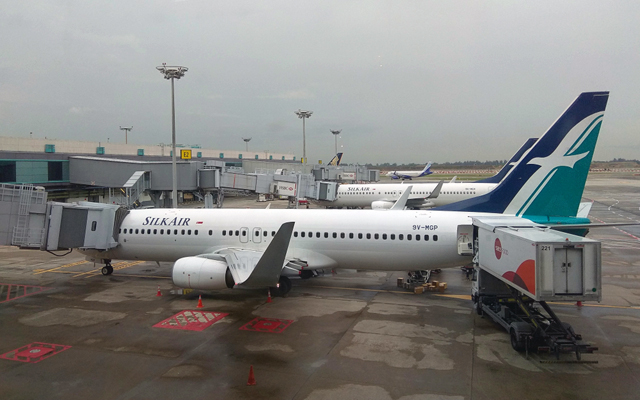
SIA Group’s low-cost subsidiary, Scoot, will take over some of the routes currently served by SilkAir, the group’s regional subsidiary of the SIA Group that will eventually be absorbed into SIA.
Scoot is to take over a number of SilkAir’s routes over the next two years, ahead of the latter’s merger into Singapore Airlines (SIA). Scoot will also be transferring some of its services to existing destinations served by SIA and SilkAir.
Expected to take place between April 2019 and the second half of 2020, the changes are the result of a review to identify which airlines in the SIA Group portfolio are best suited to meet evolving customer demand, according to a statement from the group.
Scoot, will take over some of the routes currently served by SilkAir, the group’s regional subsidiary of the SIA Group that will eventually be absorbed into SIA
The changes, which are subject to regulatory approvals, are planned as follows.
From SilkAir to Scoot:
• Luang Prabang and Vientiane in Laos, in April 2019
• Coimbatore, Trivandrum and Visakhapatnam in India, between May 2019 and
October 2019
• Changsha, Fuzhou, Kunming and Wuhan in China, between May 2019 and June
2019
• Chiang Mai (existing Scoot destination) in Thailand, in October 2019
• Kota Kinabalu in Malaysia, in December 2019
• Balikpapan, Lombok, Makassar, Manado, Semarang and Yogyakarta in Indonesia,
between May 2020 and July 2020
From Scoot to SIA (Both are existing SIA destinations):
• Bengaluru and Chennai in India, in May 2019 and May 2020
From Scoot to SilkAir (Both are existing SilkAir destinations):
• Shenzhen in China, from June 2019
• Kochi in India, from October 2019
In addition, SilkAir will be converting its Mandalay route to a seasonal service. Existing services will end in March 2019 and resume in November 2019, continuing until January 2020. Scoot will meanwhile be suspending services to Honolulu with effect from June 2019 as a result of weak demand.
Dates are indicative as a result of required regulatory approvals. Customers with existing bookings will be provided the option to switch to the new Scoot, SIA or SilkAir flights where possible, or be provided refunds.
“We are now at the half-way mark in our three-year transformation programme, and today’s announcement represents another development. The route review will strengthen the SIA Group for the long term, with the right vehicles in our portfolio of airlines deployed to the right markets,” said SIA CEO, Goh Choon Phong.
SIA announced in May that its regional wing SilkAir is to undergo a significant investment programme to upgrade its cabin products ahead of its eventual merger into SIA. The programme will see SilkAir’s cabins fitted with new lie-flat seats in Business Class, and the installation of seat-back in-flight entertainment systems in both business and economy Class.
The investments will ensure closer product and service consistency across the SIA Group’s full-service network.
Low-cost subsidiary Scoot’s fleet will meanwhile be expanded with the transfer of 14 Boeing 737-800s from SilkAir, while SilkAir will continue growing its operations in the years ahead as it takes delivery of new Boeing 737 MAX 8 aircraft.
Travel management company Carlson Wagonlit Travel has expanded its mobile air booking offering in 20 key markets around the globe, where travellers now have the option of booking their flights on the myCWT app.
Originally piloted in early 2017 and launched commercially in 2Q2018, the mobile air booking has been rolled out to the US, Germany, France, the UK, Canada, Switzerland, Austria, Italy, Australia, Poland, Brazil, Denmark, Hong Kong, Singapore, Spain, Ireland, Belgium, and the Netherlands.
Travellers in 20 countries can now book flights on the myCWT app
The app’s booking capability has a set of innovative features, including a “best time to book” indicator, which alerts travelers when prices are expected to increase, and recommends an optimal time to book.
Screenshot from the updated app
Meanwhile, a 24-hour search function gives travellers a complete list of options, including cheaper flights outside a specified window, simplifying the booking experience as well as saving costs for employers.
The app currently features check-in functionality for most major airlines, as well as notifications for flight delays, cancellations, gate changes, and safety and security travel alerts.
It also offers mobile hotel bookings for 850,000 hotels worldwide, calendar synching, traveller profile integration with loyalty programs, and advanced sharing functionality. CWT’s mobile air booking also supports global distribution system and low-cost carrier content, as well as client rates and preferred airlines.
A personalised travel safety app is aiming to encourage informed and engaged travel for leisure and corporate travellers.
In 2013, US-based technology company GeoSure launched its first phase of operations, offering hyper-localised safety rankings for neighbourhoods across the globe geared towards solo female travellers.
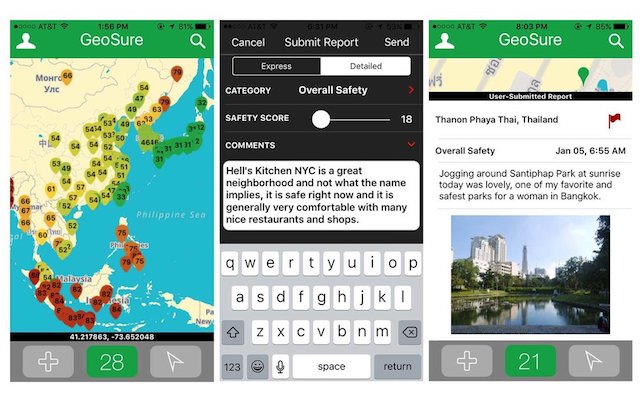
Screenshots from the GeoSure app
Using artificial intelligence (AI) and real-time, crowd-sourced data from a range of organisations, including the United Nations, World Health Organisation, Interpol and crime statistics, individual neighbourhoods are ranked from one to 100, with one being the safest.
“Safety is central to travel, and we want people to be more confident and inspired about travelling to any part of the world,” said CEO Michael Becker.
He added that the ultimate aim is to enrich travel experiences by providing detailed information on localised safety levels, which vary from neighbourhood to neighbourhood. Travel warnings are an example, where they are often unnecessarily placed on entire countries or regions, with detrimental effects.
He said: “If you put a travel ban or warning on an entire destination, it can have devastating impacts on the tourism economy when there may only be small parts of the country affected, while the rest is fine to visit. This app can help solve this problem.”
Becker: the app aims to enrich travel experiences by providing detailed information on localised safety levels
Operating on a B2C and B2B level, GeoSure is working with OTAs, TMCs, DMOs, tourism boards and other organisations to offer customers, employees and members hyper-local safety information.
While the app is free to download, GeoSure has also developed a premium, paid-for DoC (duty of care) product for corporates and multinationals. Under this, travel brands and organisations will be able to receive safety solutions and awareness and planning content.
Said Becker: “Hyper-local safety information provides timely, and monetisable, content for platform end-users. “I’m a solo female business traveller, what does the safety around my hotel look like?”, “How is the safety complexion of the neighbourhood where the business meeting is?”
Looking ahead, GeoSure is developing more features for additional travel segments. In September 2018, the second phase was rolled out, focusing on LGBTQ+.
Rooms
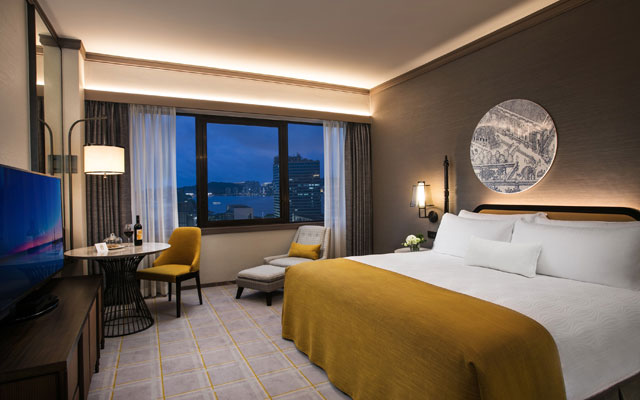
I stayed in the comfy 32m2 Grand Room (Grand Rooms are located on the 11th to 15th floor), with windows that overlooked the 15,000m2 resort. It was a pleasant view, as I could see Macau Cultural Centre at one end, and the harbour at the other.
The room’s overhauled design now comes with perks such as free in-room movies (for the Grand Room category and above), as well as amenities such as a Nespresso coffee machine, universal power sockets with integrated USB ports and dimmable lights.
My favourite is the bathroom, complete with a rainshower and a bathtub. While the shower area had several wall-mounted dispensers for shampoo and shower gel, I also found a complete set of Portuguese-brand amenities at the sink.
1 of 4
Lobby
Grand King Room
Kam Lai Heen Chinese Restaurant
Cafe
MICE facilities
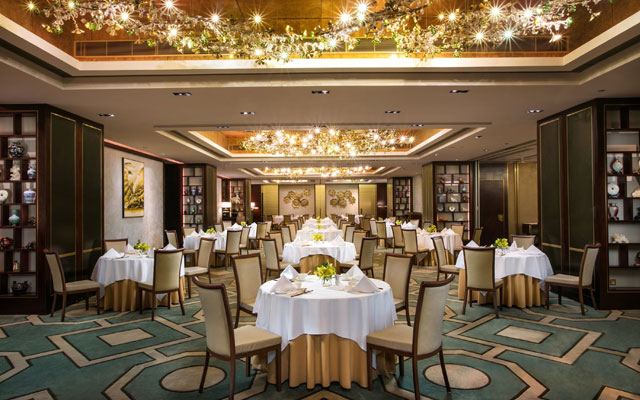
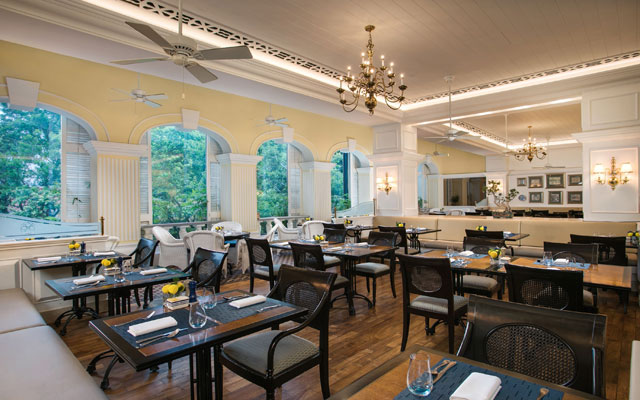
There are five F&B options, where several can be turned into event spaces. For example, the 300-seater Kam Lai Heen Chinese restaurant offers eight private dining rooms, up from three before the makeover. There is also a separate entrance for its largest space, the Lotus Room, which means more privacy for groups. There are rooms with built-in/drop down screens as well as the latest audiovisual system should groups require.
Other meeting spaces in the hotel include the 425m2 ballroom which can accommodate a maximum of 400 guests for cocktails, or 300 pax for a sit-down dinner; as well as three meeting rooms – with sizes ranging from 32m2 to 160m2 – on the 17th floor.
There are several outdoor venues as well, such as the 800m2 lawn and Naam’s garden, a Portuguese courtyard with a fountain. Both venues can be used for an intimate cocktail gathering.
Other facilities
The resort is equipped with an outdoor temperature-controlled swimming pool with waterfall, green lawn area, a hot whirlpool in the garden, tennis courts, fitness centre, aerobic studio, sauna, steam room, indoor Jacuzzi, and The Grand Lapa Spa.
Service
The premises are perfect for bleisure travellers. There is no doubt to its long-established attentive service culture so guests will be well taken care throughout the stay. Staff were quick to address guests’ requests or needs without delay.
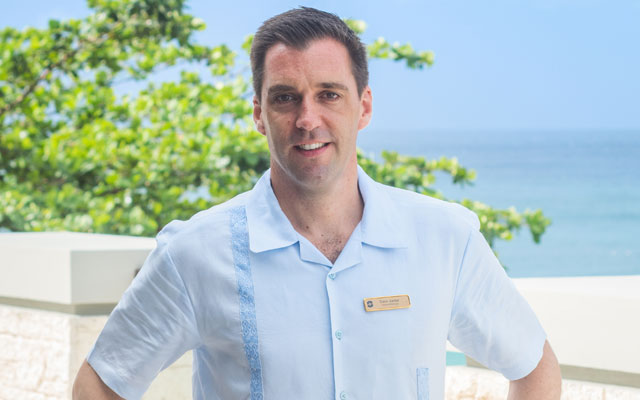
Dave Junker has joined Shangri-La’s Boracay Resort & Spa as its new general manager.
Prior to his most recent appointment at Shangri-La Hotel at the Fort, Manila, Junker has also been assigned to other Shangri-La hotels in South-east Asia, including Sule Shangri-La, Yangon; Shangri-La Hotel, Chiang Mai; Shangri-La Hotel, Bangkok and Shangri-La’s Mactan Resort & Spa, Cebu.
A Luxembourg national, the seasoned hotelier has close to two decades in the industry, and was also stationed at luxury hotels in the UK, the US, India and the UAE before joining Shangri-La.
Hotel ICON is an award-winning luxury property housing 262 upmarket rooms. Located in the bustle and energy of Tsim Sha Tsui in Hong Kong, Hotel ICON is a modern, uniquely designed property with a commitment to delivering unrivalled guest comfort and featuring a wide range of dining choices for both leisure and business guests.
In addition to being a top-rated business hotel on TripAdvisor, Hotel ICON is also a training school for the next generation of hospitality leaders. Owned by Hong Kong Polytechnic University, Hotel ICON was opened in 2011 by Richard Hatter, the hotel’s general manager and adjunct professor, and operates as a research and training facility for the School and Hotel of Tourism Management in Hong Kong.
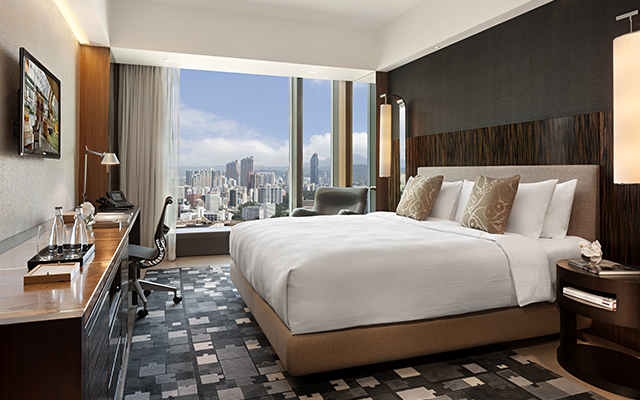
Photo: Suite bedroom
Attracting Higher-Value Guests in a Competitive Market
“Hotel ICON operates in one of the world’s most competitive hospitality markets and at very high occupancy levels—all of which means there is little margin for pricing error,” said Hatter. “Our executive team is always looking for ways to not only enhance guest experiences, but also improve the returns from our inventory and maximize revenues.”
Hotel ICON has a large inventory of upmarket club rooms and suites boasting superior amenities and accounting for 38.5% of the hotel’s total room inventory. Demand from guests, however, has traditionally been overwhelming for the property’s standard rooms, compared to higher-priced rooms. Demand for standard rooms from January to December 2017 was 126% compared with 40% for club rooms and 54% for suites.
“Our executive team was challenged by how to best lift revenues when market demand for our room inventory from guests was largely focused on lower-rated room categories,” said Hatter. “We quickly realized we needed a new approach with a best-of-breed revenue management system that could assist with room-type pricing and yielding.”
Photo: Lounge area
Returning to the Market Leader
Hotel ICON had been working with a different global revenue management system (RMS) provider but had experienced limitations with the system. Given the advanced automation and room-type management needed, Hotel ICON chose to work with IDeaS, a company the management team had previously enjoyed a successful relationship with.
“We had used a different IDeaS product previously, as well as another revenue management solution, and were confident that IDeaS G3 RMS’s unique ability to assist with room-type management and yielding, along with IDeaS’ solution for meeting space revenue management, was the best choice to drive revenue and profitability for the next stage in our revenue management journey,” said Hatter.
Through its adoption of IDeaS G3 RMS, Hotel ICON achieved optimal RevPAR performance through rate increases and by selling the higher room categories at suitable market prices. Importantly, this process helped minimize overbooking entry-level rooms and forced upgrades, a key area of opportunity many hoteliers are challenged by in the hyper-competitive Hong Kong market.
“Previously, increased demand would simply push the selling price of our room inventory higher across all room categories,” said Hatter. “Today, with the advanced IDeaS G3 RMS, Hotel ICON can accurately forecast and price our room inventory based on different room categories. This is a significant development for our property.”
Early Rewards
Since returning to work with IDeaS and implementing the industry leading G3 RMS solution, Hotel ICON has experienced significant improvement in the performance of the property’s higher-value room categories. Within three months of the G3 RMS installation, Hotel ICON saw year-on-year RevPAR growth of 4.51% for its higher-value club and suite rooms, driven by a 7.35% increase in ADR.
“When we looked to update our approach to revenue management, we committed ourselves to changing our strategies over the long term,” said Hatter. “We are pleased that since returning to work with IDeaS, Hotel ICON has experienced tangible improvements in the performance of our club and suite room categories, which has contributed to a signficant uplift in revenue over a short space of time.”
Thinking Outside the Guest Room
Going forward, Hotel ICON will also implement Smart Space by IDeaS, making their property the first in Hong Kong and China to benefit from the innovative, web-based tool which provides unparalleled visibility into meetings-and-events demand. Smart Space seamlessly pulls data from other sales tools to strategically manage function space events, allowing hoteliers to collaborate and create ideal pricing scenarios for group business.
“The positive results we have witnessed with IDeaS to enhance revenues from higher-value room categories gives us tremendous confidence we will see similar improvements from our meetings and events,” said Hatter. “We look forward to continuing our growth with IDeaS as we aim to enhance our total revenue performance.”
About IDeaS
With more than 1.6 million rooms priced daily on its advanced systems, IDeaS Revenue Solutions leads the industry with the latest revenue management software and advisory services. Powered by SAS® and with nearly three decades of experience, IDeaS proudly supports more than 10,000 clients in 124 countries and is relentless about providing hoteliers with insightful ways to manage the data behind hotel pricing.
IDeaS empowers clients to build and maintain revenue management cultures—from single entities to world-renowned estates—by focusing on a simple promise: Driving Better Revenue.
IDeaS has the knowledge, expertise and maturity to build upon proven revenue management principles with next-generation analytics for more user-friendly, insightful and profitable revenue opportunities—not just for rooms, but across the entire hotel enterprise. For more information, visit www.ideas.com.
About Hotel ICON
Unlike any other, Hotel ICON is an upscale Hong Kong hotel in the heart of Tsim Sha Tsui East. Standing as a testament to Hong Kong’s creative energy and vibrant arts scene, Hotel ICON showcases work from the city’s celebrated designers and the world’s most acclaimed architects. Offering the ultimate in comfort and committed to service excellence, Hotel ICON’s 262 stylish guestrooms comprise seductive extras, including complimentary wired and Wi-Fi internet connections, smartphone with unlimited mobile data and an ultra-slim 40” Ultra High Definition LED TV. Located on level 9, Hotel ICON’s Angsana Spa is a tranquil oasis while the harbour-facing outdoor swimming pool and fitness centre allow guests to exercise while enjoying views of Hong Kong Island’s spectacular skyline.
With a maximum capacity of 580 persons, Hotel ICON’s grand Silverbox ballroom is the ideal venue for a celebration or theatre-style conference. Hotel ICON houses three restaurants: Above & Beyond, The Market and GREEN, providing guests with exceptional quality of the food and impeccable service. wallpaper* magazine included Hotel ICON in its 2011 list of the world’s Best Business Hotels and DestinAsian included the hotel in its Luxe List 2011. The premier hotel has also won in 2 categories including the Top 25 Hotels in Asia in the 2017 TripAdvisor Traveler’s Choice Awards. Join us by following our official social media accounts at @hoteliconhk and share your memorable moments with us by using the hashtag #hoteliconhk.
Best Western Hotels & Resorts has appointed David Calvet as general manager of Tawaravadee Resort, BW Signature Collection by Best Western, in Thailand’s Prachinburi province.
The hotelier possesses an extensive knowledge of Thailand’s hospitality industry, having worked for for a series of international hotels in Bangkok and Phuket over the last 20 years.
Calvet was most recently the general manager of ibis Styles Bangkok Sukhumvit 50. Previously, he also held senior management roles with a series of well-known hotel brands, including Novotel and Sheraton. He also spent more than three years as directeur général of École d’Hôtellerie et de Tourisme Paul Dubrule, an international hospitality school in Siem Reap.
Tawaravadee Resort is Best Western’s first BW Signature Collection by Best Western property in Asia.
Just 10 minutes from Phuket International Airport on the serene northern coast, this 178-key, Bill Bensley-designed resort offers delegates a quiet, tropical paradise steeped in Phuket’s tin-mining heritage
The newly-opened Ritz-Carlton, Bangkok anchors the One Bangkok development with cosmopolitan elegance. Featuring the city's largest ballroom and a spectacular new penthouse suite, it delivers exceptional hardware and deeply authentic, soulful service for business and leisure travellers alike
Behind the imposing, Brutalist concrete that defines Zurich’s Oerlikon district lies a surprising secret. While its exterior honours the neighbourhood’s industrial roots, stepping inside Mama Shelter reveals a vibrant, neon-soaked world that is a far cry from its rigid shell