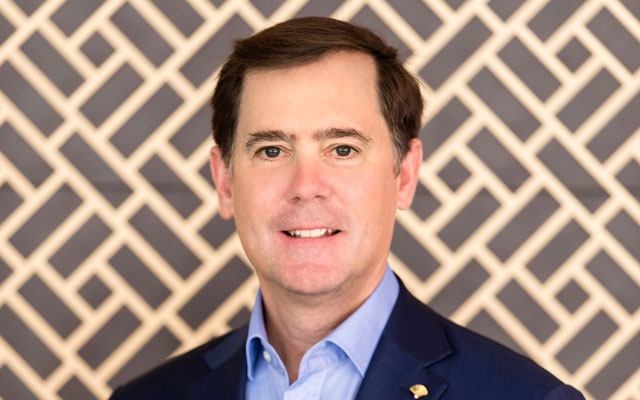
How did a Sydney boy end up with a business in China?
I came to China in March 2012 with the intention of starting a restaurant in Shanghai. I did my business plans and realised I would fail.
I then figured I love travel, so I should have a job in that area. So I sought employment with Shanghai Sideways (now called Insiders Experience), a motorcycle tour company in China. I invested in its Xi’an expansion, and I ran the China operations.
Eventually I desired broader experience, and moved to BI Worldwide China (as events business development director) in 2014. I left 3.5 years later, longing to stretch my wings further. Now I run my own events company.
Shane Ullman
Tell me about your company.
Travelevents.Asia seeks to fill the gap in high quality service in China’s business events industry. As a DMC we will offer an elite fleet of cars and experienced chauffeurs trained by me – first in Shanghai, then in Beijing. There is a big shortage of experienced drivers in China who are conversant in English.
I’m also looking to eventually train my own team of tour guides who will be able to tell an accurate ancient history of China.
Will Travelevents.Asia handle overseas meetings management too, which you specialise in?
I’ve been doing only outbound meetings in the last five years, taking Chinese corporate groups of 50 and 300 people overseas. My company handles both inbound and outbound meetings.
But I’m hoping to develop the inbound business more. I’m first targeting Australian companies keen on coming to China. I’m exhibiting at GetGlobal (in Sydney) this July, and will be telling Australians that if they want an Australian to plan their next business trip to China, come to me.
What events are coming up for you?
An incentive to Beijing at end–April, with participants from all over the world. The market in China gives very short notice, with bookings coming in two or three months to event date, so I expect to be getting more events in the coming months.
India’s US$40 billion business travel market is expected to remain unfazed even though there has been a steep depreciation of the Indian rupee.
“India is the fastest growing business travel market in the world. I think that the rupee depreciation offers an opportunity to Indian companies, as services and products from India will become cheaper and this can be an accelerator for businesses,” said Gaurav Sundaram, regional director of GBTA India, on the sidelines of the GBTA Conference 2018 in New Delhi that took place on September 14.
Services and products will become cheaper due to the depreciation, but this may act as a catalyst for businessI
In 2018, the Indian rupee has performed the worst, with a depreciation of 13 per cent in value this year. It dropped more than a percentage point to 72.6 a dollar on September 17, in spite of India’s finance minister Arun Jaitley announcing a plan to lower the country’s current account deficit, stressing the falling rupee must be dealt with immediately.
However, Sundaram shared: “India is the seventh largest global business travel market and it will continue to be the fastest growing at 12 per cent year-on-year.”
Harvinder Singh, country manager, India, United Airlines & director, United Airlines Business Services, added: “The corporate travel business is growing year-on-year above 10 per cent which is excellent. We have not seen any impact of rupee depreciation at this point of time.”
“Overall the industry sentiment remains positive with business travel witnessing a double digit growth,” Arnab Mukherjee, vice president – sales, JTB India, remarked.
On their part, Indian corporates are looking at managing their travels within a budget instead of cutting down on the amount of travel. This is for companies where travel is an essential part of its growth strategy.
Geetha Arekal, head – mobility services supply chain management, Siemens, shared: “Indian corporates are now doing an analysis on how they should spend on travel. (For example), whether they should stay away from city hotels to save cost.”
She added that while previously managers had the freedom to decide on trips to go on, with the tightening of budgets they are taking a step back to see if the travel is required or not. However, as travel is part of business strategy and management plans, Geetha opined that “business travel will continue to grow strongly”.
Taiwan's business events theme will follow an ocean theme for the rest of 2018; one of the bays in Penghu, an archipelago of 90 islands and islets in the Taiwan Strait, pictured
Taiwan is pulling out all the stops to welcome more conferences, meetings and exhibitions to regions outside of Taipei, with vibrant and unique event highlights showcasing these secondary cities lined up for upcoming shows.
Among a colourful calendar of events was the Global Harbour Cities Forum on September 26 that promoted the waterfront Kaohsiung Exhibition Centre on the Asia’s New Bay Area, as well as the nearby offshore Penghu Island.
Taiwan’s business events theme will follow an ocean theme for the rest of 2018; one of the bays in Penghu, an archipelago of 90 islands and islets in the Taiwan Strait, pictured
To draw even more business traffic to Penghu Island, MEET Taiwan is helping the destination to market the 2018 Most Beautiful Bays in the World World Congress, as well as participating in a business exhibition that features a carnival, concert and container-park show floor.
“For the rest of 2018, we will be promoting Taiwan’s business events following an ocean theme, encapsulating destinations like Kaohsiung’s bay and islands like Penghu,” explained Jessie Tseng, executive director of MEET Taiwan.
Also on the radar is Taichung, where the recently-concluded Asia MICE Forum 2018 was held. Next, the upcoming Taichung World Flora Exposition will be held from November this year to April 2019 in new facilities across Houli, Fengyuang, Waipu and Shuinan districts.
Complementing the developments of Taiwan’s “smart” cities, Tseng added that a majority of local PEOs have caught up with technological advancements with solutions such as event apps, use of VR and facial recognition systems.
Suhir Tuli, general manager – sales of New Delhi-based Southern Travels, told TTGmice: “Taiwan is full of nature and the night markets are pretty famous. The best thing is that visas are easily granted for Indians who hold a Schengen or US visa. What we need are direct flights, and I hope demand for Taiwan from India will pick up.”
Increased awareness of sustainable tourism and efforts by the Japanese government to promote the country’s regions are expected to stimulate nationwide growth of Japan’s incentive travel market, opined industry experts attending Visit Japan Travel and MICE Mart (VJTM) 2018 at Tokyo’s Big Sight last week.
In 2017, Japan welcomed a record 28.69 million tourists, up 19 per cent year-on-year. Most of them, including business events guests, visited Tokyo, Osaka, Kyoto and Hiroshima. However, the Japan National Tourism Organization is working towards a government target of 70 million nights by international visitors in rural Japan by 2020, nearly three times the number in 2015.
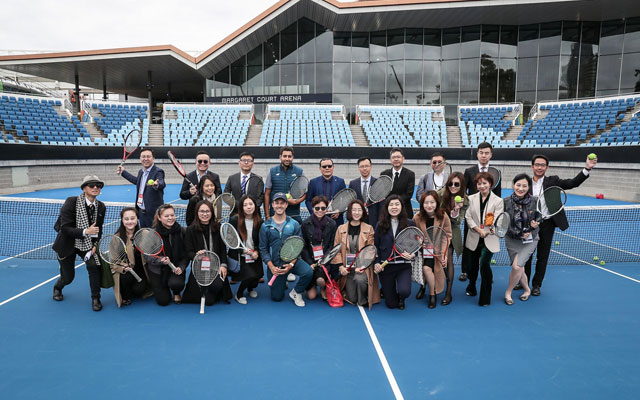
Speakers at the roundtable held alongside VJTM. Photo credit: Kathryn Wortley
At the 2nd Tourism Expo Japan Ministerial Roundtable held alongside the VJTM on September 20, Hiroshi Tabata, commissioner of the Japan Tourism Agency, said “the regeneration of local regions is a key to sustainable tourism”.
Gloria Guevara Manzo, president and CEO of the World Travel & Tourism Council, added that the “community” should be at the centre of sustainable tourism.
In response to this movement, Keijiro Sawano, CEO and founder of ground operator Heartland Japan – when interviewed at VJTM – indicated that the company has just launched a 6D5N tour in rural Hiroshima Prefecture. The tour revolves around exploring natural landscapes, meeting local people and trying cultural activities. Recognising that attendees can be best targeted from large, well-known hubs, this tour departs from Hiroshima City rather than a rural area.
Sawano revealed he had been working with the locals last year to develop the itinerary, which he indicated will benefit both locals and visitors, as this tour provides a deeper immersion into Japanese culture and promotes interaction with locals.
The trade is also eyeing corporate hospitality groups that will attend the Rugby World Cup 2019, which will be held in 12 stadiums across Japan. Other events, such as the Women’s Handball World Championship in Kumamoto Prefecture in 2019, are also expected to provide a boost to the rural areas.
China’s meetings and events industry can expect to see greater cooperation between the China Council for the Promotion of International Trade (CCPIT) and the Ministry of Culture and Tourism, which was established in mid-March.
The merger of the culture ministry and the China National Tourism Administration is still a work in progress, according to Jack Yao, vice president, China Business Event Federation and secretary general, CCPIT Commercial Sub-council.
China’s MICE sector ought to get a boost in light of this merger; Beijing’s CBD at night
The consolidation and streamlining of departments and staff at the provincial level of China’s 31 provinces is likely to continue until the end of 2019, he noted.
While it would be difficult for China to form a centralised convention and visitor bureau like some other Asian countries, Yao – who has just been named second vice president Asia Marketing Federation – said the government will now “pay more attention” to develop and promote a “national image”.
He is optimistic a new marketing campaign will be launched by next year and more will be done to foster cooperation between the public and private sectors to promote culture, tourism and trade.
Yao continued: “For the first time, CCPIT is cooperating with the new ministry and the private sector to identify and create business opportunities centred around culture,”
SMEs in the industry TTGmice spoke to said more destination marketing support is definitely needed, especially if China wants to spread business to second- and third-tier cities.
The founder and CEO of a DMC with offices in Beijing and Shanghai said the company has had to rely on its own resources since it was set up about 10 years ago.
She said: “Negative stories about China still prevail and they need to be better addressed, while strong points like the fact that China is one of the safest countries to visit or do business in, the wonderful culture and other positives, should be played up.”
A meetings and incentive veteran commented that because China is no longer a “cheap” destination, it needs to value add by applying technology to create “smart travel”, more meaningful and in-depth experiences.
“For SMEs to survive, we need to know early if city or provincial government support will be given, or not, or else it will be difficult to cap costs. Industry standards are still not uniform in China and the availability of English-speaking staff to be able to attract more international events and business assistance for smaller companies are some of the issues I hope the new ministry will address,” the managing director said.
When travelling for work, employees from Singapore want local leisure activities to be part of their travel experience too, according to new data on the growing ‘bleisure’ travel segment from Amadeus’ Journey of Me report.
The report revealed that 40% of Singaporean business travellers find recommendations that help them plan their itinerary the most useful, and one in four (25%) value sightseeing recommendations
More than 60% of business trips now include a leisure portion
Business travel within Asia is growing at twice the pace of the rest of the world and looks set to overtake the top-spending Americas within the next 10 years. To help tap this growth opportunity and get inside the mind of the business traveller, Amadeus’ research looks at the needs, habits and motivations of the Asia Pacific business traveller. The research, conducted in collaboration with YouGov, surveyed a total of 6,870 respondents across 14 markets in Asia Pacific.
Cost and convenience driving users in the sharing economy
The research found that while employees don’t need to bear the cost of their business travel, Asia Pacific business travellers are just as cost conscious as their leisure travel counterparts, and are most interested in receiving recommendations that help them save money (34%).
The rise in ‘bleisure’ travel is undoubtedly a contributing factor; with more than 60% of business trips now including a leisure portion, and many business travellers are shopping around for the best deal.
However, not all Asia Pacific business travellers are the same. While employees from Singapore find recommendations that help them save money and plan their itinerary the most useful (both 40%), business travellers from China, India and Vietnam prefer recommendations that ensure their safety (37%, 34%, and 37% respectively), Japanese employees prefer recommendations that make their travel more comfortable (39%) and Koreans prefer recommendations for sightseeing (35%).
The focus on cost has seen the sharing economy – specifically ride-sharing services like Uber and Grab, and home-sharing services like Airbnb and Couch Surfing – become widely accepted for business travel, even more so than for leisure. Almost half (46%) of business travellers use ride-sharing services to get around during their trip, compared to 31% of leisure travellers.
Alongside cost saving, the top reasons business travellers use the ride-sharing and home-sharing services is for ease and convenience (59% for ride-sharing, 50% for home-sharing) and better quality and service (43% for ride-sharing, 39% for home-sharing). However, for Australian (47%) and Hong Kong (36%) business travellers, the flexibility of the sharing economy is the top reason that they choose to home-share.
Renaud Nicolle, vice president, travel channels, business travel Asia Pacific, Amadeus, said: “The rise of ‘bleisure’ means that business travel behaviours are becoming more aligned to leisure travel, including cost consciousness. Sharing economy providers benefit from this trend thanks to the competitive products, flexibility and convenience they are able to offer and deliver. Business travel agencies in Asia Pacific need to enhance their product and service offering to be able to cater for the experience their travellers expect.”
Access to maps is more important than work emails
While business travellers are cost conscious, there is one creature comfort they will happily pay for – connectivity.
While leisure travellers rely mainly on Wi-Fi, business travellers are open to multiple options to stay connected, and are happy to invest. Wi-Fi remains the popular choice, but purchasing a local sim card at the destination is a close second for business travellers from Indonesia (54%), Singapore (52%), Philippines (51%), Hong Kong (47%), New Zealand (45%), Vietnam (45%) and Malaysia (44%). On the other hand, Korean (64%) and Japanese (40%) business travellers prefer to use international roam-as-you-go services, while those from India (56%), Thailand (51%), Australia (43%) and Taiwan (42%) prefer to buy an international phone or data package before they leave home.
While it would make sense that these employees choose to stay connected to keep up-to-date with work, this is not listed as the highest priority by any Asia Pacific business traveller, except those from Korea (56%). Instead, access to maps and location information is rated as the top priority for staying connected (53%), followed by letting people know they’re safe (50%).
Business travellers from Singapore are mostly aligned with their regional counterparts, however they place a greater priority on local leisure activities. While access to maps and location information is their top priority (67%), researching things to do at the destination is a close second (63%), on par with letting people know they’re safe (63%).
Recommendations wanted
Travel providers have a unique opportunity with business travellers, as they find the recommendations they receive from various platforms more relevant than leisure travellers do.
Recommendations that helped them save money (34%), ensured their safety (31%) and made their travel more comfortable (29%) were deemed the most useful. The top three sources they listed for relevant recommendations were online booking websites (51%), social networks (49%) and travel review sites (47%). However, in Korea and Taiwan, travel agents are still rated as the top source (56% and 52% respectively). Even post-trip, two-thirds (66%) of business travellers are open to receiving recommendations, most likely because they will return to that destination in the future.
“Business travel is a real growth opportunity in the Asia Pacific region, but to capitalise on this, travel providers need to have a clear understanding of the needs, habits and motivations of the business traveller. They also need to be ahead of the curve when it comes to technology, ensuring they can offer the technology that business travellers have adopted and habitually use.
“It is all about personalisation, and pushing the right message at the right time to the right traveller, every time. This level of personalisation makes their business trip simple, stress-free and rewarding at every stage of the journey – from search and booking to expense reconciliation; from airport parking, lounge access, hotel and meeting rooms to departure control systems and baggage check-in,” Nicolle said.
First Middle Eastern property for Hampton by Hilton
Hampton by Hilton has made its debut in the Middle East with the opening of Hampton by Hilton Dubai Airport, also the largest property in Hampton’s global portfolio.
The 420-room hotel is located near the Dubai International Airport and the Dubai Airport Freezone Authority (DAFZA). The hotel offers facilities such as a rooftop gym, large infinity bull, fully-licensed bar, and a 24/7 business centre. Guests will also enjoy a free hot breakfast, as well as complimentary Wi-Fi.
Vienna Convention Bureau has a new director
Christian Woronka will be succeeding Christian Mutschlechner as director of the Vienna Convention Bureau next year.
In his new role, Woronka will be responsible for the management and consolidation of the Convention Bureau and Market Management departments, and for the expansion of conventions and congresses, corporate meetings and incentives. He will also further develop the Vienna brand in the meetings industry.
At present, Woronka is the director of the Cologne Convention Bureau, where he has been since 2008. He was named director in 2012.
After 34 years of service to the Vienna Tourist Board, Mutschlechner will retire in February.
Security event to launch in Birmingham
The Security Event – powered by Security Essen will be held from April 9-11, 2019 at the National Exhibition Centre (NEC) in Birmingham. It will be co-located alongside three established exhibitions from the British company Western Business Exhibitions’s portfolio: The Health & Safety Event, The Fire Safety Event and The Facilities Event, and is expected to host over 100 of the world’s leading security brands.
This project aims to provide European security businesses a comprehensive platform for business operations in the UK.
Pan Pacific Hotels Group (PPHG) has launched a new offer entitled Smart Meetings, targeted at meeting organisers and event planners who hold events at Pan Pacific and Parkroyal properties worldwide.
A Full Day Residential Meeting Package will include five per cent savings on the catering and banquet bill (excluding taxes); use of meeting room from 08.00 to 17.00; meeting setup with flipchart, whiteboard, markers and bottled drinking water; Wi-Fi access; morning and afternoon tea breaks including two refreshments with coffee/tea; and buffet or set lunch with free flow soft drinks. Note there is a minimum booking of 15 delegates and 10 guestrooms.
Pan Pacific Hanoi’s Hoi An meeting room
In addition, if event planners were to book a next meeting to be held within the next 12 months from the last meeting date, they will be able to save an additional three per cent on the catering and banquet bill (excluding taxes) at the next hotel.
Meeting organisers will be rewarded with a complimentary one-night stay before or after the meeting, and a complimentary room upgrade with Club access and benefits for the entire stay. For hotels without Club, a complimentary breakfast and a two-category room upgrade is offered.
A host of other privileges are also being offered, and the more rooms booked and delegates hosted, will increase the number of privileges. For instance, 10 rooms and 15 delegates will entitle planners to select one privilege, while 50 rooms and 65 delegates will entitle planners to four privileges.
One of the meeting spaces in Pan Pacific Yangon
Privileges include two local hotel-specific privileges such as complimentary parking or airport transfers; one complimentary room for every 20 paying rooms (maximum two rooms per night); one complimentary delegate for every paying 35 delegates (up to three delegates per group); one complimentary room upgrade to the next category for every 20 paying rooms (maximum three rooms per night); one complimentary delegate for every paying 25 delegates (up to three delegates per group); a 50 per cent savings on breakout room rental for minimum of 45 delegates; a 20 per cent savings on dining for all meeting delegates; and complimentary one hour cocktail including canapés, beer and house wine (minimum 25 rooms and 50 delegates).
Organisers are also automatically included in PPHG’s new corporate loyalty programme, Pan Pacific Connections, where they earn points for that can be used to redeem rewards.
Smart Meetings run from now until March 31, 2019, and for meetings and stays held before December 31, 2019. This is subject to availability and black-out dates may apply. Other terms and conditions apply.
Located on Labuan Bajo, Waecicu Beach, the only five-star hotel in Komodo has opened with 13 suites and 192 guestrooms, each offering ocean views.
1 of 6
Resort and pier
Room
Bathroom
Main pool
Rooftop venue
Resort illuminated at night
Facilities on the 1.4-hectare Ayana Komodo Resort, Waecicu Beach, in southern Bali includes six F&B venues, a spa with five treatment rooms, gym, two swimming pools, a children’s pool, and a kids’ club. There is also a grand ballroom that can hold up to 220 pax reception-style, as well as several meeting rooms.
In addition to the new resort, the resort will also launch a 54m-long and 11m-wide, nine-bedroom phinisi ship named Ayana Lako di’a. The ship will take guests around the island for short explorations of approximately two to three nights per trip.
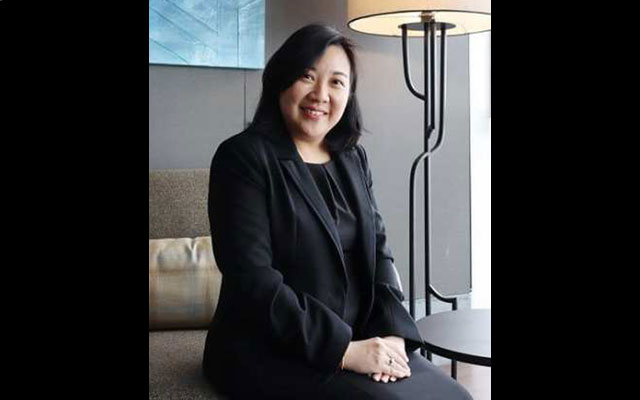
Wharf Hotels has appointed Stephen Antram as general manager of Marco Polo Shenzhen.
Prior to this appointment, Antram was the general manager of Intercontinental Beijing Beichen.
The experienced hotelier has over 40 years of knowledge in the hospitality industry, with over 25 years in Asia. He possesses a track record in operations management, business development and talent development across Europe and Asia with international luxury hotel companies.
The newly-opened Ritz-Carlton, Bangkok anchors the One Bangkok development with cosmopolitan elegance. Featuring the city's largest ballroom and a spectacular new penthouse suite, it delivers exceptional hardware and deeply authentic, soulful service for business and leisure travellers alike
Behind the imposing, Brutalist concrete that defines Zurich’s Oerlikon district lies a surprising secret. While its exterior honours the neighbourhood’s industrial roots, stepping inside Mama Shelter reveals a vibrant, neon-soaked world that is a far cry from its rigid shell
A polished urban retreat designed for business travellers, Hyatt Regency Kuala Lumpur at KL Midtown combines thoughtful design, seamless service, and exceptional facilities.