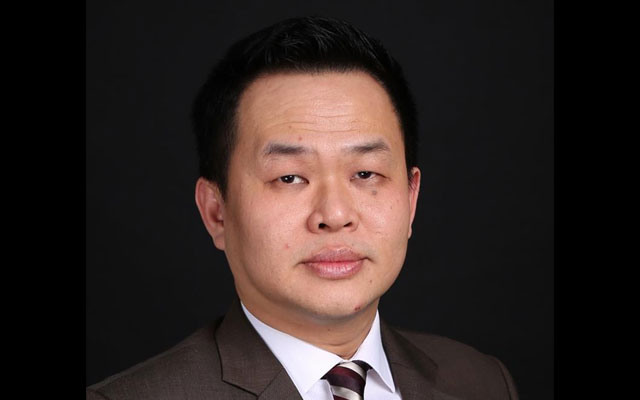
Onyx Hospitality Group has appointed Phan Ing Pai as vice president, operations – Greater China. Based in Shanghai, Phan will report to Gina Wo, senior vice president & head of Greater China.
He will be responsible for leading the operations team in the Greater China region, providing support to all operational properties across the region and ensuring all properties are in line with the group’s established operational standards. Phan will also work closely with the sales & marketing team by offering commercial support to the property teams, ensuring optimum hotel performance and business returns.
Prior to joining Onyx, Phan was area general manager, North China for Frasers Hospitality.
He has over 20 years of experience in the hospitality and serviced apartments industries and a deep understanding of the Chinese market. Phan has spent the past 14 years in China, where he also held senior level positions with Swiss-Belhotel International.
Sharjah Commerce and Tourism Development Authority (SCTDA) is turning to business events from Asia to help it achieve its target of 10 million tourists by 2021.
To do that, SCTDA is stepping out of the shadows of Dubai and Abu Dhabi, the two most popular business event destinations in the UAE, and is emphasising that Sharjah has what it takes to welcome and deliver quality events.
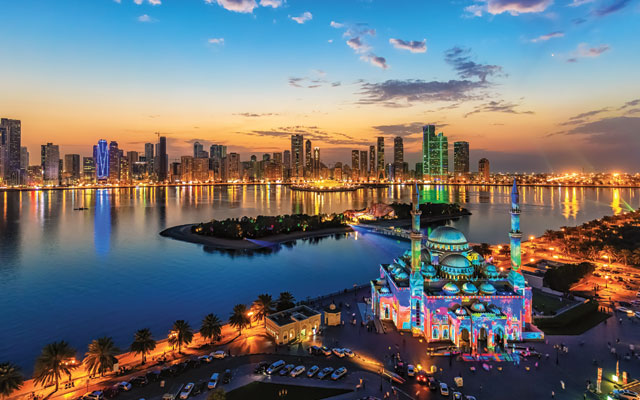
Sharjah Lighting Festival Sunset
“In terms of infrastructure and tourism products, Sharjah is well positioned to cater to international events,” said Khalid Jasim Al Midfa, chairman of SCTDA.
Bordering Al Khan Lagoon and covering 128,000m2, the visually-striking Expo Centre Sharjah is one of the most technologically advanced exhibition, conference and event venues in the Middle East. Recent events that took place at the venue include the 44th MidEast Watch and Jewellery Show, SteelFab 2018, International Education Show and Jordanian Consumer Show.
Expo Centre Sharjah recorded a seven per cent increase in the number of visitors during 1Q2017, with a total of 302,474 delegates who attended 12 exhibitions.
Sharjah hotels are doing well too, with an average occupancy rate of 70 per cent from January to June last year. The hotels welcomed 885,000 guests during the period. The performance has inspired Sharjah to look at adding 5,000 hotel rooms to its inventory by 2021.
“With the business events industry in the UAE expected to grow at a rate of seven per cent, Sharjah would benefit from its own share of business event arrivals, especially considering the tourism development taking place in the emirate,” commented Olivier Harnisch, CEO of Emaar Hospitality Group.
The hospitality company is opening three hotels in Sharjah – Address Aljada Sharjah, Vida Aljada Sharjah, and Rove Aljada Sharjah.
Besides new hotels, Sharjah is currently building the Al Tai Exhibition Centre and adding on new tourism products – for instance, a US$27.2 million attraction at the Al Montazah Amusement and Water Park by the Sharjah Investment and Development Authority, and the Sharjah Beach Development project, a 3.3km stretch that will feature art spaces, landscaped gardens and restaurants – that will appeal to corporate incentive groups.
As well, there are plans to connect the port city of Khor Fakkan through the Hajar Mountains with Sharjah’s central region.
Khalid Jasim opined that good growth will come out of “key Asian markets like India and China” and SCTDA has stepped up participation at business event-focused tradeshows in both markets. Last year, it exhibited at SATTE 2017 in New Delhi and China World Travel Market in Shanghai – both tradeshows are new to the authority. These efforts are supported by promotional campaigns and workshops in Chinese cities like Guangzhou and Chengdu.
He explained that SCTDA’s presence in China and India aims to “educate local stakeholders on our uniqueness as a business events destination”.
“We also see a great opportunity to increase Indian arrivals further by showcasing Sharjah as an incentive destination,” he said.
Jamal Abdulnazar, CEO, Cozmo Travel, sees two factors in favour of Sharjah as an attractive destination for Chinese and Indian groups. “The winter season here is a good time for Indian groups to visit, while the visa-free policy for Chinese nationals is very helpful,” he said.
Kulwant Singh, CEO of Lama Tours, believes that Sharjah can be positioned as “a new, standalone incentive destination” in the UAE for the Indian and Chinese markets but added that the destination needs more five-star hotels to truly attract the high-end incentive segment.
“Most of Sharjah hotels are three- and four-star properties,” he remarked.
Sharjah welcomed 138,000 hotel guests from India last year, a year-on-year growth of 32 per cent, while Chinese hotel guest numbers rose 45 per cent to 126,000.
While India and China are big on SCTDA’s radar, the authority is not discounting arrival potential from other parts of Asia. In fact, it has identified Malaysia and Indonesia as new sources for business events.
“We are looking at ways to reach out to Malaysian and Indonesian planners. At present we are attracting a small number of arrivals.
“These two markets have strong potential as there is a sizeable Muslim population. We will promote Sharjah by showcasing our rich Islamic culture, uniqueness of the destination and its offerings for business events,” said Khalid Jasim.
For now, SCTDA is collecting and understanding market intelligence on Malaysia and Indonesia, and will use data to form the basis of its promotion and marketing engagements.
It is also shortlisting major outbound travel agencies in Malaysia and Indonesia that it can work with closely to boost business event arrivals.
This article was first published on TTGmice August 2018
The Hong Kong Hotels Association (HKHA) has announced the election of its new chairperson, Rebecca Kwan, senior vice president of sales – Hong Kong & United Kingdom of Dorsett Hospitality International, who has commenced her two-year term from August 22.
Kwan was recently appointed an additional role within Dorsett as head of operations – United Kingdom, which will see her supporting UK sales and hotel revenue related matters. She is also general manager of Lan Kwai Fong Hotel @ Kau U Fong, Hong Kong, a boutique hotel under Dorsett’s d.Collection brand.
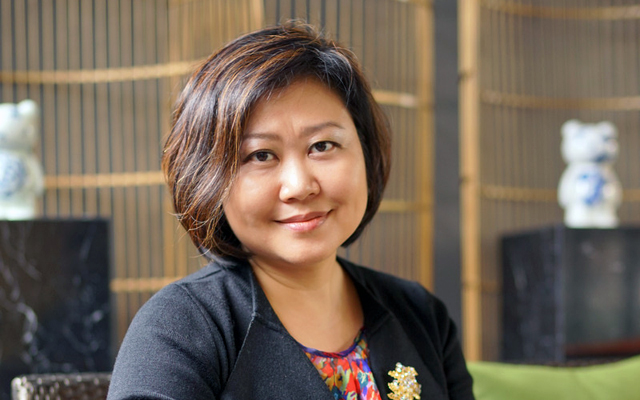
Rebecca Kwan
She was a member of the HKHA’s executive committee since 2009, before being elected second vice chairman in 2017. Now elected chairman, she succeeds Shaun Campbell, who had steered the association since 2017.
Campbell, managing director of The Langham, Hong Kong, is now a member of the executive committee.
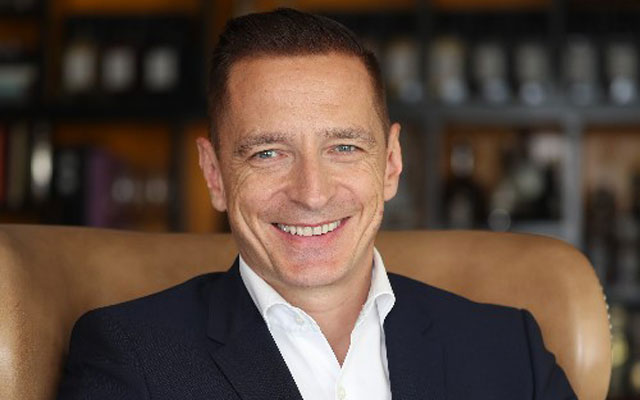
Louis T Collection has named Robert C Hauck general manager of the 156-room Galle Face Hotel and area vice president for South Asia.
A hospitality leader with over 25 years of hotel experience across Asia, Europe, South America and the Caribbean, Hauck was most recently general manager of Kanuhura in the Maldives.
The German was previously director of Asian operations for International Group Management, Shanghai, a five-star hotel and private member club at Zhejiang Circuit; and president of Thanyapura in Phuket, Asia’s first sports resort, directing the launch of the mixed-use project.
Hauck was earlier general manager at Raffles Grand Hotel d’Angkor in Siem Reap; held executive roles at Shangri-La hotels in Taipei, Hong Kong and Pudong; and had assumed other executive positions at Mandarin Oriental Kuala Lumpur; the Fairmont Hamilton Princess, Bermuda; Hotel Oro Verde, Guayaquil, Ecuador; and Kempinski Hotel Furstenhof, Leipzig, Germany.
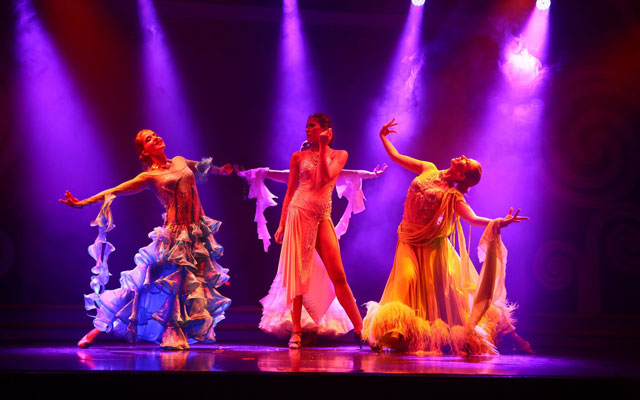
One of the entertainment options onboard Star Cruises
Asia’s development as a cruise playground and key source market for regional and global cruising, as well as the growth potential for business events on the high seas, will be among the many topics addressed by three cruise industry leaders at the inaugural Asian MICE Cruise Conference.
Taking place in Bangkok on September 18, the opening panel session entitled Cruise CEO Panel, will feature Royal Caribbean Cruises’ managing director Angie Stephen; Worldwide Cruise Associates’ co-founder and president, Steve Bloss; and Genting Cruise Lines’ senior vice president – international sales, Michael Goh.
One of the entertainment options onboard Star Cruises
The three panelists, who possess vast cruise industry experience, will also offer interesting insights on how competitive cruise lines are developing attractive hardware and onboard experiences that would appeal to business event groups, and what more could be done to enable destinations, travel agents and event planners to benefit from the cruise industry’s progress.
This half-day event will be held at the Bangkok Convention Centre at CentralWorld from 09.00, and is free for all registered IT&CMA and CTW Asia-Pacific 2018 delegates.
Industry players who are not registered for IT&CMA and CTW Asia-Pacific 2018 are welcome, and can secure a complimentary seat now.
Gyeongju Convention and Visitors Bureau is making quick progress in its efforts to build the ancient South Korean city up as an attractive option for global association congresses, with the most recent wins being the 20th International Symposium for Therapeutic Ultrasound, and the 20th International Congress on Plasma Physics.
The four-day 20th International Symposium for Therapeutic Ultrasound, organised by the International Society for Therapeutic Ultrasound, was won by a collective bid put together by the CVB and the Korean Society for Therapeutic Ultrasound. It is expected to draw some 400 attendees from 30 countries come 2020.
Joo: Aside from the recent wins, the South Korean city is also interested in pursuing heritage-related congresses
Meanwhile, the 20th International Congress on Plasma Physics, which is likely to run for five days in May 2020, is expected to attract some 700 scholars, professors, researchers and other specialists in the field of plasma science from over 30 countries.
Since the establishment of the CVB in 2014 and the completion of the city’s only dedicated convention and exhibition venue, Gyeongju Hwabaek International Convention Center in March 2015, Gyeongju has secured several association meetings from a range of industries such as nuclear power, medicine and engineering.
Kyla Joo, assistant manager, convention services, convention sales team with the Gyeongju Convention and Visitors Bureau, revealed that the city will have six international association congresses calling at Gyeongju this year alone, most of them related to medicine and engineering.
Gyeongju wins the bid to host ISTU 2020
Gyeongju has also seen success in winning over nuclear power-related meetings as a result of Korea Hydro & Nuclear Power’s (KHNP) relocation of its main office to the city in March 2016.
“Since last year we had have four or five conferences related to nuclear power, and it was all because of KHNP,” she said.
Joo added that the bureau is also keen to “go after heritage-related congresses” by leveraging the city’s rich history that dates back to the Silla Dynasty.
“Last year we hosted the World Congress of (Organization of World Heritage Cities, and because of the success of that conference, UNESCO will take its Asia-Pacific meeting to our city this September,” she said.
The Melbourne Convention Bureau (MCB) has achieved a 25 per cent increase in economic contribution from secured business events in 2017/2018 financial year from the previous year.
Economic contribution reached A$396 million (US$290 million) from 176 events secured, which will bring the highest number of visitors to the state in the past seven years, with over 79,000 new visitors anticipated.
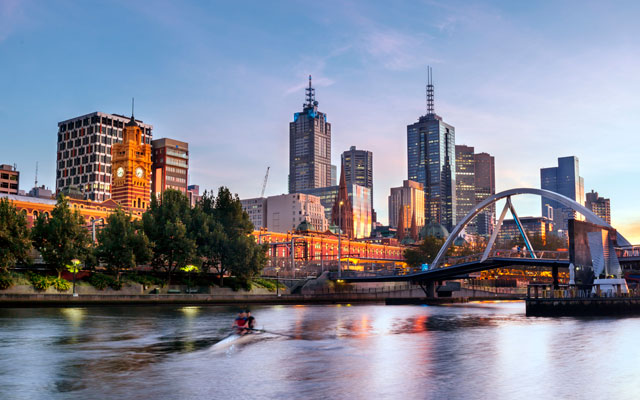
Despite the highly competitive global landscape Melbourne (pictured) delivers its strongest economic impact to date
The record-breaking year can be attributed to years of work resulting in several significant conference wins, from now till 2024, across a diverse range of sectors.
These include the Global Public Transport Summit 2021; World Ophthalmology Congress 2022; VidCon Australia 2018 and 2019; and General Assembly and Congress of the International Union of Crystallography 2023. Collectively, these events will contribute over A$155 million to the Victorian economy.
Conferences in the health and medical sectors are the most lucrative, making up 37 per cent of conferences secured in the past financial year.
Victoria’s corporate meetings and incentive business was also significantly bolstered with MCB securing 134 events which will deliver over A$82 million and over 25,500 delegates to the city and regional Victoria.
The most significant incentive win was the Cathay Life Incentive tour which delivered over 2,300 visitors to Victoria’s regions and injected A$10 million into the economy, with a significant proportion absorbed into regional communities.
The Seoul MICE Alliance (SMA) gained 39 new members this August, bringing the public-private coalition representing Seoul’s business events industry to a total of 299.
Several unique venues created by the city’s recent urban regeneration efforts joined the industry alliance this year. They include Seoul’s Oil Tank Culture Park, which was once an emergency oil reserve built in the late 1970s after the 1973 oil crisis and transformed into a cultural event complex for meetings, art exhibitions and performances; S factory, a trendsetting venue for creatives established in the walls of a former textile factory; and Baesan, a former warehouse turned into an industrial-style, flexible space for product launches and smaller exhibitions.
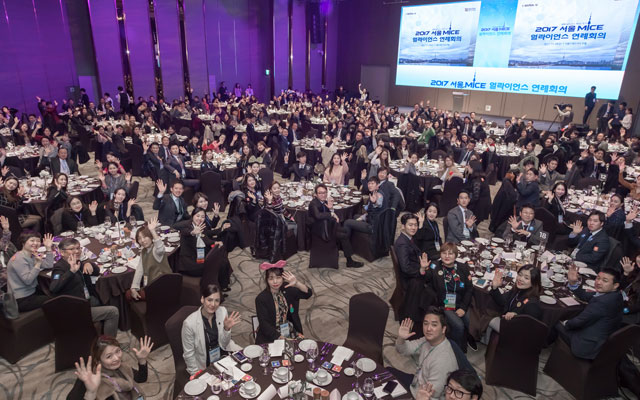
Seoul MICE Alliance’s annual gathering
Recently-opened hotels in Seoul such as Novotel Ambassador Seoul Dongdaemun Hotel & Residences and RYSE, a boutique offering from Marriott’s Autograph Collection, also joined the alliance.
Users of SMA members’ services can qualify for additional benefits from the Seoul Convention Bureau. If corporate meeting and incentive groups use three or more SMA members, international participants can receive Seoul MICE Cards – rechargeable transit cards that can also be used at convenience stores and select shops – with a value of 8,000 won (US$7).
Aviareps has been appointed Tourism Fiji’s representative in Singapore and Malaysia.
Tourism Fiji made the appointment with the aim of establishing and strengthening brand awareness and engagement among Singaporean and Malaysian travellers through a mix of trade partnerships and marketing communications activities.
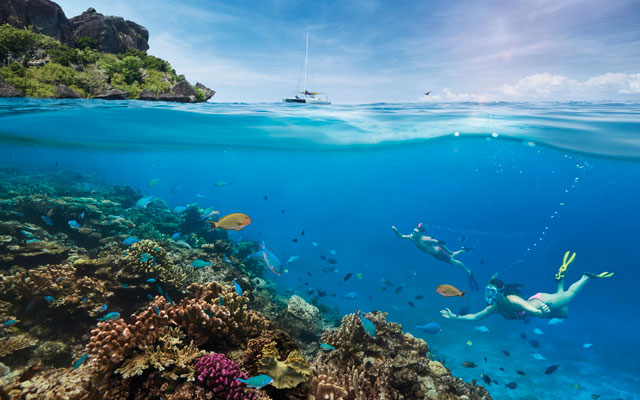
Reef snorkelling in Fiji
Aviareps will be responsible for Tourism Fiji’s travel trade development and marketing, as well as marketing communication and public relations efforts through its regional office based in Singapore.
Director for Singapore and Malaysia, Charlene Eng, said: “The team is looking forward to driving more visitation to Fiji and also position Fiji as the preferred destination for leisure and MICE by showcasing Fiji’s exciting offerings through experiential content, thereby driving deeper interest and engagement across the different segments.”
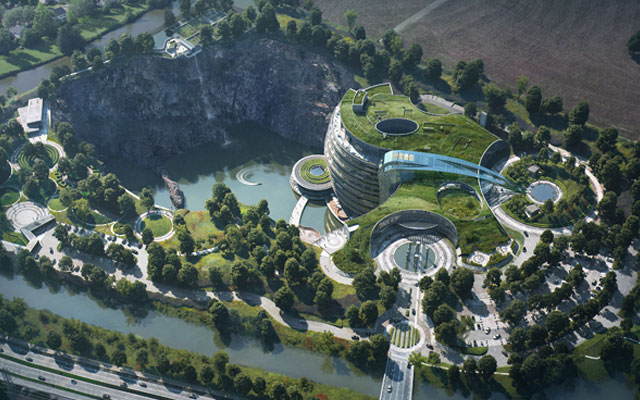
InterContinental Hotels Group (IHG) has unveiled a signing in Shanghai, an underground hotel project on the site of a former quarry.
Scheduled for opening in 4Q2018 is the InterContinental Shanghai Wonderland, an 18-storey hotel with two floors above ground, and 16 below ground, including two floors underwater.
A rendering of the InterContinental Shanghai Wonderland
The Shimao Group development will reach 88 metres underground in a deep pit of a former south-western Shanghai quarry, standing out in the current architectural landscape dominated by high-rise buildings, IHG said in a statement.
With a construction area of more than 61,000m2, the hotel will feature 336 rooms and suites that all boast balconies looking out to waterfalls from the surrounding cliffs.
Just 10 minutes from Phuket International Airport on the serene northern coast, this 178-key, Bill Bensley-designed resort offers delegates a quiet, tropical paradise steeped in Phuket’s tin-mining heritage
The newly-opened Ritz-Carlton, Bangkok anchors the One Bangkok development with cosmopolitan elegance. Featuring the city's largest ballroom and a spectacular new penthouse suite, it delivers exceptional hardware and deeply authentic, soulful service for business and leisure travellers alike
Behind the imposing, Brutalist concrete that defines Zurich’s Oerlikon district lies a surprising secret. While its exterior honours the neighbourhood’s industrial roots, stepping inside Mama Shelter reveals a vibrant, neon-soaked world that is a far cry from its rigid shell