Asia/Singapore Friday, 24th April 2026
Page 766

Engaging engagement

0
More corporate meetings are ditching instructional

While business event planners have always understood that successful meetings engage participants, the definition of engagement has in recent times taken on a more critical meaning.

Firstly, according to business event specialists TTGmice spoke to, audience engagement has extended beyond the duration of the event.

More corporate meetings are ditching instructional formats, favouring instead an interactional approach

Sam Lay, senior director, Asia Pacific, CWT Meetings & Events, observed that corporate clients are increasingly forming event programming committees and conducting focus group discussions involving key participants, all in an effort to extract views on what they hope to see in terms of content at upcoming meetings.

He believes that this is happening in the corporate space as more participants now want a say in how a meeting programme should be, as well as companies’ growing awareness that successful content needs to be co-created with partners. The latter, Lay opined, is due to the presence of a more learned and experienced internal planner – one who sits within the corporate organisation as opposed to a specialist with a meetings and events agency.

“People who are touching meetings today, compared to five years ago, are more aware of event technology, the right approach (to programming), as well as how they should work with their partners in organising a meeting.

“Naturally this has happened because there are a lot more meeting management courses being offered at higher education institutions, (and) more meetings are taking place which allows planners to gain more experiences,” Lay said.

Secondly, as much as audience engagement has become wider – spreading beyond the duration of the meeting, it has also gone deeper, observed MindMeetings Netherlands’ meeting designer, Eric de Groot, who pointed out that the instructional approach commonly taken by corporate meetings is fast going out of style.

He believes that the Information Age is the catalyst.

“Sharing has become a trend. Wikipedia is proof of the power of crowd-thinking. As a result, many organisations are becoming aware of the value that lies in conversations with employees, in harvesting their individual insights. Today’s meetings are no longer instruction platforms. Rather, meetings are test tubes for information chemistry.”

He asserts that in a “new economy led by the young generation”, corporate performance visions are no longer something only the CEO can provide.

However, not all organisations are aware of the need to alter the way they meet and engage their delegates. These organisations struggle to accept this new reality, choosing instead to maintain one-directional meetings, said de Groot, pointing to the “fear of chaos”, and inability to process large amounts of new information from meeting participants as obstacles.

Creative delivery
In hopes of leaving participants with a memorable and lasting impression, corporate meetings are getting more creative in the way they engage the audience, communicate their key messages and achieve their goals.

Drawing an example around annual general meetings (AGMs), Lay said these once rigid events are shaking off their top-down approach and are becoming more “sensorial”.

“Traditionally at these meetings, someone at the top will tell the audience what’s happening and what will happen next for the company. But in recent years, AGMs are kicking off with a big ra-ra. Videos are used (as part of presentations), and mechanisms are employed to track audience reaction, and that data helps planners analyse which part of the event was most engaging and had the highest level of activation.

“So now, planners have data to help them know when to tune up and reengage people, perhaps at the six-minute mark when people’s attention starts to waver.”

Lay also suggested that corporate meetings are becoming more creative because communication technology has made it easier for planners to “see or hear how an event held 10,000 miles away was done, and to take something innovative from it to be incorporated into their own event here”.

Daniel Chua, founder and chief executive of Singapore-based conference management agency, Aonia, said some corporate meetings have become more creative because of “an internal demand to keep things fresh and alive”.

Most corporate meetings designed and executed by Aonia are aimed at top-level personnel. These meetings are adopting more multimedia in content delivery and offering more interactive opportunities between participants.

“As the cost of event technology usage continues to drop over the years, we can expect even greater adoption,” said Chua.

In terms of venue setup though, Chua’s clients have kept to the familiar classroom layout even though new and unique ideas are encouraged.

“Formats have not changed much, and if it did, I’d think it was because of interesting event possibilities offered by venues which give clients impetus to try out new content delivery,” he added.

Impact on suppliers
Naturally, the pursuit of deeper audience engagement has changed the way corporate clients regard their meetings and events agents and venue suppliers.

“The traditional role of a meetings and events agent is changing. Agents were more reactive – clients tell them what to do and they fulfil those orders. As the meetings and events industry advances, agents must play a more consultative role and propose unique, valuable ideas to clients,” Lay said. “And clients expect this of us, demanding that value proposition we can provide as their event partner.

Ramesh Daryanani, vice president, global sales, Asia Pacific (excluding Greater China), Marriott International, agrees that hotels must, too, play the role of an event partner.

Ramesh said: “Meeting planners have evolved from simply telling hotels, ‘OK, I want a meeting room from nine to five and some tea and coffee’, to being very specific about what they want participants to experience and to take away with them at the end of the event, and what the hotel can do to help make that happen.”

Lay also emphasised the need for companies to approach meetings and events strategically in order to fulfil the need for deeper engagement. By looking at a company’s full calendar of events for the year, instead of a single event each time, the internal planner can ensure a consistent approach to audience engagement and communications, as well as see where the opportunities for cost savings and consolidated spend lie.

CWT is pushing for this strategic approach with its corporate clients, determined to “look at a client’s entire calendar of events as early as possible, and get involved in the planning just from the start”.

“By doing so, one of the things we could do is putting in an innovation right at the beginning that will help the client save money, collect useful data and better engage attendees. To achieve this, CWT forges a very close relationship with various departments of the client’s company, such as marketing and operations,” he elaborated.

The heightened interest in deeper engagement has also prompted MindMeeting and Taiwan-based Asia Concentrate Corporation (ACC) to enter a 50-50 joint venture to birth Orange Gibbon, a company specialising in meeting design services. The founders hope that Orange Gibbon would create a more productive output for meetings delivered by ACC in Asia by adopting MindMeeting’s Meeting Design solution.

To expedite the evolution of meetings design in Asia, de Groot said Orange Gibbon would “provide formats that structure the large-scale input and dynamic alternatives for information processing” and “connect meetings to strategic goals and use the wisdom of crowds to achieve those goals”.

At press time in May, Orange Gibbon is finalising plans for a Meeting Design Week, an event for planners who would like to improve their meetings but are afraid of chaos. It aims to show attendees how meeting design can create effective meeting programmes.

Hotels as influencers?
Can meeting hotels influence the creative side of meeting design? Business event specialists certainly think so.
Bangkok Marriott Marquis Queen’s Park wellness food station

CWT Meetings & Events’ Sam Lay said: “The availability of creative resources (provided by hotels) helps us in our job. I’m always very happy to come across hotel offerings that we can take back to wow my clients.”

Aonia’s Daniel Chua agrees, but said hotel sales representatives must be trained to communicate creative meeting ideas to the client during site inspections.

Marriott International’s Ramesh Daryanani acknowledges the critical role frontliners play in communicating what hotels can do as event partners. Sales staff are trained to use Marriott’s Meetings Imagined platform, the company’s meeting product that delivers memorable meetings and utilises an image-heavy website to suggest unique event ideas and guide objectives.

“A Marriott sales person digs deep into what the customer hopes to achieve through the event. He then gives the customer a visual of what Marriott can execute around the world, what other people have done in the past, and what makes events of the same kind successful.

”Site inspections are special too, Ramesh claims.

“We conduct ‘wow site inspections’. From the moment a customer get out of his car to when he finishes the site inspection, our hotel team makes sure that he gets an exemplary experience. Between a warm welcome and a fond farewell, all the activations – be it seeing the room or a meeting space – is customised to the needs of the customer.”

When asked if this approach works for customers, Ramesh replied confidently: “Meetings and events now make up 20 per cent of Marriott International’s business. In a market where we are opening numerous new hotels, we are still seeing growth in the meetings segment.”

Gaurav Mathur now India country manager for Kuoni Global Travel Services

0

Gaurav Mathur has assumed the role of country manager for India at Kuoni Global Travel Services since June 1, 2018, reporting to Reto Kaufmann, vice president sales & sales operations South-east & South Asia.

Mathur has joined Kuoni Global Travel Services since 2009 and taken on various management roles over the years. His latest assignment was senior sales manager, India.

A recognised industry expert with in-depth knowledge of the Indian outbound group travel market, Mathur has been instrumental in developing a wide range of new product solutions for clients and introducing new destination ideas to the market.

Rooftop reserved for events

0
Westin Bangkok Altitude Terrace at night

Bangkok boasts many rooftop bars and restaurants, but a private one just for meetings and events? Westin Grande Sukhumvit’s Altitude is possibly the only one in Sukhumvit if not the entire city.

Located on the hotel’s 25th floor, it boasts an open kitchen, breakout area and a city-view terrace which also offers photoshoot opportunities a la Kate and Leonardo in the Titanic flying scene. That’s when we discovered the hotel is literally shipshape.

Westin Bangkok Altitude Terrace at night

The recent South-east Asia Hotel Investors Summit, which was held the hotel, did  cocktails there one evening. Altitude comfortably accommodated the crowd of some 200 pax. High ceiling, sweeping views of the city, a chic decor, good cocktails buffet and a live band were all it took to create a lively buzz among the participants.

The venue had also seen a VVIP dinner for just 20 pax. A long dinner table was set, and the kitchen cooked up an eight-course gourmet dinner while the bar served free flow of superb wines and champagne, said Corinne Janssen, cluster director of sales of marketing, giving an idea of how flexible Altitude could be for planners. Banquets could go up to 120 pax.

For meetings, it takes in up to 100 pax classroom style and 40 pax boardroom.
The hotel’s general manager Peter Lucas said if you ran a rooftop bar and restaurant for the public, and kept having to close it for events, patrons would get turned off. A private, dedicated rooftop also enhances the hotel’s offerings, which comprises 14 venues totalling over 1,725m2.

And, with a name like Altitude, just imagine the themes that can be offered to get incentive and meeting participants to aim higher and achieve more.

For a 3D virtual tour of Altitude, go to: www.westingrandesukhumvit.com/altitude.

GM named ahead of Hard Rock Hotel Desaru Coast’s launch

0

Hard Rock International has appointed Yogeswaran Veerasamy as the general manager for Hard Rock Hotel Desaru Coast.

In his new role, Yogeswaran will oversee the overall administration and develop and execute plans surrounding the 365-room property ahead of its grand opening later this year.

Prior to joining Hard Rock, Yogeswaran was the hotel manager for Grand Copthorne Waterfront Singapore.

He has more than two decades of experience in Asia’s hospitality sector, including W Singapore Sentosa Cove, The Westin Hyderabad, The Raffles Grand D’Angkor, Swissotel Grand Shanghai, Hilton Kuala Lumpur and The Four Seasons Hotel Riyadh.

Hilton hires cluster director of business development in Myanmar

0

Hilton Hotels & Resorts in Myanmar has appointed Ashok Kapur as cluster director of business development to bolster the group’s growing footprint in the country.

In his new role, Ashok will drive sales, PR, marketing, revenue, reservations and convention sales for all Hilton hotels in Myanmar, and support strategic business planning for properties under development.

He will be based at the cluster office in Hilton Mandalay. Originally from India, Ashok is an industry veteran with more than two decades of experience in travel and hospitality.

Boy band to be Korea’s MICE ambassadors

0

The Korea Tourism Organization (KTO) has appointed popular South Korean boy band, SHINee, as its Korea MICE Honorary Ambassador, a move it hopes will capture greater interest from corporate incentive and meeting groups from South-east Asia and China.

The appointment was announced during the opening ceremony of the annual Korea MICE Expo on June 14. It coincided with the tradeshow’s theme, Hallyu in MICE, which saw Ahn Suwook, managing director of SM Entertainment, featured as a keynote speaker, and some city CVB stands showing off attractive film locations used in recent Korean hit dramas.

Kpop group SHINee with KTO president Ahn Young-bae (centre)

According to a spokesperson with KTO’s corporate meetings & incentive team, Hallyu – or the Korean culture and entertainment wave – is an influence that is “growing in South-east Asia”.

“K-pop (in particular) is one of our most powerful attractions,” the spokesperson added.

With K-pop earning a strong following in both South-east Asia and China – two main markets for South Korea’s corporate incentive and meeting traffic, the tourism body is banking on Hallyu and idol bands to be “the most effective way to attract our target markets”.

Between now and December 2019 – the duration of the appointment – KTO will produce promotional videos and welcome cards featuring SHINee and have these materials included in its Incentive and Corporate Support Program.

“And if the conditions are met, we might be able to do roadshows and welcoming parties together with them (SHINee) during their appointment period,” said the spokesperson.

When asked why SHINee was chosen among so many of South Korea’s popular idol bands, the spokesperson said the four-person band was the one that “actively answered our requests” and it had just launched a new album.

The spokesperson has declined to say how much the appointment of SHINee costs.

Thailand’s Kingsmen CMTI among six companies hailed by UFI for sustainable exhibiting

0
CIMB Thai booth at Money Expo BKK 2017; a custom-designed stand by

UFI, the Global Association of the Exhibition Industry, is recognising six companies for their sustainable exhibiting best practices within the scope of the 2018 UFI Sustainable Development Award.

CIMB Thai booth at Money Expo BKK 2017; a custom-designed stand by Kingsmen CMTI. Photo credit: Kingsmen CMTI

The chosen companies are:

  • Design and Display (South Africa) for capturing the essence of sustainability using a creative artwork approach.
  • Eko Events and Terrena (France) for bringing a highly skilled approach to eco-design exhibiting.
  • Kingsmen CMTI (Thailand) for delivering comprehensive support to the operational aspects of sustainable exhibiting.
  • Resource and Design (South Africa) for its Xanita product, a remarkable material that can be used for several types of booths.
  • Scan Display (South Africa) for demonstrating strong social and environmental awareness at the ‘Sustainability Village’, 2017 Meetings Africa.
  • UBM (UK) for its general policy towards sustainable exhibiting.

All companies have established a successful approach through their design, construction and operations, with a positive impact on the environment.

“Sustainability starts by taking into account the local environment. This is also true of sustainable exhibiting and these six companies deserve recognition for achieving this,” commented Philippe Echivard, chair of the UFI Sustainable Development Committee and chair of the jury for the award.

Premium Economy seats gain popularity with business travellers in Singapore

0

Global travel management company Carlson Wagonlit Travel, and travel commerce platform Travelport, have found that premium economy is the fastest growing cabin segment for business travellers in Singapore.

An analysis of over 1.3 million bookings made between January 1, 2015 and December 31, 2017, with Singapore as the point of origin, showed that the number of premium economy seats booked for corporate travel increased at an average rate of 157% year-on-year. In comparison, corporate bookings for other classes recorded negative growth over this three-year period.

Singapore Airlines’ Premium Economy

“One can easily see the appeal that premium economy has for corporate travel programmes,” said Richard Johnson, director, Asia Pacific, CWT Solutions Group. “It gives travellers that much-needed extra comfort versus economy class on medium- to longhaul flights, while costing their companies significantly less than a business class ticket.”

The seat share of premium economy as a proportion of total bookings has increased steadily too. In 2015, premium economy comprised only 1.2% of total corporate travel bookings, and this grew to 7% by the end of 2017.

Meanwhile, the economy class seat share declined to 54.5% in 2017, compared to 60.3% in 2015. Business class bookings have remained relatively flat, comprising 37.7% of corporate travel bookings in 2017 versus 37.6% in 2015.

“It’s interesting that the increase in premium economy bookings seems to have come largely at the expense of economy class, and not business class,” said Johnson. “This makes sense, given the trend we’re seeing where companies are looking beyond travel costs and paying more attention to traveller comfort and productivity.”

Flying economy class on medium- to longhaul flights was identified as the third- strongest stress-inducing factor for business travellers, according to an earlier study done by Carlson Wagonlit Travel called the Travel Stress Index. Such stress results in lost time and reduces the overall productivity of the traveller.

“When you look at corporate travel policies, we have seen more companies allowing their employees to travel premium economy over the last few years,” added Johnson. “Still, only around a quarter of our clients have policies that explicitly allow their travellers to book this cabin class, suggesting that there’s still a lot of room for growth for premium economy in corporate travel.”

Looking at supply, it’s clear that airlines are increasingly seeing a viable business case for premium economy. At the end of 2017, one in five airlines flying into Singapore offered premium economy, with the service available on more than 30% of routes from Singapore. For example, four in 10 planes from Singapore’s national carrier, Singapore Airlines, offer premium economy as an option, with plans to increase this further.

Supply seat share of premium economy versus other cabin classes has also increased at a steady pace. The number of premium economy seats available as a proportion of total airline seats increased from 2.5% in 2015 to 3.6% in 2017. The data suggests that airlines have made room for premium economy by reducing the number of first and economy class seats.

“With this trend we see, it has become even more imperative for corporates to work with technology partners and travel management companies who are able to provide accurate and comprehensive content choices for their travellers,” commented Mark Meehan, managing director Asia Pacific for Travelport.

“Technology such as branded fares and ancillaries, which can provide access to rich images of airline seat options and other airline products, will give corporates better value and coverage of available airline content.”

PCMA-ICESAP makes two new APAC appointments

0
From left:

PCMA-ICESAP (Professional Convention Management Association – Incentive Conference & Event Society Asia-Pacific) announced that it has appointed Antonio Codinach as regional business director – APAC to replace the outgoing Nigel Gaunt.

Codinach joins PCMA-ICESAP this summer from Cegos Asia Pacific.

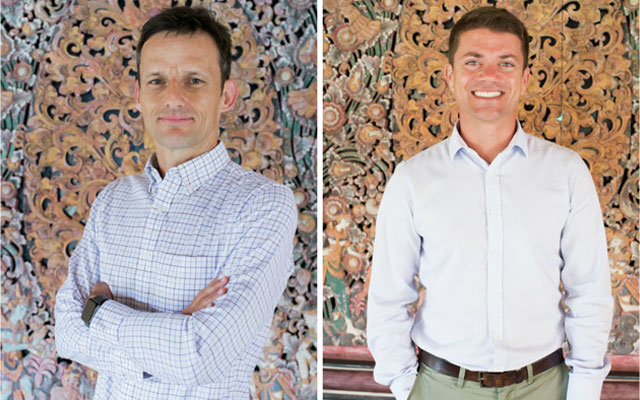
From left: Antonio Codinach and Patricia Cheong

PCMA-ICESAP has also appointed Patricia Cheong as associate director for development. She will work alongside Codinach and support the region by forging new brand partnerships with leading business events organisations.

Her expertise in the conferences and events industry, especially in her previous role as general manager at Sphere Exhibits, will help accelerate PCMA’s regional growth opportunities.

Alongside the new appointments, the association has outlined plans for its annual conference later in the year and its participation in the Singapore MICE Forum this coming summer.

PCMA-ICESAP will be a strategic partner of SACEOS as it hosts the Singapore MICE Forum (SMF) on July 24-25 at the Victoria Theatre.

Later in the year, PCMA-ICESAP will host its Annual Conference in Bangkok, Thailand in partnership with Accor Hotels and Thailand Convention & Exhibition Bureau. The conference will take place November 7-9, 2018 at the Sofitel Bangkok Sukhumvit and its theme will be Interaction with Intention.

RedDoorz expands into the Philippines; launches new property category

0
RedDoorz Plus @ Setiabudi 8

Online budget hotels booking platform RedDoorz has expanded into the Philippines – its third market in the South-east Asian region – after Singapore and Indonesia.

The company will be investing US$5 million into the Philippine market, to grow its footprint to 100 properties over the next 12 months.

RedDoorz Plus @ Setiabudi 8 in Jakarta, Indonesia

Amit Saberwal, founder and CEO, RedDoorz, said in a statement: “Our expansion into the Philippines came as a natural progression for RedDoorz, where like our first market in Indonesia showed many similarities and thus the potential for a vibrant domestic travel and hospitality industry.

“Following our fresh funding earlier this year, we realised that the Philippines held a strong demand for hotel rooms not only for tourists but also for business travellers. We felt that it was timely for us to make the conclusive move to start expanding here – especially seeing how boisterous the budget hospitality sector has been in recent years,” he added.

Along with its entry into the Philippines, RedDoorz will also be introducing a new category of properties, RedDoorz Premium. Launched this month, RedDoorz Premium are properties that are designed for the budget business traveller – not only strategically located close to business districts but have more amenities than the other two existing categories RedDoorz and RedDoorz Plus on the platform.

Commenting on the new addition of property categorisation, Rishabh Singhi, chief operating officer, RedDoorz, said: “This introduction of Premium properties came with our observation of how the Filipino concept of a ‘condotel’ had seen a remarkable growth in the Philippines over the past decade.

“The aim of this new category is to target the business traveller who looks for certain amenities like good Wi-Fi connection, location closer to business districts and other amenities. We see this as a strong category as we expand into other South-east Asian cities where there is an influx of business travellers.”

Headquartered in Singapore, RedDoorz recently raised its Pre-Series B round of US$11 million as an additional investment from Asia Investment Fund of Susquehanna International Group, International Finance Corporation (private investment arm of World Bank Group), InnoVen Capital (venture lending firm owned by Temasek Holdings and United Overseas Bank), and Jungle Ventures – all of which had invested in past funding rounds. This fundraise also saw new investors DeepSky Capital, FengHe Group, Hendale Capital as well as other investors.

Reviews

The Ritz-Carlton, Bangkok

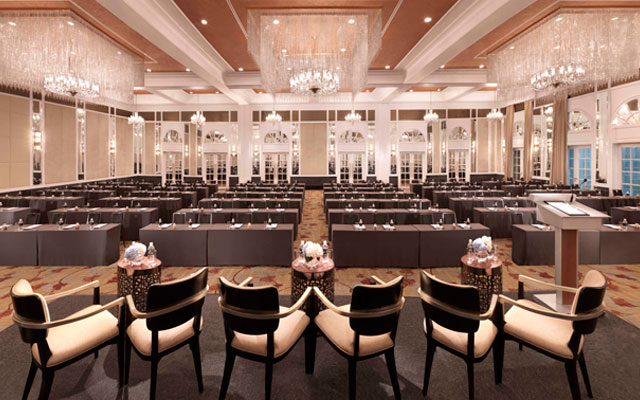
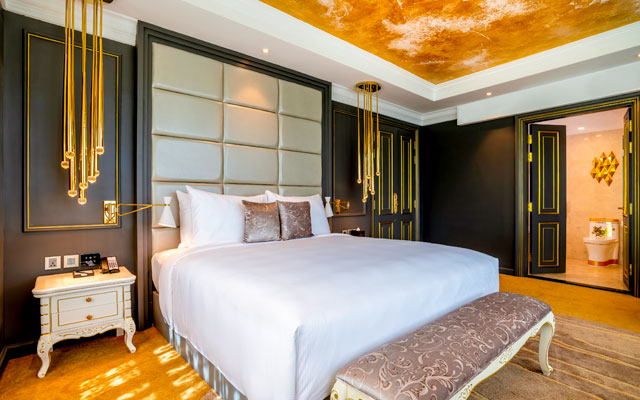
The newly-opened Ritz-Carlton, Bangkok anchors the One Bangkok development with cosmopolitan elegance. Featuring the city's largest ballroom and a spectacular new penthouse suite, it delivers exceptional hardware and deeply authentic, soulful service for business and leisure travellers alike

Mama Shelter Zurich

Behind the imposing, Brutalist concrete that defines Zurich’s Oerlikon district lies a surprising secret. While its exterior honours the neighbourhood’s industrial roots, stepping inside Mama Shelter reveals a vibrant, neon-soaked world that is a far cry from its rigid shell

Hyatt Regency Kuala Lumpur at KL Midtown

A polished urban retreat designed for business travellers, Hyatt Regency Kuala Lumpur at KL Midtown combines thoughtful design, seamless service, and exceptional facilities.