Mövenpick Hotels & Resorts has made its debut in Malaysia with a modern hotel and conference centre close to Kuala Lumpur International Airport (KLIA).
Located just a few minutes from KLIA and neighbouring KLIA2, the hotel features 333 rooms and suites with the latest in-room technology. The Executive Rooms and Suites offer access to an Executive Lounge with a daily buffet and a variety of additional amenities.
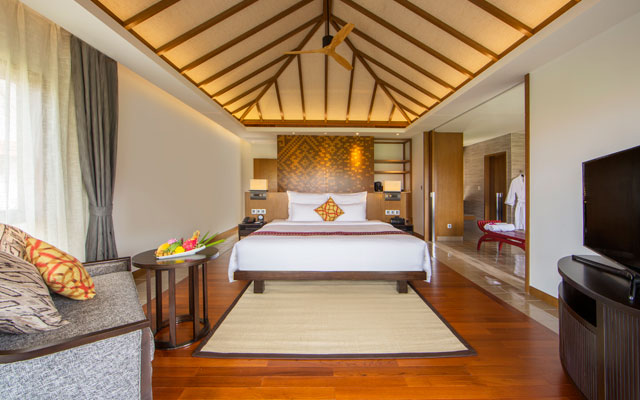
A room in the Mövenpick Hotel & Convention Centre KLIA
Mövenpick Hotel & Convention Centre KLIA boasts extensive meetings and event facilities as well. Directly accessible from the hotel, the convention centre comprises a 1,287m2 open exhibition space, 777m2 circular hall, seven discussion rooms, 10 seminar rooms and the 2,386m2 Main Hall, which can be divided into four separate spaces.
The main hotel building also has four meeting rooms and two boardrooms, which range from 35m2 to 109m2 and are well suited to corporate retreats and strategy meetings.
One of the swimming pools
The property’s leisure offering includes separate male and female swimming pools, fitness centres and spa facilities that include outdoor spa pods.
F&B options include all-day dining venue Temasya featuring live cooking stations with a choice of authentic Malaysian and international cuisines all prepared to halal standards; restaurant Bara which serves a la carte specials made from fresh local and imported ingredients; Middle Eastern-influenced eatery Redup in the lobby lounge; and the Beranda Café and Sira which serves drinks, light snacks and meals throughout the day and evening.
Three Marriott hotels in Singapore – JW Marriott Singapore South Beach, The St Regis Singapore, and W Hotels Sentosa Cove – have come together to offer a corporate meeting package entitled Rediscover Singapore.
This offer is valid across all three properties, and inclusions are five per cent off master-billed guestrooms; one complimentary room night for every 25 paid room nights, up to a maximum of five rooms; one complimentary upgrade for one night for every 25 paid room nights, up to a maximum of five rooms; spa privileges; and 15 per cent off dining at participating restaurants and bars.
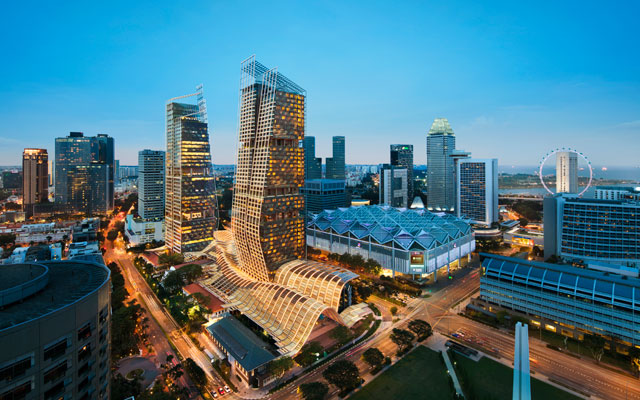
JW Marriott Singapore South Beach
Rediscover Singapore is valid only for new group meetings and events with 25 or more guestrooms on peak at any of the three above-mentioned hotels. Group meetings and events must also be reserved by November 30, 2018, and take place between October 1, 2018, to June 30, 2019.
There would also be a rebook privilege where corporate clients can further enhance their next event by enjoying an additional three per cent off master-billed guestrooms on top of the above offers booked by June 30, 2019.
The rebook privilege is only valid at participating hotels, cannot be used in conjunction with other promotions, and must be utilised by December 31, 2019. Other terms & conditions apply.
The Pullman brand has made its debut in Laos with a 16-hectare resort in Luang Prabang, 10 minutes away from the UNESCO-listed Old Town.
Pullman Luang Prabang features 123 guestrooms, suites, and a two-bedroom villa scattered among infinity pools, watercourses and streams. Lead-in rooms start with the 42m2 Deluxe Room and extends to the two-bedroom Villa – complete with separate living and dining areas, garden and pool – which can host up to 50 guests for a cocktail party or 12-seater private dinner.
Luxury Room
Facilities on-site include all-day dining L’Atelier restaurant, two bars, gym, spa, outdoor pool and Kids’ club. A range of activities such as cooking, crafts and rice cultivation classes are also available.
The property is also home to Luang Prabang’s largest conference centre which can cater up to 300 guests. Its outdoor patio can also host for al-fresco events and pre-dinner cocktail functions.
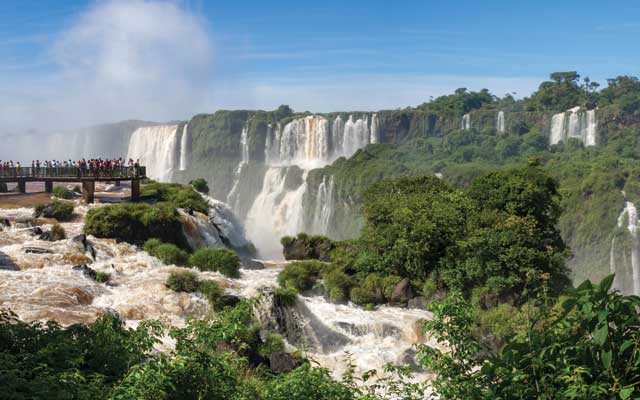
Iguazu Falls on the border of Brazil and Argentina
In 2017, Argentina welcomed almost 60,000 visitors from China, an increase of 13 per cent from 2016. Of the 60,000 visitors, 35 per cent were on corporate incentive programmes or attending business events.
That is why Destination Argentina, fronted by the National Institute of Tourism Promotion, Argentina (INPROTUR), returned to IT&CM China 2018 this year for the second time, determined to attract more Chinese citizens to its faraway shores. And this year, INPROTUR was not at the tradeshow alone, having brought along its national carrier and the Buenos Aires Tourist Board.
Iguazu Falls on the border of Brazil and Argentina
Emora Franco, MICE coordinator, Instituto Nacional de Promocion Turistica, told TTGmice: “I think that the Chinese market holds a lot of potential for Argentina. Bear in mind we are faraway, but we are an exciting destination and can offer unique experiences to the Chinese.”
Buenos Aires Tourist Board’s MICE manager, general direction of tourism promotion, Constanza Ibarra, agreed: “I find a lot of interest coming from the Chinese, especially through the meetings I’ve had at IT&CM China. People come with the basic information and have an idea of where we are located. But usually, they would need more in-depth information about the activities that can be had, how many days is a typical trip, and what programmes can be done.”
Franco shared that Chinese incentive groups spend at least a week in Argentina, visiting destinations such as Buenos Aires and Ushuaia – from where cruises to Antartica are boarded. Natural attractions such as the glaciers in El Calafate, Iguazu Falls, and Patagonia are also on their must-see list.
To raise awareness of the South American destination, INPROTUR participates in tradeshows in Beijing and Shanghai, as well as hold roadshows in various Chinese cities. The consulate in China is also active, and organises in-house seminars and trainings for travel agents.
“Currently, tier-one cities (like Beijing and Shanghai) are our primary targets. When it progresses, then we will look at other cities such as Guangzhou and provinces such as Sichuan,” Franco said.
While she found IT&CM China a “productive experience” because of the number of meetings she has had, she acknowledged that destination marketing is a “long-term investment” as there will not be an immediate increase in Chinese corporate groups travelling to Argentina. Instead, she is optimistic that fruits of her labour will come to bear in the next few years or so.
“In five years’ time I hope to get a 20 per cent increase (in group numbers) from China,” she remarked.
Obstacles in Destination Argentina’s way at present are the lack of direct flights from China and the lack of Chinese-speaking tourist guides in the country.
There are currently no direct flights from China to Argentina, noted Tony Xia, Aerolineas Argentinas’ China GSA’s sales manager. And there might not be any in the foreseeable future, he opined.
“(Despite this), there are many ways to enter Argentina, from both the US and Europe. The most popular route for Chinese incentive groups is through Miami or New York, while the second favoured route is through Dubai,” Xia shared.
Chinese citizens require a visa to enter Argentina, but if they already hold an existing visa to the US or Europe they will only need to complete an Electronic Travel Authorization online.
Ibarra also pointed out that there was a lack of Chinese-speaking tourist guides in Argentina. As such, the government has signed an agreement with the local chamber of tourism and representatives of local Chinese communities to train young Chinese Argentines in tourism.
“Students can take a three- to four-month-long course in tourism, before they decide if they want to go further and embark on the five-year-long tourism degree.
“We need more Chinese-speaking guides, (and overall we must get) more people involved in tourism. We are encouraging young Chinese Argentina-born citizens to get involved in the tourism industry, as more Chinese-speaking staff in hotels and travel agencies are needed,” Ibarra concluded.
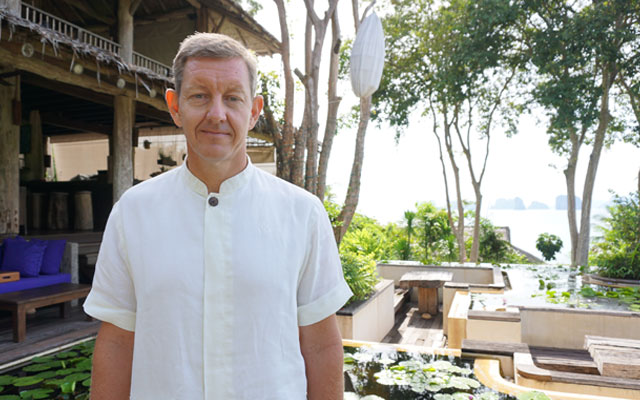
Six Senses has appointed Frans Westraadt as resort manager of Six Senses Yao Noi in Thailand.
Westraadt is no stranger to the brand as he brings his extensive experience in top-tier resorts and team management from Six Senses Laamu to Six Senses Yao Noi, where he will be in charge of the resort’s overall operations.
Throughout his career, he has been overseeing premium lodges and resorts in the Maldives, Namibia and the Seychelles.
Prior to joining the Six Senses family, Westraadt served as the executive assistant manager of Constance Ephelia in the Seychelles where, among his other responsibilities, he dedicated himself to the sustainability practices of the resort.
Speakers and buyers at the ACTE Summit in Singapore on Tuesday shared that corporate travellers are growing to expect the business travel booking experience to rival that of consumer travel booking.
Lena Khoo, regional travel manager APAC, Credit Suisse, observed: “Travellers want the same booking experience between their personal travel and business travel.”
E-commerce is the next step in the business travel sector
The consumer booking experience features a highly customisable and personalised booking experience, which can be achieved and tracked via artificial intelligence and data. The use of such data would enable business travellers to automatically access their preferred travel options – from add-on baggage and extra leg room on flights to breakfast options and room type for accommodation – that are within company travel policy.
To this effect, suppliers implored TMCs and travel managers to be more receptive to technological innovations, such as IATA’S new distribution capability (NDC) certification.
NDC enables airlines and GDS to store data on each customer’s booking preferences. The system would allow the corporate travel booking experience to parallel the regular e-commerce experience.
To date, some 50 airlines have achieved NDC certification, but no TMC has adopted it.
“Current corporate airline booking systems don’t allow for consumer-driven booking experiences. It’s dumb technology that cannot be customised to take into account each product and customer,” lamented Campbell Wilson, senior vice president, sales and marketing, Singapore Airlines.
Todd Arthur, regional head, vice-president, Sabre, recommended that popular regional routes for corporate travellers, such as Singapore-Hong Kong and Hong Kong-Sydney, be personalised using “all the data that airlines have”. In turn, TMCs can take charge of customer service in dealing with travel disruptions.
He cautioned: “We need to unlock (ourselves from) the way things have been done in the past. If your travel policy is too locked down, people will find a way to get around it. TMCs and travel managers that don’t get on board may be completely bypassed because the airlines are already there.”
Ramesh Daryanani, VP global sales APAC (ex-China), Marriott International, said: “Whoever can own the whole customer journey – from the flight to the stay and post-stay – will win in the end. It can alleviate the travel experience and capture data to better serve the traveller.”
Adoption does not come easily for travel managers however, lamented Khoo, who revealed that it can take some two years for new technology to be implemented in the finance industry.
“What’s missing now is that technological advances are not taking off as fast as we hoped. But we have already implemented a travel expense mobile app, and it’s the start of things to come,” she said.
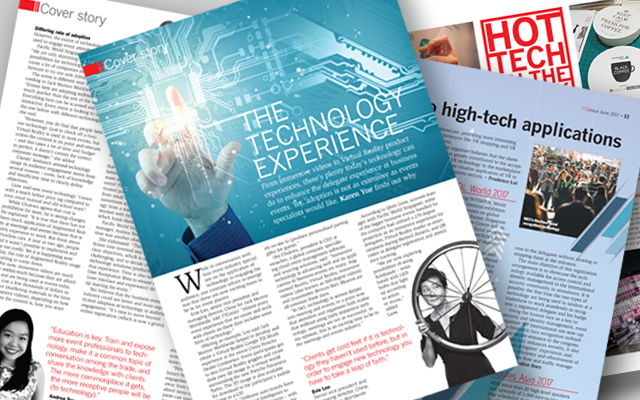
A cover feature on the use of technology to enhance the delegate experience at business events, published in TTGmice’s June 2017 issue, has won the PATA Gold Award 2018, Travel Journalism – Industry Business Article.
Written by group editor Karen Yue, The Technology Experience sought to understand the types of event technology available in the marketplace, the benefits they bring to the delegate experience, and the rate of technology adoption in business events, drawing insights from industry specialists.
TTGmice joins 29 other winners of the PATA Gold Award 2018, which recognises organisations and individuals across the categories of Marketing, Environment, Corporate Social Responsibility, Women Empowerment Initiative, Education and Training and more.
The annual awards also celebrates four PATA Grand Awards recipients in the areas of Education and Training, Environment, Heritage and Culture, and Marketing.
According to a PATA statement, this year’s awards attracted 200 entries from 87 organisations and individuals worldwide. The winners were selected by an independent judging committee consisting of 14 senior executives from the travel, tourism and hospitality sectors.
These awards have been generously supported and sponsored by the Macao Government Tourism Office since 1995.
The awards ceremony will take place in Langkawi, Malaysia, on September 14 during PATA Travel Mart 2018.
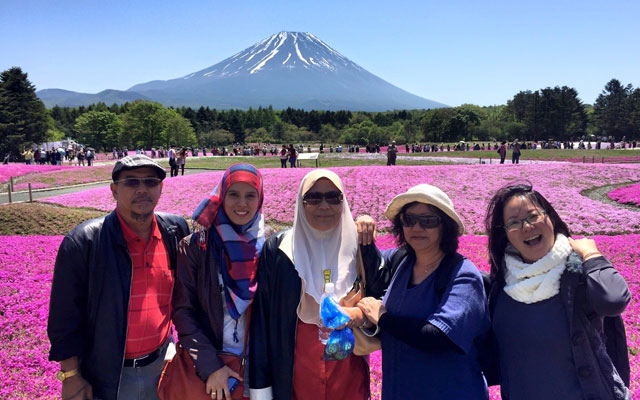
An incentive group from Malaysia at Mount Fuji. Photo credit: Feel Japan with K's Facebook page
Outbound Malaysian agents big on incentives to Japan have seen a year-on-year increase in incentive groups, citing support from Japan National Tourism Organization (JNTO) and the overall attractiveness of the destination as key draws.
Rosli Seth, managing director of Malaysia-based Feel Japan With K, said his company has seen a 20 per cent increase year-on-year in incentive business, and average group sizes numbered between 70 to 100 delegates. These bookings mainly came from banking, insurance and direct selling companies.
An incentive group from Malaysia in Japan. Photo credit: Feel Japan with K’s Facebook page
He shared: “Support from JNTO at the bidding stage, which includes sourcing for unique venues and connecting with local CVBs, makes it easy for event planning. In turn, subvention (financial and non-financial) support from local CVBs help to bring the costs down and make the destination more attractive.”
Rosli was among the 45 Malaysian agents and 16 Japanese exhibitors at JNTO’s Japan incentive travel seminar in Kuala Lumpur on July 17. The annual roadshow is part of JNTO’s in-market activities in South-east Asia. It will head to Bangkok on July 18, and Singapore and Indonesia in October.
Meanwhile, first-time Japanese exhibitor, Junichi Kawase, CEO of Thanyaporn Japan Tours, pointed out that Central Japan was largely unexplored by Malaysian incentive travellers as there are no direct flights, ever since AirAsia X suspended services to Nagoya in mid-February 2015.
Kawase pointed out that the area should not be missed, and activities in the region included walking on the giant Snow Wall at the Norikura Skyline road and hiking at Mt Norikura.
According to JNTO statistics, Malaysia is the second largest inbound market from South-east Asia after Thailand. Last year, arrivals from Malaysia totalled 439,500, an 11.5 per cent increase over 2016. For incentive travel, JNTO recorded 65,000 visitors from Malaysia last year. Popular incentive destinations for Malaysians were Kanto (28 per cent), Hokkaido (25 per cent), Kansai (23 per cent), Chubu (11 per cent), Okinawa (seven per cent), Kyushu (five per cent) and Shikoku (one per cent). Average group sizes were between 10 to 50 people.
An innovative online platform that aims to elevate Vietnam’s event planning has been crowned a finalist in a regional tourism start-up competition.
The brainchild of Ann Naomi Nguyen – who spent eight years working in the industry – VDEs strives to eliminate the time-consuming process of booking meetings, events and weddings by providing a one-stop-shop for spaces in Vietnam.
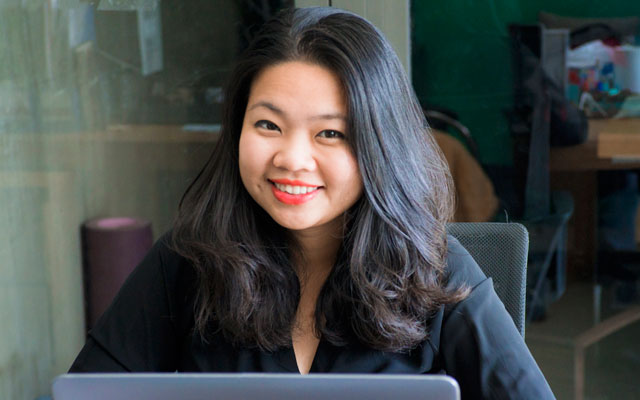
Ann: saw a gap in the market to better connect professional event suppliers with event planners
Ann, VDEs’ founder and managing director, said: “Following a survey with our clients, it can take up to 14 days to find venues and book them. Imagine if you waste all your time and resources here.”
As competition in Vietnam’s business events market grows, with an increasing number of event spaces and suppliers emerging, standing out from the crowd is becoming more difficult.
Added Ann: “There are almost 2,500 spaces but they don’t have access to an efficient marketplace, especially new venues which spend a lot of money to be at the top of a Google search and on social media channels, while having many sales staff to call clients. We saw the need of supply and demand and came up with VDEs, a platform to connect professional event suppliers with event planners.”
Created by a small team of hospitality and technology experts, VDEs uses artificial intelligence and 360-degree virtual reality to enable clients to explore spaces from their laptop. To date, partners have seen the use of event space increase by five to 10 per cent.
Since launching in February 2017, more than 150 events have been booked through VDEs, with 920 events planners signed up. It has also secured a string of large partners, with major corporate planners from organisations such as booking.com and Ho Chi Minh City’s Department of Tourism on board.
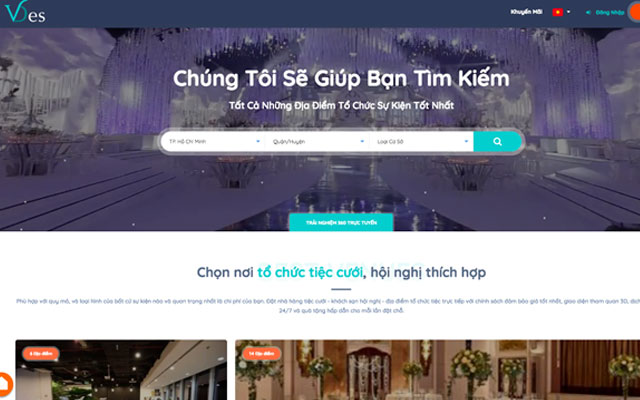
A screenshot from the VDE website
VDEs’ future plans include developing the technology side of the business. A virtual assistant – similar to Amazon’s Alexa but for events – will enable users to control every step of the process, alongside more products being added to the platform. These include event suppliers for photography, decorations, lighting and catering, travel suppliers for transport and accommodation, and other service suppliers, such as Mypop for collecting and exchanging reward points and Grab.
It is this innovation that secured VDEs a place as a finalist in this year’s Mekong Innovative Startups in Tourism (MIST) Startup Accelerator, alongside four other companies. They will come together in October to compete in the final stage for grants of up to US$10,000.
“What we are trying to build is an eco-system for the whole events industry, where the most advanced technology is applied to simplify and automate the pre-event searching, booking, planning process and post event evaluation process,” said Ann.
Hilton Worldwide Holdings is in discussion with the government of Hiroshima Prefecture to build the city’s first international brand-name hotel, complete with extensive meeting facilities, in an effort to encourage more business events to convene in the region.
Emiko Ogami, a spokeswoman for Hilton Worldwide, told TTGmice that the prefecture requested a full-service hotel that is able to meet the needs of major, international conferences of at least 1,000 people.
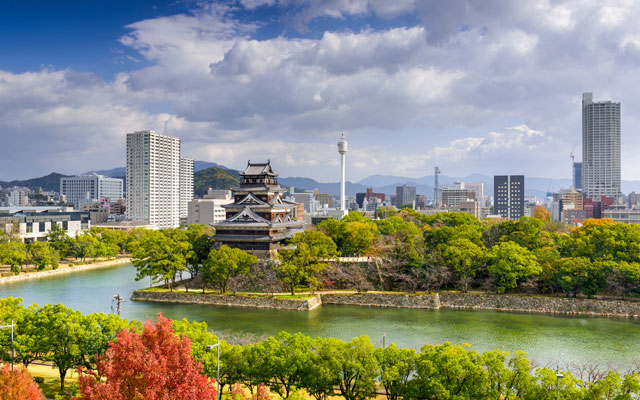
Hiroshima city (pictured) will soon have a Hilton
Local authorities have provided a 6,400m2 site that is 1.7 km south-west of Hiroshima’s shinkansen station for the planned new hotel. The cost of the project has been estimated at between 20 billion yen (US$177.2 million) and 30 billion yen.
The prefecture anticipates that the completed hotel will create 450 new jobs and add 5.3 billion yen to the broader local economy annually. The new hotel is scheduled to open in 2022.
“Hiroshima has very few hotels with the capacity to host large-scale meetings, but this is one of the largest and most important cities in western Japan. We believe that if we have the facilities, then more conventions and events will choose to come here,” said Yukiko Yoshimoto, manager of Setouchi, a DMO that is working with Hiroshima Prefecture on the project.
Well-known as the target of the first atomic bomb, Hiroshima is high on the list of many foreign visitors to Japan, and is similarly in demand among business events planners. Universities and research facilities in the city are world-leaders in the study on the impact of radiation, for example, and the local government believes there are opportunities to attract more international conventions and meetings.
Moreover, local authorities believe that a major international brand hotel with state-of-the-art meeting facilities will further boost the city’s profile for events, in line with the growing appeal of Japan for business events.
Hiroshima hosted 37 international conferences in 2012, a figure that climbed to 76 in 2016, placing Hiroshima 12th of all Japanese cities for business events.
Just 10 minutes from Phuket International Airport on the serene northern coast, this 178-key, Bill Bensley-designed resort offers delegates a quiet, tropical paradise steeped in Phuket’s tin-mining heritage
The newly-opened Ritz-Carlton, Bangkok anchors the One Bangkok development with cosmopolitan elegance. Featuring the city's largest ballroom and a spectacular new penthouse suite, it delivers exceptional hardware and deeply authentic, soulful service for business and leisure travellers alike
Behind the imposing, Brutalist concrete that defines Zurich’s Oerlikon district lies a surprising secret. While its exterior honours the neighbourhood’s industrial roots, stepping inside Mama Shelter reveals a vibrant, neon-soaked world that is a far cry from its rigid shell