Beginning April 16, the updated brand names and logos will appear across Wyndham’s digital placements
As it transitions into a pure-play hotel franchising and management company, Wyndham Hotel Group is adding the “by Wyndham” suffix to 12 of its brands to unite diverse hoteliers under a common name as well as improve guest trial and brand awareness throughout its portfolio.
Brands that will incorporate the Wyndham hallmark include Super 8, Days Inn, Howard Johnson, Travelodge, AmericInn, Baymont, Ramada, Ramada Encore, Dolce, Dazzler, Esplendor, and Trademark – representing 7,074 properties across the globe.
Beginning April 16, the updated brand names and logos will appear across Wyndham’s digital placements
As for hotel signs, Wyndham property owners in North America may immediately begin placing orders. The updates will roll out progressively around the world with an expected completion date of December 2022.
The cross-branding initiative represents a further evolution of the company and its brand portfolio leading up to its spin-off as a pure-play hotel franchising and hotel management company (Wyndham Hotels & Resorts), which is scheduled to occur later this quarter.
Wyndham said in a statement that the shift is also intended to reinforce the Wyndham Rewards by allowing guests to more easily associate each brand with the programme.
Wyndham’s Wingate, Microtel, Hawthorn Suites and TRYP brands already incorporate “by Wyndham”. All 20 of the company’s brands participate in its Wyndham Rewards loyalty programme, which has more than 55 million members.
Hong Kong is the most expensive location for business travel
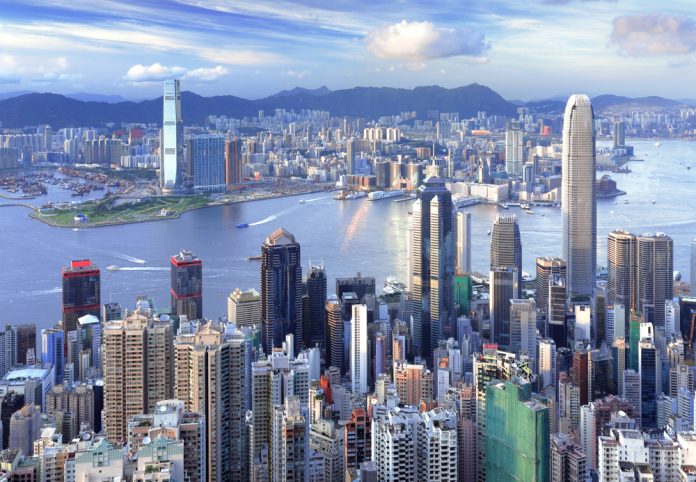
Hong Kong is now the most expensive location for business travellers, having overtaken Tokyo which drops to second spot, revealed the latest Daily Rates research published by ECA International.
Lee Quane, regional director – Asia for ECA International, said in a statement: “This change is mostly due to the overall price of business travel in Japan decreasing in dollar terms after the yen fell in value over the course of 2017. The cost of business travel in Hong Kong has remained unchanged from last year with the typical business trip now costing US$508 per day on average.”
Hong Kong is the most expensive location in APAC for business travel
However, the average cost of a business trip to Singapore has increased to US$479 per day, up from US$472 in 2016, which now puts the city state a joint third with Seoul for most expensive Asian location for business travel.
Quane said: “Hotel costs have risen slightly in the past 12 months, but the main reason for Singapore’s rise has been the increased cost of eating out in restaurants frequented by business travellers in the city over the past year.”
Meanwhile, the cheapest region for international business travel remains Malaysia, with Kuala Lumpur and Johor Bahru residing at the bottom of the rankings due to the continued weakness of the ringgit against major currencies.
“Although fellow ASEAN countries such as Indonesia, Thailand, Brunei and Cambodia have cities which rank amongst the cheapest in the region for business travel, the cost of business travel remains low in Malaysia. The cost of a business trip to Kuala Lumpur is less than half of what it is in Hong Kong,” said Quane.
Top 10 list of most expensive destinations in Asia for business travellers
The Thai cities that were included in the survey all saw a slight increase in business travel costs, with Bangkok moving into the top 50 for the first time. The average business trip to Thailand’s capital now costs US$278 a day.
Chinese cities have also seen an increase in cost for a standard business trip, with Shanghai now ranked as the ninth most expensive location for business travel in the region.
Over the past 12 months, it has become more costly for business travellers who visit Chinese cities as prices of goods and services commonly consumed by this segment has increased. Despite the increase, Shanghai is still cheaper than Hong Kong and Tokyo for business, and is over US$100 a day less expensive on average.
Some 2,400 incentive winners from AIA Hong Kong were rewarded with a trip around Melbourne and Victoria last week from April 10-13.
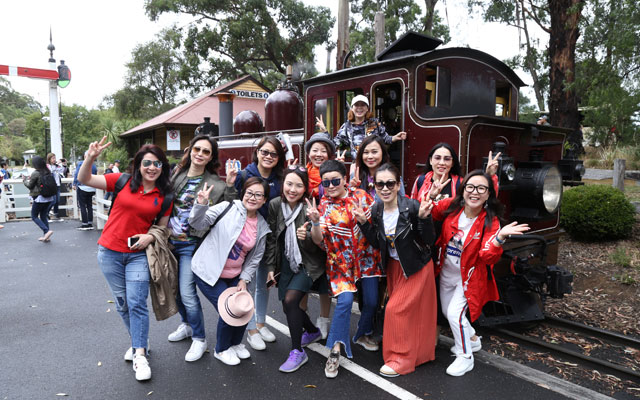
In Melbourne the group called at Queen Victoria Market, South Melbourne Market, the Tramcar Restaurant, Brighton Beach and Royal Botanic Gardens Melbourne. On the regional leg of their experience they had the option to visit the Mornington Peninsula, Yarra Valley, Ballarat and Phillip Island.
Minster for Tourism and Major Events, John Eren, said the event and tour provided a welcomed boost to local and regional economies across the state, generating A$11 million (US$8.5 million) for the state’s economy.
Burleigh Court in the process of a facelift
Loughborough-based Imago Venues has started the first phase of a £3 million (US$4.3 million) refurbishment of the 186 bedrooms in Burleigh Court, the portfolio’s four-star hotel and conference centre.
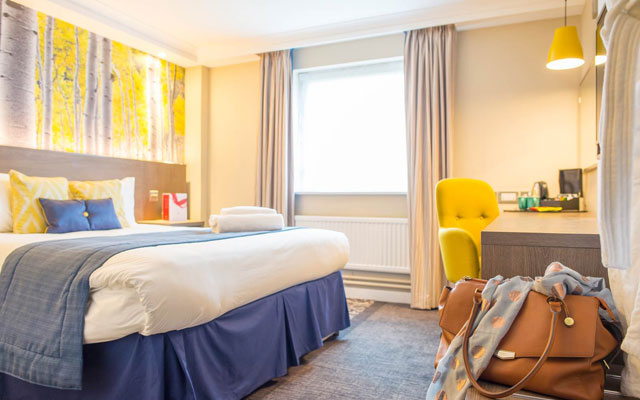
The refurbishment will see all 186 rooms modernised with new décor, furniture, furnishings and shower rooms. The sprucing up will take place in several phases, allowing the hotel and certain rooms to remain open. Facilities on-site include a bar, restaurant, and spa.
There are also future plans to upgrade the 26 meeting rooms, and 150m2 of exhibition space in Burleigh Court.
MCCC kicks off expansion
The City of Memphis has filed a construction permit for a ground-up transformation of the Memphis Cook Convention Center (MCCC) which will be completed in 4Q2019.
The plan will expand the footprint of the building in downtown Memphis with outdoor terraces and glass enclosed concourses, pre-function and meeting spaces, while adding valuable space.
The column free 10,962m2 Main Exhibit Hall will feature retractable ceiling lights, upgraded wall finishes and a newly constructed exterior pre-function concourse overlooking the Mississippi River. The expansion will also increase the total number of breakout rooms to 52.
Comic Con Africa to make debut in September
Reed Exhibitions Africa and ReedPOP have partnered with VS Gaming to bring their first comic convention to the continent with a premiere set for South Africa. The show will take place September 14-16 this year at the Kyalami Grand prix Circuit and International Convention Center in Sandton, South Africa.
Emporium Hotel South Bank in Brisbane, Australia, is set to open on July 1 2018, with bookings for accommodation, conferencing and events now available.
The property will be home to 143 suites over 21 levels, and facilities such as a rooftop bar, 23m-long infinity pool, gym, steam room, sauna, 24/7 room service, grand pillarless ballroom, and three state-of-the-art boardrooms.
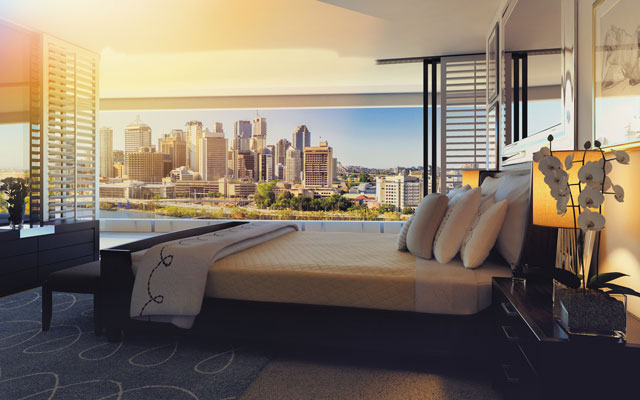
A rendering of a bedroom in the upcoming property
The hotel is part of the A$600 million (US$466.6 million) mixed-use Southpoint development on Grey Street.
The hotel has been designed and developed by the same independent owner-operators behind award-winning boutique luxury hotel Emporium Hotel Fortitude Valley, which has been since been sold and set to be rebranded as an Ovolo Hotel this month.
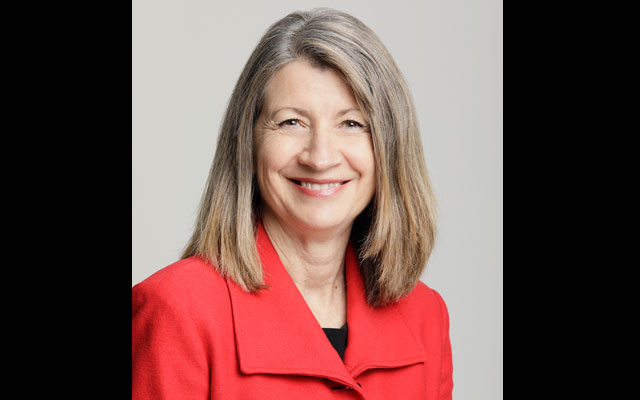
Effective from 1st July 2018, Nicolle Davey will be executive director stakeholder relations of the Perth Convention Bureau (PCB), taking over from Tracey Cinavas-Prosser.
In her new role, Davey will oversee management of the PCB Membership, Aspire Professional Development Awards, and destination marketing activities targeting overseas and national conference decision makers.
Her most recent role prior to joining PCB in 2017 was with the Perth Convention & Exhibition Centre.
The hospitality veteran began her career with Ansett Airlines before progressing to the business events sector within international and national brand hotel chains, such as Mirvac/AccorHotels.
Sunway Hotels & Resorts, the hospitality division of Malaysian conglomerate Sunway Group, has appointed Andre Scholl as CEO to lead the company and oversee the next phase of development for the hotel group.
In his new capacity as CEO, Scholl will be responsible for Sunway Hotels & Resorts’ 11 hotels and resorts in Malaysia, Cambodia and Vietnam, which represents over 3,300 guestrooms, suites, serviced residences and luxury villas; and a multitude of convention, meeting and exhibition facilities.
With over 30 years of leadership experience, Scholl was most recently the group senior vice president of operations for Regent Hotels & Resorts and prior to that the vice president – group operations and COO for the Marco Polo Hotels.
The Swiss hospitality veteran has undertaken numerous senior leadership positions for international luxury hotels including Shangri-La, Conrad, Mandarin Oriental and Hilton Hotels & Resorts.
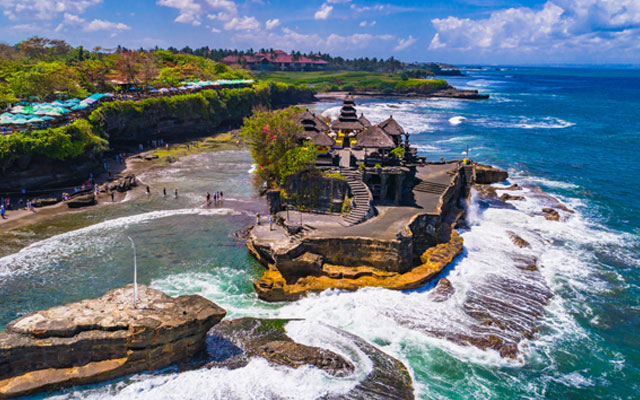
Things are looking up for Bali’s MICE stakeholders; Tanah Lot pictured
Qantas’ plan to start daily Melbourne-Denpasar route from June 23, 2018, has been lauded by stakeholders in Bali who see it as a bridge to attract business events back to the Indonesian island.
Over the last five years, Australian visitor numbers to Bali have doubled, prompting Qantas to begin daily flights between Sydney and Bali in March 2017, increasing the frequency from four to seven flights per week. In February this year, Qantas unveiled plans to launch the daily service between Melbourne and Bali.
Things are looking up for Bali’s MICE stakeholders; Tanah Lot pictured
Eddy Putra, general manager of Tour East Indonesia opined that the new Melbourne-Bali service would not only boost leisure arrivals, but also increase business travellers.
“The lack of full service airlines that fly from Australia to Bali makes large companies reluctant to conduct incentive and meetings in Bali,” Eddy lamented.
Moreover, he added that low cost carriers – which have a leading 43 per cent share on routes between Australia and Indonesia – did not offer corporate travel rates for groups. Besides, most companies in Australia tend to fly top level staff on a full-service flight.
“This is why Australian MICE business in Bali is always small. (Bali only gets) a limited number of big groups,” Eddy said.
Eddy believes that with Qantas’ new route and additional seat capacity, business events in Bali could increase by 30 per cent this year.
Michael Koth, general manager InterContinental Bali Resort is also optimistic about the new connection.
He said that Qantas will “help to convince the market as Australian companies do not have to worry about flights”, and this may help to push Australia back to pole position in terms of leisure and corporate arrivals.
To obtain more business events, InterContinental Bali Resort will be conducting sales and media calls to Australia, jointly host events with other InterContinental properties, and work closely with the global sales team based there.
Meanwhile, DMC Destination Asia will be conducting sales calls to many Australian cities and meet with event planners to attract business events back to Bali.
Ketut Sediya Yasa, managing director of Destination Asia Indonesia explained that this year’s poor performance was partly due to many Australian companies diverting incentive plans and meetings to other destinations due to Mount Agung eruption. And while the market might rebound in September, the industry was unable to capture the market and grow during the high season (January to April).
“We are now looking towards 2019. Apart doing sales calls, we are also working with ASITA (Association of Indonesian Tours and Travel Agencies) and the government to promote Bali as a MICE destination. Qantas’ new route is a fantastic opportunity (for Destination Asia) as Melbourne is a big contributor towards Bali arrivals. Surely it will accelerate the growth of MICE market,” Sediya concluded.
The city of Taichung on the Taiwan peninsula is stepping up its game with the development of multiple venues across different districts, namely in Houli, Fengyuan, Waipu and Shuinan.
The primary driver is the 2018 Taichung World Flora Exposition, which was originally slated to be held in the new-built Houli Horse Ranch and Forest Park Area. When an endangered endemic leopard cat was discovered there, the Taichung City Council expanded the show to Fengyuan and Waipu.
Sun: Taichung is hoping to make its own mark on the global events map
Besides Houli, two other districts will also receive new large event venues. These are Fengyuan Huludun Park – which will house Taiwan’s longest waterside floral gallery – and Waipu Park Area.
The new venues will take on different future uses when the event concludes.
The Houli Horse Ranch and Forest Park Area will become Asia’s largest equestrian competition venue, Fengyuan Huludun Park will house a pastry museum, while Waipu Park Area will become an international agricultural innovation park.
Meanwhile, the 254ha Shuinan area is being transformed into a TWD60 billion (US$2 billion) “smart city” – featuring the Shuinan International Convention Exhibition Centre, green buildings, landscaping, automated waste collection system, rainwater recycling system and more – as a flagship project of Taichung’s Industry 4.0 initiative.
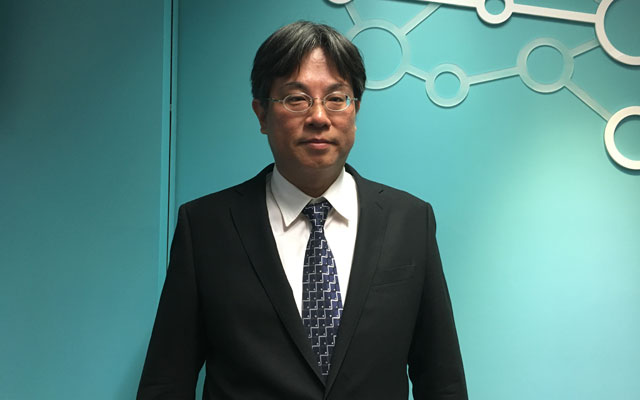
Sun Chung-Hsing, senior executive officer, Taichung City Government, said: “As what is now Taiwan’s second-largest city, Taichung is hoping to make our mark on the global map. One way we’re doing so is by increasing focus on developing our business events landscape, and the 2018 Taichung World Flora Exposition will serve as a good platform to attract more international visitors to Taichung. With this show, we have begun constructing large facilities in Taichung to accompany the development in Shuinan.”
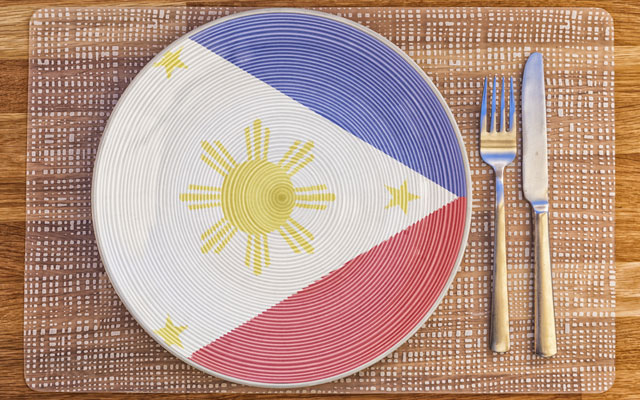
The Philippine Tourism Promotions Board (TPB) launched a culinary event, Buhay Carinderia Redefined, highlighting carinderias or roadside eateries selling local food, last week.
Buhay Carinderia Redefined is an “advocacy project” that redefines the carinderia “as something more than a simple corner eatery” into “innovative, dynamic and relatable”, explained TPB’s chief operating officer Cesar Montano.
Buhay Carinderia will go on a months-long journey all over the Philippines in search for the best in the Carinderia culinary scene
This comes after the cancellation of this year’s World Street Food Congress, and the rescheduling of premier gastronomic event Madrid Fusion Manila.
The event, originally known as Buhay Carinderia and organised by Marylindbert International in Manila in 2011, will be travelling around the Philippines. It will comprise of workshops, exhibitions, and culinary competitions.
Montano added that it will be “reaching out to the grassroots” by urging them to prepare and serve homecooked meals, an important part of Filipino hospitality.
The launch of Buhay Carinderia Redefined came after the organising committee of the World Street Food Congress announced its cancellation “under circumstances beyond our control”. The Philippines first wrested Food Congress from Singapore three years ago.
As well, TPB announced that the fourth year of Madrid Fusion Manila, initially slated for April, has been rescheduled to September, instead of initial plans to hold it in 2019.
Just 10 minutes from Phuket International Airport on the serene northern coast, this 178-key, Bill Bensley-designed resort offers delegates a quiet, tropical paradise steeped in Phuket’s tin-mining heritage
The newly-opened Ritz-Carlton, Bangkok anchors the One Bangkok development with cosmopolitan elegance. Featuring the city's largest ballroom and a spectacular new penthouse suite, it delivers exceptional hardware and deeply authentic, soulful service for business and leisure travellers alike
Behind the imposing, Brutalist concrete that defines Zurich’s Oerlikon district lies a surprising secret. While its exterior honours the neighbourhood’s industrial roots, stepping inside Mama Shelter reveals a vibrant, neon-soaked world that is a far cry from its rigid shell




 Top 10 list of most expensive destinations in Asia for business travellers