With new technology proliferating and business traveller needs and expectations evolving, travel managers are struggling to manage complex, multi-layered travel programmes. According to new research from the Association of Corporate Travel Executives (ACTE), underwritten by HRS, travel managers recognize this challenge and understand that simplifying their programmes could yield benefits—but simplification initiatives face competing priorities.
The new study, Simplifying Managed Travel, finds that traveller safety trumps the agenda: Most buyers (94 per cent) say duty of care is a key priority; 82 per cent say it is their top priority. With 72 per cent rating it is a key priority for their managed travel program, simplification follows behind cost reduction (88 per cent), data security (84 per cent) and improving traveller satisfaction (75 per cent).
However, travel managers recognize that simplification initiatives can support their other strategic priorities. For example, 47 per cent of travel managers say that simplification will improve duty of care, and 39 per cent believe it will reduce the overall cost of their travel policy.
Travel Managers Struggle to Translate Priority into Action
Despite recognizing the importance of simplification, travel managers see a gap between intention and execution. Reflecting the strategic importance placed on traveller safety, duty of care is the travel buyer’s top priority for simplification: A majority (83 per cent) say duty of care requires immediate action (62 per cent). Data security appears second on buyers’ list of simplification targets.
Disconnects between buyers’ simplification priorities and their actual behaviour, however, indicate barriers to pursuing strategic goals. The execution gaps for duty of care and data security are large relative to other priorities, with more than one-in-five buyers saying they are not currently translating their traveller safety (23 per cent) and data security (24 per cent) concerns into action.
Suppliers and Internal Stakeholders Must Become Partners in Simplification
Today’s complex travel programmes encompass multiple partners and stakeholders—internally and externally. To be effective, simplification initiatives often require support from these parties. While nearly one-in-five buyers do not get support from peers in other departments, most report that internal stakeholders are on board with simplification initiatives:
- Procurement is most often regarded as a partner in simplification (57 per cent);
- Internal risk/security and communications staff follow (40 per cent);
- IT support (36 per cent) and human resources (28 per cent) lag other departments.
Third parties can supply relevant tools and expertise, providing support to travel buyers’ simplification initiatives. Buyers welcome this assistance: More than half of buyers not currently receiving help from travel providers say they want it. Internally and externally, the data suggests that the travel buyers who say simplification is a top strategic priority are better at collaborating to reach their simplification goals.
“The value travel management provides to a company is increasingly measured in optimised processes and cross-department collaboration,” explained HRS CEO Tobias Ragge. “The study shows this close collaboration is vital and that leading companies build on their internal stakeholder network, but they also rely on the data, advice and support of external partners to reach their strategic goals.”
Driving Effective Simplification
Simplification is a key route for travel managers to achieve their business objectives. However, facing the hurdles of limited resources and differing levels of support from internal and external stakeholders, buyers must ramp up communication with suppliers, other departments within the organization and with the travellers themselves.
The study can be downloaded https://corporate.hrs.com/int/simplify.


![New-World-Millennium-Hong-Kong-Hotel---Event-Room---U-Shape[2]](https://ttgmice.2017.ttgasia.com/wp-content/uploads/sites/3/2017/11/New-World-Millennium-Hong-Kong-Hotel-Event-Room-U-Shape2.jpg)


Concept Racines means roots in French and reflects executive chef Jean-Charles Dubois’ intention to use seasonal local produce and organically grown ingredients as much as possible in producing the restaurant’s dishes and beverages. Racines also takes fresh herbs from the hotel’s own herb garden.
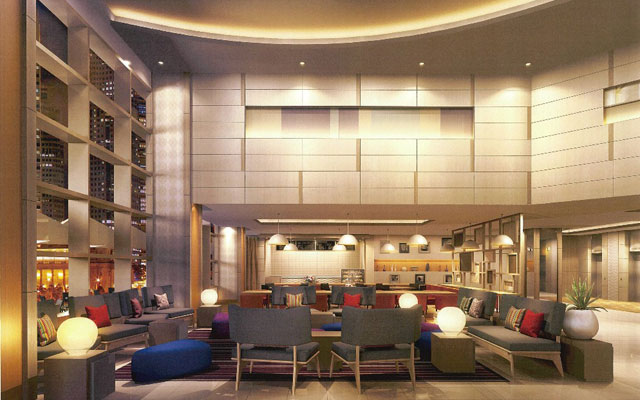
With its use of shiny steel and glass fixtures, plush fabric seats and designer ceiling lights that resemble outstretched roots, the restaurant presents a timeless and elegant interior that bears the same attributes as the Sofitel brand.
As the hotel’s all-day dining restaurant and venue where guests indulge in their first meal of the day, Racines adopts an open-kitchen concept and comes with live stations where charcuterie and the freshest garden salads are offered, its very own pâtisserie and gelato corner as well as a state-of-the-art Weinz oven which churns out freshly-baked croissants and bread daily.
While all these are lovely, what’s truly wonderful is that executive chef Dubois has placed equal importance on both French (tip of the hat to Sofitel’s French roots) and Chinese (likely to the ancestry of Singapore’s dominant community of forefathers) cuisine. I think this combination is perfect for gatherings where some guests may prefer traditional, familiar dishes more than others.
Food At Racines, cuisses de grenouilles (frog legs) sit alongside Sichuan-style fried chicken, and they are all done to perfection. I was particularly impressed by the rich lobster bisque with coral oil, basil ravioli and micros cress, the tender 48-hour slow cooked Wagyu beef cheek with truffle mash potatoes, and the flavourful sweet and sour Kurobuta pork.
My irrational distaste for frogs (The Wind in the Willows had something to do with it) evaporated when both the pan-fried grenouilles with pink garlic, parsley and wild mushroom emulsion, and the stir-fried frog legs in spicy Sichuan salt were brought out in front of me. Massive American bullfrogs are used in Racines’ kitchen, so expect meaty frog legs the size of chicken drumsticks.
Besides an a la carte menu, Racines also offers set menus with options for French only, Chinese only and vegetarian. These set lunches are refreshed every week to showcase the best produce of the week and to also ensure regular guests will always be impressed by new flavours.
MICE application Racines’ location in the Central Business District makes it a convenient option for business luncheons and group dinners.
While Racines is not available for full venue hire, it does welcome partial hire for groups of up to 60 people. There is also an eight-seat private room which works for intimate-sized gatherings.
In all, Racines seats 136 diners.
Service Warm and friendly
Contact
Email: ha152@sofitel.com
Tel: (65) 6428-5000
Opening hours Daily, 06.30 to 22.30