Asia/Singapore Saturday, 25th April 2026
Page 831

Calculating the worth of business events

0
Karen Bolinger

Seven years ago in 2010 was the last time an official dollar figure on the contribution of the events industry was published.

The WTTC (World Travel and Tourism Council) reported it was worth more than US$650 billion out of the total tourism industry contribution of US$5.7 trillion, which accounts for more than nine per cent of global GDP. Is it an accurate figure and what is the dollar figure today?
Karen Bolinger

“Nobody knows,” Oscar Cerezales, chief operating officer, MCI Group replied. “There are reports and stats but the direct value is difficult to measure and the indirect is almost impossible. That said, if you need a number, US$650 billion is ‘accurate’.”

Cerezales supported his estimate based on a recent PricewaterhouseCoopers study, which put travel and tourism at US$865 billion in the US, with US$280 billion accounting for meetings direct spend. With world meetings contributing three to four times more, he put the events ballpark figure at around US$700 billion.

Primarily, Cerezales said, it is because there is no global agreement in methodologies like ISO, and calculations in most countries are based on tourism KPIs.

Figures aside, Joint Meetings Industry Council (JMIC)’s executive director, Rod Cameron, pointed out that it was only in the last few years that there has been a growing appreciation of the value events create in terms of knowledge transfer, innovation, and business stimulation.

But these values, he noted, are difficult to measure with any precision, and methodologies are just being developed. However, the meetings industry is fragmented, has limited collective resources and progress has been slow.

Earlier this year in January, JMIC launched The Iceberg, not only as a vehicle for industry advocacy, but also specifically to showcase the content of its Case Study Program.

Cameron said JMIC, in collaboration with an international academic panel coordinated by the University of Technology Sydney, is publishing academically rigorous studies of the outcomes and legacies of business and professional events.

The aim is to convince the government, and individuals involved in a destination’s economic development, of the sector’s true value, and to identify the range of output values from particular events to serve as examples of the broader benefits generated by the meetings industry as a whole.

Cameron continued: “In most parts of the world the meetings industry is heavily reliant on government support and investment. Major event facilities like convention centres, for example, are almost always supported by public investment and government policies – such as taxation, immigration and access – can have huge implications for industry success.

“In order to see the real return on that investment, governments and communities must go beyond the spending-based value measurement and recognise the much broader role they play in advancing a wide range of policy priorities and community aspirations.

“We need to make the arguments and back them up with solid data – so this is why broader value measurement needs to be a top priority for the meetings industry today.”
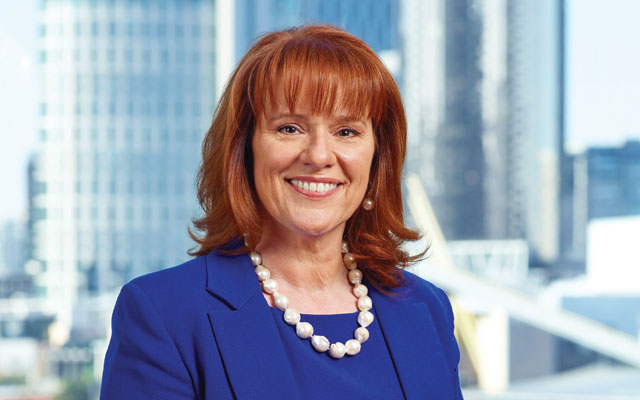
Karen Bolinger, CEO, Melbourne Convention Bureau, opined “we are not good at promoting ourselves”.

“Business events are a crucial part of the visitor economy, and the value of the sector extends beyond tourism expenditure. Conferences provide opportunities to build international networks, open trade and investment opportunities, profile a region’s sectors of strength, and bring focus to a government’s areas of policy leadership.”

Bolinger added: “To truly understand the impact of the sector, we need to understand the legacies that were left behind, such as knowledge dispersal, community initiatives, research opportunities and business development.

“However, there are real challenges in sourcing this data. There are also challenges around collecting the right data that will educate government, stakeholders and partners on the value of the business events industry.”

Melissa Ow, deputy chief executive, Singapore Tourism Board (STB), said the board is nurturing understanding of the business events industry by promoting the growth and development of SACEOS (Singapore Association of Convention and Exhibition Organisers of Singapore), a local business events industry association.

Ow commented: “With STB’s support, SACEOS developed a curated MICE Week with the Singapore MICE Forum as a key feature, where players in the business events ecosystem collaborate to share knowledge and network, thus profiling the business events industry.”
This article was updated on December 1, 2017

IHG shocks with Asia regional HQ shift to Europe, Smits leaving chain

0

InterContinental Hotels Group (IHG) has announced a new operating region that combines Europe, Middle East, Asia & Africa (EMEAA) to be based in the UK, effectively relegating the current regional office in Singapore which covers AMEA (Asia, Middle East and Africa) to a sub-regional division.

A second shock is the resignation of Jan Smits, the current AMEA CEO who is widely respected by Asian owners and hospitality professionals as running a tight ship and sealing long-lasting, trustworthy relationships.


Smits will be with the chain until the end of the year

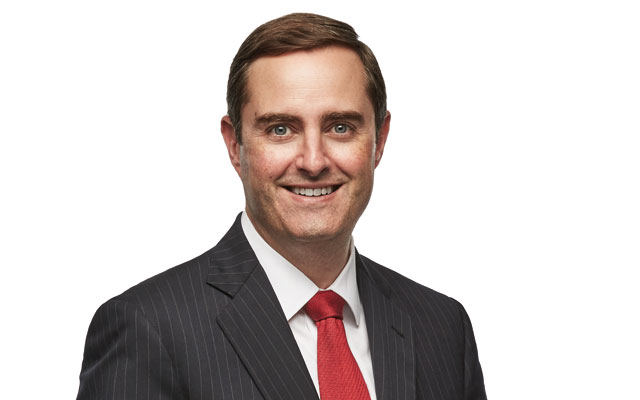
The restructure is the first major move made by IHG’s new group CEO, Keith Barr, who rose to the top on July 1 after making a mark as IHG’s CEO of Greater China, then as its chief commercial officer. The new CEO Barr picked to run EMEAA, Kenneth Macpherson, is currently IHG’s CEO of Greater China. Replacing Macpherson as CEO of Greater China, which remains as a regional office, is Jolyon Bulley, currently COO of Americas and was COO of Greater China.

The changes will take effect at the start of 2018. Smits will remain with IHG until the end of this year.

Some in the industry are pondering the logic of IHG moving farther away instead of staying close to the fastest-growing hotel market, Asia-Pacific. An EMEAA region is also atypical for the industry, raising eyebrows if such a “mega” region and one so diverse is do-able.

Just running Middle East and Asia is a challenge, pointed out Robert Williams, partner and head of hotels & hospitality Asia-Pacific, Withers Worldwide, based in Singapore. “So this is bold. And, trying to manage Asia from Europe – not many have succeeded there. Strong senior and empowered management on the ground in Asia and a clear mandate for them to execute strategy will be key.”

Asked how he thinks this will affect the current regional office in Singapore, Williams said: “Asia-Pacific is a key growth engine for the industry. That often gets overlooked by management teams in Europe and the US, who point to its smaller current size. Those sitting in Singapore may feel disenfranchised initially, and will miss Jan’s great leadership. But Kenneth has long been identified as a superstar and will no doubt represent Asia strongly in Denham.”

Asian owners and owner-representatives that let IHG manage their hotels are concerned. Said a shocked Choe Peng Sum, CEO, Frasers Hospitality Group: “First of all, the two major regions are so diverse, and to lump all operations under the UK? Just spells a little to owners like us that Asia is not that important anymore! I am indeed concerned whether we will get the attention for our properties in Asia out of Europe. There are so many opportunities both in Europe as well as Asia, two major distinct regions – it doesn’t quite figure to me.

“Secondly I am shocked and sad to see Jan leave the group as I have seen how he has led AMEA with passion and dedication, and the tremendous growth the group has seen under his watch. The attention to detail and the approachability whenever we need help or attention is always there. I hope things are not going to change with this major reshuffle. If so, we will certainly make our own plans for a reshuffle as well.”

On the flip side, Withers’ Williams thinks the move may give Barr more direct visibility into and control of Asia. “Arguably, it improves Asia’s representation in the head office too. Hopefully this feeds into the overall imperative for IHG, which must be to become the global operator that makes a difference quickly and much more aggressively.

“IHG has a track record of putting through a very deliberate reshuffle every four years or so. With a new group CEO at the helm, this is an early move to shape the management team and regions in a way that aligns with the vision the board is asking Keith Barr to deliver on,” said Williams.

He agrees with the sentiments being expressed on Smits’ sterling leadership. “Jan has built a great management team in Singapore and steered the region to record growth during a period in which two IHG legends Anthony South and Paul Logan (IHG’s development chiefs in AMEA) retired, and in which IHG has not been as aggressive with capital as some of its competitors. That is a legacy he can be very proud of.”

In a statement, IHG assured that the UK-based EMEAA region will operate through “strong” sub-regional divisions based in a number of locations, including Singapore, “to ensure the business remains close to hotel owners, guests and colleagues”.

“By bringing two strong, established regions together as one, the company will focus on further growth through increased agility and effectiveness,” it said.

Barr said in the statement: “The success of our current AMEA and Europe regions has put us in great shape. Our clear and focused strategy that remains unchanged, along with the investments we have made, has seen our business grow significantly in these markets. We are now ready to take the next step, which will continue to drive operational performance and accelerate the growth of our brands.

“The EMEAA region will be hugely diverse with tremendous opportunity. With Kenneth’s experience in our fastest-growing region, sharp focus on operational excellence and strong background in consumer brands, he has both the experience and passion to take our new region forward.”

IHG CEO says he’s not de-prioritising AMEA

0

InterContinental Hotels Group (IHG) CEO Keith Barr said he is not de-prioritising AMEA with his move to create a new mega region that combines AMEA with Europe based in the UK.

In fact, he wants to bring resources closer to the markets, Barr said in a phone interview from London.


Barr wants to enable markets be more independent when it comes to making decisions, in order to drive performance

The intention, according to Barr, is not to have a big office in Europe running the business but “to have more resources going into the markets close to the hotels and owners (and) to enable the markets have more autonomy and be a bit more entrepreneurial to drive performance. So we’re moving resources around while maintaining centres of excellence on development, luxury, F&B, operations, in Asia.”

Barr recounted that was how he ran Australia/New Zealand/South Pacific years ago. “I was a fairly independent business; I wasn’t dependent on Singapore. I had development, sales & marketing, revenue management, I ran my own business, and I had the ability to make decisions on how we partner, how we negotiate a deal, and that’s what I want to see. I want to empower southern Asia, India, and so forth. Sure there are some things we can’t do from a back office perspective such as finance or HR which are more process-related.”

He’s looking at how best to structure EMEAA on a market basis, he said. Macpherson will have accountability for the overall strategy of EMEAA, and there will be leadership in each of the markets who will be accountable for operating the hotels, opening hotels, growing the business. “We’ll work through who should be in those roles going forward. We have a number of people in place and we have to look at which other leaders we want to have in place going forward,” he explained.

He reiterated: “There’re going to be resources in Singapore, it’s a huge important part of the world for us. There will be resources in other important markets for us and we’ll be more focused on putting resources in markets that have the highest potential, based on pipeline, relationships with have with owners and our competitive positions too.”

Asked why this model is relevant for IHG today, Barr said: “The business has got scale now. Where we didn’t have scale in many of those markets in the years past, it did make sense to do everything out of Singapore. But now that we have scale in those markets, the best way to drive performance for owners is to grow more resources in those markets.”

Each market, he reminds, is fundamentally different. Australia/New Zealand has lots of institutional funds compared with southern Asia, which has lots of high net worth individuals, managed luxury and upscale business, he points out. “So no one size fits all,” he said. “I want to make sure we’ve got the right go-to-market strategy.”

Regions are just constructs that companies make, says Barr. What’s important is “how to ensure we have the right operating model in the markets and not be constrained (by traditional ways), how we look at using technology, new ways of working and leveraging our scale”.

TCEB extends twin-city event subsidies

0

Thailand Convention and Exhibition Bureau (TCEB) is extending its Meet Double Cities package – offered under its wider Thailand Connect campaign – through 2018, as demand for it picks up this year on the back of a recovering European business events market.

The Meet Double Cities package was launched last year to encourage corporate groups to stay on longer in Thailand through multi-city itineraries. It dishes out 100,000 baht (US$3,014) for each qualified group with 200 attendees and more staying in Thailand for at least four nights in more than one destination.

Supawan: Meet Double Cities package is heavily dependent on longhaul markets

According to Supawan Teerarat, TCEB vice president of strategic and business development, the package had a rocky start as its launch coincided with a shaky European economy that saw groups holding on tighter to their finances, and shrinking travel and event budgets.

Supawan explained that the success of the Meet Double Cities package was more dependant on longhaul markets as their travellers were more likely than Asian ones to take up a multi-city itinerary, having travelled a long distance to Thailand and would want to make the most of their trip.

“European groups that (did come) to Asia for business events were very careful with their expenses, and tended not to feature too many cities in one destination,” she said.

But things are looking up this year.

“We saw more demand for events and more requests (for the package) since early this year, just as the European market rebounded,” she told TTGmice.

Among the multi-city corporate events held in Thailand this year is a 280-pax incentive programme for a company in Belgium. The group visited Bangkok and Hua Hin from March 7-23, and the organisers were supported by the Meet Double Cities package.

Encouraged, TCEB has decided to extend the Meet Double Cities package to 2018, which otherwise would have closed its application on September 30 this year.

Malaysia’s association industry boosted by formation of MSAE

0

On September 14, the Malaysian Society of Association Executives (MSAE) was officially launched during the Malaysia Association neXt (MyNext) 2017 conference in Kuala Lumpur.

Headed by Zaliha Omar, MSAE’s mission is to advance the stature and professionalism of associations in Malaysia through advocacy, education and advisory services.

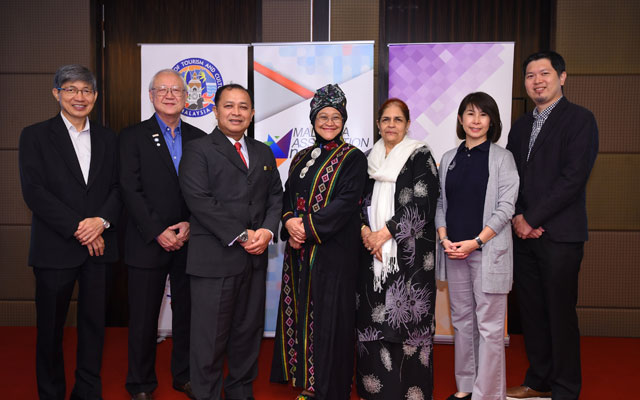
Malaysia Convention & Exhibition Bureau’s Zulkefli Sharif (third from left); MSAE’s Zaliha Omar (fourth from right); and MSAE committee members

Zaliha said in a statement: “Among our objectives are to promote the profession of association management, to accord networking platform for our members, and to conduct educational and training courses to uplift our members’ knowledge, skills and standards.”

She also urged fellow association members to become MSAE members, so as to connect with other like-minded professionals in the industry.

Malaysia Convention & Exhibition Bureau CEO, Zulkefli Sharif, expressed his support, saying that the establishment of MSAE “complements our efforts in positioning Malaysia as Asia’s business events hub”.

On the setting up of MSAE, regional director Asia Pacific, International Congress and Convention Association (ICCA), Noor Ahmad Hamid commented: “The initiatives to set up the MSAE are indeed a significant move for Malaysia to capitalise on the power of association. More importantly, it represents a platform where local association leaders and executives can exchange knowledge and know-how to build efficient and sustainable associations. ”

The MyNext 2017 conference which saw the presence of 124 local association experts and thought leaders, was jointly hosted by Malaysia Convention & Exhibition Bureau and MSAE.

Nepal to position itself for corporate incentives and other tourism appeals

0

With Nepal already well established as a destination for trekking and mountaineering expeditions, the NTO is now moving on to promote the destination for corporate incentives, culture and soft adventures to widen its market and achieve more consistent footfalls.

Nepal Tourism Board’s CEO, Deepak Raj Joshi, said: “Our aim is to promote Nepal as a very high value, unique experiential destination. We also want to grow tourist arrivals in line with the new National Tourism Strategy 2016–2025, which targets 2.52 million tourists annually by 2025.”

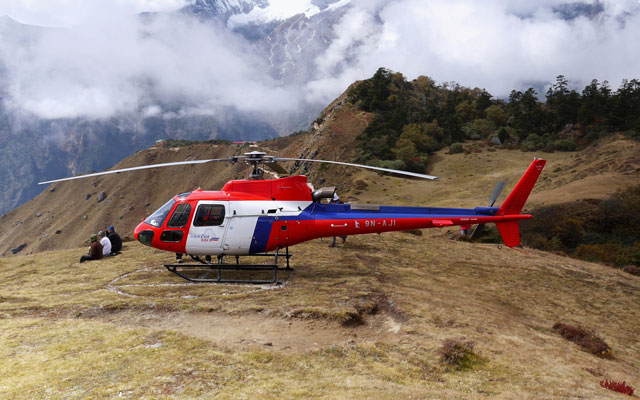
A possible incentive activity is taking a helicopter tour to view Mount Everest and its surrounds

This year, Deepak expects Nepal to breach its one million arrival mark for the first time in the country’s history.

From January to June 2017, arrivals rose by 41.5 per cent to 460,237 tourists.

Deepak said: “Tourism in Nepal has completely recovered from the earthquake of 2015. Part of the reason for the strong growth is that tourists who had held back their holiday plans to Nepal after the earthquake were finally back this year.”

In line with its new vision, Nepal Tourism Board is conducting more promotions directed at niche interest groups.

Sanjay Mathema, president at Travel World Experiences, an DMC, believes that the Nepal Tourism Board is on the right track.

He said: “Nepal has always been associated with mountaineering because of Mount Everest. It is the right move to change the perception of people, and to make known other products that the destination can offer.”

Nanda Kumar, managing director of Hidden Asia Travel & Tours based in Kuala Lumpur, is also seeing keener interest in Nepal among his Malaysian corporate clients.

Kumar said: “We see clients increasingly asking for exotic destinations to incentivise their top achievers, and Nepal falls into this category. A popular activity is a helicopter tour to see Mount Everest up close and the surrounding mountains. This is symbolic, as the client’s top achievers have been to the tallest mountain in the world. The sky is thus the limit for their future achievements.”

Mandarin Oriental to open hutong hotel in Beijing

0

Mandarin Oriental Hotel Group has announced that it will manage a luxury hotel project – expected to open in 2018 – in the heart of Beijing.

Mandarin Oriental Qianmen, Beijing, will be located within the traditional Qianmen East Hutong Quarter which is currently undergoing a process of preservation and regeneration. Hutongsdate back to the 13th century and comprise courtyard houses connected by narrow lanes and alleyways.

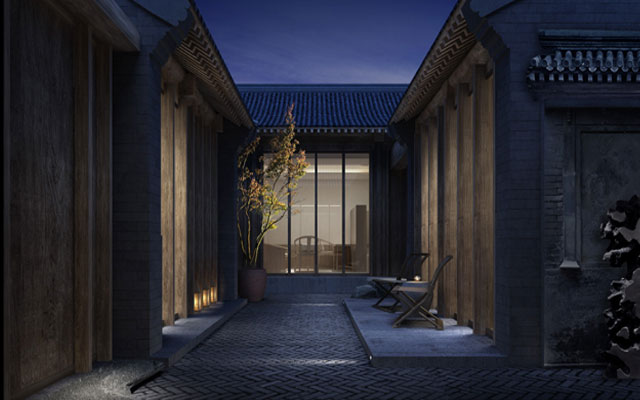
A rendering of Mandarin Oriental Qianmen, Beijing

Guests can expect to stay in landscaped courtyard suites and experience the traditional Beijing way of life within the labyrinth of alleys and lanes.

Facilities within the hotel will include multipurpose function rooms, indoor swimming pool, fitness centre and spa. For F&B options, there will be an all-day dining concept with a roof terrace, a Chinese restaurant, a lobby lounge, a traditional tea lounge and a Mandarin cake shop.

Plan and budget for event technology, urge industry experts

0

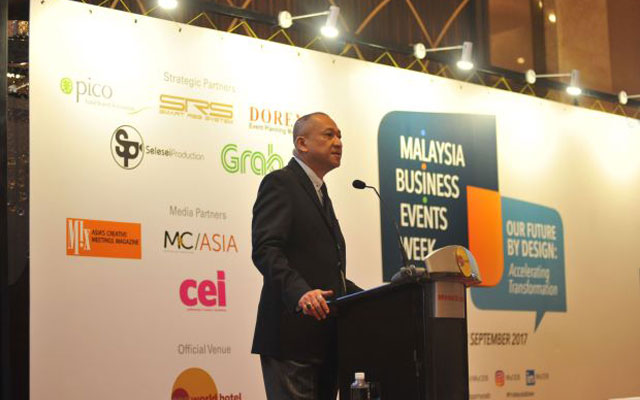
Business travel experts at the ongoing Malaysia Business Events Week (MBEW) are urging business event planners to embrace technology and use it to enhance their event experience.

Yusno Yunos, CEO and founder of Malaysia-based event technology specialist Evenesis – Y Us, said event technology should not be an element that only comes into the picture when there is excess budget.

Datuk Seri Mohamed Nazri Abdul Aziz, speaking at this year’s MBEW

Sharing his experience, he said: “Government-linked companies and (non-profit) associations are somewhat open to the idea of adopting new technology in their events, but their decision (to actually implement it) is usually determined by cost. They will only implement event technology when they have additional budget.

“This attitude must change. Companies must set aside a budget for event technology if they want to create a better event that will entice people to attend.”

Yusno believes that events will move towards paperless identification for delegate registration, such as by using facial recognition software.

“This is already adopted in some countries and will become more mainstream in the future. Evenesis – Y Us is researching and developing facial recognition software which we hope to roll out by mid- 2018,” he said.

Technology could also change people’s motivation for attending a business event.

Panellist, Angeline Van Den Broecke, director of sales and marketing, Kuala Lumpur Convention Centre, said technology has made knowledge so easily accessible to delegates that their primary reason for attending conferences in the future will not be for gathering new knowledge but rather for networking opportunities.

In this changed landscape, she foresees a future “where organisers will pay delegates to attend meetings”.

Yusno opined that the “right technology is not necessarily the most expensive one” and that having people knowledgeable in event technology to plan and execute such applications are critical to success.

Also speaking on the same panel, Jan Bartscht, co-founder and managing director, Leadapreneur, urged event organisers to not fear technology, and instead embrace it, use it to innovate and improve the experiences for event attendees.

Mindanao MICE players devise ways to soften business slide

0
Business event players here are looking at new markets and adapting to changing needs 

Business events players in the Philippine island of Mindanao, whose city Davao is a popular meetings and events destination, are turning to new markets and adoption new business approaches to cope with the slowdown in business this year amid the island’s martial law and continuing war in Marawi.

A business hotel in Mindanao is now pursuing the China market, whose citizens have recently been offered visa on arrival, after suffering from cancellations of business events bookings this year and up to May next year, with some of these events relocated to either Manila or the Visayas.

Business event players here are looking at new markets and adapting to changing needs

The general manager of this hotel complained that the ballroom, which used to be very busy, has got only one business event for the rest of 2017 and the hotel’s occupancy slid to 49 to 59 per cent on average.

Dottie Wurgler-Cronin, general manager of Marco Polo Davao, said working together as a cluster and cross-selling with two other Marco Polo hotels in Manila and Cebu helped.

“That’s why we see an uptrend in July-August,” she said.

Agreeing, Frank Reichenbach, general manager of Marco Polo Ortigas Manila, said: “June-July was softer, August-September strong and we picked up some business in Davao”.

For Rajah Tours, reliance on the leisure market has grown as the company sees a dip in business events demand. Company president Jojo Clemente told TTGmice that the only big groups it is handling are the Ambassador/s Tour from the US and the Canada Winter’s Escapade.

Clemente underlined the importance of establishing a perception of peace and order among business event planners and delegates who prefer low-risk destinations.

Industry leaders are thus focusing also on clear communications with source markets.

Cecilia Sanchez, CEO of international event organiser Leverage International, said: “It is really very important to communicate what’s really happening not only from the negative point of view but also from the positive point of view. Balanced reporting. There are negative things happening but there are also positive things that should be interesting to business people.”

Marisa Nallana, secretary-general of the Philippine Association of Convention/Exhibition Organizers and Suppliers (PACEOS), assured source countries: “We recognise their security and risk concerns, but the local government units are doing their best to keep their destinations safe and they are also putting together more attractions to encourage visitors.”

Meanwhile, Philippine industry players are looking forward to the country’s first nationwide business events roadmap which will be unveiled this month to address issues and challenges in positioning the country as a competitive destination, tourism undersecretary Benito Bengzon Jr. disclosed.

Part of the deliverables is an extensive business events data base that’s currently lacking and which will provide strategic direction to both the tourism department and the private sector, he said.

HKCEC spends US$3.9 million to upgrade Wi-Fi capabilities

0

Hong Kong Convention and Exhibition Centre Management (HML) has kicked off a US$3.9 million project to rebuild the entire Wi-Fi system at the Hong Kong Convention and Exhibition Centre (HKCEC).

The new Wi-Fi network will feature the highest standard IEEE 802.11ac wave 2, as well as a new 10Gbps fibre network backbone for offering superb signal stability to meet the data demand generated by large numbers of guests simultaneously using the network. It will deploy advanced high density Wi-Fi (HD Wi-Fi) solution provided by Cisco.

HKCEC has kicked off a US$3.9 million project to rebuild the entire Wi-Fi system

The US$3.9 million project will also involve installation of 660 new Wi-Fi access points, which will support more than 20,000 mobile devices with scalability. Resilient optical fibre network infrastructure will be installed, making it possible to scale up network bandwidth requirements to meet future demand and undergo system upgrades as technology advances.

The new Wi-Fi services will continue to be available on a complimentary basis.

The new system can support Location Based Services LBS technology, allowing organisers to utilise their mobile applications for improving customer’s experience. The LBS platform also allows organisers to analyse guest behaviours, improve crowd management and enhance guest experiences.

HML will be able to provide configurable bandwidth for individual organisers or exhibitors upon request, and offer premium services (paid pass) to visitors for additional bandwidth. The captive portal feature in the new Wi-Fi system will provide customised Wi-Fi landing page to offer promotion opportunities for events.

The project is scheduled to be completed in 3Q2018. The total area covered by the network will be 125,000m2, which will include all exhibition halls and function rooms, front of house areas, entrance lobbies and concourses, organiser offices and ancillary rooms, as well as restaurants.

Reviews

The Ritz-Carlton, Bangkok

The newly-opened Ritz-Carlton, Bangkok anchors the One Bangkok development with cosmopolitan elegance. Featuring the city's largest ballroom and a spectacular new penthouse suite, it delivers exceptional hardware and deeply authentic, soulful service for business and leisure travellers alike

Mama Shelter Zurich

Behind the imposing, Brutalist concrete that defines Zurich’s Oerlikon district lies a surprising secret. While its exterior honours the neighbourhood’s industrial roots, stepping inside Mama Shelter reveals a vibrant, neon-soaked world that is a far cry from its rigid shell

Hyatt Regency Kuala Lumpur at KL Midtown

A polished urban retreat designed for business travellers, Hyatt Regency Kuala Lumpur at KL Midtown combines thoughtful design, seamless service, and exceptional facilities.