The smartphone is the new window to the world, allowing people faster access to information and more developed technology.
Today, 2.5 billion smartphones are used globally, and this number is projected to increase to five billion by 2020, said Bertrand Saillet, general manager, Asia, FCM Travel Solutions (FCM), citing figures from World Bank, GSMA, Apple and Google.
Saillet: chatbots are a way to interact with customers
With this trend, mobile-optimised artificial intelligence (AI) is going to “drive massive change”, he predicted at a CTW Asia-Pacific session on September 27.
The wave is already taking shape. Delta’s partner in Brazil, GOL Linhas Aéreas Inteligentes, this year launched Selfie Check-in, the world’s first app to use facial recognition to allow customers to check into flights. It is currently available for Brazil’s domestic and international flights.
Similar technology is also being tested for JetBlue flights from New York’s JFK Airport to Boston. Saillet suggested that in the future, facial recognition could even be used in hospitality for concierge officers to greet guests with preferred welcome amenities.
However, the business-travel world is “still very fragmented”, noted Saillet. For this, AI can help determine who the traveller is, and chatbots are a way to interact with customers on their mobile phone and deliver personalised products.
“I believe that the chatbot is going to completely revolutionise the travel industry, especially for corporate travel in Asia,” Saillet told TTGmice.
Saillet proposed that, with apps such as FCM’s Sam Chatbot, travel managers and agents can offer their clients an “organised itinerary” with “responsive” advisories and content on the user’s intended destination, capped off with a chatbot to aid in other requests and queries.
The app can help travel managers “connect with the best players of the (travel) market”, Saillet pointed out, such as expense management systems and sharing economy suppliers.
However, he was also quick to clarify that mobile AI does not replace customer service. To maintain the human touch, FCM retains 8,000 consultants to aid its clients and communicate with its partners.
Sam Chatbot is currently live in the US, to be launched in Singapore and Hong Kong in November and in the rest of Asia come January 2018. It will also be available to use on social media platforms like Facebook Messenger and WeChat, concluded Saillet.
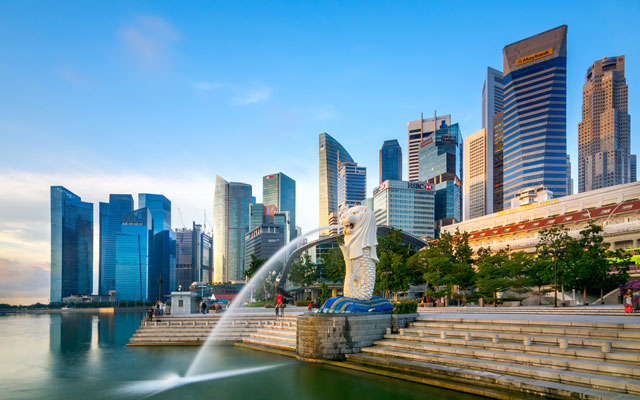
In 1H2017, Singapore has successfully secured five world congresses and two tradeshows to be held in the years to come.
These events, some of which are taking place for the first time in South-east Asia, are estimated to bring in an additional 20,000 visitors to the city.
Singapore remains attractive as a business events destination
Three medical congresses set to take place for the first time in South-east Asia.
The first of which is the International Urogynecological Association (IUGA) Annual Meeting in 2021, which will attract 1,200 visiting physicians and healthcare professionals.
The following year, Singapore will host the 20th International Congress of Endocrinology (ICE). The ICE 2022 will gather more than 4,000 endocrinologists from over 70 countries.
Further down the road, the World Congress of Anaesthesiologists (WCA) in 2024 will welcome 8,000 anaesthesiologists from around the world.
Meanwhile, two world congresses in the industrial solutions sector will make their first forays into South-east Asia.
The world’s largest technical professional association, Institute of Electrical and Electronics Engineers (IEEE), will be bringing engineers, computer scientists and allied professionals to the city state for two of its flagship events – the 46th Annual Conference of the IEEE Industrial Electronics Society (IECON) in 2020, to be attended by around 1,300 overseas attendees; and the IEEE International Conference on Acoustics, Speech
and Signal Processing (ICASSP) in 2022, with an expected attendance of 2,000 people.
On the exhibitions and conferences front, Singapore has also secured various travel, technology and F&B tradeshows.
Two events will take place for the first time next year. Making its debut from May 21-24, 2018, at the Sands Expo and Convention Centre, is the International Luxury Travel Mart (ILTM) Asia-Pacific. It is expected to receive around 1,400 visitors.
In July 2018, Campus Party – the world’s largest technology-based festival – will also come to Asia for the first time. Set to take place at the Singapore Expo, Campus Party Singapore will present a wide range of activities, talks, competitions and workshops for 72 hours (round-the-clock for three consecutive days), and is expected to bring in around 1,000 visitors to Singapore.
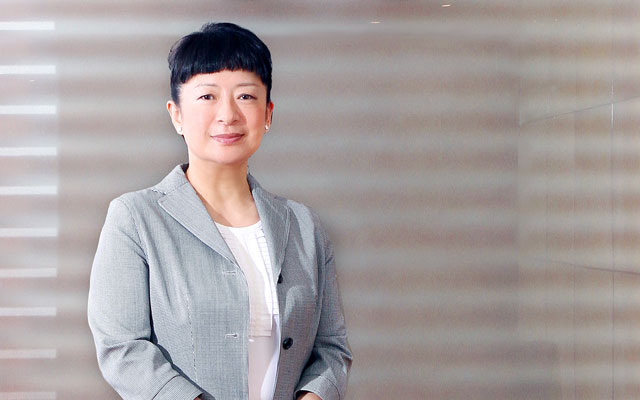
Macao Trade and Investment Promotion Institute (IPIM)’s executive director, Irene Lau, tells Prudence Lui more about the training course for Macau’s business events professionals, and the future of the industry.
Irene Lau
This summer’s MICE Talent Training Program was the third edition. How did it differ from the last two?
Venue wise, after Shanghai and Dalian, Hangzhou was picked as the destination thanks to its commercial, tourism and cultural hub in eastern China. Content-wise, we have it in line with the Macau government’s policy of giving “Priority to Conventions”, so this training programme was structured to focus more on the elements related to conventions.
Among the speakers, Liu Haiying, the CEO of China National Convention Center, was invited to share his experience in organising and attracting mega international conventions.
The group also visited relevant venues and facilities such as the Hangzhou International Expo Center, so as to obtain a preliminary understanding of the business events-related environment in Hangzhou, and got acquainted with local business events professionals.
How effective has the programme been?
The three editions of the MICE Talent Training Program attracted 70 business events industry practitioners from Macau.
The programme combines theory with practice, and helps to enhance the strengths and professional level of Macau’s business events industry. It also improves competitiveness, and provides upward mobility for industry professionals, so as to cultivate a larger number of middle-level managers.
At the same time, the programme helps to promote exchange and collaboration between professionals, enterprises of Macau’s business events industry and their counterparts in Mainland China.
In fact, the rising standard of local business practitioners enabled Macau to hold a variety of large-scale regional and international events.
In January 2017, The 13th China Expo Forum for International Cooperation was hosted in Macau. This annual event of the international convention and exhibition industry was hosted outside of Mainland China for the first time.
It attracted more than 800 elites and high-ranking individuals in the business events industry. The helmsmen of the three international convention and exhibition organisations, UFI, IAEE and SISO, were also invited to the forum in Macau to share their experiences.
What was the highlight of this summer’s edition? What did the participants learn?
We had 20 Macau business events practitioners in participation. With the cooperation of Training Center of the China Council for the Promotion of International Trade (CCPIT) and the CCPIT Zhejiang, the group visited the Hangzhou International Expo Center, the headquarters of Alibaba Group, and the largest organiser of Chinese companies to participate in the overseas exhibition – Meorient International Exhibition.
Trainees learnt the protocol in serving VVIPs at the Hangzhou International Expo Center, for instance. They also learnt about the application of Internet and technology in business events through the Alibaba Group visit. They also picked up strategies, techniques, and use of O2O services in attracting exhibitors efficiently at Meorient International Exhibition.
Is manpower quality the key issue for Macau’s business events industry today and into the near future?
Absolutely. A large number of high-quality personnel are needed to drive the growth of Macau’s business events industry.
According to the Macau Talents Development Committee, in 2015 there were 1,729 employees in the business events industry (taking large business events companies into account) of which 44 per cent were managerial class, 42 per cent were middle-level and 14 percent were ground-level. The research predicted a demand for an additional 1,683 employees from 2016 to 2018. As well, more high-quality practitioners are in demand to meet the increasing number and size of events held in Macau.
What needs to be done to allow Macau to keep pace with international standards in business events?
Aside from conducting training courses and exchange activities, the participation in international tradeshows is also an active and effective way for business events professionals to keep pace with international standards.
IPIM organises and encourages local business events practitioners to participate in overseas tradeshows, such as IMEX, where they can stay updated and learn more about the latest market trends.
Are there enough training opportunities for local business events professionals?
Nurturing talents is an important component in the sustainable development of the industry. In view of this, IPIM initiates and works closely with the industry to organise different programmes and training for the business events and business events-related professionals.
For instance, the Support Program for Professional Training and Education in the Convention and Exhibition Sector (MICE) aims to provide financial support for convention and exhibition organisers.
As well, our regular business events industry workshops cover different topics and themes. Local associations, such as the Macau Fair and Trade Association, also run courses and training.
What is your one biggest wish for Macau’s business events talent pool?
We hope that more fresh blood can be brought into the business events industry to meet the manpower needs for future development. The requirement for well-trained business events practitioners is becoming dire as Macau continues to flourish with new construction projects and business events facilities.
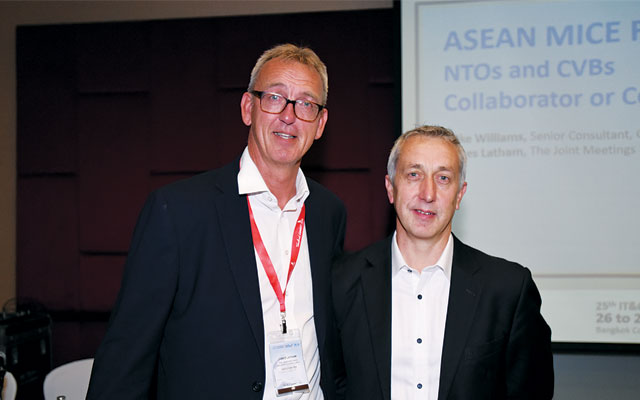
Latham: MICE supports economic growth, Williams: communicate with the government
Despite the region’s burgeoning growth in MICE numbers, CVBs grapple with limited support from government bodies, citing the main problem of being conflated with tourism.
“In Asia-Pacific, everybody’s been eager to jump onto the MICE bandwagon, but (because) they don’t all understand why, most of them are driven by the need to grow visitor numbers. As such, (MICE has) been driven very much by tourism efforts,” said Mike Williams, senior consultant, Gaining Edge.
Latham: MICE supports economic growth, Williams: communicate with the government
Thailand Convention and Exhition Bureau’s (TCEB) Waraporn Sornprom agreed, and observed: “The MICE industry is not heard on government platforms (in Asia).”
For some countries, CVBs are non-existent while in others they play a limited role – like in India where the India Convention Promotion Bureau does not bid for events and Hyderabad Convention Visitors Bureau is the country’s only city-level CVB.
Conversely, under the Thailand 4.0 scheme, TCEB’s “strength” is in reporting directly to the Prime Minister’s Office, said Chiruit Isarangkun Na Ayuthaya, president of TCEB.
This has in turn created the opportunity for a holistic marketing strategy, as well as allowed TCEB to benefit from firsthand information and updates on government policies, explained Chiruit.
Such integrated government support is the same advantage played by Singapore, said James Latham, The Iceberg and the Joint Meetings Industry Council. Although MICE developments share the city-state’s tourism budget, it responds directly to the Prime Minister’s Office under the Singapore Tourism Board.
This has allowed Singapore, as well as other cities such as London, to target specific sectors for economic growth by creating “clustered” events like Singapore Medical Week and London Tech Week.
One solution to unlocking support and funding is that CVBs should collaborate with “key industry communities” to communicate to the government that the MICE industry is “more than tourism”, but also spurs growth across the economy, said Williams.
This includes local associations, private companies in the industry and the academic community.
Williams cited the example of how Gaining Edge worked with universities such as Melbourne University to lobby more government support for scientific academia and research – an effort which led to the construction of a new international convention centre.
He also mentioned that the Malaysia Convention & Exhibition Bureau currently helps develop and strengthen associations’ local presence to build membership and foundation before bidding on an international platform.
Williams added that, in fact, associations can even “play a leading role in talking to the government” to develop a city’s MICE capabilities.
To this effect, TCEB has pulled its weight in the ASEAN committee. Waraporn shared that the bureau “has been engaging with ASEAN, and for next year’s ASEAN Tourism Forum, we’ve created the ASEAN MICE Forum”.
She added: “We looked into engaging city-level professionals and ASEAN experts to meet within an official framework”.
Jason Yeh, president of ICCA Asia Pacific and association president and destination marketing of Taiwan Convention and Exhibition Association, urged CVBs to have targeted initiatives by “(creating their) own events to match destination positioning and city branding”.
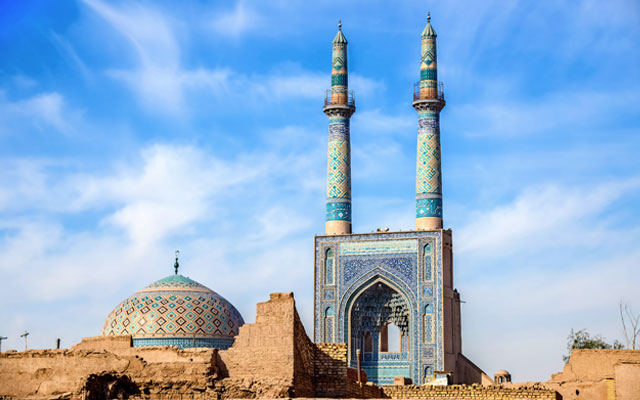
While most meeting planners typically avoid destination with security issues, the Institute of Journalism and Communication enjoyed strong attendance when its meetings on the Nuclear Accord was held in Iran
Terror threats and security concerns are having a bigger bearing on choice of incentive destinations today, buyers at IT&CMA said.
Bernd Maesse, managing director of MaesseMarketingConsulting based in Cologne, said over 50 per cent of his incentive clients today are more sensitised to safety concerns such as terror attacks, altbough the effect varies depending on the sector. Pharmaceutical companies for example are more guided by safety fears compared to the automobile sector, where factors such as where companies do overseas business with also determine the incentive destination.
While most meeting planners typically avoid destination with security issues, the Institute of Journalism and Communication enjoyed strong attendance when its meetings on the Nuclear Accord was held in Iran
He said Turkey and Egypt are no longer the hot destinations they once were for his clients.
“Once the government issues a travel advisory about a particular destination, clients will avoid the destination because they will not be covered by insurance,” he added.
However, Kuala Lumpur-based Prestige Vacation Network managing director, Terence Chew, said his incentive clients are avoiding countries such as Myanmar, the UK, Paris and Belgium due to safety concerns – even without official travel warnings.
In such cases, clients tend to either be advised by Prestige, which relies on ground operators for information, or make up their own minds.
Jonathan Tran, executive director of Lac Hong Voyages, Vietnam, said that the foremost considerations when choosing a destination for incentive and corporate meetings are budget, safety and then facilities.
Unrest in certain areas in the Philippines is affecting domestic buyers too. Jobelle Co Lim, general manager of Belle Horizon Travel Ventures, said some Filipino clients are avoiding Mindanao and choosing destinations perceived to be safer, such as Singapore, Japan and South Korea.
Despite sharing Tran’s observation that security tends to be a secondary priority to budget, Anthenie Leonardo, branch manager of FCM Travel Solutions, said: “News has huge impact on (choice of) destination, for instance the Marawi incident, a number of (local) incentive groups were cancelled.”
However, in particular cases, conferences attract more participants when held in areas in tumult.
Joe Calstas, director general, board member of the Geneva-based Institute of Journalism and Communication, said decisions to hold conferences in a particular country are based on their relevancy to current issues, and participation tends to not been impacted by safety concerns. Citing an example, he said the Nuclear Accord: Great Step Towards Respect and Stability conference which took place in Iran in 2015 attracted 107 delegates, more than was anticipated. Similarly in 2015, a conference in Istanbul with content on the Middle East attracted 739 delegates, again exceeding the expected turnout.
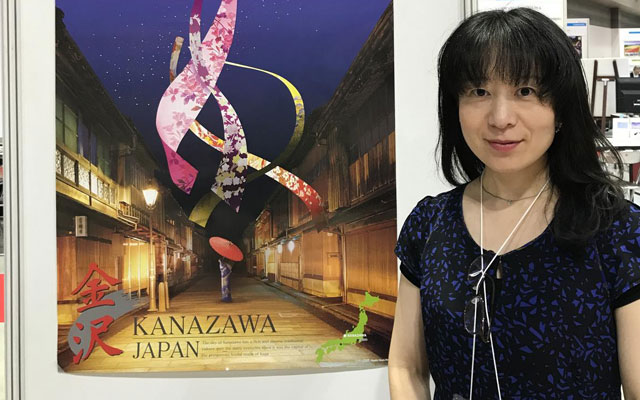
Maki Hashizume, assistant manager, Kanazawa Convention Bureau
Kanazawa on Japan’s central Honshu Island has started its convention bureau in 1985, but it was only three years ago that the bureau started looking outside the country.
Maki Hashizume, assistant manager, Kanazawa Convention Bureau, told TTGmice: “Previously, we were not active in promoting the city internationally, and primarily dealt with a domestic market. But now we realise the importance of the international market.”
Maki Hashizume, assistant manager, Kanazawa Convention Bureau
It comes as no coincidence then that this is the first time the convention bureau is attending Visit Japan Travel & MICE Mart 2017, in order to obtain contacts from international markets.
But while the city is more apt for middle-size events – thanks to a number of music halls that can hold up to 1,500 pax each, and a convention centre that can hold up to 800 pax in its largest hall – Kanazawa welcomed its largest ever medical conference earlier in March.
Hashizume elaborated: “There were 15,000 people, and they used up all the hotels and the facilities that we had. The city was stretched to the limit, but the doctors really wanted to hold it in Kanazawa.”
She added that Kanazawa’s international meetings and incentives market is only 10 per cent, and groups primarily hail from Seoul, Shanghai and Taiwan, as the Komatsu Airport has direct flights from these three places.
When asked which markets the convention bureau were targeting at the moment, Hashizume shared: “We are targeting the South-east Asian markets of Singapore, Malaysia, and Thailand. Recently, we went to an incentive seminar in Thailand, and also (made a sales call) to Singapore in July.”
However, she has her work cut out for her, and lamented that “Kanazawa is not very well-known to the South-east Asian market”.
As a result, she pointed out that the convention bureau “does not have a target number or percentage at this point”, and is going through the process of education to spread the word about the destination first.
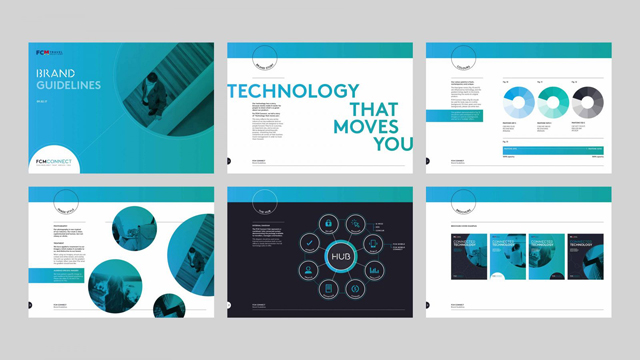
FCM Travel Solutions (FCM) has launched FCM Connect, is an integrated global technology platform which gives their clients access to multiple tools that deliver on their travel programme.
At the core of the solution is the FCM Connect HUB; a single-sign-on platform that gives customers one connection point to all of FCM’s leading technology tools including Analytics, Approve, Booking, Secure, Expense and Mobile. HUB can be customised for each company in both configuration of tools used and interface design.
The platform will support organisations across a full range of travel programme deliverables including global, regional or national fulfilment; cost reduction strategies; data compliance; and duty of care responsibilities.
“Our improved solution has been designed for the modern Traveller, Booker and Program Manager and addresses their desire to be more connected to the entire booking, travel and management journey. Being better connected helps travellers and bookers feel in control and gives our programme managers the visibility they need to elevate their travel programs,” said Marcus Eklund, global brand leader, FCM Travel Solutions.
“Through extensive customer consultation and product development, we’ve refined a world-class, end-to-end solution that ensures all of our customer’s travel needs are organised – from pre-trip approval to booking, to traveller tracking and reporting that provides complete visibility of spend,” Eklund added.
FCM Connect was previewed to clients and industry earlier in the year at the London Business Travel Show and Global Business Travel Association Conference in Sydney, Australia.
Mobile event technology specialist CrowdComms has announced they are promoting the Entegy Suite, and will provide a universal service to event professionals.
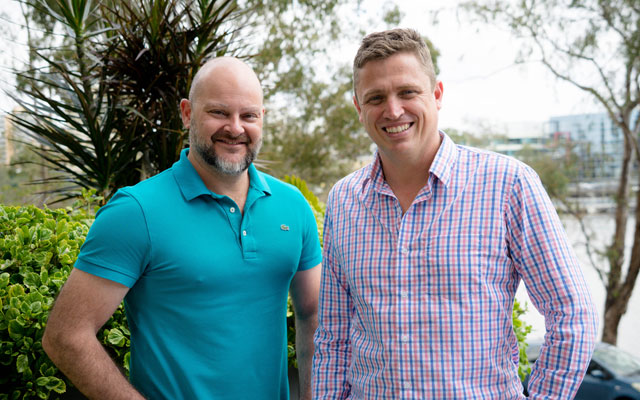
Entegy’s Gus Hotchin and CrowdComms’ Peter Hair
CrowdComms co-founder & managing director, Peter Hair, said: “We are excited to be offering the Entegy Suite to our range of services. We have seen the Entegy platform grow, and see it as the best in class solution in the market.”
Entegy’s executive director, Gus Hotchin, said that the company experienced 250 per cent growth in clients over the last financial year.
“The recent surge in demand suggests that integrated end-to-end event technology is no longer optional. Technology plays a major role in every aspect of an event lifecycle and should give organisers a single place to view real-time data and gain insight into their events from beginning to end. This spans across marketing and ticket sales, communication and engagement tools and strategies, attendance management and stakeholder return on investment,” he shared.
With CrowdComms providing production, support and onsite services to event clients in Australia, Asia, the UK and Ireland, Entegy will continue to focus on the continued development of their platform and growing their global distributor relationships.
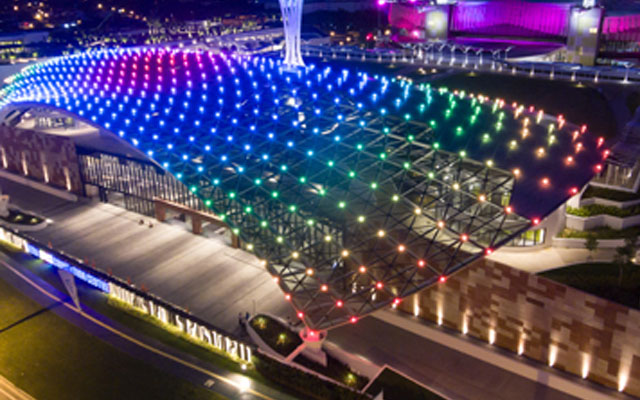
The new Setia SPICE Convention Centre will host the 2nd BE @ Penang
The second edition of BE @ Penang conference happening this December 7-8 will see a bigger panel of experienced business events industry speakers and a deeper collaboration with TTGmice publication.
Themed Be Empowered, this year’s conference continues to serve as a platform that encourages Penang’s business events industry players to communicate and collaborate with their international peers, which will lead to greater professionalism and new business leads for the benefit of the Malaysian state.
The new Setia SPICE Convention Centre will host the 2nd BE @ Penang
Headlining the conference is keynote speaker Roy Sheppard, who has a background as a BBC TV and radio journalist and presenter. Expert speakers include ICCA Asia Pacific Chapter’s Jason Yeh, Malaysia Convention & Exhibition Bureau’s Ho Yoke Ping, Place Borneo’s Gracie Geckie, and Anderes Fourdy’s Fu Kei Cheong and Rahul Bharadwaj.
These industry experts will tackle topics such as event technology, effective bidding, attracting association meetings and marketing to Europe. Sheppard will also be conducting a CEO Deep Dive workshop for C-level executives.
TTGmice will come in this year with greater content support. Group editor Karen Yue will join Penang Convention & Exhibition Bureau’s (PCEB) marketing communications manager Yasmin Bathamanathan in an open discussion with attendees on how business event players can collaborate with trade publications to advance their business objectives and reinforce the extensive economic benefits of business events.
In the same communications vein, TTGmice and Penang Convention & Exhibition Bureau are running the Best Business Events Print Advertisement Award. Open to all participating business events suppliers (excluding PCEB and BE @ Penang sponsors) at the conference, the contest will reward the most attractive and memorable print advertisement on December 7.
To participate, applicants are required to submit their best print advertisement visual in high-resolution PDF and a 100-word campaign story to karen.yue@ttgasia.com by November 7, 2017, 17.00 Singapore time.
Three shortlisted entries will then vie for attendee votes when the BE @ Penang opens on December 7. The entry with the most votes will win the campaign lead a staycation in Singapore.
Campaign leads of the three shortlisted entries will also do a five-minute presentation of their entry and its back-story during the conference. The winner, determined by Yue and PCEB’s CEO Ashwin Gunasekeran, will win his/her company the grand prize of a regular TTGmice advertising space worth up to US$14,500.
The International Society for Magnetic Resonance in Medicine (ISMRM) has started investigating potential destinations in Asia for its Annual Meeting and Exhibition in 2024, when the event’s compulsory rotation takes it to this part of the world.
Kerry Crockett
Kerry Crockett, ISMRM’s Associate Executive Director, told TTGmice that her team is “now looking at getting together an RFP to send out for the meeting”.
To qualify, the destination must satisfy “the basics”.
One of the basics is a convention centre that can accommodate 6,000 attendees from all over the world, has sufficient breakout rooms for “a tremendous amount of concurrent sessions”, and has a hall that supports an exhibition of about 9,290m2 in size.
“Easy access is another thing we will look at,” said Crockett, who added that ISMRM does not use shuttle buses for its meeting delegates, so venues and hotels must be within walking distance or conveniently connected by public transport.
She said: “The hotel package comes next, and it is something we are very careful about. We have a ceiling budget for hotel room rates because we have residents and students in attendance, all the way through senior people in their field, so we need a wide range of quality properties that are affordable for all. They pay for their own travel, meeting registration fees and accommodation, so we need to be sensitive to their expenses. An average room rate of US$250 is ideal, but we certainly look for properties that are less expensive for our residents and students.”
ISMRM has investigated Japan, Hong Kong and Malaysia as possible host destinations for previous meetings, and is “starting to look at South Korea”.
“We may do a workshop in South Korea, so we are also taking the opportunity to consider that for the 2024 meeting,” she shared.
The ISMRM Annual Meeting and Exhibition rotates in a compulsory sequence – North America, Europe, North America and Asia. Its last Asian edition was held in Singapore in 2016.
The newly-opened Ritz-Carlton, Bangkok anchors the One Bangkok development with cosmopolitan elegance. Featuring the city's largest ballroom and a spectacular new penthouse suite, it delivers exceptional hardware and deeply authentic, soulful service for business and leisure travellers alike
Behind the imposing, Brutalist concrete that defines Zurich’s Oerlikon district lies a surprising secret. While its exterior honours the neighbourhood’s industrial roots, stepping inside Mama Shelter reveals a vibrant, neon-soaked world that is a far cry from its rigid shell
A polished urban retreat designed for business travellers, Hyatt Regency Kuala Lumpur at KL Midtown combines thoughtful design, seamless service, and exceptional facilities.