Asia/Singapore Thursday, 9th April 2026
Page 931

PCEB launches destination brochure and MICE guide

0

PENANG Convention & Exhibition Bureau (PCEB) has launched two publications – theDestination Experience Brochure and the Penang MICE Guide 2016-17 – a mere three months after the bureau’s establishment.

The Destination Experience Brochure showcases Penang’s rich culture, heritage, colonial, nature and artistic aspects, while highlighting the diverse conventional and unique venues for business and leisure events.

Complementing the brochure is the Penang MICE Guide 2016-17, which features a comprehensive list of more than 50 venues such as luxurious hotels and grand convention centres from all over Penang. It also provides useful information such as the capacity and facilities of each venue.

Both publications were produced in-house by the PCEB team.

Chief minister of Penang and chairperson of PCEB, Lim Guan Eng, said: “I believe these publications will garner the attention of MICE buyers, associations, and meeting and event planners worldwide. (These will help to) position Penang as the preferred MICE destination in this region.”

PCEB also launched its website in early April, complete with an easy-to-use RFP function and essential information on destinations within Penang and infrastructure for MICE events.

Refreshed InterContinental gives hotel wings to meetings pursuit

0

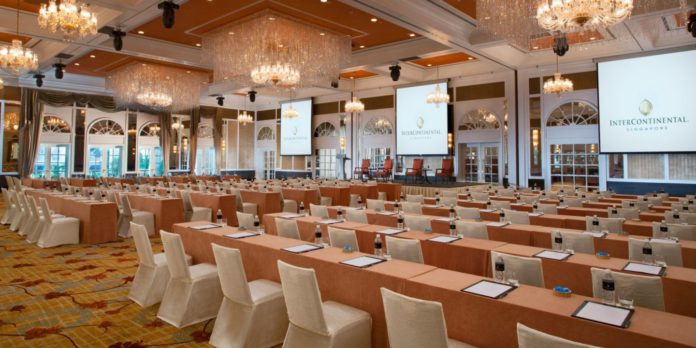
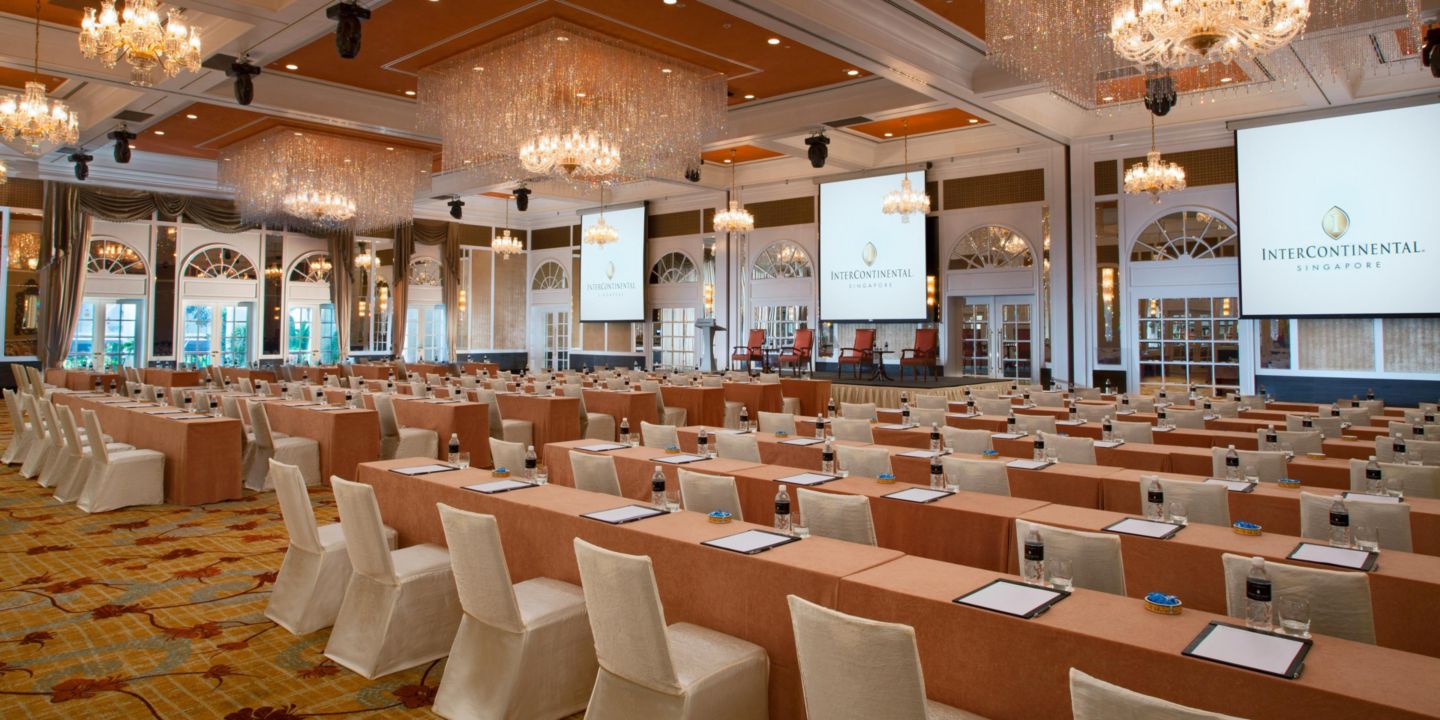
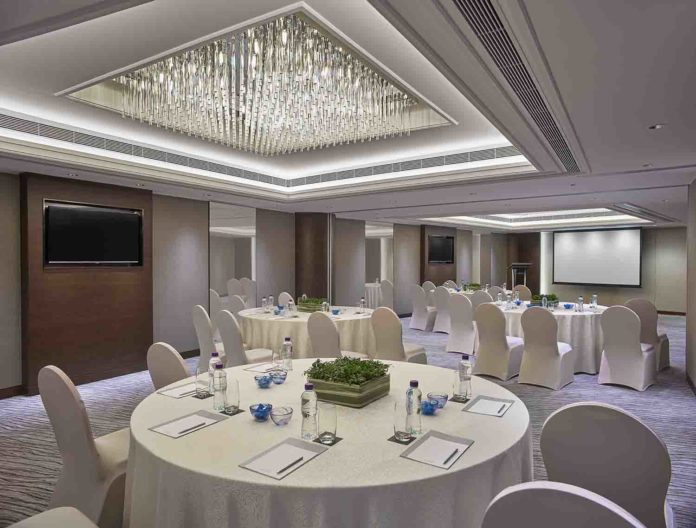
A SERIES of six unique showcases in March and April held to present the renovated facilities within InterContinental Singapore has resulted in an uptick in enquiries from meeting planners, with two high-level ones already materialised.

The hotel’s area director of sales & marketing, Rex Loh, told TTGmice e-Weekly in an interview: “The renovated Presidential Suite was used to showcase the new features of the hotel and how we can support business events. When planners at the showcase saw how meetings can be done differently with us, especially in such a unique space as our Presidential Suite, they got excited.”

Loh said the two materialised events were held in the Presidential Suite, one for a private corporate party and the other for a meeting.

At 259m2, InterContinental Singapore’s Presidential Suite is said to be the largest of its kind in the country. It is suitable for gatherings for 10 to 50 guests.

“Other refreshed aspects of the hotel, such as the renovated guestrooms, also gave us good exposure to new and potential corporate clients, and we found that many are keen to come and have a look. That helps to get the conversation going, and we have several new leads,” said Loh.

Loh added that the hotel is also playing up the rich heritage of the neighbourhood to attract corporate meetings and events.

“This area has so much to offer. Meeting groups can experience the neighbourhood through our Guided Heritage Trail. Clients used to think that the hotel is too far from the city centre, too inconvenient, but the arts and cultural draws around us are changing perceptions,” he said, adding that event bookings this year are “good” and “maintaining 2014 levels”.

The Guided Heritage Trail is a two-hour walking tour around the arts and cultural districts of Waterloo Street and Albert Street, calling at the National Design Centre and The Church of Saints Peter and Paul. While the tour is offered only on Saturdays for hotel guests, the hotel can arrange private group tours for meeting delegates.

HKTB extends MICE agent awards to South Korea

0

THE annual Top Agent Awards by the Hong Kong Tourism Board (HKTB) has been given a new spin with a new name and an expanded recipient category.

South Korean players are now eligible for recognition in the Top MICE Agent Awards, joining existing markets India, China and Indonesia. Three top performing South Korean MICE agents will be awarded in each of two categories: Top Number of Passengers and Top Number of Groups.

A HKTB spokesman said South Korea has been included this year because of its strong growth potential.

“South Korea recorded over 20 per cent growth in overnight MICE arrivals last year. Meetings and Exhibitions Hong Kong will foster a closer relationship with top MICE agencies (in the market) to bring more meetings and incentives into Hong Kong,” the spokesperson said.

HKTB, through its office in Seoul, will also be deploying more marketing initiatives and organise more trade seminars, workshops and fam trips in 2016.

HKTB will be focused on growing meetings and incentives traffic from shorthaul markets, including South Korea, China, India and Indonesia, with particular attention being paid to select industry sectors such as direct selling, finance and insurance, information technology, manufacturing and pharmaceutical sectors, according to the spokesperson.

New World Millennium Hotel to unveil upgraded event spaces in August

0

REFRESHED function rooms at New World Millennium Hotel in Hong Kong will greet meeting planners come August, as the hotel continues with its refurbishment project following its rebranding from Hotel Nikko Hong Kong.

To date, the hotel in Tsim Sha Tsui East has unveiled an updated hotel lobby in January and 88 renovated guestrooms in March. The guestrooms, which span five room types, now offer enhanced comfort and modern amenities including a complimentary handy smartphone which affords guests unlimited local and international calls to seven select countries, and unlimited 3G mobile Internet access.

While details of the upgraded function rooms are still under wraps, the hotel’s director of sales and marketing, Francesco Wong, said the décor would be modern and the venues would offer flexible configurations.

Wong added that meeting packages would be reviewed after renovations are complete, and prices would be competitive.

Meanwhile, work on the Lobby Lounge is slated to be completed next month.

“With our new products, we remain positive (about) our business. Despite the uncertain market situation, we have been versatile and highly responsive in our sales and marketing strategies so as to achieve our business goals,” he said.

KLCC to share hospitality, MICE expertise with external parties

0

THE Kuala Lumpur Convention Centre has been sanctioned to provide training to external participants after receiving the Certified Training Provider accreditation from the Malaysian Ministry of Human Resources’ Human Resource Development Fund.

Rohizat Baharum, the centre’s director of human resource, said: “This certification fits perfectly with our vision of being a knowledge centre and training provider for local industry players and stakeholders. (This will) help raise the level of service delivery and grow Malaysia’s business events footprint globally.”

Training programmes that will be conducted include the Food Handlers training course endorsed by the Ministry of Health Malaysia, as well as programmes related to conventions and exhibitions.

He added: “We look forward to sharing our experience and know-how garnered from over a decade of operations with partners and stakeholders, (in order) to boost Malaysia’s competitiveness against regional and international competition.”

Commencement dates for these programmes are still being discussed at press time.

Club Med guns for bigger share of MICE market

0

FOLLOWING its acquisition by Fosun International in March 2015, all-inclusive holiday resort Club Med has created a new MICE-dedicated post, stepping up initiatives to offer meeting packages and incentivising agents to bring in more corporate event bookings.

According to general manager for Hong Kong/Macau, Sebastien Portes, the group is now better-placed to grow its market share even though it has up to now been a minor player, with only three per cent of Hong Kong business generated by MICE in 2015.

He said: “(Our performance thus far) in the MICE market (is due to) various factors like the absence of a dedicated MICE team and lack of investment in trade marketing.

However, with a new post set up six months ago to lead the MICE segment, he is positive that sales will grow 10 times in the next three years.

Besides rolling out a dedicated website for the Hong Kong market in mid-2016, it also introduced higher commissions for agents who bring in MICE bookings. From April 1, every agent bringing a group of more than 40 pax will be guaranteed an additional three per cent in commission.

Julien Hauss, business development manager for MICE, said: “We are the only player with an all-inclusive offer and now we have one location near Hong Kong – the 300-room Dong’ao Island Hotel, Zhuhai – that offers full MICE facilities.”

He added: “I am targeting big companies in finance, insurance, health and new technology as they do events every year despite (the) current economy.”

Club Med resorts provide the use of function spaces and additional equipment such as overhead projectors and screens. For groups of up to 500 pax, full venue hire is possible.

Meanwhile, Club Med will further expand its reach in China with the Joyview by Club Med brand next year. Two properties under this banner will emerge in Shanghai. According to Portes, the brand is dedicated to the China market, with properties built outside first-tier cities, located two to three hours away by car.

“Additionally, our second Club Med ski resort in China (will) open in Jilin this November. It will offer full MICE facilities and ski activities for (corporate) groups,” he added.

Dubai welcomes more international association offices, events

0

TWENTY-THREE international associations have established offices in Dubai since 2013, as a direct result of the support offered by the Dubai Association Centre (DAC), and are raising the number of meetings held in the emirate.

More than offering international associations keen on expanding across the Middle East, North Africa and South Asia a serviced office from which to conduct business, the DAC provides licensing and registration services, association management services through its partner MCI, and event planning services for meetings and conferences held in Dubai.

Layla Derraz, promotion and events representative from the DAC, shared that a further 50 applications are being processed now.

“The DAC has drawn great interest from international associations, and those that have already established an office at the DAC include UITP (an international association for public transport authorities, operators, policy makers and other key stakeholders in the public transport field), GSMA (an international association for mobile operators and those in related industries) and MENAFA (Middle East & North Africa Franchise Association),” said Derraz.

When asked if the DAC has enough office space to house more international associations, Derraz said an expansion project is underway to add to the DAC’s current capacity in the Sheikh Rashid Tower, part of the Dubai World Trade Centre.

Steen Jakobsen, director, Dubai Business Events, said: “There is a huge amount of development around the complex where DAC is, and multiple sites are in the pipeline. A second office will open next to the Dubai World Trade Centre and it will support new international associations that are entering the region.”

Jakobsen added that the DAC has contributed to Dubai Business Events’ ultimate goal of achieving greater MICE business in the destination.

Although Jakobsen was unable to quantify the percentage increase in the number of association meetings since the establishment of the DAC, he shared that a “roundtable with several associations last week revealed that they are hosting more events – both regional and international congresses” since coming into Dubai.

New targets for Tassie following ambassador programme relaunch

0

BUSINESS Events Tasmania (BET) has overhauled its ambassador programme, adding nine new experts to its arsenal in a bid to secure more national and international conferences for the state.

Speaking to TTGmice, CEO of BET, Stuart Nettlefold, said while the original programme launched in 2010 was an exercise in profile raising, the reinvigorated programme was a more formalised and strategic approach to winning new business.

“What we’ve done in the Tasmanian Ambassador Program is really target people we know have the networks, knowledge and expertise, and use that to bring in conferences in our key sectors such as Antarctic and Southern Ocean, food and agribusiness, information, communication and technology,” he said.

Among the new ambassadors are Paul Holper, director of Scientell; Neil Bose, principal, Australian Maritime College; and Sean Tracey, senior research fellow, Institute of Marine and Antarctic Studies.

“They are very keen to work with us to use conferences to showcase what they do to the world, to attract global talent back to Tasmania and really drive those beyond tourism benefits,” Nettlefold said.

“The patron is (Australian) Premier Will Hodgman, which means we’ve got buy-in at the highest level of government.”

Nettlefold also said that while parallels could be drawn with programmes in other states, the key difference was in the ambassadors targeted to join the programme.

“Each state has different priorities in terms of their strengths economically, so we’ve been very targeted to those specific drivers.”

In 2015, 41,000 delegates visited Tasmania for business events, injecting A$132 million (US$99.8 million) into the state’s economy.

“The Tasmanian brand is hot at the moment and the destination appeal is high. That certainly helps what we do in terms of getting conference and incentive groups into the destination.”

LED canvas takes centrestage at St Regis Kuala Lumpur’s grand ballroom

0

THE St Regis Kuala Lumpur will unveil Asia’s first 270-degree LED digital canvas among other features when it opens in May this year.

The 208-key hotel will offer some of the largest guestrooms in the city plus 10,000m2 of function space spread among 16 meeting rooms.

The largest is the 1,300m2 Grand Ballroom, which is skirted by a digital canvas made up of 47 LED screens.

General manager, Anne Scott, said: “I believe we are the first hotel in the region with the ability to give event participants the sense of being totally immersed in the presentation because it is being projected all around them not only through the LED screens but also through the supporting state-of-the-art light and sound system.”

Guests can expect to pay 250,000 ringgit (US$64,176) per use of the LED digital canvas. In addition, the Grand Ballroom is accessible by a private lift large enough to transport a car into the room.

Outdoors, the hotel has a dual-level rooftop bar and lounge named Crystal, which has an LED media wall that runs alongside the pool, and can also be used for events.

The St Regis Kuala Lumpur expects its main markets to include Hong Kong, Singapore, Indonesia and China and also some business from Europe and Australia.

With the opening of its sister hotel The St Regis Langkawi this month, both hotels intend to cross-sell by offering packages that will twin the two cities in a “bleisure” programme that may include a corporate meeting at the St Regis Kuala Lumpur followed by teambuilding or CSR activities at the St Regis Langkawi.

[PERSPECTIVES] The Sharing Economy is here to stay, but now what?

0

THE rapid growth of services like Uber and Airbnb over the last decade make it clear that the “sharing economy” is not a passing trend. These businesses are causing some concern for traditional travel suppliers, with the potential to impact both volume and pricing in the long-term.

What is less clear, however, is the level at which corporate travel managers should integrate these suppliers into their travel programs. While using sharing economy suppliers presents an opportunity for transaction-specific savings, there are also several challenges and concerns associated with using these suppliers that must be considered.

Low usage of sharing economy suppliers

The use of sharing economy suppliers still represents a relatively small portion of most corporate travel programs. A 2015 survey by the Global Business Travel Association (GBTA) indicates 24% of companies do not allow their travelers to use ride-sharing suppliers. The study also indicates ride-sharing options as the least used by business travelers with only 11% using these services, while the majority opt for traditional transport options like renting cars or hailing taxis.

While travel managers in Asia are beginning to explore the viability of working with sharing economy suppliers – largely at the request of their travelers – they are cautious and calculated in their approach, given the concerns around traveler safety.

In Asia, the use of these suppliers varies widely based on the market. While the sharing economy is not a common phenomenon in markets like India and Vietnam, markets such as Australia and Japan have been much more receptive. Differences in the demand and supply in a market are a key factor in determining whether sharing economy suppliers are an attractive option. A place such as Tokyo, for example, which has some of the highest hotel occupancy, is a very interesting place to consider sharing economy accommodation providers.

The relatively low integration of sharing economy suppliers into managed travel programs thus far leaves a number of questions around the actual savings that can be achieved, and how best to work with these suppliers, still to be answered.

Serious savings or the price of service?

CWT Solutions Group recently analyzed the use of Airbnb vs. traditional accommodation such as hotels and serviced apartments, by looking at 68,200 stays made by various companies that have included Airbnb in their travel programs.

Findings from the study indicate that while tracked sharing economy usage is still marginal at only 2.5% of total accommodation bookings, the average paid rates were 37% lowerthan traditional lodging. In Singapore, the average daily guest rate for Airbnb was 27% lower than traditional lodging.

The study also identified a clear pattern in the length of stay; Airbnb stays are twice as longas traditional hotels, with 7 nights’ stay on average. Travelers to Singapore stayed in Airbnb accommodations for 17 more days, on average, compared to hotel stays. On the other hand, in destinations such as Tokyo or Shanghai, travelers actually booked Airbnb accommodations in lieu of traditional hotels, even for shorter stays.

Yet, before rushing to savings, buyers and travelers must also understand the price difference may be the price of service.

Any traveler requiring a sense of service or other assurances licensed providers offer such as video cameras, fire detection systems, deadbolt locks, safes and more, may not be a good match for Airbnb. In addition, if a larger living space with a full kitchen and multiple sleeping rooms is needed, seasoned travelers well know that many traditional suppliers already offer these amenities via extended stay brands and without compromising safety and security requirements.

Proceed with caution

While the cost savings are tempting, price is only one of many criteria used to judge whether a supplier belongs in a corporate travel program, and given a variety of concerns, it is understandable that very few companies or travel managers have endorsed or prohibited sharing economy solutions broadly in their travel policy.

For businesses, the first step for any corporate travel program is to determine their position on sharing economy usage and educate travelers accordingly. Left ambiguous, traveler leakage and compliance issues will inevitably arise from their lack of understanding around benefits and/or risks.

As Asia varies tremendously from one country to the other, the challenge of the Asia travel manager is to form a consistent travel policy around shared economy suppliers. Besides safety and security concerns, there are also concerns around the validity or legality of such suppliers in each market. Opportunities to work with these suppliers definitely exist in pockets, but it could be a serious challenge to develop a consistent shared economy policy across all markets in Asia.

At the same time, sharing economy suppliers like Airbnb and Uber must provide greater transparency to address corporate travel concerns. Today, neither Airbnb nor Uber load rates via global distribution systems (GDSs) or any platform that allows a third-party to book. Although Airbnb has recently launched a business travel platform to boost efforts to meet some of the needs expressed by travel managers, some of the most critical “must-haves” remain unavailable to corporate buyers, such as consistency of the service and products, assurances around safety, traveler tracking, and integrated distribution and booking channels.

In the long term, these suppliers will have to create key additional business travel features to become widely accepted in travel managers’ tools and processes. As long as they don’t, they will likely remain on the cusp of acceptance in travel policies and not be overly encouraged by travel managers concerned with more than bottom-line pricing.

When to move ahead?

There is no single, definitive way to determine whether a sharing economy supplier is a good fit for your program. Indeed, it is often a matter of combining unique program and supplier data with corporate culture and industry know-how to find the right solution for a specific program.

Hence, we have proposed a 5-stage process (below) to help buyers identify both the specific pains and gains of using sharing economy suppliers and make informed decisions.

Ultimately, it is up to the company to evaluate if the opportunities afforded by using a sharing economy supplier solve one or several business issues?

Conversely, if companies rule out sharing economy suppliers, it is important for the company, in terms of compliance and employee understanding, to communicate this to its employees with its rationale.


By Akshay Kapoor

Akshay Kapoor is the Asia Pacific Head of CWT Solutions Group, Carlson Wagonlit Travel’s global consulting arm specialized in travel program optimization. CWT Solutions Group helps corporate travel and procurement professionals worldwide find opportunities for savings and deliver more value in air, hotel and ground transportation sourcing, travel policy and compliance, and more.

Reviews

The Ritz-Carlton, Bangkok

The newly-opened Ritz-Carlton, Bangkok anchors the One Bangkok development with cosmopolitan elegance. Featuring the city's largest ballroom and a spectacular new penthouse suite, it delivers exceptional hardware and deeply authentic, soulful service for business and leisure travellers alike

Mama Shelter Zurich

Behind the imposing, Brutalist concrete that defines Zurich’s Oerlikon district lies a surprising secret. While its exterior honours the neighbourhood’s industrial roots, stepping inside Mama Shelter reveals a vibrant, neon-soaked world that is a far cry from its rigid shell

Hyatt Regency Kuala Lumpur at KL Midtown

A polished urban retreat designed for business travellers, Hyatt Regency Kuala Lumpur at KL Midtown combines thoughtful design, seamless service, and exceptional facilities.