Asia/Singapore Sunday, 28th December 2025
Page 939

Swiss-Belhotel adds property in Kuta

0

Built with business and leisure guests in mind, the new Swiss-Belhotel Petitenget, Bali in northern Kuta offers 111 contemporary rooms, an outdoor swimming pool, Paon Balinese restaurant and Sanje Bar and Lounge.

Armed with two function rooms that can be combined for larger gatherings and be configured for meetings, seminars and banquets, the hotel makes a good option for smaller-scale corporate gatherings.

Swiss-Belhotel Petitenget enjoys a good location too, being surrounded by restaurants, cafes, beach clubs, shops and entertainment spots. Popular attractions such as Tanah Lot are also close by.

With the launch of Swiss-Belhotel Petitenget, Swiss-Belhotel International now has 44 operating hotels and resorts in Indonesia.

Sofitel and Sebel welcome guests in Xining City

0

Accor has opened Sofitel Xining and The Sebel Xining, its first Sebel property in China.

Located in the west of Xining City, both Sofitel and The Sebel are just 30 minutes from Xining Caojiabao Airport, 15 minutes from the old town and 20 minutes from the high-speed train station.

The 492-key Sofitel Xining offers meeting planners 2,500m2 of function space which can accommodate up to 1,000 pax. There are three restaurants to cater to all tastes, as well as leisure facilities in the form of an indoor pool, gym and spa that specialises in traditional oriental treatments. Free Wi-Fi is available throughout the hotel.

For The Sebel Xining, each of the 197 apartments has a fully equipped kitchen, living area and bathroom. A direct connection to Sofitel Xining provides guests access to the hotel’s facilities.

The hotel complex is part of the Xining Xin Hua Lian City Complex, which comprises a five-star hotel, high-end shopping centre, office buildings and residential towers.

Guam gets new Dusit Thani resort and convention centre

0

Dusit International is bringing its homegrown brand of Thai hospitality into the Pacific as it prepares to launch the Dusit Thani Guam Resort.

Slated to soft open this month, Dusit Thani Guam Resort is the first newbuild on Guam since 1999 and is situated on Tumon Bay.

The luxury resort will feature 419 deluxe rooms and suites with ocean views, as well as six Villa Suites with their own private plunge pools, and gym and concierge services.

In particular, the Villa Azul will come with a 550m2 balcony suitable for outdoor entertaining.

The Devarana Spa will also make its debut on Guam, alongside four dining venues serving Thai, Italian, international and seafood cuisines respectively.

Dusit Thani Guam Resort will also be home to the Guam Convention Center, providing 1,169m2 of space. As the largest convention venue on the island, the convention centre can accommodate up to 2,000 pax for events, exhibitions or meetings.

Starwood helps planners design their own event app

0

Starwood Hotels & Resorts has teamed up with CrowdCompass by Cvent and PSAV to offer a mobile app for planners who are holding meetings and events at its properties.

Through a newly forged referral partnership between Starwood, event management platform Cvent and technology service provider PSAV, planners can tailor an app specifically to the needs of their event attendees whether it is looking up information or networking.

Jonathan Kaplan, Starwood’s director of sales, new business and digital programming, explained: “With the option of having a customisable app with CrowdCompass by Cvent, attendees can go paperless and view real-time content like event agendas, speaker bios, presentations and property information right from their mobile device.

“Meeting attendees also may be able to use the app to create personalised schedules, share contact information with other attendees, connect with others via social media and receive push message communications instantly from onsite meeting planners.”

This follows Starwood’s introduction of the ProMeetings app, which allows meetings planners who are SPG or SPG Pro members to submit on-property requests directly to associates who can fulfill requests in real time. The app, which is expected to fully roll out in 2016, is currently in pilot at several Starwood hotels around the world, including W Singapore – Sentosa Cove, The Westin Singapore, Sheraton Atlanta Airport, W Atlanta Midtown, and The Westin Charlotte.

Mercure opens in Vietnam’s heritage city

0

The UNESCO World Heritage Site-gazetted city of Hoi An now offers a Mercure boutique property.

While meeting facilities at the 96-key Mercure Hoi An Royal is limited to only a 10-seat boardroom, the hotel’s proximity to popular attractions and landmarks such as the Hoi An Ancient Town, Cua Dai Beach, Thu Bon River and the historic Japanese Bridge makes it a good stay option for corporate teambuilding and incentives.

Danang International Airport is 45 minutes away.

Other facilities at the hotel include a self-service business centre, an all-day dining restaurant, a bar, and swimming pools.

New programme to keep biz travellers safe on the roads

0

A NEW eLearning module is attempting to educate business travellers about the often-underestimated risk of road accidents.

Road accidents were one of the top five causes of medical evacuations led by International SOS and a significant cause of injury and death for employees working abroad, according to its data.

To highlight the need for better road safety practices, International SOS and Control Risks has, in collaboration with Global Road Safety Partnership, rolled out an online course Travel Risk: Road Safety.

Suzy Bell, group product training director for International SOS, said: “We developed this eLearning training to bring road safety to the forefront of a traveller’s mind. Because road travel is such a common everyday activity, there is a tendency to underestimate its risks.

“Our goal is to provide travellers and organisations with the tools to reduce risks, while still being able to conduct their business. Twenty minutes of online learning can make a big difference in raising awareness and prepare the business traveller to reduce – and respond to – road accidents.”

The eLearning module features real-world scenarios and advice from Global Road Safety Partnership, as well as a traveller toolkit with journey management templates, checklists, best practices and links to additional travel information resources.

Grant Strudwick, regional security director, Asia-Pacific for International SOS and Control Risks, commented: “Road safety isn’t just about being a safer driver. Sometimes, the safest option is not to drive at all. If you don’t know the rules of the road, highway conditions, or local language, you may be better off arranging transportation with a trusted and vetted provider.”

The Langham Auckland spruces up meeting venues

0

Following a NZ$2.4 million (US$1.7 million) facelift that finished in April, The Langham Auckland is ready to flaunt its shiny new meeting facilities.

The former Waitemata Room is now enjoying a new lease of life as the Crystal Room. Furbished with four new crystal chandeliers, the venue can take up to 180 guests altogether or be divided into two rooms.

Four new Gallery Rooms have also officially opened on the site of the old SPE bar to meet demand for more meeting or breakout rooms.

Floor-to-ceiling windows in the Gallery Rooms offer an abundance of natural sunlight to complement its new crisp, bright décor, wireless connectivity for iPads or PCs and audiovisual technology that spares presenters from being tethered to cables while delivering their presentations.

The Langham Auckland has retained its Great Room, Auckland’s largest pillarless ballroom, which fits 900 banquet style and 1,400 for cocktails.

The hotel also offers special corporate rates for small- to medium-size companies that use between 20 and 50 room nights a year, under a programme called Optimum. This programme features exclusive rates across the Langham global portfolio, preferential rates for Langham Club Rooms and Suites, a dedicated global sales representative to personally assist with your reservations, and airline partner miles accrual.

The Hyatt touch

0


Grand Hyatt Singapore threw a Food Lover’s Market event at its Grand Ballroom on Level 3 recently, marking the completion of its remodelled meeting space on three floors (Level 1 and 2 were completed earlier).

The party showed off the brand’s reputation for always attempting to lead the market with new hardware and creative events.

We love the use of not one but two LED walls that brought to live the market buzz such a theme needed. In old days, imagine the props we all would have to use! The hotel’s sales and events team members who were out in full force mingling with guests that evening believed they were first hotel in Singapore to be able to offer panoramic video-mapping technology and showed planners the effect it could have on any event.

It also helped that the Grand Ballroom had high ceilings (6.5m), and the unmistakably Super Potato contemporary design touch (love the lighting on the ceiling). The space is actually not that big; all of 577m2, it can fit in 380 pax for banquets and 800 pax for receptions. But though it’s not grand in size, it is a smart little one. Car launches have been held there, while its compactness helps an event look and sound very ‘happening’ with minimum effort.

In all, Level 3 now boasts 2,786m2 of flexible meeting space with natural daylight and high ceilings.

We also love the hotel’s quality food offering and the range it can offer. No wonder it chose the theme Food Lover’s Market for this celebration – what better way to show off that strength! Different stations were decorated so appetisingly (especially the dessert corner) and served fresh and delicious food.

But what took the cake was the idea of having a section with big vases filled with all sorts of beautiful flowers, as you’d find in a market. And guess what? Guests that evening were welcomed to pick the flowers they liked to bring home.

Thus, even when the event was over, the smells and sights linger in those flowers.

Over coffee with… Rajeev Kohli

0
Days are getting busier for Kohli, joint managing director of Creative Travel India, one of the country’s leading travel firms, as he readies for his post as SITE president in 2016. As the first Asian to be elected into this role, Kohli is determined to grow the association’s Asian representation. He talks to Mimi Hudoyo

Congratulations on being elected into presidency for 2016. What will keep you busy in this new role?

I want to grow membership and Asia is one of our core targets for membership growth. Right now our Asian membership is about six per cent of the total. That needs to increase significantly and I would like to triple the numbers in three years’ time.

Seeing how the SITE presidency lasts only a year, is your target too ambitious?

It is not a tall order. Look at the world map and the number of members we have in each country and the extent of the incentive business. We have (members from) only six Asian countries (out of a total of 80 countries worldwide).

In Thailand we have three members; in Singapore we have four or five. But I can list 20 people in Thailand who are capable of becoming SITE members, likewise in Singapore. In Indonesia and Malaysia I know enough people who can become our members.

(Our Asian membership) is very small, partly because SITE has not come to Asia for a long time. So it isn’t because (these people) refuse to join SITE, it is just that nobody has approached them.

My election is a reflection of SITE’s growing interest in Asia.

We need a strategy and corresponding actions by the SITE headquaters to push that strategy. This isn’t the responsiblity and job of SITE president Rajeev Kohli, but a concerted effort by the entire board and its members.

What are your plans to get those numbers?

Well, SITE Global Conference (in New Delhi from October 23 to 25, 2015) will reach out the the region.

We will also be approaching associations in Asia to engage their members and show them what SITE can do. It will not be an easy task but we have to start somewhere.

Let’s talk about the SITE Global Conference. It is a big win for India’s incentive industry. 

Well, yes. The conference rotates between the Americas, Europe, Asia and the Middle East. It is Asia’s turn and we won the bid. It shows the recognition SITE have for India.

There are three factors motivating people to attend the conference in India. First of all the desire by participants to bring clients and groups to India, and second the desire to get business out of India because it is one of the world’s largest growing outbound market.

There are 15 million outbound Indian travellers today. By 2020 the number is estimated to be 50 million. That is why many NTOs and CVBs have offices in India.

The third factor is that for many people a trip to India is on their bucket list and (the conference) is an opportunity for them to (tick India off the list).

(The benefit India gets is that) SITE Global Conference will help to expose India to the world and show incentive professionals (how things are done differently around here).

For example, Europeans and Americans are sometimes used to a certain way of working and they are interested to see a different work culture and find out how a successful economy like ours operates.

India is the world’s third largest economy, growing at six to seven per cent annually. I’m sure people are curious about how India is making it work especially since we are chaotic and confusing, we are not one country, we are a continent, we do not speak a single language and we do not have just one religion.

There is nothing common among Indians yet we are successful, we are controlling the world’s IT sector, and many global companies have Indians as CEO.

What can the rest of Asia do to make the most out of this conference?

The conference should be regarded as an Asian event that happens to take place in India. We want participation from Asia. We are bringing the event closer (to the region) and we are bringing in quality people to interact with us.

Asia is not yet a big incentive destination for the West, and this is the time (to change that).

India was not given the SITE Global Conference on a silver platter. It resulted from many years of networking and participation in other SITE conferences by me and my Indian colleagues. I have been attending the SITE Global Conference for the past 10 years. I have been involved in the SITE board over the last four years.

SITE Global Conference in New Delhi came as a result of Indian trade members (who made a) conscious effort to (raise the profile of India). SITE saw India’s value and here we are today.

So there is no reason why Japan, South Korea and Thailand, for instance, cannot (host future SITE Global Conferences).

Can we expect changes in the association with you at its helm?

I believe an association’s function is to always deliver to its members the opportunity to improve and increase their businesses. It also needs to communicate with its members.

In SITE’s case, we need to communicate to the world the value of the incentive industry. SITE does a very good job as an association (and we should) stand on the rooftop and shout about it.

I’m all for one-on-one communications with my members, and that’s one of the many things I intend to do.

I am aware that SITE is a multicultural association and I need to be sensitive to the ways people work in different countries. I expect to work different in India and with SITE.

Take for example the way board meetings are held in the West and in India. In the Western world, you raise your hand (to speak) and everyone is calm. In India, we are shouting, screaming, joking and going completely off topic. And somehow that works.

The way of the Dragon

0

International associations keen to organise events in China must not only do their homework, they must play by its rules and find a suitable local PCO partner. Caroline Boey finds out more

Holding a meeting in China is the target of US association meeting buyer Kimberly LaBounty, president and founder of Apex Management and Special Events.

Apex is an AMC based in the US and its clients include legal, medical and publishing professionals, and LaBounty, who was attending IT&CM China for the first time in April, is eyeing a spring 2017 date.

“I am very likely to recommend taking our publishing association conference to China in spring 2017 as publishing is a growing and changing market in China and there is tremendous potential.

“We realise not many educational conferences have been held in Asia, so it would be an opportunity for us to be among the first. We would like to hold a conference in Shanghai or Beijing to share best practices.

“We already hold conferences in the US and Europe, and expanding to Asia will allow the association to be perceived as a truly global organisation,” she said.

Several associations managed by Apex have members all over the world, and they are looking to expand into China and other Asian countries and are eager to learn from Asia on how best to provide the services needed.

However LaBounty says China’s proposed law – The Non-Mainland Non-Governmental Organizations Management Law of the People’s Republic of China – not allowing foreign associations to hold meetings in China could pose a problem.

American Society of Association Executives (ASAE) believes the draft legislation will make it extremely difficult for US trade associations and professional societies to be active in China, adding that major restrictions would be placed on the ability of its association professionals to meet, share knowledge, conduct business, and share best practices with Chinese associations, severly curtailing association programmes in China.

ASAE president and CEO John Graham, expressing his concern in a letter to the Law Committee of the Standing Committee of the National People’s Congress, said the legislation would significantly impact US and China economic and commercial relations.

Jeffery Huang, deputy secretary-general and associate researcher of the World Federation of Chinese Medicine Societies based in Beijing says being able to contribute to local cultural, economic and social development is important for anyone organising an event in China.

“Managing cost, securing a high-level keynote speaker and attracting enough participants can be some of the challenges,” he added.

Liu Ping, CEO of China Star, a leading PCO in China, observed that association meetings seem to be slowing down (based on ICCA’s 2013-2015 figures). “I’m concerned that China does not have a ‘unified competent authority (to champion the industry)’,” she added.

“I’m not sure how long it will take China to have a national CVB but cities such as Shanghai, Hangzhou and Chengdu have gone ahead to set up departments under their tourism administrations to promote events,” she noted.

Pulling off a successful event in China requires a deep mindset change and international buyers must be aware of the challenges they may face working with local partners and government entities.

In a presentation to local and international association meetings buyers and sellers, Liu Yi, deputy director, China Star, gave a no-holds barred overview of some of the obstacles that stand in the way of China’s international association meetings landscape.

Liu Yi said it is important for international PCOs to co-operate with a local partner who understands and knows the ins-and-outs of China’s requirements and conditions, can cut through government red tape, be able to appoint reliable suppliers, etc.

In China it can take at least 18 months, some times years, for an association meeting to materialise and the reporting system and approval if foreign delegates are attending is complicated, he noted, adding that government influence can positively impact an event.

On the other hand, if the government requests a site inspection, the venue operator may be required to stop an event in-between so that an empty venue can be showcased and it resumes when the site inspection is completed, he noted.

Applying for visas is another area associations need to be mindful of and Liu Yi recommends using a local professional PCO. There is a strict limit on the issuing of business visa invitations, but it is improving, he added.

“Associations think they can be their own PCOs, but in China, a professional and reliable PCO can also help cut waste and take care of areas such as catering and distributing hundreds of box lunches on-site.”

Jennifer Salsbury, the former senior director, international, at Beijing’s China National Convention Center, said China’s processes are unique and truly different.

In communicating with the government, “formulaic” and “government speak” is necessary. “It’s a different ‘language’ and this is the challenge,” Salsbury noted.

Now running IMC-Convention Solutions covering Beijing, Hong Kong and Australia, Salsbury said China’s understanding of international competition is not on the same level compared to other countries in the region.

“China has no CVB or subvention programme to attract meetings, and raising professional standards and getting government recognition is what China must strive for,” she said.

Liu Ping added: “Many cities in China have built impressive venues but have no professional staff to run or market them. There is a big gap.”

Reviews

Hyatt Regency Kuala Lumpur at KL Midtown

A polished urban retreat designed for business travellers, Hyatt Regency Kuala Lumpur at KL Midtown combines thoughtful design, seamless service, and exceptional facilities.

A versatile powerhouse

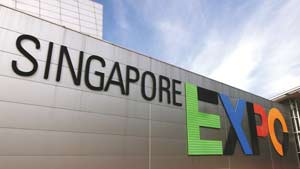
Arena @ Expo, a multipurpose concert hall at the Singapore Expo is a flexible space for high octane concerts and lifestyle events.

Amari Bangkok

The five-star property excels in backing its expansive facilities with seamless service and personalised attention, setting the benchmark for luxury in Bangkok.