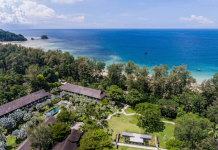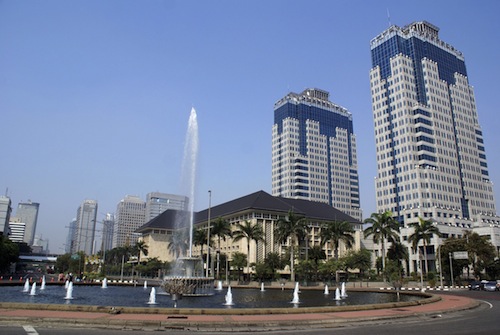
Five-star, 250 rooms, Jalan Lapangan Terbang SAAS, 40150 Shah Alam, Selangor Darul Ehsan, Malaysia, www.shr.my/the-saujana-hotel/
The Saujana Hotel Kuala Lumpur is a gem. Following major refurbishments which completed in June, the almost 30 year-old hotel feels spanking new. It also scores on location, being accessible via the Federal Highway and the New Klang Valley Expressway.
Although it is a city hotel, I felt transported to a resort on a beautiful island, thanks to the lobby’s high ceiling which brought a cool breeze through the reception area. This vision followed through to my deluxe room which offered views of the lake and free-form swimming pool. With views so tempting, I was glad I had my portable notebook with me, allowing me to write this review outdoors.
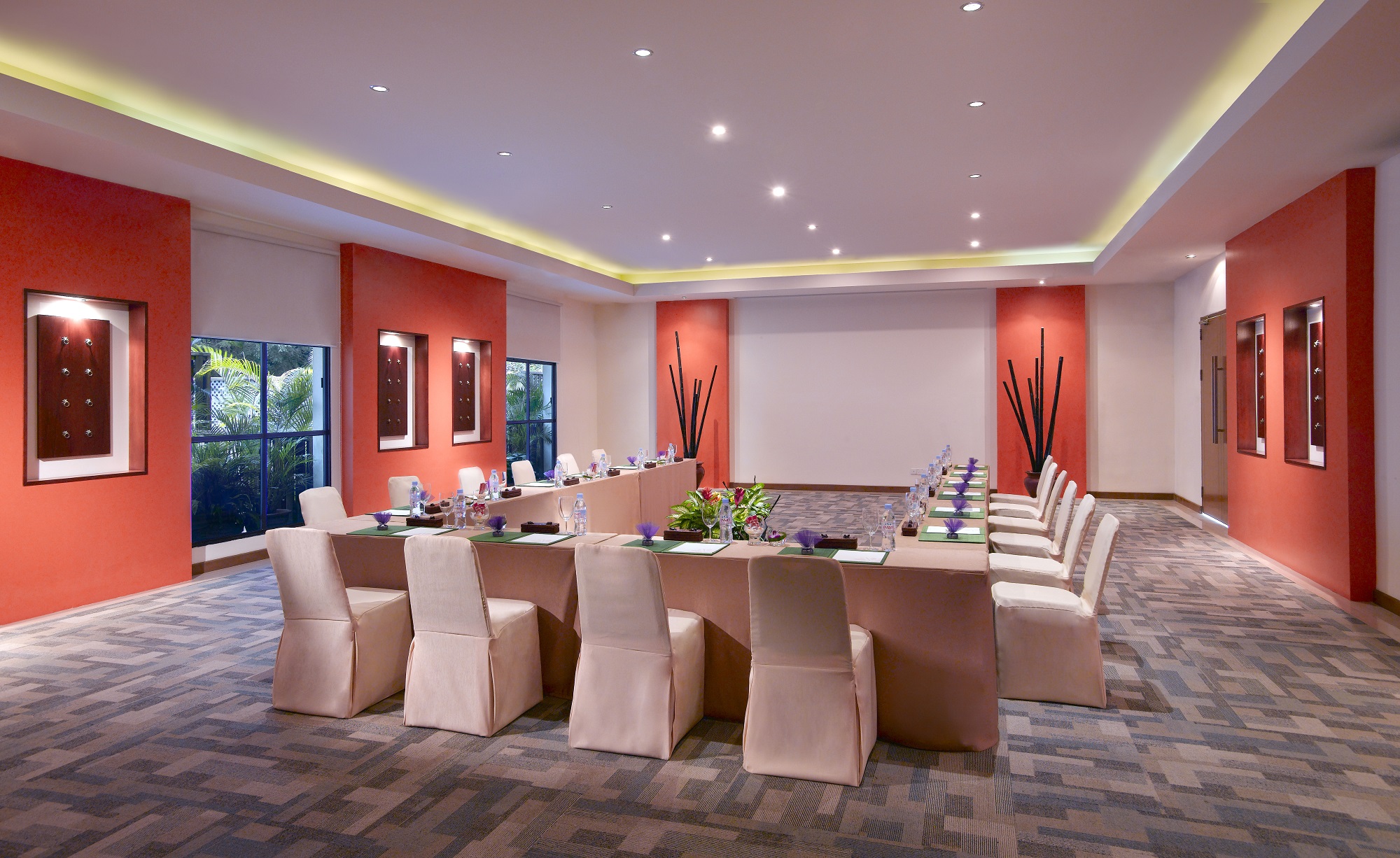
Meeting facilities The are nine meeting rooms and a ballroom at Block 1, while Block 2 features six meetings venues, all of which were renovated. In my view, they appeal to two types of planners.
For the planner who desires a stimulating environment for brainstorming, an air-conditioned meeting room with beautiful views of the lake may be ideal. There are three venues with such views. They are equipped with two 70-inch flat-screen TVs in each room, whiteboard, LCD projector and sound system. Delegates also get to enjoy the convenience of a well-stocked private minibar and charging stations for mobile devices.
For the planner who wants for a venue for solemn meetings, an enclosed environment would be more suitable and there are five venues to suit this need.
All meeting rooms sit on the ground floor and are close to the Suajana Ballroom which has a permanent stage and capacity for 700 pax in theatre-style. The entrance to the ballroom was renovated, now allowing cars to be easily driven in, making the venue ideal for car launches.
Saujana Hotel & Resorts vice president of operations, Peter J Hourigan, told me that the hotel is keen on winning over car events “since many luxury automobile brands are located in the vicinity”.
With 160 hectares of manicured gardens, there’s ample space for outdoor teambuilding activities.
Rooms All 250 guestrooms were refurbished. I enjoyed the 50-inch flat-screen TV in my room and the iPod docking station on my bedside table. A free app, designed for use in the hotel and downloadable from Google Play Store, allowed me to project photos from my smartphone onto the TV, which was great.
My deluxe room was spacious, even with two super single beds, a comfortable lounge chair, a side table and a long work desk with a multimedia hub.
F&B Seven restaurants, each specialising in a different cuisine, provide variety for event delegates who are staying a few nights at the hotel.
Senja Italian restaurant has a live band playing every night, a lounge area, a cocktail bar and a dining area.
Charcoal opened last year, serving prime meats, quality seafood and a wide selection of Peranakan dishes. It has a private dining area for 60 pax.
Kogetsu features a classic Japanese countryside, complete with a show kitchen in the main area, separate sushi and teppanyaki counters for alternative seating options and three tatami rooms for private functions.
Other facilities Complimentary Wi-Fi is available for in-house guests throughout the resort. Free parking is offered too.
Thanks to a weaker ringgit, foreign MICE groups can get greater value out of their event at Sunway Resort Hotel & Spa (pictured here)
With the country’s main airport close by and an inventory of business hotels and accessible entertainment, Selangor is the new darling of event organisers, discovers S Puvaneswary
The MICE sector in Selangor is starting to see a rebound in business following a tough 2014 when two air tragedies and a slowdown in travel led to a dip in arrivals to Malaysia.
Recovery has been attributed to Selangor’s infrastructure developments and the depreciation in the ringgit. Trade players believe that the destination’s close proximity to two major gateways into Malaysia, namely Kuala Lumpur International Airport (KLIA) and low-cost carrier terminal klia2, is a contributing factor.
The new klia2, much bigger and far better equipped in terms of safety and comfort features than the former budget terminal, enabled low-cost airlines using the facility to expand their frequencies and introduce new routes, thus improving opportunities for inbound players to tap new secondary markets for business events.
Access into Malaysia through klia2 has improved this year, with AirAsia raising its frequency from Manila from twice to thrice daily; AirAsia and Malindo Air both starting the new Kuala Lumpur-Visakhapatnam route; and AirAsia X commencing a new service from Chongqing with four weekly flights.
Ganneesh Ramaa, manager of local DMC Luxury Tours, said: “The aggressive expansion of low-cost carriers…opens new markets for business events.”
Ramaa said business hotels in Selangor are benefitting because they are close to these gateways, have large meeting spaces and guestroom inventory, and are cheaper compared with hotels of similar star rating in Kuala Lumpur.
“Hoteliers (in Selangor) are also more flexible with rates,” he remarked, adding that it is “easier to promote Selangor” than Kuala Lumpur to MICE clients.
Arokia Das, senior manager of Luxury Tours Malaysia, said the rates for business events held at four- and five-star hotels in Selangor were “easily 30 per cent lower than the rates (of similar hotels) in the outskirts of Bangkok”.
Adam Kamal, CEO of Rakyat Travel, said: “Regional or international conference organisers with two- or three-day events don’t want destinations too far from the capital city, such as Penang or Langkawi which require an additional flight. At the same time, they may choose not to do it in Kuala Lumpur, as there are too many distractions. So Selangor is an obvious choice.”
Citing an example of how valuable accessibility is to clients, Kamal told TTGmice that Bank Rakyat, the organiser of an international conference on Islamic finances in August, had chosen to host the event at Putrajaya Marriott Hotel because the hotel was close to KLIA and klia2, had large conference facilities, and was near Putrajaya, enabling a day tour to the administrative capital.
Rakyat Travel was the groundhandler for the conference which was attended by 150 delegates from all over the world.
Putrajaya Marriott Hotel also provides free shuttle services for its guests to the nearby IOI City Mall, allowing meeting delegates to end their day with shopping and entertainment.The mall features more than 300 outlets, including an ice skating rink, a cinema with 13 halls, and an indoor Apocalypse themed adventure park known as District 21 which provides challenges and obstacle courses for adults.
Putrajaya Marriott Hotel and IOI City Mall are part of the IOI Resort City, which also includes the four-star 151-key Palm Garden Hotel.
According to Lydia Mae Hendroff, assistant director of marketing at Putrajaya Marriott Hotel, IOI Resort City is being marketed as a single destination this year, resulting in growing interest especially from China, India, Vietnam, the Philippines, Singapore and Brunei.
Hendroff said: “Cluster marketing provides convenience for meeting planners as their main point of reference is the sales team who will liaise with the different entities within IOI Resort City (on their behalf).”
Another hotel that is benefiting from its close proximity to the airports is AVANI Sepang Goldcoast Resort. Pamela Yew, its director of sales and marketing, said event organisers found the hotel convenient for time-strapped foreign delegates, especially speakers who would often fly in to make their presentation in the day and leave at night.
The seafront property also appeals to event planners with its seclusion from the busy city centre and access to two ballrooms. Its location allows the provision of an “extreme park” with paintball courts, a go-kart track and ATV rides. Corporate teambuilding activities can be arranged on site. The two ballrooms are pillarless and have high ceilings. They can accommodate 1,000 and 400 pax respectively.
Yew said: “Many competing MICE hotels only have one ballroom which is used for the main conference, leaving not enough venues for private dining.”
Also playing to Selangor’s advantage is the steady depreciation of the Malaysian ringgit this year. At press time on August 14, it slumped to its weakest level in 17 years, and reached a historic low of 4.03 against the US dollar.
Kamal observed that the weak currency has made Selangor a more attractive destination for business events, and said his company had seen increased enquiries from ASEAN member countries, such as the Philippines and Indonesia, for the second half of 2015.
He said: “The depreciation of the ringgit had resulted in clients using their savings to (add value to the programme), such as by organising a gala dinner outside the hotel or requesting for entertainment options.”
Yew too is seeing increased enquiries from companies based in Singapore, India and China for 2H2015. While demand is up from financial service sectors, Yew noted that it was the reverse with oil and gas clients. She explained that the weaker currency had impacted the latter’s revenue.
She remarked: “The devaluation of the ringgit has helped business as organisers want to stretch their budget. During the low season, we are able to provide value adds such as room upgrades, complimentary rooms, coach transfers from airport to hotel or from hotel to the city centre, and flexible room rates and meeting packages.”
Selangor’s Sunway Resort Hotel & Spa group director of brand marketing & communications marketing, Farizal Jaafar, said the integrated resort is now more affordable to its main markets from the Asia Pacific region which contributed 60 per cent of its guests in 2014.
Rakyat Travel’s Kamal agrees. “In the past, the total package price of holding an event at Sunway was beyond the budget of our clients. Now with the devaluation of the ringgit, it (is affordable). This is also a good option for clients who have already done Kuala Lumpur and are looking for a new destination.”
Meanwhile, the two-year-old Setia City Convention Centre in Selangor’s Shah Alam is banking on the integration of ASEAN as a single community to further drive business, said its senior manager, Francis Teo.
Currently, part of its business comes from multinational corporations in Shah Alam and Subang Jaya who prefer to do their events at the centre which is nearer than venues in Kuala Lumpur.
{Talking Numbers}
{Spotlight}
Journey into the capital’s past
Mud takes the audience into Kuala Lumpur’s past
MICE planners having an event in Kuala Lumpur should incorporate this 50-minute live performance in English into their programme as it gives foreign visitors a lively introduction into the early beginnings of the city.
Everyone who watches this show will have their hearts go out to the colourful, multiracial settlers who lost their homes and their possessions when the Great Fire of Kuala Lumpur broke out in 1881. To further add to their misery, The Great Flood that year destroyed the city and settlers were left with two choices, leave and start anew elsewhere or rebuild the city and their lives. Thankfully they chose the latter.
While the characters are fictional, the story is based on historical accounts from the 1850s during the tin mining boom which promised riches and attracted an influx of pioneers from Asia to the muddy junction of the two rivers, Lumpur River (now known as Gombak River) and Kelang River.
What also makes the show interesting is that the audience can choose to participate, and by doing so, they become part of the unfolding drama. For instance, they can form a line and become volunteers to pass pails of water to help put out the ravaging fire of 1881.
The intensity of the fire is projected through visuals on the LED screen.
It is fitting that the tale of Kuala Lumpur is staged at Panggung Bandaraya, built in 1901. Panggung Bandaraya is located at Merdeka Square, the heritage area of Kuala Lumpur where buildings are more than a century old. This was the “new” city of Kuala Lumpur then.
Mud: Our story of Kuala Lumpur is the longest running musical in Kuala Lumpur; it will be staged till end-2017. There are two performances daily, at 15.00 and 20.30, except on the second and fourth Monday of the month.
This musical is the perfect post-lunch/dinner entertainment. If an afternoon show is chosen, the programme can include a horse carriage ride – provided the group size is small. The ride starts and ends at KL City Gallery, which is within walking distance to Panggung Bandaraya.
Drawn by Friesian horses, the carriages will take visitors past the old parts of the city, where buildings date back to the 1800s. Visitors will be able to see some of the architecture that will be featured in the musical. The ride lasts 20 minutes and a carriage can fit up to four people.
With advance bookings, Kuala Lumpur City Hall can prepare up to five carriages to take groups around at any one time.
{Insider}
Ganneesh Ramaa, manager of Luxury Tours Malaysia, points out Malaysia’s many attractions that delegates must experience
Diverse destinations
Malaysia has a lot to offer to visiting MICE delegates. There is an old world charm to experience in Penang and Malacca, beautiful beaches to play at in Langkawi, Terengganu and Sabah, and a lively city centre to explore in Kuala Lumpur. Good highways, rail and air links make travelling from one state to another easy.
Culture club
Explore cultural diversity in Malaysia by sampling different food and experiencing the way of life of locals. Homestay programmes allow delegates to spend a night with locals, while day trips to villages and longhouses promise memorable experiences for foreign delegates.
Be one with nature
Batu Caves Picture by Idambies/123RFcom
Many opportunities for nature-based pre/post-show activities are on offer. For example, Forest Research Institute of Malaysia in Kepong is one of the top eco-tourism destinations in Malaysia, and offers the excitement of walking along a 150m canopy walkway, suspended 30m above the ground. Dark Cave in Batu Caves and Tempurong Cave in Gopeng, Perak are also waiting to be explored. For venues with a twist, planners can pick The Lost World of Tambun’s 400 million-year-old Kepura Cave which can accommodate meetings. To escape the tropical heat, head up to Cameron Highlands and explore Endau-Rompin National Park on a four-wheel drive or bicycle.
Uniplan’s sales & marketing executive, Mimi Wong, shows how her company battles Hong Kong’s capricious weather while holding Mercedes-Benz’s media launch outdoors
Event brief
It was in mid-March that Mercedes-Benz contracted live communications agency, Uniplan, to hold the launch of its new Maybach S-Class and S-Class Pullman models. Scheduled to happen in June, Mercedes was set on impressing the media and its exclusive clientele during the VIP unveiling of the new models. By the end of the month, Uniplan had begun preparing for the event, from creative concept through to production and event management.
Challenges
The media launch would take place in a glasshouse atop Hong Kong Central Pier 4, which offers beautiful views of the harbour front during the day and a front seat to the Hong Kong skyline at night.
As with many outdoor events, the key challenge was to design and install a transparent marquee that could withstand the harsh outdoor conditions, which ranged from the blazing sun to Hong Kong’s infamous thunderstorms and howling winds during the typhoon season.
The fact that the event was held at the top of the pier meant that large set-ups such as the marquee and portable washrooms had to be lifted up to the pier using a crane.
In addition, we were limited to only four hours of crane usage daily and only at pre-determined times.
Solutions
The solution to our challenges lay in extensive pre-event planning. Prior to the launch, we designed contingency plans for different weather conditions to prevent any delays in the event. For example, we added weights to the marquee structure, designed to withstand up to Typhoon
Category 3.
During the event, Uniplan also carefully monitored the stand’s condition to ensure the comfort and safety of the guests and our team.
To overcome the crane issue, we cautiously designed the event to minimise large set-up structures in order to reduce lifting time. We also worked closely with multiple vendors to ensure all parties were aware of the working schedules to prevent delays in set-up time.
Key takeaways
As the event was held outdoors at the top of a pier – not your everyday go-to venue – we learnt that it is absolutely critical for contingency plans in case of unpredictable weather conditions. Thorough pre-event planning and time management are just as crucial.
We also realised more than ever that clear and concise communication between all parties is essential for a successful and smooth event.
Panduit’s head of marketing operations APAC, Philip Goh, shows how his company and Destination Asia pulled off a successful summit for a multicultural audience from all over the world
Event brief
The 460-pax, three-day conference and incentive programme in Beijing, which includes a city tour to the Great Wall of China at the end of the summit, involves top international partners that help to drive the company. The programme must be an impressive one that will leave these VIPs with fond memories to take home.
Challenges
With 460 delegates attending this event from Singapore, Australia, China, India, Japan, South Korea, the US, Malaysia, Thailand, the Philippines, Indonesia, Vietnam, Hong Kong and Taiwan, communication was a top concern. While presentations were all conducted in English, we had to make sure that translation was provided, so as to not hamper any of the delegate’s understanding of the content.
Apart from the language barrier, the multicultural audience also meant that they would have different tastes and we had to make sure everyone’s stomachs would be appeased – one of the key factors for a successful event.
Solutions
To break down language barriers, we made sure we had interpreters for various languages such as Chinese, Japanese and Korean. We had all the materials translated and each country also interviewed the translators to ensure they were suitable.
We also provided a free mobile app that could carry the respective content. Apart from information about the event and the speakers, the app also provided alerts on scheduled meeting times, to ensure every delegate was kept up to date on the programme schedule.
To cater to the variety of dietary preferences, we worked closely with the hotel to ensure that food options would appeal to delegates from different countries. Ample options, from halal and vegetarian to spicy and non-spicy, were provided, so were condiments to allow delegates to spice up their meals.
We decided to use the different nationalities of our guests to our advantage and organised games during the gala dinner that required them to compete accordingly to their home countries. This helped to drum up excitement among the delegates who were quickly united by their countries.
These games proved to be an effective icebreaker, and more games were later introduced to allow delegates to network with peers of other nationalities and foster inter-country partnerships.
Key takeaways
The success of the event was evident from the numerous delegates coming forward to ask us for information about next year’s event. This has given us the assurance that we had indeed delivered an event up to their expectations.
We realised that in our cross-cultural setting it is worth going the extra mile to make every one feel welcome, especially by presenting content in their native language. This helps them to feel respected, even if it meant more work for us.
Never underestimate the need to be hospitable as this is what will make or break a delegate’s overall experience.
SOUTH Korea is adding more sweeteners to its marketing and promotions aimed at the ASEAN region and China to salvage the MICE market which was nearly halved during the June and July MERS scare.
Underway are a series of roadshows, fam trips and promotions such as subventions, free vouchers, discounts for leisure and business tourists, with even more generous perks and incentives than in the past, revealed Keehun Kim, executive director of Korea MICE Bureau.
The CVB is also dangling the ongoing grand sale in South Korea, with 30,000 shops offering generous discounts till October 31.
Kim told TTGmice e-Weekly that many international MICE groups had cancelled in June and July, but business post-MERS is recovering fast and groups are starting to return this month.
A positive development is the confirmation of two huge international events for May next year: the Rotary International Convention with 50,000 participants, including 22,000 from overseas; and Nanjing, China’s Chung Mai multi-level marketing group with 15,000 participants.
Business events account for eight to nine per cent of total arrivals in South Korea, which plunged 41 per cent in July and 53 per cent in August from a year ago. Total arrivals dropped by some 20 per cent in August.
Because of the impact of the MERS scare, South Korea scaled down its total arrivals target from 15.5 million to 15 million this year, but still higher than the 14.2 million total arrivals in 2014.
Hye Jin Jang, assistant manager Manila office, Korea Tourism Oganization (KTO), said that in the Philippines, they are coordinating with ther 28 travel agency partners and five airlines (Korean Air, Asiana, Jeju Air, Cebu Pacific and Air Asia Philippines) to lure Filipino tourists, business travellers and MICE planners.
KTO is renowned in the Philippines for taking good care of its travel agencies and corporate partners, and its ease of accessibility.
The Philippines is a small but fast-growing inbound market for South Korea. About 400,000 Filipinos visited it in 2014, including incentive groups which doubled to 3,400 from just 1,200 in 2013.
THE five-star Keio Plaza Hotel Tokyo will unveil its new event facilities on the 47th floor tomorrow, following a month-long renovation that cost 300 million yen (US$2.5 million).
The five banquet rooms on the level were updated with new interiors, while Akane room was expanded from 45m2 to 65m2 and Aozora room was fitted with improved lighting systems. Works were also done to the foyer, karaoke room entrance and restrooms on the 47th floor, as well as the banquet rooms on the lower levels which now offers wireless and local area network facilities.
Beside function rooms on the the top floor, the hotel has multipurpose venues on the fourth and fifth floors.
Hotel spokesperson, Sunaho Nakatani, told TTGmice e-Weekly that the renovations were made to improve the hotel’s product for events and maintain the high quality of venues and experiences the hotel is known for.
“Our banquet and event facilities are very popular and our largest venue, the Concord Ballroom, enjoys a high occupancy of 90 per cent throughout the year,” added Junko Saito, deputy director of marketing and PR.
The hotel hosts some 80 academic and international conventions a year and is regarded either the first or second top hotel venue for events in Japan, with its closest rival being a property in Kansai, according to Saito.
Saito said: “Our hotel is among the best in Shinjuku and Tokyo, and despite our room rates rising every year, we’ve been able to enjoy a healthy average occupancy rate of 89 to 90 per cent. Our rooms aren’t cheap, so we work hard to make sure experiences and service standards are excellent. Our marketing efforts now are aimed at strengthening the hotel’s branding.”
Melbourne is a globally-renowned city to hold successful business events
Melbourne’s new brand positioning is designed to drive success for its clients by being the ultimate MICE destination. By Rebecca Elliot
It has been just over three years since the Melbourne Convention Bureau (MCB) launched Melbourne IQ: The Intelligent Choice for Conferences, the city’s inaugural marketing campaign for business events under CEO Karen Bolinger.
Designed to showcase the city’s knowledge capabilities, Melbourne IQ positioned Melbourne as a business events destination “beyond the bricks and mortar”, according to Bolinger.
While Melbourne was one of the first cities globally to market its intelligence as a unique selling proposition to the MICE industry, the terms ‘knowledge economy’ and ‘intellectual capital’ have become buzz phrases in recent years, leaving Bolinger and her team to ponder, where to next?
Enter The Melbourne Effect, launched by MCB at IMEX Frankfurt in May, which Bolinger explained, is the evolution of Melbourne IQ.
“We’ve got the bricks and mortar, we’ve got the intellectual capital. The Melbourne Effect is about bringing this to life and actually making a difference to your conference – once you’ve had your conference, what does it leave behind?” said Bolinger.
“We conducted extensive research across our key market segments – international associations and corporate and incentive planners – and what stood out was their desire for a city and bureau to not just tick the boxes, but to facilitate collaboration and deliver real outcomes.
“Melbourne is creating a real point of difference by driving action and real change, and creating legacies. These are becoming a compelling reason for planners to choose Melbourne,” she said.
Bolinger said the 20th International AIDS Conference hosted in Melbourne in 2015 was a prime example of The Melbourne Effect.
Over the four years prior to the conference, MCB enlisted the support of the local, state and federal government and other city stakeholders, and worked closely with the International AIDS Society right through to event execution.
Not only was it the largest health related conference ever hosted in Australia, attracting more than 13,000 delegates to the city and delivering A$80 million (US$59 million) to the local economy, it also saw Australia’s health ministers sign the AIDS 2014 Legacy Statement, signifying their commitment to see the virtual elimination of new HIV infections by 2020.
While Melbourne IQ was squarely targeted at the international association market, The Melbourne Effect also translates to the corporate and incentive travel market.
“The Melbourne Effect speaks to everything about the city; its ability to transform ideas into innovations, the community into a collaborative force and the everyday into immersive experiences,” said Bolinger.
“For the corporate planner, it’s not about education, it’s about creating a tailored experience for their group that has a wow factor and inspires their staff to increase sales.”
Given that Melbourne is a city that many describe as immersive and one to experience rather than being famed for its iconic attractions like Sydney is for its Harbour Bridge and Opera House, Bolinger said The Melbourne Effect will enhance the city’s appeal in Asia in particular because it will allow planners to more easily describe and sell the destination.
At the end of May, MCB co-hosted a familiarisation with Business Events Australia, which was attended by corporate buyers from Indonesia, Malaysia and Singapore from a variety of industries including direct sales, manufacturing and FMCG.
While the trip was not themed The Melbourne Effect, it provided MCB with an opportunity to test out the concept with the buyers while they were experiencing the city.
The three-day familiarisation saw the group participate in quintessentially Melbourne experiences including a coffee and street art tour, a hot air balloon ride over the city and a day trip to Phillip Island to see the famous Penguin Parade.
MCB’s director corporate meetings, incentives and membership Jasmine Lim said: “We verbally shared with them the thinking behind The Melbourne Effect and everyone took to it positively. By the end of the famil they were using it to describe the positive outcomes of the famil for themselves.”
The story behind The Melbourne Effect is available on MCB’s website and Bolinger said the campaign would be rolled out through bids, presentations and other platforms over the next 12 months.
“It’s evolving as it’s going and we’re really happy with it.”
Flinders Street Railway Station is a city icon and Australia’s oldest train station
{Talking numbers}
{Spotlight}
DoubleTree by Hilton Melbourne – Flinders Street is the latest hotel to open in the World’s Most Liveable City and joins its sister property, Hilton Melbourne South Wharf. Formerly the Citigate Melbourne, the hotel underwent a multimillion dollar refurbishment before opening in December 2014.
Owned by M&L Hospitality Group and managed by Hilton Worldwide, the 180-room boutique-style hotel neighbours Flinders Street Station and takes many of its design cues from the Melbourne icon, even down to the bed headboards which are inspired by the concertina folds connecting the train carriages.
Hotel manager Clinton Farley said: “The hotel has performed exceptionally well since opening and is ahead of market expectations. The completion of our refurbishment combined with our global brand, team culture, management and prime downtown CBD location has assisted in a significant shift in the market mix to become a hub for corporate guests throughout the week and leisure on weekends.”
Upon entering the hotel, the check-in desk doubles as a funky, inner-city bar, which is the perfect location to enjoy the complimentary DoubleTree by Hilton signature warm chocolate chip cookie with a drink.
Guestrooms come in king, queen and twin configurations with custom designed features, like the black-and-white photographs of the city, by interior designers Mill Interiors and Dreamtime Australia Design. The king guestrooms on the higher floors boast spectacular views of the bustling station below.
The first level of the 13-storey hotel houses two meeting rooms, which when combined can seat 140 delegates. In addition, a boardroom is available along with a 24-hour business centre.
The in-house restaurant Platform 270’s dining room has a distinct industrial feel reminiscent of the city’s famed laneways. Head chef Tony Moss has created a playful modern Australian menu that utilises ingredients from the hotel’s rooftop garden and regions in Victoria.
{Insights}
Pamela McMurtry, head of groups and events, The Conference Team, gives three ideas that one should add to the itinerary when holding events in Melbourne
Progressive dinner experience
Melbourne is full of multicultural dining experiences. The best way for a delegate to experience some wonderful dining opportunities is to organise a progressive dinner.
Art scene
If art is your thing, there are guided tours through the city which take your delegates into laneways to see graffiti art, as well as museums.
Go on a regional day trip
A visit to Melbourne is not complete unless your group experiences some of the world-class wines that come from different regions around Melbourne such as Yarra Valley.
From left: A plethora of dining opportunities can be had in Melbourne; Brown Brothers Milawa Vineyard’s barn welcomes private events
The impressive Hwaseong Fortress surrounding the centre of Suwon, the provincial capital, is a star attraction
MICE interest in Gyeonggi is up, thanks to a young and eager CVB and available convention facilities. By Paige Lee Pei Qi
The formation of the Gyeonggi MICE Bureau in July 2011 has brought good news to the South Korean province’s MICE sector. Active promotion of the destination for business events has resulted in MICE arrivals leaping from six million in 2012 to eight million in 2013.
According to the bureau’s deputy general manager, Charles Park, destination promotion efforts so far have included participation in international and domestic exhibitions and publicity campaigns in industry publications.
“It is about getting the word out that there is a lot of MICE potential here in Gyeonggi,” Park said.
Gyeonggi MICE Bureau also offers a highly-coordinated support system for event bidding, overseas promotion and the hosting of international events. This system is available to societies, associations and corporations planning on holding large events in the province. Events that qualify for support can enjoy perks like a hosted lunch or dinner banquet with performances for event delegates, complimentary guidebooks and promotional materials, or subsidised rental of convention facilities.
Its latest developement is the establishment of a MICE alliance to conduct joint marketing initiatives and market research. Alliance members include Korean Folk Village, Hotel ibis Suwon Ambassador and MVL Hotel Kintex.
Aiding the bureau in its MICE promotion efforts is the province’s stellar geographic location – it sits close to South Korea’s main gateway, Incheon International Airport, making it easily accessible to time-strapped business travellers.
Its convention centre is also the country’s largest and Asia’s fifth largest. Korea International Exhibition Centre – or KINTEX which it is commonly known as – features 108,049m2 of flexible event spaces, including 57 meeting rooms, a 6,000-seat event hall and a 2,000-seat grand ballroom. The entire venue can accommodate up to 10,000 delegates at one time.
“(KINTEX) gives us a competitive edge and we are able to attract many large-scale international conferences with this facility,” he remarked.
Besides KINTEX, Gyeonggi also offers buiness event planners three other venue options – Cheongshim Peace World Centre, Sintex, and Gyeonggi Small and Medium Business Centre. They can accommodate 25,000, 1,000 and 500 delegates respectively in their largest halls.
Park believes that Gyeonggi’s competitive hotel rates, which can be at least 10 to 20 per cent lower than that of Seoul, is also a pull factor. Furthermore, the province has an inventory of 9,360 hotel rooms at press time in August, enough to support large-scale business events.
One of the latest hotel additions to Gyeonggi is the 377-room MVL Hotel Kintex, which sits adjacent to the convention centre. It has been a popular option for event delegates since its opening in 2013. The hotel itself can support business meetings too, through its grand ballroom with capacity for up to 680 guests.
Park said the upcoming 2016 Rotary International Convention which will see 56,000 participants and Hair World 2016 with 80,000 participants are a testament to the growing international appeal of the province.
Gyeonggi, which is the centre of South Korea’s manufacturing industry, will appeal especially to relevant multinational companies. Exclusive factory tours can be arranged with local corporations such as Samsung Electronics, LG Electronics and Hyundai Motor Group.
The latest highlight for trade missions is the five-storey Samsung Innovation Museum which opened last year in the province and showcases 150 inventions and products.
Gyeonggi is not short on pre/post-event recreation too. Onemount Snowpark, the first indoor winter theme park in South Korea, offers activities like sledding and can accommodate 2,000 people at any one time.
Tommy Lee, overseas sales team senior manager of Onemount Snowpark, said the attraction has customisable spaces for corporate groups that are keen on taking their gatherings somewhere unique.
In March this year Onemount Snowpark hosted a 500-pax winter themed dinner banquet.
Describing Onemount Snowpark as a “very special place” that will give delegates a “memorable time”, Lee said the park appeals with its ability to “bring winter to (delegates) at any time of the year.”
Local MICE specialists have, however, noted that interest in Gyeonggi still pales in comparison with the other more established South Korea MICE cities.
While Bosuk Tours CEO Richard Suh recognises Gyeonggi’s accessibility, he has yet to hold any events there. “The more popular options would still be Busan or Jeju,” he remarked.
E J Fieldhouse, Pacific World South Korea’s country manager and director of Kim’s Travel Service, told TTGmice: “Most of our clients still opt for Seoul and we will usually plan a day trip there (to Gyeonggi). But if their priority is accessbility to KINTEX, then they will choose Gyeonggi.”
Fieldhouse noted that Gyeonggi’s Korea Folk Village is a star attraction among her clients. The village features real traditional houses that were relocated and reconstructed to bring to life Korea’s ancient lifestyle and culture.
{Talking Numbers}
{Spotlight}
The Demilitarized Zone (DMZ) that sits between North and South Korea is known to many for being a well-preserved stretch where peace and tension coexist between the two countries.
The only way into this restricted area is by joining an organised tour and Gyeonggi MICE Bureau is able to assist corporate groups in tailoring one.
Several observatories are available in the DMZ and they offer visitors a peek into the mysterious North.
Tours start off at Camp Bonifas, the joint US and Korea army camp just outside the DMZ, and are led by soldier guides. Visitors will then board designated buses to travel into the Joint Security Area. Straddling the ceasefire line, this is the only place where one can take a safe step into North Korea.
Once back on the bus, delegates will be taken to one of Panmunjeom’s lookout posts where two villages within the DMZ can be seen – Daeseong-dong in the South and Gijeong-dong in the North. The latter is also known among South Koreans as Propaganda Village because all buildings there are empty.
Later at Dora Observatory at the top of Dorasan, visitors can peer through binoculars for a closer look at Kaesong city and Kaesong Industrial Complex.
The Demilitarized Zone (DMZ) slashes across the Korean peninsula, separating the north and south
But to truly understand the complex and confrontational relationship between North and South Korea, one must go on the 3rd Infiltration Tunnel tour. Designed by the North for a surprise attack on the South, this 1.7km long, 2m high and 2m wide tunnel is said to allow an estimated 30,000 soldiers to move through it per hour. It was discovered in 1978 by South Korean forces.
The tunnel offers various sightseeing points such as the DMZ Video room, symbolic sculptures, the souvenir shops and more.
A tour of the 3rd Infiltration Tunnel will no doubt offer an unforgettable experience for any visitor. – Paige Lee Pei Qi
{Insight}
E J Fieldhouse, Pacific World South Korea’s country manager and director of Kim’s Travel Service, identifies three hot experiences in South Korea
Have a taste of kimchi
Kimchi is synonymous with South Korea and a class on how to make this traditional fermented side dish will be a memorable experience for any traveller. The 30-minute class will also teach participants the many uses of kimchi in the Korean diet.
Cultural explosion
Traditional Korean lifestyle can be explored first-hand in a folk village (such as Gyeonggi’s Korean Folk Village, www.koreanfolk.co.kr). Gain insight into the unique lives of the days gone by in the village that illustrates the diversity of the country’s rich traditional and cultural heritage. Observe Korean folk customs and handicrafts while strolling through an open-air village recreated with more than 200 traditional homes.
Conquer a giant
Leave the busy city behind and go on a one-day excursion to Mount Sorak (Seoraksan), South Korea’s third highest mountain and a UNESCO Biosphere Preservation District. Regarded as one of the country’s most popular attractions, it is loved for its snow-clad surfaces and community of animals like the musk deer.
A SERIES of new perks are now available to business event groups that confirm their travels to Seoul by the end of this month.
The new incentives by Seoul Tourism Organization are available through two programmes, and are part of recent efforts to make it easier for event organisers to qualify for promotional and on-site support programmes and services.
The first programme takes advantage of Seoul’s major autumn festivals. Business events with at least 50 delegates staying a minimum of two consecutive nights can apply for complementary reserved seats at either the Seoul Mega Concert, a K-Pop musical performance at Seoul Plaza scheduled for early October, or at the Seoul International Fireworks Festival on October 3. Seats for either event will be reserved on a first-come, first-serve basis.
The second programme comes with a longer timeline and is aimed at business events that are slated to take place between now and June 2016. Groups that qualify for this programme will receive a 10,000 won (US$8.40) food credit per delegate, a city tour of Seoul on coach, and up to 3,000,000 won in credit towards a Seoul-based performance.
Application for either programme must be made by September 30 this year through mice@seoulwelcome.com.
A YEAR after its opening Philippine Arena in the outskirts of Manila is embarking on an international marketing blitz to woo foreign meeting and event planners and organisers, with participation in the Philippine MICE Conference (MICECON) 2015 being its first step.
Operations manager Enrile L Teodoro said the venue was built and designed to world-class standards by renowned foreign companies. As the country’s largest multipurpose indoor arena with a seating capacity for 55,000 pax, Philippine Arena is expected to appeal to international events, such as the Katy Perry concert which was held there in May.
Marketing materials are also prepared for the foreign market.
Acknowledging that the venue’s location in Bocaue, Bulacan can pose a challenge, Enrile said Philippine Arena is building its own transport terminal to improve accessibility from the heart of Manila.
Philippine Arena already has its own exit on the North Luzon Expressway for quicker access from Manila, and is served by shuttle buses that pick visitors from some points in the city.
Philippine Arena is the centerpiece of a massive multipurpose development called Ciudad de Victoria which also houses the 20,000-seat Philippine Sports Stadium. The indoor Philippine Sports Centre will likely opened in 2016, while hotels and other tourism-related facilities are being planned.
The newly-opened Ritz-Carlton, Bangkok anchors the One Bangkok development with cosmopolitan elegance. Featuring the city's largest ballroom and a spectacular new penthouse suite, it delivers exceptional hardware and deeply authentic, soulful service for business and leisure travellers alike
Behind the imposing, Brutalist concrete that defines Zurich’s Oerlikon district lies a surprising secret. While its exterior honours the neighbourhood’s industrial roots, stepping inside Mama Shelter reveals a vibrant, neon-soaked world that is a far cry from its rigid shell
A polished urban retreat designed for business travellers, Hyatt Regency Kuala Lumpur at KL Midtown combines thoughtful design, seamless service, and exceptional facilities.