In re-engineering duty of care (DoC) for meetings and events, planners can be resilient if they avoid assumptions and rely instead on data based on scientific research to make informed decisions.
Tony Ridley, chief security and risk advisor, EMA Global, told TTGmice safety and security reports and recommendations can be “flawed” if they are marketing driven and not based on scientific research.
Many corporate travel managers, he added, do not know what DoC is.
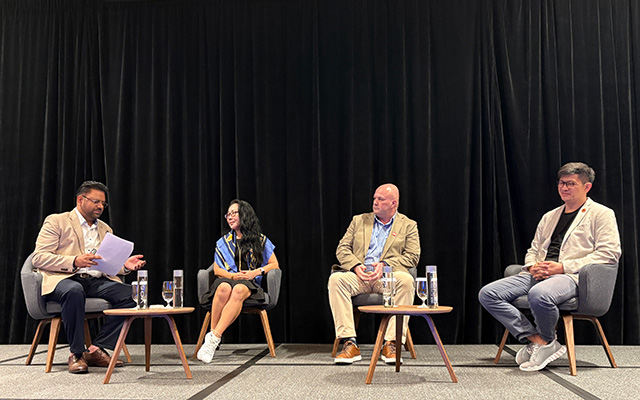
Planners must ask themselves what DoC is and why it is so relevant in current times, according to speakers on the From Disruption to Resilience: Re-engineering Duty of Care for Meetings and Events panel at the GBTA APAC Conference last month.
Because DoC covers such a broad spectrum – from physical safety to cybersecurity – speakers emphasised that every organisation must build its own playbook to navigate these essential building blocks.
Kaori Pereyra-Lago, head of strategic meetings management, Asia Pacific, Europe, Middle East and Africa, at AMEX GBT, gave the example of venue selection and the difficulty of evacuating an event with lots of high-risk stakeholders in a place like Phu Quoc, Vietnam, due to the island’s geography.
On the topic of technology and cybersecurity, Ridley highlighted the use of free Wi-Fi at an event exposes data on who has logged in.
Meanwhile, moderator Navodit Srivastava, hospitality cloud leader Asia Pacific, Cvent, pointed out planners have to verify if comprehensive risk assessment planning is deep enough, or not.
On event insurance, Barry Lin, regional security manager, South-east Asia, Google, shared that a 6,000-strong company event in Macau was handled by human resources, and he did not have the information on how it was procured.
Separately, a global M&E services leader attendee, who organises more than 200 meetings a year, told TTGmice there is only vendor insurance, but no event insurance for attendees as part of DoC.
Ridley added: “DoC is not universal and legislation is different in different countries. Planners need to look at a company’s portfolio risk and concentration risk and know whether or not the right tools are being used.”
Pereyra-Lago highlighted many clients do not have strict travel policies limiting the number of travellers from a department or the number of vice presidents on flights and coaches.
She added more attention also needs to be paid to F&B, citing how airline captains and their co-pilots do not eat the same food.