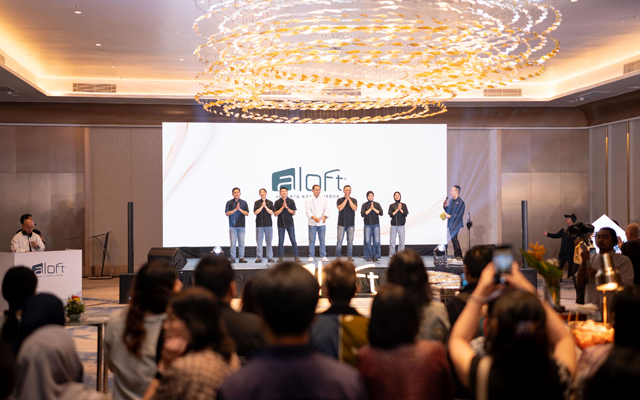
Aloft Jakarta Kebon Jeruk officially opened its Grand Ballroom on April 10, 2026, completing the full suite of meeting facilities available since the hotel’s November 2025 opening.
Located on the third floor, the 530m2 Grand Ballroom features a five-metre ceiling height and can accommodate up to 654 guests. It is equipped with a built-in screen and projector, a professional-grade Hardwell Turbo Voice 15 Pro sound system, bandwidth of up to 100 Mbps, and a power supply of 10,000 watts, with the option to expand to 20,000 watts for larger productions.
Aloft Jakarta Kebon Jeruk’s Grand Ballroom
The ballroom is part of a meeting ecosystem with a dedicated drop-off gate that includes a Junior Ballroom with a 284-seat capacity, five meeting rooms ranging from 32 to 120 seats, a VIP room, and two private dining rooms. Additionally, an expansive 508m2 pre-function is designed to maximise comfort and engagement.
Calvine Vorry, director of sales and marketing of Aloft Jakarta Kebon Jeruk, said: “The pre-function area is bathed in natural daylight, creating an open, comfortable, and interactive atmosphere. This space is ideal for coffee breaks, exhibitions, and vibrant networking sessions.”
Highlighting the importance of business events to the hotel’s strategy, Calvine noted: “We see the MICE segment in West Jakarta continuing to show positive growth, particularly from the corporate, technology, and government sectors.”
Since opening, the hotel has hosted a variety of events, from corporate meetings and gala dinners to brand activations. In April, the property hosted an automotive sales conference for 220 guests, alongside a product launch and a medical conference for 150 delegates each. This momentum continues into May with a scheduled banking and financial training session for 120 participants.
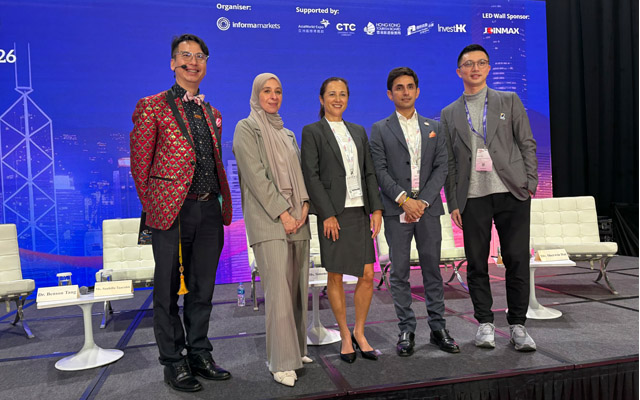
From left: Corporate Travel Community’s Benson Tang; Al-Futtaim’s Souhilla Taarabit; ex-Toyota Finance Australia’s Simone Gibbs; KPMG’s Rahul Marwah; and Trip.Biz’s Sherwin Dai; photo by Prudence Lui
Corporate travel is shifting away from a pure cost-saving model toward a strategy that prioritises employee well-being and modernised Duty of Care standards.
At a forum held during Connect Marketplace 2026 in Hong Kong, industry leaders discussed how travel policies are being redesigned to balance corporate financial goals with the necessity of supporting and protecting the traveller.
From left: Corporate Travel Community’s Benson Tang; Al-Futtaim’s Souhilla Taarabit; ex-Toyota Finance Australia’s Simone Gibbs; KPMG’s Rahul Marwah; and Trip.Biz’s Sherwin Dai; photo by Prudence Lui
Rahul Marwah, sourcing & procurement advisory director at KPMG, noted that modern negotiations now prioritise necessity and due diligence over raw savings.
“Instead of making three separate trips, staff can combine multiple destinations into a single journey. This approach not only optimises costs but also ensures staff are well-rested, rather than trading well-being for business,” he explained.
Marwah added that KPMG now allows business class for flights over five hours regardless of seniority, noting that embedding ESG and social elements into policy is becoming essential.
Finding the right balance between company objectives and employee needs is crucial, added Souhilla Taarabit, group head of corporate travel services at Al-Futtaim.
Following regional instability in the Middle East, Al-Futtaim revised its policies to focus on “meaningful travel”. Taarabit emphasised that the best approach is to understand how a trip supports company outcomes.
“We revised our policy and introduced more parameters around meaningful travel. It is vital for employees to feel that we are taking care of them,” she said.
Flexibility has also become a priority, as noted by Simone Gibbs, former procurement lead at Toyota Finance Australia. She stressed the importance of maintaining flexible travel policies in light of ongoing disruptions and rising fuel surcharges.
“Since the pandemic, knowing where your people are at any time is really important for Duty of Care,” Gibbs highlighted. While many TMCs provide tracking portals, she suggested the “next level” involves paid services like International SOS, which can deploy people on the ground to provide direct assistance during a crisis.
Sherwin Dai, general manager for Greater China & North Asia at Trip.Biz, argued that more organisations are viewing travel programmes as a talent acquisition strategy.
He cited a global tech client that allows its 100,000 staff to book premium economy for any flight over four hours, sharing that the company saw a two per cent increase in the retention rate..
“From their perspective, it was well-spent money. More companies are realising that a strong, employee-centric policy is a way to attract and retain talent,” Dai stated.
Opinions remain divided on where travel management should sit within a corporate structure. At Al-Futtaim, the function is placed under Human Resources. Taarabit explained that this creates the most value for a diverse workforce: “The most vital step is to make sure employees understand we want them to feel good.”
However, Gibbs argued that while her former travel policy was owned by HR, it was not always managed effectively. She suggested that the best model involves operations and procurement working together.
“Procurement puts the agreements in place, but you need someone operationally to manage that supplier and gather traveller feedback,” she noted. Ultimately, she concluded that the ideal approach differs based on each company’s needs.
Star Alliance has introduced a new lounge at Guangzhou Baiyun International Airport’s Terminal 3, adding to its presence at the airport as international traffic grows.
An opening event was held at the Terminal 3 facility with representatives from Star Alliance, Guangzhou Baiyun International Airport, member airlines and partners.
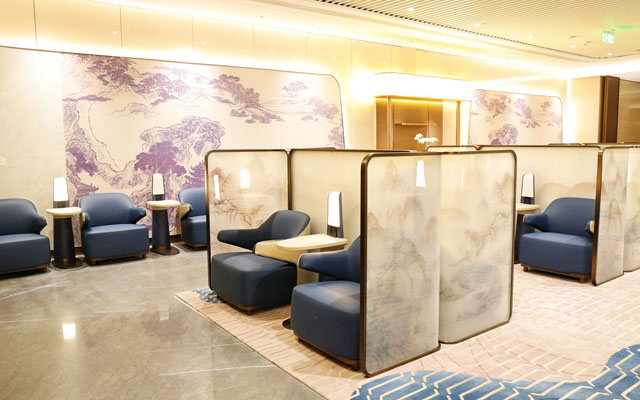
The lounge offers seating areas, dining options and an outdoor garden at Guangzhou Baiyun International Airport Terminal 3
The lounge covers about 1,400m² and seats around 245 passengers. It includes a 700m² outdoor garden, an open-air space within the airport environment. The facility operates 24 hours a day and is intended to serve international travellers across different flight schedules. Access is available to First and Business class passengers, as well as Star Alliance Gold members travelling on member airline flights departing from Terminal 3.
A total of 10 Star Alliance airlines operate from Guangzhou, including Air China, ANA, Asiana Airlines, EgyptAir, Ethiopian Airlines, EVA Air, Shenzhen Airlines, Singapore Airlines, Thai Airways and Turkish Airlines. Together they run about 1,500 weekly departures to 52 destinations across 10 countries.
The design references Lingnan culture and Guangzhou’s landscape, including a central installation based on the kapok flower. A tea service is also available.
The facility is operated by Guangzhou Baiyun International Airport Business Travel Service Co., with operations moved from Terminal 1 to Terminal 3.
Ambar Franco, vice president – customer experience at Star Alliance said: “Lounges are a critical part of the customer experience for Star Alliance member airline passengers, supporting our vision for more seamless and effortless journeys. This new space reflects the evolution of our lounge offering – it is bigger and better, and will deliver enhanced comfort and functionality for Star Alliance member airline customers.”
Qi Yaoming, deputy general manager of Guangzhou Baiyun International Airport, added: “Going forward, we will continue to strengthen strategic coordination with Star Alliance and major airlines, carrying out deeper cooperation in route network expansion, transfer facilitation, and smart travel, to jointly build a better international aviation ecosystem.”
Thaifex – Anuga Asia 2026 is set to be the largest in the event’s history, returning to Bangkok’s IMPACT Muang Thong Thani from May 26 to 30.
The tradeshow has expanded to 12 halls covering over 140,000m2, reflecting a critical period for the F&B industry where supply chain adjustments and sourcing speed have become paramount. This year’s edition expects to host over 3,300 exhibitors from 60 countries, drawing an estimated 88,000 trade visitors from around the world.
Thaifex – Anuga Asia 2025; photo by Koelnmesse
A major addition to the 2026 programme is the debut of PLX Asia, the region’s first dedicated B2B platform for private label and contract manufacturing. This initiative addresses a strategic shift in South-east Asia where retailers are increasingly using private labels to drive growth. The platform will launch with an industry leadership summit on May 29, laying the groundwork for a full-scale trade exhibition in 2027 that will span food, beauty, and household categories.
Innovation remains a central focus, particularly within the newly integrated Hall 4. This zone features the New-to-Market Street, showcasing products launched within the last year, and the Future Food Experience+, a conference covering high-tech advancements like precision fermentation and AI in retail. Visitors can also participate in interactive events such as the Alternative Protein Flavour & Taste Contest, where they can vote on the best emerging plant-based products.
The event also marks a significant diplomatic and commercial milestone with the European Union joining as the Official Partner Region. An EU Pavilion will highlight European standards of authenticity and sustainability, providing buyers a streamlined way to access high-quality European supply within the larger sourcing environment.
According to event organisers Koelnmesse, this consolidation of nine specialised trade shows into one venue is designed to help businesses close deals faster and navigate a rapidly evolving global market.
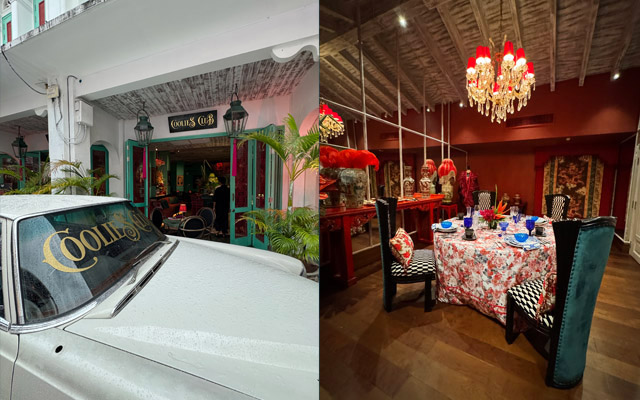
From left: Entrance to Coolies Club; private dining room on the second floor
Located on Soi Romanee in Old Phuket Town – once the epicentre of the island’s 19th-century tin mining red-light district – Coolies Club is the latest project from Krystal Prakaikaew Na-Ranong, the co-owner and managing director of The Slate Phuket.
Designed by acclaimed architect Bill Bensley, the venue pays homage to the area’s history of opium dens and miners’ hedonistic pleasures with a design palette of turquoise, jade green, and antique red.
From left: Entrance to Coolies Club; private dining room on the second floor
For event planners looking for an intimate, high-impact setting, the venue offers two distinct levels. The ground floor provides a sophisticated sit-down format for up to 40 guests, surrounded by ornate Chinese fretwork and vintage furnishings. For more exclusive gatherings, the private room upstairs accommodates 32 pax, offering an atmospheric Opium Den dining experience.
The culinary programme follows a zero-waste kitchen concept, focusing on sustainability without compromising on creativity. A standout example is the lemongrass tuna wraps, which cleverly utilise portions of the fish that cannot be served as whole fillets, ensuring every ingredient is maximised.
The menu is further defined by rustic, fire-smoked techniques – think seared Black Angus hanger steak with rosemary and garlic butter, and smoked spaghetti alla bottarga – that reference the traditional cooking methods used by tin miners.
Entertainment is also a core component of the Coolies Club experience. While the venue hosts a signature singing cabaret every Saturday night, capturing the exotic elegance of a bygone time, these performers are also available for private hire. Planners can book the cabaret troupe to bring a sense of theatrical flair and historical nostalgia to corporate dinners or private celebrations.
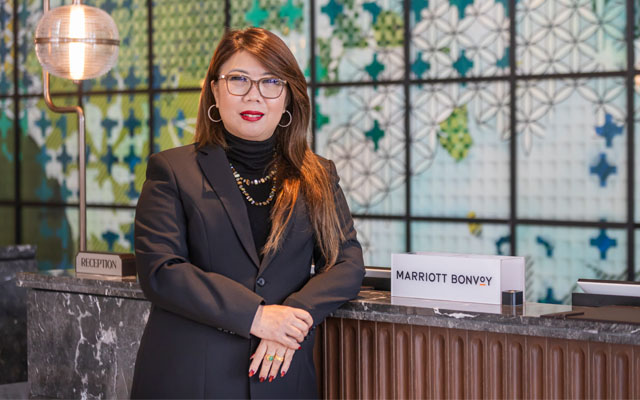
Iconic Hotel Group has appointed Pauline Chua as group general manager, overseeing operations across Iconic Marjorie Penang, Iconic Regency Service Residences and Iconic Hotel Penang.
She joins from Onyx Hospitality Group, where she was general manager of Amari Johor Bahru, driving performance and strengthening brand recognition.
With over three decades of hospitality experience, she has led both single properties and multi-property portfolios across Asia-Pacific.
Food & Hospitality Asia (FHA) 2026 concluded after four days of trade activity, seminars and competitions, with organisers reporting its largest edition in a decade.
The event combined FHA-Food & Beverage and FHA-HoReCa into a single annual format, held alongside ProWine Singapore and IndusFood Asia at Singapore Expo. More than 2,750 exhibitors took part across 10 halls, while about 70,000 industry professionals from around 110 countries and regions attended.
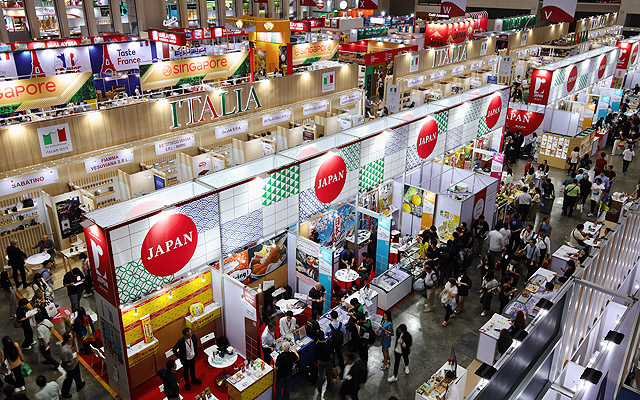
The Singapore Pavilion hosted local exhibitors and business matching sessions at FHA 2026
The programme covered 18 segments across food, beverage and hospitality, including technology, products and operational practices. The show floor featured country pavilions from Asia-Pacific, Europe and the Americas, alongside newer participants such as Cambodia, Mongolia and the Philippines.
The European Union was featured as Region of Honour, presenting food products and sustainability initiatives. The Singapore Pavilion, led by Enterprise Singapore, included business matching sessions and a showcase developed with the Singapore Food Manufacturers Association.
A technology-focused zone, FutureFWD, highlighted developments in areas such as AI, automation and data analytics, alongside seminars and product demonstrations.
ProWine Singapore 2026 brought together more than 200 exhibitors from 24 countries, including established wine and spirits producers and newer categories such as low- and no-alcohol products. Features included tasting areas and networking sessions with buyers and distributors.
IndusFood Asia presented companies from India’s food and beverage sector, with a focus on exports, partnerships and market trends.
The Hosted Buyer Programme attracted 700 buyers from over 23 countries and regions, with around 19,000 meetings conducted over four days.
Competitions included the Young Chefs Grand Prix, won by KCAA.GN from South Korea, alongside the Asian Pastry Cup, FHA Bakery Challenge and FHA Dessert Challenge. Winners included Japan in the Asian Pastry Cup, China in the bakery competition and Sohee Kim from South Korea in the dessert category.
The next edition is scheduled for April 20-23, 2027.
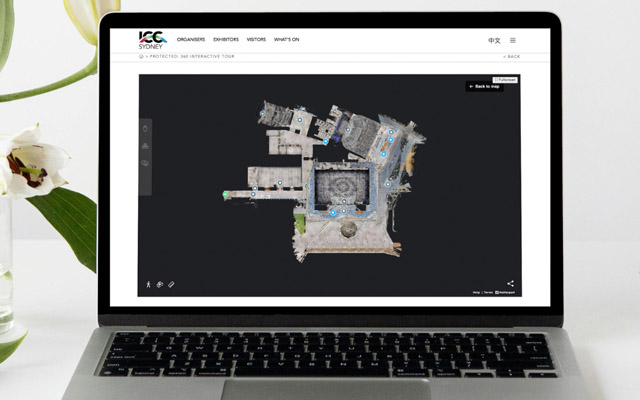
The venue now provides a comprehensive digital replica of its flexible event spaces
The International Convention Centre Sydney (ICC Sydney) has unveiled 360 Interactive Tour, establishing one of the world’s largest 3D digital twins to streamline global event planning.
Powered by Matterport’s immersive mapping and Phoria’s UX technology, the tool allows organisers to remotely navigate the Convention Centre, Exhibition Centre, and TikTok Entertainment Centre.
The venue now provides a comprehensive digital replica of its flexible event spaces
Unlike standard virtual walkthroughs, this digital twin enables precise evaluation of scale, room connectivity, and attendee flow, allowing planners to visualise complex layouts and spatial relationships with high accuracy long before arriving on-site.
ICC Sydney CEO Adam Mather-Brown noted that the investment is designed to reduce planning complexity and provide smarter, more efficient solutions as the pace of industry technology accelerates.
The tool addresses a growing demand for immersive infrastructure, as research indicates that organisers engage more deeply with 3D digital environments than traditional static imagery.
The interactive experience is now live and accessible via the venue’s official website.
Design Matters is designed to bring event professionals together to share best practices in the World Design Capital of Frankfurt
IMEX’s new Talking Point, Design Matters, is poised to elevate the business relationships at the heart of IMEX Frankfurt come May 19 to 21, 2026.
Guided by the belief that ‘good design is good business’, Design Matters is being planned as a catalyst to bring together event professionals and partners at the show, share best practices, and deepen the sense of belonging among the global events community.
The new Talking Point is especially fitting given that the Frankfurt RheinMain region – where IMEX Frankfurt takes place – has been named World Design Capital for 2026.
The show is set to bring together thousands of pre-vetted buyers and suppliers from around the world when it returns to Messe Frankfurt next month.
New education tracks
Design Matters will show up at IMEX Frankfurt through immersive activations, exhibitor booth activities, and across the over 200 session learning programmes.
Three of the four new education tracks will provide different perspectives on design: Design Matters; Designing for human needs, and Regenerative design. Together with the returning Experiential Event Design track, these four design‑led tracks will introduce attendees to fresh speakers, collaborators, and research shaping the sector.
Design Matters
IMEX CEO, Carina Bauer, explains: “When we move past surface level networking and find people who share our values, the events industry really shines. We believe this feeling of belongingis the foundation of strong relationships and strong business, increasingly called Return on Relationship. With that in mind, our new Talking Point is just one tool that will help those connections flourish, supported by some collaborations with exciting new partners and speakers.”
IMEX Frankfurt takes place from May 19 to 21. Register for free now.
Latest GBTA industry poll finds optimism waning, especially in Europe
Global business travel is continuing at a steady pace into 2026, but with significantly more caution, less confidence and more operational complexity than at the beginning of the year.
Organisations are still pressing forward with trips, spending and meetings, yet are doing so amid escalating conflicts, higher costs and growing disruption.
Latest GBTA industry poll finds optimism waning, especially in Europe
The shift can be seen across regions but is most pronounced in Europe, where industry pessimism now outweighs optimism as broader geopolitical conflicts are increasingly shaping travel routes, safety considerations, and meetings decisions worldwide.
In parallel, the travel manager role is increasingly strategic, including leveraging AI as a key enabler of smarter decisions and stronger organisational impact.
This is according to findings released by the Global Business Travel Association (GBTA) from its April business travel industry sentiment poll. Results broadly show a more cautious outlook compared with GBTA’s January poll, with organisations actively adjusting why and how they are travelling for work now.
“What we’re seeing is not a broad pullback from business travel, but a more deliberate and carefully managed approach to it. Organisations continue to travel and meet – and innovate – but they’re doing so while adapting to rising costs, operational friction and escalating geopolitical tensions,” said Suzanne Neufang, CEO of GBTA.
“These pressures are reshaping how, where and why companies are travelling now – making experienced business travel professionals more critical than ever to keeping travellers safe, navigating risk and disruption, and controlling budgets so organisations and people can continue to connect and do business.”
Risks and regional impacts: Geopolitical tensions now the dominant concern
Geopolitical instability has become the most significant external risk influencing business travel decisions in 2026, according to April poll respondents.
Nearly eight in 10 respondents (79%) now cite geopolitical instability and conflict as a top travel-related risk, making it the industry’s leading concern globally.
The impact is especially visible in Europe, where more than 9 in 10 respondents (92%) identify geopolitics as a primary risk, compared with 72% in North America.
Current geopolitical conflicts, including tensions involving Iran and the Middle East, are having tangible impacts on industry outlook and operations:
76% of buyers say geopolitical conflicts are having a moderate or significant impact on their organisation’s business travel and meetings decisions.
Travel suppliers report even greater impact, with more than four in five (83%) indicating these conflicts are materially affecting their customers.
Organisations report real-world consequences, including route and itinerary changes (50%), suspension of all travel to/within the region (50%), and re-evaluation of duty of care policies (36%).
Outlook and optimism: Confidence drops since January, especially in Europe Overall industry optimism has weakened considerably since the start of the year.
Just 41% of all global respondents say they are optimistic about the business travel industry in 2026, down from 59% in January.
At the same time, the share expressing pessimism has nearly tripled, rising from nine per cent in January to 24% of respondents in April, likely reflecting the heightened exposure to geopolitical instability, travel affordability pressures and overall disruption.
This erosion in sentiment is evident across both travel buyers and suppliers.
Buyer optimism fell from nearly six in 10 in January (59%) to fewer than four in ten (39%) in April, while supplier optimism fell from more than half (57%) to just over four in ten (45%).
Regionally, Europe now stands as the only region where pessimism outweighs optimism in terms of the year-ahead outlook.
Optimism among European respondents was relatively strong in January (58% optimistic versus 14% pessimistic), but fell significantly by April, with just 21% now optimistic and pessimism rising to 38%.
In contrast, North America remains net positive – 59% optimistic and 9% pessimistic in January – but optimism materially declined by April, with 45% optimistic and 19% pessimistic.
In terms of outlook for 2026, increasingly widespread concerns cited by all respondents include the affordability of business travel (82%, vs. 70% in January) and employee safety when they are travelling (67%, vs. 56%).
Spending, volume, and revenue: Business travel continues, but downside risk grows Despite the weakening outlook, business travel activity is expected to continue through 2026, but expectations have softened meaningfully since January.
Business travel volume:
Among buyers, 28% now expect volume to decline in 2026, a significant shift from 16% in January, signalling growing downside risk.
30% expect the number of business trips taken at their organisation to increase in 2026, down from 35% in January, while 41% anticipate their year-over-year volume to remain unchanged.
Business travel spending:
Expectations for spending remain comparatively stronger, driven by cost pressures. 43% of buyers expect travel spending to increase, similar to January levels.
22% now expect spending to decline, up from just 13% at the start of the year.
Business travel supplier revenue:
Travel suppliers are becoming more cautious in their outlook as well. Just 35% expect travel-related revenue to increase, down from 47% in January, while the share expecting revenue to decline has risen sharply since the beginning of the year (27% now vs. 7%). This reflects a more support-intensive and cost-constrained operating environment.
Meetings and events: Strategies adjust under pressure but in-person value holds Geopolitical risk and cross-border complexity are not only affecting individual trips but also reshaping meetings and events planning.
Over a third of buyers (38%) say they’re less likely to host multinational meetings in the US than they were six months ago.
More than half of buyers (56%) say their organisation has changed its meetings or events strategy in the past three months. This includes shifting some meetings or events to virtual formats (26%), cancelling meetings or events (24%), reducing employee event attendance (24%), and relocating meetings to different markets (22%).
European buyers (33%) are significantly more likely than those in North America (21%) to shift meetings or events to virtual formats, underscoring a higher level of disruption sensitivity.
At the same time, travel buyers emphasise that certain gatherings remain difficult to replace.
Sales and client meetings (53%) and conferences or trade shows (51%) are cited as the hardest in-person activities to shift to virtual alternatives – rising to 63% among European buyers for conferences and trade shows.
Travel management’s role: More essential than ever, more strategic by need
As disruption and evolution intensifies, the role of travel management and travel professionals is becoming increasingly strategic.
Seven in 10 buyers (70%) say the travel management function becomes more important during periods of disruption, with responsibilities moving closer to leadership, risk management, and enterprise decision-making.
Many report increased involvement in traveller safety, policy changes, crisis response, and meetings decision-making.
Regardless of region, by far travel buyers (92%) are confident their organisation can effectively support their travellers during a major disruption.
Artificial intelligence is becoming one of the clearest tools buyers see for operating more strategically. More than two in five buyers (41%) say their organisation is proactively implementing AI use cases while another 28% are leveraging AI embedded in existing travel tools.
Buyers view AI as a critical enabler and they are prioritising building AI and automation skills (37%) to drive better reporting, pricing insight, spend forecasting, and more informed decision-making and voicing their biggest barrier as data/privacy/security concerns (47%).
The GBTA poll was conducted online from March 25 to April 8, 2026, and drew responses from 539 GBTA members and non-members across North America, Europe, Asia Pacific, Latin America, Africa, and the Middle East. Respondents represented organisations with global, regional, and market-level responsibilities, and a wide range of business travel spending profiles.
Just 10 minutes from Phuket International Airport on the serene northern coast, this 178-key, Bill Bensley-designed resort offers delegates a quiet, tropical paradise steeped in Phuket’s tin-mining heritage
The newly-opened Ritz-Carlton, Bangkok anchors the One Bangkok development with cosmopolitan elegance. Featuring the city's largest ballroom and a spectacular new penthouse suite, it delivers exceptional hardware and deeply authentic, soulful service for business and leisure travellers alike
Behind the imposing, Brutalist concrete that defines Zurich’s Oerlikon district lies a surprising secret. While its exterior honours the neighbourhood’s industrial roots, stepping inside Mama Shelter reveals a vibrant, neon-soaked world that is a far cry from its rigid shell




 With over three decades of hospitality experience, she has led both single properties and multi-property portfolios across Asia-Pacific.