Onyx Hospitality Group has reinforced its expansion plan with a number of strategic promotions to achieve the group’s core business objectives.
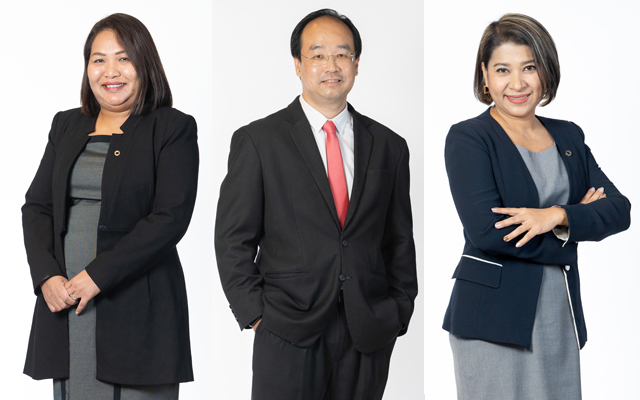
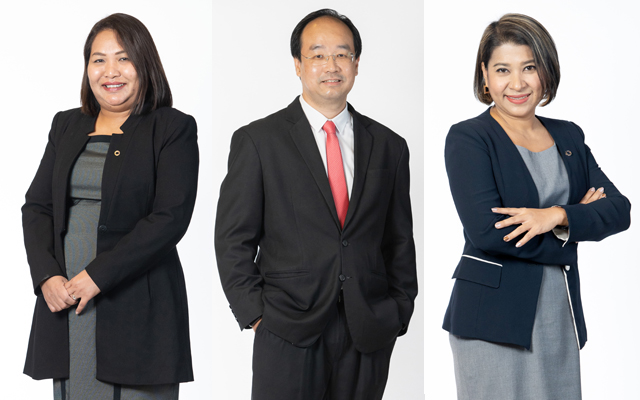
From left: Chutima Fuangkham Kennedy, Wuthivet Vetchabutsakorn, and Hathairat Naenkwaen
Chutima Fuangkham Kennedy is the new promotion – vice president, marketing, and has been with the company for 13 years. Her experience and expertise fall within the digital marketing arena, where she was responsible for building the group’s digital marketing team and successfully deliver double-digit ROI throughout her career.
With more than 20 years of experience in corporate finance, Wuthivet Vetchabutsakorn joined Onyx in 2021 and is the group head of finance. He was with Asset World Corporation Public Company Limited where he served as chief financial officer.
Hathairat Naenkwaen first joined the company in 2017 as OTA partnership director. In her new role as promotion – senior director, sales & distribution, she will drive the strategic revenue performance across distribution as well as sales and key accounts.
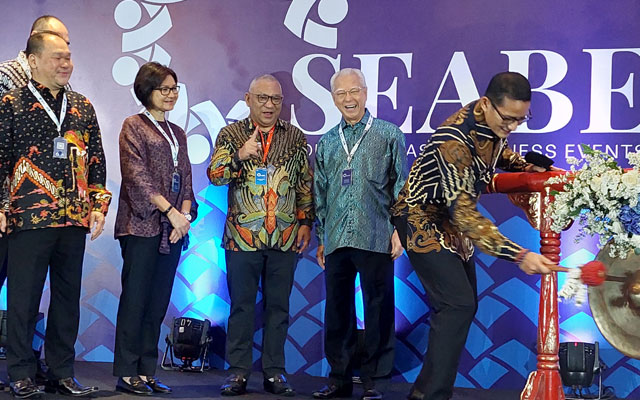
Sandiaga Uno strikes the gong to mark the opening of SEABEF
The disruption of business events in China for more than three years has led many European and US organisers there to deploy their resources elsewhere, particularly to South-east Asia, creating a prime opportunity for the region’s business events industry to shine.
Speaking at the inaugural Southeast Asia Business Event Forum (SEABEF) on February 3, an event that was part of ASEAN Tourism Forum 2023 last week, Edward Liu, honorary president of the Asian Federation of Exhibition and Convention Associations, said the “Aseanistion” of the industry is underway. He noted that some senior management staff were relocated to South-east Asia, which is an attractive market of more than 684 million people.
Sandiaga Uno strikes the gong to mark the opening of SEABEF
“We can expect more conferences and exhibitions to be staged in South-east Asia this decade,” he added.
In his keynote presentation, Liu suggested that Indonesia, which hosts the seat of ASEAN headquarters in Jakarta, could lead the way in the formation of an ASEAN MICE Federation to build a stronger business event ecosystem in the region. This could be paired with the launch of an ASEAN expo that focuses on key industries and innovations, with editions rotated among member nations. Funding could come from ASEAN and participating countries.
Liu also asked the Indonesian Ministry of Tourism and Creative Economy to form an international business events advisory panel, tasked with charting the development of the industry in the country.
In response, Sandiaga Uno, Indonesia minister of tourism and creative economy, said he is “in full support of the leadership to collaborate (with the business events community) for an ASEAN expo”.
He added that rotating the expo among the 10 ASEAN member countries will position South-east Asia “as an epicentre of growth” and the hub for world-class business events.
He would work with related associations to determine government support for the formulation of the ASEAN MICE federation, and table both initiatives at the ASEAN Ministerial Meeting.
SEABEF could be the “embryo” for the eventual expo and federation, Sandiaga opined.
In addition, Sandiaga shared that Indonesia is working on digitalising the business events permits process and establishing a platform for knowledge exchange with the Indonesia Chamber of Commerce and Industry. Supporting the growth of the business events industry will result in investment opportunities and job creation for the country and its people.
1. Leave something good behind in Bhutan
A retreat in the Bhutan Spirit Sanctuary may sound like just an extravagant treat but the property, part of Small Luxury Hotels of the World’s Considerate Collection, makes sure to enrich the life of every guest during their stay.
Guests are encouraged to live in harmony with the surrounding forests and farmland on the remote mountainside. They can walk, hike and cycle around the Neyphu Valley, and partake in traditional wellness programmes.
Guests looking to leave a positive mark behind can support Bhutan Spirit Sanctuary’s partnership with Pack for a Purpose by contributing supplies to local families and animals, or sharing a meal with local farming families.
2. Work those arms and team spirit
The Tachikawa MICE association offers a meaningful whitewater rafting activity at Mitake Race Rafting Club in Ome City, Japan. This activity blends a powerful arm and core workout, teambuilding, environmental education and community work together for a memorable group outing.
This river clean-up invites corporate groups meeting in Tachikawa to come together to pick debris off the Tama River that runs through the Mitake Gorge. The activity is the brainchild of Daigo Shibata, a certified rafting instructor and an award-winning former member of the national rafting team. After witnessing the destruction of a 2019 typhoon left behind in Mitake Gorge, Shibata picked up his oars and went down the river scooping up any debris within reach. It became his Monday routine and eventually drew the attention of local rafters who turned the river clean-up into a popular activity for school and corporate groups.
3. Dive into an Okinawan forest
Join Yanbaru Nature School on an excursion of Yanbaru National Park in northern Okinawa to see the unique plants and animals that dwell within this natural landscape, and learn about their fragile and unique ecosystems. The half-day activity takes participants on a Gesashi River canoe tour, and a walk along the Gesashi River to observe the mangroves. Timings for the canoe course will depend on the ebb and flow of the tides.
4. Surf away to mind and body balance
Surfing enthusiasts have long claimed the therapeutic effects of the sport on their mental and physical well-being, and the science behind that is being studied by the US Navy for application to their service members who may be suffering from Post Traumatic Stress Disorder.
Whether or not the benefits of surfing are certain, corporate groups can be sure of a day of fun tumbling and riding the waves at Gyeonggi’s Wavepark. The need to focus on balance on the surf board is sure to take one’s mind off other concerns. Up to five teams of 10 participants each can take lessons together, and teambuilding goals can be built into the programme.
Opened in 2020, the massive water attraction also features a Surf Camp, which offers 14 luxury caravans and a VIP caravan for overnight stays.
5. Craft a toy for good
Toy Factory by Asia Ability is a meaningful and structured teambuilding activity with clear learning values. The activity starts off with teams being tasked with crafting a child’s toy from a bag of wacky wooden parts, guided only by a 3D blueprint.
Sounds easy? Not so. The clock is ticking, and their craft must pass a quality check. Furthermore, an innovative and educational game must be designed to go with it.
More than just a time-challenged craft session, the activity underlines the value of team management, and presents a meaningful finale – the toys and game materials are donated to a local children’s charity or home of the company’s choice.
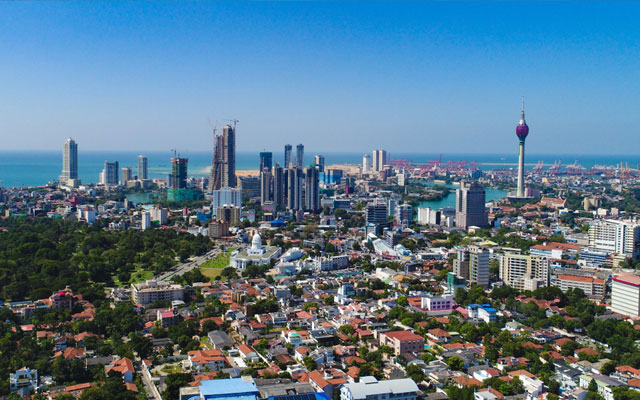
The inaugural show will take place in Colombo (pictured)
Sri Lanka will be organising a MICE – EXPO 2023 tradeshow in Colombo next month, its first business events-dedicated tradeshow aimed at portraying the country as an attractive destination for meetings and business events.
Taking place from March 13-15, 2023, at the Shangri-La Hotel Colombo, the event is organised by state-owned Sri Lanka Convention Bureau (SLCB) in partnership with national carrier SriLankan Airlines.
The inaugural show will take place in Colombo (pictured)
SriLankan Airlines will be bringing over 100 participants from South-east Asia, the Middle East and Europe, where around half of the invitees hail from India, one of its top inbound markets.
Speaking at the recent launch of the event, tourism minister Harin Fernando said that the tradeshow “will be a huge opportunity for local service providers to gain global exposure and attract new customers”.
This would help improve Sri Lanka’s economy, and ease the pressure on its foreign reserves, he added. On average, a business events traveller spends up to three times more than a leisure tourist.
Organisers also intend to use MICE – EXPO 2023 as a platform to create awareness about the value that Sri Lanka has to offer the world, in other aspects aside from business events, such as tourism and investment.
Tourism in Sri Lanka is recovering from a few disastrous years owing to the Covid-19 pandemic coupled with an economic downturn. Arrivals last year totalled 719,978, much higher than 194,495 recorded in 2021. SLCB’s aim is to welcome 1.5 million visitors this year.
New research points to continued industry recovery, easing of supplier staffing constraints, and mixed outlook on China travel
Global business travel is forecast to see an uptick in 2023 versus 2022, travel suppliers anticipate an increase in corporate travel spending with companies expected to send more employees on trips, according to the Global Business Travel Association’s (GBTA) 1Q2023 Business Travel Outlook Poll.
Other survey findings sectors such as finance, insurance, professional services, and consulting are showing stronger signs of growth in travel spending; as well as a mixed outlook on China travel.
New research points to continued industry recovery, easing of supplier staffing constraints, and mixed outlook on China travel
Here are the key takeaways from this latest GBTA poll:
Back on the road and in the air − more business trips are expected in 2023.
Business leaders may anticipate a recession this year, but travel managers are anticipating more business travel. Three in four travel managers (78%) expect their company will take a lot more (22%) or more (55%) business trips in 2023 versus 2022.
Only 15% of travel managers expect to see the same levels of business travel as last year, and seven per cent expect fewer or a lot fewer trips.
An overwhelming 90% of respondents believe their employees are willing to travel for business, while 88% report feeling more optimistic about the path to recovery compared to last month.
Companies are also expected to increase their business travel spending.
Travel suppliers expect more business travel spending by their corporate customers in the year ahead. Almost nine in 10 suppliers (86%) expect spending by corporate customers in 2023 will be much higher (26%) or somewhat higher (60%) compared to 2022. (This marks an increase from GBTA’s October 2022 poll where 80% of suppliers expected spending to increase.)
Nine per cent expect corporate business travel spend to be about the same, and only one per cent expect spending to be lower than in 2022. (In the October poll, 15% expected the same level of spending and 5% expected lower spending.)
Business travel bookings and spending continue making their way back to 2019 levels.
On average, travel buyers estimate their companies’ current domestic business travel bookings have returned to 67% of pre-pandemic 2019 levels (up from 63% in GBTA’s October poll). Travel buyers estimate their company’s current domestic business travel spend is back to 68% of their 2019 spend levels.
International business travel continues to gain ground. In this poll, on average, travel buyers estimate international business travel bookings have recovered to 54%, up slightly from 50% in October. Current spending for international trips is back to approximately 58%.
What industries are leading and lagging in returning to business travel spending?
When asked to assess the industries of their corporate clients where they’ve seen the strongest growth in business travel spending in 2022, travel suppliers cited their top three a finance and insurance (34%); professional, consulting, scientific, and technical (32%); and software, hardware and technology (25%). These industries largely resumed travel last year after lagging other industries – such as manufacturing –in 2021.
When asked which industries have seen the weakest growth in travel spending last year, travel suppliers and travel management professionals cited: non-profits, associations, and foundations (35%); software, hardware, technology (24%); and educational services (22%).
Interestingly, the software, hardware and technology sector was cited as both leading and lagging in spending growth, indicating variances among companies and industries in terms of approaches, travel policies, and strategies.
Trip type and intent continue to drive business travel spending and approvals.
According to travel buyers the top areas for business travel spending in 2023 are sales/account management meetings with customers or prospects (28%); internal meetings with colleagues (20%); and conferences, trade shows and industry events (18%), which is largely consistent with GBTA’s June 2022 poll.
Rounding out the spending mix are customer service trips (14%); employee training or development (nine per cent); and supplier meetings (six per cent).
During the pandemic, many travel programmes implemented stricter pre-trip approval processes to manage risk. Add to that the desire to control costs or align to greener travel practices, and employee travel may now require additional approvals – such as from Risk, HR, senior leadership, finance or the travel or CSR departments. Twenty-two percent said pre-trip approval is required all the time for domestic travel and 34% said pre-trip approval is always required for international travel. An additional 20% said pre-trip approval was required some of the time for domestic or international travel.
However, half (49%) of travel buyers say pre-trip approval is never required for domestic business travel, while one-third (31%) say the same for international travel.
Staffing for travel suppliers is still suppressed but help may be on the way in 2023.
Travel suppliers and travel management companies were forced to reduce staff during the pandemic−even now, many of these companies are not yet fully re-staffed. Almost half of travel suppliers (47%) report their company’s staffing level is somewhat or much smaller than it was pre-pandemic, while 28% say it is about the same.
However, two in three travel suppliers (65%) expect staffing will increase a lot or somewhat in 2023 compared to 2022, while 26% expect no change.
Company travel programmes hold their (pre-pandemic) ground when it comes to staffing.
While many travel suppliers emerged from the pandemic with fewer staff, the same has rarely happened with travel programmes. The majority of buyers (78%) say their company’s travel programme staff size in 2023 is expected to be about the same (56%) as it was pre-pandemic or will be much or somewhat larger (22%).
Many buyers also expect to increase spending for their travel programme operations (such as staff salaries, technology, and consultants) in 2023 versus last year. Almost half of buyers (45%) expect their travel programme budgets will be higher, while 41% expect them to be about the same as in 2022.
Industry sentiments are mixed on business travel and China.
As it opens its borders to travel, China has seen a rising number of Covid-19 cases and some countries – including the US, Italy and Japan – have re-introduced testing requirements for inbound passengers from China. Among all respondents, 56% support policies requiring proof of a negative COVID-19 test or proof of recent recovery in order to enter, while 18% believe requirements should be less strict, and 18% are uncertain. Of those supporting the policies, 54% were US-based and 59% were non-US-based.
Almost half thought these policies would lead to a significant (15%) or moderate (37%) decrease in the amount of business travel to and from China, while one-quarter (26%) didn’t think there would be an impact and 18% were not sure.
One in four (24%) S travel buyers report their company employees are typically allowed to travel to China, while 28% say employees are allowed but the company recommends against it. An additional third (29%) say employees are typically not allowed to travel to China and 19% are unsure.
In total, 637 business travel buyers, suppliers, and industry professionals around the world participated in the survey that was fielded from January 16-26, 2023.
Singapore Airlines (SIA) has rolled out complimentary unlimited in-flight Wi-Fi for all Business Class customers, as well as its PPS Club members and PPS Club supplementary card holders.
This makes SIA one of the first airlines to offer complimentary unlimited Wi-Fi across its passenger network for its Suites, First Class, and Business Class customers, as well as PPS Club members.
Singapore Airlines’ KrisFlyer members can now enjoy complimentary in-flight Wi-Fi
In addition, KrisFlyer members now enjoy free three-hour Wi-Fi plans when travelling in Premium Economy Class, and free two-hour Wi-Fi plans when travelling in Economy Class.
Customers who are not KrisFlyer members, and members who may have consumed their complimentary plans, can choose from SIA’s new Wi-Fi price plans ranging from US$3.99 for one hour, to US$15.99 for the entire flight.
Previously, Business Class customers and PPS Club members enjoyed 100MB worth of complimentary in-flight Wi-Fi. KrisFlyer members travelling in Premium Economy Class and Economy Class were offered a two-hour complimentary inflight Wi-Fi plan that was optimised for text-only messaging services.
Diverse flavours, quality local produce and inclusive options are integral to MCEC's 2023 menu
Melbourne Convention and Exhibition Centre (MCEC) has unveiled its 2023 menu – reflecting a commitment to celebrate the city and deliver an extraordinary culinary experience for every guest, every time.
Highlights include the use of native ingredients, such as wattleseed, lemon myrtle, macadamia and Kakadu plum, which combine beautifully with local, fresh, seasonal produce. Healthy, vegan, vegetarian and gluten-friendly choices and alcoholic and non-alcoholic drink options are integral to every menu.
Diverse flavours, quality local produce and inclusive options are integral to MCEC’s 2023 menu
MCEC’s executive chef, Peter Haycroft, stated: “We create food that showcases the many flavours and ingredients available on our doorstep.”
“Supporting home-grown is very important to us. Our 2023 menu showcases the many riches on offer, from High Country pork and Mt Macedon duck to Great Ocean Road cheese, Yarra Valley caviar and Warragul greens. And 90 per cent of our beverage menu is sourced from Victoria’s winemakers, breweries and distilleries.
“Sourcing produce locally and growing herbs, citrus and flowers on-site delivers outstanding ingredients and also helps reduce our carbon footprint.”
The new website collaboration tool enables event organisers to create better, fit-for-purpose websites more quickly
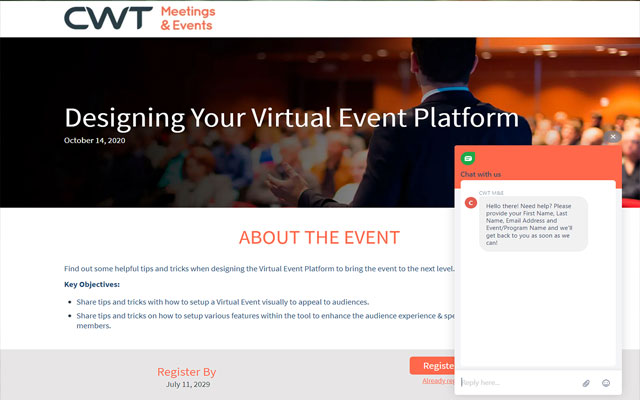
CWT Meetings & Events has introduced two new solutions to help event organisers create a better attendee experience – a website collaboration tool that streamlines the process of designing event websites, and chat support for event attendees.
The design and building of an event website are usually laborious for all involved, with a lot of time spent providing feedback, email and phone communications, and difficulty in tracking and storing changes.
The new website collaboration tool enables event organisers to create better, fit-for-purpose websites more quickly
The new online website collaboration tool aims to streamline this process, where a client can look at a web page on their screen, mark up the changes and share them with the CWT M&E team at the click of a button. Change requests and task statuses are more easily understood, and actions are readily assigned among those working on the project.
This will help to increase efficiency and create a better experience for the client, and free up time for CWT M&E’s web buildings to be more creative and consultative. During a pilot roll-out last year with one of CWT M&E’s global tech clients, the tool helped cut down the time to build event websites by as much as 30 per cent.
CWT M&E has also added live chat support to its portfolio of attendee engagement and management services. The chat service can be integrated into the event website, providing attendees with another channel to obtain assistance with their travel arrangements, registration, and other requests, as well as technical support for virtual and hybrid events.
Both the website collaboration tool and chat support are included in CWT M&E’s standard event planning and management service and are available to customers worldwide at no additional cost.
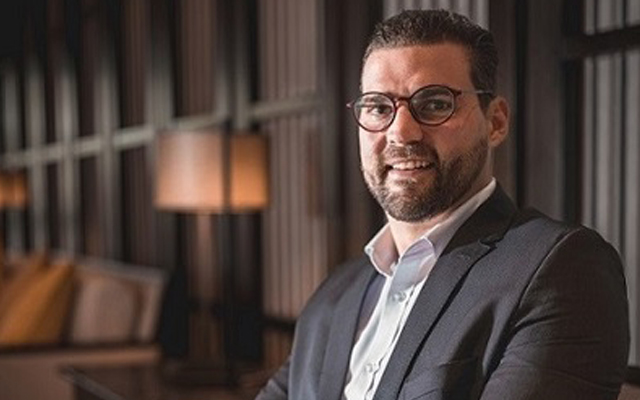
Anantara Riverside Bangkok Resort has appointed Michael Robinson as general manager.
In his new role, Michael will oversee all operations of the property, including accommodation, F&B, river cruise, spa, as well as meeting and event facilities.
The New Zealand national joins Anantara Riverside Bangkok from FCC Angkor by Avani in Siem Reap, where he worked as general manager from 2020.
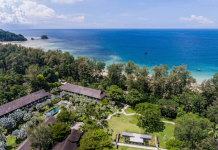
Just 10 minutes from Phuket International Airport on the serene northern coast, this 178-key, Bill Bensley-designed resort offers delegates a quiet, tropical paradise steeped in Phuket’s tin-mining heritage
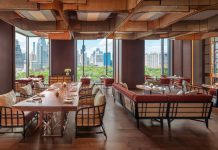
The newly-opened Ritz-Carlton, Bangkok anchors the One Bangkok development with cosmopolitan elegance. Featuring the city's largest ballroom and a spectacular new penthouse suite, it delivers exceptional hardware and deeply authentic, soulful service for business and leisure travellers alike
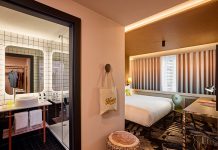
Behind the imposing, Brutalist concrete that defines Zurich’s Oerlikon district lies a surprising secret. While its exterior honours the neighbourhood’s industrial roots, stepping inside Mama Shelter reveals a vibrant, neon-soaked world that is a far cry from its rigid shell





 5. Craft a toy for good





 The New Zealand national joins Anantara Riverside Bangkok from FCC Angkor by Avani in Siem Reap, where he worked as general manager from 2020.