The Ad Museum Tokyo, the only museum in Japan dedicated to the promotion, study and understanding of advertising and marketing, is now available to business events groups by reservation.
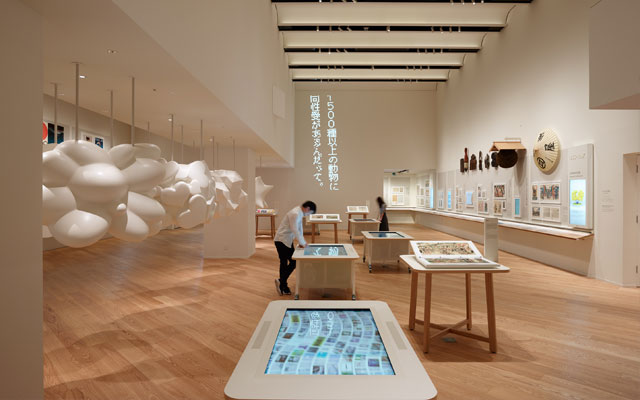
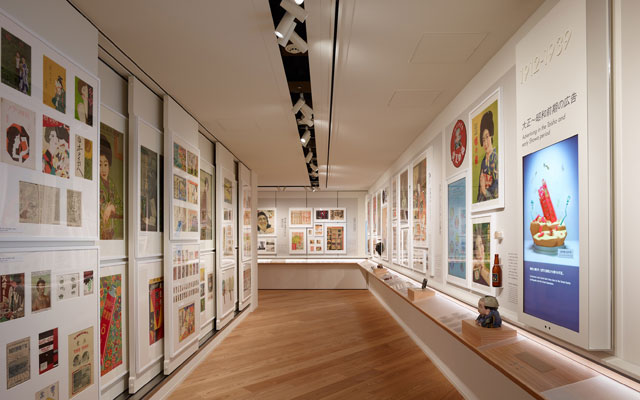
The Shimbashi-based facility is designed so visitors “may encounter new ideas and fresh discoveries”, according to its managing foundation. Its main feature is a permanent exhibition displaying about 330,000 advertising and marketing materials of all kinds, from coloured woodblock prints dating from the early 17th century to posters from recent years.
Ad Museum Tokyoi
1 of 4
By looking at advertising exhibits for the same products that were delivered in different regions of Japan, visitors can also consider how advertising campaigns are created based on people’s possible needs, interests and attitudes.
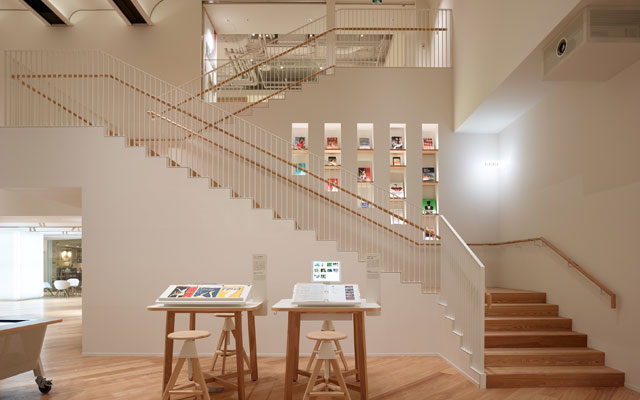
The Ad Museum Tokyo also has special temporary exhibitions, a library, an audiovisual booth and a digital table, where it is possible to watch TV commercials spanning the 1950s to the present day.
According to the foundation, each exhibit has been selected for its “lasting impression”, whether “entertaining, surprising, moving or thought-proving”, making this museum a particularly good incentive or teambuilding option for advertising and marketing groups or other creative teams.
1. Let digital lead the way
Events of all kinds are increasing their reliance on digital technology to do everything from increasing their reach and widening their audience, to personalising and enhancing certain aspects of brand experiences. Digital tech also enables audiences to interact with brands and build brand communities in new ways, and for marketers and event professionals to learn more about audience behaviours.
With all that, it makes sense to take a digital-first approach. Even live, in-person events can be designed and planned around maximising attendees’ digital engagement far beyond the time and place of the actual event.
2. The personal(ised) touch
People have always responded well when they are being noticed and catered to as individuals. Now, technology has enabled brands and event organisers to achieve a degree of personalisation that makes attendees feel that events have been created for them, or on their behalf.
The actual degree of personalisation need only be slight, but if it is applied in the right place in the right way, its impact can run deep. For example, at a Hewlett-Packard (HP) Malaysia Partners Event, each attendee received an AR invitation card with a unique personalised video.
3. Integrate those channels
Whether you call it omnichannel or integrated channel, the essence of this approach is to ensure that all the event’s working parts – digital as well as in-person, online and offline – mesh together seamlessly, offering an experience of equal value throughout.
A recent example was HP’s presence at the Coachella music festival this year. Inside the HP Antarctic Dome, the brand underlined the festival’s and its own commitment to sustainability by presenting REGEN, an immersive 360-degree sensory journey combining tech, art and music. The experience transcended the Dome itself, with a dedicated social media campaign taking it to a worldwide audience. Participants could even create their own sustainable sounds and upload them to social media platforms.
In all, more than 80,000 people visited the HP Antarctic Dome during Coachella, while total impressions – including from social media, the metaverse, and physical site – reached a record-breaking 12 billion.
4. Follow the data
The more audiences digitally engage at events, the easier it is to gather data on their behaviour. But more data does not necessarily mean better knowledge; it is important to analyse appropriately so that useable conclusions can be reached on what worked, what did not, why and with whom.
Some new products are leading the way to make such analyses faster, easier and more scientific. Among those offerings is Pico ExQ Experience Analytics, which uses a proprietary algorithm to measure event performance against real first-party data, yielding clear and actionable answers to business-critical questions.
5. Sustainability lends purpose
More and more consumers are translating their serious concern for the environment to a demand that brands and companies take sustainability to heart.
As events comprise a major brand-audience interface, it is through them that commitments to facets of sustainability such as recycling, responsible sourcing and resource efficiency can be demonstrated.
Sustainability made a big splash in Hong Kong when Articoin, a dedicated digital art platform, collaborated with HSBC to promote 11 exclusive NFT art pieces on display at K11 Museum. The 11 works were ‘previewed’ by projecting them onto the façade of the HSBC headquarters, with the bank also giving away 1,000 non-tradable NFTs as eco-friendly gifts to customers.
Jeremie de Fombelle has been named as The Lux Collective’s chief sales and marketing officer.
With over two decades of leadership and operational experience in luxury hospitality management, he will focus on awareness-driving strategies for the company’s portfolio of brands globally across channels.
Based in Mauritius since 2014, he was most recently regional general manager for Mauritius and Reunion Island for Lux* Resorts & Hotels.
The recovery phase for the exhibition industry is ending in most markets around the world, where global attention has shifted toward future challenges
UFI, the Global Association of the Exhibition Industry, has released the 30th edition of its flagship Global Exhibition Barometer research, where the results highlight the quickening pace of the industry’s recovery in 2022 and a positive outlook for 2023.
While there is strong evidence that Covid-19 is behind in most markets, where the full recovery is expected in 2023, there remain a few markets, including China, where this full recovery is not anticipated in 2023. Globally, the level of operations continues to improve, with a proportion of companies declaring a “normal activity” gradually increasing from 30% in January 2022 to 72% in December 2022 and expected to reach 80% in June 2023 – aligning with pre-pandemic levels.
The recovery phase for the exhibition industry is ending in most markets around the world, where global attention has shifted toward future challenges
Companies from most markets expect to deliver 2022 results close to their 2019 levels. In terms of operating profit, around half of the companies are declaring an increase or stable level for 2022 compared to 2019 levels and increasing to seven out of 10 for 2023. Those results for 2022 were achieved with no public financial support for 69% of companies, and for half of those that did, this aid represented less than 10% of their overall costs.
The most pressing business issues also reflect how the industry is now focusing on post-pandemic challenges and opportunities: “Internal management challenges” (highlighted by 20% of respondents), “Impact of digitalisation” (16%), and “State of the economy in the home market” and “Global economic developments” (both 15% of answers) are the most common ones. By comparison, the “Impact of the Covid-19 pandemic on the business” is now marked by only five per cent of companies as one of the most important issues (compared to 19% one year ago).
Operations The highest levels of “normal activity” for 1H2023 on average are expected in Brazil (98%), Turkey and the US (95%), the UK (90%), Italy and Thailand (88%), and Spain and UAE (85%). In China, only 29% expect a normal activity, and 40% a reduced one.
This overall very positive outlook is driven by the fact that exhibitions can now be held everywhere in the world, except in some places in China. In parallel, new hygiene measures are reported in several regions (in more than 20% of respondents in Malaysia, Saudi Arabia and Thailand). In China alone, as of December 2022, and combining all markets, 55% of respondents declared that exhibitions could be held (usually with hygiene measures), 17% reported that “only local events” were and 28% said that events were still not allowed.
Exhibition organisers who participated in this edition of the Barometer were also asked to evaluate the “hosted buyers” packages, whereby the organiser invites and hosts selected visitors in return for a guaranteed amount of business meetings with exhibiting companies.
Global results indicate that half of the respondents apply this concept, and while one in four of them are happy with the programmes, two-thirds declare having mixed results. Results vary significantly between specific markets, providing insights into opportunities for hosted buyer programmes.
Turnover, operating profits and public financial support Globally, on average and excluding China, the revenues for 2022 and 2023 represent 80% and 94% of 2019 levels.
Colombia, France, Saudi Arabia, Spain, and Turkey have performed well above this average in 2022 and the UK will join that group in 2023.
In terms of operating profit, the markets in all the countries analysed are above average levels in either 2022 or 2023, or both, except China, Germany, Italy, Thailand, and the US.
Globally, four per cent of respondents expect a loss for 2023, compared to 11% for 2022. The highest proportion of companies expecting a loss in 2023 is declared in China (18%), Germany (17%) and Italy (11%).
While the highest proportions of companies receiving public financial support are identified in Europe and Asia-Pacific, there are significant differences across all regional markets, and the percentages of companies declaring that they received “no public support” varies:
from 69% in the US to 100% in Mexico, for North America
from 53% in Brazil to 83% in Chile, for Central and South America
from 12% in Greece to 86% in the UK, for Europe
from 67% in Saudi Arabia to 91% in the UAE, for the Middle East and Africa
from 19% in Malaysia to 100% in India, for Asia-Pacific.
Key business issues “Internal management challenges” is the key business issue for all regions, and it is the most selected issue for most markets. Within “Internal management challenges,” 67% of respondents selected “Human resources” issues, 44% selected “Business model adjustments”, and 31% selected “Finance”.
For Germany, Italy, the UK and the US, however, “Global economic developments” has become the most pressing issue.
An analysis by industry segment (organiser, venue only and service provider) shows no differences with regard to the three most pressing issues, which remain “Internal management challenges”, “Impact of digitalisation” and “State of the economy in the home market”.
On the occasion of the 30th edition of the Barometer research, a special trend review has been undertaken to show how the industry’s priorities have changed in recent years. The analysis of the trend around top business issues over the 2015-2022 period identifies several important shifts:
“Impact of digitalisation/Competition with other media” now ranks as the main issue, with 30% of answers (compared with 14% in 2015).
“Global economic developments/State of the economy in the home market” have dropped from the main issue in 2015 (44% of answers) to 22% in 2021 and 29% in 2022, while the “Impact of Covid-19 pandemic on the business” fell from 29% in 2020 to five per cent in 2022.
And “Internal management challenges” has increased from 14% in 2015 to 20% in 2022.
In parallel, “Sustainability/climate and other stakeholders’ issues” has doubled from four per cent of answers in 2015 to 8% in 2022, while “Competition from within the exhibition industry” has dropped considerably, from 20% in 2015 to less than eight per cent in 2022.
Future exhibition formats: physical and digital events
In addition to the 88% of companies who are confident that “Covid-19 confirms the value of face-to-face events”:
26% (compared to 44% and 63% previously) believe there will be “Less international ‘physical’ exhibitions and, overall, less participants” (with 5% stating “Yes, for sure”, 22% stating “Most probably” and 31% remaining unsure).
57% (compared to 73% and 80% previously) believe there is “A push towards hybrid events, more digital elements at events” (with 10% stating “Yes, for sure”, 47% stating “Most probably” and 25% remaining unsure).
5% (compared to 11% and 14% previously) agree that “Virtual events are replacing physical events”, while 11% are unsure and 84% state “Not sure at all” or “Definitely not”.
The 30th Global Barometer survey, concluded in January 2023, provides insights from 367 companies, across 56 countries and regions. It was conducted in collaboration with 21 UFI member associations.
Dusit International has appointed Makoto Yamashita as pre-opening general manager of ASAI Kyoto Shijo and area general manager – Kyoto, Japan.
Bringing more than 30 years of marketing and operational experience to the role, he will be responsible for spearheading the opening of ASAI Kyoto Shijo and Dusit Thani Kyoto, ensuring both properties meet their financial and operational objectives.
Prior to joining Dusit, Yamashita was area general manager of Mori Trust Hotels & Resorts in Tokyo and Nagano.
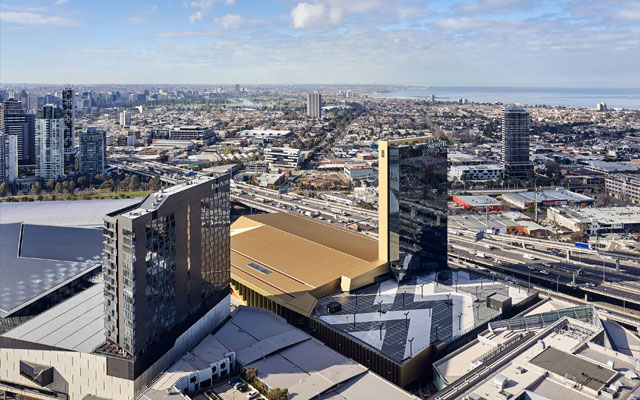
Aerial view of MCEC and its surroundings. Photo credit: Peter Bennetts
The Victoria Tourism Industry Council (VTIC) and Melbourne Convention and Exhibition Centre (MCEC) have created a new industry partnership to support the tourism and business events sector, and its role in attracting national and international visitors to Victoria.
Together, they will collaborate on leadership and development opportunities for the sector.
Aerial view of MCEC and its surroundings. Photo credit: Peter Bennetts
Natalie O’Brien, recently appointed CEO of MCEC, believes the partnership with VTIC offers a great platform to share knowledge, experience and a strategic approach to supporting tourism and events.
“Business events make a huge contribution to the Australian tourism sector, sometimes overlooked. Nationally, business events contribute around A$36 billion (US$25 billion) to Australia’s economy. Pre-pandemic, MCEC alone contributed more than A$1 billion to the Victorian economy, and we’re well on our way to that same level of impact,” O’Brien said.
“This partnership with VTIC ensures we can continue to promote the role of business events and help foster talent development and leadership in the broader tourism space.”
An important aspect of the partnership is MCEC’s support in delivering VTIC’s Vision Summit 2023.
Vision Summit 2023, to be held at MCEC on March 2, 2023, will explore critical shifts in the tourism and events sector and also look to the future to determine how every opportunity can be maximised.
“Without a doubt, our industry in Victoria has rediscovered its mojo – Vision Summit 2023 will consider what Victoria can do to ensure we stay ahead of the pack in our resurgence to global positioning as a destination of choice in Australia,” said Felicia Mariani, CEO of VTIC.
Tourism Australia, a major partner alongside MCEC of the Vision Summit 2023, will update the industry on data and insights relating to industry recovery, while Visit Victoria will outline how these trends will impact Victoria’s strategies and initiatives. Other topics for the Summit include the importance of sustainability in destination choice, a key area of focus for MCEC, which has a sustainability strategy with a target to achieve net-zero emissions by 2030.
The VTIC-MCEC partnership also supports the sector by sharing knowledge and experience and developing skills and expertise to train future industry leaders.
“VTIC’s Melbourne Tourism Leadership Program is a valued programme, developing effective leaders not only for businesses like MCEC but also for the wider industry. We have several graduates of the programme and are delighted to be supporting its continued delivery,” O’Brien said.
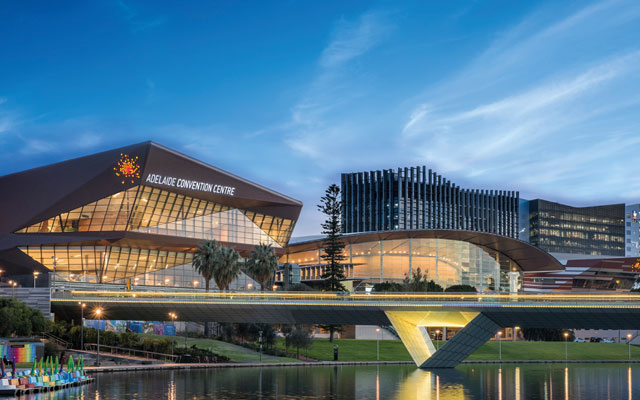
The ACCG is calling for a single, amalgamated peak body to support business events growth; Adelaide Convention Centre pictured
The Australian Convention Centre Group (ACCG), comprising representatives from the nation’s leading convention and exhibition centres, have passed a resolution to support the amalgamation of relevant industry associations, in the interest of the broader event sector.
This follows a similar resolution by the Exhibitions and Events Association of Australia (EEAA) in December, when EEAA members unanimously moved a motion to allow its Board to merge with the Association of Australian Convention Bureaux (AACB) and Australian Convention Centre Group (ACCG), creating a new entity. On January 30, 2023, the AACB also unanimously passed the same motion.
The ACCG is calling for a single, amalgamated peak body to support business events growth; Adelaide Convention Centre pictured
The ACCG, comprised of the Melbourne Convention and Exhibition Centre, International Convention Centre Sydney, Brisbane Convention and Exhibition Centre, Perth Convention and Exhibition Centre, Gold Coast Convention and Exhibition Centre, Cairns Convention Centre, Adelaide Convention Centre and Darwin Convention Centre has echoed the calls from AACB and EEAA to pursue a single, unified voice for the industry.
Business events play an enormous role in Australia’s economy, contributing more than A$36 billion (US$25 billion) nationally in the year prior to Covid-19 But beyond the immediate economic benefits, business events catalyse change and leave lasting legacies, through knowledge exchange, communication of research and subsequent investment in innovation.
Currently, the industry voice is splintered across multiple associations, which can at times make it challenging to advocate the sector’s value.
Advocating for the change, members of the ACCG argued and agree that the business events sector would benefit enormously from a single, amalgamated peak body to support growth and industry development.
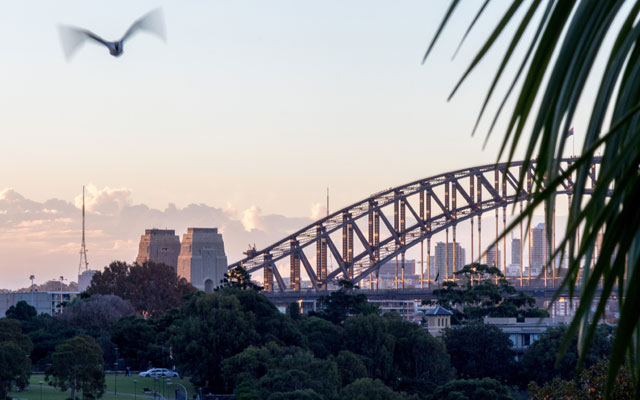
Pipeline of events for Sydney continues to grow; Sydney Harbour Bridge pictured
Business Events Sydney (BESydney) has secured several international bid wins over the festive season that will bring in an additional A$13 million (US$12 million) in direct expenditure to the local economy from 2023 through to 2026.
These wins add to other health and life science events already secured for 2023, which include the FDI World Dental Congress, World Conference on Family Doctors (WONCA) and the World Congress on Safety and Health at Work.
Pipeline of events for Sydney continues to grow; Sydney Harbour Bridge pictured
In 2024, the Global Health Security Conference 2024 will have 800 delegates gathering at the International Convention Centre Sydney (ICC Sydney) from June 18-21, where the conference will generate A$3.4 million for the local economy. The Global Health Security Network connects people from across the fields of public health, medicine, veterinary science, agriculture, government, security, international relations, sociology and anthropology to examine the progress in strengthening health systems and identify the gaps and opportunities for enhancing our ability to respond to future adverse health crises.
Further in 2026, the International Symposium on Pediatric Neuro-Oncology (ISPNO) will attract 800 delegates from June 10-12. Estimated to be worth AU$2 million to the local economy, ISPNO is by far the largest international scientific meeting of multidisciplinary professionals in research, diagnosis, treatment, and rehabilitation of children and adolescents with tumours of the Central Nervous System
“It is great to see a strong global interest in Sydney for health and life sciences events coming through, particularly as the New South Wales Government and the university and private sector are investing in the development of the Westmead Health and Innovation District which will soon be a global centre for new discoveries, commercialisation, treatment, education and training,” said BESydney CEO, Lyn Lewis-Smith.
The festive season also saw the welcome return of the global corporate and incentive event market with BESydney bringing in five major wins with a combined estimated direct expenditure of AU$7.5 million. The events – which include Mahindra & Mahindra Dealers Incentive and Hyundai National Dealers Conference – will bring almost 1,500 delegates from Hong Kong, India, Singapore, UAE, London and Malaysia to Sydney in February, March and April.
Hosted buyer applications have opened for MEETINGS 2023, the first time the event will be hosted in Wellington, New Zealand from June 21-22, 2023.
Organised by Business Events Industry Aotearoa (BEIA), MEETINGS 2023, the event will take place at the new Tākina – Wellington Convention and Exhibition Centre.
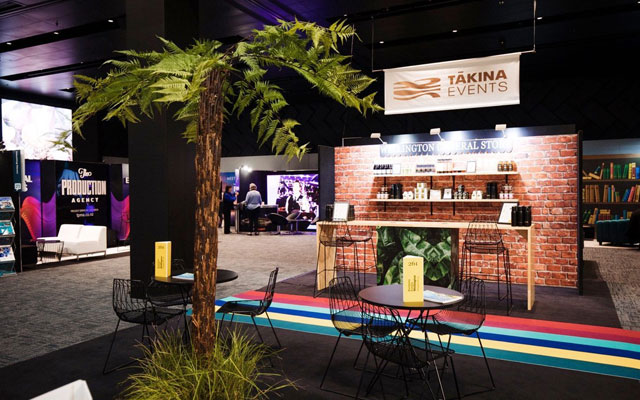
The Takina Events booth at MEETINGS 2022
Fully Hosted Buyers receive complimentary air travel, transfers, accommodation, registration to social events and 30 personalised appointments.
For the first time, event organisers can choose to attend MEETINGS as Semi-Hosted Buyers, which gives them complimentary accommodation, registration to social events and 20 personalised appointments.
“After four years, we can’t wait to welcome back international clients. With support from Tourism New Zealand, we are expecting buyers from key international destinations to visit the show,” said BEIA’s chief executive Lisa Hopkins.
All hosted buyers will be invited to join Business Events Wellington for a day of exploration on June 20, and Australian buyers have the chance to join one of two weekend famils on the weekend before MEETINGS 2023, from June 17-19.
Applications for Hoster Buyers close on April 19, 2023, with limited spaces available.
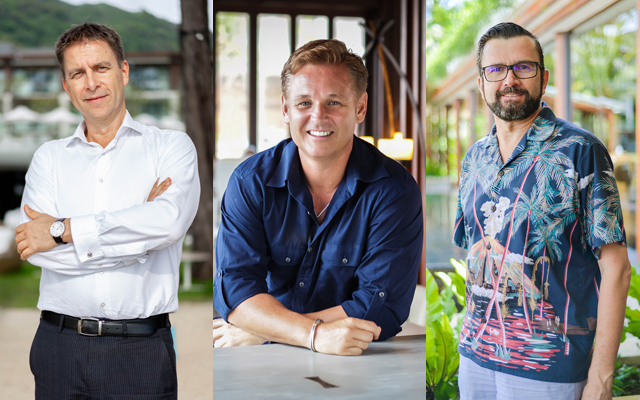
From left: Bjorn Courage; Brett Wilson; and Daniel Meury
The Phuket Hotels Association, a non-profit organisation representing 80 of the island’s hotels and resorts, has reappointed its senior leadership team.
Following a recent election, Bjorn Courage, who also serves as general manager of the InterContinental Phuket Resort, was given an overwhelming vote of confidence to continue in the role of president. Brett Wilson, general manager of the Pullman Phuket Arcadia Naithon Beach, was named as treasurer and Daniel Meury, general manager of the Andara Resort & Hotels, was re-elected as secretary.
From left: Bjorn Courage; Brett Wilson; and Daniel Meury
This move comes at a vital time for Phuket’s hospitality industry, which is enjoying a strong rebound from the global pandemic. The continuity of having Phuket Hotels Association’s executive team remain in place for another term will enable key projects and policies to be implemented effectively.
Just 10 minutes from Phuket International Airport on the serene northern coast, this 178-key, Bill Bensley-designed resort offers delegates a quiet, tropical paradise steeped in Phuket’s tin-mining heritage
The newly-opened Ritz-Carlton, Bangkok anchors the One Bangkok development with cosmopolitan elegance. Featuring the city's largest ballroom and a spectacular new penthouse suite, it delivers exceptional hardware and deeply authentic, soulful service for business and leisure travellers alike
Behind the imposing, Brutalist concrete that defines Zurich’s Oerlikon district lies a surprising secret. While its exterior honours the neighbourhood’s industrial roots, stepping inside Mama Shelter reveals a vibrant, neon-soaked world that is a far cry from its rigid shell






 Based in Mauritius since 2014, he was most recently regional general manager for Mauritius and Reunion Island for Lux* Resorts & Hotels.