



Rooms
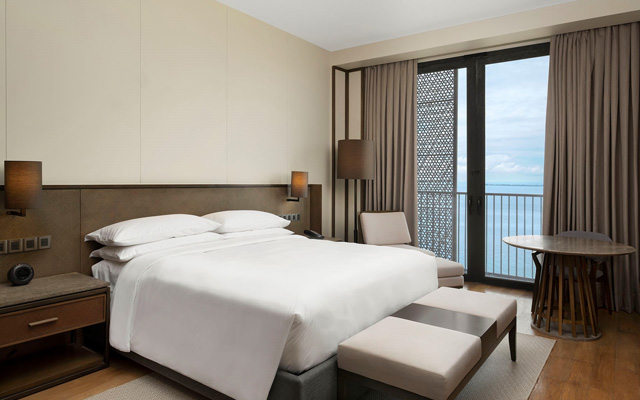
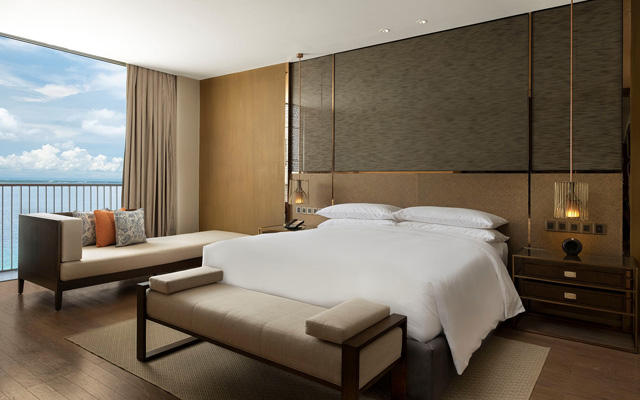
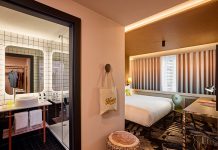
The 48m2 deluxe room that my friend and I stayed overnight has a veranda overlooking the sea and the Olango Island Wildlife Sanctuary. In total, the hotel offers 261 keys, most of which have a sea view.
At press time, 70 per cent of the rooms are available for guests, with the property fully operational by year-end.
What greeted us when we entered our room was a handwritten welcome note from the general manager, chilled bubbly Chateau Gantonnet Bordeaux Blanc, and a wooden tray lavishly laden with premium cheeses, nuts, dried fruits and crackers.
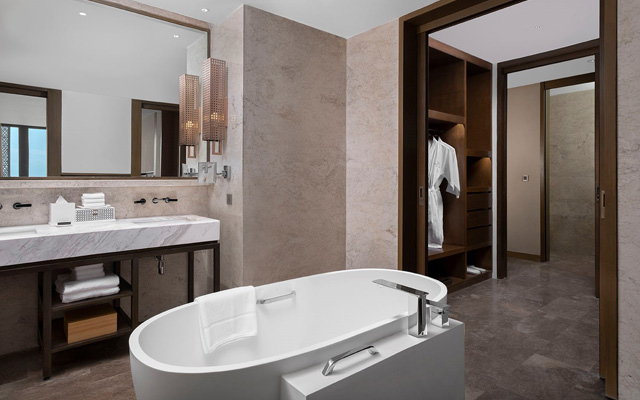
The room offered a generous number of sockets for all sorts of gadgets a business traveller might possess, high-speed Internet and a 50-inch TV. Within the large bathroom were a smart toilet and a huge bathtub.
On the sustainability front, the room also has a sensor that automatically turns off the lights and aircon if it does not detect body heat.
MICE facilities
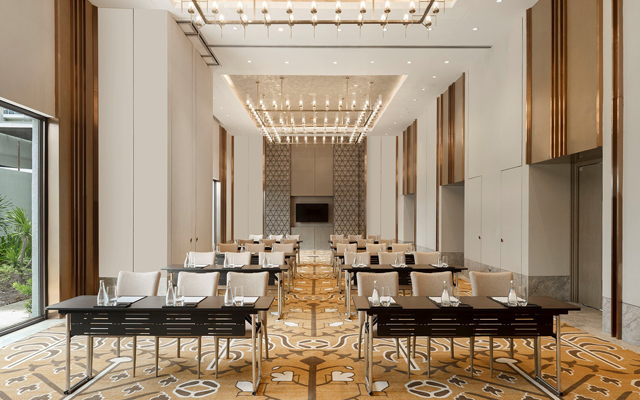
There are eight meeting venues on-site, the largest being the 727m2 Grand Ballroom that can hold 540 pax for banquets. There are also three meeting rooms, a boardroom, and a pre-function area that can be used for pre-event cocktails and networking. These indoor event spaces have been built to make the most out of the sea view, and allow in natural light.
Other unconventional event spaces within the resort include the beach, gardens, or open spaces tastefully dotted with Kenneth Cobonpue installations. There is also a roof deck on the 12th floor of the main building that can be transformed into an outdoor events venue.
Other facilities
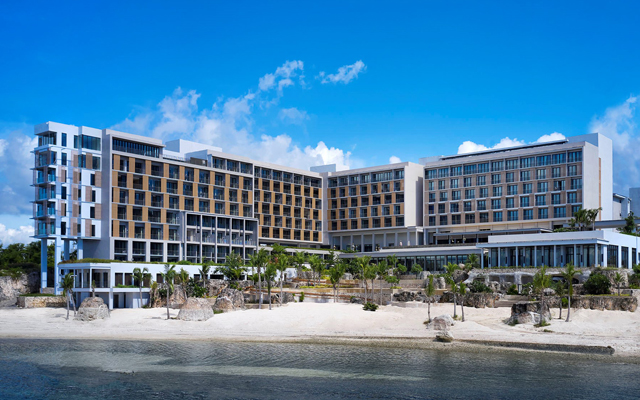
Situated at the tip of Mactan Island with no neighbouring hotels, adds to the resort’s exclusive appeal. The beaches also look relatively untouched.
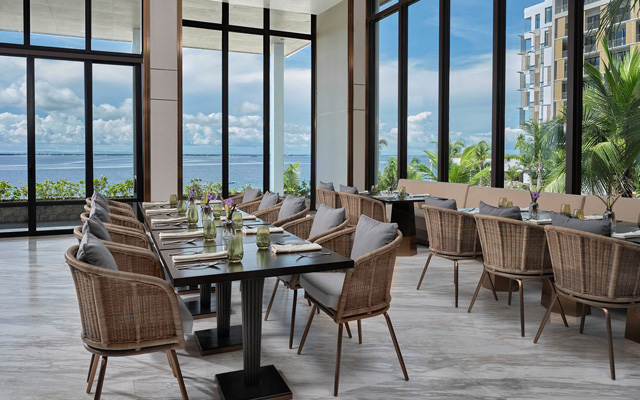
The lobby and reception area look out to the terraced pool, the sea and Olango Island. This relaxing and calming scenery puts me immediately at ease, and I liked the minimalist decor that made use of local materials like wood, wicker, rattan, and solihiya weave.
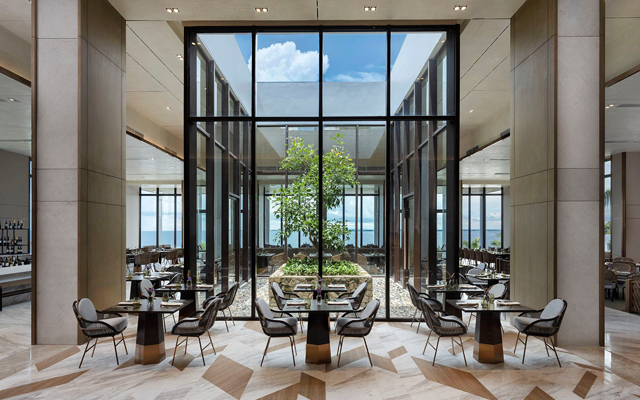
For meals, all-day diner 5 Cien has indoor and outdoor tables overlooking the sea and pools; Buhi Bar serves Mediterranean cuisine; while Sa Sitio is a grab-and-go coffee shop cum deli and bakery. The fourth F&B option, Dip, will serve Nikkei cuisine when it opens in October.
My favourite is the Buhi Bar, as the space is built to resemble a cave, blasted from the rocks originally strewn on the resort’s beachfront. Aside from the main bar, which corporates can have pre-drinks at, there are four mini “caves” for more intimate gatherings.
There are also terraced swimming pools, the Sheraton Spa, and a 24/7 gym on-site. For business travellers on the road with their families, the resort offers children’s pools, as well as an activity room filled with toys, books and games for younglings.
Water activities like island hopping, jet skiing, diving and snorkelling are also available. Soon-to-open is a marine sanctuary, and a jetty port that will ferry guests via water taxis to Mactan city and to the airport via Mactan Wharf.
Service
My travelling companion was feeling unwell when we arrived at the resort. Noticing her gait was unsteady, staff immediately provided her with a wheelchair, and offered the help of an in-house nurse and a visit to the medical centre, both of which we declined. She felt better after having a bowl of porridge, and the general manager continued to check in on her every now and then to ensure she felt better. If that’s not great service, what is?
Verdict
Used to the finer things in life, my globetrotting travelling companion, who is also a Marriott loyalty member, approved of the resort, its facilities and service, calling it the best resort stay she has had in the Philippines. And I completely agree with her.
Number of rooms 261
Contact details
Tel: +63 32-5205500
www.sheratoncebumactan.com













The persistence of “phygital” events, wellness embedded in business event programmes, and inclusivity are three trends that will shape the business events industry moving forward.
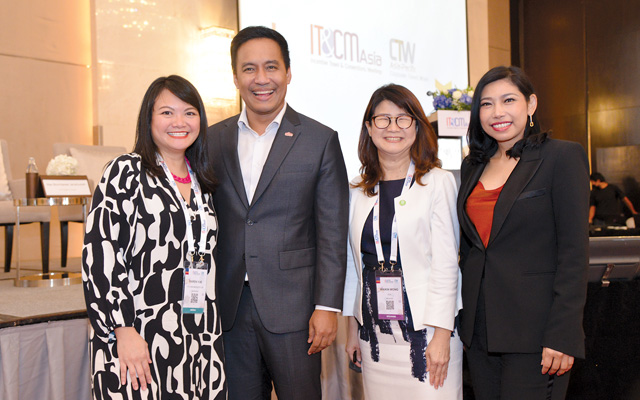
These pointers were identified by Chiruit Isarangkun Na Ayuthaya, president of Thailand Convention & Exhibition Bureau (TCEB), during the opening keynote address at IT&CM Asia 2022 last week.
The first, “phygital” events – which is a blend of physical and digital events – will soon become the norm, Chiruit opined, as organisers strive to create meaningful and immersive experiences.
Digitalisation can also help to expand the audience reach, while contributing to event safety management, he pointed out.
The second trend is the incorporation of wellness into meetings to avoid delegate fatigue and help them to digest information easily. This comes as health and wellness considerations have intensified during the pandemic.
The third trend is inclusivity, which requires events to be accessible for all, “across diverse cultures and backgrounds, regardless of their physical or intellectual limitations”, Chiruit elaborated.
The application of inclusivity in the business events environment also requires the redesigning of programmes and activities to contribute to the livelihoods of the local community.
On this note, Chiruit encouraged planners to think of ways to establish “measurable legacies for the local communities”.
The keynote address was followed by a panel discussion which touched on the revival of the business events industry.
While panellists Max Boontawee Jantasuwan, president, SITE Thailand Chapter; Supanich Thiansing, director of meetings and incentives department, TCEB; and Waikin Wong, regional director Asia Pacific, ICCA all agreed that business events have rebounded strongly and swiftly, obstacles in human resource have placed a glass ceiling on recovery potential.
Illustrating the acuteness of the manpower crunch, Max shared that some SITE Thailand Chapter members have had to turn down business due to staff shortages. He acknowledged that manpower woes are affecting the industry at large, and not just Thailand.
Challenges in staff retention are another reality, he said, adding that the industry must find ways to keep staff loyal and motivated by providing a more conducive work environment that also benefits the business.
Max recommended that talents can be drawn to the industry by emphasising the critical role business events play in national economic health.
Both Supanich and Wong pointed out that the provision of training and upskilling programmes, as well as opportunities for career growth, will also help to attract young talents into the industry.