The annual What About Kuching Festival (WAK2022) will break out of its two-year pandemic-induced hiatus with a fourth edition this October.
Endorsed and supported by the Ministry of Tourism, Creative Industry and Performing Arts Sarawak, WAK2022 has seen strong support from potential programme collaborators.
WAK2022 is a community-driven festival of the arts, culture and lifestyle of the people of Kuching and Sarawak; pictured The Possibility 2.0 Magic Show & Workshop by The Cartisan
Donald Tan, founding festival director of the WAK festival series, said: “At the close of proposal submission on July 31, WAK2022 received 69 proposals from 59 different collaborators covering 111 events of various genres including music, theatre, dance, arts and crafts, gastronomy, literary and culture, and not forgetting sporting events and eco-based adventure activities.
“We are very pumped up to see the amount of support we are getting, not only in terms of numbers but also the very high, world-class quality genres. We will now be closely engaging all collaborators to discuss further details and tighten the loose ends so we are all fully ready.”
WAK2022 is expected to bring a variety of events and activities to Kuching throughout October, making the Malaysian city and the larger Sarawak state even more exciting for visitors.
The final line-up will be announced in September.
Tan hopes WAK2022 will entice visitors who had missed out on some of Sarawak’s most iconic events earlier in the year, such as the Rainforest World Music Festival and Borneo Jazz Festival.
“WAK2022 will be your best opportunity to experience and be immersed in our rich culture and heritage, while satisfying your craving for musical, theatre and fine arts performances as we present both the old and the new. Gastronomy will be a big part of the festival too,” he added.
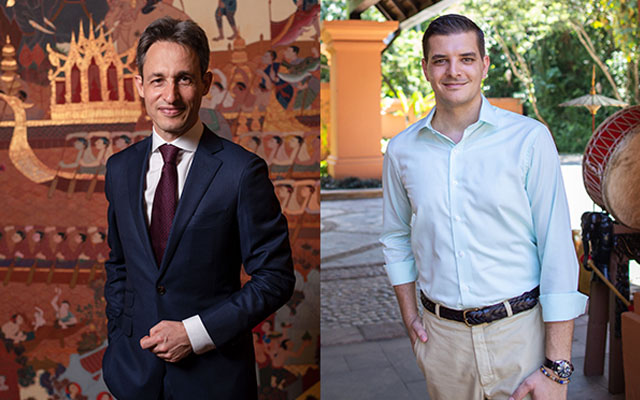
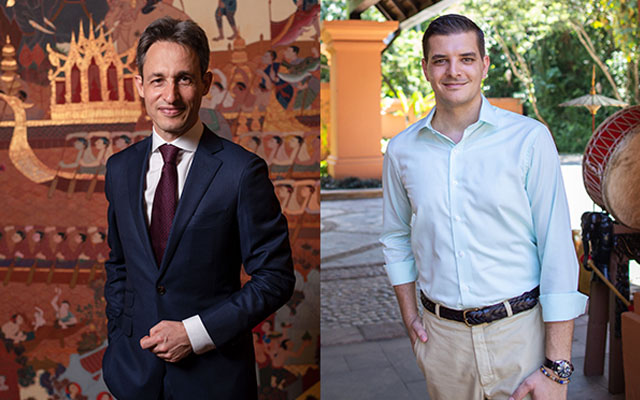
Serge Cuypers has been appointed as the new general manager of Anantara Mai Khao Phuket Villas.
Bringing over 22 years of experience in high-profile international luxury hospitality properties to the role, Cuypers has been a part of the Anantara family for years – his most recent position was general manager of Anantara Golden Triangle Elephant Camp and Resort since 2021.
Meanwhile in Chiang Rai, Arnaud Béril will head Anantara Golden Triangle Elephant Camp and Resort as its new resort manager.
Prior to his new role, Béril was director of operations (executive assistant manager) with Avani+ Samui Resort and the newly-opened Avani Chaweng Samui Hotel & Beach Club.
Two major global travel management companies are reporting continued business travel plans among their clients even as chaotic conditions are reported at some of Europe’s important air hubs, such as Heathrow Airport in London and Amsterdam Airport Schiphol, which were caused by a blend of staff shortages and labour strikes by both airport workers and air crew.
Airlines, such as Lufthansa, British Airways and KLM, have reportedly cut thousands of flights from their summer schedules to cope with the disruptions, while major airport have ordered passenger traffic limits. Heathrow Airport has imposed a 100,000 daily departing passenger cap until September 11, while Amsterdam Airport Schiphol announced on August 2 an extension of its passenger traffic cap – down from the current 72,000 daily departing passenger limit to 67,500 in September and 69,500 in October.
Business travellers are advised to travel light and be more informed to minimise disruptions
Rob Coomer, senior director, global customer management with CWT, said clients are not spooked by these travel inconveniences.
“On the contrary, there continues to be a steady recovery in business travel volumes – including between Asia, Europe, and the US – as people are keen to meet face-to-face,” added Coomer.
While BCD Travel has seen “considerable dialogue” with its clients arising from Europe’s airport conditions, Emanuel Tzafaris, vice president, supplier relations, Asia Pacific, told TTGmice that customers are not discouraged from travel. They are, however, re-evaluating when they will travel and requesting for more pre-trip information to help them “prepare for and navigate the challenges”.
Travelling under current challenging conditions requires a change in behaviour, noted corporate travel specialists who spoke to TTGmice.
Coomer said most business travellers are flying with carry-on baggage only and checking-in online to avoid multiple queue points at the airport. Travellers in premium cabins are also utilising fast-track security and immigration clearance should these be available to them at airports.
Tzafaris: business travellers are re-evaluating when they will travel
BCD Travel is advising clients to travel light where possible. Tzafaris said: “We know of clients missing scheduled engagements at their destination because it took much longer than normal for their checked baggage to arrive, and in some cases the checked baggage was lost altogether. While these are not unique problems, the chances of them occurring are much higher than normal at the moment due to the challenges the airports and airlines are facing.”
At the same time, with business travellers competing with leisure travellers for the same seats in a marketplace that is hit by demand outpacing supply as well as airport caps, BCD Travel is urging clients to plan and book their flights well in advance to avoid high ticket prices.
Uncertainties in the post-lockdown travel environment, largely stemming from the severe manpower shortage that has impacted the entire travel ecosystem, have underscored the importance of travel agents. Furthermore, some travellers are “out-of-practice” when it comes to getting back on the road, observed Coomer.
“For example, they may have forgotten their company’s travel policy or have expired travel documentation and credit card information stored in their travel profiles,” he said. “CWT has been rapidly scaling-up its travel counsellor teams, not only to match the rebound in travel volumes, but also due to the fact that travellers are calling us more frequently and for longer durations than before the pandemic as travel arrangements are still more complex than they used to be.”
Travel managers are also more focused than ever on helping clients manage rising costs of travel in a volatile environment, while advancing their travellers’ well-being and sustainability objectives, stated Chris Sabby, director of CWT Solutions Group.
The Malaysia Convention & Exhibition Bureau (MyCEB) has reported that 18 international business events will be held in the country in August 2022, a sign of the country’s business events industry bouncing back.
These business events (14 conventions and four trade exhibitions) are expected to bring together close to 24,000 total delegates, which is estimated to generate more than RM56 million in economic impact to the Malaysian economy,” Nancy Shukri, the minister of tourism, arts and culture (MOTAC) Malaysia said in a press release.
Nancy: MyCEB helps to generate more business-to-business leads and creates endless opportunities for the country
Events include the Malaysian Society of Anesthesiologists & College of Anesthesiologist Annual Scientific Congress, Asia Pacific Glaucoma Congress (APGC), and IPMEX Malaysia 2022.
The Malaysian Society of Anesthesiologists & College of Anesthesiologist Annual Scientific Congress 2022 is a hybrid conference which will have networking, provide participants with the most up-to-date information on anesthesiologists’ management, and encourage more doctors to choose a career in anaesthesia.
Meanwhile, APGC 2022 brings together stakeholders from the Ophthalmology field with a focus on glaucoma, providing a platform for delegates to collaborate, and share experiences, knowledge, research results and recent innovations.
Lastly, IPMEX Malaysia 2022 will bring together print, paper, label, package, corrugated printing, signage, and advertisement industry professionals to develop a strong network and collaborate to bring out the best in digital and print technology.
Before the pandemic, Malaysia in August 2019 welcomed a total of 14 conventions and exhibitions.
“This is a strong testament that our industry players are resilient, and the support received from various government agencies is reaping results. We view these positive results as very promising for Malaysia and we hope to continue these efforts to progressively realise our mission,” Abdul Khani Daud, CEO of MyCEB added.
GBTA Foundation’s newly appointed board of global travel industry leaders will provide governance on climate action, DEI and workforce development initiatives
The Global Business Travel Association has re-established its charitable arm, the GBTA Foundation.
The GBTA Foundation will focus on the strategy and execution of GBTA’s global sustainability programmes, supporting initiatives related to climate action, as well as diversity, equity and inclusion and other talent-related topics via education, research, and advocacy.
GBTA Foundation’s newly appointed board of global travel industry leaders will provide governance on climate action, DEI and workforce development initiatives
“We are excited to re-establish the GBTA Foundation within a fine-tuned scope of ‘people and planet,’” said Suzanne Neufang, CEO, GBTA. “It’s an important moment in GBTA’s 54-year history, as we renew our commitment to creating lasting, positive impact. The GBTA Foundation, along with its newly appointed Board of Directors, will focus on making a positive impact in our industry and beyond.”
GBTA’s Sustainability Program initiative, which launched in late 2021 to build a greener future for business travel and help reduce its climate impact, will now be managed under the Foundation, as well as GBTA’s existing people-related programmes, WINiT by GBTA and GBTA Ladders.
Paul Abbott, CEO of American Express Global Business Travel, will serve as the chairperson of the GBTA Foundation Board of Directors for the next two years.
Meanwhile, leaders from across the global travel industry with interests and strengths in key ESG (environmental, social and governance) areas will serve as the Board of Directors for the Foundation for staggered terms of one and two years:
Leslie Andrews, director of global travel category, JLL (two-year term)
Erica Gordon, senior vice president, global head of public affairs and ESG, Hilton (one-year term)
Scott Kirby, CEO, United Airlines (two-year term)
Darragh Ormsby, global travel manager, Google (one-year term)
Delphine Millot, managing director, GBTA Foundation (ex-officio)
The Board held its first meeting in July 2022 and is prioritising Foundation governance, providing guidance on GBTA’s existing people and planet programme efforts, and determining strategic areas of focus and priorities within environmental and human sustainability initiatives for 2023.
The GBTA Foundation was originally formed in 1989 as a US 501c3 charitable arm of GBTA. Until early 2018 when it was put on hiatus, the GBTA Foundation was the centre of all GBTA education and research. The education and research areas of GBTA were subsequently moved to the core GBTA organisation’s 501c6 tradeshow arm where they will continue to reside when not related to the “sustainability of people + planet” focus of the Foundation.
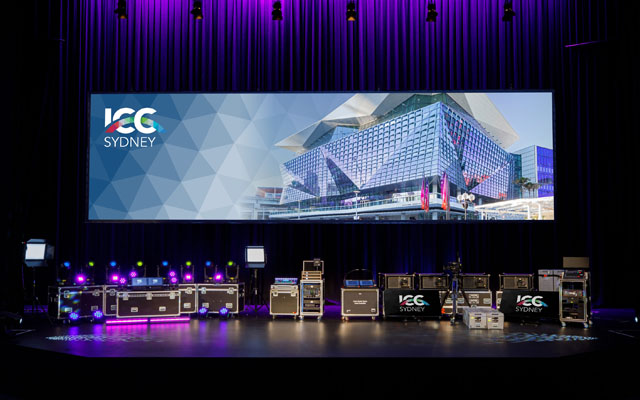
Events at ICC Sydney will feature best-in-class equipment
International Convention Centre Sydney (ICC Sydney) has invested A$1.5 million (US$1 million) in new industry-leading audio visual (AV) equipment to expand and upgrade its technology inventory.
Backed by its team of AV experts, the investment enhances ICC Sydney’s comprehensive, high-tech event delivery solutions to meet the returned demand for in-person events with state-of-the-art equipment including 32K lumens laser projectors, vision processing and control, projection screens, laptops, foldback monitors, cameras, audio and lighting consoles, radio microphones, moving light fixtures and draping.
Events at ICC Sydney will feature best-in-class equipment
The investment builds on the venue’s recently expanded range of 1.9-millimetre pitch modular and customisable LED screens.
ICC Sydney’s director of audio visual services, Brian Nash, said the team’s expertise coupled with the additional equipment ensures the venue remains at the forefront of the industry, continually setting new benchmarks for delivering events.
He added that ICC Sydney will also continue to support the next generation of technical professionals with vocational training.
“Adding to the learning and development opportunities available to the team through ICC Sydney’s Academy of Extraordinary, we are proud to have recently collaborated with vocational education providers to onboard seven AV trainees as part of our inaugural Professional Growth Traineeship Program,” Nash said.
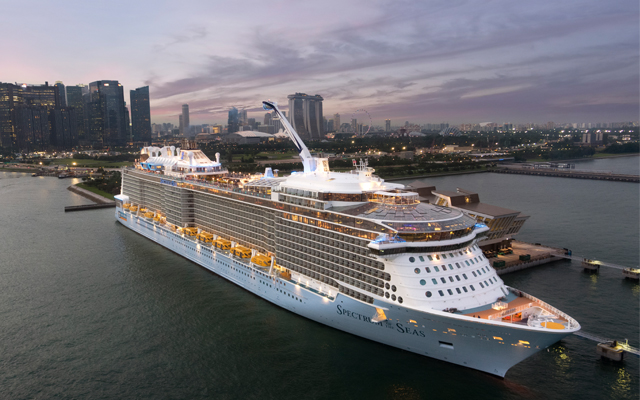
Spectrum of the Seas with the Singapore skyline in the background
India’s largest travel association TAAI (The Travel Agents Association Of India) will be holding their 66th Convention in Singapore from August 22-25, 2022.
Offering a different experience, the annual convention will be held onboard Royal Caribbean International’s Spectrum of the Seas, and will begin and end in Singapore. Delegates will have the chance to explore Singapore, as well as Penang, Malaysia.
Spectrum of the Seas with the Singapore skyline in the background
Jyoti Mayal, president of TAAI, is inviting members to meet face-to-face to rebuild their networks and relationships post-lockdown.
She shared that the close proximity of Singapore, and the opportunity to promote regional tourism will help to strengthen bilateral relations, develop trade, investments and tourism.
According to The Economic Times, the association announced Sri Lanka as the host in April, but amid the political unrest and volatile situation, decide to postpone the convention.
For many companies, business travel is key to regaining post-pandemic momentum. But just as business leaders get ready to take on new frontiers, 2022 brings global inflation causing costs to increase all around and the Asian Development Bank (ADB) recently reviewed and increased their inflation forecasts by ~13 per cent for both 2022 and 2023.
Travel is no exception; with the cost of travel increasing +27 per cent in some regions due to (Covid & Russia-Ukraine conflict-related) lower capacity, high demand and a fundamental increase in provider costs, for example, airline fuel has increased by 35 per cent.
Beating travel inflation takes some work
But business must go on and, the past two years have taught us, that sometimes there are no substitutes for meeting in person.
Here are some ways your company cut travel spending without compromising on effective travel.
1. Planning early
Planning ahead means booking flights and hotels well in advance to get the best deals possible. It also means setting a budget before booking anything because this will help you figure out what accommodation and commute options suit your needs best.
We know making early travel plans isn’t the most ideal in a fast-paced business landscape. Schedules are subject to change and cancelled travel plans at the last minute can incur hefty losses for your company. But we’re here to say planning your employees’ travel calendar months ahead of time can help you save money. You get to take advantage of early bird travel prices and secure your top hotel and flight seat choices.
This is the most straightforward advice, but implementing it is not necessarily easy unless you use a travel management solution with flexibility built-in. For most travellers, a flexible travel solution can save you up to 50 per cent vs booking a week or less before departure.
2. Effective policy
Employees find it difficult to understand and follow policies if the guidelines are confusing and frequently updated. This is all-too-common when using manual methods to enforce policies.
If you automate your business travel policy, then you can monitor all spending on travel more effectively and ensure compliance with company policies. To achieve this and beat travel inflation, a tech-driven travel management solution like TruTrip allows you to customise your travel blueprint down to granular options.
3. Trim around the edges
Knowing exactly how much each trip costs empowers you to make informed decisions about which destinations are worth visiting. This ensures that every penny spent on travel goes towards achieving an important objective for your company.
Calculate the minimum viable travel cost for the essential options your company policy permits, then compare it to the actual current cost. Keep in mind other expenses beyond the actual travel costs, such as charges for cancellations and rebookings, the outlay for software solutions, and even manpower costs.
TruTrip identifies the challenges travel managers need to overcome in this ever-changing climate
4. Opt for low-cost carriers
Low-cost carriers offer a range of benefits, with lower fares being the most prominent. With this option, you can often find more cost-effective deals than traditional carriers while still maintaining good service levels.
These carriers are hardly the preferred option for most business trips, though. However, for shorthaul trips, they offer the best value for money. Your employees will still get to their destination in time and with reasonable comfort levels.
5. Alternative accommodation
There are a growing number of alternatives to hotels that can help you keep costs down while ensuring your travellers’ relative satisfaction. Long-stay apartments, boutique hotels, hostels, bed-and-breakfasts, and Airbnbs are great examples of this.
Group collaboration trips, in particular, can soar to very high prices when you book hotels for teams. But you’d discover that these alternative accommodation options are also comfortable and they even ensure better flexibility that could help teams form stronger bonds.
6. Plan stays along key public transport routes
Another way to minimise the impact of travel inflation is to consider lodging your travellers outside the main city centre. This probably sounds counterintuitive at first. But consider this: getting your travellers accommodations outside the city centres but within easy reach of public transport, such as an express bus, can help you save on exorbitant hotel costs. Because you are planning along the key public transport routes, your travellers won’t have to worry about their commute to meeting venues.
7. Prioritise your travel based on impact
Frankly, there is an overdose of meetings in the corporate world. Yet, despite the endless opportunities for business interactions, both physical and virtual, it still seems difficult to get anything done. This means one thing: no meeting is important enough if it does not generate genuine collaboration.
If you question the methods and impacts of your meetings, you might discover that some interactions shouldn’t have been meetings at all and some goals can be achieved more effectively without meeting physically.
Simply prioritising meeting objectives can cut your travel spending significantly and raise your company’s productivity.
Clearly, beating travel inflation takes some work. The key to success is setting objectives for lower spending, ensuring visibility into your travel expenses, and enhancing reporting. The right travel management integrations help you do just that and there’s no better time than now to rethink how you do business travel.
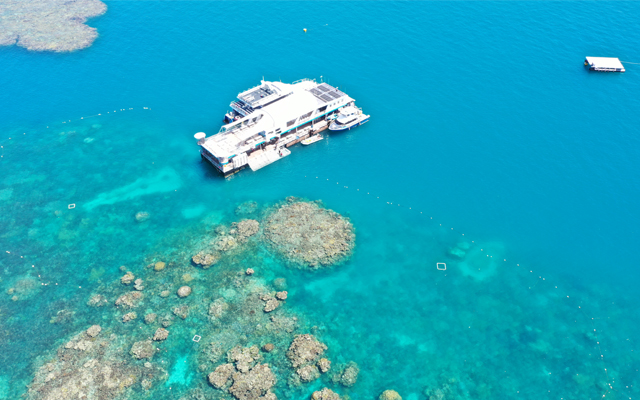
Reef Magic, owned by leading Australian adventure and leisure tourism company, Experience Co., has begun operations on the Great Barrier Reef.
The three-level floating platform is based at Moore Reef, a large horseshoe-shaped reef system 45km offshore from Cairns. The 1,000m2 activity pontoon will provide capacity for up to 250 guests who can enjoy guided snorkelling, and introductory and certified diving.
Helmet Diving is also available using an underwater platform that loops around the pontoon, offering one of the longest circuits on the Great Barrier Reef.
Local Traditional Owners will work closely with Experience Co’s marine biologists to offer guests a narrative of Indigenous knowledge along with western science.
Guests wanting to stay dry can experience the Reef via the semi-submersible, glass bottom boats or enjoy the large air-conditioned underwater observatory which features floor-to-ceiling windows.
In between activities, a sundeck complete with sun loungers and shaded retreat areas invites passengers to lie back and relax in comfort while admiring the views of the outer reef. Onboard catering from Ochre restaurant in Cairns will provide morning and afternoon teas, as well as hot and cold lunchtime offerings featuring Indigenous flavours such as Lemon Myrtle Roast Chicken Breast and Native Dukkah Crusted Smoked Kangaroo Loin. A fully stocked licenced bar will complement the culinary treats.
Adding to the guest experience is a purpose-built onboard marine science laboratory. Marine biologists will be available to take guests through the Reef research and conservation work being done onboard. Numerous science groups will utilise the laboratory with onboard accommodation allowing for multi-day stays during major reef events such as coral spawning.
With sustainability as a priority in its design, the day-to-day operations of the platform will focus on reducing the impact on the environment with three wind turbines, 16 solar panels and, where possible, electricity generation to power the pontoon – a first for the region.
Reef Magic pontoon experiences will depart from the Cairns Marina at 09.00 and return at 17.00. Prices start from A$139 (US$96) per person.
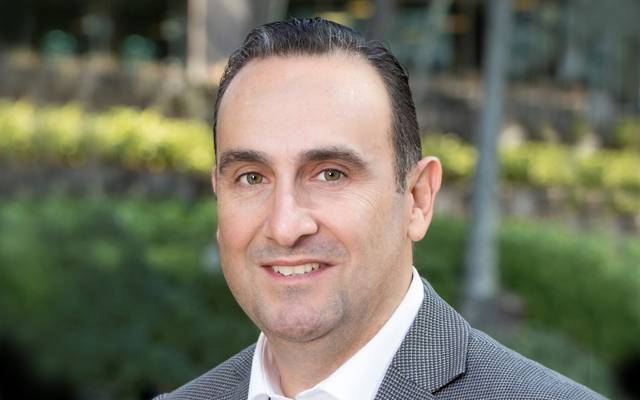
Kung Teong Wah has been appointed general manager of Parkroyal on Beach Road.
Amassing 30 years of experience in Asia and Singapore’s hospitality scene, Kung was a cluster general manager with Millennium Hotels and Resorts prior to joining Parkroyal on Beach Road.
Having started his career as a chef, Kung has since received many accolades throughout the course of his career.
He is also a board member of the e2i Employment & Employability Institute and chairman of the Institute for Technical Education (ITE) Hospitality Advisory Board Committee.
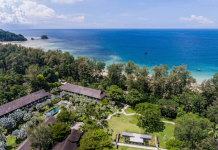
Just 10 minutes from Phuket International Airport on the serene northern coast, this 178-key, Bill Bensley-designed resort offers delegates a quiet, tropical paradise steeped in Phuket’s tin-mining heritage
The newly-opened Ritz-Carlton, Bangkok anchors the One Bangkok development with cosmopolitan elegance. Featuring the city's largest ballroom and a spectacular new penthouse suite, it delivers exceptional hardware and deeply authentic, soulful service for business and leisure travellers alike
Behind the imposing, Brutalist concrete that defines Zurich’s Oerlikon district lies a surprising secret. While its exterior honours the neighbourhood’s industrial roots, stepping inside Mama Shelter reveals a vibrant, neon-soaked world that is a far cry from its rigid shell





 Meanwhile in Chiang Rai, Arnaud Béril will head Anantara Golden Triangle Elephant Camp and Resort as its new resort manager.






 Having started his career as a chef, Kung has since received many accolades throughout the course of his career.