


New Zealand offers the ultimate escape

Brought to you by Tourism New Zealand
- Do you need to reward your top achievers for their hard work during the pandemic?
- Retain your best staff during ‘the Great Resignation’?
- Reconnect with and revive staff members who’ve been limited to working online?
Choose a breath of fresh air and plan your next incentive in New Zealand. Escape the crowds on a trip full of exclusive outdoor activities designed to bond and inspire teams.
Revitalising comes naturally in New Zealand
New Zealand’s stunning natural landscapes offer a wide range of incentive activities to suit anyone’s idea of a restorative trip and ensure your workforce returns refreshed and recharged.
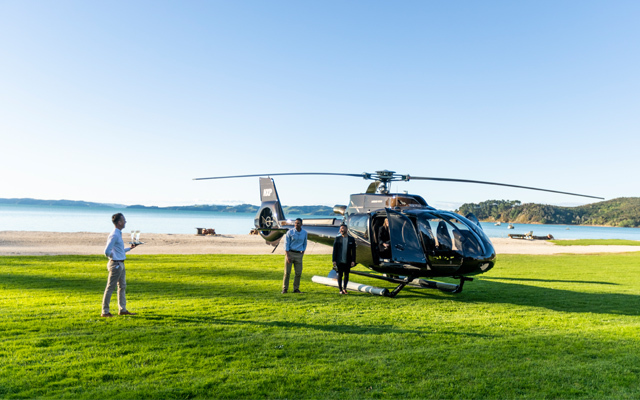
Whether that’s sinking into a yoga pose on the beach at a five-star wellness retreat; sinking a fishing line off a luxury charter yacht into a pristine lake; sinking a putt on a cliff-top golf course; sinking a glass of Pinot Noir in a picturesque vineyard; sinking into the restorative waters of a geothermal hot pool; or even sinking some money at a high-end boutique, New Zealand can offer it all.

Care and connection
New Zealand is a place to make deeper connections: With nature, with our people, with your colleagues.
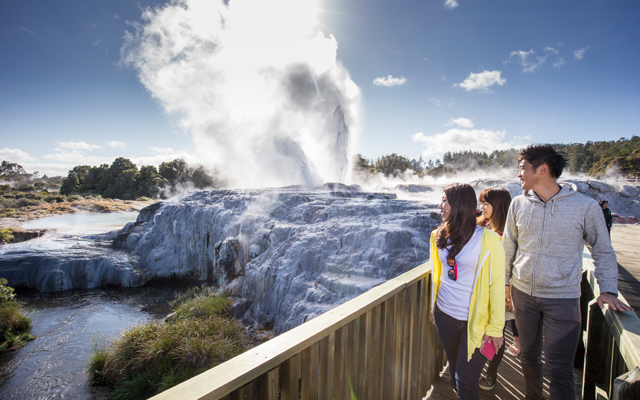
Immerse your group in the beautiful surroundings. Spot whales or dolphins, walk amongst native birds in the wild, or simply admire the fantastic scenery and make time for reflection and motivation.
Immerse your delegates in New Zealand’s unique Māori culture. Incorporating Māori values and activities into your itinerary not only creates a more authentic New Zealand programme but allows you to emphasise your own brand and team values.
R and R – return on investment and return on objective
Rest and relaxation aside, New Zealand can tailor an incentive to best suit your objectives and exceed your expectations.
From a luxe and high-end reward programme, to focusing on team bonding and building loyalty, we can help you plan an itinerary that delivers.
In New Zealand, everything’s close, allowing you to add variety to a programme.
Accommodation options are many and diverse, from five-star global brand hotels to boutique luxury lodges. Food and beverage choices are fresh and fabulous and cater to any taste. Enjoy amazing local seafood and meat, delicious produce, and world-famous wine to celebrate your team’s achievements.

Create an unforgettable experience unlike any other.
Ready for the incentive of a lifetime?
For more inspiration, check out The Ultimate Reward – an incentive in New Zealand below:

To discuss an incentive itinerary tailored to your team and objectives, contact:
Edward Kwek
Trade Manager Business Events
Tourism New Zealand
Contact: +65 9152 9122
Email: Edward.Kwek@tnz.govt.nz
Website: businessevents.newzealand.com
TTGmice online news bulletin takes a break

TTGmice online news bulletin will go on a break for the Labour Day and Hari Raya Puasa public holidays, stretching from May 1 through May 3, 2022.
We will return to our regular online news bulletin on May 5.
We wish all our Asian readers a long and meaningful holiday, and all our Muslim readers, a blessed and illuminating Hari Raya.
Event venue revenue expected to surpass 2019’s by 2023: IACC study

Two-thirds of venues say they will recover to 2019 meeting revenue levels in 2022 or 2023, with Danish and Australian venues predicting the fastest recovery, according to the International Association of Conference Centres’ (IACC) annual Meeting Room of the Future Barometer 2022.
Respondents globally reported that 2023 would be the first year to surpass 2019 meetings and business events revenue levels. Predictions did differ slightly by country, with projected revenues in Denmark to surpass 2019 levels as early as 2022 while the Americas had a slightly longer outlook with revenues not returning to pre-pandemic levels until 2024.
The study, which is financially supported by IACC’s partners Encore Global, Benchmark Hospitality, Flik Hospitality Group/Rapport and Aramark Conferencing, shows that in 2021, average meeting and business events revenue was 45% lower than 2019 levels but in 2022, this percentage is expected to shrink to just 8% below 2019 levels.
Sustainability continues to be an emerging topic, with some improvements made since the 2021 report. The report shows that, in general, there is more of a focus on environmental and social responsibility at venues in Europe and Australia when compared with North American venues. 46% of respondents to this year’s survey reported that they are receiving increased requests from clients to either state or provide social responsibility and environmental credentials.
There is one sustainable practice where venues have shown considerable improvement since 2020, and that is the ability to donate unused food to local community outreach programmes. More than 50% of responding venues report this option compared with only 23% of venues in 2020, and North American venues reporting a greater likelihood of offering healthy food options and the ability to donate unused foods than other regions.
The study further supports the gradual return to meetings weighted towards more in-person interactions. In 2021, 30% of respondents reported that more than 90% of their live meetings and events also offered virtual access. In 2022 this percentage has dropped to 19%. This is corroborated by IACC’s report, The Future of the Meeting Industry, from February 2022, which showed that the value of human interaction is ranked the highest of seven factors when considering attending an in-person meeting, above expanding one’s network, scheduling and cost of attending. Collaboration with colleagues is also highly ranked.
Talent shortages across industries have been dominating headlines and while the meetings industry is not immune to the challenges of attracting and retaining workers, operators are showing optimism that they will be able to find employees to keep their venues running successfully. The study predicts that talent shortages will be alleviated over time, and overall, respondents do not anticipate that workforce shortages will negatively impact their ability to meet client and attendee needs. As 2022 unfolds, 55% of respondents reported that their venue has or will return to full-staffing levels by the end of 2022.
The survey ran over a three-week period in March 2022, with 87 venue operators from three continents (Americas, Europe and Australia) taking part in the research study.
The full report is available at here.
Event enquiries, bookings climb as Thailand eases arrival requirements
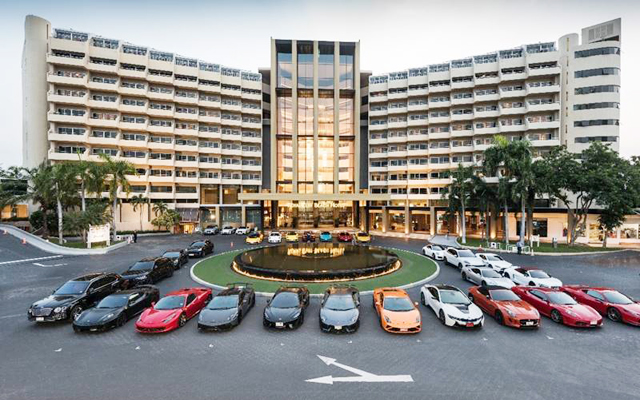
Short days after Thailand announced the removal of on-arrival PCR testing and relaxation of insurance demands on visitors from May 1, hoteliers in the destination say a positive impact on events is already visible.
Royal Cliff Hotels Group, which owns and operates a collection of luxury hotels and beach resorts in Pattaya, has “some exciting bookings lined up”, shared CEO Vitanart Vathanakul.
They include the Bare Knuckle Fighting Championship in May, the Club 8ight Supercars event in June, and the Bill & Melinda Gates Foundation’s International Conference on Family Planning in November.
“We hope (the International Conference on Family Planning) will attract up to 5,000 people,” said Vitanart.
Ross Park, director of sales & marketing at The Athenee Hotel, a Luxury Collection Hotel, Bangkok, said the first two months following May 1 will be important.
“The hotel has seen a large number of enquiries in the MICE sector and incentive travel is returning very quickly, with many in-person meetings and events confirmed and re-booked. We expect to see the first large-scale overseas event within the first two months of the removal of Test & Go, and hope to continue to build from there,” he told TTGmice.
The Slate Phuket has also reported positive impacts from the relaxation of travel requirements – two incentive groups have confirmed their arrival in August, revealed general manager Claude Sauter.
While there has not been a surge in event bookings at Carlton Hotel Bangkok Sukhumvit, general manager Mark Bulmer said enquiries are trending up since the announcement.
But it is “too early to tell” the true impact of the deregulation, Bulmer added.
For Thailand’s business events industry to return to its previous levels of success, hoteliers concur that the Thailand Pass and compulsory travel insurance are barriers that must be removed. They state that it is still far easier for event groups to choose another destination where there are none of such restrictions.
Business events pick up pace in the Philippines
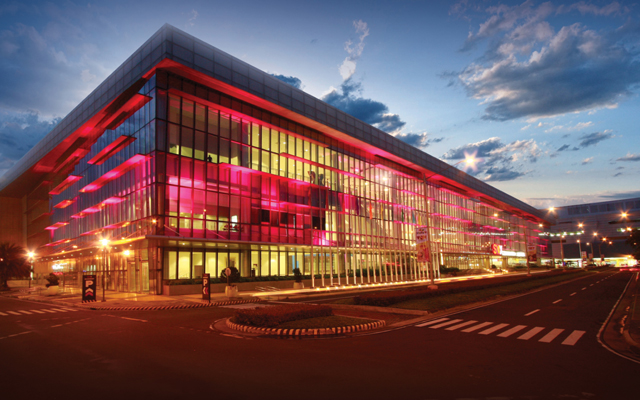
International business events are returning to the Philippines as the country reopened her borders and permitted venue operations at full capacity since a couple of months ago.
“Event suppliers and organisers are starting to be confident enough to start investing in local events,” said Walid Wafik, senior vice president of SM Hotels and Convention Center, whose seven convention centers are all allowed to operate at full capacity.
Wafik told TTGmice that although 90 per cent of events at SMX Convention Center Manila are local activations, they draw many international exhibitors.
While there are no international events in the immediate future, some enquiries are emerging.
Ex-Link Events business organiser, Orly Ballesteros, expressed intentions to “implement projects we suspended because of lockdown and capture more clients eager to be in the Philippines for their events”.
Angel Ramos Bognot, president, Afro Asian World Events president, confirmed that the first Global Women Empowerment Summit, postponed from last year, will be held for 12 days from May 29 to June 9 in Manila, Bohol, Cebu and Davao.
Enrique Florencio, new secretary general of Association of Development Financing Institutions of Asia Pacific, said ADFIAP’s 4th annual meeting will be held in Manila this October.
Among the events with foreign participation this year are the 4th Asian Defense and Security, Crisis and Disaster Management Exhibition and Conference starting April 27 and ending April 29; Philconstruct Manila in November, which adopted a hybrid format over the last two years; and Philconstruct in Clark in June.
GBTA notes double-digit surge in business travel since February

Business travel is surging forward, international travel is returning, and despite new challenges, industry recovery is entrenched, observes the Global Business Travel Association (GBTA) in its latest April Business Travel Recovery Poll.
In addition, corporate travel policies are undergoing a revamp and employees are broadly willing to travel for business, found the survey.
“We’re seeing significant gains in the return of business travel, especially over the past month or two. GBTA’s global data shows more companies are allowing domestic and now also international employee travel.
“Booking levels and travel spending continue to return, and there’s high levels of optimism and employee willingness to travel for business. This comes even as the industry faces challenges beyond Covid-19, including rising fuel prices, inflation, supply chain disruption and war in Ukraine,” said Suzanne Neufang, CEO, GBTA.
Double-digit increments, international travel jumps
Companies that report they at least sometimes allow non-essential domestic business travel has increased to 86%, up from 73% in GBTA’s February poll. International travel made a big jump with 74% reporting their company now allows it, up 26 percentage points from February.
Less cancellations, more travel
Companies continue to resume international business travel, with only 45% saying they have cancelled or suspended most or all international business trips, 27 points less than the 71% in February. In addition, only one in five respondents (20%) report they have cancelled or suspended most or all domestic business travel, compared to 33% in February.
Of the companies that previously cancelled or suspended most or all trips to a specific region/country, 75% plan to resume domestic travel and 52% international travel in the next one to three months.
Corporate travel bookings return
A majority (88%) of suppliers and TMCs report their bookings have increased in the prior month. This is much higher than the share that said the same in February (45%). On average, travel buyers say their company’s travel bookings are currently at 56% of the pre-pandemic level, up 22 points from February.
Spending trends up
When asked to characterise their company’s spending on business travel compared to 2019, on average, respondents expect their company will be back to 59% of their pre-pandemic spend by the end of 2022, and will reach 79% by the end of 2023.
Back in the office and on the road
Four in ten (41%) GBTA stakeholders say their company’s return to the office directly correlates to the return to business travel. Over half (55%) of respondents say their company has implemented a permanent back-to-office policy.
One-quarter (23%) report their employees will be full-time in-office, and over half (52%) will be hybrid. Twenty-six per cent report their company has not yet announced a permanent policy. A smaller segment (12%) say employees will have the choice whether to return to the office or not.
Travel willingness climbs
Nine in ten (94%) GBTA buyers and procurement professionals feel their employees are “willing” or “very willing’ to travel for business in the current environment, up from 82% in the February poll. No respondent in any region of the world feels their employees are not willing to travel for business in the current environment.
Changing policies
The pandemic has forced many companies to rethink their business travel program. A majority (80%) of travel managers report the pandemic has driven changes to their company’s travel policies in some capacity, including: fewer business trips overall (39%); employees take fewer business trips, but with more goals assigned to each trip (37%); more trip approval requirements (24%); and a re-evaluation of how employees travel for business (23%).
Inflation impact
Many companies are increasing their business travel spend in the wake of inflation. Forty-one percent report they have increased employee travel spending for air travel, 34% for hotel stays, 33% for car rentals, and 26% for ride share and taxis.
Sustainable considerations
Corporate travel managers recognizs sustainability will impact their travel programme. The most frequently cited expectations include fewer trips per employee overall (54%) and longer, multi-purpose business trips (43%), and more rail and multi-modal options (34%). However, most travel buyers (61%) do not expect their company will restrict the frequency of flying in business class.
Getting used to travel
As employees return to business travel, many have faced hurdles as they get back in the air and on the road. GBTA stakeholders most often report they and/or their colleagues have experienced confusion on travel restrictions/travel documentation (63%), are more anxious or stressed about business travel (45%), or have had challenges when navigating airports and security rules (36%).
Mask on planes – who should decide?
Global sentiment around mask mandates on commercial airplanes varies. Two in five GBTA stakeholders (41%) say governments should require passengers to wear masks on airplanes, while a third (32%) feel each airline should be allowed to decide on this. One in five (20%) feel governments should prohibit mask mandates, which is to allow passengers to fly on any airline without masks.
IMEX returns to human connections in Frankfurt next month
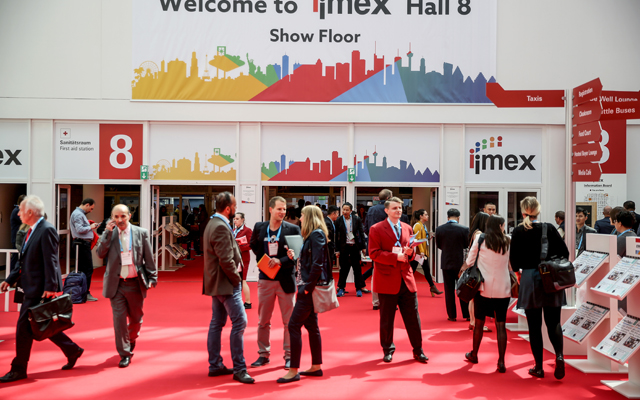
The global business events community will gather in Frankfurt next month for IMEX 2022, with strong interest radiating from both suppliers and buyers.
An international range of suppliers – destinations, venues, technology providers, incentive companies and more – will participate at the show, with confirmed representation from Germany, France, Spain, Croatia, Miami, San Francisco, Las Vegas, the Philippines and Taiwan at press time.
Parts of the business events sector have forged ahead in the past two years with investments in refurbishments, new venues and enhanced experiences. IMEX in Frankfurt will be the stage for some major launches such as Ethiopia’s new convention bureau, new venues, new professional development programmes and new industry partnerships.
Well over 2,500 buyers from 70 countries have registered to date, and hundreds of global buyers continue to register each week. An international mix of buyers from agencies, corporates and associations, plus independent professionals have all confirmed participation at the show.
Show attendees can expect bespoke education for associations, corporates and agencies, in addition to business meetings. Some of the dedicated learning opportunities can be found at Exclusively Corporate, which will feature expert presenters from SAP, Bolt Financial and Siemens Healthineers; Agency Directors Forum, which is aimed at agency planners; and Association Focus, which will deliver learning and networking exclusively for association professionals.
Well-being elements are also built into the programme. Experts from the Listening Collective will bring their own powerful brand of coaching with a dedicated space, The Listening Lab, to help attendees develop their own ‘listening superpowers’.
The Be Well Lounge, presented by Inner Sense and supported by Costa Rica DMC and Weichlein Tours, offers a space for show attendees to pause, unwind and recharge.
Attendees craving an energetic start to the day will enjoy the 5km IMEXrun, developed by VOQIN, along – the banks of Frankfurt’s River Main.
Carina Bauer, CEO of the IMEX Group, said: “While doing business and powering our sector’s growth sits at the core of the show, IMEX in Frankfurt stands for so much more. Inspiration is one of our core values and we’re set to deliver this through a creative and cutting-edge show experience. An unforgettable experience that helps attendees reconnect and revive, supercharge their skillset and – importantly – have fun! By coming together – and celebrating 20 years of IMEX in Frankfurt – our community is set to create many memorable moments.”
IMEX in Frankfurt will run from May 31 to June 2, 2022.
Accor sharpens hybrid meetings solution across the Pacific
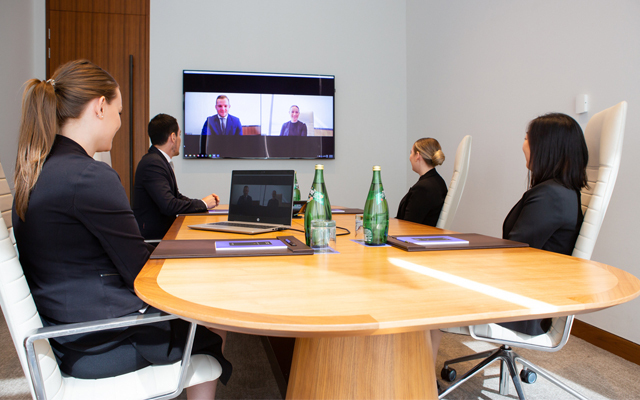
Accor has launched ALL CONNECT, a hybrid meetings concept supported by a range of technology partners including Microsoft Teams, Events Air, Encore and AV Dynamics, at several properties across Australia, New Zealand and Fiji.
ALL CONNECT meetings take place on a range of platforms, including Microsoft Teams, where attendees connect and engage virtually across multiple locations as if they were in the same room.
ALL CONNECT is integrated with Accor’s ALL – Accor Live Limitless Meeting Planner loyalty programme, allowing members to earn Reward points for each meeting booked. Points can be used to part pay future meetings or redeem unforgettable experiences such as catering, sport, overnight stays, wellness, entertainment and more.
ALL Meeting Planner members will earn triple Reward points on eligible events held and paid for by December 31, 2022. Members only need to register and book by May 31, 2022 at participating hotels in Australia, New Zealand, Fiji and the Ala Moana Hotel Honolulu.
Patrick Andersen steps into CEO role at CWT

 CWT has appointed president and chief commercial officer Patrick Andersen as its next president and chief executive officer, effective May 1, 2022.
Andersen takes over from Michelle McKinney Frymire, who has decided to step down from her roles at the company.
Prior to his current position, Andersen served as chief strategy officer and before that, president of the Americas. He joined CWT in 2008.
Reviews
The Slate Phuket
Just 10 minutes from Phuket International Airport on the serene northern coast, this 178-key, Bill Bensley-designed resort offers delegates a quiet, tropical paradise steeped in Phuket’s tin-mining heritage

The Ritz-Carlton, Bangkok
The newly-opened Ritz-Carlton, Bangkok anchors the One Bangkok development with cosmopolitan elegance. Featuring the city's largest ballroom and a spectacular new penthouse suite, it delivers exceptional hardware and deeply authentic, soulful service for business and leisure travellers alike

Mama Shelter Zurich
Behind the imposing, Brutalist concrete that defines Zurich’s Oerlikon district lies a surprising secret. While its exterior honours the neighbourhood’s industrial roots, stepping inside Mama Shelter reveals a vibrant, neon-soaked world that is a far cry from its rigid shell


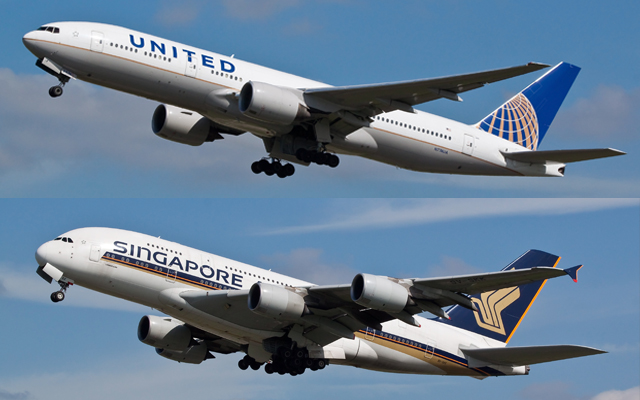
Star Alliance members United Airlines and Singapore Airlines (SIA) are expanding their codeshare arrangements to include 19 new destinations in Asia and the US.
From April 26, United’s customers will be able to connect to nine new codeshare destinations in the SIA Group network, including Bandar Seri Begawan, Siem Reap, Kuala Lumpur, Penang, Bali, Jakarta, Surabaya, Perth and Male.
SIA customers may connect on United’s flights out of Los Angeles to 10 new codeshare destinations in the US, such as Austin, Baltimore, Boise, Cleveland, Denver, Honolulu, Las Vegas, Phoenix, Reno and Sacramento, all of which complement existing connections.
This expansion is timely as more countries around the world ease border restrictions and demand for international air travel is on the rise, recognised both airlines.
The codeshare flights will be made available for sale progressively through the airlines’ respective booking channels, subject to regulatory approvals.