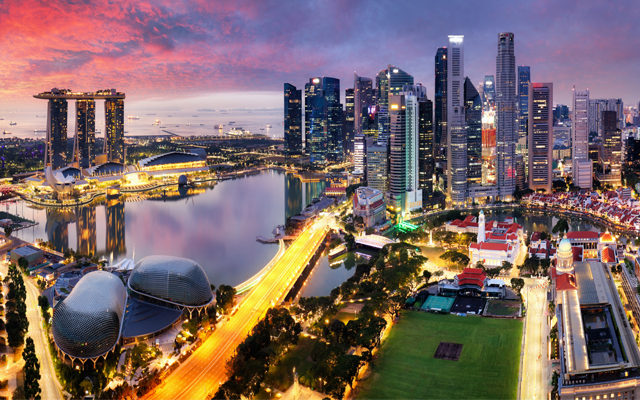
Singapore city panoranora at sunrise with Marina bay
Streamlined Covid-19 safety measures announced last month that were soon postponed due to a surge in daily infections, will finally come into effect today (March 15).
The easing of measures, according to Singapore’s Ministry of Health, includes the removal of safe distancing requirements for mask-on settings and the application of a single safe distance of 1m for all settings.
Singapore removes capacity limits on smaller events, and prepares for further simplified entry for fully vaccinated travellers
Smaller events and group settings with 1,000 or fewer people can proceed without being subject to any capacity limit. For events and group settings involving more than 1,000 people, such as cruises, live performances and tourist attractions, only 50 per cent of the venue’s capacity may be utilised.
Travellers entering Singapore on Vaccinated Travel Lanes or from Category 1 areas China, Taiwan and Macau can now choose to submit an unsupervised self-swab antigen rapid test (ART) result within 24 hours of entry, instead of undergoing a supervised self-swab rapid test at a test centre in the city-state. The advanced submission must be made through the Sync website before proceeding with their activities in Singapore.
MOH said the easing of the Covid-19 testing regime for arriving travellers is view of the low imported infection numbers – around one per cent of total daily infections – as many countries have already passed the peak of their Omicron infection waves.
“These are important steps to take to prepare ourselves for a new Vaccinated Travel concept in the coming weeks, where fully vaccinated travellers generally need not apply for approval to enter Singapore, and will undergo simplified test requirements,” MOH said in a statement.
Arinex's sustainable initiatives are designed to help reduce the carbon footprint of the events it manages
Arinex has become the first Australian event management company to gain carbon-neutral certification.
Provided by Climate Active, the carbon-neutral certification is awarded to businesses and organisations that have achieved a state of net-zero emissions.
Arinex’s sustainable initiatives are designed to help reduce the carbon footprint of the events it manages
In 2019, Arinex introduced a Sustainability Policy, as well as signed up for the IAPCO Plastics Pledge, pledging to drastically reduce the amount of plastic used at events.
The company also joined more than 310 event industry stakeholders from 48 countries to sign the Net Zero Carbon Events Pledge. Launched during the 2021 UN Climate Change Conference, the pledge signifies a joint commitment to achieve net-zero carbon events.
Recently, Arinex followed up on its sustainability ethos by banning all printed business cards for staff and making the switch to paper-free ‘tap and go’ cards from sustainability start-up Tapt.
The company’s Sydney office has also made the move to a new, greener building on Market Street, which has a 5-star Nabers energy rating and 4-star Nabers water rating. Desk rubbish bins have also been banned as part of a move to encourage recycling and reduction of waste.
Arinex’s managing director Nicole Walker said carbon neutral certification is part of a long-term commitment.
“We are acutely aware that this certification is only one step in our sustainability story – it’s not the be-all, end-all. The important thing is to follow through with this for every event that we manage and to assist our clients in reducing the carbon footprints of their events while showing them they need not compromise on anything,” she said.
“The rise of virtual events in the past two years has had a positive impact on the environment. However, with the return of physical events, it is even more pertinent to implement strategies that help to reduce, or ideally offset, the footprint.”
Mohmed: looking forward to organising events on a larger scale and with more international delegates
The business events fraternity in Malaysia is thrilled to receive news that the country’s borders will reopen on April 1, 2022.
Mohmed Razip Hasan, director-general, Islamic Tourism Centre (ITC), told TTGmice: “The reopening is timely as we have planned several international conferences on Islamic Tourism including World Islamic Tourism Conference and Islamic Tourism Outlook Conference.”
Mohmed: looking forward to organising events on a larger scale and with more international delegates
This means that the events can now be organised on a “larger scale”, and ITC’s events can now invite “international speakers and delegates to attend in-person”, Mohmed enthused.
He added that this in turn, would bring in foreign expenditure, where “the multiplier effects of business travel will add economic value” to the accommodation, F&B, transportation, and entertainment sectors.
Yeoh Soon Hin, Penang state executive councillor for tourism and creative economy, is optimistic about the reopening, but cautioned that the tourism and business events industry will not “instantly recover” as Malaysia is still dealing with a surge in daily cases due to the Omicron variant.
A day after Malaysian prime minister Ismail Sabri Yaakob announced the reopening date, Penang Convention & Exhibition Bureau (PCEB) also launched its BElong campaign in Kuala Lumpur. The campaign sends the message that Penang is open for business, and increase destination confidence through the various health and safety measures in place.
Since the announcement, Zahira Tahir, founder and CEO, Universal Holidays Travel and Tourism, shared that her company has already received seven enquiries for corporate meetings and incentives from countries such as India and Pakistan, where interest was in Kuala Lumpur, Langkawi, and Resorts World Genting.
“Corporate companies see Malaysia as a value for money destination, and the fact that no quarantine is required upon arrival, is a bonus,” she said.
Zahira added that part of her company’s marketing activities will include attending the upcoming Arabian Travel Mart and South Asia’s travel and Tourism Exchange, both held in May.
As for Mint Leong, managing director of Sunflower Holidays, she is hoping to draw small incentive groups from Singapore and Indonesia as her key inbound incentive market, China, is not yet open.
However, one key challenge is that airline services have not resumed as pre-Covid and airfares are still generally high, which is why she is targeting small, high-end incentives.
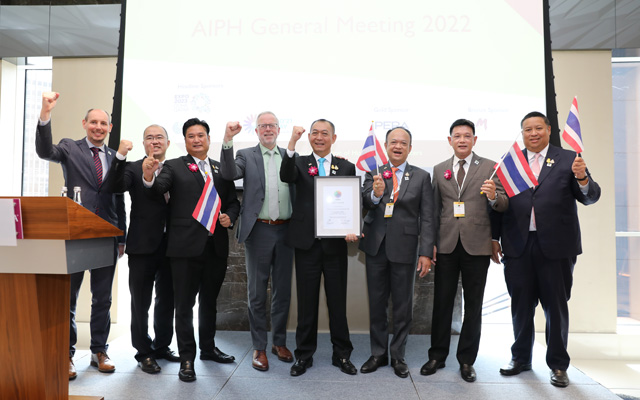
The Thai delegation celebrating the win at the AIPH General Meeting 2022
Udon Thani, a north-eastern province in Thailand, will host the International Horticultural Expo in 2026, billed as the first global event to be held in the Greater Mekong Subregion.
Themed Diversity of Life: Connecting Water, Plants, and People for Sustainable Living, driven by the ‘3S’ food and farming policy and BCG economic model of the government and SDGs of the United Nations.
The Thai delegation celebrating the win at the AIPH General Meeting 2022
The International Association of Horticultural Producers (AIPH) chose Udon Thani, citing the site’s unique wetland area and the special connection between water, natural resources, and the people living in it.
Slated to run from November 1, 2026, to March 14, 2027, the International Horticultural Expo 2026 plans to attract 3.6 million visitors, and is expected to cost the Thai government 2,500 million baht in investment.
Chalermchai Sree-on, minister of agriculture and cooperatives, who was head of the Thai delegation, said that Thailand is committed to contributing to the global food security through the ‘3S’ farming and food policy, and the event will help shed light and ignite collaboration on sustainability issues.
Sayam Sirimongkol, Udon Thani’s governor, reaffirmed the city’s readiness to host the Expo, adding that the province’s status as the gateway to the Greater Mekong Subregion will guarantee a diverse display of cultures and floras befitting the theme.
This is not the first time Thailand will be hosting the horticultural expo, as Chiang Mai province has hosted two prior editions.
Chiruit Isarangkun Na Ayuthaya, president of Thailand Convention and Exhibition Bureau also highlighted the government’s development strategy and national agenda to promote the Bio-Circular-Green Economy Model that seeks to drive socio-economic growth while minimising and even reversing the negative impacts on the environment.
The International Congress and Convention Association (ICCA) and the American Society of Association Executives (ASAE) have agreed to collaborate to enhance access to content and community for the global association ecosystem.
ICCA’s collaborations with ASAE will leverage the strengths of each organisation to expand opportunities for engagement and knowledge sharing between association leaders globally, and the global association meetings community.
From left: ASAE’s Michelle Mason and ICCA’s Senthil Gopinath at the signing
The collaboration supports both association’s goals and strategic plans and will focus on, peer-to-peer learning and developing a global community.
Examples of peer-to-peer programming will include collaboration on ASAE’s Global Summit on the State of the Association Community, as well as the development of one legacy-focused programme. ICCA and ASAE will also look at joint exhibiting opportunities, as well as produce joint statements.
“The role of associations is rapidly changing and many of the meta trends influencing ASAE’s strategic direction are shared by our global colleagues,” said ASAE president and CEO Michelle Mason. “This reality necessitates more collaborative thinking and idea-sharing between leaders of organisations worldwide.”
ICCA CEO, Senthil Gopinath, added: “More meaningful and sustainable engagement and a mutually beneficial collaboration will advocate for the value of associations to society and their meetings as vehicles to drive change in local communities.”
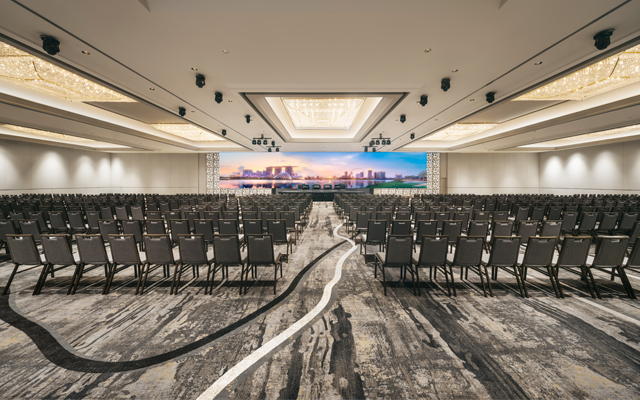
A meeting space within the refurbished Hilton Orchard
Hilton’s move from one end of Singapore’s Orchard Road lifestyle district to a more central location has gifted the brand a “bigger, better and stronger” property that will support the return of large-scale business events to the city-state.
General manager Cedric Nubul said the new 1,080-key Hilton Singapore Orchard, which opened on February 24, ahead of its initial schedule on March 1, will be a “brand-defining Hilton property”.
A meeting space within the refurbished Hilton Orchard
Recognised as Hilton’s largest hotel in Asia-Pacific, Hilton Singapore Orchard takes over what was once Mandarin Orchard Singapore. A S$150 million (US$110.2 million) comprehensive renovation has given the property a new look and hardware, where the hotel’s interior design pays homage to Singapore’s rich colonial history and the area’s agricultural heritage.
“This hotel was known for offering one of Singapore’s largest meeting spaces, and we’ve gone beyond that,” said Nubul, adding that Hilton Singapore Orchard’s portfolio of event spaces is more extensive than the former Hilton hotel.
While existing event facilities were upgraded and refurbished, a section of the carpark was transformed into a new cluster of seven meeting rooms that are equipped with functional features, such as multiple whiteboards and electrical outlets on every desk to power multiple devices. The expansive foyer shared by the meeting rooms feature a botanical garden centrepiece, and the complete space can double up as a dining reception area with live cooking stations.
Altogether, the hotel offers 16 venues, including two pillarless ballrooms fitted with LED walls, and 12 function rooms with natural light. The Grand Ballroom takes 1,000 guests for receptions or 160 pax in a conference setting.
In addition, the hotel’s five F&B destinations promise varied social dining opportunities for corporate groups. The 360-pax Estate all-day restaurant, in particular, allows event planners to arrange for private dining spaces, as beautifully-furnished seating sections stretch across a large part of the lobby.
Nubul said the hotel is opening with “a very positive outlook”, stemming from Singapore’s expanded Vaccinated Travel Lanes and progressive reopening of many other countries.
“Opening a hotel with 1,080 rooms sends a very strong message about the confidence we have in Singapore’s tourism,” he said, adding that his team is working very closely with the Singapore Tourism Board, local industry associations and inbound agents to rebuild inbound travel to Singapore.
“Hilton’s reputation in service and hospitality excellence as well as this amazing product that we have here, come together to create a significant demand generator for Singapore,” he said.
While he refrained from quantifying corporate bookings, he let on that the hotel is seeing “great interest” from international corporate clients. He expects some of these events to materialise in May or June.
He noted that event decisions are dependent on event restrictions, which are still evolving. Despite uncertainty in event planning, the hotel has been able to welcome some local business gatherings.
“We have residential meetings booked by local customers. People have been working so much from home that they want to meet and connect in a different place,” Nubul shared.
Nubul believes that the domestic market will continue to be “a key focus” even as Hilton’s “strong network of sales offices around the world” is pulling business events demand to the hotel.
Crowne Plaza Vinh Yen City Centre's Social Workspace
Crowne Plaza Hotels & Resorts, part of IHG Hotels & Resorts’ premium collection, is continuing its growth across the Asia-Pacific (APAC).
There are now 75 Crowne Plaza hotels in the pipeline in APAC, with another two set to open this year, the Crowne Plaza Vinh Yen City Centre in Vietnam, and the refurbished and rebranded Crowne Plaza Bangkok Grand Sukhumvit in Thailand.
Crowne Plaza Vinh Yen City Centre’s Social Workspace
Next, the Crowne Plaza Melbourne Carlton in Melbourne, the Crowne Plaza Kota Kinabalu Waterfront and Crowne Plaza Kuala Lumpur City Centre in Malaysia, are slated to open in 2023. Further on, Thailand and Vietnam will welcome the Crowne Plaza Bangkok Rama 9 in 2025, and the Crowne Plaza Danang Ba Na Hills in 2026 respectively.
The brand’s most recent opening in December 2021, the Crowne Plaza Phu Quoc Starbay, introduced the brand’s signature Plaza Workspace in South-east Asia. Its Plaza Workspace is designed to help guests find a balance between work and leisure, and easily switch between them during their stay.
The hotel teams at all Crowne Plaza hotels follow the brand’s Dare to Connect service style, which ensures they anticipate the needs of guests and provide informed recommendations that help them make the most of their free time.
Globally, there are more than 400 open Crowne Plaza hotels, with 160 in APAC.
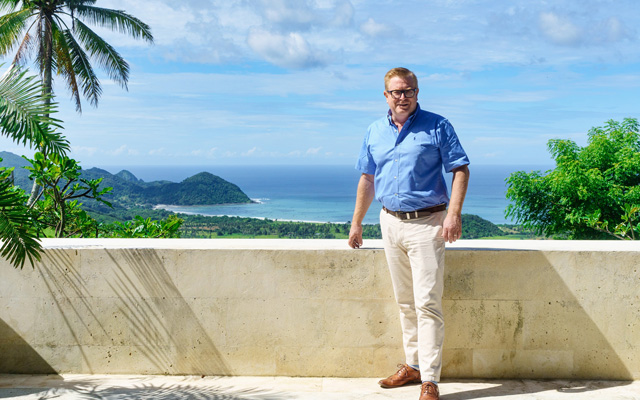
Andrew J. Leith has joined Selong Selo Resort & Residences as general manager.
Leith brings more than two decades of international hospitality experience with him. His hospitality background includes private resorts in the Caribbean, branded luxury resorts in the Maldives, luxury villa retreats in Bali and Heron Island Resort in Australia. He has also held senior management positions at Angsana Ihuru in the Maldives, and Point Grace on Turks and Caicos.
A New Zealand native, Leith has been living and working in numerous leadership roles in Bali for the past 10 years.
Prior to this appointment, he was general manager at The Layar Designer Villas and Spa, and a partner with S.E.I.N.A. Management, a hospitality management and consultancy company on the island that supports villas, hotels and restaurants.
Although Chinese outbound travel sentiments have fluctuated with waves of Covid-19 variant infections around the world, the intention to travel has been increasingly positive, observed George Cao, co-founder and CEO of Dragon Trail International.
In this episode of TTG Conversations: Five Questions, Cao shares findings from his company’s regular Chinese travel sentiment studies and discusses what that means for Chinese outbound business travel and events, how Chinese incentive events could be conducted, and how destinations should prepare for the return of the Chinese travel market.
Travel to the Philippines will be made even smoother with the removal of an arrival cap at all ports of entry across the country from April 1, 2022.
The Department of Tourism (DoT) made the announcement on March 11, following the decision of the Inter-Agency Task Force for the Management of Emerging Infectious Diseases (IATF-EID) to lift the arrival quota for unvaccinated passengers.
The Philippines will open to fully vaccinated tourists from all countries, without arrival limits, from April 1; Coron, Palawan pictured
Arriving passengers will submit a negative laboratory-based antigen test result taken within 24 hours from departure. This replaces the initial requirement of a negative RT-PCR test taken 48 hours prior to departure from point of origin.
The resumption of visa issuance by Philippine embassies and consulates will also start on April 1 to coincide with total removal of arrival quotas.
“This latest development opens the country to all fully vaccinated tourists from all countries, and means the country’s tourism industry is well on its way to recovery,” said tourism secretary Berna Romulo-Puyat.
“We at the DoT thank our colleagues in the IATF for approving such measures that will help sustain the recovery of the sector in the coming months. We have high hopes that all of these will result in an uptick in international travelers visiting the country during the summer season,” Puyat added.
The IATF Resolution 164-A also allows the entry of passport holders from Hong Kong and Macau for a period not exceeding 14 days.
There will also be reciprocal recognition of Covid-19 vaccination certificates from Croatia, Cyprus, and Nepal which are among the 157 countries whose citizens can enter the Philippines without a visa.
“While our domestic tourists have been the pillar of our recovery, we are also excited to welcome more foreign visitors in the weeks ahead. Such a move to further ease our borders and recognise the vaccination certificates of other countries is very important, noting that our top foreign markets were part of the visa-free countries,” she added.
Since reopened the borders to foreign travellers from visa-free countries on February 10, the Philippines has recorded 76,736 arrivals at the main airports. Of these, 43,249 were foreign tourists.
Just 10 minutes from Phuket International Airport on the serene northern coast, this 178-key, Bill Bensley-designed resort offers delegates a quiet, tropical paradise steeped in Phuket’s tin-mining heritage
The newly-opened Ritz-Carlton, Bangkok anchors the One Bangkok development with cosmopolitan elegance. Featuring the city's largest ballroom and a spectacular new penthouse suite, it delivers exceptional hardware and deeply authentic, soulful service for business and leisure travellers alike
Behind the imposing, Brutalist concrete that defines Zurich’s Oerlikon district lies a surprising secret. While its exterior honours the neighbourhood’s industrial roots, stepping inside Mama Shelter reveals a vibrant, neon-soaked world that is a far cry from its rigid shell