Australia’s tourism minister said that the federal government plans to reopen its international borders by Christmas “at the latest”.
Under the national reopening plan, Australians will be allowed to travel overseas again once 80 per cent of the eligible population aged 16 and over have been fully vaccinated.
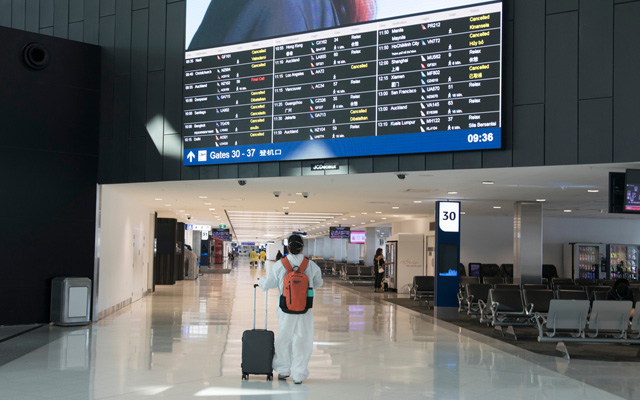
A passenger at Sydney Airport
Local media reported Tehan as having said at a National Press Club of Australia event on Wednesday (September 22) that Australians will be able to “freely travel outside Australia”, with no restrictions on the destination, once that vaccination target in their respective home state is reached. They will also not need to go through hotel quarantine upon their return.
Australia’s border has been closed to all non-citizens and non-residents since March last year.
Tehan also said the government is still in talks with several countries to set up travel bubbles to reduce quarantine time.
The 21st World Travel and Tourism Council (WTTC) Global Summit, initially slated to be held in the Philippines next month, has been postponed to March 2022, tourism secretary Bernadette Romulo-Puyat shared during Philippine Travel Exchange (PHITEX 2021) in Subic.
Planned as a hybrid event, the summit was supposed to draw 650 in-person, with another 30,000 individuals tuning in via the digital platform.
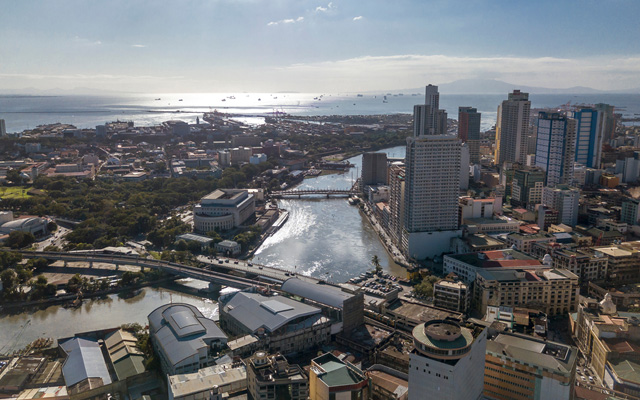
Business events are currently not allowed in Manila (pictured) due to heightened alert levels
Downplaying the impact of the postponed event, Rajah Travel chairman and CEO Aileen Clemente said that “every postponement is always a mutual decision between the WTTC and the host country, so it doesn’t happen that we lose the hosting rights just like that”.
On the other hand, C9 Hotelworks’ managing director Bill Barnett pointed out: “For WTTC, there is merit in a first-mover advantage to return to the stages so it makes sense to stop delaying. If travel is to survive, it has to learn to live with Covid-19.” He further cited the AHIC (Arabian & African Hospitality Investment Conference) that was held in Dubai this week which was “a big success with a large in-person contingent”.
As other international events were similarly postponed or cancelled as the pandemic continues to wreak havoc in the Philippines, Clemente pointed out “there has to be better implementation and consistent implementation of protocols”.
For instance, as business events happen in controlled environments, it is possible to conduct events on a smaller scale, perhaps starting with a 30 per cent capacity, she pointed out.
“What is hurting (the tourism industry) is the inconsistent implementation and lack of attention to the actual causes (of infections). For example, the lack of building ventilation and filters, as well as lack of in-depth statistical requirements in tracking the movement of Covid-19 such as interoperable contact tracing,” she lamented.
Clemente added that alert levels and quarantine parameters have become so confusing that governmental units also run into problems when it comes to implementation.
In the Philippines, event venues, hotels and restaurants are either opened with reduced capacity or closed depending upon the lockdown classification of the destination as determined by the local government every two weeks.
Metro Manila is currently under the second-highest alert, Level 4, until the end of this month, which means that events cannot be held.
ncourage our global community to openly share their experiences and insights so that the Events Industry Council can create the resources and support necessary to drive genuine long-term change
The Events Industry Council (EIC), the global voice of the business events industry on advocacy, research, professional recognition and standards, has launched the first phase of its landmark Equity Acceleration Plan.
This first phase will focus on establishing a benchmark by which to measure progress for the industry through a survey to determine the current state of diversity, equity, and inclusion within the workplace across the events industry.
EIC encourages the global community to openly share their experiences and insights so that they can create the resources and support necessary to drive long-term change
The results of this benchmark will inform the development of tools, resources and recommendations in the subsequent phases on the Equity Acceleration Plan, which aims to provide a framework, and lead the challenge against discrimination and systemic racism in the events industry.
The survey will give respondents the opportunity to share some of their personal experiences and opinions on what is needed to improve the sector.
The findings will be used as the basis for a report and a series of specially created educational courses, tools and resources to support the industry in its shared goal of a more diverse and inclusive future. The Equity Acceleration Plan is part of EIC’s Centre for Sustainability & Social Impact and is a long-term project that will regularly measure the impact of interventions and make recommendations for further work.
Amy Calvert, CEO of EIC, said: “With over 10.3 million direct jobs and over 1.5 billion participants in our sector, and as the industry that at its heart fosters human connection and collaborations, we have the opportunity and responsibility to be a catalyst for meaningful and measurable change.
“The Equity Acceleration Plan will enable us to support event professionals to create more diverse and inclusive environments, develop career pathways, and ensure representation in leadership and supply chains by providing the learning and resources intended to reach and support our community.”
The survey takes just 10 minutes to complete. To take part, click here. The survey will close on October 15, 2021.
Seoul will be serving as the Asia Pacific Regional Hub for the upcoming ICCA (International Congress and Convention Association) Congress, slated to be held in Colombia from October 24-27, 2021, in a multi-hub hybrid format.
The event is expected to draw 1,500 participants from convention bureaus and PCOs attending from 90 countries. The in-person congress will be held at COEX and streamed live for both days, and will comprise of ICCA headquarters’ online programmes from Cartagena de Indias and Seoul’s local programmes.
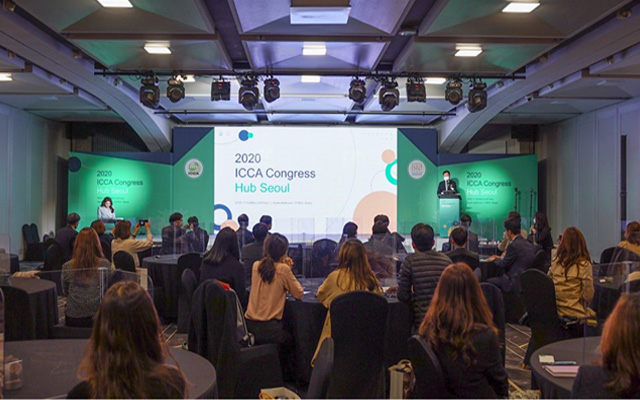
The 2020 ICCA Congress being held in Seoul
An STO official said that the South Korean city will “utilise last year’s hosting experience to upgrade Seoul’s position as the optimal hosting destination for hybrid MICE events”.
The ICCA Congress pivoted to a hybrid model for the first time last year, and chose hub cities to represent Europe, Africa, the Middle East, and Asia Pacific. In 2020, Sarawak was chosen as regional host for APAC.
Interprefy, a provider of managed interpreting technology and services, has partnered with London-based Grip, an AI-powered matchmaking and networking solution for events.
This partnership will allow Grip to run webinars and virtual events in multiple languages without the administrative overhead.
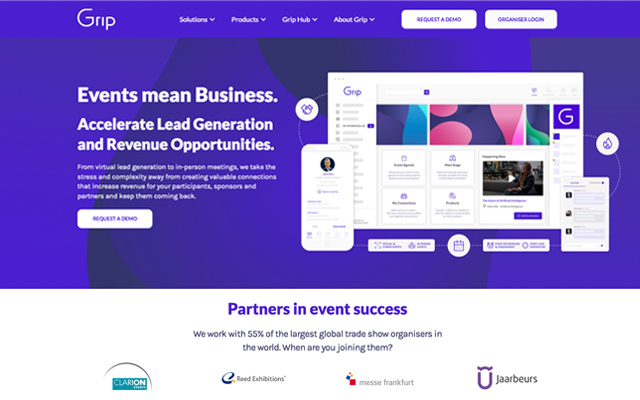
A screenshot of the Grip website
Grip will be integrated with Interprefy’s Select Solution, which features an array of tools to optimise the user experience and there is no limit to the number of languages that can be provided.
“With the world turning to hybrid events, in the post-Covid-19 world, a large number of events are retaining some part of the virtual experience, for the longer term,” said Richard Roocroft, director of global sales at Interprefy.
“Interprefy makes Grip events multilingual, so that attendees can listen to presenters in a language of their choice, helping to increase engagement and inclusivity for all. We are delighted to partner with Grip, a global leader in hybrid events for networking and lead management”, Roocroft added.
Melia International has rolled out a We Are Back, Meet with Melia campaign, where event planners can choose from some 130 properties to hold their events at.
This promotion is valid for newly confirmed groups before December 31, 2021, with arrival until June 30, 2022, and groups have to contract both accommodation and meeting spaces. Melia has also emphasised its cleanliness, with the Stay Safe With Meliá programme certified by Bureau Veritas in place.
Melia Hanoi
Groups can enjoy maximum flexibility, such as free cancellation and return of deposits up to 60 days before arrival; as well as the possibility to change the dates with no cancellation fees at the 30-day mark.
Event planners will also be rewarded with double Melia Rewards Points for every group booked.
This promotion is not applicable for group buyouts or groups that book more than 80 per cent of the hotel accommodation capacity.
Mandarin Oriental Hotel Group has opened its latest outpost in Istanbul, Turkey.
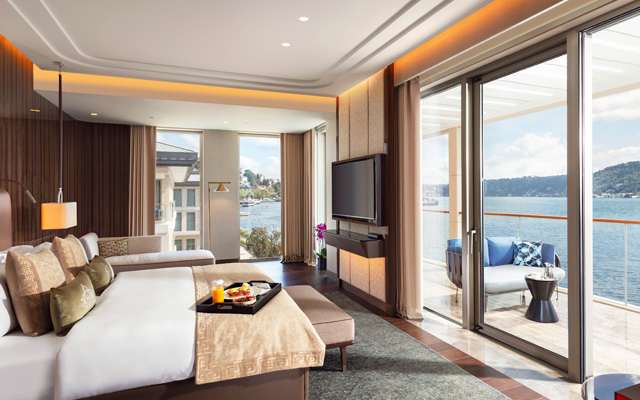
There are 100 luxurious guestrooms at the Mandarin Oriental Bosphorus, Istanbul, good for hotel group buyouts. For corporate events, the urban resort features three ballrooms, a garden terrace and pool area, an open area which can be decorated, and six meeting rooms.
One-bedroom suite
The hotel has also introduced the Novikov concept to Istanbul, with the main Novikov restaurant on the shorefront, a Novikov Lounge Bar, a vibrant Bosphorus Lounge with waterfront terrace, and the Novikov Pool Bar.
Meanwhile, the spa offers an extensive range of wellness and beauty therapies and includes luxury treatment rooms, hammams, private relaxation areas, exercise and fitness facilities as well as an indoor and outdoor swimming pool.
The urban resort is located 15 minutes from the central business district and the city’s central Taksim Square. Istanbul’s major attractions, historical sites and museums are a short drive away, and the hotel is a short walk to the nightlife in Kuruçeşme.
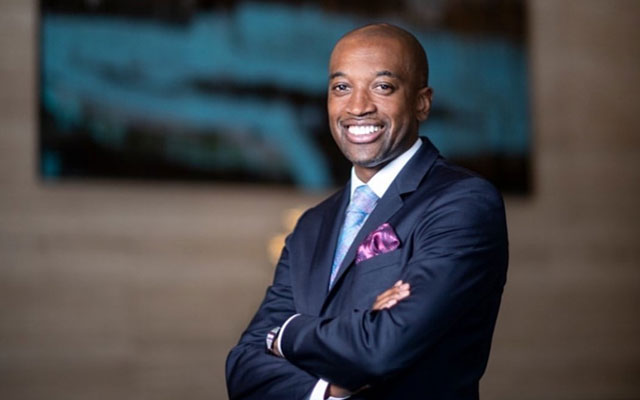
Hilton has appointed industry veteran Cedric Nubul as general manager for Hilton Singapore Orchard, which is set to open in January 2022 following an extensive refurbishment of the current Mandarin Orchard Singapore.
Nubul brings over 20 years of experience with Hilton hotels, including strong experience in conversion of hotels. He served in the role of general manager across the Caribbean and Colombia over the past eight years, and previously worked across France, Spain, Italy, the Maldives, and Malaysia.
Nest Group Indonesia (NGI) has unveiled the Nest Virtual Convention Center (NVCC), the country’s first web-based virtual venue.
Although virtual, NVCC offers both indoor and outdoor areas. The indoor space has a total area of 135,000m2 consisting of a ballroom, exhibition hall, meeting room, and plenary hall, while the outdoor area measures 50,000m2. The virtual model of a venue was superimposed onto the platform with the help of virtual reality 360, and 3D web technology.
A screenshot from the NVCC website
On-site attendees can meet, network, and hold interviews directly on NVCC. When visiting a stand, attendees can also download and interact with exhibitors as they would in a physical event. Real-time chat, audio, and video calls help to ensure maximum user engagement and interaction.
On how this will benefit event organisers, Soegianto Husin, CEO of Nest Group explained that the virtual setup will help save on event costs, and cut down on preparation time without having the need to create a brand new website each time an event planner wants to hold a virtual event.
“If you have to build websites on a project basis, you have to pay for the venue design. Then you would have to pay for another platform on which the virtual event can be built open. For us, NVCC already is the venue, so we’re able to provide clients with all these services.
“We have also created many template designs for stages and booths, and clients just have to choose the one they want, which is included in one pricing,” Soegianto elaborated.
Eddy Mulyoto, founder of Empro production, shared his experience: “NVCC helps organisers deliver memorable experiences that the audience craves for, yet it makes the organiser’s work simpler because everything that’s needed to build a virtual tradeshow is already on the platform.”
“As long as organisers understand the event brief and know the detailed specifications of the client’s needs, organisers can deliver a unique experience in a virtual venue where attendees can meet new people, network, and interact as they would in real life.”
As for Donny D, managing director of Adcom Cipta Media, while he agrees NVCC makes it easier for event organisers to create and host virtual events, he hopes that there is enough bandwidth to successfully deliver numerous digital aspects of the event.
Domestic tourism will lead the initial recovery phase; a security officer standing guard at Prambanan Temple in Yogyakarta, Indonesia pictured
The Indonesian government has unveiled its three-stage recovery plan to build a more resilient tourism industry post-Covid.
Speaking at the Global Tourism Forum last week, Rizki Handayani, deputy of tourism product and MICE at the Ministry of Tourism and Creative Economy (MoTCE), said in the first stage of recovery (2021 to 2022), the focus will be on spurring domestic tourism and accelerating digital transformation within the sector, while ensuring that the CHSE (Cleanliness, Health, Safety and Environmental Sustainability) protocols are being implemented across destinations.
Domestic tourism will lead the initial recovery phase; a security officer standing guard at Prambanan Temple in Yogyakarta, Indonesia pictured
The ministry will also focus on establishing travel bubble arrangements, and work with related government agencies to prepare for the gradual reopening of destinations across the country, particularly Bali.
To pave the way for Bali’s reopening, Teuku Faizasyah, director general of information and public diplomacy, Ministry of Foreign Affairs, said that his office would help MoTCE analyse potential source markets and keep international travellers updated of the Covid-safe measures in place at tourist destinations.
Budi Tirtawisata, CEO of Panorama Group, urged the government to ease entry requirements for international travellers, including exempting them from quarantine if they test negative for Covid-19.
In the second phase of the recovery programme, from 2022 to 2024, MoTCE will aggressively promote tourism villages as it projects that community-based tourism will shine in the post-Covid era, said Rizki.
During this recovery stage, the government will focus on boosting the sector’s resilience, through stimulus funding to support the digitisation of tourism villages and development of creative hubs, as well as facilitating collaboration between e-commerce players and banks for capital assistance.
Rizki expects that the growth and acceleration phase will take place from 2024 to 2029. During this stage, the government will strengthen quality tourism and the destination resilience, promote wellness and adventure products, intensify marketing campaigns, speed up digital transformation, as well as strengthen the supply and value chains of the industry.
Just 10 minutes from Phuket International Airport on the serene northern coast, this 178-key, Bill Bensley-designed resort offers delegates a quiet, tropical paradise steeped in Phuket’s tin-mining heritage
The newly-opened Ritz-Carlton, Bangkok anchors the One Bangkok development with cosmopolitan elegance. Featuring the city's largest ballroom and a spectacular new penthouse suite, it delivers exceptional hardware and deeply authentic, soulful service for business and leisure travellers alike
Behind the imposing, Brutalist concrete that defines Zurich’s Oerlikon district lies a surprising secret. While its exterior honours the neighbourhood’s industrial roots, stepping inside Mama Shelter reveals a vibrant, neon-soaked world that is a far cry from its rigid shell