Asia/Singapore Friday, 24th April 2026
Page 470

Singapore tightens border measures for travellers from Indonesia

0
Singapore tightens entry approvals for travellers and transfers from Indonesia

Singapore has reduced entry approvals for travellers from Indonesia who are non-Singapore citizens or permanent residents.

The announcement was made on Saturday (July 10) by the Ministry of Health (MOH), who said that the tightened border measure for travellers from Indonesia will take place “with immediate effect” and comes amid the “worsening” Covid-19 situation there.

Singapore tightens entry approvals for travellers and transfers from Indonesia

Entry approvals may be considered where additional safe management measures are taken, it added.

All travellers with travel history to Indonesia within the last 21 days will also not be allowed to transit through Singapore, starting July 12, 11.59.

With effect from July 12, 23.59, all travellers entering Singapore with recent travel history to Indonesia within the last 21 days will be required to present a valid negative Covid-19 polymerase chain reaction (PCR) test result taken within 48 hours before departure for Singapore.

Currently, such travellers will need to present a valid negative Covid-19 PCR test result taken within 72 hours before departure for Singapore.

Travellers who arrive in Singapore without a valid negative PCR test result may be denied entry into Singapore, said MOH. Permanent residents and long-term pass holders who fail to comply with the new requirements may have their permit or pass cancelled, it added.

All travellers will continue to be subjected to a 14-day stay-home notice at dedicated facilities; an on-arrival PCR test and another test on day 14 of arrival; and an on-arrival antigen rapid test (ART) and self-administered ART test on day 3, 7 and 11 of arrival.

TCVB introduces 11 sustainable programmes for corporate events

0
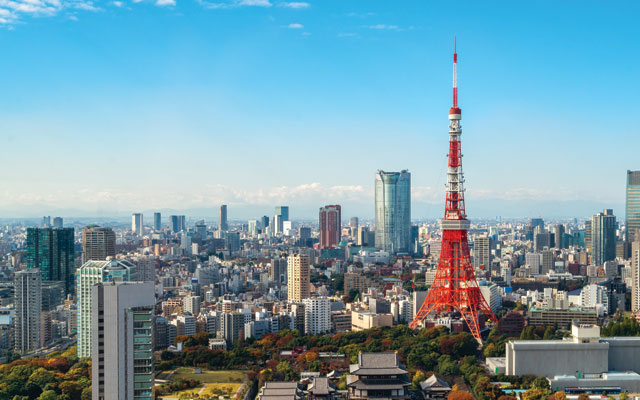
The Japanese business travel market offers vast opportunities to grow; Tokyo pictured

The Tokyo Convention & Visitors Bureau (TCVB) has released sustainable offerings to enable business event organisers to hold conferences in the Japanese capital in a more socially and environmentally responsible way.

Entitled Sustainability Experience in Tokyo, the initiative aims to introduce the city’s rich culture and history in a unique, thought-provoking way via 11 programmes designed to contribute to the United Nations’ Sustainable Development Goals. Programmes have a focus on nature, food, crafts and physical activities.

Tokyo is pushing the sustainable envelope and is keen to show its guests how they do it

According to the TCVB, the idea is to allow business visitors to “enjoy Tokyo charms and at the same time contribute to the future of the city”.

Kazuko Toda, senior director of the business events team, said the TCVB is “confident that the programmes will make the guests’ stay in Tokyo most satisfying. We also hope the meeting organisers will make good use of the programmes”.

One experience explores how bees travel from the Imperial Palace and Hamariku Gardens to a sustainable hive two kilometres away on a rooftop in Ginza where their honey is harvested. Here, participants can learn about the vital role that bees play in ecosystems and enjoy a honey tasting.

Staying with the theme of sustainable food, another experience allows participants to learn and use traditional methods to make nori, dried Japanese seaweed, which was first produced in Tokyo in the 17th century.

Also included are several programmes related to the reuse and recycling of kimonos and other traditional or natural materials to make Japanese souvenirs. Participants can also join a clean-up of Tokyo’s waterways or a walking tour of key sites.

As an add-on, the information pack features tips on how events can be organised more consciously, such as by using local vegetables. It also notes that the Tokyo Metropolitan Government has created more than 800 drinking stations across the capital, offering free tap water to reduce consumption of bottled water.

Virtual IT&CM and CTW China 2021 concludes on a positive note

0
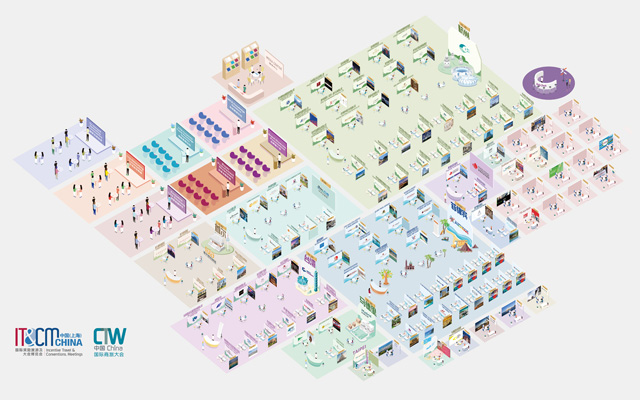
The virtual floorplan at ITCM China

The second Virtual IT&CM China and CTW China, held from June 22-24 this year, has reported a successful conclusion, with a high percentage of fulfilled scheduled appointments and strong buying intention for the next two years.

Post-show statistics revealed that over 500 Chinese and international delegates had participated in the three-day event, with 200 exhibitors from 22 territories/countries meeting with 247 buyers from 32 territories/countries.

The virtual floorplan at ITCM China

The event organiser, TTG Asia Media, has also found strong business and lead generation throughout the MICE and corporate travel event.

Close to 3,000 pre-scheduled appointments and walk-in meetings were conducted over three days, with 86 per cent of pre-scheduled appointments being fulfilled.

Noteworthy during the ongoing travel and tourism crisis is that 92 per cent of exhibitors and buyers expect to receive or place MICE and corporate travel orders over the next 12 to 24 months.

Eighty-six per cent of delegates said they have achieved their objectives of attending Virtual IT&CM China and CTW China 2021, while 74 per cent of exhibitors rated buyers’ quality were above average.

The post-show study has also found that delegates were most impressed by the live networking conversations, exclusive live sessions, as well as the various MICE and corporate travel knowledge sessions. Ninety-three per cent have also registered their interest in attending the next virtual event.

G Murali Krishna, CEO of India-based Happy Vacations, said that the networking sessions were “excellent and well-organised”, and he was delighted to discover new business ventures.

Similarly, Cheng Xiangfeng, assistant manager of China Women Travel Service, appreciated the opportunity to stay connected with suppliers and the industry to continue with her business planning for when borders reopen.

All the right moves

0
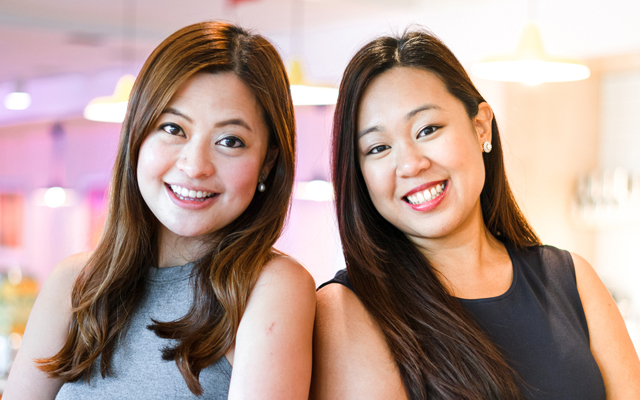
From left: Jaqueline Ye and Melissa Lou

What first sparked the idea for Delegate back in 2015 and how was business before the pandemic?
Lou: We started Delegate in 2015 as we saw a gap in the market for a self-serve event planning platform. My co-founder Jacqueline and I were both planning events for work and saw the opportunity to solve this pain point. We were also conscious that we wanted to be a tech-first company with our vision being to build tech products to serve the events industry.

Our core business Delegate is an online marketplace that connects anyone planning an event to a network of over 4,000 event vendors. We also launched a backend client management tool called Delegate PRO, targeted at event businesses to manage their sales leads, communications and engagement with end-users. Those two business lines existed pre-pandemic years and were focused exclusively on offline, physical events.

In 2019, we closed the year on a record high and had expansion plans to bring our marketplace and Delegate PRO to Indonesia. A majority of our users ( approximately 60 per cent) pre-pandemic came from the corporate space – we had a lot of users who planned their internal meetings and smaller-scale events on Delegate; the events that they didn’t have the budget to hire a PEO for. We spent the years from 2015 building up our community of users and vendors but alas, 2020 hit and we found ourselves having to start from scratch again.

How did you change your business to survive the pandemic?
Ye: In early 2020, we started receiving cancellations and postponement of events from our corporate clients. In turn, these same clients were also looking to us to help convert their physical events into digital ones. Even as early as March 2020 at the start of the pandemic, they were already looking at tools that could bring about more engagement and interactivity beyond the usual video and meeting tools around.

As a company centred around events and technology, we’ve been driven to innovate to cater to the demand for virtual and increasingly, hybrid events. With this in mind, we launched Delegate PLAY in September 2020, a 3D immersive virtual conference platform to host virtual events.

We have also made a concerted effort to shift our marketplace focus to weddings. Throughout the pandemic, we saw that users were still using us to plan their upcoming nuptials. This also led to the birth of the Delegate Virtual Wedding Festival, Singapore’s largest wedding expo that’s hosted on our own Delegate PLAY platform.

How useful is PLAY for corporate events planners?
Ye: Think of Delegate PLAY as a virtual convention centre that corporate event planners are able to hire for their exhibitions, tradeshows and conferences. It comes complete with a virtual lobby entrance, exhibition halls, exhibitor booths and an information desk. The platform’s exhibition halls allow the set up of customisable virtual exhibitor booths, with live presentations and real-time networking opportunities with attendees.

We also try our best to offer the best-in-class in virtual event experiences by offering attendees multiple touchpoints to interact with such as live chat, virtual meeting rooms, one-to-one attendee networking, parallel stages to view content and much more. It is also 100 per cent mobile-responsive, with a robust suite of branding and sponsorship opportunities.

What’s next after PLAY?
Ye: The appetite we see among our corporate clients is a desire for physical events to return but they are also cautious to do too much, too fast. Having been locked up for almost two years now has meant that a lot of event organisers and attendees are keen to return to networking and engaging with others at in-person events.

For the near term, it seems that our clients are still keen on virtual and hybrid event formats for their larger-scale conferences and events. The features that we have lined up in our product pipeline for Delegate PLAY are catered to the requirements of the event organiser to transition to hybrid formats, where they’re able to offer attendees a unified event experience.

We also have plans to expand the Delegate PLAY brand through the regionalisation of our Virtual Wedding Festival brand. Before the end of 2020, we will bring the show to Malaysia, Hong Kong and the Philippines.

As an SME yourself, how badly impacted do you observe other SME event companies to be at the moment?
Lou: We’re deeply saddened by the number of event companies we’ve seen shuttered among our vendor community in the last year. However, we are also really impressed by the number of creative business pivots we’ve witnessed.

So many SME event business owners we know, ourselves included, have had to make some of the most difficult business decisions in the name of survivability in the last year. And we are proud to be in an industry that’s proven to be so resilient with lots of businesses now upskilling to improve themselves and exploring digital tools and channels as a means to gain more business and to stay relevant.

Do you see enough support both at the private and government levels?
Lou: There’s so much private funding in the events sector globally and we’ve seen companies raising millions of dollars based on sky-high valuations which are truly unprecedented. I don’t think there’s been a more attractive and also, more challenging time to be in the events industry as there is so much more interest and competition in our space now.

In terms of private funding, there’s a lot of interest in this space but investors are pickier with the companies they choose to invest in. They are looking at companies with proven track records, traction and product-market-fit with a clear route to profitability.

On the government front, we both feel incredibly lucky to be based in Singapore as we’ve had a lot of support as a Singapore-owned SME so we’ve been able to enjoy the support of job support schemes, rental rebates etc. We also know of the amazing opportunities that grant such as the Special Situation Fund for Startups which incentivises private sector institutions to co-invest in startups along with EDBI (a Singapore-based global investor) and Seeds Capital of Enterprise Singapore.

What advice would you give young female entrepreneurs, especially those hoping to foray into events technology?
Ye: I think the best advice we could give is to just start. If you find yourself interested in this space, it’s actually a really exciting time to be in events tech as there’s been such a seismic shift in how events are being planned, delivered and experienced. If 2020 has proven anything, it’s that events are here to stay and that they will happen. The future of events is looking hybrid and we’re excited to see what new products will be launched in the years to come.

Triad Trails

0
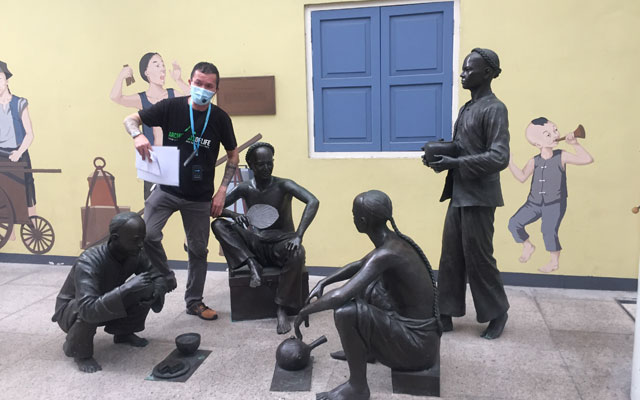
Chiong sharing about the hard life of Chinese coolies during Singapore's colonial era

Concept
With team bonding a challenge during this time of remote working, an inventive and interactive walking tour allows corporate groups to bond over a different kind of outing around the Chinatown district in Singapore.

Led by ex-offenders, the Triad Trails tour peels back the squeaky-clean image of Singapore to reveal the city-state’s dark underbelly past.

The tour is organised by Singapore tour agency Actxplorer, in collaboration with Architects of Life (AOL), a social enterprise that aims to develop the potential of ex-offenders and youth-at-risks.

“The aim of Triad Trails is to challenge the stereotypes that many have about ex-offenders. Through this tour, the public gets a first-hand experience listening to the stories of these ex-offenders. Not only will this give the public an insight into the life of a previous gang member, it also makes the public understand the struggles they (ex-offenders) have,” said Nurfilzah Hanis Razali, a project executive at AOL.

“Additionally, the purpose of this tour is to empower and provide employment opportunities for the ex-offenders by allowing them to take charge of the tour.”

What
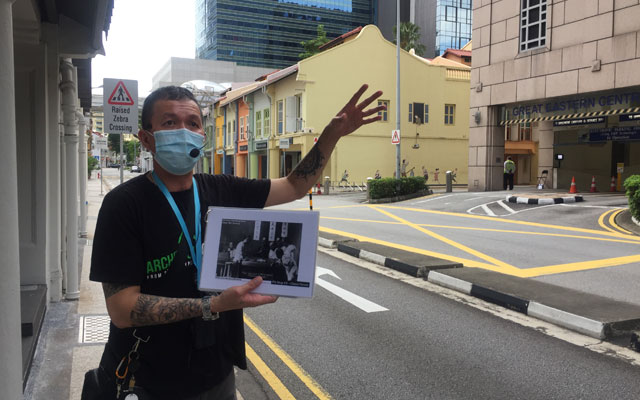
The tour kicks off with our tour guide Alvin Chiong, a former gang member, giving us a brief history of how Singapore’s gangland past had its roots in union groups formed by Chinese immigrants who came to Singapore to work in the 1800s. These union groups, which gave the migrants “a sense of security” and brotherhood, eventually evolved into secret societies.

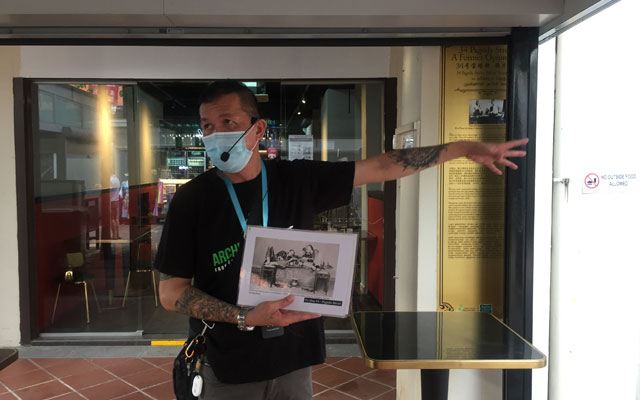
From the gambling joints that once lined China Street to 34 Pagoda Street that was once home to an opium den, Chinatown’s sordid past as a hotbed of vices is brought to life during this tour.

Over two hours, Chiong brings participants on an eye-opening journey to discover the seedy side of old Chinatown characterised by secret societies, opium dens and gambling joints. Chiong’s narrative blends the enclave’s history with related events from his own life, making for a tour that is equal parts informative and revelatory.

MICE application
The tour comprises five pit stops around the Chinatown district. Each tour takes up to 16 participants, split into two groups, with no intermingling between groups during the tour, as part of Covid-safe measures.

One of the tour’s highlights is a dining experience with these tour guides at the end of the day. It’s a fun and novel way for teams to bond over a hearty meal, while learning more about these ex-convicts’ past involvement with drugs and gangs.

At the time of our participation in this tour, dining-in at F&B venues were capped at groups of two under the Phase 3 (Heightened Alert) regulations, so participants were given takeaways instead.

However, at the end of the tour, we still got the chance to sit down for a no-holds-barred small group conversation with Chiong’s mentee – also an ex-offender – who is under training to one day lead these tours on his own. Our chat gave us a rare behind-the-scenes glimpse into gang life and the secret goings-on behind prison bars.

According to an AOL representative, response for the tour has been “very good”, with slots fully booked for this month. Notably, the tour has drawn a mixed bag of participants, from both expats and locals, couples and families, and even church groups. Interest from corporate groups has also been forthcoming.

Service
Participants were given several opportunities to pose questions to the affable Chiong, who fielded all queries with ease. He also kept participants engaged in between pit stops during the tour, with commentary about the landmarks en route.

Chiong’s mentee was equally forthcoming and engaging during our small group conversation with him, with no questions off-limits.

Acting as a conduit for ex-inmates to find meaningful employment and integrate back into society aside, these tours go a long way in subverting stereotypes about reformed convicts through up-close and personal conversations. Guided by ex-convicts who have been there, done that, it’s a refreshing take on the city-state’s gritty colonial past.

Rate: S$70 (US$52) per person
Dates: Every Saturday
Contact
Email: contact@actxplorer.com
Website: https://actxplorer.com/tour2?id=154

MCEC’s chief executive takes on VP role with AIPC

0
Peter King

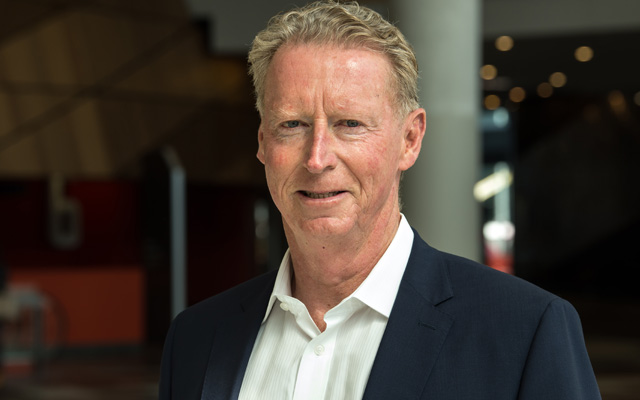
Melbourne Convention and Exhibition Centre’s (MCEC) chief executive Peter King has been appointed vice president of The International Association of Convention Centres (AIPC)’s Executive Council.

King joins representatives from Colombia, South Africa, Denmark, Thailand, Sweden and the US as directors and the executive council.

Peter King

Founded in 1958, AIPC is a global network of some 190 leading centres in 61 countries with the active involvement of more than 900 management-level professionals.

Its mission is to encourage, support and recognise excellence in convention centre management, based on the diverse experience and expertise of its international membership, and it maintains a full range of educational, research, networking and management standards programmes in order to achieve this.

AIPC recognises and actively promotes the essential role of the international meetings industry in supporting economic, academic and professional development in communities where its members are located, as well as enhancing global relations among diverse business and cultural interests worldwide.

JW Marriott Hotel Hong Kong launches hybrid meeting solution

0
JW Marriott Ballroom corporate dinner setup

JW Marriott Hotel Hong Kong has put in place a hybrid meetings solution with the building of a specific Extended Reality (xR) stage, billed as the first-of-its-kind among Hong Kong hotels

With the advanced Hologram technology, participants who are not present physically at the venue can appear on the virtual xR stage, and are able to interact with one another.

JW Marriott Ballroom corporate dinner setup

In the meantime, augmented reality (AR) 3D objects can also be manipulated on the xR stage in real-time, allowing clients to put their products in the limelight with ease and showcase the features through live interactions.

Essential tools necessary for meetings and events, such as PowerPoint presentations, video players and online meeting interfaces, can also be integrated into the technology.

The xR Stage, pre-set at the Executive Meeting Suite on Level 30 of the hotel costs HK$120,000 (US$15,550) for a full-day event. The package includes a rehearsal day, a standard scene from a given template (tailor-made scenes and 3D content will have separate costs), as well as complementary equipment such as cameras and recorders.

The package is valid until September 15 2021, and the venue charge will be levied and subject to availability. Terms and conditions apply. For enquiries, call (852) 2841 3838 or email jwmarriott.hk@marriotthotels.com.

Langham Hospitality Group enlarges footprint in China

0
The Langham Club

Langham Place, Changsha opens as Langham Hospitality Group’s 13th hotel in China, and the 25th property in the group’s growing global portfolio.

The hotel is located within the Da Wang Shan Resort, a tourist destination south-west of Changsha. Within Da Wang Shan Resort and accessible by bleisure guests and corporate groups are multiple entertainment and amusement parks which include one of the world’s largest indoor ski slopes, Snow World, The Deep Pit Ice, and a waterpark featuring a 60-metre high waterfall.

The Langham Club

For functions and events, the hotel offers more than 2,000m2 of space comprising a 1,100m2 Grand Ballroom with natural lighting, and a 360m2 independent pre-function Yuelu Ballroom. The Grand Ballroom and Yuelu Ballroom both have separate entrances, providing guests with direct access to the venues.

Meanwhile, there are a total of 295 rooms available, ranging from the 36m2 deluxe room up to the 255m2 presidential suite. For corporate guests with their families in tow, there are also two-bedroom suites available.

Other hotel amenities include three F&B concepts, the Chuan Spa, a fitness centre and an indoor swimming pool.

Searching for the silver lining in every cloud

0

Winston Churchill once said: “Never let a good crisis go to waste”. With every crisis, there lies opportunity. Where do you think are the opportunities for the business events sector at this point in time?
The opportunity that comes with every crisis is the space and window to re-invent, refresh and inspire, and to do so we have to unlearn, adapt, and be resilient in coping with a crisis. The pandemic propelled us into a future scenario that was already starting to emerge with the Industrial Revolution 4.0, and its impact on the advancement of the new world of work and social lifestyle and engagement.

For business events, new opportunities lie in the expansion of our market reach, engaging fresh audiences, developing new products and services, undertaking future-proof business model innovation, upskilling, cross-skilling and adapting our skills sets and workforce to the new standards and demands and to become more data-savvy.

A silver lining of crisis is the knowledge and learnings gained from managing and coping with it, and in itself an opportunity to improve on future crisis management and scenario planning.

With the current suspension of business events activities, what kind of support does the industry need from the government in order to retain jobs as well as ensure survival?
Business events is a major industry sector of the visitor economy that is reliant on the entire supply chain that supports meetings and events, and is currently dealing with two important scenarios that need to run in parallel, namely the resumption and the recovery of the business events industry.

Our appeal to the government is to ensure the resumption of business events as soon as possible and to prioritise continuity to build recovery. By expediting the vaccine rollout, we are confident this will greatly assist to revitalise our sector as an important economic driver.

We need the government to provide an advanced alert system to enable us to plan more effectively for re-opening, and the national recovery plan is indicative of this. We are committed to supporting all efforts so we can rebound and restore market confidence in Malaysia.

Government programmes or initiatives to streamline event permit application procedures, tax exemptions for utility costs, job retention and sustainability, supporting grants for events and to initiate and maintain a consistent collection of data on the national business events market, will be most welcomed by the industry.

What is Business Events Council Malaysia (BECM) doing to help the industry get back on its feet?
BECM has been leading the industry’s government advocacy and lobbying efforts throughout the Covid-19 pandemic which are focused on industry advocacy and lobbying to drive collective effort for the safe re-opening of our sector.

We are working collectively with our alliance partners to drive safe certification adoption, provide shared information on best practices and placing a great deal of focus on the development of dedicated communication to engage our target audiences and to maintain market presence so we are fully prepared with a safe and accessible business events proposition for Malaysia. This will ensure we are well prepared once domestic, regional and global travel commences.

Our strategy is aligned to the National Recovery Plan set out by the government and we are working with Malaysia Convention & Exhibition Bureau to promote Malaysia’s market presence and to continually uphold our stringent SOPs, consistently demonstrating the industry’s capabilities to deliver safe, professional, regulated and successful meetings and events.

We are also up-keeping our engagement with strategic partners’ industry associations through collaboration and partnerships in advocating and implementing stringent compliance to deliver a “Safe Malaysia” business events destination proposition. We fully support and are highly encouraged by the National Covid-19 Immunisation Programme, as this will lead us towards a much more positive reputation as a safe destination as we look to the world to visit and re-engage with Malaysia.

But it has said that the government does not understand the importance of business events. What is BECM doing to change this?
The Covid-19 pandemic has been a great catalyst to build industry collaboration and solidarity. We have to sing with one voice and drive engagement with the government in a consistent and collective manner.

Our aim is to factually and objectively demonstrate the value of the business events industry and its contribution to the economic and social development of the country, and we are consistently advocating and initiating data collection that informs and justifies the importance of our industry sector.

We have been well-supported by industry and mainstream media to help us communicate vital and relevant information that can inform and build awareness of our industry. Managing a large-scale event such as the running of a Vaccine Centre is a very powerful way for us to build our communication interface with the government, demonstrate our capabilities as venues and reinforce our value as important social and economic infrastructure assets.

What do you think are some major trends expected to shape the business events industry in Malaysia over the next five years?
It will be a case of adapt or become irrelevant. We will certainly need to respond proactively to growing competition and have a sustained market presence. We have to be willing to evolve our products and services and adapt to a technology-driven world and apply these solutions to meet client needs and wants.

Our workforce and organisational structures will be re-defined and new business models will continue to emerge. We envisage many collaborative partnerships across the supply chain and new models of engagement with existing and new audiences with high expectations on experiential and interactive content that is delivered not only face to face but virtually as well. We also know that data will become a vital business intelligence tool and will drive business decision-making.

One cannot ignore individuals’ and communities’ growing expectations on and commitment to business and social sustainability and organisations will have to demonstrate and engage more actively to ensure they remain adaptive, resilient and responsive to meet the needs of the ever-changing and emerging world of work and social life.

What new skills are needed by professional event organisers in a post-Covid-19 world?
Many of us had to adapt to remote working life and re-evaluate our business process and policies to adapt to technology, automation and sustainability. This progression began before the Covid-19 pandemic and the new world of work requires different skills sets and mindsets to thrive in a digital and technological environment. The typical office set-up and layout will certainly change, event planning design and execution will require new skills, business model innovation will require new skillsets and the content of professional development tools and training required to meet these demands will evolve too.

We are experiencing a different engagement culture and a stronger emphasis on social investment and sustainability. Skills development is not only focused on tasks and job roles but on managing and incorporating mental and emotional health and resilience. These changes will create new roles and change traditional organisational structures.

Understanding the value of data and its influence as a business intelligence tool means skills in objective and strategic management of information and communication through new and emerging engagement platforms.

Professionals will need to be more connected to where the future is going than maintaining the traditional skillsets of the past. There will be a level of integration as acquired knowledge and experience will continue to influence the value proposition of the future workforce.

What keeps you awake at night?
For the entire industry, no one has endured such strife even after many major world disasters of the past. For many, nothing in our lifetime has come close to dealing with the pandemic and there is still no end in sight.

We, as an industry, are concerned about how we manage to keep our staff employed? How can we recover from little to no business for almost 18 months now, and how quickly can recovery happen?

The timeline is fluid and ever-changing so we really cannot safely predict when and how recovery will begin, and how quickly will we be able to return to a previous level of business operation and normality.

So far, Covid-19 has mutated and had second, third and even fourth ‘waves’ causing more and extended lockdowns. Not knowing what is in store for us makes any kind of planning extremely challenging, and not knowing what is coming down the track keeps us awake at night. The unknown is a very difficult and arduous path to navigate!


Pan Pacific Singapore takes events to next level with hybrid studio

0
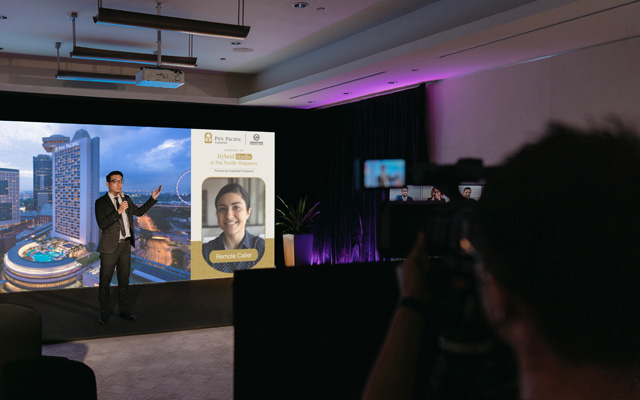
The Hybrid Studio in action with a virtual caller in the background

Pan Pacific Singapore has launched a Hybrid Studio @ Pan Pacific Singapore, in partnership with Unearthed Productions, an industry leader in the hybrid event space.

At 108m2, the Hybrid Studio @ Pan Pacific Singapore offers the capability of either a green screen set-up with a virtual background, or a LED video wall for virtual and hybrid events.

The Hybrid Studio in action with a virtual caller in the background

Packages start from S$4,000 for a four-hour block, inclusive of livestreaming and audio equipment along with an operating crew that includes a streaming technician, audio technician and camera operator.

To ensure the wellbeing of its guests and associates, elevated cleaning standards and safety protocols are also practised throughout the hotel as part of Pan Pacific Cares, an initiative by the Pan Pacific Hotels Group.

Reviews

The Ritz-Carlton, Bangkok

The newly-opened Ritz-Carlton, Bangkok anchors the One Bangkok development with cosmopolitan elegance. Featuring the city's largest ballroom and a spectacular new penthouse suite, it delivers exceptional hardware and deeply authentic, soulful service for business and leisure travellers alike

Mama Shelter Zurich

Behind the imposing, Brutalist concrete that defines Zurich’s Oerlikon district lies a surprising secret. While its exterior honours the neighbourhood’s industrial roots, stepping inside Mama Shelter reveals a vibrant, neon-soaked world that is a far cry from its rigid shell

Hyatt Regency Kuala Lumpur at KL Midtown

A polished urban retreat designed for business travellers, Hyatt Regency Kuala Lumpur at KL Midtown combines thoughtful design, seamless service, and exceptional facilities.