A new alliance to promote the business events industry and drive business events to Asia was formally established through the virtual signing of MoUs (Memorandums of Understanding) on September 2.
Named Asia Convention Alliance, the five founding members are Thailand Convention Bureau (TCEB), Thailand Incentive and Convention Association (TICA), Seoul Tourism Organization, Taiwan External Trade Development Council (TAITRA), and the Malaysia Convention & Exhibition Bureau (MyCEB).
A screenshot from the virtual signing ceremony
Chiruit Isarangkun Na Ayuthaya, president of TCEB, revealed at the virtual signing ceremony that the idea of forming an alliance with other Asian counterparts was first mooted by TCEB and TICA back in December 2020 when they foresaw that the convention market in Asia was the most promising and on the verge of recovery. This was partly due to the economic stimulus policies of governments in the region.
He elaborated: “The alliance aims to help local professional conference organisers in each country build confidence and be prepared to respond to fresh demands of the post-Covid-19 pandemic when businesses and organisations will utilise conventions in gathering advanced knowledge, latest technologies and new experiences to reignite professional and business growth.”
The alliance aims to restore the region’s business events industry which has been badly hit by the Covid-19 pandemic, strengthen relations, and facilitate the exchange of knowledge between member countries through collaborative ventures.
There is also a goal of hosting and bidding for more conventions, as well as organising joint conventions in member countries on a rotational basis. Each member in the alliance is also encouraged to invite other convention bureaus to become members of the alliance.
Fiera Milano, dmg events, MP Singapore, DesignSingapore Council and Singapore Tourism Board have signed an MoU (Memorandum of Understanding) to launch FIND: Design Fair Asia in Singapore.
FIND (Furniture, INteriors and Design), the first new international design fair to emerge in the neo pandemic period, will also be the official trade fair of Singapore’s design festival. With at least three annual editions planned from 2022 to 2024, the inaugural edition will take place in Singapore from September 22-24, 2022.
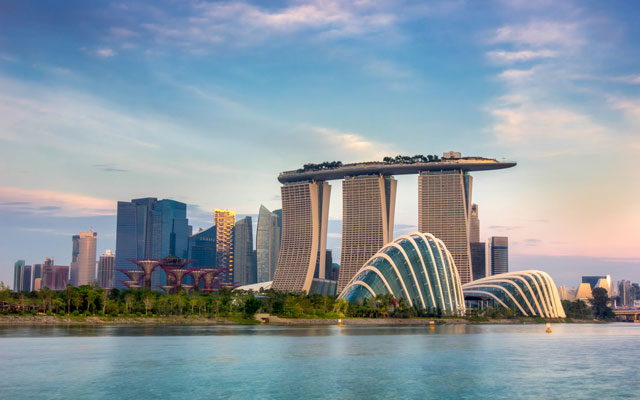
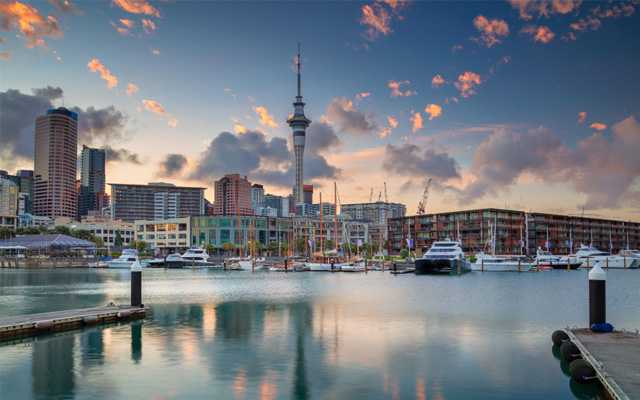
This collaboration will step up Singapore’s positioning as a global design hub; Singapore skyline pictured
Held in a hybrid format, FIND: Design Fair Asia will present a mix of country pavilions integrated with futuristic trend exhibits from independent brands and creators, alongside a 365 digital platform that will allow audiences to meet and get access to exhibitors before the start of, during and after the fair.
FIND: Design Fair Asia will run for three days at the iconic Sands Expo and Convention Centre, and is expected to receive about 500 exhibiting brands and 15,000 key decision-makers and influencers virtually and in-person from the design and furniture sectors.
Under the MoU, the parties will also collaborate on industry knowledge and innovation exchange and growing FIND into Asia’s leading tradeshow for the furniture, interior, and design sectors.
Commenting on this global launch, Luca Palermo, CEO of Fiera Milano said: “FIND will be the new fair dedicated to design in South-east Asia, one of the largest markets in the world as well as a strategic area to expand our business. Singapore is the perfect gateway to this area not only for the city’s infrastructure and the several top-level trade fairs, but also for the business opportunities aimed (at) Italian companies.”
Christopher Hudson, president of dmg events, added: “FIND fills a real gap in the market for a curated design global centrepiece that will service the fast-growing and evolving needs of Asian customers. Singapore offers us the perfect regional hub from which we can connect the West to the East and help catalyse growth and creative collaboration. FIND has already secured strong global partnerships which pave the way for a really exciting launch in September 2022.”
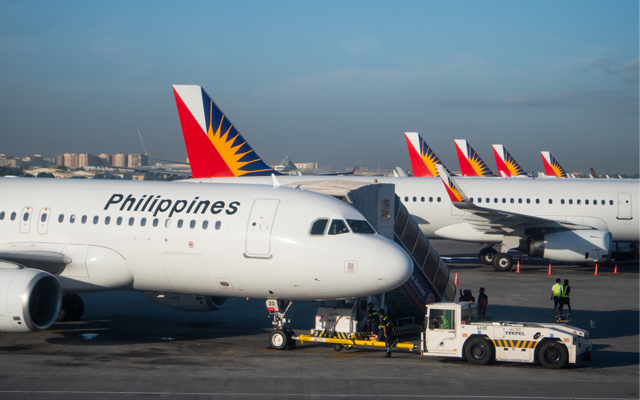
PAL now operates 21 per cent of pre-pandemic flights to 70 per cent of its usual destinations, said its president
Philippine Airlines (PAL) has filed for Chapter 11 bankruptcy in the US to pursue a lender-backed restructuring plan aimed at helping the country’s national carrier recover from the pandemic-induced travel slump.
The company said that its proposed restructuring, which is subject to court approval, will allow it to reduce its debt payments by US$2 billion and downsize its fleet size by 25 per cent.
PAL now operates 21 per cent of pre-pandemic flights to 70 per cent of its usual destinations, said its president
PAL will also get US$505 million in equity and debt financing from its majority shareholder, as well as US$150 million of debt financing from new investors.
The Chapter 11 filing, which allows a company to continue operations while it restructures, came after months-long discussions between the airline and its key shareholders.
Billionaire Lucio Tan, company president and CEO, said: “We welcome this major breakthrough, an overall agreement that enables PAL to remain the flag carrier of the Philippines and the premier global airline of the country.”
The carrier said that the plan will not affect passengers and employees. It added that it will gradually increase domestic and international flights in accordance with market demand.
PAL will also complete a parallel filing for recognition in the Philippines under the Financial Insolvency and Rehabilitation Act of 2010.
Humans stand at the centre of the future of travel
Humanisation lies at the core of events as well as the larger travel ecosystem, which will help tide the sector through this tough period, discussed panellists at The Path Forward for Travel and Events, a hybrid event organised by Marriott International last week.
Anna Patterson, vice president and managing director of Singapore-based event agency George P Johnson, stated: “The biggest and most important things we have come to realise is that technology, and holograms, VR, XR, all of these are just enablers (to delivering events). The most important is the human brain, human emotions, and the human experience which is being engaged and entertained.”
Humans, and our need for social interaction, stand at the centre of the future of travel
Patterson revealed how she helped to transform a three-hour keynote presentation that comprised many presenters and content, into a 30-minute cinematic documentary where every stakeholder and speaker became part of a story of how that company had transformed.
“I think it’s about the connection and human behaviour, and if anything, the pandemic (has helped us realise) that human interaction serves a purpose,” she said.
Meanwhile in the corporate travel space, Kenji Soh, executive director APAC (ex. India) travel, Goldman Sachs, and Andy Winchester, APAC travel manager, Bloomberg both revealed that corporate trips are still happening despite the current complex environment – also because a human element is key.
Soh elaborated: “Face-to-face interactions are very important to us. While travel volume is comparatively lower, each trip is very important to us because it makes our firm competitive.”
But in the current climate, Soh pointed out that Goldman Sachs tries to take away the complexity of travel planning for their employees by assuring them that the company has a strong and reliable team that will support them and provide timely, relevant information when needed.
“We’ve resumed travel in China and domestic Australia. When we spoke to the travellers and department heads, there was no hesitation about getting back to travel. We learnt that people want to be out there seeing their customers, and we’ve added a lot of value to the business by enabling people to travel safely,” shared Winchester.
He added that Bloomberg has also focused on how to disseminate information to travellers in a timely way, but points out that in the future, “we need to automate that as much as possible particularly as volumes grow”.
Sustainability is also another rising concern in the corporate travel space, both travel managers indicate.
“First, the trip has to be evaluated. Perhaps many meetings can be conducted in one trip, rather than having to do multiple trips and cut down on emissions that way. But we also give our travellers the choice to choose, as they would know what the most sustainable choice is,” Winchester said. On the company’s part, Bloomberg is working with partners to make that happen.
Similarly for Goldman Sachs, Soh revealed that the company is moving beyond carbon offsets, and putting the choice in the hands of the travellers to better understand what will be the byproduct of their trip.
They are also working to showcase green hotels better in their online booking tool, and they have been working with major hotel chains such as Marriott to ensure that the information is reflected accurately in the system.
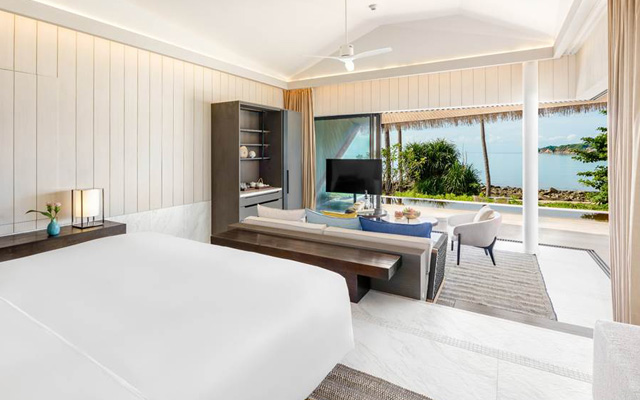
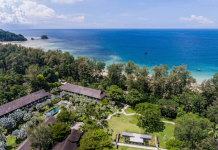
Hyatt has opened the Hyatt Regency Koh Samui on North Chaweng, a 10-minute drive from the island’s international airport.
The 140-room property occupies eight acres of private coastline in the far north-east corner of Koh Samui. The 140 guestrooms, which include 24 suites and villas, feature private balconies and most offer sea views. Select rooms include access to Regency Club privileges.
Hyatt Regency Phuket
The property offers indoor and outdoor venues for gatherings, big and small. The Regency Ballroom can accommodate up to 100 guests or 150 for cocktails. A 97m2 manicured lawn is also available for al fresco events.
There are four F&B options on-site, which include Yangna, an all-day dining restaurant showcasing Thai and international cuisine; and the open-air Sesun Grill & Beach Bar where diners can order fresh seafood and Mediterranean sides.
Other amenities include a spa with five treatment rooms, as well as a lap pool and plunge pool. Business travellers with their young ones in tow can also enjoy the family-friendly facilities such as a kids’ pool with slide, family pool, and Camp Hyatt with supervised play and activities from arts and crafts to movie nights.
Improving travel freedom in popular tourist destinations, as well as relaxed restrictions for returning fully vaccinated Singapore residents, have nurtured green shoots in outbound incentive travel business.
Kuoni Tumlare saw an “immediate response” from major incentive organisers based in Singapore as soon as the Vaccinated Travel Lane (VTL) with Germany was announced in mid-August.
Singapore’s Vaccinated Travel Lane with Germany has led three major insurance companies to begin incentive planning to the destination; Miltenberg medieval town pictured
Reto Kaufmann, the company’s vice president – sales & operations South East & South Asia, told TTGmice: “Three out of 10 largest insurance companies in Singapore have also immediately started to look at projects into Germany, scheduled for travel around 4Q2021 or 1Q2022.”
“In short, there is a pent up demand for incentive travel,” Kaufmann remarked.
Also sharing optimistic news is Melvyn Nonis, director of Singapore-based incentive specialist M.I.C.E Matters. He told TTGmice that “some light at the end of the tunnel” was finally coming through, with corporate clients starting now to plan for incentive programmes happening as early as April 2022.
He revealed that Singapore-based corporates are keen on a variety of destinations, from Russia to Iceland on the other side of the globe, New Zealand and Australia, as well as Taiwan, South Korea and Japan which are closer to home.
Kaufmann noted that while Germany was seldom regarded as a premium incentive destination among Singapore companies pre-pandemic, the VTL has encouraged clients to take the option seriously now. “That is good because Germany has many nice incentive regions, such as Bavaria and The Black Forest,” he said.
New enquiries for Switzerland have emerged too, although most are for travel around 2023, shared Dominique Oi, MICE manager Southeast Asia with the Switzerland Convention & Incentive Bureau.
“At the moment, most Singapore companies are holding back and waiting for quarantine requirements to be lifted,” Oi explained.
While Switzerland offers a quarantine-free welcome to fully vaccinated Singapore travellers who test negative for Covid-19, a compulsory 14-day isolation awaits upon their return home. This regulation, however, was relaxed in August to allow travellers from certain countries, including Switzerland, to serve their quarantine at home, instead of a government facility.
Altered programmes
Against a Covid-19 backdrop, post-lockdown incentive programmes are expected to look different.
Groups will have to travel in small batches and with staggered departures for better health and safety control. As a result, gala and farewell dinners will be “more intimate and lavish”, opined Nonis.
Nonis: availability of non-stop, direct flights would give clients confidence to resume incentive travel
“Itinerary will be more organised, with fewer free days. Experiential programmes, including team bonding, (will be featured more prominently),” he said, adding that trips would likely be extended by a day to satiate pent-up travel desires and clients would consider booking out an entire hotel for private use.
Oi expects post-lockdown incentive trips to be packed out with more programmes – a mix of incentive and teambuilding elements – to maximise travellers’ time in the destination.
On the other hand, Kaufmann disagrees that programmes would be more packed out post-lockdown – only because Asian groups are already masters of time and are used to “being out from eight in the morning to 10 in the evening”.
In fact, Kaufmann encourages organisers to have fewer inclusions due to logistical situations and expected delays, and to provide more time buffers in between activities.
Meanwhile, the need for reduced trip disruptions due to sudden border closures will make mono destination programmes more popular than the traditional multi-country itineraries.
“Irrespective of the VTL, mono destinations will be the norm. I don’t see incentive groups moving cross-country until we have clear control over Covid-19,” Kaufmann explained, adding that this will benefit both the traveller and the destination, as programmes can now “deep dive into the beauty of the particular country” and showcase experiences in second- and third-tier cities.
Another travel preference identified by both Nonis and Kaufmann is the stronger desire for non-stop, direct flights. Nonis noted that the availability of such flights could elevate client’s travel confidence. However, his clients would stop short of chartering private jets due to cost concerns.
With safety concerns still top of mind and evolving border restrictions a reality, reliance on professional travel planners is ever stronger. To strengthen communications with incentive travel participants and sharpen group management, M.I.C.E Matters will be implementing digital solutions.
A costlier undertaking
Incentive programmes post-lockdown will require a bigger budget to cover Covid-19 tests for travellers, more manpower to manage multiple batches of incentive qualifiers, higher ground expenses as well as increased management fees.
Nonis said clients should be prepared to pay 20 to 30 per cent more compared to pre-pandemic days. He intends to raise management fees to reflect additional work and preparations that come with overseas trips now. Although gaining clients’ acceptance would be “tricky”, Nonis said the fee increase was necessary.
Oi: appetite for incentive trips among South-east Asian corporates is still good
Kaufmann agrees that pricier travel is the new reality. “Unfortunately, people have not really gotten a picture of the new travel cost structure, which is why many are having this wait-and-see attitude. They need time to rebuild their travel confidence,” he said.
However, companies looking to resume their incentive programmes on limited budget could benefit from an oversupply in tourism products, suggested Kaufmann.
“If you buy into hotel inventories at the right time, for instance, you could possibly make enough savings to mitigate the additional cost of travel. Kuoni Tumlare has the buying power to minimise the cost impact on clients. We understand that a lot of budget has already been set for incentive programmes, so we work with our teams and partners to bring down the cost as much as possible,” he added.
Green shoots in other Asian markets too
Demand for longhaul incentive trips is also resurfacing elsewhere in South-east Asia, encouraged by the reopening of international travel borders in aspirational destinations.
Mountainous resorts and excursions around regions such as Lake Geneva are planned for an Indonesian group, says Switzerland Convention & Incentive Bureau; Chillon Castle at Lake Geneva pictured
The Switzerland Convention & Incentive Bureau is taking fresh enquiries from a number of markets here, such as Indonesia, Thailand and Malaysia, with most intending to travel after 2Q2022 or in 2023.
“I must say the appetite for incentive trips among South-east Asian corporates is still relatively good,” Oi remarked, adding that a 237-pax incentive group from Indonesia has just sent in their application for the Schengen visa to travel this December.
Revealing more details on this incentive group, Oi said the itinerary would span five nights and feature mountainous resorts and excursions around regions such as Valais, Lake Lucerne, Bernese Alps Oberland and Lake Geneva.
Departures will be staggered across three-day intervals, with 50 to 75 participants per batch.
To rebuild interest in Switzerland for corporate incentives, the bureau is kicking off early September its second virtual/hybrid networking event, Switzerland Travel Experience. This will bring more than 30 Swiss partners together with Asian buyers through face-to-face meetings.
Kuoni Tumlare is also witnessing good progress, particularly in Indonesia and Thailand, where requests for proposal are returning. Kaufmann revealed that his company is fielding “several nice requests” out of Indonesia for travel in the later part of this year, while interesting incentive concepts are emerging among his Thai clients.
“For example, we have a request to the US where the Thai organiser wants to get his staff vaccinated there. So, the programme combines an incentive award and a vaccination exercise,” he said.
Barring “any shocking developments”, Kaufmann expects incentive demand to continue to rise in South-east Asia, leading possibly to a “decent recovery in the fourth quarter”.
Taoyuan as the main MICE city in Taiwan will open the new mode of MICE services for "Hybrid Meetings"
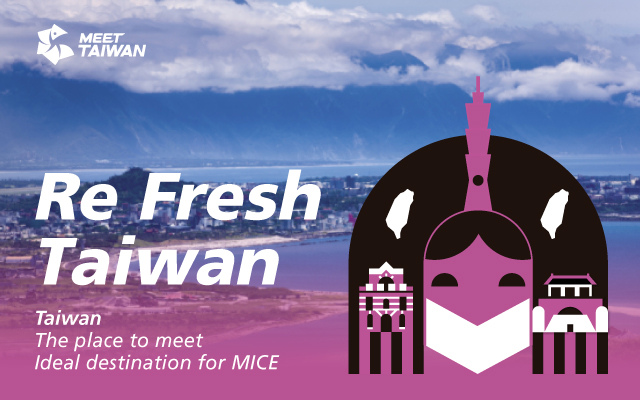
The prefix “re-“, meaning back or again, is the highlight of MEET TAIWAN’s new program name—Re-Fresh Taiwan—representing a fresh start after the global pandemic forging a fresh new ecosystem for Taiwan’s MICE.
With the advent of COVID-19, Taiwan, like other countries, has confronted new challenges. Early on, Taiwan achieved world-leading pandemic control results through prompt response measures. Even though there was a surge in infection cases later on, it was soon stabilized through public cooperation and effective government control. Along with rising vaccination rates, these measures show Taiwan’s COVID resilience, which enabled people to quickly return to relatively normal life reassured and with peace of mind.
As a result of the new normal caused by the pandemic, the global MICE industry is undergoing a revolution. MEET TAIWAN launched a new project called Re-Fresh Taiwan to reform the Taiwanese MICE industry. Integrating governmental and non-governmental resources, in conjunction with Taiwan’s world-leading information technology and abundant cultural vitality, a more safe and secure MICE ecosystem is forming. At the same time, the industry has become reinvigorated with people’s warmth and compassion, thereby kicking off better, more diverse services and cultural experiences for professionals around the world.
The advantages of organizing MICE events in Taiwan in the post-COVID-19 era fall into three categories:
Reassured and Safe
Taiwan has a sound medical care system and public health environment that can promptly implement pandemic control measures, as well as excellent public security. These advantages make Taiwan a top pick for countries around the world to organize MICE events.
Remarkable Services
Looking forward to the recovery of Taiwan’s MICE industry, MICE service providers in Taiwan provide MICE event organizers with professional, highly efficient, high-quality, and flexible services that are incredibly responsive to emergencies.
Revolutionized Digital Era
As hybrid MICE events have become the latest trend, Taiwan is innovatively enhancing its MICE industry by applying new digital technologies to build a fresh model for Taiwan’s digital exhibitions to facilitate the technological and digital transformation of MICE.
Taiwan is ready for the new normal. Once countries around the world reopen their borders, the nation should be a top choice for global MICE service providers to reconnect with each other.
Lacklustre response to in-person meetings even with increase in limit
F&B an important catalyst for networking and social mingling
Future events will harness more tech aspects
Virtual events are currently the preferred mode of meeting during this pandemic, due to the number of backup plans that needs to be created and hoops planners have to jump through for an in-person event
The Singapore government has raised business events in-person limits to 1,000 as it takes a step towards an endemic Covid future, but companies here are sticking to virtual sessions, preferring to keep in-person meetings short and intimate.
In fact, events specialists here told TTGmice that demand for in-person meetings is weak, as companies are shying away from organising such events for now.
Events technology company Delegate’s co-founder Jacqueline Ye said: “A lot of enquiries are coming through our platform for both virtual and physical events but they are scheduled for the later part of the year”.
While Alexis Lhoyer CEO and co-founder Chab Events, has seen clients starting to plan for award ceremonies, launches and gala dinners for December 2021 and 1Q2022, he said interest in in-person events is low “as F&B and social mingling are absent”.
Lhoyer hopes that social events will be able to restart before the end of the year.
“The population is already 80 per cent vaccinated. If that isn’t enough to bring back confidence about reopening our society like what we are seeing in Europe since June, I’m not sure what will,” he lamented.
Conrad Centennial Singapore had a recent business summit hosted by a renowned telecommunication organisation, with 100 people in attendance. Business events are “trickling in” but director of sales for group, conference and events, Lolita Kuek, said demand for smaller meetings remains “weak”, as companies have chosen to hold them in their own facilities or moved online.
Lack of confidence and restrictions
Fear of changing event restrictions and the hassle such occurrences would bring are the biggest hurdles in reviving local meetings.
Ye’s clients “prefer to host an in-person meeting or event” but are concerned that “restrictions might change”. They are also “afraid to commit” as economic recovery is still ongoing.
Kuek concurred: “Meetings and events are not happening mainly due to the fact that the level of confidence (in holding a successful in-person meeting during Covid-19) has not been attained.”
Lhoyer noticed that the cessation of F&B services – such as coffee breaks – is one of the major factors in stopping most companies from going ahead with physical events, as this severely restricts networking.
Marcus Hanna, managing director at Fairmont Singapore and Swissotel The Stamford, shares the observation. Currently, the hotel predominantly hosts small meetings for around 20 people, while trainings have yet to resume due to prevailing F&B service restrictions.
Hanna said: “The changing restrictions that have been adapted as the pandemic situation evolves, over a short and quick span of time, can be confusing for some clients who then find it too much of a hassle to coordinate and see through the event process.”
All is not bleak, however, as Petrina Goh, director at CWT Meetings & Events, told TTGmice that in-person event projects for her company are returning “very steadily”, made possible by a growing number of people who have become accustomed to dealing with the changing regulations around meeting management.
CWT clients are favouring small in-person and hybrid meetings with shorter durations and which do not require F&B service.
Goh pointed out that the local events market could use some form of event insurance that allows for compensation should an event be postponed or cancelled due to Covid-19 regulation changes or outbreaks. Such coverage is common for UK meetings, she shared.
Hybrid reliance remains
Events specialists unanimously agree that virtual events cannot replace physical events, especially in the areas of networking. However, they also agree that there will be more hybrid events in the future, as well as events that harness technology to enhance the overall experience.
Lhoyer expects more “immersive experiences involving mixed reality and avatars”, beyond the current “overused 2D platforms”, as well as the emergence of “new concepts that incorporate both physical and virtual elements seamlessly”.
“Organisers now have acquired the experience and seen the added revenue or solid ROI that digital components can bring, so they will plan to have an event format that incorporates both,” he elaborated.
Goh sees hybrid meetings as the way of the future, “at least for some time because they allow customers to have a fallback”.
She added: “Should regulations change nearer to a meeting, a virtual platform allows them to still proceed with the event and scale down the physical aspect, while not losing audience numbers.”
For Ye, most clients are “keen to integrate a virtual element in their events” as they have been exposed to the “benefits of virtual events – such as larger and global audience reach, more sponsorship revenue, and data extraction opportunities on attendees”.
She added that event owners are now more “pressured to engage their communities throughout the year”, which will result in year-round content creation, establishment of community engagement platforms, and more frequent activation events that culminate in a major conference.
Auckland's lockdown extended two weeks, other areas of New Zealand being downgraded
As New Zealand’s national lockdown readies for a downgrade to Level 3 from today (September 1), business events stakeholders are expressing optimism in being able to bounce back once the ordeal is over.
The lockdown comes two weeks after the first case of the highly-contagious Delta variant was found on August 17, prompting prime minister Jacinda Ardern to enact a nationwide lockdown. Auckland will, however, remain in full lockdown – level 4 – for another two weeks due to the number of active cases.
Auckland’s (pictured) lockdown has been extended two weeks, other parts of New Zealand get downgraded to level 3
Megan Crum, head of business events, ChristchurchNZ, told TTGmice: “While New Zealand’s recent lockdown has been disappointing and disheartening for Christchurch’s business events sector, the city is well-placed to welcome back business events once the country’s alert levels drop. With no active community cases in our region, we are continuing to plan and book business events here.”
Crum added that the purpose-built convention centre, Te Pae Christchurch, is on track to open at the end of this year.
Despite the pandemic, Crum added that the Christchurch Convention Bureau continues to be “extremely active” in bidding and securing events for the city, with five confirmed in the last eight weeks, with an estimated combined total of 2,000 delegates.
“New Zealand has had over 170 days of no restrictions. During that time our domestic market was supporting the industry at levels never experienced,” Lisa Hopkins, CEO at Business Events Industry Aotearoa (BEIA), told TTGmice.
“As always, this industry fortifies itself by adapting and with experience of previous lockdowns, we know what to do. However, the Delta variant of Covid operates in a very different way and we have had to adjust again.”
Both Crum and Hopkins shared that a majority of conferences and corporate events that were supposed to be held during this period have not cancelled but are, instead, postponed to a later date as many already have risk management plans in place.
However, Crum stated there is a “desire from our industry partners to see a staged border opening strategy” to help them plan for the future.
“When the travel bubble with Australia “popped”, we expected some downturn, but it was encouraging to see Australian groups simply push back dates versus cancel. We are seeing very few cancellations, with postponements more prevalent,” agreed Hopkins.
Similarly for Richard Clarke, head of major and business events at Auckland Unlimited, shared that the latest lockdown has “affected 11 events” and “impacted its upcoming calendar of events”, their partners are focusing on rescheduling as opposed to cancelling events.
“The advantage of business events is that we work with long lead times which offers the opportunity to continue to support and work closely with our partners on alternative delivery options, including hybrid events,” noted Clarke.
BEIA has also launched a campaign called BE Vaccinated to help members reconnect with the world through vaccinations, though Hopkins has indicated the industry would like to see this “accelerated dramatically”.
According to Reuters, just about 21 per cent of the country’s 5.1 million people have been fully vaccinated, lagging behind most of the developed world.
Hopkins concluded: “New Zealand’s approach to Covid is one of elimination, so we are in this for the longhaul. We know that safety and security is the number one consideration when choosing a destination for a business event, and we are confident that the actions we take now will ensure our manuhiri (guests) can be confident in their selection.”
CWT has appointed Ian Cummings as global head of CWT Meetings & Events, as well as Bill Courtney as executive vice president and chief financial officer.
Based in London, Cummings will report to Niklas Andreen, CWT’s chief operating officer and serve as a member of the customer and travel experience leadership team. He has been with CWT Meetings & Events for nine years, joining in late 2012.
From left: Ian Cummings; and Bill Courtney
Before his move to CWT, Cummings held successful managing director, CEO, and regional director roles at a range of service industry businesses such as DHL, DX Business Direct, eCourier, Imparta, and Sensigrade.
Over in North Carolina, Courtney will report to Michelle McKinney Frymire, CEO of CWT, and serve as a member of the executive leadership team. Acting CFO, Courtney Mattson, will return to her former role as global treasurer and deputy CFO.
Prior to this move, Courtney held the position of CFO at Starkey Hearing Technologies. Before joining Starkey, he held senior global finance roles with Medtronic, Bank of America, Barclay’s Bank, Best Buy Co, and Delta Airlines.
Just 10 minutes from Phuket International Airport on the serene northern coast, this 178-key, Bill Bensley-designed resort offers delegates a quiet, tropical paradise steeped in Phuket’s tin-mining heritage
The newly-opened Ritz-Carlton, Bangkok anchors the One Bangkok development with cosmopolitan elegance. Featuring the city's largest ballroom and a spectacular new penthouse suite, it delivers exceptional hardware and deeply authentic, soulful service for business and leisure travellers alike
Behind the imposing, Brutalist concrete that defines Zurich’s Oerlikon district lies a surprising secret. While its exterior honours the neighbourhood’s industrial roots, stepping inside Mama Shelter reveals a vibrant, neon-soaked world that is a far cry from its rigid shell